Blog Archives
A World of Lithomancy

Dark Bringer follows a cypher cop, an archangel, and a miner’s daughter whose paths cross with the grisly murder of a corrupt consul. What was the inspiration for the setup of your story?
So Dark Bringer is actually the start of a prequel series that ties into my Nightmarked books. I’d always wanted to tell the story of how that world, called the Via Sancta, came about. When I finished that series (and fans wanted more), I knew it was time to go back and explore the origins. Kaldurite plays a large role in the Nightmarked books, and after much brainstorming, and tossing out storyline after storyline, I decided to focus on this very special gemstone that repels magic in a world of lithomancy. Where it came from, who found it, and how it ultimately shook the foundations of Sion—Cathrynne and Gavriel’s world. Of course, their love story is also a big element, and one that is touched on in the later Nightmarked books, too.
What is the most challenging aspect of planning a fantasy series?
Everything! They have so many moving parts. But having muddled through a few over the last ten years, I’ve learned to think the choices I make all the way through (as far as this is possible—there are always surprises). You’ll have to live with those choices (who survives, who dies, what are the limits of magic, etc) for many books to come, so be sure they’ll work with the larger story down the line. Some choices open doors, and others close them forever. It can be a daunting process, and I think that’s why it takes me longer to plot than it used to. I’ve made plenty of mistakes I regretted and don’t want to do that again! Oh, and here’s another one: don’t write TOO many characters, and TOO many storylines. That still tends to be my downfall, haha.
Do you have a favorite character in this first installment of The Lord of Everfell series? One that is especially fun to write for?
I’ll say it straight: Gavriel starts as an arrogant, uptight prig who needs to be taken down a notch, so I’m actually enjoying writing him more in the next book, War Witch, where he’s forced to reckon with the sins of his past. Kal is funny and smart, but she, too, is mainly focused on her own problems in Dark Bringer, and becomes more altruistic in the next one.
Cathrynne, who is both pragmatic and vulnerable, and just a decent person, is my favorite.
Can we get a glimpse inside Book 2? Where will it take readers?
I have not written the blurb yet, and it would entail massive spoilers to discuss Gavriel, but I can say that he becomes a lot more human (for an angel), Cathrynne goes on a quest to find the witch goddess Minerva, and Kal heads to Iskatar under the fake name Kayla Jentzen, which lands her in fresh trouble. Levi and the White Foxes are still in pursuit, but that’s all I can say for now!
Author Links: GoodReads | Facebook | Website | Amazon
Cathrynne Rowan is half witch, half angel. Such unions are forbidden, and the offspring – called cyphers – are reviled as abominations. But Cathrynne’s powers are indisputable, so when Lord Morningstar is nearly killed by an assassin, she’s summoned to serve as his bodyguard.
In Sion, all magic derives from gems and metals. Cathrynne and Gavriel must hunt down a mysterious stone that’s left a trail of bodies in its wake. Along the way, they forge an unlikely kinship that threatens to blossom into something more. Something decidedly dangerous.
Then Cathrynne starts having visions of a fallen angel who will tear the empire from its moorings. It seems impossible that the upright and honorable Lord Morningstar could be this Dark Bringer. But if it is Gavriel… How far will she go to stop him?
Taking place a thousand years before the events of the award-winning Nightmarked series, Lord of Everfell is set on the sprawling continent of Sion, where witches, angels, and humans populate seven vibrant realms surrounding the Parnassian Sea. Get ready for epic intrigue, dragons, and a love affair for the ages!
The Strains of Malice: Book One of The Nessemiah


The Strains of Malice, the first novel in Andrew Beardmore’s Nessemiah series, offers assured, character-led storytelling in a vividly imagined setting. Clear maps and a welcoming introduction make the world easy to step into from the outset.
Set in a pre-industrial society with strong late–eighteenth-century European echoes, the story centers on fifteen-year-old Emilya, a baker’s daughter in the port city of Ghantiss. Her compassion is not performative. It’s defiant. When she pulls a dog from Prince Magnus’s brutal bloodsport ring, she challenges the one person no one is meant to challenge. Magnus responds with predictable entitlement and very real menace. Protected by royal privilege, he decides she will pay.
Former naval captain Jake disrupts Magnus’s retaliation long enough to give Emilya a chance to run. The escape becomes a life. It also becomes a binding. Later, Elyse, a perceptive healer with sharp instincts, joins them on the road. The trio turns fugitive. Necessity hardens into trust. Trust turns into affection, earned in breathless flight and in the quiet gaps between threats.
A strong supporting cast adds weight and texture. Freya, Emilya’s childhood friend, carries her own scars from Magnus’s cruelty. Magnus’s sister offers a gentler counterpoint and a tragic lens on a fractured royal household. And Magnus himself? Chilling. A narcissist with a talent for performance and a taste for control. His depravity feels calculated rather than chaotic, which makes him far more unsettling.
The novel grips from its opening pages. Emilya is immediately sympathetic and never simplistic. Magnus’s amused coldness lands like a warning bell. Action scenes arrive with momentum and stay readable. Tension builds cleanly. Sensory detail does a lot of heavy lifting, keeping each sequence sharp and immediate.
Graphic violence and mature themes appear with intent. They underline abuses of power. They raise the stakes. They also shape the book’s central idea, the “strains” of malice that seep into institutions, families, and ordinary lives. The intensity will not suit every reader, yet the darkness is consistently counterbalanced. Loyalty surfaces. Love persists. Compassion refuses to be extinguished.
The Strains of Malice stands out for immersive worldbuilding, well-timed twists, and a cast that is vivid and easy to root for. The opening volume introduces its setting with care, blending the fantastical with the uncomfortably familiar and grounding imaginative elements in a plausible social reality. The historical texture adds depth and authenticity. As a series opener, it’s gripping and confident. Epic-fantasy scope meets the brisk punch of pulp adventure. Beardmore’s novel is best suited to readers who want their fantasy darker, sharper, and unafraid to look directly at cruelty, without losing sight of warmth.
Pages: 548 | ASIN : B0DYZ5T653

Dark Bringer

Dark Bringer, by Kat Ross, is a gaslamp-flavored epic fantasy that braids together a murder mystery, political intrigue, and forbidden divinity. In a world ruled by distant gods and policed by arrogant angels, we follow three main threads: Cathrynne Rowan, a hard-headed cypher cop with illegal seer gifts; Gavriel Morningstar, the severe archangel who once condemned an angel for loving a witch; and Kal, a miner’s daughter on the run after a gem-smuggling disaster. Their paths tangle around the spectacularly grisly murder of a corrupt consul in the city of Kota Gelangi, smuggled ley-gems, and the re-emergence of the draconic Sinn and the eerie Plain of Contemplation that swallows exiled angels.
I really love the world the author has created here. Author Kat Ross gives us a secondary world that feels halfway between an industrial empire and a late-Victorian university town: angel towers sharing horizons with observatories, student bars, and gossip rags; cyphers kicking down doors while White Fox witch-inquisitors swoop in to steal the glory; miners whispering prayers to monsters they also fear. The terminology, ley, liminal spaces, forcing, Sinn, never felt like a glossary dump; it arrives in the middle of chases, interrogations, and messy street scenes. I loved the way magic is both sacred and bureaucratic: archangels filing paperwork while traveling through liminal ley, witches arguing jurisdiction, cyphers grumbling about forms as they bleed all over a White Fox’s expensive car upholstery.
On the character side, the book felt like a conversation between cynicism and care. Cathrynne is wonderfully prickly. She has a brutal sense of justice, a horror of confinement, and this buried terror that her seer visions will get her entombed in a kloster for life. Watching her collide with Gavriel, who starts as the epitome of cold angelic law and gradually reveals a bone-deep loneliness, was deeply satisfying. Their dynamic shifts from mutual irritation to wary respect to something that definitely is not regulation-approved, and the last chapters lean harder into that tension. Kal’s storyline gives the book its raw, working-class heartbeat: a girl who knows the mines, who carries a wise-cracking ghost and a ship tattoo under her concealer, pulled into the same conspiracy from the opposite end of the empire. Her chapters add grit and grief to what could otherwise have stayed a high-altitude political thriller.
I’d hand Dark Bringer to readers who like epic fantasy, gaslamp fantasy, fantasy mystery, and angel-and-witch fantasy with a strong streak of character drama. If you enjoy the divine politics and flawed immortals of N.K. Jemisin’s The Hundred Thousand Kingdoms, but wish the world came with more cops-and-robbers chases, haunted miners, and draconic horror, this scratches a very similar itch while feeling distinctly its own. For me, Dark Bringer is sharp, moody, and unexpectedly tender–murder mystery in a crumbling empire full of gods and ghosts.
Pages: 410 | ASIN : B0F4KWFMTL
Thaddeus and the Daemon
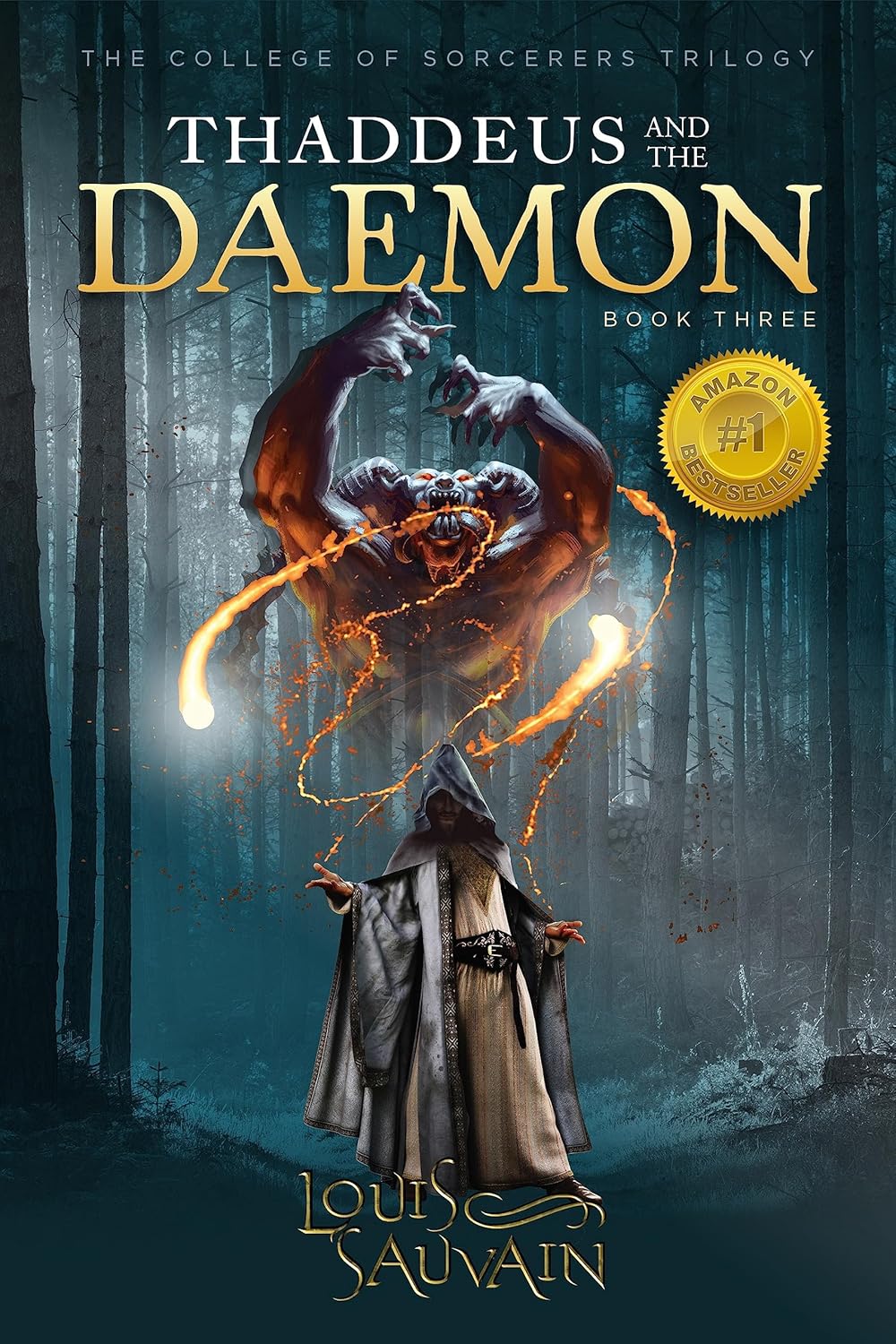
Thaddeus and the Daemon drops readers back into the Collegium Sorcerorum with Thaddeus and his tight little crew, right when everything starts to wobble. A love letter hits like a gut punch, complete with prophecy, a secret child, and a farewell that sends Thaddeus sprinting into danger on pure emotion. The story then widens fast. There’s a creeping plot tied to Master Perditus and a Daemon named Morag, a hunt for a guilty middleman, and a slow reveal that someone inside the school is playing for the other team. It all barrels toward curses, portals, and a showdown where belief itself becomes a weapon and a weakness, and the Daemon’s plans start falling apart in a very strange, very satisfying way.
I liked the writing most when it lets feelings lead. Thaddeus breaking down after the letter felt raw and real, no fancy posing, just pain. The voice also has this cozy old-tale vibe. It can be dramatic, then weirdly funny a beat later, like the book knows when to wink. Some scenes run long, though. I caught myself thinking, okay, we get it. Move it along. Still, when it hits, it hits. I felt that tight chest feeling. The kind you get when a character makes a bad choice for a good reason.
The ideas under the adventure worked for me, even when they got big and mystical. The book keeps poking at belief, fate, and how much choice any of these kids really have. There’s prophecy pressure everywhere, and it messes with how they love, how they fight, and how they trust. I’m a sucker for that theme, and this one leans into it hard. Sometimes it feels a little too neat, like the universe is doing tge heavy lifting. Even so, I enjoyed the tug of war between “I choose this” and “this was chosen for me.” And the whole traitor thread added a nice paranoid edge.
This one gave me some strong J.K. Rowling vibes, mostly in the way the school setting turns into a pressure cooker where secrets and loyalty tests keep piling up. Like Harry Potter, it starts with that familiar comfort of lessons and rivalries, then it swings hard into darker stakes and bigger magic. The difference is the tone. Thaddeus and the Daemon feels more intimate and emotionally direct, less puzzle-box, more heart-first, and it leans into destiny and belief in a way Rowling usually keeps in the background.
I walked away feeling wrung out, in a good way, and also kind of hyped to see what comes next. I’d hand this to readers who like earnest fantasy with heart on its sleeve, teen heroes under massive stakes, and magic that runs on faith and feelings more than math. If you want a sweeping, emotional ride with prophecies, creatures, and school politics turning dangerous, then definitely pick this book up.
Pages: 482 | ASIN : B0C958PRC1
Veil of Embers

Veil of Embers is a Celtic-flavored portal fantasy that follows Sorcha, a ranger in the Circle of Light, as creeping corruption seeps into her forest, her city of Lumora, and even the people she loves. Strange reanimated beasts, a spreading sick bloom in the woods, and a willfully blind council set the stage while a second thread follows Kyron of the Tuatha Dé Danann, who faces the cost of dark magic up close, and a third thread tracks Riona as she gets entangled with a forbidden grimoire and the very charming, very suspect Vaelric. As the circle investigates, the rot in their world deepens, the old gods feel nearer, and the story builds toward Sorcha, Kyron, and the shapeshifter Cat stepping through the Veil itself into a new realm, leaving this first installment as a clear launch point for a larger series.
I really liked the way Karla Molina writes moment to moment. The opening trial with Sorcha and the animated wolf grabbed me right away, and the tone never really lets go after that. The prose is descriptive and sensory, with a lot of attention to sounds, smells, and texture, so the forest scenes and Lumora’s streets feel lived in. The library of Verdant Light, with its living tree and the mirror portal tucked into an alcove, is a good example, it feels cozy and ominous at the same time. The banter inside the Circle is warm and funny and gave me that “found family” vibe without feeling like a sitcom room, and the fight and horror scenes with the corrupted wolves, the dead livestock, and the black flower in the woods have real teeth. The pacing stays pretty steady, more slow-burning investigation and creeping dread than constant action, and then ramps up in the last act when the Veil finally opens. I will say it ends on a pretty hard “now we step into the new world” beat, so as a reader, I finished the last page already mentally reaching for book two.
The book worked for me because it is not just monsters in the trees. It keeps exploring the cost of power and the way hurt people go looking for shortcuts. Kyron’s mercy killing of Alenia, whose body has been twisted by dark magic, hits that theme in a brutal way, and it frames his later choices with a lot of quiet grief. Riona’s storyline with the Dark Book feels like watching someone slip into an addiction one page at a time, she is lonely and angry, the book tells her exactly what she wants to hear, and she keeps going back even while she knows better. The text does not glamorize that, it lets you feel the pull and the danger. On top of that, you have Sorcha’s trauma, the loss of her parents, the nightmares, panic, and the way she keeps forcing herself to function while her magic behaves more and more strangely. The preface is clear about the heavy topics, and I appreciated that the story leans into anxiety, despair, and even thoughts of not wanting to go on, but does so with empathy rather than shock value.
The character dynamics were a high point for me. The Circle feels like a real unit, full of teasing, half-serious flirting, and little crushes that may or may not go anywhere. Eirin, Drystan, Mason, Rhosyn, and Emry each get small moments that make them feel like people, not just names standing behind Sorcha in a formation. The romance threads stay fairly low heat and “closed door”, which fits the tone, but there is plenty of tension, especially between Sorcha and Kyron. I liked that their connection grows out of shared responsibility and shared guilt, not just “you are hot and mysterious”. Riona and Vaelric bring a darker, more questionable chemistry that adds another flavor. Worldbuilding-wise, I enjoyed the Irish myth roots, the Tuatha Dé Danann, Samhain, the Pooka, and the Undines in the waterfall, and the glossary up front is a nice touch, so the names and terms do not feel like homework.
By the time Sorcha, Kyron, and Cat step through the cracked earth into a sky full of dragons and a perpetual sunset, I felt both satisfied with the arc of this book and very aware that the larger story is only getting started. I closed it feeling a little wrung out, fond of this messy, brave group, and curious about how far into the dark the story is willing to go in future volumes. I would recommend Veil of Embers to readers who like character-driven epic fantasy with a slightly spooky edge, strong found family energy, Celtic myth influences, and slow-burning romance. It feels especially right for older teens and adults who do not mind heavier themes like grief, anxiety, and dark magic, and who enjoy that feeling of walking from a haunted, familiar forest into a bright and dangerous new world and knowing the real journey is just beginning.
Pages: 371 | ASIN: B0GHQM7JGD
Even Immortality Has it’s Down Side

Of Hunters and Magi follows a battle-worn soldier and a fallen god as they hunt a lost artifact across a wounded world, forcing both to confront who they are when faith, duty, and identity begin to crumble. What first sparked the idea of pairing a disciplined soldier with a god who has lost his divinity?
Defurge’s inclusion was always a given from the very beginning of the story. He is based on a Dungeons and Dragons character I once played, someone whose powers, abilities, and personality weren’t inherently their own but were conferred upon them by a cursed artifact. The original D&D character was not as playful or manipulative as the former god of destruction and madness turned out to be, and that evolution was organic to the story. Many character-building moments needed tension, and he brought it through his manipulation of others for his own amusement.
How did you approach writing gods as flawed, tired beings rather than distant or omnipotent figures?
I’ve always enjoyed the myths of the Greek and Norse deities who were flawed. I also enjoy characters who grapple with immortality, such as the vampire Lestat, Wolverine, and Deadpool. Those characters all have something we think we would want: immortality, but each of their stories discusses the significant downside of the affliction. When I was writing my deities, I brought that mentality into their being. At some point, the interactions would cease to be novel, and everything would become mundane, especially if there was never any danger in their life.
Bronwyn’s inner doubts play a big role in the story. How much of her emotional arc was planned versus discovered while writing?
About fifty percent. I knew before I started that I wanted her character to come from a hard, militaristic life, where she had to struggle for acceptance and to show how she isolated herself as a buffer against it. I wanted her to join a group that accepted her leadership and skills without question, and to show how her character changed when she no longer had to struggle every day for the validation she was seeking. As I wrote and spent time with all the characters, they became more real, and I think that is when Bronwyn’s doubts began to surface. I always wanted her to reevaluate the beliefs she was raised with, but I didn’t expect how that would lead her to question everything around her.
The world feels shaped by long-past choices. How did you decide what history to reveal and what to leave buried?
I’m a big believer in the iceberg theory of world-building, 90% of it is invisible and serves to support the visible 10%. I decided to give the reader as little information as possible to get them from point A to point B to maintain pacing, unless of course, the bit of history was interesting or added flavor to the world. It was a balancing act, and information was added, cut, re-added, re-cut, and moved around a lot throughout the many revisions.
Author Links: GoodReads | Instagram | Website
But first things first, Emestria still needs saving. Bronwyn searches for the Horn of Garanhir, another legendary artifact capable of creating food. With Miro and Clara still angry at Bronwyn for her actions while fighting Defurge, she finds the current incarnation a strange ally. Even with a clear target and set goals, something is still unsettling. Surely, it can’t be the Library of Laevin and the peculiar denizens.
Of Hunters and Magi is the second installment in the Legendary Artifacts series. This epic fantasy picks up two weeks after the first book ended. Captain Bronwyn Amyna, Clara, Miro, and Issaroh are searching for an artifact to help Emestria weather the war with Rouke. But in the back of their minds, they know they will soon have to start searching for the artifact to destroy the Soul Gem that grants Defurge his power.
This is a multi-POV novel. Bronwyn, Clara, and Defurge are the primary points of view. The prologue includes a POV from a character far in the past: Cassandra, the first Void Walker. Mysteries unfold as the adventuring group discovers more about their abilities, the Ywaigwai, and the extent of Defurge’s power. Each character harbors secrets, and no one is candid with each other.
Brandon Sanderson and Patrick Rothfuss fans will enjoy this mythic story crafted in a unique world where gods and goddesses once lived side-by-side with mortals. Christopher J. Harris combines his love for fantasy, video games, comedy, and old-school claymation movies like Jason and the Argonauts in this series.
Cultural Imperialism

Talismans: Quathiels Dance follows the son of a potter whose ability to complete a Water talisman determines the fate of not only his betrothed but ultimately the land. What was the inspiration for the setup of your story?
My experience with the inspiration of stories is deeper than one incident. I’ve been an avid reader of fantasy and science fiction since primary school. I’m not sure if there was a single inspiration. Some elements were purely reactionary. I can’t recall a single fantasy story based in the Southern Hemisphere. As an Australian, I’m subjected to a huge amount of Northern Hemisphere cultural imperialism. Down here, when the north wind blows, it’s hot, full of dust, and a likely precursor to bushfires. There’s no snow at Christmas – but all the shops are decked out with mock snow crystals and fake frosting.
Another aspect of living in the antipodes is the history of colonization. While I did not want to focus on that aspect, it is an underlying element in the Quathiels Dance world building. Living in New Zealand for many years, I saw how indigenous and colonizers could live in harmony (but only after the British had their imperial noses bloodied).
Is there a particular scene or passage in this book you are particularly proud of?
I’m proud of any section that was good enough to escape the editor’s red pen. 😁 Although not a major dramatic moment, I’m pleased with Maeve’s introduction while she’s out on the hunt with Sqwarker.
In many coming-of-age novels, authors often add their own life experiences to the story. Are there any bits of you in this story?
The story is all me!
All the characters are drawn from either who I am or who I hope I’m not. I’d love to be an experimentalist, like Ross, and a hunter like Maeve. I’ve fantasized about being a warrior, like Damon, and a sorcerer like Hallen, and a careful, caring person like Elam who can keep her anger in check.
Can you give us a peek inside the next book in this series? Where will it take readers?
It is difficult to give a peek into book two without spoiling the climax of book one.
East! Go east, young man! 🙃😁
There is mud. Ross builds on his success despite his failures and the increasing burdens the Quathiels lay upon him.
Author Links: GoodReads | Facebook | Website | Amazon
Although helpless to stop Salena, his betrothed, from being dragged away and Bound to the sorcerer, Ross held to a glimmer of hope. What could be done, could be undone.
Legend and the law said only death could free the sorcerously Bound, but Ross refused to relinquish the bright spark of his belief even though learning the sorcerous arts came at a high price: exile and enslavement, or death. But if he could learn enough to save his beloved, he could release the land from the bloody nightmare that dealing with the Bound presented.
The Quathiels, ancient elemental beings, had a plan. Steps were laid before Ross’s feet and the cadence set. To save the woman he loved, Ross must learn this new dance—and risk becoming the very thing the world feared.
The Founding Scroll
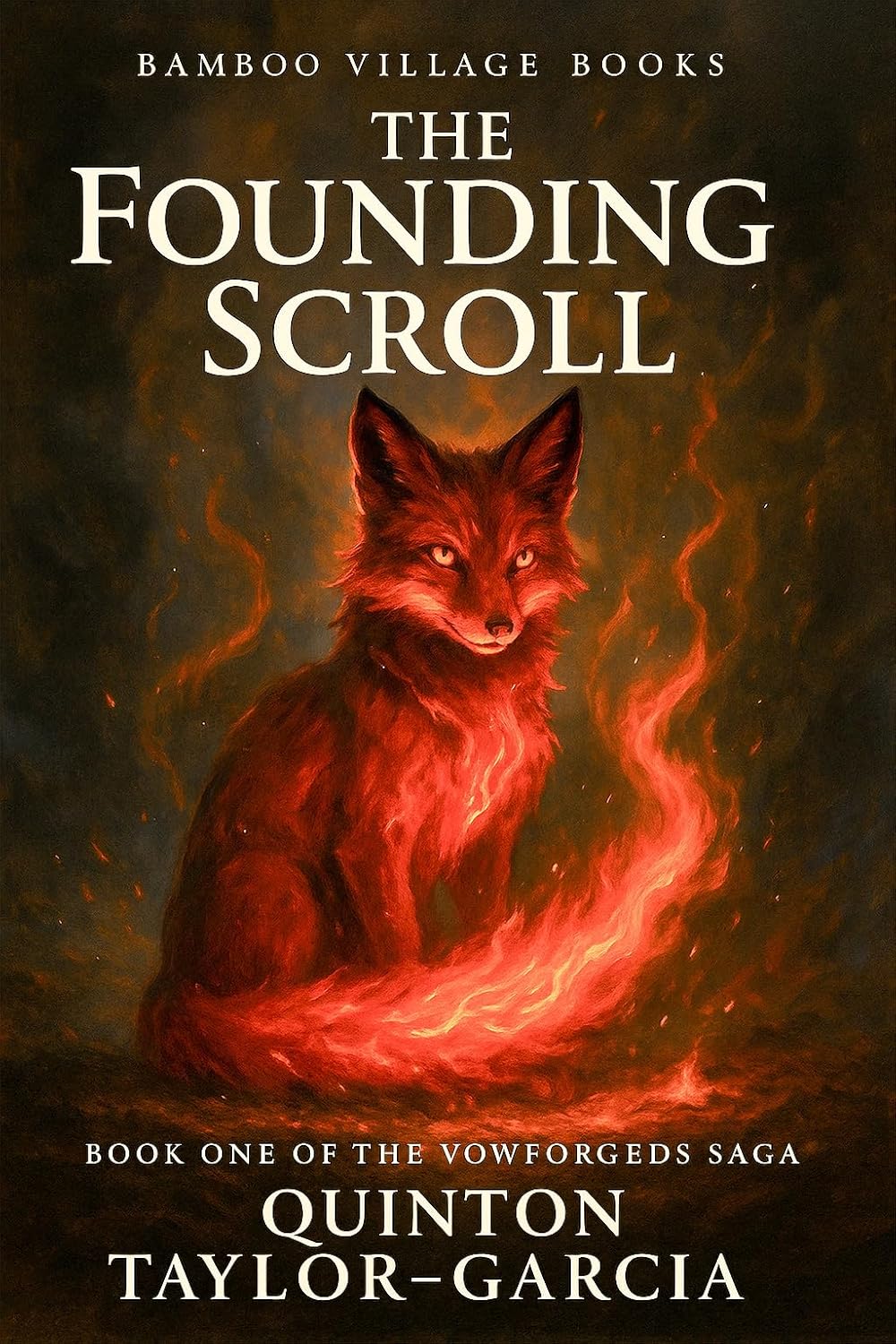
Seren starts as a ledger-trained merchant’s daughter in Ember City, practical, tired of being small, and then stumbles into a document that refuses to stay “just paper”: a cold, rune-shifting guild scroll labeled Vow of Accord / Twelfth Hand with the cheerful warning that “the price burns all.” When she touches it, she becomes Oathbound and accidentally-foundational, forging the beginnings of the Vowforged and learning that in this world, contracts aren’t metaphors, they’re leverage you can feel in your bones. The story escalates from street-level trade grit to guild warfare and road-ambush politics, culminating in a convoy betrayal where Ashmark turns the “collaboration” into bait for Dominion’s masked raiders and their glass-coin smoke. Seren answers by writing survival into the air itself, an enforced cohesion oath that frightens even her allies, while, elsewhere, Corvus watches the board with the calm appetite of someone who enjoys the word due.
What surprised me most was how physical the “bureaucratic magic” feels. The book makes ink behave like weather: pressure, heat, the metallic taste of consequences. When Seren throws authority around, it isn’t a triumphant sparkle-burst; it’s more like biting down on a live wire and deciding you’ll smile through it anyway. I loved that tonal choice. It keeps the power fantasy from floating away on easy hero fumes, every oath reads as a bruise you chose on purpose. And the guild dynamics scratch that MMO itch in a way that’s less “stats screen” and more “social aggro”: alliances form because they’re useful, then turn because usefulness rots. Even the quiet moments after violence land, smoke ribbons, stunned survivors, someone counting heads twice because grief can’t do arithmetic yet.
The lore is deep and detailed, with systems, factions, titles, and mechanics. I kept coming back because Seren’s arc is thorny in a satisfying way: she doesn’t merely “become strong,” she becomes responsible in public, which is a rarer, harder transformation. Her relationships sharpen that conflict: Ronan’s steadiness, Lyra’s prickly competence, Mira’s strange gentleness, Kael’s smile that always seems to be hiding a second smile. And when Seren etches that “Unity Oath” into the night, half rescue, half brand, I felt the moral temperature spike: leadership as shelter, leadership as subtle captivity, the same blade held two ways.
If your shelves are filled with epic fantasy, progression fantasy, LitRPG-adjacent guild politics, hard-magic oaths, found-family under siege, and grim road adventure, you’re the target audience for this book, especially if you like your victories paid in soreness rather than confetti. In spirit, it reminded me of Mistborn-era Brandon Sanderson: the same pleasure of rules-driven power, but with more mud under the fingernails and more menace in the fine print. If you want a fantasy where promises are not spoken but forged, and where the bill is always on its way, this one delivers. The Founding Scroll is a story where every vow is a weapon, and every victory leaves a mark.
Pages: 484 | ASIN : B0GFQBWZQQ



