Blog Archives
Can We Look Directly at It, Just for a Second?


Rain Corbyn’s Can We Look Directly at It, Just for a Second? is a queer horror novella with an unusually personal view of the apocalypse. Its narrator retreats to the Catskills, convinced the world’s final day has arrived, carrying a lifetime of resentment, desire, shame, and unfinished business. Climate fiction and body horror meet in a landscape where the ocean has swallowed familiar boundaries and the natural world keeps finding strange ways to grow. There’s a wonderfully uncomfortable intimacy to the setup: planetary catastrophe shares space with awkward social encounters and private grievances. Corbyn makes that collision funny, ugly, and emotionally convincing. Even with the world collapsing, being a person remains an exhausting job.
The narrator’s voice gives the book much of its force. They’re caustic, horny, frightened, perceptive, and capable of turning almost any interaction into a prosecution of themselves or somebody else. You can laugh at a petty complaint and then recognize the hurt beneath it a sentence later. Corbyn is especially sharp about the ways therapeutic language, political righteousness, and online habits can shape relationships, including how the vocabulary of care becomes useful to people seeking control. The narrator participates in these habits, too, and their awareness of that keeps the satire interesting. Gender dysphoria, neurodivergence, and the wish to be desired are woven into the narration’s smallest decisions. Who’s looking? What do they see? How much explanation will make being seen feel safe?
As ecological horror, the novella gets under your skin through texture. Algae, insects, fungus, salt water, and damaged flesh make its world feel damp, hungry, and alarmingly alive. The body horror is graphic and sexually explicit, with disgust, attraction, and tenderness often occupying the same image. Corbyn’s comparisons come quickly, drawing on horror movies, internet slang, childhood memories, and ordinary consumer junk. That density can be tiring, particularly when several images compete for attention in a single passage. It also suits a narrator who compulsively translates experience into language, then worries about how that language will be received. The prose’s excess becomes part of the character’s struggle. Fans of weird fiction will find plenty to chew on in the book’s unstable relationship between human bodies and the ecosystems they inhabit.
I appreciated the book’s attention to the hunger for permission: permission to change, to want things, to feel anger, to stop performing goodness for an imagined audience. Its literary horror grows out of that hunger as much as it does from its grotesque imagery. Beneath the jokes and fury is a bruised longing for affection that doesn’t require a flawless explanation of the self. Corbyn keeps that longing complicated, giving the narrator enough vanity and spite to make their vulnerability feel earned. If you enjoy queer horror and experimental climate fiction with a fiercely opinionated voice, this novella offers a concentrated, demanding read. It’s at its best when a revolting image and a painfully familiar feeling arrive together, making you wince for two reasons at once.
Pages: 120 | ISBN : 9781590217900
The Relic


Lloyd A. Meeker’s The Relic is a spiritual fantasy, a queer love story, and a fable about belonging all at once. It begins with Brother Magnus, a young monk whose desperate need to belong has made him vulnerable to people who take advantage of his trust. After the corrupt Father Xavier falsely accuses him of sexual misconduct, Magnus is sent on what amounts to a suicide mission: carry the supposedly sacred Mantle of San Sarvras across the desert to General Tun and return with Brother Calmas. The complication is that the relic is already known to be a fake. Yet while the object may have a fraudulent history, its power turns out to be very real. It speaks to Magnus, saves his life, and slowly leads him away from the rigid world he knows. What starts as a pilgrimage becomes a much more personal journey about deciding who he wants to be when nobody else gets to define him.
The strongest part of the novel is Magnus’s transformation into Mateo and the relationships that grow around his new identity. Zoya, the witch who gives him a home, challenges almost everything he has been taught about goodness, faith, work, and nature. Her nephew Nuri brings something different: music, humor, sexuality, imagination, and eventually love. Mateo’s romance with Nuri gives the book much of its emotional warmth because it directly answers the loneliness established in the opening chapters. Mateo has spent most of his life believing belonging is something he has to earn through labor, obedience, or sex. With Zoya and Nuri, he begins to understand belonging as connection instead of payment. Even his magical transformation follows that idea. The relic literally becomes part of his body, and by the end, Mateo chooses to become a tree beside Nuri. It’s a wonderfully strange conclusion, but it fits the novel’s belief that love can change the form of a life without erasing its meaning.
Meeker’s magic is especially interesting because it depends on language, intention, and agreement. Mateo can heal Nuri’s crushed hand, force a habitual liar to tell the truth, protect people from harm, and reshape lives through statements that become magical contracts. That makes words consequential in a way that suits a story so concerned with promises, lies, and trust. Some of the most memorable scenes come from Mateo slowly discovering that power and then realizing power itself isn’t wisdom. The novel deliberately circles its central lessons several times, especially the distinction between love and approval, the danger of confusing punishment with justice, and the importance of accepting the world before trying to act within it. That repetition gives the story a meditative, almost devotional rhythm. At times it slows the plot, but it also makes Mateo’s development feel like a practice. He has to keep learning the same truths at deeper levels.
In that respect, The Relic reminded me most of Paulo Coelho’s The Alchemist. Both books send an earnest young man across a desert and turn a physical journey into an education in how to listen to the world. Both treat nature as alive with meaning, and both allow signs that might initially seem like coincidence or superstition to become part of a larger spiritual language. The difference is where the two journeys lead. Santiago in The Alchemist learns to pursue his Personal Legend, while Mateo gradually becomes less interested in an individual destiny and more interested in relationship, community, and what Nuri calls “the song.” Meeker’s version of spiritual awakening is more bodily and communal. Love, sex, farming, animals, trees, sickness, death, and magic all belong to the same living system. Mateo doesn’t discover himself by separating from the world. He discovers himself by becoming more entangled with it.
What stayed with me most about The Relic is its sincerity. Meeker takes some genuinely unusual ideas, including a talking relic, magical bargains, lovers becoming intertwined trees, and a former monk learning to hear the music of the natural world, and treats them with complete emotional seriousness. The result is a novel that feels tender even when it deals with exploitation, religious corruption, violence, and loss. Mateo’s final choice works because the whole story has been moving toward it. The epilogue extends that idea beautifully, turning the two trees into a source of healing for others while the larger world continues with all its ordinary messiness. The Relic is a story about learning that happiness isn’t control over what happens to us.
Pages: 267 | ASIN : B0GT5183RL

Amongst Embers and Ashes

Amongst Embers and Ashes tells the story of Scarlet, a girl raised on an isolated farm who learns she is a pyro elemental. Her quiet life collapses as secrets spill open. She is taken from the only home she has known and thrown into a kingdom where politics, power, and fear swirl around her. The book follows her as she meets the other elementals, discovers the truth behind her past, and feels the weight of a world that both wants and fears her. The tale blends magic, trauma, and coming-of-age moments into a journey that keeps tilting between warm hope and sharp dread.
I felt swept up right away. The writing has this fast pulse to it, almost like Scarlet’s own nerves buzzing under the surface. Scenes crackle with emotion. Little moments hit hard, such as Scarlet lighting her fingertips so she can see in the dark, or the tight, bitter silence that fills the farmhouse during dinner. The dialogue feels natural and messy. People talk over each other. They misunderstand each other. I found that refreshing. The story leans into the confusion of being young and scared, and the author does not tidy it up. Sometimes Scarlet’s thoughts spiral in a way that feels raw and very emotional.
I liked the theme of being labeled dangerous before you even understand who you are. Scarlet’s guilt sits like a stone in her chest, and I could feel its weight while reading. The contrast between her rough farm life and the polished castle made me think about how power works and who gets to feel safe. I also enjoyed the mix of elemental magic with political tension. It gave the world a lot of texture, even in quiet scenes. The pacing is fast, and the energy of the story pulled me along, and I found myself caring more about the characters than the neatness of the plot. That says a lot about how well the emotional core is written.
This book would be great for readers who love character-driven fantasy, especially those who enjoy stories about teens pushed into roles they never asked for. If you like magic mixed with messy feelings, or if you want a tale that hits close to the heart, then Amongst Embers and Ashes is an easy recommendation.
Pages: 362 | ASIN : B0F2ZFDN9W

Understanding and Solidarity

Well, Mama, This is It (it’s Now Or Never) is part confession, part storytelling, and part letter-writing, all stitched together with raw honesty and a strong emotional pulse with reflections on love, faith, and the messy business of being human. Why was this an important book for you to write?
This book was important for me to write because it allowed me to explore different characters and express what I had imagined. It was a way for me to connect with readers who may be going through similar struggles and offer them a sense of understanding and solidarity. This book is a testament to the power of vulnerability and the beauty of embracing our imperfections.
What were some ideas that were important for you to share in this book?
There were key ideas that I found important to share. Some of these ideas include the importance of self-love, unapologetically being yourself, and the value of perseverance in the face of challenges.
How has writing this book changed you as a writer, or what did you learn about yourself through writing it?
Writing this book has changed me as a writer, and it’s all thanks to amazing readers like yourself and everyone who has been a part of this journey. I have learned that I am capable of overcoming challenges and self-doubt to produce a work that I am truly proud of. This experience has not only improved my writing skills but also boosted my confidence in my abilities as a storyteller. Writing this book has shown me that with dedication and passion, I can achieve my writing goals and continue to grow as an author. Once again, thanks to everyone!
What do you hope is one thing readers take away from Well, Mama, This is It (it’s Now Or Never)?
I hope that readers take away a sense of empowerment and inspiration.
Author Links: GoodReads | Snapchat
We don’t have to fight
We do not have to cry for the rest of our lives
Cause Boys
Girls
And Everyone we know
Seems to drift away just a little bit
That’s life”
Step into a world where love knows no bounds and equality reigns supreme. In this gripping tale, a group of men and women defy the odds and fight for their right to be themselves. As they navigate the twists and turns of their lives, they discover that the greatest strength comes from within.
Meanwhile, teenagers grapple with their own struggles, trying to find their place in a world that often seems to be against them. But as the characters’ stories intertwine, they learn the power of love, the importance of equality, and the beauty of being true to oneself. This is a story that will inspire young women and men in our community to embrace their uniqueness and strive for greatness. So come along on this unforgettable journey of self-discovery and empowerment, and discover the power of love and equality in a world that often seems to be lacking in both.
Well, Mama, This is It (it’s Now Or Never)
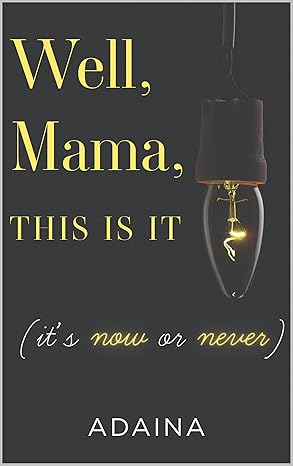
Well, Mama, This is It (it’s Now Or Never) is unlike anything I’ve read before. It’s part confession, part storytelling, and part letter-writing, all stitched together with raw honesty and a strong emotional pulse. The book moves between voices, sometimes it’s a teenage boy writing to his grandmother, other times it’s a young woman chasing a dream life, or even a haunting personal tale of loss and survival. At its heart, though, the book is a letter to her mother, a brave and vulnerable coming-out story wrapped in poetry, reflections on love, faith, and the messy business of being human.
In “A Story of a Friend of a Friend,” when Adaina shares her journey from being a teacher to a stripper, the descriptions are almost cinematic. She writes about smoky eye makeup, French pedicures, and stepping into the strip club as if it were a Hollywood set. It’s dazzling, but then the tone flips as she describes the loneliness and danger behind the glamour, and suddenly I was pulled from the surface glitter into the heavy silence of regret. That swing between fantasy and reality is something the book does again and again, and it made me feel the same kind of emotional whiplash she must have lived through.
I also loved the way she mingles imagination with truth. Take “Secret Agent (Voodoo Princess),” where Rebecca Tanon, a demon-child-turned-undercover-agent, blurs the line between folklore and personal reflection. At first, I thought it was a sharp left turn into fiction, but it clicked for me as a metaphor for how heavy family expectations and inherited trauma can feel like being born with a mission you never asked for. The story gave me chills, not just because of the supernatural edge, but because of what it revealed about how powerless a child can feel in the hands of adults.
In “To My Newest Pen Pal, Jant Leaps,” Adaina writes a heartfelt letter that evolves into a romantic confession, blending vulnerability with defiance against judgment. In “Sexual Orientation,” she reflects on faith, family, and identity, ultimately affirming that love is sacred regardless of gender. She weaves in verses about love, love with a woman who makes her feel free, love that pulls her away from Hennessy and Ecstasy, love that feels holy even when the world insists it’s wrong. There’s vulnerability in her admission, “I never thought I could fall in love with Eve’s gender,” but also defiance when she insists, “Yes, I am a Christian, but my religion is kindness.” That blend of fear, yearning, and courageous self-acceptance struck me deeply. It’s not polished in the way mainstream memoirs often are, but that’s what makes it powerful. It feels like a real letter, one that trembles with truth.
In the end, I walked away from this book feeling like I had just sat across from someone who didn’t hold anything back. It’s raw. It’s uneven at times. But it’s alive with feeling, and that’s rare. I’d recommend this book to anyone who craves honesty in writing, teens struggling with self-expression, readers curious about queer coming-of-age stories, or anyone who wants to feel less alone in their own mess of faith, love, and identity. It’s not a book for someone looking for clean lines or tidy endings, but if you’re okay with sitting in the chaos of someone else’s truth, then Well, Mama, This is It (it’s Now Or Never) will move you the way it moved me.
Pages: 51 | ASIN : B0DT7FZS7Q
Compassion and Vulnerability
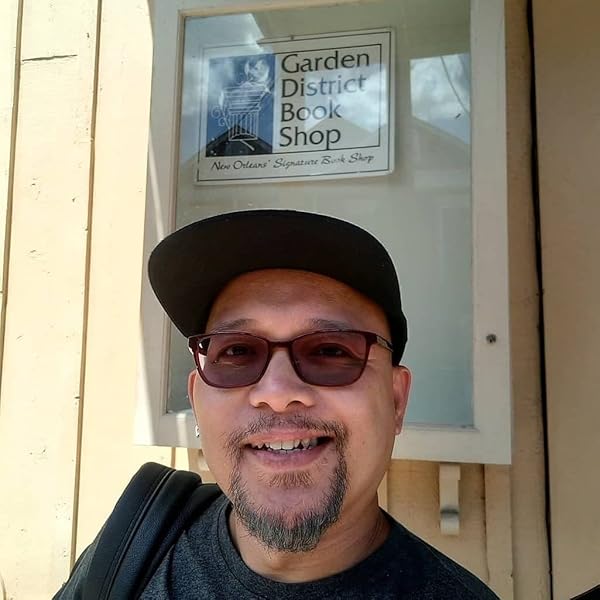
Dark District Primer: Duology on the Lore and Lure of the Dark District combines two novellas, Sojourn and Take Me Now, weaving personal identity with fantasy, Filipino folklore with urban life, and spiritual questions with surreal encounters. What was the inspiration for these stories?
For Sojourn, I wrote it in a time of grief when my father passed away. And so most of the things that I wanted to say and wanted to do were all poured into that novella as well as the emotions involved in such a given circumstance. Writing it was both an affirmation for me in being the son that I am and the son that he wanted. He was the first one to acknowledge my writing growing up. Perhaps he already knew something even before I knew who I was.
For Take Me Now, I wanted to incorporate the world that I have established and expound on it and give it more spice and relationship-driven. While Sojourn was written first, it was Take Me Now that was first published and I had to go back and tweak Sojourn in order that it would mirror the world that I wanted to establish.
What are some things that you find interesting about the human condition that you think make for great fiction?
I love it when we show our humanity both through compassion and vulnerability. Compassion when we are able to put ourselves in the shoes of others to either feel their weakness in order to give them a little bit of our strength so that we help sustain them and what they need to do and vulnerability when it is our time to be on the receiving end of the help and empathy we give to others.
What were some themes that were important for you to explore in this book?
As my father’s passing was the catalyst for me to be more introspective and re-examine my writing, it was both my feelings of grief, honesty and self-identity that I wanted to explore more in Sojourn while framing it within a created universe that has touchpoints in Philippine Folklore. In any relationship, being true and comfortable with oneself is one of the pillars in making it work. Lose that or postpone that form of self-affirmation then the foundation to establishing a relationship with another falls apart.
What is the next book that you are working on, and when can your fans expect it to be out?
My next book is the next installment of the Tales from the Dark District series, entitled Take My Heart, and is being targeted for a FALL 2026 release. Along with that I shall also resume work on my New Adult series, which will also be set within the Dark District Universe.
Author Links: GoodReads | X | Instagram | Facebook | Website
By C.J. Edmunds
Welcome to the Dark District. A place where magic hides in plain sight, and desire leads you deeper into the unknown.
In this atmospheric duology by C.J. Edmunds, two queer protagonists are drawn into the same hidden world—but under very different circumstances.
🌀 In Sojourn, David Lansing, a half-Filipino call center trainer, suddenly begins seeing visions and a mysterious spirit guide. Haunted by creatures from Philippine folklore—Tikbalang, Aswang, and the White Lady of Balete Drive—he embarks on a magical and existential journey that becomes one of purpose, ancestry, and an invitation to a place where people like him finally belong.
✅ Recommended for ages 16+ due to complex parental and identity themes and supernatural tension.
🔥 In Take Me Now, Alvin is tired of the wrong men, wrong choices, and wrong timing. Until the Dark District opens its doors and gives him more than he bargained for. Steamy encounters, eerie magic, and dark truths collide in this sensual tale of love and self-worth.
⚠️ Recommended for ages 17+ for sensual scenes and mature emotional content.
Whether you crave introspection or intensity, Dark District Primer invites you to step through the veil—and explore what’s waiting on the other side.
This lush and haunting collection explores:
Filipino urban legends reimagined
Queer identity and transformation
Steamy encounters and emotional awakenings
A universe where fantasy, myth, and reality blur
Welcome to the Dark District. You might not want to leave.
Perfect for fans of Neil Gaiman’s The Sandman, Philippine mythology, and magical realism with queer narratives.
📘 Includes the complete novellas “Sojourn” and “Take Me Now.”
The Dark District Primer: Duology on the Lore and Lure of the Dark District

C.J. Edmunds’ Dark District Primer is a strange, soulful, and genre-bending exploration of myth, memory, and magic rooted in the Philippines. It combines two novellas, Sojourn and Take Me Now, weaving personal identity with fantasy, Filipino folklore with urban life, and spiritual questions with surreal encounters. The main narrator, David Lansing, acts as our curious guide, relaying his disorienting journey through magical encounters, visions of cultural archetypes, and confrontations with hidden truths. These experiences are framed through a personal, at times confessional, lens as he is summoned by a supernatural Council to explain his strange awakening in the Dark District.
Reading this felt like peeling through layers of memory, myth, and grief. The writing style is introspective and poetic at times, with bursts of long, flowing paragraphs that spill over with emotion and insight. Edmunds has a real knack for setting scenes that feel alive. The haunting streets of Manila, the hidden halls of the Council, even the surreal blankness of the otherworldly realms. At its heart, though, what struck me most was how much Dark District Primer is about identity, especially queer identity, cultural identity, and spiritual reckoning. I could feel the author writing through pain and purpose, and while some parts meandered or repeated themselves, the raw honesty kept me hooked. The lore is fascinating, especially the blending of Filipino myths like the Tikbalang and Manananggal with modern, urban queer life.
The ending of Take Me Now leaves just enough unanswered that I found myself eager to dive into the next chapter of the story. That brings me to Take My Hand, the upcoming installment teased at the end of the book. The preview promises bigger stakes and deeper dives into the lore. Take My Hand promises to have more world-building and capitalize on the lore in the introspective tone that I enjoyed.
There were times when whole pages spiraled into inner monologue, and the pacing slowed in the second half of Sojourn, where narrative momentum gave way to philosophical reflection. Edmunds isn’t just telling a story, he’s sharing something personal and vulnerable. You can feel the care and love he has for the lore, the community, and the craft.
I’d recommend this book to readers who want something different. If you like urban fantasy with depth, or if you’re curious about queer stories grounded in Southeast Asian myth, this will hit home. It’s not a quick read, but it rewards with a haunting and heartfelt experience. Especially for queer readers, Filipino readers, or anyone feeling caught between two worlds.
Pages: 298 | ASIN : B0FDGS86JT
A Fatal Affair

A Fatal Affair is a cozy mystery with a sharp, sly, character-rich story set in the sleepy town of Nyes Landing, where drama unfolds both on stage and off. The plot kicks off with Officer Callum Nowak dealing with a belligerent actor at a local tavern, and it snowballs into a tangled mess involving poisoned meatballs, backstabbing actors, an ambitious theater production, and one very chaotic opening night. As the small-town cops try to uncover what made a dozen townsfolk sick and nearly killed Oliver Crispin, the reader is treated to a fast-paced, often hilarious, and sometimes poignant whodunit.
From the very first chapter, I was thoroughly engaged. Callum emerges as a compelling narrator, direct, introspective, and burdened with a complex personal history that adds real depth to the narrative. From the opening barroom confrontation with the volatile Crispin, a character who consistently tests the boundaries of acceptable behavior, it’s clear this is no conventional detective story. Williams’s writing is sharp and kinetic, with brisk dialogue and a narrative pace that rarely lets up. Scenes unfold with a kind of controlled chaos, where tension builds only to erupt in the most unexpected ways, such as the unforgettable moment during the theater scene, when guests begin hallucinating and turning on each other in a frenzy of accusations. It’s outrageous, unpredictable, and thoroughly compelling.
Williams also handles the emotional undercurrents of the story with remarkable sensitivity. Callum’s relationships, particularly with his boyfriend, Demetrius, and his longtime friend, Annie, are portrayed with nuance and authenticity. His emotional distance and reluctance to fully embrace intimacy add a compelling layer to the central mystery. Moments like the tense camping discussion, the uneasy dinner with Demetrius and Annie, and the confrontation at the crime scene reveal a man grappling not only with external conflict but with internal scars that refuse to fade. This is as much a story of emotional survival as it is of uncovering the truth.
Some of the dialogue occasionally veers into melodramatic territory. Characters like Daphne, the self-styled diva, and her theatrical circle often feel as though they’ve stepped out of a reality television set, with moments of exaggerated flair that strain plausibility. Lines such as “They’re witches!” or Ernest Drucker’s over-the-top reactions can be both amusing and distracting. However, this heightened drama ultimately suits the tone of the novel. Nyes Landing is a town brimming with unresolved tensions, long-standing feuds, and relentless gossip, and it’s this very turbulence that fuels the narrative’s energy. Even the local goat farm is not without its share of theatrics.
A Fatal Affair is sharp-witted, queer-friendly, and packed with snappy dialogue and messy humans. If you’re into small-town mysteries with theater kids, found families, emotional baggage, and a touch of camp, this book’s for you. Fans of Only Murders in the Building, Knives Out, or even Gilmore Girls with body bags will feel right at home in Nyes Landing.
Pages: 286 | ASIN : B0F9X8ZZR1


