Blog Archives
One Last Question Before You Go: Why You Should Interview Your Parents
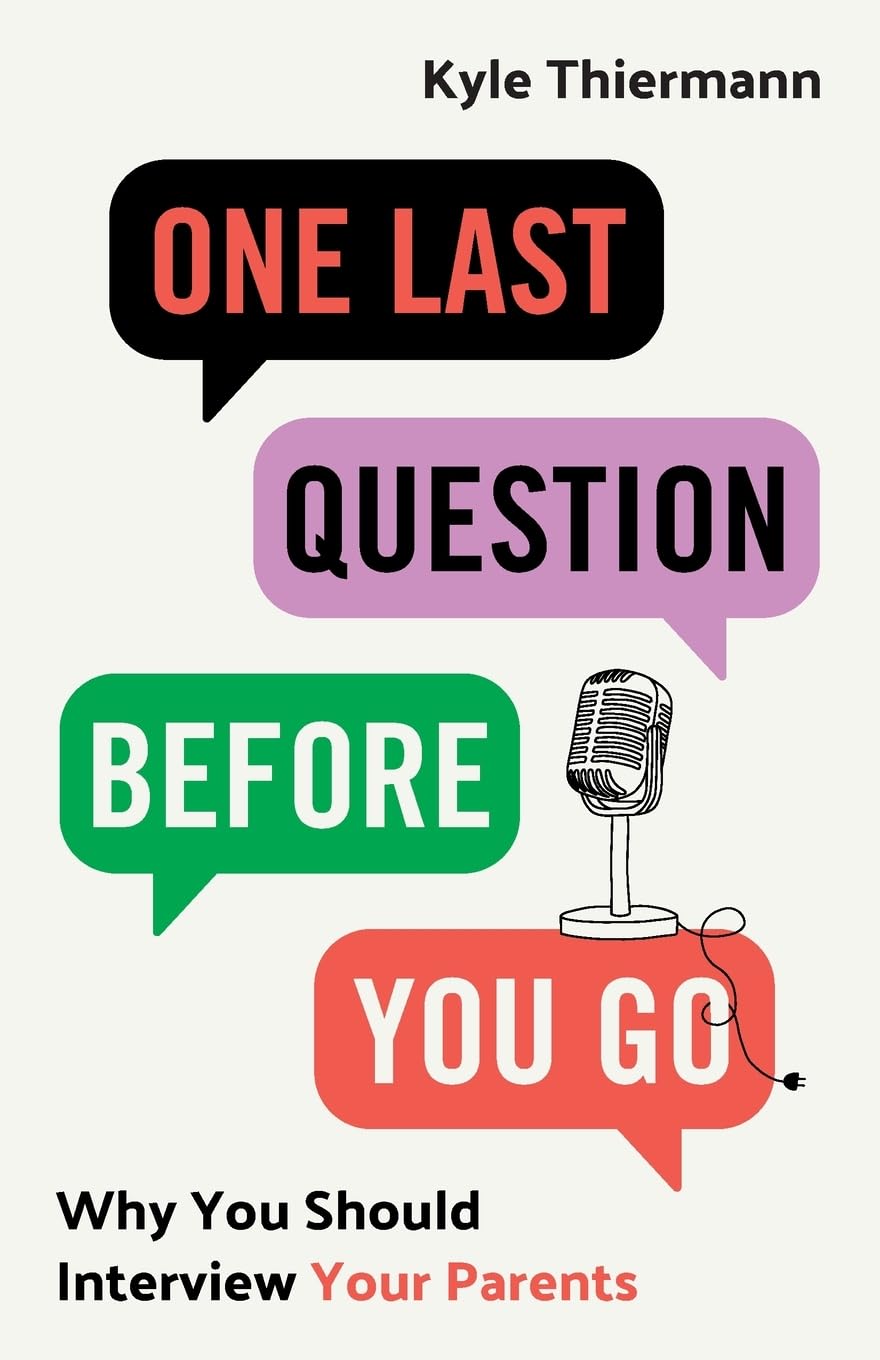

Kyle Thiermann’s One Last Question Before You Go is part memoir, part field guide for emotional courage. It begins as a practical project, recording conversations with his parents before it’s too late, but evolves into a moving exploration of love, misunderstanding, and reconciliation. Thiermann opens his life with remarkable honesty, describing a childhood shaped by idealism, tension, and unconventional choices. His storytelling blurs the line between instruction and confession, reminding readers that asking questions can be both a form of preservation and an act of healing.
Thiermann’s writing balances clarity and lyricism. He recounts moments from his youth in Santa Cruz with humor and unease: surf sessions laced with danger, family debates over truth and science, and a mother whose belief in conspiracy theories fractures their bond. When he writes, “Now when my mom and I look up at the same blue sky, she sees chemtrails, where I see clouds,” the simplicity of the line reveals something profound about distance and love. It’s this honesty, direct, unsentimental, but deeply felt, that gives the book its emotional weight.
His reflections on interviewing parents are both practical and philosophical. Thiermann treats listening as a skill that requires humility and patience. His advice to start with simple questions, to let silence breathe, feels genuine and attainable. He doesn’t posture as an expert but as someone learning in real time. When he describes forcing himself to write “bad questions” until something true appears, it captures the imperfect process of reaching toward another person.
The book’s rhythm is conversational yet purposeful. Thiermann alternates between intimate family vignettes and broader reflections on communication, mortality, and forgiveness. He resists the urge to offer neat resolutions, allowing discomfort and ambiguity to remain. That restraint makes his insights resonate more deeply.
One Last Question Before You Go manages to be both instructive and profoundly human. It’s a reminder that asking hard questions is not about control or closure, it’s about connection. This is a book for readers who value sincerity over polish, who want to bridge emotional gaps with their own parents, or who simply wish to understand their family stories before time takes them. Thoughtful, unguarded, and deeply affecting, Thiermann’s work lingers long after the final page.
Pages: 156 | ASIN : B0FR8JLM98

The Quest Home

Daniel C. Davis’s memoir is a deeply personal exploration of what it means to build and belong within a family. The book follows Davis’s journey from childhood reflections to marriage, fatherhood, and the emotional architecture of creating a true home. Told through intimate vignettes and lessons drawn from family, love, and loss, the story is both memoir and meditation. Each chapter feels like a room in a house, built with care, filled with lived experience, and connected by a common thread of love, faith, and self-discovery. It begins with Davis’s parents teaching him that a home is made through connection, continues through his partnership with his wife, Quinnyana, and culminates in the formation of their family and the profound lessons that come with it.
The writing is clean and heartfelt, full of small moments that hit hard because they’re real. I loved how Davis didn’t pretend to have it all figured out. He let his uncertainties live on the page. His stories about learning to listen to his wife, confronting fear, and realizing that home is something you create every day hit close to home. There’s a warmth to his voice that makes even the simplest moments, like losing tater tots or hearing a song in a car, feel loaded with meaning. The structure is steady, but the tone is conversational, which made the emotional turns land even harder. I found myself nodding, smiling, and sometimes tearing up at how familiar his lessons felt.
What stood out most to me was the humility in Davis’s storytelling. He never writes like he’s teaching a class on love or family. He writes like someone learning alongside you. His openness about vulnerability, grief, and the courage it takes to stay connected in a world that constantly pulls people apart is refreshing. Some passages made me pause, not because they were complex, but because they were so honest. The idea that home is not a place but a practice, a daily act of choosing connection, lingered with me long after I finished. There were moments where I wished he’d gone even deeper into certain conflicts or emotions, but maybe that restraint is part of what makes the book feel genuine. It’s not about drama; it’s about meaning.
I’d recommend The Quest Home to anyone who’s ever wondered what it really takes to build a life with someone. It’s perfect for couples, new parents, or anyone reflecting on family and legacy. The book is full of love and life lessons that feel earned rather than preached. Davis’s journey reminded me that home isn’t something you find once. It’s something you keep building, brick by brick, moment by moment, through connection, patience, and faith.
Pages: 127 | ASIN : B0FPPCB7C8

Blood Flow: A son’s 40-year journey to understand his father’s suicide


Larry Bograd’s Blood Flow is a raw, unfiltered memoir that stitches together decades of family trauma, personal ambition, health battles, and the relentless search for meaning. Starting with his heart surgery at age 53, eerily close to when his father died, Bograd flips back and forth through time, weaving stories of boyhood misadventures, a rocky writing career, and adult anxieties. It’s not a straight line; it’s a winding, messy journey through memories, many of them bittersweet, some of them laugh-out-loud funny, and others gut-wrenchingly sad.
One thing I really liked about Blood Flow was how unsparingly honest Bograd is about himself. He doesn’t polish the mirror. When he writes about dragging his broken post-surgery body across airports in “Canceled,” you can feel his pain and his stubbornness. I almost wanted to yell at the pages: “Larry, go home, man!” He talks about dragging his carry-on bag, stinking from a day’s worth of sweat and city grime, just to chase after the consulting career he had risked everything to build. It’s both hilarious and heartbreaking, and it made me really root for him, even when he made some obviously terrible choices. You don’t often see a memoirist so willing to look foolish, and it made him feel incredibly human.
Another thing that stuck with me was the way he tackled family history, especially the chapters where he digs into his father’s mysterious past and death. In “Bubbe Meises,” he interviews long-lost cousins Edna and Archie, piecing together the broken story of a man who was charming, brilliant, and ultimately crushed by depression. These scenes were deeply emotional, full of love but also full of pain. I teared up when Edna said, “Did he want to kill all of us? Because that’s what he did!” That moment hit like a gut punch. It made me think about how family stories are stitched together from grief and guilt just as much as from love.
That said, there were moments when the memoir became weighed down by its own melancholy. Certain sections, such as “Working in a Coal Mine, Going Down, Down, Down,” are particularly mired in introspection and financial anxiety. While the depth of personal struggle is understandable, I occasionally wished Bograd had broadened the perspective, offering a wider view beyond his internal battles. Nevertheless, even in the slower passages, his sharp humor and keen observations continued to offer compelling reasons to stay engaged.
By the end of Blood Flow, I felt like I had walked a long, hard road with Bograd, and weirdly, I didn’t feel sad. I felt grateful. Grateful for the honesty, for the messy way he told the truth, for the weird little triumphs tucked between all the losses. I would absolutely recommend this book to anyone who’s ever struggled with family legacy, creative dreams that don’t pan out the way you hope, or the sheer stubborn business of staying alive. If you like memoirs that are gritty, funny, tender, and sometimes a little heartbreaking, Blood Flow will absolutely be worth your time.
Pages; 264 | ASIN : B0F1TZYZ3R
Letting Go of Overthinking and Anxiety in Relationships: 57 Easy Techniques to Stop Overanalyzing, Rewire Your Anxious Thoughts and Build Trust in Your Relationship

Letting Go of Overthinking and Anxiety in Relationships is a compassionate and clear-eyed guide that gently walks readers through the emotional maze of anxiety and overthinking in romantic relationships. With 57 practical techniques, the book aims to unravel the tight knots that overanalysis and insecurity can tie between partners. It balances clinical insight with real-life advice, focusing on emotional awareness, cognitive reframing, and communication strategies that are not only actionable but empathetic.
I found myself moved by how much this book “gets it.” The author speaks to the experience of lying awake at night, spinning in silent spirals of doubt and fear, and validates those feelings without judgment. What struck me most was the simplicity of the tools—many are things you can do right away, without therapy sessions or fancy journals. In Chapter 1, the visualization script of a secure relationship felt like an emotional balm. I paused to do it myself. The imagined warmth, the calm space, the supportive presence of a partner—it was powerful. Later chapters dig even deeper. The section on “Defensive Awareness Check-Ins” offered one of the most refreshingly honest approaches to managing conflict I’ve read. It wasn’t about blame; it was about pausing and choosing empathy over ego.
Chapter 7, Nurturing a Resilient Mindset for Long-Term Relationship Success, is one of the book’s most empowering and quietly motivating chapters. It shifts the focus from fixing anxiety in the moment to building lasting emotional strength that can weather the ups and downs of love. The author emphasizes that resilience in relationships isn’t about being unaffected by conflict—it’s about bouncing back with understanding, empathy, and commitment. What resonated with me most was the idea that resilience is something you build, not something you’re born with. Techniques like setting shared goals, reflecting on past victories as a couple, and practicing emotional regulation in stressful times are all presented as realistic, do-able practices.
I’d absolutely recommend this book to anyone who’s ever felt emotionally hijacked by their own thoughts in a relationship. Whether you’re newly dating or in a long-term partnership, this book has value. It’s especially helpful for folks navigating anxious attachment, or for partners who want to better understand each other’s triggers and emotional patterns. It’s the kind of book you dog-ear, return to, and maybe even read out loud together on a quiet Sunday night.
Pages: 168 | ASIN : B0DTL5VB7Z
So Close, Yet So Far Away

Finding Max is a memoir detailing your relentless decades-long search for your father’s birth family, uncovering hidden truths, confronting painful secrets, and redefining the meaning of family along the way. Why was this an important book for you to write?
After a couple of deaths in the family, only a few months apart, I felt dread and urgency to tell the story of Finding Max. I had wanted to tell the story before, but I was putting it off until “I had more time in life.” Unfortunately, the deaths of those close family members made me realize that time may not be my friend, and I’d better do this while it’s fresh and raw.
What was the most surprising discovery you made during your search for your father’s birth family?
There are so many actually. Every discovery was something I wasn’t necessarily expecting. But I think the most surprising thing was the connection to the birth father that was absolutely never expected, so close, yet so far away.
If you could go back and give yourself one piece of advice at the start of your search, what would it be?
One piece of advice is tough. Throughout my book, I give reflections on lessons learned, and there are so many. But if I had to go back and give one, I would tell myself to spend more time with my dad’s birth family after I’d found them, visit them more often, and take vacations with them, because time is stolen from you and you never know how much time you really have.
How has this journey changed your perspective on identity and what it means to be “family”?
Family is not something you’re born into, it’s something you make, and not necessarily by blood. You’re not bound by birthright.
Author Links: GoodReads | Facebook | Website | Amazon
As a teen, Jennifer Wallig learned that her father was adopted, turning what she thought she knew about her family history—and identity—upside down. Her life had been turbulent as the child of divorced parents inundated with their own struggles. These revelations changed everything.
In Finding Max, Jennifer shares her journey to find her father’s birth family, uncovering surprising secrets and unsettling lies. This is the inspirational story of a daughter devoted to her beloved father, a man burdened with PTSD and addiction who never felt fully accepted by his adopted family. It’s the story of unwavering determination to uncover the truth and life-affirming joy found in unexpected places. Raw, vulnerable, and thought-provoking, Finding Max is a must-read memoir for genealogists, ancestry enthusiasts, and anyone yearning to rediscover the power of family.
Upward Mobility

In This Is How We Heal from Painful Childhoods, you provide readers with a guide for dealing with childhood traumas that leave an impact far into adulthood. Why was this an important book for you to write?
Throughout the doctoral program for my PhD in clinical psychology, I searched for a comprehensive program to address the many complex issues present in family environments that allowed for repeated trauma and dysfunction. While I learned many fantastic therapeutic approaches to treating trauma, I found that they addressed several key parts of the trauma picture while ignoring other critical components. And so I set out to create a more complete list of variables, along with solutions and guidance to address each variable. And it only took me 14 years to complete!
What is a common misconception you feel people have about growing up with a dysfunctional family dynamic?
So many young adults believe that all they have to do is get free of their dysfunctional family by getting a solid job and their own independent place to live, which usually works for about a decade until their late 20’s and early 30’s when the less obvious (but very damaging) lingering habits and unhealthy thinking prevent personal thriving and happiness. It is not until they learn about self-sabotaging cycles, interpersonal control dynamics, and other natural consequences of the dysfunctional family dynamic that these survivors are able to truly break free from their family’s trauma history.
Can you share with us a little about the research required to put your book together?
First of all, for many years I have directly served clients struggling with complex post-traumatic stress disorder (C-PTSD), like at the National Center for PTSD at the Veterans Affairs Palo Alto Healthcare System (amongst other places) where I studied and worked for 4 years in graduate school. Secondly, through continuing education programs, I purposefully learned many of the empirically validated therapies for treating trauma (EMDR, biofeedback, mindfulness, ACT, DBT, etc.). Third, by 2015, I had created my curriculum that included 13 variables that I turned into ‘rules’ that were easier for my clients to memorize and integrate into their lives. By 2017, the list had grown to 20 rules. By 2020, the 20 rules curriculum was highly refined and had successfully helped my clients and me address their family dysfunction in a comprehensive and detailed fashion. It was time to put the curriculum into book format!
What is one thing you hope readers can take away from This Is How We Heal from Painful Childhoods?
The lifestyle of upward mobility!! There is no one technique, one concept or skill, or one action that will heal a survivor and prepare them for a healthy, stable, happy life with their own successful relationships and family. So, much like the lifestyle of the martial artist, thriving survivors of childhood struggles have adopted a lifestyle of self-education, training, and self-empowerment that comes with tremendous challenges and victories throughout their lives. They just keep learning in their therapeutic activities–year after year–the many skills and insights that enable them to successfully handle life’s many challenges, as well as pass on their hard-learned education to the next generation!
Author Links: GoodReads | Facebook | Website 1 | Website 2
During prolonged periods of chronic stress, family traumas, or dysfunctional family dynamics, your young brain likely created deeply ingrained physical and mental habits to help you survive. Unfortunately, these habits and core beliefs work against your adult life and relationship goals.
Even if you did not directly experience childhood abuse or neglect, you have likely felt the harmful effects of intergenerational (generational) trauma from your family, inherited as genetic issues or passed along through skills deficits and dysfunctional relationships. When these ancestral issues go unaddressed, we hand them down to the next generation. Natural responses to childhood stress can include:Chronic anxiety symptoms
Unhealthy, chaotic, or toxic relationships
Survival-based thinking (short-term, defensive, distrusting)
Personal or family substance abuse (or addictions like gambling, work, porn)
Unstable work life
These perfectly normal reactions to a painful childhood do not automatically go away when you grow up! Recovery from such childhood experiences is challenging but quite possible when motivated survivors utilize self-education, therapy, and skills building to empower themselves.
This book presents 20 key concepts for comprehensively thriving past your stressful childhood. While many books focus on two to three of these issues in depth, they typically leave out entire concepts critical to beast-mode thriving! This book offers guidelines for you to develop yourself as an individual before moving on to enhancing your interpersonal functioning. Each chapter explains key concepts before offering solutions with realistic healing exercises to develop healthy habits that will help you heal and ultimately thrive! Here are just a few of the 20 rules:Trauma lies are just that…LIES
We must slow down to speed up
Practice treating yourself in a self-loving and self-respecting fashion
We are responsible for the decisions that we are aware of
It’s us against trauma world
This encouraging and reality-based guide was authored by Ernest Ellender, PhD, who has worked directly with trauma survivors from all walks of life since 1995. He combined insights from his clinical psychology doctorate education and career with training methods from his martial arts career (Jiu-jitsu black belt instructor) to create this comprehensive and effective curriculum for those on a healing journey toward emotional wellbeing.
Clients benefiting from this curriculum have included those struggling with mental health instability; those in codependent and dysfunctional relationships; single parents wanting to do better for their children; divorced parents struggling with healthy co-parenting; clients diagnosed with C-PTSD (complex post-traumatic stress disorder), ADHD, bipolar disorder, major depression, or dissociative disorders; clients whose prior therapists were poorly trained in trauma counseling and cptsd treatments; and parents seeking parenting tips to strengthen their family to prevent or minimize the impact of future traumas.
Following the guidelines of this book will lead to…More control, stability, and self-esteem
A daily life free of toxic shame!
Empathic and mature self-care and coping skills
Advanced self-advocacy and communication skills
Healthier, mutually supportive, and deeply engaged relationships when desired
The ability to articulate, set, and enforce healthier boundaries with both loved ones and toxic individuals
Positive parenting that fosters healthy families
A healthy lifestyle of healing and pursuit of long-term goals
Read less
This Is How We Heal from Painful Childhoods: A Practical Guide for Healing Past Intergenerational Stress and Trauma
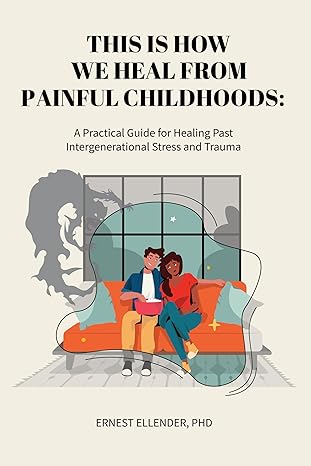
In This is How We Heal from Painful Childhoods: A Practical Guide for Healing Past Intergenerational Stress and Trauma, Ernest Ellender delves into the profound impact of childhood experiences on our adult lives. It’s a well-established notion that early childhood shapes our character and drives us through life. However, the journey is rarely without its challenges, and many of us carry the weight of childhood trauma into adulthood. Ellender’s book offers an insightful exploration of this trauma, particularly transgenerational trauma, and provides practical examples for beginning the healing journey.
Ellender emphasizes that transgenerational trauma doesn’t always stem from violence or horrific events; rather, it often arises from dysfunctional family dynamics that persist through generations. He asserts that now is the time to heal and grow from these inherited mistakes. The book is structured around 20 key points, or “rules,” designed to help readers overcome childhood trauma and live free from behaviors learned as self-protection mechanisms in childhood. One of the most compelling concepts in the book is the idea that “We must slow down to speed up.” This rule centers on the necessity of introspection. In our fast-paced lives, trauma doesn’t simply disappear; it requires deliberate and sustained effort to address and heal. To become stronger individuals, both for ourselves and those around us, we must take the time to engage in thorough self-work, allowing us to heal from our wounded pasts.
What sets Ellender’s work apart is its accessibility. Despite his academic background, the book is written in a relatable and comprehensible tone. It feels like a conversation with a trusted friend or a therapy session, making it easy for readers to connect with and learn from the material.
As someone with a background in psychology, I cannot overstate the importance of this book. Ellender’s career and expertise have culminated in a work that is invaluable for professionals in the psychology and mental health fields, as well as anyone struggling with past trauma or simply curious to learn more about the healing process. This is How We Heal from Painful Childhoods is a must-read for anyone on the journey to self-discovery and healing.
Pages: 367 | ASIN : B0CW1MJ1NH
You’re on Fire, It’s Fine: Effective Strategies for Parenting Teens with Self-Destructive Behaviors

In You’re on Fire, It’s Fine, Katie K. May tackles one of the most challenging aspects of parenting: dealing with teens who exhibit self-destructive behaviors. This book stands out with its candid exploration of the author’s personal experiences and her practical guidance for parents. May leverages her background in clinical counseling to offer insightful strategies to support teenagers through their emotional turmoil, making it a compelling read for parents feeling overwhelmed by their teens’ behavior.
May’s writing is deeply engaging and relatable, making the book not just a manual but a narrative with which many can connect. She opens with a vivid recounting of her own struggles, such as the turmoil following her parents’ divorce and her subsequent battles with self-harm and depression. These personal anecdotes ground the book in reality, making it clear that May’s advice stems from lived experience as much as from professional expertise. Her story about discovering a purpose beyond her pain when she became pregnant at twenty-six is both heart-wrenching and uplifting, providing a powerful backdrop to her professional insights.
One of the book’s strongest aspects is its emphasis on empathy and understanding. May’s chapters on “Drop the Judgments That Fuel the Emotional Fire” and “Extinguish the Flames with Validation” underscore the importance of dropping preconceived notions and validating a teen’s feelings. Her discussion on how judgmental environments exacerbate emotional issues offers a profound lesson on the impact of a supportive versus a critical home atmosphere. This empathetic approach is therapeutic and fosters a more harmonious parent-teen relationship. This straightforwardness makes her strategies accessible and actionable, providing a starting point for parents who might be at their wits’ end.
You’re on Fire, It’s Fine is an essential read for any parent grappling with a teen’s self-destructive tendencies. May’s blend of personal narrative and professional advice offers both solace and actionable steps. Her heartfelt recounting of her journey and her clear, empathetic strategies will resonate deeply with parents feeling helpless in the face of their teens’ struggles. This book is particularly valuable for those who appreciate a personal touch in self-help literature and seek practical guidance grounded in real-life experiences.
Pages: 156 | ASIN : B0D2DY857H



 LITERARY TITAN