Blog Archives
Hope For Moms
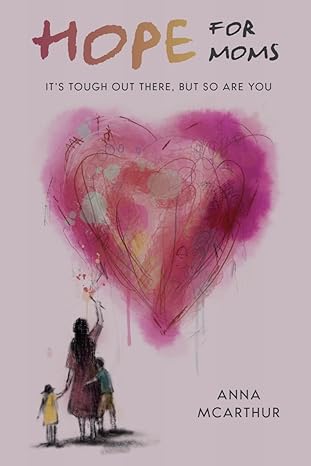

Anna McArthur’s Hope for Moms is a raw, heartfelt guide for moms navigating the unpredictable joys and struggles of parenting. The book offers a mix of personal stories, practical advice, and emotional validation, making it feel less like a manual and more like a conversation with a wise and understanding friend. McArthur divides her insights into three categories: Yes, No, and Maybe. She helps moms determine what’s essential, what can be let go, and what is worth reconsidering as they move forward. She covers everything from the exhaustion of early motherhood to the deeper challenges of raising kids with learning disabilities, LGBTQ+ identities, and racial complexities within an adoptive family. The book reassures moms that they are not alone and provides a roadmap for embracing imperfection while finding strength.
McArthur doesn’t sugarcoat motherhood. In Chapter 1, she recalls an overwhelming moment when her two-year-old staged a sit-in at preschool while her infant screamed in his carrier. A stranger offered to help, but McArthur reflexively refused until the woman ignored her resistance and just stepped in. This moment perfectly illustrates the lesson of the chapter: “Remember to keep accepting help.” I found this so relatable. How many times have we moms insisted, “I’ve got it,” when in reality, we’re drowning? The book is filled with these little reminders that strength isn’t about doing it all alone; it’s about knowing when to lean on others.
Another powerful moment comes in Chapter 3 when McArthur describes her son Caleb coming out as gay in a rural Georgia high school. She admits that despite being a progressive Christian and vocal about LGBTQ+ rights, she didn’t handle it as well as she wished. Fear clouded her initial response. But instead of dwelling on guilt, she took steps to grow and support her son, from reading parenting guides to treating his relationship with the same warmth she would any of her other children’s. This chapter hit home. We all want to believe we’ll react perfectly in big parenting moments, but often, we stumble before finding our footing. McArthur’s transparency in these moments makes her advice feel accessible rather than idealistic.
One of the most eye-opening sections is Chapter 10, where McArthur realizes she has been disappearing into her children’s lives. It took her therapist bluntly asking, “How are you?” for her to recognize she had no answer outside of updates on her kids. That was a gut punch for me. As parents, it’s so easy to wrap our entire identities around our children’s needs, but this chapter gently nudges moms to reclaim space for themselves. She takes horseback riding lessons just for her, no kids involved. This kind of intentional self-care isn’t about spa days or bubble baths but about rediscovering who we are beyond motherhood.
I’d recommend Hope for Moms to any mother who has ever felt overwhelmed, inadequate, or just plain exhausted, which, let’s be real, is every mom at some point. It’s especially relevant for moms facing unexpected challenges, whether it’s special needs, adoption complexities, or simply the relentless pressure of parenting. McArthur writes with humor, warmth, and just the right amount of tough love. Reading this book felt like sitting across from a friend who has been through it all and is offering me a hand to hold. If you need a reminder that you’re not alone and that you don’t have to get it all right, this book is for you.
Pages: 168 | ISBN : 1643435604

Family and Friends

Coco’s Tea Party beautifully captures the wonder of childhood imagination and family bonding. What inspired you to write this story, and is Coco based on a real child in your life?
My inspiration for this story was from my Coco’s Life Adventures book series, and I wanted to show my character growing up and meeting new friends who look different than Coco, which my Dad recommended to show on my book cover. I also love drinking tea and thought it would be fun for little girls and parents to be inspired to have tea parties of their own.
The tea-making tips and the fun guessing game add an interactive element to the book. How did you decide to include these features, and what do you hope young readers take away from them?
I thought of the tea games to make the tea party engaging and fun for the characters in my book and for the readers to also know the difference between hot and cold tea and have fun drinking tea with family and friends.
The ending, where Coco expresses gratitude to her mom, is particularly touching. Why was it important for you to highlight appreciation and meaningful moments in the story?
I believed this moment was special because it helps parents and children to see how important it is for parents to be creative with their children’s learning, activities, and social skills.
If a young reader were inspired to host their own tea party after reading Coco’s Tea Party, what advice would you give them to make it extra special?
I would recommend that young readers ask their parents to help them with learning about the purpose of drinking tea, how to plan a fun tea party, inviting family and friends, with special bakery treats, games, and gifts, and taking fun photos, to make it memorable for a time of bonding and sharing fun with the ones they love.
Author Links: GoodReads | Amazon
CROSSING BORDERS AND GENERATIONS: One Man’s Journey To Search For His Ukrainian, Greek, And Bulgarian Roots

Kiril Kristoff’s Crossing Borders and Generations is a masterfully crafted fictional memoir that chronicles the lives of multiple generations of the Kakhovskiy family. At its heart is George Kakhovskiy, a Bulgarian native who, at just sixteen, escapes the oppressive grip of communism and emigrates to America. In this new world, he fights to survive, driven by the dream of a better future. However, through a surreal twist of fate following a car accident, George and his teenage grandson embark on an extraordinary, otherworldly journey—one that allows them to relive George’s past and trace the profound impact of immigration on their family’s history.
Kristoff’s use of innovative narrative techniques elevates the storytelling, making George’s life unfold in an immersive and deeply emotional way. The supernatural journey shared by George and his grandson, Alex, serves as a compelling literary device, allowing readers to experience George’s struggles, triumphs, and sacrifices firsthand. More than a mere retelling, it becomes a deeply introspective exploration of generational resilience and the enduring consequences of leaving one’s homeland.
Themes of displacement, perseverance, and the pursuit of the American dream permeate the novel. As Alex observes his grandfather’s past, he gains an appreciation for the hardships George endured. The novel effectively captures this realization and moments like these bridge the generational gap, transforming historical struggles into personal revelations.
One of the novel’s most striking elements is its ability to convey emotion through memory. The re-experiencing of George’s past does more than recount events, it immerses the reader in his emotional reality. Kristoff’s skill in translating raw emotion into words, allowing the reader to step into the mind of a man who has lived through exile, hardship, and ultimate resilience is unmatched.
Beyond George’s personal journey, Crossing Borders and Generations skillfully examines how immigration shapes an entire lineage. The novel portrays the pain of separation, the struggle to adapt, and the complex emotional landscape that immigrants and their descendants navigate. George’s mental health, his son’s feelings of alienation, and the often-complicated father-son dynamic all intertwine to form a rich, multi-layered narrative. Yet, amid the adversity, the novel celebrates the enduring strength of the human spirit and the invaluable privilege of freedom—something often taken for granted by those born into it.
Kristoff’s novel is a captivating and inventive take on the memoir genre, skillfully blending fiction with personal history. Through its unique structure and poignant storytelling, Crossing Borders and Generations offers a compelling glimpse into Bulgaria’s past and the lived realities of those who sought a better future beyond its borders. Thought-provoking, deeply moving, and beautifully executed, this book is a must-read for anyone interested in immigration narratives, family sagas, and the timeless quest for belonging.
Pages: 314 | ASIN : B0DC4QR89S
Little Boy, I Know Your Name: A Second-Generation Memoir from Inherited Holocaust Trauma
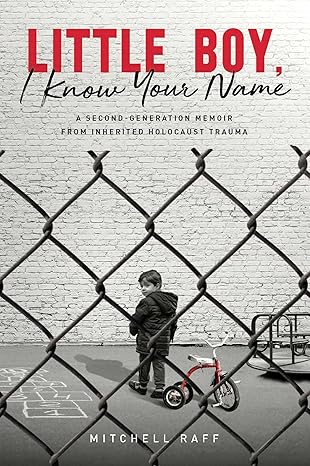
Readers looking for a book that hits you right in the feels and leaves you thinking long afterward, will not want to miss Little Boy, I Know Your Name by Mitchell Raff. This memoir dives into the author’s life, showing how inherited trauma from the Holocaust shaped him and the people around him. It’s raw, emotional, and brutally honest, painting a picture of a childhood full of pain, survival, and moments of unexpected love.
From the first chapter, this book pulls no punches. Raff shares heartbreaking stories of his abusive mother and the chaos that surrounded his young life. One scene that will stick with me forever is when his mom threw him out of the house into the cold night. It’s gut-wrenching, and I couldn’t help but feel for the little boy he was. But there’s balance in the way he writes. He also talks about the kindness and stability he found with his uncle and aunt, who stepped in as surrogate parents. Their love gave the story some much-needed light, and I found myself rooting for them just as much as for Raff.
The focus on his childhood trauma is the primary focus of the book, and I found myself wishing for more information about his father’s struggles or his adult life. But maybe that’s the point, though. It really allows readers to sit with the weight of everything he went through. A moment I remember was when his therapist called him a “well-dressed poser.” It was a wake-up call for Raff and, honestly, a moment that made me reflect on my own life, too. We all wear masks, don’t we?
What really makes this book special to me is how it tackles inherited trauma. Raff’s family, like so many Holocaust survivors, tried to bury the pain. But it seeped through in ways they couldn’t control. It’s these quiet and powerful memories that make the book more than just a story about one man’s struggles.
By the time I finished, I felt a mix of heartbreak and hope. The ending, where Raff reflects on his son Joshua and the possibility of breaking free from the cycle of pain, strikes just the right note. It’s not a happily-ever-after, but it’s real, and it left me believing healing is possible.
I’d recommend Little Boy, I Know Your Name to anyone who loves memoirs that dig deep. If you liked The Glass Castle or Night, Raff’s writing will resonate with you. It’s not a breezy read, but it’s the kind of book that reminds you of the strength it takes to confront the past and move forward.
Pages: 235 | ASIN : B0CLL22MMG
The Child Becomes the Caregiver

The Night Garden: Of My Mother is a memoir that delves into the intricacies of familial bonds, offering an exploration of love, frustration, and the ties between mothers and daughters. Why was this an important book for you to write?
To be honest, I don’t know that I ever weighed the importance of writing this book. If I had, Night Garden may have developed much more heavy-handedly, suppressing the real life of these characters — as they finally are just that, characters. Traditionally, I am a fiction writer, so I have learned how to allow characters their own lived lives on the page.
At the same time, the mother/daughter dynamic has always been central to my writing, to my novels, however subconscious. In my first novel, Blue Glass, I naturally fell into the first-person perspective of an only child, which I am, to explore the nuanced mother/daughter relationship. The mother in that novel is entirely fictional – I honestly don’t know where she came from, as she is the complete opposite “character” of my mother. But what I do think I pulled from—again, subconsciously—was the integral bond between my mother and me; that intensity of love and devotion of the only daughter.
Though I have to say, this memoir was finally so much harder to write than my novels because the subject was right there in front of me – it was lived. What was most difficult was finding the structure – writing of scene comes naturally to me, and many of these moments I dramatized through the years as they were happening. Other scenes are a kind of consolidation of events, to concentrate a truth. I think I knew I had strong material here, even if it was hard to write. And perhaps in the writing, I was able to objectify in a way that offered me a layer of emotional protection—the harder that things became for me and my mother, the more I wished I could distance myself from it all.
What were some ideas that were important for you to share in this book?
The Night Garden chronicles a period in my life when I was deeply divided between my roles as a mother and daughter, by both distance and powerful emotional pulls—I had my two children in my 40s when my mother was already in her late 80s. When my mother falls and breaks her hip, what I recall best is being unable to nurse my three month old while she was in Emergency, the physical feeling of being torn between my mother’s needs and my children’s. This torn feeling I believe is far more universal than we realize, as women are having children later in life. Granted, my situation was even more skewed, as my mother too had me later in life. But there is something to be said for the fact that birthrates have fallen in every age group except for women in their forties. Women, whether in relation to children or their own parents, are still most likely to be the designated primary caregivers.
I appreciated the candid nature with which you told your story. What was the hardest thing for you to write about?
I think the hardest was reliving that period when my mother manifested dementia — it was a quick and deep descent in her last two years, and one much darker than I experienced with my father — my father’s deterioration was over the span of 13 years, and while he was diagnosed with Alzheimers, the terrain of his dementia was much gentler. No deep descents. My mother would find herself locked in empty churches, dental chairs and in jail. The hardest moment was when she no longer recognized her own home, what she’d always referred to as her “happy house;” and in that lack of recognition, I already felt left behind, as I would wandering that house alone once she was gone.
The second hardest was writing about the grueling lesson of navigating the dementia, one I learned from her aide who had witnessed this dynamic between child and parent so many times before. She understood my desperation in needing to convince my mother that she was not actually locked in a church, but at home in bed with her beloved two cats. In my denial was indeed, a refusal to let go. So instead of trying to convince my mother that she wasn’t locked in a church, I learned how to soothe her in the moment, to promise I would send a parishioner drive her home. But my desperation finally was born out of a stubborn denial — on some level, however old we are, we are still the child unable to imagine losing a parent, however fraught that relationship was or wasn’t historically. Once stripped of our role as child, how do we reimagine ourselves? And how might this reimagining impact our own roles as mothers?
What do you hope is one thing readers take away from your story?
I’ve already received messages about how Night Garden is helping those currently in caregiving roles, whether or not they are balancing young children as well. I do hear mostly from women, who appreciate my candor about conflicted feelings: unable to bear that thought of losing a parent— of our role as child— while resentful of the toll caregiving is having on our own lives and mental health. We are no longer a society of extended families — at best, we are families scattered across the country, so that usually the caregiving does fall to one child, one sibling. Readers of my story I hope will feel a little bit less alone in what finally may be an inevitable quagmire, but also forgive themselves for feeling conflicted; the child/parent relationship is resounding in its complexity, if not always rooted in unconditional love.
Author Links: GoodReads | Website
As her mother’s dementia worsens, Chandice warns the author about other daughters “gone crazy” watching their mothers become unrecognizable-after her mother’s death, the author is admitted to a psychiatric ward, where she sleeps the “sleep of the dying,” as her mother slept in her final weeks. But in the timelessness of this ward, she can wonder: was her closeness with her mother not of best friends, but something inherent in their dispositions as a writer and artist-in that compulsion to be seen and heard? With empathy and affectionate comedy, The Night Gardencandidly explores what it means for a daughter to have her focus fractured by conflicting responsibilities while still seeking, above all else, her mother’s approval, protection and love
Strong and Loving Connection

The Gift of Parenthood is a heartfelt and personal memoir that takes readers on an emotional journey from infertility struggles to the joys and challenges of open adoption. Why was this an important book for you to write?
It was important to share my parenthood journey. There is a stigma surrounding infertility and adoption, and society tends to shy away from these topics. By shedding light with a very personal experience, I hope to enlighten and inspire others.
What were some ideas that were important for you to share in this book?
Infertility is one of the most challenging things I’ve ever gone through. Being unable to have a child of your own can be devastating, but with time husband and I were able to heal and consider adoption.
Adoption has granted us the gift of parenthood and a bonus family. It’s been an unbelievable blessing for both sides.
What is a common misconception you feel people have about open adoptions?
That open adoption is unhealthy… our experience has been far from that. We put in the work to build a strong and loving connection with my son’s birth family and are respectful of each other’s needs.
What was the most challenging part of writing your memoir, and what was the most rewarding?
At first, I couldn’t figure out how to get the word out while respecting my teenage son’s wishes for privacy. But, he was comfortable with me writing under a pen name and even suggested using my phone’s memoji as my picture.
The actual writing part came naturally. Hearing how our story has touched others has been the most rewarding part.
Author Links: GoodReads | Facebook | Website | Amazon
Emaline Ashe’s memoir shares an intimate look into her emotional journey to become a mom. A few years into their marriage, she and her husband Liam were young, healthy, and ready to have several kids.
Life had different plans in store for them when unexplained infertility hit like a ton of bricks. After many years of medical treatments, Emaline and Liam embarked on an alternate path to become parents. This new path led to an unexpected open adoption and a bonus family.
Emaline’s true story is one of hope, loss, and resilience. It captures the devastation of infertility and shows just how life-changing adoption can be for all involved.
A Personal Reckoning

Twice the Family is your poignant memoir of identity, adoption, and the unyielding bonds of sisterhood, exploring the journey of being “chosen” while searching for belonging. Why was this an important book for you to write?
For me, this book was a greater challenge than writing my debut memoir, Twice a Daughter, the five-year saga about searching for my birth parents to gather family medical history. Twice the Family rose out of readers’ requests to know more about what it was like to grow up as a twin and an adoptee. Yet, for me, the book is more than that. It is a personal reckoning.
Twice a Daughter had a specific frame or timeline. While I provided the necessary backstory, it focused on the events surrounding my adoption search. Because Twice the Family is a coming-of-age story, it has a longer timeline: twenty-seven years. It opens with the births of my twin sister and me, and our subsequent adoption, and culminates with the building of my own biological family.
Choosing the events to include in this new book and tying those moments to the desired themes of love, loss, and family was a deliberate and challenging task. Telling the story and sharing my unique perspective as a twin and adoptee within the context of our family history was a delicate balance. My goal was for the reader to understand the struggles I faced within a loving family governed by the strict rules of Catholicism. While we were soothed by love and instilled with a strong sense of belonging, our formative years were overshadowed by my parents’ infertility and drive to achieve their goal of a big Irish Catholic family. As I matured, I realized some of my parents’ goals and values did not align with mine.
How did your adoptive family’s faith shape your understanding of being “chosen” and your identity?
Some of the foundational tenets of Catholicism are love is patient, love is kind, and love heals all. Also, love your neighbor as yourself. This belief system became ingrained in my siblings and me during our formative years at school, church, and at home. Also, the struggles my parents faced in building their big, Irish Catholic family through adoption, their years of infertility, and subsequent child loss due to stillborn death and sudden illness made a lasting impression on me. It was, however, my parents deeply held religious beliefs, their unrelenting commitment to family, and the strong examples they set about honesty, perseverance, and resiliency that influenced who I am and the person I have become.
I always felt as if I held a strong place in my family. Some of that “chosen” feeling arose from the stature of being the firstborn and a twin. I strongly believe that the adoption of my twin sister, myself, and our younger brother was not what set us apart from our younger siblings––my folks’ biological children––but what strung us all together. We were individuals and my mother recognized that and used it in a cohesive way. My mother is a very inclusive person. If she thought, you were the underdog in a given situation, she became your fiercest champion. I love this trait about her; it made her a faithful and reliable mother, neighbor, and friend.
What message do you hope readers—especially adoptees—take away from your story?
Parenting, whether it comes by way of adoption or not, is not a smooth easy road to success. As parents, we make numerous mistakes, and each child takes note, adjusting their behavior to accommodate it. When it is our turn to build our own families, sometimes we are successful at not repeating the mistakes our parents made. Often though, we make different errors, and so the cycle repeats itself. The point I wanted to make in Twice the Family is that family building, then and now, is no easy road. It takes commitment, but through shared values, love, and consistent efforts, parents succeed in building character among those they call family.
Were there moments during the writing process where revisiting your story became emotionally overwhelming? How did you navigate them?
There were chapters I intended to include in the book that happened so long ago that I knew I needed help with validating facts. Because I wanted a true accounting, I consulted with my twin sister and my mother. Together we revisited those key moments. Collaborating was informative and fun, and it enabled me to craft a true story. The result was one part family history, one part memoir, and one part nostalgia for a bygone era of society. Navigating the tough scenes and events meant the writing process slowed down due to the strong emotional impact of those moments. The aftermath of getting them down, getting them right, and polishing them was both exhilarating and draining. Slowing down and honoring those moments was an important aspect of the writing process. The outcome, Twice the Family, fills me with deep pride and satisfaction.
Author Links: GoodReads | Facebook | Instagram | X (Twitter) | Website | Amazon
In this coming-of-age memoir, set in Chicago’s western suburbs between the 1960s and ’80s, adopted twins Julie and Jenny provide their parents with an instant family. Their sisterly bond holds tight as the two strive for identity, individuality, and belonging. But as Julie’s parents continue adding children to the family, some painful and tragic experiences test family values, parental relationships, and sibling bonds.
Faced with these hurdles, Julie questions everything—who she is, how she fits in, her adoption circumstances, her faith, and her idea of family. But the life her parents have constructed is not one she wants for herself—and as she matures, she recognizes how the experiences that formed her have provided her a road map for the person and mother she wants to be.
Report an issue with this product or seller
Limitless Reach and Resources

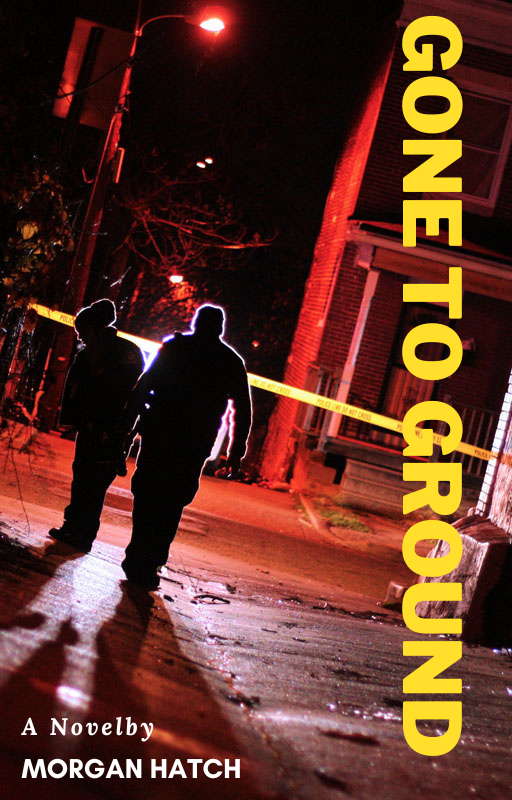
In Gone to Ground, a high school senior fights to keep his brother from falling victim to the dangers of gang life while battling a developer bent on completing a devastating urban renewal project. What was the most difficult scene to write in this book?
Developing a romantic bond between Javier and Leslie was a challenge – most of the spark came from Leslie, and Javier is often making excuses to go work when anything with emotional weight comes up, “pushing rope” when it came to knowing how he felt and how to share his tightly wrapped inner world. I now read suspense with an eye toward the way suspense writers weave in a romantic thread which I think readers appreciate. I once wrote a more nuanced short story about Javier and Leslie detailing their first encounter when they were both elementary age. Javier was both observer and participant as he is Gone To Ground, though in much greater measure. By the time he is in high school, Javier’s sense of romance and adventure has been eclipsed by his family and future. I saw an article recently titled something like “What It’s Like Texting With a Man,” and I didn’t need to read it. I can imagine Leslie texting whole pages and getting one or two lines back from Javier.
Does writing a thriller energize or exhaust you?
I am energized when I find the kernel of action that will drive a scene, the tension, the twist, and an antagonist like George Jones with limitless reach and resources is fun because deep in my lizard brain this is all wish fulfillment. My favorite scene to write was Alex at the drop with Chuco because I got to not only have the guns come out but we got to look into Alex’s head and his sudden realization that he’s out of his depth. There are sections you write quickly and play out cinematically in your head, and in one sense, Gone To Ground is a collection of set pieces sewn together with some exposition. The parts that I constantly have to rework and rework and rework is the stuff in between – the character development, the collection of small moments that give the reader a fuller and more intimate knowledge of characters. My favorite authors like Richard Price, Tara French, and Dennis Lehane make it look effortless.
Can you give us a peek inside the second book in this trilogy? Where will it take readers?
Book two is a critique of the increasing role our custodians of the public trust abet the ultra-wealthy. The opening scene is actually a military op that foreshadows the role of this back-stage affair between these gazillionaires and the elected officials as they chart their own course with no consideration of public interest. We fast forward seven years from the conclusion of Gone To Ground. Javier is working for a financial consulting group that specializes in mergers and acquisitions which sounds dull and tedious, but he is more than he appears. The first body that drops is Betzaida’s friend Letty who is found with two in the chest and one in the head, so we have one plot thread from the same streets of Los Angeles featuring Betzaida and another that gets into the political machinations of water in the Colorado River Basin where “Whiskey’s for drinking, and water’s for fighting.”
Author Links: GoodReads | X (Twitter) | Facebook | Website



 LITERARY TITAN