Blog Archives
Full Circles


Kenneth D. Thompson Sr.’s Full Circles: The Circles of Life Navigated to Become the Father I Wish I Had is a memoir about fatherhood, race, community, and the decision to turn an old wound into a useful life. Thompson traces his path from a crowded home in East Austin to corporate leadership, elected office, national advocacy, and eventually the White House. Yet the book’s real center is more intimate: a boy repeatedly searching the crowd for an absent father, then growing into a man determined that his own son would never have to conduct the same search. Thompson tells that story with candor, humor, anger, and a strong sense of place.
The early chapters bring East Austin to life through neighborhood stores, schoolyards, churches, ball fields, music, food, nicknames, and the adults who kept an eye on everybody’s children. Thompson doesn’t romanticize poverty, but he makes the community’s creativity and closeness easy to feel. His memories of segregation and poorly handled school integration add important historical weight. The closing of Black schools, the removal of educational opportunities, and the racism he encountered weren’t abstract policies. They shaped his friendships, ambitions, and understanding of power. Sports also become a language for nearly everything in the book, including discipline, belonging, exclusion, mentorship, and pride.
Thompson’s voice is one of the memoir’s greatest strengths. He writes like someone telling stories across a kitchen table, moving naturally between painful recollection, sharp observation, and a well-timed joke. He’s willing to describe his own arrogance, mistakes, marital struggles, and professional missteps, which keeps the book from becoming a polished résumé of accomplishments. At times, the number of names and community memories can slow the narrative, but they also show that Thompson sees his life as collective rather than solitary. Coaches, teachers, relatives, neighbors, coworkers, and friends all helped supply pieces of the guidance his father didn’t provide.
The second half follows Thompson as he builds a family, advances at IBM, returns to community work, becomes the first Black trustee elected to the Pflugerville school board, and advocates for fathers in child welfare and public policy. These achievements matter because the book connects each of them to the same personal question: what does it mean to show up? Thompson’s answer is practical rather than sentimental. Presence means attending games, challenging institutions, opening doors, admitting mistakes, and making sure children know they’re loved. As he puts it, “You can find purpose exactly where you are, in the space you occupy.”
By the end, the title’s full-circle image feels earned. The arenas, schools, neighborhoods, and political spaces that once reminded Thompson of exclusion become places where he creates access for his son and others. The family motto “Never Surrender” captures both the book’s persistence and its moral balance, especially in its warning never to believe that you’re above or beneath another person. Full Circles is a deeply personal account of how one man assembled a model of fatherhood from community examples, hard lessons, and deliberate choices. Its lasting impression comes from Thompson’s belief that legacy isn’t simply what a person achieves. It’s the care, guidance, and presence that others can carry forward.
Pages: 165 | ASIN : B0H6CY7G9Q

Departure From Innocence


William Wilson’s Departure From Innocence is a philosophical coming-of-age novel that follows Bradley Zimbroski from early childhood into marriage and fatherhood. Bradley’s life unfolds through formative incidents involving family, sexuality, competition, grief, addiction, work, and love. Small experiences, such as receiving a shark jaw for his birthday or becoming lost in a parking lot, carry symbolic weight and gradually shape his understanding of adulthood. The result is literary fiction with the broad scope of a life story and the intimate focus of a family drama.
The novel’s most distinctive feature is the way it blends Bradley’s personal journey with extended reflections on human behavior. Wilson frequently steps back from the immediate action to consider subjects such as parenting, social expectations, masculinity, risk, marriage, and the stories people tell themselves. This gives the book elements of psychological fiction and philosophical fiction, while Bradley’s changing perspective keeps those larger ideas connected to one recognizable life. His departure from innocence happens gradually, through accumulated knowledge, disappointment, desire, and consequence.
Bradley is a complicated protagonist whose ambition and sensitivity exist alongside impulsiveness, resentment, and a recurring need to escape discomfort. His struggles with alcohol become especially important as he moves through college, police work, his relationship with Trinity, and the birth of their daughter, Maple. Some of the book’s most affecting passages examine how destructive habits can return disguised as rewards or harmless relief. Bradley’s lowest moments, including his suicide attempt and later collapse, give this psychological family drama a raw emotional current, while his relationships provide the reasons he keeps reaching for a more stable life.
Departure From Innocence is ultimately a reflective literary novel about the difficult work of becoming accountable for one’s choices. Its episodic structure creates the feeling of looking through a long collection of memories, with each chapter adding another piece to Bradley’s identity. Readers drawn to coming-of-age fiction, addiction and recovery fiction, philosophical novels, and multigenerational family stories will find plenty to consider here. Wilson closes Bradley’s journey on a grounded note, presenting recovery as a daily decision to remain present, accept responsibility, and keep moving forward.
Pages: 171
From Innocence to Wisdom

In From Innocence to Wisdom, Marty Lynch traces a life shaped by childhood trauma, inherited anger, marital loss, hard-won self-recognition, and the slow, deliberate work of becoming gentler. The book begins in the charged atmosphere of family inheritance, with a beloved but volatile father and a Catholic upbringing that left deep marks, then moves into the author’s devastating recollection of childhood sexual abuse at summer camp. From there, Lynch follows the consequences of pain carried in silence: his temper, the collapse of his marriage to Kathleen, the loneliness of starting over at fifty-four, and the surprising inner shift that comes through therapy, reflection, accountability, and something as deceptively simple as learning to truly smile.
What moved me most was the book’s refusal to keep suffering abstract. Lynch doesn’t write about pain as a polished concept. He writes about the tiny loft above the barn after Kathleen asks for a divorce, the dark train rushing through a tunnel in his imagination, the airport beer no one is waiting to hear about, and Brendan’s hand resting quietly over his on the U-Haul’s shifter as they leave the family home. Those moments have a plainspoken force. I found the strongest passages to be the ones where he stops explaining and simply lets memory breathe. The writing sometimes revisits things, especially when circling the ideas of brokenness, resilience, and “the best version of ourselves,” but I also felt that repetition belonged to the emotional reality of the book. Trauma often thinks in loops. Regret returns. Self-forgiveness doesn’t arrive in one clean sentence.
The ideas in the book are earnest, practical, and sometimes unexpectedly luminous. I admired Lynch’s insistence that change is possible, not as a slogan, but as a daily discipline rooted in awareness. His chapter on anger as a nuclear weapon felt especially honest because he doesn’t excuse himself, even when he gives the reader the history that wounded him. I also appreciated the way his “smile” revelation, which could have sounded slight in a less sincere book, becomes something larger here: a theory of reciprocity, of how the face we offer the world changes what the world offers back. Lynch’s wisdom is most persuasive when it emerges from the grain of his own life, from the therapy session where his father still can’t listen, from the letter returning pain to its source, from the tenderness of remarriage after ruin.
I finished From Innocence to Wisdom feeling that I had spent time with a man determined to tell the truth as best he can, even when the truth embarrasses him, grieves him, or forces him to stand uncovered before the reader. It’s a sincere and often affecting book that’s carried by humility, remorse, and an almost stubborn faith in personal repair. Its power lies in the belief that innocence may be shattered, but wisdom can still be chosen, practiced, and shared. I’d recommend this book to readers drawn to reflective memoirs about trauma, emotional growth, marriage, fatherhood, accountability, and the difficult beauty of becoming softer without becoming less strong.
Pages: 122 | ASIN : B0H461M6W7
Fatherhood Matters!


Anthony Owens’s Fatherhood Matters! is a heartfelt guide to the role fathers play in family life, especially in the emotional, social, and identity development of children. The book opens from a personal place, with Owens explaining that his own upbringing by a single mother shaped his desire to write about why fathers need to be present and active. He frames fatherhood as more than biology, writing that it’s “the role of a provider, protector, mentor, and friend.”
The book works best as a practical encouragement piece. Owens moves through the evolution of fatherhood, the benefits of a father’s presence, the challenges fathers face, and the impact fathers can have during adolescence. His main idea stays steady throughout: children need guidance, stability, emotional safety, communication, and love, and fathers are uniquely positioned to offer those things when they’re engaged and consistent.
One of the strongest parts of the book is its attention to different fatherhood situations. Owens doesn’t limit the discussion to the traditional two-parent home. He writes about single fathers, co-parenting, divorce, separation, death, incarceration, cultural differences, and same-gender parenting. That gives the book a wide scope and makes it feel like it’s trying to speak to real families in real circumstances, rather than only presenting one version of family life.
The tone is earnest, motivational, and sometimes almost devotional in the way it talks about parenting. Owens often uses images of fathers as anchors, compasses, shade trees, and guides, which gives the book a warm and encouraging feel. The closing message captures the spirit of the whole book: “Fatherhood is not about being perfect; it’s about being present.” That line fits the book’s central purpose, because Owens isn’t arguing for flawless fathers. He’s calling for fathers who show up, listen, support, guide, and keep learning.
Fatherhood Matters! is a sincere, accessible book about the value of active fatherhood. It’s part personal reflection, part parenting guide, and part call to action. The book is most compelling when it connects big themes like identity, discipline, education, and emotional health to everyday father-child moments. It’s a book for fathers, father figures, parents, and anyone interested in how steady love and presence can shape a child’s future.
Pages: 188 | ASIN : B0DFXB1B6Y
A Father’s Presence
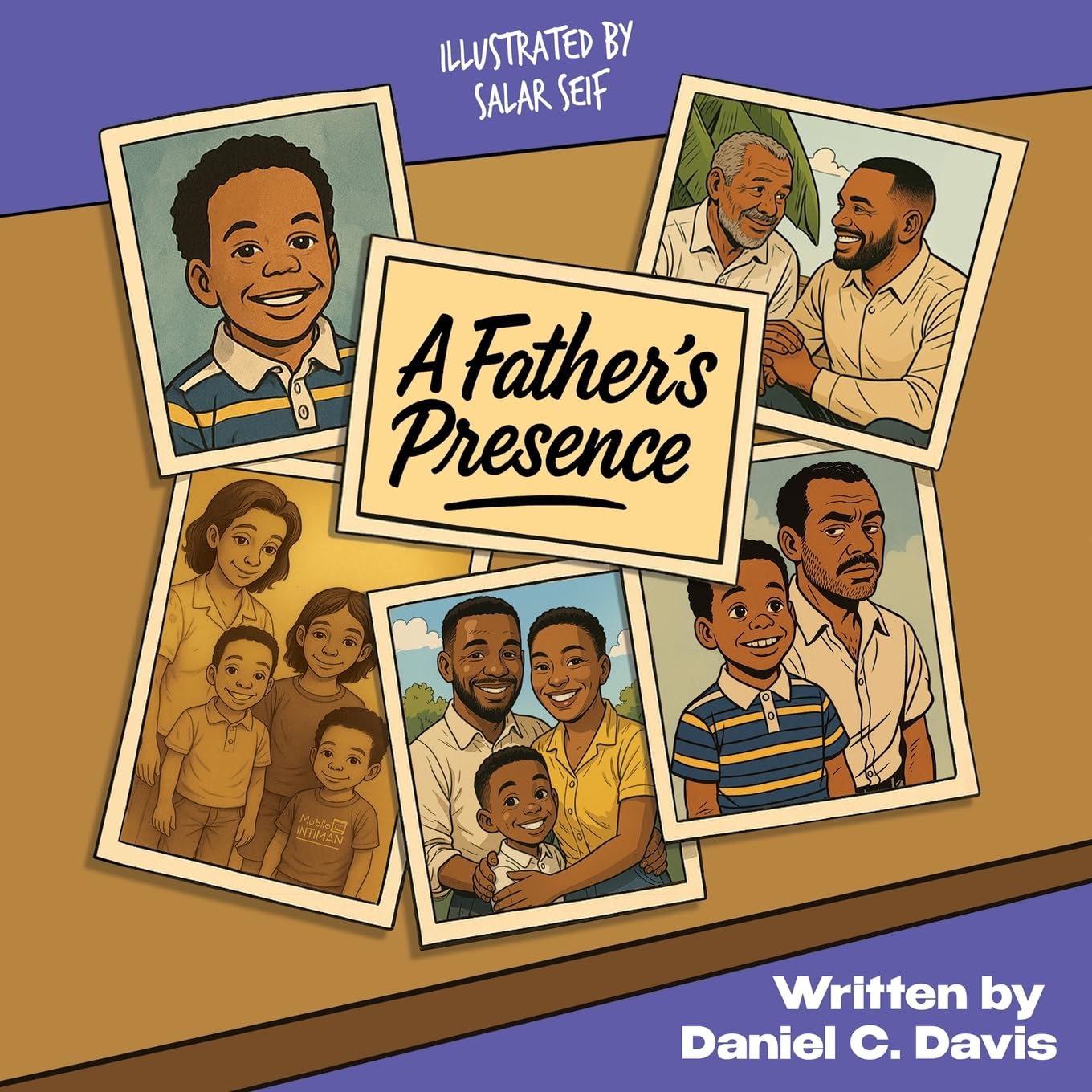
A Father’s Presence tells the story of Curtis and his father, tracing the ripples of absence that echo through generations of men learning what it truly means to “be there.” It begins with a boy whose father, though physically present, feels distant, carrying the quiet ache of growing up without his own dad. Through small, tender moments and the wisdom of mentors like a patient coach, Curtis learns how listening and empathy can heal old wounds. The story blooms into a celebration of connection, showing how one family breaks free from the heavy weight of inherited silence to build something whole and loving.
Reading this children’s book stirred something deep in me. The writing feels honest and simple, yet it cuts right to the heart. Each page carries warmth and quiet power through its words and its illustrations. The author doesn’t hide behind fancy words or big speeches. Instead, he shows us the small gestures like a pat on the head, an empty chair, a son’s whispered promise, that build and break a life. The pacing is gentle, but the emotions sneak up on you. By the end, I wasn’t just reading about Curtis and his father. I was thinking about my own family, about the times I could have listened more or spoken less. There’s something raw and comforting about that.
I loved how the book balances pain and hope. The illustrations by Salar Seif add another layer of heart, soft and sincere, helping the story feel alive. The scene where Curtis and his dad finally spoke, not as man and boy, but as two souls trying to understand each other, that scene hit me hardest. It reminded me that presence isn’t about showing up, it’s about seeing, hearing, and feeling with someone.
I’d recommend A Father’s Presence to anyone who’s ever wished for a deeper connection with their parents, their children, or themselves. It’s a picture book for fathers trying to unlearn the quiet, for sons who crave more than words, and for anyone brave enough to break old cycles. This children’s book doesn’t just tell a story. It gives you a reason to sit down, listen, and start again.
Pages: 20 | ASIN : B0FRQ28YTJ

You Make My Heart Giggle: Dadisms, The Wisdom and Wit of Dad

The book is a heartfelt blend of memoir, wisdom, and history. Brent John Larsen builds each chapter around one of his father’s sayings, what he calls “Dadisms.” These are short, memorable lines that carry lessons about courage, integrity, optimism, and love. Each one is tied to a story from his own life, often connected to his father’s influence, and then matched with an episode from history that reflects the same theme. The book moves from family stories to bigger cultural touchstones like the Apollo moon landing, the Grand Canyon expedition, or D-Day. It’s both intimate and sweeping, mixing tender memories with lessons meant to last.
Reading it stirred me up in ways I didn’t expect. The writing is simple, but that works in its favor. It doesn’t try to be fancy. It feels like sitting on a porch with someone older and wiser, listening to stories that matter. At times, the mix of personal loss and historical grandeur felt heavy, but that weight gave the lessons a kind of permanence. Some chapters hit harder than others. The introduction, where Larsen recalls losing his son and nearly losing his own life, shook me. It made me sit still for a while. I also loved how he wove in his dad’s voice, almost like the man was speaking directly to me. There’s an earnestness here that you don’t find in most books.
Each chapter follows the same rhythm: the saying, the family story, the historical story. I found myself anticipating the turn. Yet the predictability didn’t take away too much because the content itself was strong. What I enjoyed most was how personal moments were stitched to major historical events. That leap from small family wisdom to global history made me feel the depth of these sayings. It reminded me that wisdom can be both ordinary and extraordinary, lived at home and echoed through time.
I’d recommend this book to anyone who enjoys family stories, history told in a personal way, or reflections on fatherhood. It would especially resonate with parents, children of loving fathers, or anyone who’s lost someone and still feels their lessons echoing through life. It’s warm, emotional, and rooted in gratitude. For me, it felt like a reminder to look closer at the words my own family repeats and see what truths are hidden inside.
Pages: 217 | ASIN : B0FJSPCN3W
The Domino Effect

Finding Sutton’s Choice follows a young writer who confronts old memories when she returns home to face her father’s declining health and deal with the family’s struggling newspaper. What was the inspiration for the setup of your story?
I’ve witnessed so many loved ones impacted by Alzheimer’s disease—beloved mentors, friends, friends’ parents or spouses, and even one of my own family members who has shown early signs of dementia. As I researched the topic, it became more and more important to weave a plot that unobtrusively but positively raises awareness of the disease and provides caregivers with a relatable story. As a past journalist of a family-owned Pittsburgh publication, I was drawn to the idea of incorporating a community newspaper. Setting the story in Lakeside Chautauqua, the very real place where I live, also allowed me to offer a snapshot of a closeknit, small Ohio town, not unlike the farming community where I grew up in Coshocton County, Ohio.
Which character in the novel do you feel you relate to more and why?
I have all the feels for Charlotte, as complicated (and sometimes annoying) as she may be. She’s a very, very distant version of myself… an insecure, immature, dutiful but damaged, sometimes angry, and inherently messy version. But aren’t we all a little messy when we’re 10? 20? Older? It takes time to work out the kinks. Charlotte holds onto old hurts far too long, but for good reason. As is seen through her memories, her childhood was complex. I can relate to that. I killed some personal demons in the writing of this book, and, like Charlotte, I’ve grown into a more self-aware human during the process.
Now, if you were to ask me what character I aspire to be, that would be The Surly Sturgeon’s barkeeper, Bea, who is a Boss Lady and completely unconcerned with what others may think. My new motto? Be like Bea.
What were some themes that were important for you to explore in this book?
Finding Sutton’s Choice explores complicated parent-child relationships, failing mental health, forgiveness, and the domino effect family choices have on who we become.
I am fascinated by how our perceptions of the past can shade and shape our future. Note that I say “perceptions.” Our personal histories are only as factual and reliable as our memories of those moments in time. And, though we are a product of our past, our future is what we make it. We can choose a new path to produce different outcomes. As my character Chuck Sutton would say, “It’s the final inning that really matters.”
Can we look forward to more work from you soon? What are you currently working on?
In the past six years, I’ve completed multiple first drafts during National Novel Writing Month in November. Though I’ve got a healthy stack of potential projects, I’m currently editing a sequel to Finding Sutton’s Choice. The follow-up, tentatively titled Sutton’s Second Chance, is set 15 years in the future. You can expect a few of the same quirky characters and many new ones, all living their best (but equally messy) lives in the little Lake Erie town of Lakeside, Ohio. Additionally, I’ve been working on personal essays about my lake life. I hope to bundle them for future publication.
Author Links: GoodReads | X | Facebook | BlueSky | Instagram | Website | LinkedIn
Chuck Sutton-newspaper editor, retired baseball player, and the town’s most beloved celebrity-is thought to have Alzheimer’s disease. The community newspaper is also on the verge of closure, and a childhood friend holds a decade-long grudge. Despite all this, there is Lakeside. The quaint waterfront community, flush with ivy-covered cottages and vintage charm, hasn’t changed even as everything else in Charlotte’s life has shifted. She intends to stay only long enough to get her father’s affairs in order.
But, to reconcile her past and unearth family secrets, Charlotte must reconnect with Chuck through his Alzheimer’s diagnosis and reevaluate her own misconceptions about growing up in the small Ohio town that still holds her heart.
Finding Sutton’s Choice
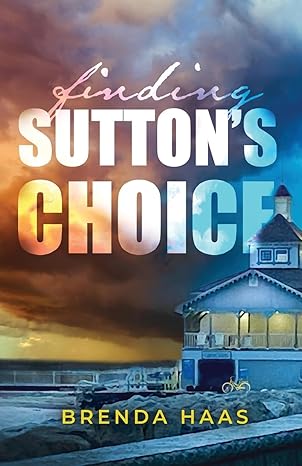
In Finding Sutton’s Choice, Brenda Haas delivers a heartfelt and layered story about Charlotte Sutton, a young writer who returns to her quaint hometown of Lakeside, Ohio, after ten years away. A mysterious voicemail and concerns about her estranged father’s health, possibly Alzheimer’s, bring her back to a place she swore she’d left behind. As Charlotte steps into the chaos of her father’s declining memory, a struggling family newspaper, and a surprise half-sibling, she’s forced to confront old wounds, unspoken truths, and what it really means to go home again.
This book hit me square in the chest. Haas writes with an intimacy that doesn’t just paint a picture, it lets you walk the streets of Lakeside with Charlotte. Her prose is straightforward, not showy, but rich with emotion and charm. The dialogue felt natural and real, and the pacing kept me invested. I especially loved the way memory and identity were woven through the story without beating me over the head. And Charlotte, who is blunt, flawed, and sharp, was someone I could root for even when she was a mess.
Some of the characters leaned on small-town tropes. Still, Haas balanced it with enough surprises and emotional weight to make those moments work. What really stuck with me was the raw honesty about family. The father-daughter dynamic wasn’t whitewashed, and the complicated layers of resentment, love, and misunderstanding rang painfully true. Watching Charlotte navigate a relationship with a father who might not remember her, and then discovering a brother who took her place, was heartbreaking in the best way.
Finding Sutton’s Choice is a beautiful story about forgiveness, second chances, and finding home in unexpected places. If you’ve ever wrestled with family messes or avoided going back to the town that raised you, you’ll enjoy this one. I’d recommend it to readers who enjoy emotionally driven fiction with depth, especially fans of Ann Patchett or Elizabeth Berg.
Pages: 310 | ISBN : 978-1645382386


