Blog Archives
Red Dirt Part I: The Star Bearer
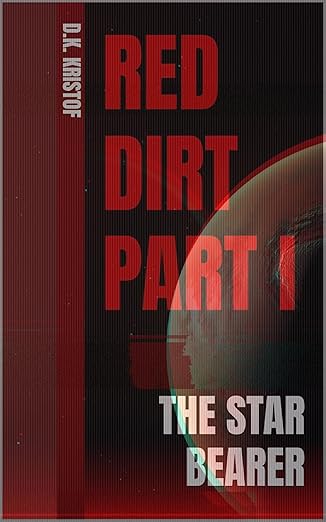

Red Dirt Part I kicks off in the dusty aftermath of humanity’s fall, where synthetic life forms—called the Vestige—have built their own societies on a Mars abandoned by Earth. It’s a story about memory, legacy, and survival. At the heart of it is Miri, a scrappy, half-synthetic woman with more attitude than caution, and the Star Bearer, a quiet, deeply complex Extant—one of the last organic humans with a mysterious past. Together, they’re caught in the crossfire of an old war being reignited by Commander Sutherland, a terrifying war-machine of a man hellbent on reclaiming Mars for what’s left of humanity. It’s sci-fi with soul. And it’s damn good.
First off, the writing is tight but poetic, with lines that just land. One that stuck with me was when Miri, heartbroken after losing her droid companion Lazer, asks, “What happens when we die?” The Star Bearer answers, “We are remembered by those who miss and honor us.” That hit me. It’s not just pretty language—this book digs into what it means to be alive, to be remembered, to matter. There’s something really haunting about a post-human Mars where machines are the ones asking the big questions. It flips the usual sci-fi trope on its head. And Miri is wild. She crashes a grav bike through a ventilation shaft to save the Star Bearer. Like, that’s the kind of unhinged loyalty and heart you only get when a character is real on the page.
The worldbuilding is top tier. Saint Forsaken is this grimy, neon-drenched underground city filled with holograms, synth food, and old Earth relics. It’s like Blade Runner moved to the outback. There’s this moment when the Star Bearer enters a club full of all women—an ex-military hideaway—and everything is both sensual and surreal. You can feel the tension and the hidden history. Also, the action scenes are solid. They don’t drag, and they don’t try too hard. Just the right amount of grit.
Red Dirt Part I: The Star Bearer is less about machines and more about meaning. It’s for readers who like their sci-fi with heart and grit. If you loved The Mandalorian, Mass Effect, or The Expanse, but wanted a bit more raw emotion and fewer lectures on quantum physics, this is your jam. It’s got action, found family, ethical dilemmas, and the kind of quiet, devastating moments that stick with you.
Pages: 40 | ASIN : B0DVVLXML5

Endless Fall of Night
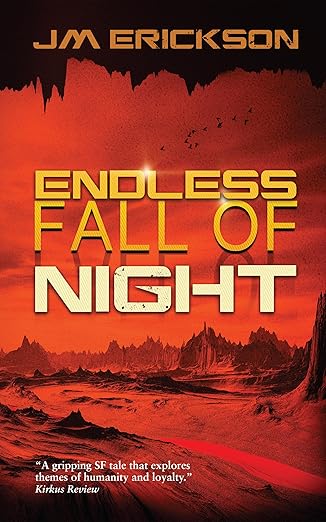
This book is a dystopian firestorm wrapped in razor wire. Endless Fall of Night throws us into a bleak future where racial purity and social stratification rule the day, and one woman, Cassandra IX, stands at the heart of it all, defiant, broken, and brilliant. The story kicks off with her trial and sentencing for crimes that are more moral rebellion than criminal offenses, and it doesn’t let up. From sterile courtrooms to hellish prisons and eventually deep space, Erickson drags us through the slow-motion car crash that is Cassie’s journey, and you can’t look away.
The writing hits hard; it is not elegant or flowery. And that’s what makes it work. The courtroom scenes early in the book are brutal, especially the way the government lawyer describes Cassie’s supposed betrayal. “She can’t help it,” he sneers while showing ancient libraries going up in flames. You want to scream. Erickson doesn’t just hint at dystopia; he makes you choke on it. His use of visuals, like the collapsing libraries or the image of Cassie bleeding and broken, is cinematic in the best (and most horrifying) way.
Cassie is no hero in the classic sense. She’s angry, complicated, and tired. Her inner voice, especially after she loses her AI companion Aletheia, is a mix of grief, sarcasm, and deep loneliness. And the prison chapters? They’re suffocating. I felt like I needed to open a window. Erickson builds this terrifying sense of powerlessness without ever turning Cassie into a victim stereotype. She fights. She cracks. She rages. She survives. Her whispered line might be one of the most powerful moments in the book; it’s a punch in the face to a rotten empire.
The pacing gets a little weird after Cassie leaves prison. Once she boards the Jefferson Davis, the tone shifts. It’s still good, creepy, mysterious, and loaded with dread, but the rhythm wobbles. Still, the moment her AI returns through a charged music device is oddly beautiful. Aletheia’s voice is like a flashlight in a cave, and it reminded me of how much I missed her presence earlier in the book. Their bond is one of the best parts of this story, part friendship, part lifeline, part rebellion.
Endless Fall of Night made me mad. It made me sad. It made me weirdly hopeful. It’s not a fun read; it’s a furious one. But it’s worth it. If you liked The Handmaid’s Tale or V for Vendetta, this is your book. Just be ready: it doesn’t hold your hand. It holds a mirror up and dares you to look.
Pages: 131 | ASIN : B0D6JSPDDY
The Shadow and the Scream

The Shadow and the Scream by Rebecca L. Fearnley takes readers into a dark and thrilling world, following Annie as she navigates chilling confrontations with monsters both real and imagined. It’s a gritty tale steeped in darkness, magic, and the shadowy corners of human experience, particularly highlighting Annie’s struggles with domestic abuse and trauma. Through forty-five gripping chapters, the novel pulls you deep into the tension-filled journey of a protagonist wrestling with internal demons and otherworldly threats.
What really enjoyed about Fearnley’s writing was her intense, almost visceral way of illustrating emotional trauma. Right from the start in Chapter One, the raw depiction of Annie’s internal struggles is both unsettling and captivating. I found myself deeply moved yet a bit overwhelmed, particularly in scenes where Annie’s pain was almost palpable. Sometimes, it felt like Fearnley held nothing back, and while that intensity might not be everyone’s cup of tea, it certainly left an impression on me.
Another thing that stood out was the world-building—especially notable in chapters like “Through the Portal Tree” and “The Battle for Lin.” These were immersive moments that sucked me right into Fearnley’s uniquely crafted universe. I felt transported, right alongside Annie, through every harrowing battle and heart-pounding escape. There was never a moment where the story’s atmosphere didn’t feel real, even amidst its supernatural chaos.
The relentless pace, particularly in chapters like “Fangs and Fury” and “Storming the Manor,” sometimes made it challenging to catch my emotional breath. It’s not necessarily a downside—more like an emotional marathon. Yet, in the quieter moments, like those in “Maeve Remembers,” the depth and humanity of the characters genuinely shined through, providing necessary emotional relief.
The Shadow and the Scream is powerful and raw, a dive into darkness that ultimately highlights resilience and courage. I’d highly recommend it to readers who aren’t afraid of confronting heavy themes alongside fantastical horrors. If you’re someone who loves intense, emotional rollercoasters with well-crafted supernatural twists, this is definitely a book that’ll grab you and refuse to let go.
Pages: 689 | ASIN : B0CCP4SGW1
Return to the Galaxy


Return to the Galaxy is a wild ride that blends gritty military realism with classic sci-fi adventure. At its core, it’s the story of Ewan Scott, a retired British Special Forces officer lying on his deathbed in 2038 who is offered a second chance at life by Jera, a mysterious alien AI avatar. In exchange for healing, youth, and purpose, Ewan must help prepare humanity for an interstellar future and a looming war that threatens Earth’s existence. The book weaves between Ewan’s vivid flashbacks of the Falklands War, present-day emotional reckonings, and a galactic history lesson that unfolds like a cosmic epic.
The book starts grounded, with grim and deeply human moments from Ewan’s military past, like the chaotic bayonet charge during the Battle for Mount Tumbledown. The details there felt raw and real: the terror, the gallows humor, the sheer physicality of it. Then, bam, we’re in a hospital room in 2038, talking to an avatar who injects nanites and heals cancer with a touch. It could have been too jarring, but somehow, Gillies makes it work. The emotional contrast between war and future tech gave the whole story more weight than your usual sci-fi romp.
The world-building is absolutely bananas but in the best way. We get a full-on download of galactic history, like this whole layered explanation of the Saret Federation and their colony systems: Light, Foster, and Wild Colonies. The way Gillies uses AI-driven flashbacks and Jera’s direct brain-to-brain communication with Ewan to show us these massive space empires was surprisingly effective. I was especially hit by the bittersweet moment when a pregnant colonist says goodbye to her children before leaving for a distant planet. It made this massive world feel very personal. That’s rare in sci-fi, and I loved it.
At times it feels like a mashup of a war memoir, a space opera, and a philosophical chat about humanity’s future and not all the transitions are smooth. Some exposition dumps, especially Jera’s monologues about history, dragged a bit, like the detailed timeline of colonization. But just when I felt bogged down, Gillies would toss in a zinger, like a van-driving blow-up doll named “Bouncing Betty” or a flashback to dodging landmines. Ewan’s dry humor and lived-in sarcasm saved the tone whenever it got too heady.
Return to the Galaxy is emotional, funny, high-stakes, and thought-provoking. It asks big questions: What do we owe our species? What makes a life worth living? And how far would you go to start over? I’d recommend Return to the Galaxy to fans of Old Man’s War by John Scalzi, military fiction lovers who are curious about space, and anyone who likes their sci-fi with a side of heart. It’s a bit rough around the edges, but it punches way above its weight.
The Music Makers

James D. Snyder’s The Music Makers is a gripping novel about life under dictatorship and the struggle for freedom. Set in East Berlin during the pivotal year of 1989, it follows a group of characters, ordinary people caught in the gears of a failing system as they find ways to resist oppression in their own small but meaningful ways. From Greta, a spirited schoolteacher with a rebellious streak, to Max, a mechanic with dreams of escape, and Heidi, a quiet but determined librarian, Snyder weaves together their stories against the backdrop of a crumbling regime. As the Berlin Wall trembles, the book paints a deeply personal picture of what it meant to live on the edge of history.
The novel doesn’t just recount historical events; it immerses you in them. The opening letter from Greta, smuggled inside a pair of boots, immediately sets the tone. She’s planning a small act of defiance, selling black-market white asparagus and red carnations at the May Day parade. It’s risky, even foolish, but it speaks to her spirit. And that’s what this book does so well: it captures the quiet, everyday acts of resistance that often get lost in grander historical narratives. Even the street organ scenes, where people gather to waltz in defiance of the dull uniformity of the regime, feel like a protest in their own right. Snyder doesn’t just tell us what happened, he makes us feel the tension, the fear, and the hope.
Another strength of The Music Makers is its characters. They aren’t just symbols; they feel real. Max, the young mechanic who dreams of fleeing to the West, isn’t a polished hero; he’s a restless, impulsive kid who fixes cars for extra cash and plays in a rock band that blares illegal Western music. Heidi, his sister, is cautious but brave in her own way, secretly checking out books that could land her in trouble. Even Gerhard, the Stasi officer, is more than just a villain; he’s a man caught in a system he doesn’t fully believe in but feels powerless to escape. The novel’s structure, which includes interview-style segments where the characters speak directly to the “author,” adds depth, as if they’re aware that history is watching them and deciding how they’ll be remembered.
Snyder’s writing is sharp and unpretentious. He doesn’t bog the story down with heavy-handed metaphors or flowery descriptions. Instead, he lets the setting and dialogue do the work. There’s a casual, almost journalistic style to some sections, especially the excerpts from Greta’s satirical “Lessons in Leadership,” which read like a darkly funny (and unsettlingly accurate) guide to authoritarian rule. The humor in these sections adds a layer of biting irony, making the book more than just a grim retelling of history, it’s a warning. It’s a reminder that oppression thrives on complacency and that freedom is always something that has to be fought for, whether in the streets or in small, everyday choices.
I’d recommend The Music Makers to anyone who enjoys historical fiction that feels immediate and personal. It’s for readers who appreciate stories about resilience, about people who refuse to accept the world as it is and instead try to shape it into something better. It’s a book that lingers in your mind, making you think not just about the past but about the present. Because, as Snyder seems to be asking, what good is history if we don’t learn from it?
Pages: 118
Toxic Minds

Toxic Minds throws you into a whirlwind of hospital hallways, moral dilemmas, and absolute chaos. It’s a fast-paced medical thriller that starts with a fairly routine day for Dr. Mark Lin, a hospitalist, and spirals quickly into something much darker. After one of his patients is killed in a shocking suicide bombing at a nearby clinic, Mark is drawn into a tangled mess of grief, conspiracy, and unsettling truths about the people—and systems—around him. The story doesn’t just deal with medicine; it tackles cult-like ideology, mass manipulation, and the dangerous intersections of pseudoscience and fanaticism.
Lee does a great job writing in a conversational tone that makes you feel like you’re in the trenches with Mark—whether he’s joking with a colleague or stumbling through trauma. I felt the gut-punch during the phone call with Shannon, where she goes from joking about ham sandwiches to facing the terrifying possibility that her pregnancy is now high-risk because of warfarin. And just when you think it’s settled, boom—literally. The way Lee wrote the explosion through a phone call was brilliant. You don’t see the gore, but you feel the horror.
Lee also nails emotional pacing. After the bombing, there’s this wave of guilt, confusion, and dread that just keeps building. Mark’s phone call with Shannon’s husband, Craig, later on hit hard. The way Craig slowly unravels, grasping at hope, is heartbreaking. And Mark—he’s not a superhero. He’s overwhelmed, he blacks out, he doubts himself, but he keeps showing up. That kind of flawed strength makes him feel real. There’s a scene where Mark listens to ‘My Immortal’ by Evanescence while eating dinner, and it’s such a small moment, but it resonated with me. You get to sit in his grief, and it’s quiet and honest.
The plot does get a little ambitious. By the time we’re knee-deep in secret cults and anti-science ideologies disguised as wellness trends, the narrative risks tipping into melodrama. But it works because Lee ties it back to a real concern—the seductive pull of misinformation and how even smart people can fall for dangerous ideas. It’s chilling because it feels familiar. The quotes from Asimov and Voltaire at the start are no accident: belief, when twisted, can absolutely kill.
Toxic Minds is a solid ride. It’s part ER, part true-crime docuseries, and part psychological dive into how we handle (or don’t handle) loss and madness. If you like fast reads with dark turns and emotional depth, this one’s for you. Especially recommended for fans of Robin Cook or Michael Crichton, or anyone who enjoys thinking “well damn” after turning a page.
Pages: 435 | ASIN: B0DZ3JJV4H
Eramus of Hares End

Eramus of Hare’s End is a deeply heartfelt and surprisingly rich tale about survival, grief, and finding purpose when everything around you seems to be crumbling. It follows Eramus, a humble village farmer, who’s burdened with the task of saving his drought-stricken village from starvation. The journey that follows is as much inward as it is outward — full of painful memories, reluctant hope, and unexpected encounters that pull you into something much larger than you’d expect from the first few chapters.
What hit me first was how real Eramus felt. The writing here is simple in the best way — no fluff, no fancy prose trying to impress. Just raw emotion, hard choices, and lived-in characters. When the Ruling Hand decides to trade daughters for food, I swear I had to put the book down for a second. It’s brutal, but not in a shock-value way. It’s just the kind of awful decision people might actually have to make when hope is running on fumes. You feel the desperation — not because the author tells you to, but because it leaks from every word.
As the story unfolds, what really hooked me wasn’t just the survival stuff. It was the quiet, personal grief behind Eramus’s drive. The scenes where he visits his wife’s grave were emotionally difficult but in a good way. There’s this one part where he’s laying in the field at night, looking up at the stars, and you can just feel how much he misses her. It’s simple. Poignant. Beautiful. And then, boom — dreams, visions, whispers of something bigger stirring underneath the dirt and drought. The fantasy elements creep in softly, like mist, and I loved that slow burn. When he encounters Lewatollma — the mysterious, pointy-eared healer — I was fully in.
The book starts slow. It meanders a bit, especially in the early travel sections. But stick with it. There’s a subtle shift from a grim survival story into something laced with myth and destiny. And somehow, it works. The pacing feels intentional — like the world is slowly cracking open for both Eramus and the reader. When the wolves show up and Eramus is on death’s door, the story suddenly kicks into another gear, and I couldn’t stop reading. His hallucinations, his panic, that haunting moment where he thinks he’s being eaten by a demon — it’s weird and intense.
In the end, I was moved. Not just by Eramus’s journey, but by what the story says about pain, memory, and resilience. It’s not flashy fantasy. There are no sword fights, no magic duels. But there is magic — the quiet, earthy kind that shows up in healing hands, dream-visions, and the bonds between people. This book would be a great fit for readers who love character-driven fantasy, grounded world-building, and stories that feel like oral histories passed down by firelight.
Pages: 392 | ASIN : B0CW1D8T81
Red Shadows at Saugatuck
Red Shadows at Saugatuck is the fourth entry in Randy Overbeck’s Haunted Shores Mysteries series, and it wastes no time plunging us back into the life of Darrell Henshaw, the history teacher with a ghost-sensing “gift” he never asked for. This time, Darrell, his wife Erin, and their son Leo are headed to Michigan for a family celebration, but like clockwork, something much darker is waiting for them. Ghosts, secrets, and the unsolved disappearances of Native girls from the local Gun Lake Tribe start to bubble up as Darrell is once again pulled into a mystery he didn’t go looking for.
What struck me right away was how real the characters felt, especially Darrell and his family. I loved the opening chapter where they’re fresh from a trip to Sesame Place, still sticky with cotton candy and joy, and Darrell’s dad instincts are on full display. That whole bit where their son Leo gets “lost” in the restroom for three minutes had my chest tightening. It’s those quiet, relatable parenting moments that Overbeck nails, grounding the supernatural in the mundane. Erin, especially, feels like a full character and not just a supportive spouse but a smart, capable woman with her own voice and presence.
The pacing builds in a way that’s more eerie than action-packed. One of my favorite scenes happens early on when Darrell visits the recreated Indian village at Meadowcroft and has that surreal, low-key haunting interaction with the Native elder. That moment felt… still. Intimate. And a little unnerving. Then, when the elder vanishes, and the park ranger tells him that no one was scheduled in that wigwam, it’ll give the reader chills. Overbeck clearly did his research, and it shows, especially in how delicately and respectfully he handles the very real issue of missing and murdered Indigenous women. It never felt exploitative, just tragic and timely.
Where the book really grabbed me emotionally was in the smaller, more personal scares. Darrell’s growing fear that his young son might share his ghost-seeing ability is honestly heartbreaking. When Leo cheerfully talks about his invisible playground friend Monica, and Darrell realizes she’s a ghost of a dead girl, the moment hits hard. I found myself whispering “Oh no” under my breath more than once. That slow, gnawing dread works better than any jump scare. It’s the kind of haunting that lingers, especially when you’re a parent.
I really enjoyed Red Shadows at Saugatuck. It’s thoughtful, deeply human, and low-key terrifying in a quiet way. If you like your mysteries with a bit of the supernatural but grounded in family, history, and emotional truth, this book is for you. Fans of Louise Penny or Tana French will appreciate the character depth, while ghost story lovers will get their fix, too. It’s not a thriller that rushes. It’s a slow burn and one that stays with you. I’d recommend it to readers who like their mysteries to make them feel something, not just guess whodunnit.



 LITERARY TITAN