Blog Archives
I Truly Want to Help Everyone

In The Fitness Mirage, you emphasize the notion that fitness is a whole-person transformation that goes far beyond the pursuit of muscle, weight loss, or discipline for its own sake. Why was this an important book for you to write?
This book was important for me to write because I truly want to help everyone heal themselves from within as the victor vs the victim!
It was important to me with the work I do as a ISSA certified personal trainer/Exercise Transformation Specialist to help as many people as possible unlock the mind, body, and spirit’s full potential to make the world a better place through one person at a time!
You share your transition from pharmacy technician to personal trainer. Looking back, what was the defining moment that convinced you fitness could become your life’s work?
It was during the 2020 pandemic of COVID where I had the epiphany that we need to get back towards taking control of our health and we must get back to natural healing with a holistic approach!
Faith plays an important role in your understanding of health and transformation. How has your spiritual life influenced the way you coach clients and approach wellness?
Faith allows me to explain the importance of how achieving our transformation is not only done in the physical; but through the mental and spiritual as well because it comes down to alignment!
If readers finish The Fitness Mirage and make just one lasting change in their lives, what do you hope that change will be?
I hope every reader can become a blueprint for everyone to become the best version of themselves that they can be!
Author Links: Facebook | Website:https://cliftonpope-hfwb-dshn6yk.gamma.site/
The Fitness Mirage: The Hidden Secret to Your Mind and Body’s Potential


The Fitness Mirage is Clifton Pope’s personal, spiritually grounded guide to fitness as a whole-person transformation rather than a narrow pursuit of muscle, weight loss, or discipline for its own sake. Pope moves through his own shift from pharmacy technician to trainer, his work at Results Personal Training Studio, and the story of ESSA, a client whose exercise, nutrition, and fasting practices become part of a larger healing journey. The book blends memoir, coaching, neuroscience, faith, mindful eating, fasting, primal movement, and future-looking fitness technology into one central belief: the body, mind, and spirit aren’t separate projects but one living system asking to be cared for with consistency and intention.
There’s a raw, conversational quality to the book that makes it feel less like a polished fitness manual and more like sitting across from someone who’s genuinely excited to tell you what changed his life. I appreciated the moments where his personal story came through clearly, especially his memory of leaving Walgreens, stepping into Results Personal Training Studio, and discovering that fitness could be more than reps and sweat. His repeated idea of training the mind so the body can follow gives the book its emotional spine. The writing has a generous, encouraging pulse, especially when Pope talks about ESSA’s walks with her father, her small victories in the gym, and the way movement became an anchor during mental and physical instability. Those passages have heart because they aren’t just about transformation as a slogan. They’re about a person trying, stumbling, adjusting, and choosing to show up again.
Pope has a lot he wants to share, from endocannabinoids and mindful nutrition to fasting, chakras, AI fitness tools, wearable technology, and biblical examples like Moses fasting for forty days. That abundance gives the book energy. I respected the honesty behind the ideas. Pope isn’t writing from a cold, clinical distance. He’s writing from conviction. His advice to celebrate small wins, avoid comparison, listen to the body, and focus on progress instead of perfection feels grounded in lived experience, and that’s where the book feels most persuasive.
The Fitness Mirage is an earnest and heartfelt book about reclaiming health from the inside out. Its writing is most compelling when Pope trusts his own story and the human details of ESSA’s journey, and its ideas are strongest when they circle back to patience, self-awareness, and the daily courage of consistency. I’d recommend it to readers who enjoy faith-informed books on personal growth, personal transformation stories, and holistic fitness guidance that treats exercise as an emotional and spiritual practice, not just as physical improvement.
Pages: 42 | ASIN : B0GY1FZZPK

Physiologic Disruptions

In The Shift Worker’s Paradox, you present an unsettling picture of the grim reality of shift work and its biological impact on the human body. Why was this an important book for you to write?
A friend of mine used to say that self-help books are often written for the author. I suppose the ultimate motivator for this book is my own narrowing mortality. Watching a decade of night shift slowly peel away the resilience and strength I had built over the years has a way of sharpening perspective.
I also saw this as a personal responsibility. I devour podcasts and have listened to countless discussions on sleep, health, and wellness, always waiting for someone to meaningfully address shift workers. Many made a passing nod to the risks, but I wanted a deeper dive, one that helped address what I felt was a clear gap in the conversation.
The truth is, this topic has been on my mind for a long time. As a perpetual biohacker, I’ve spent more than twenty years trying to find ways to improve my own health and well-being. The subject also has broader relevance. We are now a 24/7 society, with a large swath of the workforce engaged in shift work. Add the physiologic disruptions outlined in this book to an already unhealthy American population, and you have a recipe for long-term, often informing sequelae.
I recognize that this is not a “sexy” book. Because it addresses a niche topic, I never expected it to be a bestseller. What I did hope was that someone, somewhere, would find value in it. I believe it is the most comprehensive book on shift work ever written, and I am proud of that.
Can you share with us a little about the research process that went into putting this book together?
I write several hundred thousand words a year as a freelance writer across a wide range of medical topics. During that time, I routinely encounter information that informs the pieces I am working on and often proves relevant to this book, so I make careful notes along the way. The eighteen months spent writing the book were largely devoted to organizing that framework and properly referencing the accumulated material.
I tend to approach writing from the perspective of a project manager: planning, executing, and monitoring progress. The actual writing, however, is less about production and more about building a narrative—telling a coherent story by fitting the right pieces of the puzzle together.
As an avid reader, I know that an over-referenced book can be difficult to read, and as a fiction writer prior to this project, references were not part of my usual process. Moving back and forth between fiction and nonfiction, I found that transition particularly challenging.
Your book takes a deeply emotional turn with personal stories. Why did you choose to blend science and moving narratives?
As I mentioned, prior to this book, my only published works were literary fiction. My academic and freelance writing does not require an emotional component. As I continue to grow as a nonfiction writer, I want my work to be narrative nonfiction—using dialogue and scene setting to drive the story. That is what I appreciate as a reader, and I hope others do as well. This is an important topic with significant consequences, and in the opening pages, I allude to why this information matters. In some cases, it can be a matter of life and death.
What is one thing you hope readers take from The Shift Worker’s Paradox?
That all is not lost. In truth, many people who are not shift workers can also benefit from this book and understand that burnout, fatigue, and health decline in shift work—and in general wellness—are not personal failures; they are predictable physiological outcomes of working against human biology. Even if you are not a shift worker, give yourself some grace as you approach your health challenges.
I hope readers understand that exhaustion is a systems problem, not a character flaw, and that they use the language and evidence provided to stop blaming themselves. If the book does one thing, I hope it replaces guilt with clarity and empowers readers to make informed, realistic decisions about their health, careers, and lives.
Author Links: GoodReads | Facebook | Instagram | BlueSky | Amazon
Medics, factory workers, and police officers-shift workers-are going against what their bodies are designed to do. The Shift Worker’s Paradox is a must-read for anyone living this reality, and a powerful refresher for those who have lived it before.
There comes a point where biology and exhaustion collide, where functioning and the body’s natural rhythms are at odds, and survival depends on understanding what constant disruption does to the human system and how shift workers can push back.
This book is the ultimate survival manual for those who don’t get the sleep they need. We were not born to live in a state of perpetual rush, yet millions do. Through science and real-life stories, The Shift Worker’s Paradox exposes how shift work disrupts internal clocks, metabolism, and aging, and pulls back the curtain on how small, rhythmic changes can begin to repair the damage.
From light therapy and tailored nutrition to adaptogens, precision supplementation, and pharmacological nudges, it offers research-backed, deeply human strategies for those desperate for sleep at 3 a.m. and racing to feel rested by noon.
Empathetic and unflinching,
The Shift Worker’s Paradox reminds us that biology is not up for debate, and that resilience is not a product of willpower, but of rhythm.
Quiet Doubts
The Infinity Within tells the story of Gabe, a man haunted by strange, otherworldly experiences from childhood through early adulthood. This seems like a very personal story for you. How hard was it to put this story out in the world for people to read?
In many ways, it was one of the hardest things I’ve ever done—and also one of the most necessary. The Infinity Within may be written as Gabe’s journey, but much of what he experiences mirrors my own. To put those truths—those quiet doubts, soul-piercing questions, and hard-earned awakenings—onto the page was like pulling threads from the deepest parts of myself. It’s vulnerable. But I believe vulnerability is sacred, and if there’s even one person out there who finds themselves in these pages and feels less alone, more seen, or more empowered… then it’s worth every moment of discomfort. Sharing this story was never about telling people what to believe—it was about offering a mirror. One I wish I’d had during my own darkest nights.
What were some ideas that were important for you to share in this book?
At the heart of The Infinity Within is the idea that fear, doubt, and emotional heaviness aren’t signs that we’re broken—they’re sacred signals inviting us to remember who we truly are. I wanted to challenge the mainstream narrative that healing is about fixing yourself. What if nothing is broken? What if the pain is part of the awakening?
It was also important for me to explore the concept that life isn’t random—it’s a soul-designed journey. One of remembering, not achieving. Through Gabe’s dialogue with Elias, I wanted readers to feel invited into their own inner conversation, where their intuition could guide them more than any external doctrine ever could.
Lastly, I wanted to help dissolve the illusion of separation. Between self and Source. Between what we’ve been told is real and what we quietly feel to be true. If I could offer even a moment where someone says, “I’ve felt this too,” then I’ve done what I came to do.
What is one piece of advice someone gave you that changed your life?
“Stop trying to win the game—remember you designed it.”
That one sentence stopped me in my tracks. It reframed my entire perspective. I had spent years pushing, striving, fixing… believing life was something to conquer. But those words helped me realize that the obstacles, the fears, even the breakdowns—they weren’t punishments. They were invitations. Designed by me, for my own awakening.
That advice didn’t just shift how I lived—it became the foundation of The Infinity Within. It’s not about controlling life. It’s about remembering the deeper intelligence that’s always been guiding it.
What is one thing that you hope readers take away from The Infinity Within?
That they are not broken—they are remembering.
We live in a world that constantly tells us we need fixing, healing, or improving before we can be whole. The Infinity Within offers a different message: what if everything you’re going through is not a detour, but part of a sacred design calling you back to your true self?
If readers walk away with just one thing, I hope it’s this:
You already have the power. You already hold the map. And the moment you stop running from your fear and instead listen to it, you’ll find it was never the enemy. It was the doorway.
Author Links: GoodReads | X (Twitter) | Facebook | Website | Amazon
Break Through Fear, Trust Your Inner Power, and Create a Life That Reflects Who You Truly Are
Have you ever felt the faint pull of something larger than day-to-day routines—like an invisible current stirring in your gut, urging you to see beyond the grind? What if that pull wasn’t a dream, but a call to remember you’re far more than you’ve been told?
In The Infinity Within, you’ll join Gabe on a journey that shatters the illusion of limitation. From an eerie childhood moment when a toy train appeared weightless in his hands, to a near-fatal car crash where time bent and fate reversed, Gabe keeps stumbling into events that defy logic. Again and again, these flashes whisper: Reality is malleable—fear and doubt alone keep it fixed.
Desperate for clarity, Gabe tests the boundary between “impossible” and “everyday,” venturing at dawn into a quiet orchard. Under a hush that silences his busy mind, he attempts small but audacious acts—summoning a cardinal by sheer intention, almost teleporting across the grass—and glimpses cosmic teachers, from ancient spiritual icons to modern disruptors like Elon Musk. Each one demonstrates how unwavering faith outsmarts “that can’t be done,” hinting that a single moment of pure trust can shift the universe to meet us.
Yet The Infinity Within isn’t a catalog of miracles; it’s a map for releasing illusions. Gabe’s leaps of faith peel away layers of doubt, revealing the quiet truth that we all harbor a spark of the divine. This isn’t about gaining power to show off, but reclaiming the essence we lost behind fear and social conditioning.
You’ll see:
Near-Death Expansions where crisis ignites improbable survival
Orchard Illusions tested in a tranquil field at sunrise, proving how quickly the “impossible” crumbles
Real-World Parallels in teachers like Jesus, the Buddha, Eckhart Tolle, and even Musk—each boldly brushing aside limits in different domains
Practical Steps to cultivate your own orchard hush, dissolving doubt and empowering you to co-create the life you truly want
By the final pages, Gabe’s story intersects with yours: the illusions that once caged him are the same illusions blocking your next transformation. As you read, you’ll discover how to break through fear, trust your inner power, and craft a reality that aligns with who you really are—in your work, relationships, and personal calling.
Ready to taste life free of self-imposed walls? With each chapter, illusions recede, revealing an infinite spark inside you that’s always waited to shine. Gabe’s journey will nudge you to question every “I can’t,” forging a fresh perspective where possibility opens at every turn. The Infinity Within calls you to see past the illusions you’ve carried too long, urging you to step forward, awakened and alive, into a future of your own making.
Open these pages if you’re ready to challenge your limits, tap the hush of dawn in your own heart, and claim the boundless capacity that’s always been yours. Your leap begins now. Let the orchard hush guide you and watch your world transform as illusions unravel and your infinite self stands revealed.
BALANCE, WALKING, and FALL PREVENTION: A Fitness Trainer’s Guide for Seniors and Pre-Seniors


Maintaining independence and mobility is one of the greatest concerns as we age, and Tracy Markley’s Balance, Walking, and Fall Prevention arrives as an essential guide for anyone looking to strengthen their body, sharpen their awareness, and reduce the risk of falls. With clarity, compassion, and practical expertise, Tracy provides both the “why” and the “how” behind improving balance and walking confidence.
The book stands out for its straightforward explanations and colorful illustrations, which make complex concepts easy to grasp. Tracy demystifies muscles, posture, and movement, translating them into actionable steps. Topics such as gait, spatial awareness, hip and leg stability, and even the connection between hearing loss and balance are covered in detail, yet never feel overwhelming. Readers can follow along with simple exercises and tips that integrate seamlessly into daily routines.
What sets this book apart is its practicality. Tracy doesn’t just explain balance and fall prevention in theory; she provides tangible exercises and strategies to apply right away. From improving posture to boosting reaction time, the guidance is designed to empower readers with confidence and control. For seniors, pre-seniors, caregivers, and healthcare professionals alike, the book offers a toolkit that’s relevant, actionable, and genuinely life-enhancing.
Tracy’s approachable writing style makes the material feel personal and encouraging rather than clinical. She blends her professional knowledge with real-world insight, including her success in helping individuals recover from strokes and regain mobility. This authenticity shines through, giving the book a sense of credibility and warmth that inspires trust and motivation.
Balance, Walking, and Fall Prevention is a lifeline for those who want to remain steady, safe, and strong as they age. It’s also a valuable resource for practitioners who support seniors in healthcare or fitness settings. With its blend of science, practical advice, and heart, this book deserves a place on every bookshelf where mobility and wellness matter.
Pages: 252 | ASIN : B0FN89THL1
Why Are You Sick? (Audiobook)
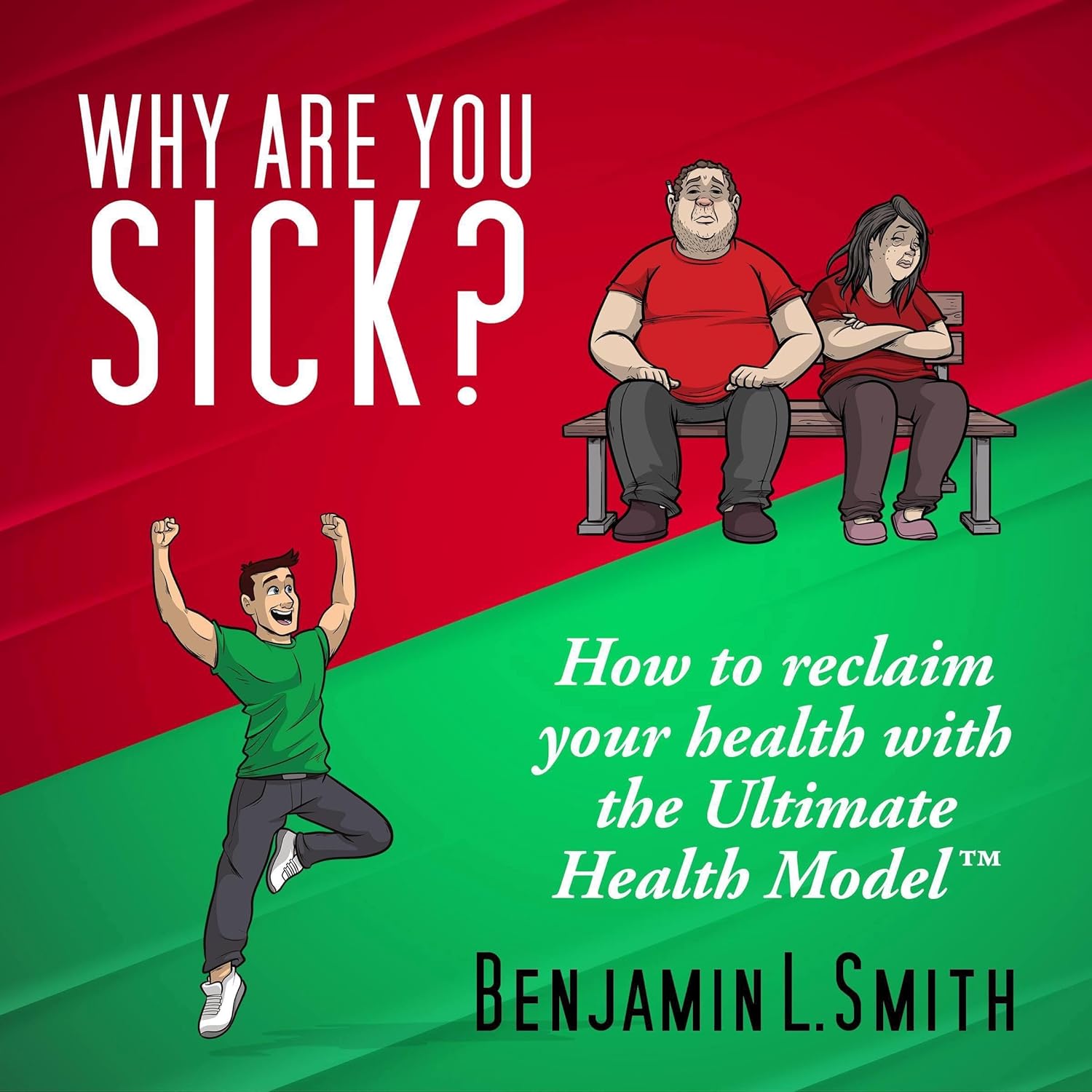
The audiobook starts by pulling back the curtain on the lies and myths we’ve all been fed about health. From the first chapter, the narrator makes it clear that this is not another fad diet manual or a magic-pill promise. Instead, he introduces what the author calls the Ultimate Health Model™, a framework that connects cellular health with lifestyle factors like breathing, sleep, water, food, movement, environment, and even thoughts and feelings. He threads personal stories of loss, his own health struggles, and years of research into a narrative that pushes the reader to think differently about sickness. By the end, it feels less like a lecture and more like a wake-up call to reclaim agency over our bodies.
Listening to the audiobook, I found myself reacting in waves. At times, I was nodding along with genuine excitement, especially when Smith explained concepts like structured water or the overlooked role of chronic dehydration. The narrator’s voice is soothing but carries conviction, which makes the listening experience feel calming and informative. The narrator’s passion kept me engaged, and I couldn’t help but admire the author’s dedication to challenging the status quo.
The mix of narrators, Gillian Williams, GM Hakim, Tom Wayland, and Rachel Sloane, keeps the audiobook lively and dynamic, each voice adding its own energy and tone, and hearing directly from the author himself makes the experience feel even more personal and authentic.
The book feels personal. Author Benjamin Smith shares stories of losing loved ones to cancer, his own battles with asthma and fatigue, and the frustration of watching mainstream medicine ignore what he sees as obvious connections. That vulnerability gave weight to his arguments. I also liked how he broke up serious topics with humor, casual asides, and even a few sharp words. It made the audiobook feel conversational. It was heartfelt and, at times, surprisingly inspiring.
I’d recommend Why Are You Sick? to anyone who feels stuck in their health journey and wants a fresh perspective. It’s not an audiobook for someone looking for a rigid plan or a neat list of do’s and don’ts. It’s more for the curious, the frustrated, and the open-minded listener who’s willing to sift through bold ideas, personal stories, and unconventional advice to find what resonates. If you like your audiobooks passionate and provocative, this one might be exactly what you need.
6 Hours and 22 Minutes | ASIN : B0FN4S3DMB

Strength Training for Seniors Over 60: Safe and Effective Exercises to Improve Balance, Increase Mobility, and Stay Independent in Just 20 Minutes a Day

After reading Strength Training for Seniors Over 60 by Adina Vitalis, I came away feeling both informed and inspired. This guide is packed with practical advice, engaging encouragement, and detailed instruction designed specifically for older adults looking to improve their strength, balance, and independence. The book breaks down the science of aging and how tailored exercise can combat common issues like muscle loss, joint stiffness, and fall risk. Structured workout plans, safety tips, and lifestyle insights, including nutrition, sleep, and mindset, are all covered in a clear, conversational tone. Best of all, it promises real change in just 20 minutes a day, which makes it feel both achievable and sustainable.
What I liked most was the way the author addresses fear and doubt head-on. Adina Vitalis has a knack for making you feel seen. She anticipates the common excuses or anxieties like “I’m too old,” or “I might fall,” or “I don’t have time,” and gently dismantles them with facts, compassion, and stories of real seniors who made it work. The voice is friendly, and she’s practical without being boring. The chapter on building a home workout space with stuff you already have really resonated with me personally. It reminded me that exercise doesn’t have to be complicated or expensive. Her analogies, like the one comparing our bodies to aging cars that need maintenance, are simple, relatable, and effective.
One thing I appreciated was how the book reinforced key ideas throughout. Topics like goal setting and the benefits of resistance bands come up more than once, which really helps the messages stick. This kind of repetition can be a great way to make sure the information sinks in, especially for readers who are new to exercise or returning after a long break. The writing stays focused and purposeful, consistently reminding you of what matters most. At times, it felt more like a knowledgeable coach guiding you step by step rather than rushing ahead, which makes the book feel steady, thoughtful, and built to support long-term success.
I’d recommend this book to anyone over 60 or even approaching it who wants to take control of their health and stay independent longer. It’s especially great for people who’ve never exercised or are coming back to it after a long break. If you’ve got aging parents or grandparents who could use a little nudge, this book is a gentle but firm push in the right direction. It’s not flashy or filled with gimmicks. It’s just solid advice, clearly laid out, with real heart behind it.
Pages: 144 | ISBN : 978-1069069900
Healing Is Possible
Health on Fire shares with readers your knowledge of biological principles, such as metabolism, oxidation, and enzyme function, to support your belief that to reclaim their health, people need to make radical changes in diet and lifestyle. Why was this an important book for you to write?
I was sick for many years, and despite my respect for the medical industry, it could not offer me a true cure. While conventional treatments helped me manage symptoms and gave temporary relief, they didn’t address the root cause of my health issues. After years of research, I discovered that many chronic conditions are directly related to what we put into our bodies—and how we damage our food through processing and, most significantly, cooking.
When I started nourishing myself with clean, unprocessed, and uncooked foods, the transformation was incredible—my body began to heal. I also interviewed others who had adopted a natural lifestyle and experienced similar results. As I continued to study, I found solid scientific evidence showing that a raw, plant-based diet can help people reverse chronic diseases and restore health naturally.
This book was born from a deep desire to share those findings. Health on Fire is not just based on personal experience—it’s backed by science. I’ve included research references throughout the book so readers can explore the evidence for themselves.
Ultimately, this book is about empowering people to take back control of their health. And beyond individual healing, embracing a raw vegan lifestyle benefits not only our wellbeing but also our natural resources and the planet we share.
What is one thing about a raw vegan diet that you think is misrepresented in the media?
One of the biggest misconceptions is that a raw vegan diet doesn’t provide enough protein. Many people still believe that protein only comes from meat and animal products, but that’s simply not true.
If we look at nature, we see powerful animals like gorillas—who eat mostly fruit and leafy greens—and elephants, with their enormous muscle mass, thriving entirely on plant-based diets. These animals build strength and muscle without ever consuming animal protein.
It’s the same for humans. There are many vegan athletes and bodybuilders today who are living proof that you can build muscle, strength, and endurance on a plant-based diet.
The idea that animal products are essential for protein is outdated. In reality, all protein originates in plants; animals just act as the middlemen. By going straight to the source—raw, whole plant foods—we can meet all our protein needs in a cleaner, more efficient, and healthier way.
What were some ideas that were important for you to share in this book?
One of the core ideas I wanted to share is that going fully raw can support the body’s natural ability to heal itself—even from chronic diseases like diabetes, multiple sclerosis, and in some cases, cancer.
Through my research and personal experience, I came to understand that in many cases, our food and drink choices are the root cause of our health problems. When we eliminate processed, toxic, and unnatural foods and replace them with clean, raw, living plant foods, the body can begin to repair the damage and activate its innate healing mechanisms.
It was deeply important to me to show that healing is possible. I wrote this book to help people who are suffering—to offer them real hope and a path forward through natural, science-backed principles. Everyone deserves the chance to live free from pain, and I believe nature has already provided everything we need to heal and thrive.
What is one thing that people point out after reading your book that surprises you?
The reality is, I’m not surprised by the reactions—because I knew that much of the information in the book would be completely new to most people. What readers often point out—and what surprises them—is that they’ve never heard this before. Many ask why the medical industry or doctors don’t talk about these things, or why the government doesn’t promote a raw, plant-based lifestyle despite its clear benefits.
Their response highlights just how much vital, healing knowledge is missing from mainstream health guidance—and it’s exactly why I felt called to write this book.
Author Links: GoodReads | Website | Amazon
What is the state of your health?
Or better yet: Do you believe your health is your choice? 🧠💚
If your answer is YES, then Health on Fire is the guide you’ve been searching for — a bold, practical manual to reclaim your wellbeing naturally. 🌿
📘 Inside this transformative book, you’ll discover:
➤ How to lose weight naturally without counting calories
➤ How to restore energy, clarity, and vitality 🌞
➤ How to break free from chronic illness and inflammation
➤ Why a raw vegan and fruitarian diet supports deep healing
🌱 This isn’t theory — it’s a lifestyle that works.
The healing approach detailed in this book has helped thousands of people around the world:
✅ Reverse type 2 diabetes
✅ Overcome autoimmune conditions
✅ Support recovery from cancer
✅ Reduce fatty liver
✅ Some could eliminate the need for medications and even painkillers
🔬 Grounded in science and lived experience, this food-as-medicine blueprint provides a sustainable, step-by-step path to:
✨ Lifelong health
✨ Natural healing
✨ A body you feel proud to live in — without harsh diets, drugs, or fads
💡 Whether you’re seeking natural weight loss, healing from chronic disease, or simply want to feel vibrant again — this book empowers you to take control.
🎯 Because your health is your choice.
🔥 Let your journey to Ultimate Health begin today.


