Blog Archives
Quietly Philosophical

The Last Orbit follows a crew of four astronauts aboard the ISS as they witness the destruction of Earth by an asteroid and realize they are alone in space. What was the first image that sparked your story — the asteroid, the ISS, or the idea of watching the end from a distance?
The distance.
I had the visual of the impact from space first — almost like a pebble dropped into a pond, with concentric rings radiating out from the centre. From that height, it looked strangely peaceful.
Then I played with the idea of the crown of water splashing upward at the point of impact — something catastrophic, yet quite beautiful when seen from a distance.
That contrast stayed with me: unimaginable destruction reduced to something visually serene simply because of how far away the observer is.
Each astronaut responds differently to catastrophe. How did you develop Ava, Greg, Koji, and Lena as emotional counterweights to one another?
I suppose they’re all facets of the same person.
I needed a commander in Ava — someone who could take charge when everything fell apart. Greg is the heart of the crew, the emotional glue that keeps them human. Lena is the workhorse, the one who keeps moving because stopping would mean thinking. And Koji is the voice of reason — reflective, grounded, and quietly philosophical.
Together they form a complete emotional response to catastrophe, allowing different ways of processing grief to exist side by side.
What balance were you aiming for between scientific accuracy and emotional storytelling?
I started with very little scientific knowledge beyond the basics, but I knew enough to research what I needed to make the setting plausible.
I didn’t want the technical detail to overpower the real story. The Last Orbit isn’t really a space novel at all — it’s a human one. Space is simply the environment that strips everything back.
As long as the science felt grounded and believable, it allowed the emotional side of the story to breathe. Once the reader accepts the reality of the situation, the focus can stay where it belongs — on the people living through it.
What is the next book that you are working on, and when can your fans expect it to be out?
It’s a complete change of environment this time.
The next novel is titled Mya, a traditional gothic horror set in 1880s England — gas lamps, fog, cobbled streets, and long shadows. It’s very nearly finished and is scheduled for release in early February.
This will also be the first story in a connected universe of horror I’m developing — not a strict numbered series, but a shared world with overlapping characters, locations, and events for readers who enjoy discovering those links.
Author Links: GoodReads | Amazon
When a catastrophic impact hits Earth, four astronauts are left circling a silent planet — their mission meaningless. Cut off from command and running out of time, every decision could be their last.
As the truth of what happened unfolds, fear, hope and love collide in the cold vacuum of space.
The Last Orbit is a haunting, cinematic thriller about the human spirit at the edge of extinction.
Companion playlist included inside.
An optional layer to explore after the story
Clyde
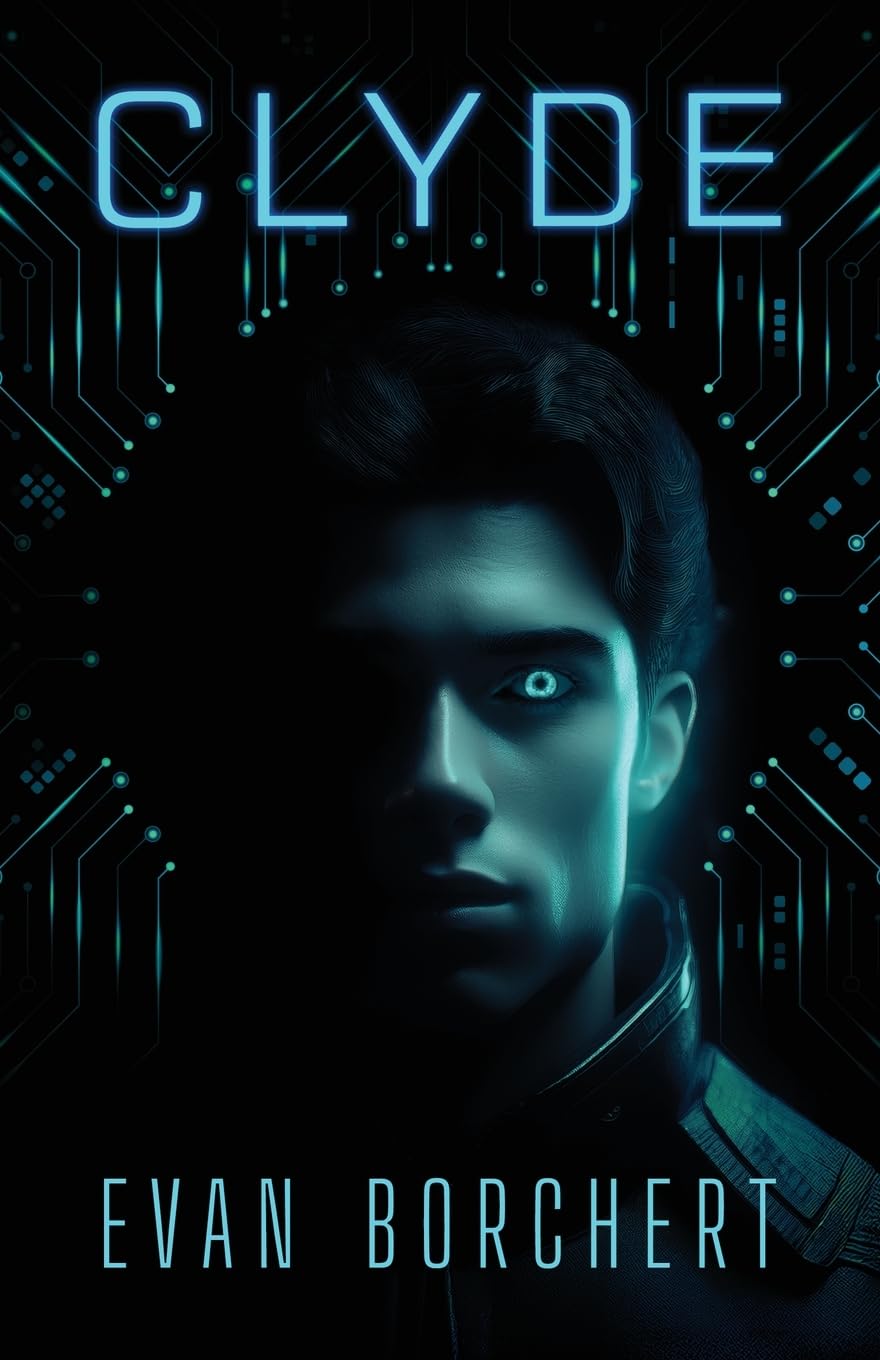

Clyde, by Evan Borchert, follows a man who wakes with no memory, no body to speak of, and no control over his senses. He exists in a strange limbo where lights flash behind eyes he cannot blink, and a doctor he nicknames Jim Bob pokes at him while speaking in cheerful tones that feel all wrong. As Clyde slowly discovers what has happened to him, he builds internal systems to protect his identity, holds tight to scraps of dreams, and pieces together the truth of a shattered world and of himself. The story grows from a claustrophobic medical mystery into a post-apocalyptic adventure filled with danger, grief, technical puzzles, and a surprising amount of heart. It becomes a journey of rebuilding a life that has already ended once.
The writing is straightforward but sharp, and it kept me glued to every shift in Clyde’s awareness. I kept feeling this strange mix of dread and wonder as he uncovered each new detail about his condition. The book takes its time with those moments. The pacing builds pressure little by little instead of throwing big twists for shock value. I also appreciated how the story handles isolation. Clyde’s frustration, his humor, and his fear all felt genuine. I caught myself rooting for him early on, even when I knew the truth he was digging toward would hurt.
There’s a lot in here about identity and autonomy and the way technology can save us or break us, depending on who controls it. Some scenes made my stomach twist, especially when Clyde learns how much of his past is gone for good. Other parts made me grin, for instance, when he starts outsmarting the systems built to contain him. I appreciated how the book never leans too hard into scientific jargon. The tech stays clear and readable. The emotional beats sit right on the surface. And the world-building, especially once the bunker and its people come into play, feels lived-in without ever slowing the story down.
Clyde left me thinking about what actually makes someone whole. The book mixes tension, sadness, and hope in a way that made the last chapters stick with me. I’d recommend it to readers who enjoy character-driven sci-fi, anyone who likes survival stories with emotional weight, and people who want a mystery that unfolds piece by piece instead of rushing straight to the point. It’s a thoughtful, surprisingly warm story wrapped inside a gripping science fiction shell.
Pages: 282 | ASIN : B0G54BJQ83

Navigating Expectations

Broken Alliance follows the Venture’s crew as they uncover a conspiracy tied to black-market thetic technology, corporate power grabs, and the lingering ghost of Sovereign. How did your goals for this book differ from the first installment?
While Tracer was about introducing the crew and establishing the stakes of their world, Broken Alliance shifts the focus to the ‘aftermath.’ I wanted to explore the consequences of their initial decisions—not just for the Venture crew, but for the Settled Systems at large. In many ways, this second book was easier to write because the characters’ voices were already established; however, the challenge lay in ensuring their growth felt organic. My goal was to navigate the expectations set in Book 1, sometimes fulfilling them and other times intentionally subverting them.
Characters are often forced to make imperfect choices. Are you more interested in right answers or honest ones?
Most of us go into heroic stories expecting the characters to make the ‘right’ choice. It’s an expectation built by the books and movies we’ve grown up with. To me, that’s why literature is so vital—it teaches us what it means to be human on this tiny planet. Even when authors ‘flip the script,’ we still have that core desire to see good triumph over evil. I try to lean into honest answers wherever possible, but leading my heroes toward a morally right conclusion is ultimately how I share my own values through my work.
What makes chosen family such a powerful counterweight to failing institutions?
We’ve all been told that you can’t choose your family—that ‘blood is thicker than water.’ Personally, I believe that’s a falsehood. There is no greater bond than one forged in a close-knit circle of friends who have proven, time and again, that they have your best interests at heart. These are not always the people who share our blood, but they are often the ones who have bled with us. We can no more choose our relatives than we can choose the systemic world we were born into, but we can choose who to accept as our true family—just as we can choose to speak up against tyranny and corruption.
The ending offers a pause rather than closure. What threads from Broken Alliance are you most excited to explore next?
My goal was to provide a sense of closure for this specific arc while hinting at the larger story still to come. Each character has changed so much, but for me, the most exciting part is knowing they have much further to go. We’ve only scratched the surface of the Tracer universe in these first two books. I’m looking forward to expanding the scope of the series and perhaps even stepping outside the current saga to explore these characters from new perspectives.
Author Links: GoodReads | X | Facebook | Website
The crew of The Venture—Andre, Bex, Bishop, and Caleb—are now Alliance Tracers, tasked with hunting down those who seek to capitalize in the wake of Sovereign’s defeat. But loyalty is a fragile thing in a universe still reeling from the brink of destruction. Meanwhile, General Katherine Mallory navigates a treacherous new battlefield, facing enemies as formidable in the Council Chambers as any on the front lines. And deep within Trelin Base, Commander Bryton guards the galaxy’s most dangerous secret: Sovereign, whose unnatural power remains an ominous threat.
Old wounds fester and new forces rise, all vying to unlock Sovereign’s power. As the fragile peace threatens to unravel, these heroes must choose where their allegiances lie. Will the Alliance endure this new era, or is it doomed to collapse and shatter into a Broken Alliance?
Quantum Weirdness

Diverging Streams follows two young lovers who, after an accident, are separated and reunited twenty years later by another accident, leaving them with the ability to travel through time and dimensions. What was the inspiration for the setup of your story?
I began working on this book over 30 years ago, and I really don’t remember any particular inspiration for it. At one point, in 2008, I gave up on it and published Chapters 2 and 3 as a stand-alone short story, but about 2010, I took it up again and finished it in 2015.
Your novel has some interesting characters with their own flaws, yet they are still likable. How do you go about creating characters for your story?
I know it sounds corny, but I listen to my characters and allow them to develop their own personalities. I like to compare it to those old Max Fleischer cartoons in which Betty Boop or Koko the Clown climbs out of the ink bottle onto the paper. And once the characters are fully developed, I let them write the story for me. I feel more like an observer than the creator.
The science inserted in the fiction, I felt, was well balanced. How did you manage to keep it grounded while still providing the fantastic edge science fiction stories usually provide?
I have long believed that time, like space, is three-dimensional, which I maintain offers the best explanation for quantum weirdness. The world I have created—the constantly dividing and diverging time streams, each with its own unique reality, follows necessarily from multidimensional time. Although the afterlife, as I have described it, is more speculative, it is perhaps more a case of probable than merely possible.
Will this novel be the start of a series, or are you working on a different story?
I have no interest in further pursuing this story. I have finished two more novels: Conniption Creek, a dark comedy in the tradition of Catch 22, and The Swing Time Soda Emporium, a coming-of-age story set in small-town America during the 1940s, which I hope to publish by late this year or early next.
Author Links: GoodReads | Amazon
Consistent with the many worlds interpretation of quantum physics, time—like space—is three-dimensional, with a nearly infinite number of constantly dividing and diverging time streams, each stream containing its own unique reality.
Broken Alliance

Broken Alliance is a character-driven science fiction adventure that picks up right where Tracer leaves off. We follow Bex, Andre, Kat, and the rest of the Venture’s crew as they uncover a conspiracy tied to black-market thetic technology, corporate power grabs, and the lingering ghost of Sovereign. The stakes scale from street-level desperation to full political upheaval, with personal loyalty binding the whole thing together. By the time the dust settles, alliances shift, institutions crack, and the characters have to decide who they want to be in the systems they’ve helped reshape.
Author David Graham writes with a steady rhythm: some moments hit hard and fast, like the firefight in the Paramor or Bex racing across rooftops; others stretch out with quieter emotional beats, especially in the aftermath scenes near the end of the story. What I appreciated most is how the book doesn’t rush the characters’ inner shifts. Bex’s relationship with identity and agency, Andre’s weariness and stubborn hope, Kat’s complicated sense of duty, these all felt grounded. Even when the plot leaned into big sci-fi spectacle, the emotional center stayed human.
The author also makes some interesting choices about power structures and responsibility. The political hearings, the scramble over the Trelin Base project, and the moral ambiguity of the Alliance add a sharper edge to the adventure (the council scenes show this well). Sometimes the villains are overt, like Davenport, but more often the danger feels systemic, which makes the world feel authentic and messy. I liked that the story refuses a clean resolution. Even the epilogue acknowledges the work still ahead while nudging us toward future threads in the Settled Systems.
By the time I turned the last page, I felt satisfied but also curious. The ending gives the characters a breather, a moment of found-family warmth, and a hint that their fight isn’t done. It’s a good tone to leave on: hopeful but honest. If you enjoy sci-fi that balances action with character, especially stories about crews who choose each other again and again even when the galaxy keeps breaking around them, this one will land well. Fans of The Expanse, Mass Effect, or any tight-knit-crew narrative will feel right at home.
Pages: 418 | ASIN : B0DYVSVTML

Diverging Streams


Diverging Streams is a work of literary science fiction that blends time travel, alternate realities, and deeply human moments. The novel follows Haskell Yngren across multiple timelines, weaving together pivotal events from adolescence, adulthood, and parallel versions of his life. What begins as a vivid, often humorous barroom incident expands into a meditation on chance, memory, desire, and the small decisions that quietly fracture a life into many possible paths.
Author Earl L Carlson writes with a confident, old-fashioned storyteller’s rhythm, the kind that is unafraid to linger. He pauses to philosophize, to explain, to wander off briefly and then return. The prose is rich but not showy. He trusts long scenes and detailed observation, especially when he is writing about adolescence, embarrassment, longing, and those fragile moments when everything feels charged and irreversible. Some passages are genuinely funny, others almost uncomfortably intimate, and that contrast feels intentional.
The story leans into digressions and omniscient commentary, sometimes stepping well outside the action to reflect on culture, sexuality, or human cruelty. Still, those same detours are also where the book’s personality lives. The speculative elements are never flashy. This is not a fast, gadget-driven science fiction novel. Instead, the genre functions as a framework for asking what might have happened if a single moment tilted another way. The alternate timelines feel less like puzzles to solve and more like emotional echoes.
I felt that Diverging Streams is best suited for readers who enjoy reflective, character-driven speculative fiction. If you like science fiction that behaves more like literary fiction, are curious about time but deeply invested in memory, desire, and consequence, this book will likely resonate. It rewards patience and a willingness to sit with discomfort, humor, and nostalgia all at once.
Pages: 172 | ASIN : B0FP5TSF7T
Those Alien Skies

Those Alien Skies is a sharp and imaginative collection of three novellas that dive into the vast unknown of space and the strange corners of the human mind. Each story, The Hunt for Elias Weber, Few and Far Between, and Battle Lines, is a window into a galaxy thick with mystery, alien worlds, and the stubborn will of people trying to find meaning in chaos. The tales follow the aftermath of Graham’s Milijun series, exploring how humans and aliens intertwine, clash, and sometimes find common ground across unimaginable distances. It’s part science fiction, part reflection on what drives us to explore, to fight, and to survive.
I enjoyed this book more than I expected. The writing is crisp and easy to fall into. There’s no heavy technobabble or confusing jargon, just vivid storytelling that pulls you along. Graham’s imagination is wild, but he keeps his worlds grounded in emotions like grief, loyalty, guilt, and curiosity. Elias Weber, one of the central figures, feels real in his flaws and his desperation. His moral decay is slow and chilling, and I found myself both frustrated by him and oddly sympathetic. Graham balances those shades of humanity so well. Sometimes the pacing dips a little, and a few scenes run long, but the payoff always comes. There’s a rhythm to his storytelling that feels cinematic, yet somehow deeply personal.
What really got me, though, was the heart behind the words. This isn’t just about aliens and spaceships. It’s about what happens when belief and doubt collide. It’s about the need for redemption in a universe that doesn’t seem to care. I felt that in every page. Some parts made me stop and think about the way we treat truth, how easily we bend it to suit ourselves. There’s a subtle sadness that lingers underneath all the adventure, like a quiet hum of loss and hope mixed together. And when Graham lets his characters breathe, when he slows things down and lets them wrestle with their fears, that’s when his writing shines the most.
I’d recommend Those Alien Skies to readers who love thoughtful science fiction but don’t want to get buried in technical detail. It’s perfect for anyone who likes their space stories with a touch of philosophy and a pulse of real emotion. If you’ve read the Milijun trilogy, this feels like coming home; if you haven’t, it stands well enough on its own. It’s a book that makes you think and feel at the same time, and that’s a rare thing these days.
Pages: 347 | ASIN: B0FRG7VK6P
Chaos from the Cosmos

Chaos from the Cosmos is a sweeping, cinematic novel that weaves space technology, politics, and human ambition into a fast-moving geopolitical thriller. The story begins with Jackie Jill, a firebrand from rural California who rockets from small-town scandal to the U.S. vice presidency, and follows her alongside the cold genius President Bradford, the haunted astronaut Kiril, and the global powers manipulating events from behind the scenes. As nations battle over control of satellites, quantum computing, and the invisible systems that run our world, the book explores how space, a realm we often view with awe, has become the new front line of human conflict. It’s both speculative and alarmingly real, painting a future that feels close enough to touch.
The author writes with a crisp, cinematic eye for detail, making every scene, from backroom deals in Washington to drone swarms over Taiwan, pulse with tension. His prose is tight but not cold, and he has a knack for slipping big ideas into everyday moments without turning the story into a lecture. I liked that he doesn’t shy away from politics or human messiness. Jackie Jill, in particular, felt alive, loud, funny, damaged, and unapologetically herself. I found myself rooting for her even when she made questionable choices. Bradford, on the other hand, unnerved me. He’s brilliant but hollow, a mirror of our own age of clever leaders who mistake intellect for wisdom. The book never lets you relax. Every comfort in technology feels like a ticking bomb.
What struck me most was how human the book remains despite its cosmic scale. The tech and strategy are grounded in real science, but the real story is about people. Loneliness, pride, fear, ambition. I could feel the tension between progress and control, wonder and destruction. There’s a dark humor running through it, too, especially in how people justify madness as “innovation.” Sometimes I laughed, sometimes I felt sick, and sometimes I had to pause and just sit with what it said about us. The writing has a rhythm that keeps you hooked, shifting from sharp political dialogue to lyrical descriptions of space and silence. It’s smart without being pretentious, and heavy without being hopeless.
Chaos from the Cosmos hit me as both thrilling fiction and a warning. I’d recommend it to anyone who likes their science fiction tangled up with politics and human drama, or to readers who enjoy the sharp realism of Tom Clancy but crave more emotional depth. It’s not just for sci-fi fans, it’s for anyone curious about where our dependence on satellites, AI, and global systems might really lead. This book doesn’t just show chaos from the cosmos; it shows the chaos inside us, reflected right back from the stars.
Pages: 228 | ASIN : B0FCSM42MT


