Blog Archives
Essential Human Longings
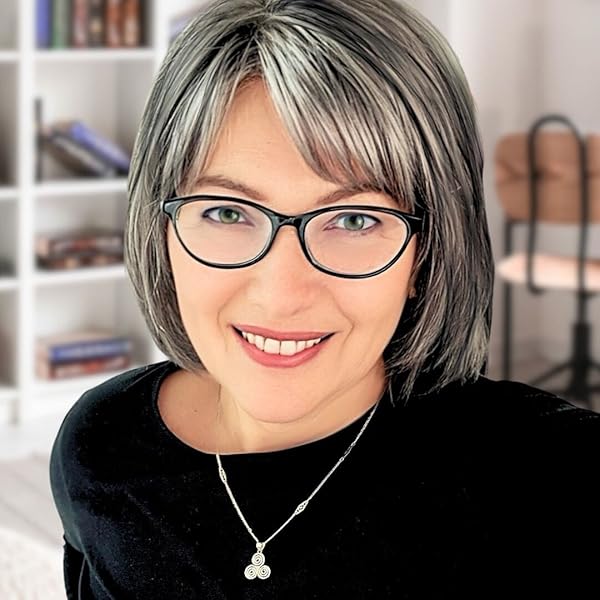
Valor, Book Two, follows a young woman of Druidic blood who flees her past and confronts prophecy, peril, and the awakening of her own fierce magic as she steps into a destiny shaped by sacrifice, love, and rebirth. What ideas did you want to introduce in this book that were different from Book One?
In Book One, Sacrifice, Ena—also known as Catherine—is a young woman caught between duty and desire, shaped by the rigid expectations of noble birth and Christian decorum. Her understanding of herself is narrow, inherited, and heavily prescribed. She moves through the world reacting to forces around her.
In Valor, I wanted to explore what happens when that same young woman chooses to step outside every boundary that once defined her. This book shifts the tone from repression to autonomy. Ena sheds the identity that never fit and takes responsibility for forging her own path, even when that path is treacherous, lonely, or morally complex.
So the new ideas I wanted to bring forward are rooted in personal sovereignty; claiming one’s freedom, and experiencing the profound, often painful unfolding of selfhood. Valor is more about becoming. It’s the story of a woman who confronts both the darkness behind her and the light rising within her, and discovers the courage required to inhabit her true self.
The book balances sudden bursts of violence or magic with quiet, sacred moments; how did you approach crafting that rhythm in your storytelling?
Crafting is an interesting term here. Because these quiet pauses that occur—mostly after some intense rising action—occur more organically than by any attention to planning. After scenes filled with danger, magic, or emotional upheaval, both the reader and I need a breath! I write from inside the characters’ bodies, minds, and hearts, so those quieter moments feel instinctive—almost like a spiritual exhale. They become sacred spaces within the narrative where meaning can settle, and where transformation can take root.
Mysticism and dreamlike imagery play a strong role in the book’s atmosphere. What mythologies or symbolic traditions influenced your vision for this world?
That’s a great question!
For most of my life, I’ve been fascinated by the worlds that existed before organized doctrine—mythology, symbolism, and forgotten religions, especially the Druidic traditions. Valor draws heavily from years of exploring these ideas. One major influence for this book is Hermeticism, attributed to Hermes Trismegistus, a figure who bridges Greek and Egyptian wisdom traditions. The Hermetic axiom “as above, so below,” and its counterpart “as within, so without,” form a subtle backbone in the series.
Other contributing traditions include the I Ching, Vedic wisdom, and Christian mysticism. On the surface, readers will see the conflict between paganism and the rising Holy Roman Church. But beneath that lies a deeper theme: that across cultures, religions, and mythologies, we share the same essential human longings—to understand ourselves, to find meaning, to feel love, and to experience the sacred.
What can readers expect in Book Three of The Evensong Enchantments series?
Well, lots more magic! In Book Three, Truth, Ena’s gifts continue to evolve and ultimately reach their apex. The stakes intensify when a powerful bishop sets his sights on her young son—heir to the throne—for his own personal and spiritual ambitions. This threat strikes at the core of Ena’s beliefs and forces her into a battle on multiple fronts: political, mystical, and deeply personal.
The narrative carries readers to some of the most evocative settings in medieval Europe, including the sacred crypt beneath Chartres Cathedral and the enchanted Valley of No Return within Brittany’s magical Forest of Broceliande.
Truth blends gritty medieval reality with liminal, mythic spaces where Druidic magic, Celtic lore, and Christian dogma collide. Ultimately, Ena must rely on her heritage, her allies, and her awakening powers to secure her son’s destiny and usher in a new era grounded in enlightenment, understanding, and true fellowship.
Author Links: GoodReads | X (Twitter) | Facebook | Website | Amazon
Escape to the Middle Ages with the fierce heroine of this series, as her inherited gifts come to life on a perilous journey to the Middle East.
In distant lands, Ena must confront her darkest shadows to face an ancient force that still covets her powers, while Philip, now king of the Franks, struggles with the weight of his new regime—and his undying love for her—as the First Crusade threatens to consume them both.
As her path intertwines with Bernard Ato, the enigmatic Viscount of Nîmes, his loyalty to the Church and the campaign of the Holy War is a harsh reminder of Philip’s vexing blind faith. Will Ena’s growing attraction to Bernard hinder her journey—or ignite her purpose as an instrument of the Divine Feminine?
For those who love magical realism, profound romance, and historical fiction, Valor is a must-read. If you are captivated by enchanting worlds and gripping medieval tales, you will not be able to put down this riveting blend of history, chivalry, romance, and fantasy.
Buy your copy today and be swept away in the immersive world of Valor, Book Two of The Evensong Enchantments.
Elemental Magic
Sacred Sites
The First Crusade
Slow-burn Romance
Druidic Prophecy
Strong Heroine
Potential Triggers: killing, death, war, violence, trauma, loss and grief, famine and plague, attempted rape, demonic possession, religious persecution, graphic childbirth, near death experience.
Spice level = 1 out of 5 (no smut)
Parents: This book is suitable for ADULTS ONLY.
Boy of Heaven
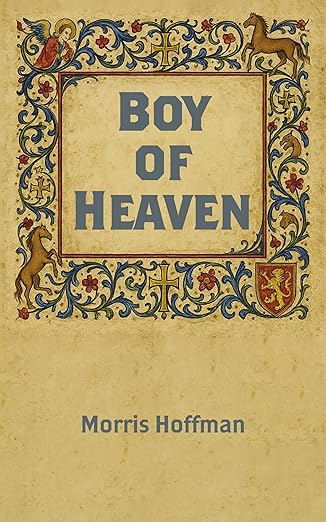

Boy of Heaven, by Morris Hoffman, tells the story of an orphan boy in 17th-century Milan who discovers a fading mural, Leonardo da Vinci’s The Last Supper, hidden in what has become the stables of a Dominican priory. As the boy labors among horses, he has named after constellations; he alone sees the painting’s slow return to clarity. What unfolds is a lyrical meditation on suffering, faith, grief, and vision. Hoffman’s novel blends historical fiction with a mystical edge, threading deep emotion through a richly imagined world.
Reading this book pulled something quiet but insistent from me. Hoffman’s writing is unusual, almost liturgical in rhythm. It doesn’t always make for an easy read, but it makes for a rewarding one. There were passages I reread just to feel them again. The boy’s interior world is raw and lonely, but never melodramatic. There’s very little action in the conventional sense. Instead, the story unfolds through daily labor, small kindnesses, and sacred echoes. And yet, I found myself emotionally swept up in the boy’s grief for a horse, his awe at a fresco, his quiet yearning to be seen.
I feel the book drifts at times. There were sections where the pace slowed, where there were long descriptions of the priory or repeated imagery. Everything is so reverent. Still, what the book lacks in momentum, it makes up for in heart. The blend of the sacred and the mundane, the way the horses become mythic, the mystery of the fresco, that’s where it shines. It doesn’t explain itself, and that made it feel more honest and more relatable.
Boy of Heaven isn’t just about art or faith or even memory. It’s about seeing what others miss and holding on to what shouldn’t be forgotten. It’s a quiet book, but it left a loud feeling. I’d recommend it to anyone who loves poetic writing, historical fiction with a spiritual bend, or stories where nothing much happens on the outside but everything changes on the inside. This is not a book to speed through. It’s one to sit with, one to cherish in silence.
Pages: 90 | ASIN : B0F7C4BSRP

Vampires Are Our Friends

Immortal Gifts follows a centuries-old Jewish vampire on the run from an antisemite trying to make him permanently dead, who falls in love with a mortal woman in the twenty-first century. What was the inspiration for the setup of your story?
The original concept was a one-time challenge with my writing group: “The vampire has a wife. Set the story in the last five years.” Several people submitted wildly different stories. Mine turned into Immortal Gifts.
I’m a Pantser, and it’s a normal part of my process to reread what I’ve written and extract subtext. Early on, I started to feel that the character was Jewish. That was interesting, so I went with it.
A lot of Abraham’s early biographical details (date and place of birth and desire to study at an academy that does not allow Jews) came from the life of Jewish composer Louis Lewandowski. Obviously, Abraham is not Lewandowski! But Lewandowski ended up being the first Jewish student at the Berlin Academy. Lewandowski was admitted as a favor to his friend, Felix Mendelssohn. Abraham, not having a Mendelssohn, lied.
Abraham is not the typical vampire often found in paranormal books; he offers readers a human perspective on supernatural beings and explores how immortality affects who they are. What were some of the emotional and moral guidelines you followed when developing your characters?
I was primarily interested in the concept of immortality in choosing vampires. It’s true that my vampires have the no-food and sunlight issues, but that was primarily so the reader wouldn’t immediately say “Immortality? Sign me up!” 🙂
Aside from that, I wanted my vampires to be very grounded in reality. Vampires are always people—that’s one of the things that makes them fun to me—but I wanted them to be very much the person they always were. If someone is a good person, eternal life in itself won’t change that. If someone is a bad person, immortality won’t change that, either. In other words: it’s your choices and actions, not the length of your life, that determines your moral alignment.
Early on the question of consent started coming up. Turning someone without asking permission first is, at the very least, a faux pas. When is it justified? Is it okay to turn someone without their consent to save their life if they haven’t offered an opinion? When is it okay to make someone’s medical decisions for them? Because that’s what it is in my book: a miracle cure for almost any ailment that also has significant drawbacks.
What were some themes that were important for you to explore in this book?
Mortality. Grief. Consent. Resilience in the face of oppression.
At one point I was describing the book to my sister and told her, “Don’t be afraid of the vampires. Vampires are our friends. You know what’s not our friends? The natural processes by which our loved ones get sick and die. Those are horrifying.” (Our parents are both dead, by the way.)
Will there be a follow-up novel to this story? If so, what aspects of the story will the next book cover?
I’m working on the second book, and we’re still talking about mortality (and gifts). We did leave off with a couple of characters in uncertain situations and had a reveal about a third.
A lot of Immortal Gifts was written during the pandemic and has a lot of pandemic-feeling isolation. The second book is shaping up to be more… sociable.
Author Links: GoodReads | Facebook | Website | Amazon
Prussia, 1841. Abraham only ever wanted to play violin. Hiding his Jewish status so he can study at the prestigious Berlin Academy of Music, the eager young man is delighted to find a patron who believes in him. But he’s mortified when his new friend turns him into a vampire… and Abraham earns the fury of an ancient antisemite who vows to see him permanently dead.
Fleeing the hate-mongering fiend across the decades, the sensitive violinist at last settles in twenty-first-century New Jersey with a mortal woman. But when he discovers his relentless tormentor has tracked him down yet again, Abraham despairs he’ll never find true happiness.
With everyone he’s ever loved at risk, can he escape the rage of a ruthless bigot?
In a complex tale woven through history, Katherine Villyard delivers a fresh and insightful twist on the vampire novel. Infusing the narrative with profound themes of love, betrayal, and the nature of monsters, she crafts an unforgettable saga of surviving prejudice that will keep readers turning pages deep into the night.
Immortal Gifts is the thoughtful first book in the Immortal Vampires contemporary fantasy series. If you like well-drawn characters, dual-timeline storytelling, and pulse-pounding suspense, then you’ll adore Katherine Villyard’s compelling read.
Buy Immortal Gifts to tap a vein of devotion today!
Immortal Gifts
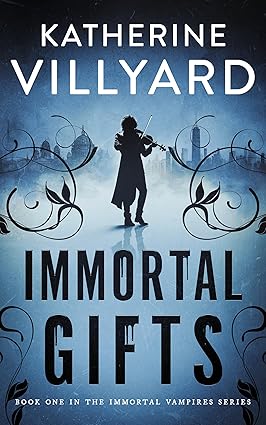

Katherine Villyard’s Immortal Gifts is a tender, layered, and unexpectedly intimate vampire novel that defies the genre’s usual brooding tropes. Instead of sleek, soulless predators, we meet Abraham, a centuries-old vampire who finds comfort not in shadows and bloodlust but in love, cats, and quiet domesticity. His relationship with his human wife, Destiny—a Wiccan veterinarian with a bleeding heart and a sharp wit—forms the emotional center of the book. Through alternating perspectives, we get a story that weaves deep questions about mortality, belief, identity, and love into a slice-of-life narrative where vampire myth meets real-world heartbreak and healing.
The writing is deceptively simple, yet emotionally precise. Abraham’s melancholy charm and Destiny’s fierce warmth play off each other perfectly. The prose flows easily but is filled with poignant moments that sneak up on you. There’s a real sense of lived-in love here, of two souls—one eternal, one ephemeral—trying to bridge an impossible gap. Villyard never glamorizes the vampire life; instead, she shows its weight. The grief Abraham carries for every lost pet, every lost love, feels real. I actually teared up more than once, especially during the sections with Victoria, their aging cat. That mix of supernatural elements with such grounded, human sorrow hit me hard. It’s rare to see a fantasy book so in tune with real emotional textures.
What I appreciated most, though, was how Immortal Gifts manages to be funny and soft even when it’s tackling grief, anti-Semitism, or ethical dilemmas around immortality. The characters talk like real people—awkward, earnest, sometimes ridiculous. There’s no need for purple prose here; the dialogue and emotional beats do all the heavy lifting. And can we talk about the Jewish and Wiccan interfaith wedding ceremony? It was weird, beautiful, and oddly hilarious. I was grinning one minute and choked up the next. Ludwig’s historical flashbacks were chilling, especially his origin story, but they gave the book depth and darkness without overwhelming it. Villyard handles historical trauma with care, and that care is felt.
Immortal Gifts is for people who’ve loved and lost, who find meaning in small rituals and shared quiet. If you’ve ever bottle-fed a kitten at 2 a.m. or struggled to hold it together at the vet, this book will feel like home. It’s for the weird, the tender-hearted, the spiritually curious. For those of us who like our love stories with equal parts warmth and weight, this book is a gift.
Pages: 414 | ASIN : B0DM9YKV2F

How Myths Form

The Borealis Queen follows a resilient young woman marked by a mysterious prophecy who embarks on a perilous journey that intertwines survival, destiny, and the forging of unexpected bonds. What was the inspiration for the setup of your story?
The setup came from wanting to tell a story that felt ancient but emotionally intimate; something that would resonate across time. I was drawn to the idea of a young girl facing the collapse of everything she knows and being forced to survive, not because she’s chosen, but because she’s clever, resourceful, and refuses to break. The prophecy element isn’t about fate in the traditional sense: it’s more about how people interpret strength, especially when it threatens the established order. (A future installment—told as a prequel—will reveal the true origin of the prophecy.)
I wanted to explore how myths form around ordinary people who do extraordinary things. Nin’s journey is perilous, yes, but at its heart, it’s about a girl learning who she is in a world that tries to define her. The bonds she forms (with animals, with her memories, even with silence) came from my belief that survival isn’t just physical. It’s also emotional. And sometimes, it’s the unexpected relationships, even with wild creatures, that save us.
I find the world you created in this novel brimming with possibilities. Where did the inspiration for the setting come from and how did it change as you were writing?
The inspiration for the setting of The Borealis Queen came from a mix of bedtime storytelling, my fascination with prehistory, and a desire to build a world that feels both ancient and mythic—but still grounded in nature and human emotion. I used to tell stories to my kids at night, creating episodes on the fly, and over time, these tales evolved into the foundation of this world. I wanted a setting that didn’t rely on magic or modern tropes, but still felt epic, dangerous, and full of wonder.
The Ice Age gave me that—a time when humans lived closer to the edge when survival depended on wits, instincts, and bonds with animals. The world itself became a character. As I wrote, the setting changed from a backdrop into something almost primal. The wilderness sharpened Nin’s growth, and the creatures—like the Urbaraks and Shadow—took on symbolic weight. It started as a harsh world, but over time, I began to see its beauty and subtle order, just as Nin does. That shift really deepened the emotional core of the story.
What were some themes that were important for you to explore in this book?
ANSWER: I wanted to explore what happens when a person is pushed to the brink—how survival, identity, and resilience take shape in a world that feels hostile, ancient, and raw. One of the most important themes for me was the power of connection—not just between people, but between humans and nature, especially the bond between Nin and the animals she encounters. I was also interested in legacy and mythmaking: how stories about a person can become larger than life, and how that shapes not only how others see them but how they see themselves. Another key theme is agency—Nin is not waiting to be rescued or chosen. She’s crafting her path, sometimes painfully, sometimes defiantly, in a world that would rather crush her than acknowledge her power.
Is this the first book in the series? If so, when is the next book coming out, and what can your fans expect in the next story?
I’m already writing the sequel. The theme is actually hinted at in the final paragraph of Chapter 24, at the end of the book:
‘Word of the tale of the girl slave adorned with beautiful marks on her skin, who rose to become a queen, spread like the fastest birds, soaring across the land and beyond. It traveled all the way to the distant Australis lands, where it caught the attention of an ambitious young king, driven by dreams of world domination…’
That final line opens the door to a larger world and deeper conflicts. It shifts the story from one girl’s survival and rises to something even more expansive—how her legend begins to echo far beyond her homeland, drawing the attention of powers she doesn’t even know exist yet. The theme of how myth and reputation can reshape history is something I’m really excited to keep exploring.
I expect to finish it by early next year. The sequel builds on everything that came before, but with a much wider lens: new lands, new rulers, and greater threats. It explores how one girl’s rise can spark fear, admiration, and ambition across distant lands. I’m enjoying the challenge of expanding the scope while staying true to the emotional core of the first book.
Author Links: GoodReads | Website | Amazon
For readers of Brandon Sanderson and Clan of the Cave Bear—this is not the fantasy of knights and castles, but of raw survival, ancient beasts, and a legend forged in snow and blood.
She was never meant to survive. Nin is the last of her people—captured, scarred, and dragged across the frozen wilds by brutal enemies. But in a land where beasts are dreaded and winter never forgives, she discovers that survival is more than endurance—it’s transformation.
With nothing but a sling, her instincts, and the loyalty of a mysterious saber-toothed Smilodon, Nin must carve a path through ice, blood, and betrayal. As legends rise and clans clash, she becomes more than a girl on the run—she becomes the storm they cannot contain.
The Borealis Queen is a sweeping Ice Age survival fantasy about resilience, instinct, and the powerful bonds between humans and the wild. Perfect for fans of character-driven epics, elemental worldbuilding, and heroines who don’t just fight—but endure.
If you’re seeking a bold, action-packed epic fantasy with emotional depth and cinematic storytelling, this is the adventure you’ve been waiting for.
Palpable Tension

The Matriarch Messiah follows two women who come from different cultural and religious backgrounds yet find themselves bound by an ancient prophecy and mission to save humanity. What was the inspiration for the setup of your story?
First and foremost, the conflicts over the ages between people of both Zara’s and Rachel’s faiths and cultures inspired the story of how peace needs to be found so humanity could survive and thrive. The more recent conflicts highlight the need for peaceful solutions as violence only begets violence – which both Zara, a former Kurdish soldier, and Rachel, an Israeli Torah historian and archeologist, find out by the ending chapters of The Matriarch Messiah. Perhaps these notions are naïve, but we all must have faith that we can find peace among us all.
The legend of the cavern of the blue light stemmed from a sense of gender equality in mythology. The Matriarch Matrix is based on an ancient story passed patriarchally from grandfather to grandson. Much of ancient literature including faith text is patriarchal. The Matriarch Messiah shows a parallel but even more secretive women’s legend passed matriarchally from grandmother to granddaughter. So, even though Zara and Rachel have their initial conceptual and contextual differences, both their matriarchal ancestors ask they follow the prophecy handed down by their grandmothers. In this, they must find a solution by working together. A parable for our times.
What was your inspiration for their characters’ interactions and backstories?
In The Matriarch Messiah, the reviews so far call out the “raw and realistic” interactions between Zara and Rachel. As I credit in the book’s acknowledgments, their spats are based on years of watching my two daughters, who ultimately love each other, go at it for, as we say in French, “n’importe quoi” or whatever or nothing at all. At their core, Zara and Rachel are more similar than different motivated by the same end-game of finding the cavern of the blue light. But as in real life, the external optics of upbringing and sense of what is culturally or religiously correct trip them up.
And the love triangle that some reviewers have praised? That was inspired by Romance Writers of America craft sessions. A romance story must find the romance characters stumbling over obstacle after obstacle until they finally resolve their differences. Setting up Rachel as someone who Zara would despise, especially if Peter ends up in her bed, fueled the palpable tension felt through the back half of the book.
What were some themes that were important for you to explore in this book?
In both The Matriarch Matrix and the sequel, The Matriarch Messiah, I wanted readers to confront their own prejudices and stereotyping formed by our modern world’s premium on “fast take” and “move on” social media. From the reviews, one can discern those who formed judgment very early and did not accept the later challenges to their preconceived notions. Then one can see other reviewers who embraced the “thought-provoking” nature of the reading experience. Much of the social injustice we see today, the intolerance of different cultures and faiths, comes from biases formed from misinformation and/or misunderstanding. My premise is we need to be open to understanding further before we pronounce judgement.
Second, I created the book’s ancients storyline to show a hypothesis of how the seemingly divergent customs we see in the Abrahamic faiths may have started from one source before the days humanity could codify their faith in writing. Myths and religion were passed down orally from one generation to another. Then around 3000 BCE these stories–history was encoded into durable stone and clay. Hence we see a common “flood story” across faiths. The original matriarch, Nanshe, and her descendants hypothetically formed many of the cultural traditions we see in these Western religions. My intent is to show we are more alike than different by showing both the good in what we see today and the horrible acts of war have roots all the way back beyond the first temple at Göbekli Tepe in 9600 BCE.
Will there be a follow-up novel to this story? If so, what aspects of the story will the next book cover?
Nearing first draft completion is the prequel, The Matriarch Mission. Set eighty years prior to the current two books, it takes place in post-civil war Russia. The story provides the background for Rachel’s pursuit of the truth behind Asherah and how her family became intimate with the legend of the cavern of the blue light as shown in The Matriarch Messiah prologue. The protagonist is Oksana, the mother of Rachel’s great-grandmother, Ariella.
As well, we will learn why Alexander Murometz, the ominous puppet master Russian oligarch in The Matriarch Matrix and The Matriarch Messiah, is driven to find the legendary black object at all costs. His grandfather, Zoran Murometz, plays a role in Oksana’s destiny with Asherah and the mysterious Agartthans, who were in real life sought after by Russian and French occultists.
While The Matriarch Mission goes to beta readers in April, I will outline The Matriarch Mandate while on the shores of Mallorca, which will follow the stories of the first two book’s characters eighteen years later. What is worse than fighting oppressors in deadly combat? Raising teenagers!
Author Links: GoodReads | Facebook | Website | Amazon
The Matriarch Messiah is a thrilling science fiction adventure that will leave you breathless. This sequel to The Matriarch Matrix picks up the story six months later, plunging you deeper into a world of conspiracies, forbidden love, and the fight for humanity’s future.
Zara Khatum, a woman haunted by ancient visions, finds herself drawn deeper into the heart of a perilous quest. Guided by a mysterious voice, she seeks to fulfill an ancient prophecy and find the cavern of blue light – a sanctuary rumored to hold the key to saving humanity. But the path to salvation is fraught with danger, and Zara is torn between her destiny and her heart.
A shadowy organization, known as NiQihs, seeks to exploit the power of the legendary black object, the source of Zara’s visions, for their own sinister ends. They are not alone. The world’s superpowers, driven by greed and ambition, race to control the artifact, threatening to unleash unimaginable devastation.
Joining Zara in this dangerous pursuit is Rachel Capsali, a brilliant Israeli archaeologist driven by a personal quest to uncover evidence of Asherah, a forgotten goddess who held a pivotal place in ancient Israelite faith. Unbeknownst to them, both women are bound by a shared destiny – a prophecy foretelling the cavern of blue light and a final, heartbreaking truth: two women will fight to the death, and only one will save us all.
Adding to the complexity, a passionate triangle forms as Rachel vies for Peter Gollinger‘s affection, a man deeply entangled in the ancient mystery. Zara, torn between fulfilling her destiny and her own feelings for Peter, finds herself caught in a web of conflicting desires.
As Zara and Rachel navigate a treacherous landscape of hidden agendas, betrayal, and relentless pursuit, their rivalry for Peter’s affections intensifies. Can love survive the forces that threaten to tear them apart? Will the quest for salvation lead to a heart-wrenching sacrifice?
Dive into a world where:Ancient prophecies clash with modern technology: Discover a world where ancient legends are woven into the fabric of a technologically advanced future.
Intrigue and betrayal threaten to shatter everything: Uncover a web of conspiracies, hidden agendas, and deadly secrets.
A passionate rivalry for love unfolds: Zara and Rachel’s destinies are intertwined, leading them to a final confrontation where only one will survive, but their struggle for Peter’s love adds another layer of complexity and tension.
The stakes are higher than ever before: With the world teetering on the brink of nuclear war, Zara and Rachel must find the cavern of blue light, uncover the truth behind the black object, and face the ultimate sacrifice to save humanity.
The Matriarch Messiah is a must-read for fans of science fiction thrillers with a touch of romance and a dash of the mystical. Prepare to be swept away by a journey where ancient secrets, forbidden love, and the fate of humanity hang in the balance.
The Matriarch Messiah

Maxime Trencavel’s The Matriarch Messiah is a complex and deeply layered novel that blends historical fiction, spiritual exploration, and high-stakes adventure. The book follows two women, Zara and Rachel, who come from different cultural and religious backgrounds yet find themselves bound by an ancient prophecy. Their journey to uncover the mysteries of the blue light forces them to confront personal fears, generational trauma, and the weight of centuries-old traditions. Through parallel storylines, one set in a futuristic geopolitical landscape and another reaching back to pre-Neolithic times, Trencavel crafts a sweeping narrative about faith, destiny, and the power of unity.
The writing is ambitious, sometimes almost overwhelmingly so. The book constantly shifts between timelines, perspectives, and mythologies. At times, this makes for a thrilling, immersive experience, like when Nikolas, a young Austrian in 1944, stumbles upon the forbidden cavern of the blue light. The eerie atmosphere, the ominous skeletons of ancient giants, and the whispered prophecies created a sense of wonder and dread that pulled me in. Yet, there were also moments where the sheer density of historical and cultural references felt heavy as if the author was determined to pack in every possible layer of meaning. The philosophical musings, while insightful, sometimes interrupted the narrative momentum.
One of the novel’s greatest strengths is its characters. Zara, a devout Kurdish woman, and Rachel, an Israeli Torah historian, are beautifully fleshed out. Their personal struggles, Zara’s internal battle with her past as a fighter and Rachel’s pressure to honor her lineage felt genuine and compelling. Their differences should have divided them, yet their shared quest forces them into an uneasy alliance. This tension is captured in moments like Zara’s quiet reflections on faith compared to Rachel’s analytical approach to history. These interactions felt raw and real. The dialogue often provides rich insights into theological concepts, offering readers a deeper understanding of the characters’ beliefs and cultural backgrounds. While these moments are informative, they occasionally take on a more detailed, explanatory style that adds to the novel’s intellectual depth.
The novel’s antagonist, Alexander Murometz, is a fascinatingly despicable figure. He manipulates global politics with chilling efficiency, and his twisted sense of destiny makes him a force to be reckoned with. The scene where he casually orders the nuclear destruction of Zara’s hometown just to force her compliance is a gut-punching moment of sheer villainy. But even he is not a simple caricature; his obsession with power is interwoven with a desperate quest for his own version of salvation. This moral complexity elevates him beyond a typical evil mastermind.
The Matriarch Messiah is a richly rewarding read, offering a deeply immersive experience for those who love thought-provoking fiction. It invites readers to engage with its intricate storytelling, blending history, mythology, and spiritual exploration in a way that feels both epic and intimate. Fans of historical thrillers, speculative fiction, and philosophical narratives will find plenty to appreciate, from its compelling characters to its grand, multi-layered themes. This is the kind of book that invites you to slow down, savor its complexities, and lose yourself in its profound and imaginative world.
Pages: 644 | ASIN : B0DZ334PM7
The Blood Queen: A ‘Bhanrigh Full
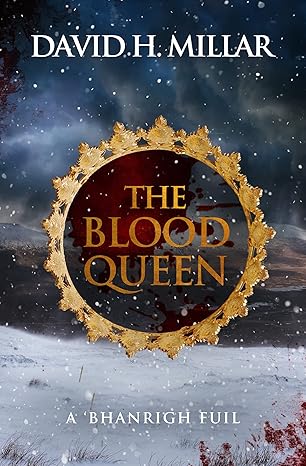
The Blood Queen: A ‘Bhanrigh Fuil by David H. Millar is a thrilling blend of historical fantasy and Celtic mythology, steeped in rich lore and compelling characters. Set against the turbulent backdrop of ancient Scotland, the story dives into themes of power, betrayal, and survival. The narrative follows Gràinne Ni Fearghal, haunted by a prophecy tying her to dark forces, as she navigates treacherous alliances, familial conflicts, and the sinister resurgence of an ancient evil. Millar’s world-building is meticulous, creating a vivid and gritty landscape where legends and nightmares collide.
The writing is immersive, though it occasionally indulges in detail. The opening chapter, for instance, is both gripping and unsettling. It paints a vivid picture of sacrificial rituals, setting a tone of dread and suspense. While this effectively captures the stakes and atmosphere, it might be too graphic for some readers. Yet, these moments anchor the narrative’s darker themes, showcasing Millar’s ability to evoke powerful emotions. The scenes involving Gràinne’s visions are particularly striking, blending psychological tension with mystical intrigue. However, at times, the descriptive prose slows the pacing.
The characters are well-crafted, particularly Gràinne and her daughter Brianag. Gràinne’s struggles with her past and her determination to protect her family make her a compelling protagonist. Her complex relationship with her estranged lover, Brion, and the fraught dynamics with her impulsive daughter, Brianag, add emotional depth to the story. Brianag’s fiery personality and warrior’s spirit shine in her confrontations, especially the tense duel with her half-brother, Cassán. These interactions are a testament to Millar’s skill in creating multi-dimensional characters.
Thematically, the book excels in exploring the cyclical nature of power and its corrupting influence. The Na Daoine Tùrsach’s dark rituals and their ties to ancient evils reflect humanity’s capacity for both creation and destruction. The contrast between Gràinne’s maternal instincts and her warrior’s resolve underscores the tension between personal desires and larger responsibilities. These ideas are woven seamlessly into the plot, though I felt that the frequent shifts in perspective can occasionally disrupt the flow. I enjoyed the inclusion of Gaelic terms and historical details which enriched the story.
The Blood Queen: A ‘Bhanrigh Fuil is a dark and captivating tale that blends historical authenticity with mythological elements. Its vivid imagery and complex characters make it a rewarding read for fans of Celtic lore and gritty fantasy. Readers who appreciate richly detailed worlds and morally ambiguous narratives will find much to enjoy.
Pages: 359 | ASIN : B0BV1J3ZBW



 LITERARY TITAN