Blog Archives
A Story That Had To Be Told
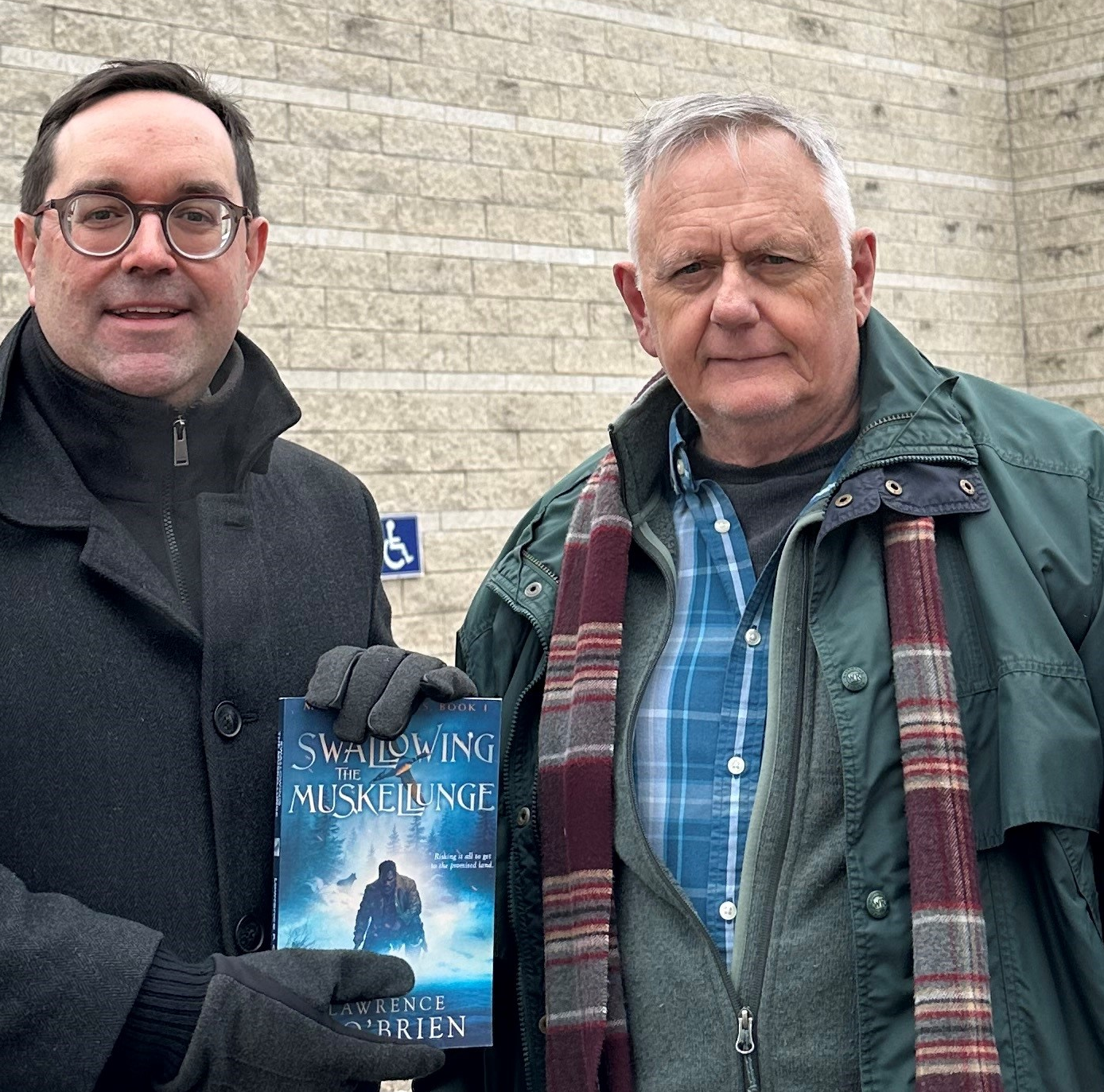
(The other fella is the author)
Swallowing the Muskellunge follows a Black family in the late 1700s as they confront human cruelty and eerie folktale terrors that haunt the forests and rivers surrounding their fragile search for belonging. What was the inspiration for the setup of your story?
I wrote a book about the early Wrightville settlement. Although I never published it, from its bones will come a telling of life during the early period but from the point of view of an Anishinaabe woman. In my research, London’s name kept coming up. There were missing sections within the historical record, which made me curious as to who he was.
My father’s people settled north of his property in the Gatineau hills two life times after he arrived. My grandfather’s parents got married in a church that was built on his land. In recent times, uncles and aunts settled, or acquired land in the area. I had an indirect connection with him, and I felt that his story had to be told, and SWALLOWING THE MUSKELLUNGE is my take on it.
The father–son relationship between London and Abner feels especially raw and vulnerable. Were any real historical accounts or personal experiences influential in shaping their dynamic?
Although the Oxford family had lived in Massachusetts with a label that said they were free, it was still a dangerous place for an African American. Before 1800, one didn’t have to travel far before being vulnerable to the prey of slave holders. It would have been difficult to prove one had papers once they were stolen.
The dynamic of my writing was influenced from numerous cross country drives with my kids, as well as isolated work in the wilderness during my younger days (e.g. logging, surveying, mining, & farming). For the specific dangers in the early part of the book (e.g. Woburn and Framingham), I relied on historical records.
The story balances human cruelty with moments of tenderness. How did you navigate that emotional rhythm without overwhelming the reader?
Whether it was harvesting meteorites for Inco, applying a paint brush during a “Perfect Storm,” witnessing a Chinook disappear two inches of snow within half an hour while sipping a thick cup of lumberjack from behind a cabin by the foothills, I learned that the extraordinary was never far from the mundane. Returning to the time of my grandparents and before also reminded me that hard work most of the time prevented starvation. Folks put up with a lot in order not to go hungry. Although family tenderness made life bearable, its warmth was a counterweight to tragedy, which was not in short supply.
The shadowy forces near the river feel symbolic as well as literal. How do you see the folklore elements interacting with your themes of freedom, fear, and belonging?
Freedom: Persons, mythological beasts, and creatures of the wilderness will not be free if a population attempts to force subservience. Any of the entities can be interpreted as shadowy forces when something attempts to bind them. Ultimately, to be free, a living thing has to be able to feel that it can say no. Others might consider that their ways that are different, but to not be afraid, the entities have to have rights that allow them not to be the same.
Fear: Tribes in the wilderness (of any of the continents) used to acquire mates from beyond their borders. To keep the community vibrant and vital, the other were actively integrated. Whether “the other” remained feared depended on how free they were to show their differences and disagreements when it mattered.
Belonging: To be accepted by “the other,” there has to be a clear understanding that saying no to the norm is socially acceptable. Lacking that, it would not be possible to have a lasting peaceful coexistence. People otherwise would spend their lives trying to escape or doing self-harm.
Author Links: GoodReads | Facebook | Website | Bluesky | Instagram
Young Abner Oxford has kept something of his mother’s. Something else needs what he has. It’s patient, can be quite disarming, and has a monstrous, fierce appetite. Abner and his family, along with a caravan of sleighs, are moving north.
The frigid cold and the blinding white have made the adults slow, weary, and numb. Very few questioned the drag marks in the snow or the mounting number of disappearances. Abner’s father felt like that—until it woke him up.
Fans of The Terror, the Fisherman, and El Norte will be hooked.
The Communist Question
Jeanne The Woman in Red is a work of biographical fiction based on the life of Jeanne Tunica Y Casas, a fiery, uncompromising political activist, feminist, communist, and a woman of courage. What was the inspiration for the setup of your story?
If I had written a non-fiction account of Jeanne’s life and work, it would have sounded robotic and lacking in truth. Fiction was the only way to delve deep into her life and times. Many people she knew and worked with had passed away or were reluctant to speak or give any information. I understand and respect that, but facts, figures, and exact dates would have been missing. There is not much out there in English, and the work done, predominantly by a New Caledonian historian, provided a solid foundation from which to write. I had access to her articles, tracts, and speeches, and I was able to integrate this into the story as they had been written—typos and all.
I have always been inspired by strong characters in fiction and non-fiction. I was drawn to Jeanne straightaway. I had just arrived in New Caledonia for three years, and I was browsing its history, and I came across Jeanne. I wanted to visit her at the cemetery, pay my respects, but I discovered she had been buried in a common grave. I could not believe it. Disheartened but determined, I contacted the administration and decided that writing the book is only half of it. I wanted her recognised with a plaque. She fought for the rights of exploited peoples, and I wanted to fight for her legacy. Her remains were located, and a plaque now recognises her at a local cemetery. It has been a hard but satisfying journey.
What were some ideas that were important for you to share in this book?
Her relationship with her lover turned husband, Paco. The communist question. How much or how little did she know about Stalin’s atrocities? The right of women to vote. I wanted back-and-forth chapters where her life in the nursing home meets the past.
Did you find anything in your research of this story that surprised you?
I was surprised that she had lived in Australia for a while and opened up a restaurant in Sydney. Her continual battle with the authorities. She never gave up. I was also disappointed with a few reactions as if writing about a communist makes the writer a communist. This is not the case, and I could never have placed 2020 eyes on Jeanne’s life and get away with writing her story.
What is one thing that you hope readers take away from Jeanne The Woman in Red?
That she, like many others, must be remembered for inspiring and encouraging change without violence, and that history, far from being cancelled, should be remembered and studied – the good and the bad and learn the lessons on how to move forward. I am not just talking about feminists and politicians, but people who did not have a public role but were instrumental in shaping future generations.
The book has been translated into French and will soon be released.
Author Links: GoodReads | Amazon
Justice and Loyalty
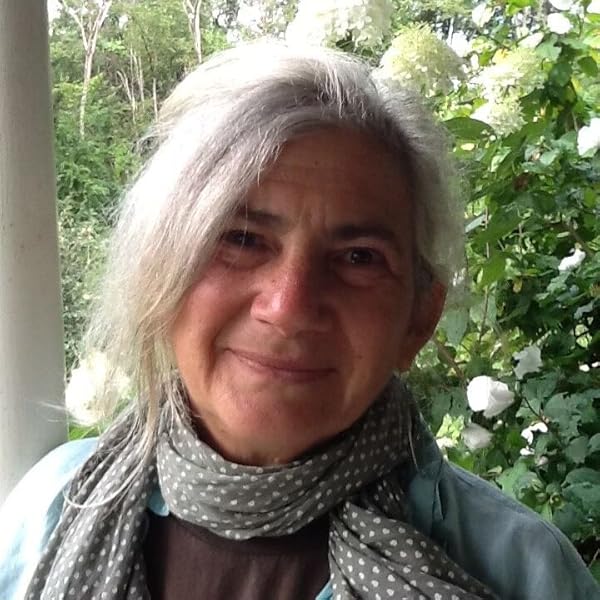
Part of the Solution: A Mystery follows a New York professor who experiences a chance meeting that pulls her back into the 70s and brings her closer to a death that shook the community she once called home. What was the inspiration for the setup of your story?
Setting Part of the Solution in 1978 was an easy choice because the very first version of the book was written in 1978! I had just finished a dissertation in English literature, and I’d survived graduate school by sneaking off to read murder mysteries when I couldn’t bear one more page of “serious” literature. A few years ago, I reread my original manuscript and decided to rewrite it as a period piece. I thought it would be interesting to go back to that time and wrestle with who we “Boomers” were back in the day – idealistic, earnest, and hopeful but also very young and sometimes very silly. The book is completely different now. In some ways, it’s a comedy of manners as much as it is a mystery.
Yet comedy of manners though it is, I don’t want to overemphasize the humor in the book. In the process of rewriting, the mysterious death at the core of the original plot took on a deeper meaning. Now my main character, Jenifer, has had forty years in which she has had to live with what happened. The decisions she made at the time as the “amateur detective” have shaped her life in ways that she – and even I – could never have imagined at the time.
What is it that draws you to the mystery genre?
I have a complicated relationship with the mystery genre. I love the structure and discipline of the classic whodunit in which all the clues and red herrings line up in a way that plays fair with the reader. I love the puzzle at the heart of the genre and, to quote the title of my book, the `solution’ that is revealed at the end. But I am also troubled by how much fun such mysteries are because death, even in fiction, shouldn’t be fun. I worry that devouring mysteries the way a lot of us do ends up dulling our responses and thus numbing an important piece of what makes us human. I don’t want the characters, or even the reader, to get off scot-free.
In Part of the Solution, I tried to tell a story in which the characters don’t get off scot-free because they are changed forever by what has happened to them. I wanted them to have to wrestle on a deeply personal level with the issues that are raised. What does justice mean? What does loyalty mean? How do different people understand those terms, and what difference does that make? Jennifer and Ford – the amateur detective and the official detective – have very different relationships to questions of justice and loyalty, and those questions matter to them both. The very different answers they come up with have never stopped haunting them.
How did the mystery develop for this story? Did you plan it before writing, or did it develop organically?
The mystery plot was there from the beginning. I had a wonderful time inventing a set of wonky characters in an imaginary little hippie town in the Berkshires, with the challenge of trying to figure out who among these various peace activists, artisans and poets, leftwing intellectuals, and spiritual seekers would murder someone, and why. Once I had the mystery structured, I could relax into writing the dialogue and the scenes. What were they listening to on the stereo? What were they arguing about? Laughing about? What were all of them wearing? How did they understand the world around them, and how were they trying to change it for the better?
What is the next book that you are working on, and when will it be available?
I want to bring Jennifer and Ford back together in the present day. They are both in their late ‘sixties now, and they meet up again at a conference during which someone dies mysteriously. I have the plot lined up as well as most of the characters. I haven’t gotten very far in the writing yet, but I’ve booked myself some time away this winter just to write, and I’m planning to have it done by the end of this coming year.
Concern for her community prompts Jennifer to investigate the murder with the sometimes-reluctant help of Ford McDermott, a young police officer. Little does she know that the solution lies in the hidden past.
Part of the Solution blends snappy dialogue, unconventional settings, and a classic oldies soundtrack, capturing the essence of a traditional whodunnit in the era of sex, drugs, and rock-and-roll.
Love, Hate, and Ego
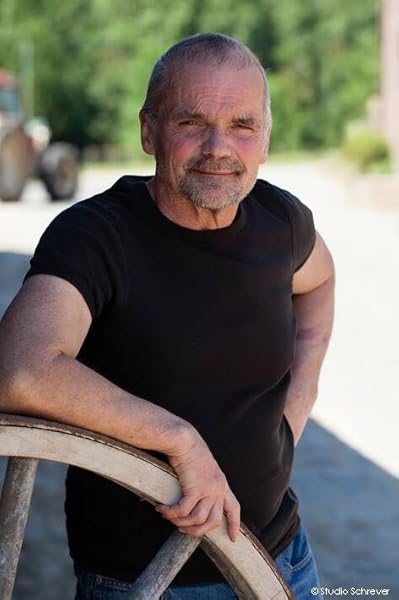
The Long Farewell follows a young man with an Oedipus complex living in the rise of Nazi Germany who, after a series of tragic events, seeks to get revenge on his father. What was the inspiration for the setup of your story?
When I was in college, I was fascinated by Jorgen, a fellow student whom others in our student house labeled as a weirdo. He exhibited abrupt mood swings and had an aggressive aura, although he was skinny and short. When something irked Jorgen – and many things did – he stood trembling, his fists clenched, his eyes wide-open, in front of you and then burst into tears. After such an emotional eruption, he was withdrawn and silent. In our student house, we placed bets on how long he would last at university. I had been so stupid to tell the others I wanted to become a writer and that Jorgen could become a fascinating character in the novel I wanted to write. The rumor had apparently reached Jorgen: during an evening out at the well-known student pub The Red Scaffold, he confronted me about my statement. It turned out that, for once, he wasn’t aggressive. On the contrary, he seemed flattered. We found a quiet place on the terrace. Jorgen told me he wanted to become a poet and asked a string of questions. We drank a few beers, and he became nostalgic and tearful. He boasted he was diagnosed as borderline schizophrenic. He really seemed proud about it and became strangely souped-up and said with trembling lips and flared nostrils: “My mother turned me into a creep. I was only thirteen when she confessed that she wanted me to make love to her. I remember that a fiery arrow went along my spine, making me shudder.” He peered closely at my shocked face and almost whispered:” Nobody knows if we did it or not.”
What could I say? I was quiet.
Jorgen looked me straight in the eyes. I saw he was fighting back tears. “I hate my father,” he whined softly, exhaling with quivering lips. “It’s all his fault.”
That evening, in my bed, I vowed to write a book one day, circling a character with an Oedipus complex.
And to dodge Jorgen.
I didn’t have to do that long. Two weeks later, Jorgen didn’t check in on Monday at our student house.
And never came back.
The memory of this troubled young man stayed with me for several years.
And popped up stronger than ever when I began writing “The Long Farewell.”
The tragic boy Hermann was born.
What are some things that you find interesting about the human condition that you think make for great fiction?
The contradiction between our ‘good’ and ‘bad’ urges is breathtaking. The building of our personalities after birth is chaotic. Our instincts are relentlessly brutal. If babies had the strength to wield weapons, I believe that most of them would be murderers before their third year. We speak with disdain –and fear- about narcissists and don’t want to face up to the fact that our own ego is narcissistic on different levels. In “The Long Farewell,” we see Hermann’s mental suffering, fueled by his hate for his SS father, getting worse and culminating in a dangerous schizophrenia, leading to a truly apocalyptic ending in the German city of Dresden. Schizophrenia is a fascinating and eerie mental disease. When a baby grows up in a family where its mother and father imprint it with radically opposed worldviews, research has detected that the tension thus generated later on in life is the ideal breeding ground for mental anomalies. In past times, these anomalies were called demons. You may smile, but I assure you that we have to take them seriously.
What were some themes that were important for you to explore in this book?
You know, I often think that everything on this Earth eventually comes down to the endless configurations that love, hate, and ego can produce. Love and ego can join forces to form powerful hate and cruelty. I know that we want to see love as something pristine and holy, but reality shows us otherwise.
Of course, I propose my statement here, pure and well-defined. In everyday life, the borders between love and hate –and ego! – are fuzzy. In my oeuvre, I try to follow the intricate signs in our mind that forecast violent drama. Not an easy task, I can assure you. You may wonder why I am so frantically searching for the roots of our violence. I wonder about that too, because after 39 years of being a full-time author, I’m still searching. I’ve been a travel writer in conflict zones between 1990 and 2003, visiting Somalia, Liberia, Sudan, Lebanon, Burundi, Bosnia, Gaza, Iran, Iraq, Kosovo, Myanmar… to name but a few. Those travels have surely influenced my outlook on the world. In Belgium and the Netherlands, my Flemish/Dutch publisher published 45 books. Although set on several continents, they all focus on the mystery of our aggression, on the executioners and the executed.
What is the next book that you are working on, and when will it be available?
I suspect that I’m writing my last novel: I am seventy-two, and I feel my energy waning. Three years ago, I fell victim to a sepsis infection that nearly killed me. I still struggle with the damage the sepsis has wrecked. Moreover, I am afraid to lose my mental powers and glide into Alzheimer’s maw. The terrible disease destroyed my mother’s brain. I know that Alzheimer’s is hereditary, therefore I spy on myself as if my life depends on it. Which it does, of course.
But enough whining, my manuscript-in-progress carries the ominous working title “Black Water,” but I keep searching for a better one. Over here, in Belgium, readers know me as an author who writes crossovers between suspense and literary, but “Black Water” is more magical realism, with a story taking place on different continents, with a central character, a writer/father hiding many secrets from his teenage daughter until a car accident results in a deep coma. Moran, the daughter, tries to wake him up by reading excerpts of his diary. I could explain more, but an author must be cautious and not divulge too much about a work in progress—the novel centers on love, sorrow, and guilt.
And magical mystery?
Maybe.
When out?
I hope next year.
Author Links: Website | Email | Facebook | X | Instagram | LinkedIn | YouTube | BookBub | Amazon | GoodReads | TikTok | Substack
His father is in the SS, his mother is Belarusian, and his girlfriend is Jewish. After a brutal clash with his father, Hermann and his mother flee to Paris. Swept along by a maelstrom of events, Hermann ends up as a spy for the British in the Polish extermination camp Treblinka.
The trauma of what he sees in this realm of death intensifies his pessimistic outlook on humanity. In Switzerland, the famous psychiatrist Carl Gustav Jung tries to free Hermann of his frightening schizophrenia, but fails to unravel the power of the young man’s emotions, especially his intense hate for his father.
What follows is a tragic chain of events, leading to Hermann’s ultimate revenge on his father: the apocalyptic bombing of Dresden.
THE LONG FAREWELL is an unforgettable exploration of fascism’s lure and the roots of the Holocaust. More than ever, the novel is a mirror for our modern times.
Different Solutions

The Grubby Feather Gang follows a boy plagued by bullying and fear who finds himself part of a small circle of friends who together find adventure and hope in a village otherwise torn by war and chaos. What was the inspiration for the setup of your story?
I’m really not sure, to be honest. I am very interested in the experiences of those who lived through either or both of the world wars because both wars plunged otherwise peaceful, ordinary people into extraordinary and horrific situations. But I love the idea that different people can have different solutions to the same problems; most young men of fighting age during WW1 wanted – or felt the need – to go overseas and join the fighting whereas some, such as George’s father in the story, believed in a totally different, peaceful approach. The amount of courage needed for either approach must have been immense, and thankfully, most of us today can only imagine what it must have been like to face that dilemma. I’m fascinated by the fact that these experiences, that seem, to us today, to exist only in the realms of fiction, really happened to real people.
What do you find is the most challenging aspect of writing for middle-grade readers?
Other than the usual challenges of writing for any audience, I’m not sure I find anything especially challenging about writing for middle-grade readers. It can be a challenge when you’ve been hired by a publishing company – rather than writing just because you yourself have decided to do so – because if the project is for a young audience the publishers give you a tight word-count which creates restrictions and challenges, ones which, I have to say, I really enjoy working within. However, I wrote The Grubby Feather Gang off my own bat, so I didn’t have those restrictions, even though I did want to keep the book short. But middle-grade is a wonderful age range. I don’t hold back on the complexity of the language I use or the depth of the issues the story tackles. The only thing I do differently when writing for children as opposed to adults is to make the main characters children.
Is there anything from your own life included in the characters in The Grubby Feather Gang?
I’m happy to say that the experiences of the children in this story are very different from mine. I don’t think you have to have experienced something to write about it in a believable way though. I hope I’m right about that! But there often elements of the writer’s personality in the characters they create. George is prone to anger and sulking, and as a child, I was a little like that. (I’ve grown out of it now though!) I would add that I am always warmed by people – real or fictional – who turn out to be more impressive in some way than you originally realised, like Mr Haxby. And in a way, the same can be said of each of the three main characters.
What is the next book you are working on, and when will it be available?
I’m currently working on a novel for adults. Unlike most of what I’ve written before, this is a fantasy novel, with elements of horror. It features werewolves and witches. There is so much literature about such things, so the challenge is to present them in a new way, avoiding stereotypes and tropes, and I think I’ve achieved that…
Author Links: Facebook | Website
Worse still, the school bully hangs George upside-down from the hayloft, and the next day, George gets the cane! So, with a bit of help from Emma, a curious newcomer to the village, he decides to take daring and drastic revenge on both the bully and his teacher. But he could never have predicted what happens next…
The Grubby Feather Gang is the story of four friends helping each other cope with their parents’ problems.
The BigShorts books are short, stand-alone novels for strong Key Stage 2 readers. Each novel is around 100 pages long. The content is rich and detailed, tackling discussion-worthy themes. Being shorter than most novels, BigShorts books are a great length for teachers to read to their class, or for use as guided-reading texts.
The Living Bridge
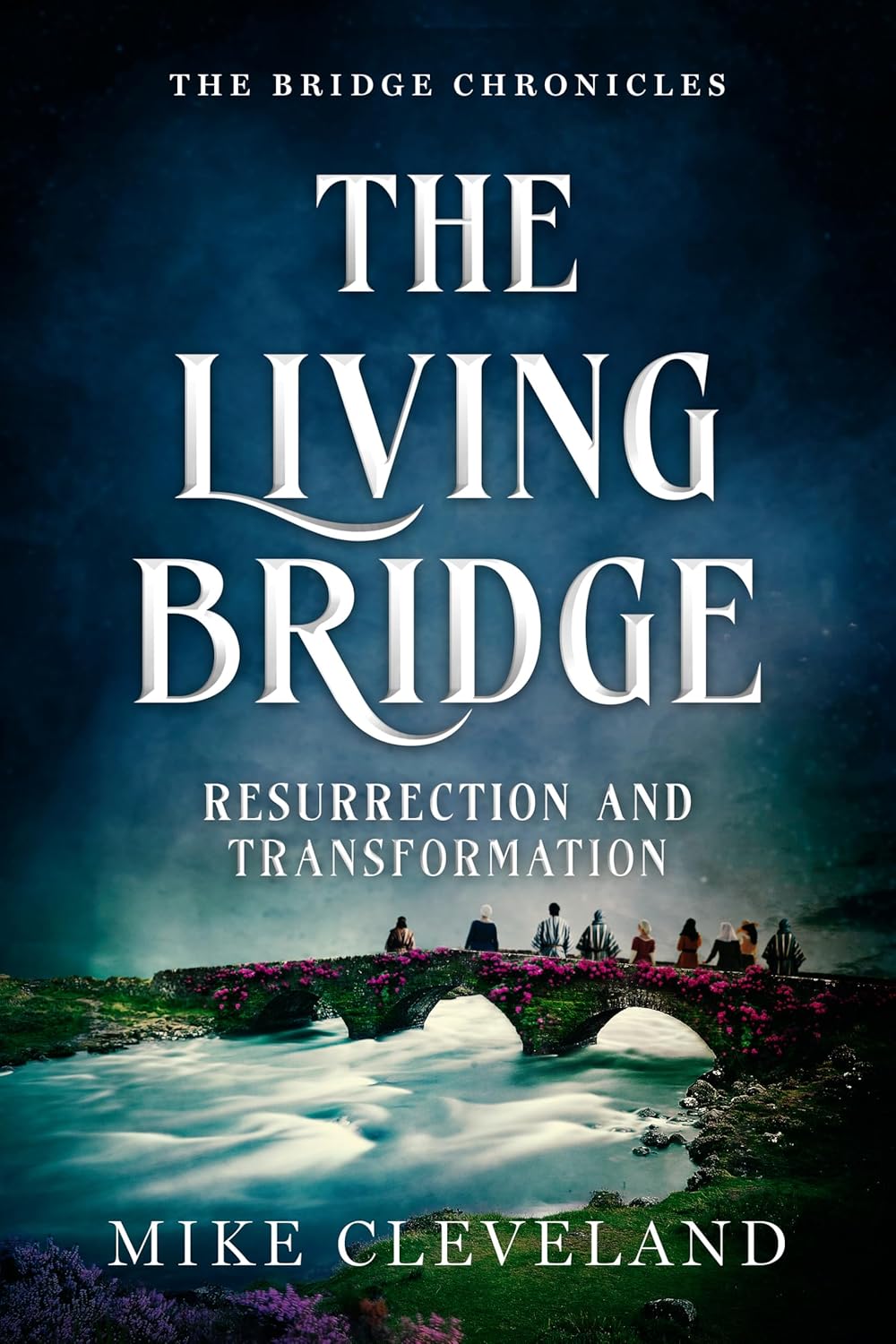

The Living Bridge is a work of Christian allegorical fiction that weaves together the stories of five broken people whose lives intersect in the shadow of a shattered bridge between Eastlight and Westshore. The book follows Mary, Lydia, Matthias, Cleopus, and Tamar as each carries grief, guilt, or despair to the riverbank where everything once fell apart. Their stories unfold in three movements that chart their journey from damage to darkness to eventual restoration, all centering on the arrival of a mysterious teacher named Geshriel, whose presence begins to mend what the earthquake destroyed. The opening chapters set the tone well, especially Mary’s torment under “Legion” and her stunning moment of deliverance, and Lydia’s aching exile from her family across the broken river.
As I read, I found myself reacting less to the plot mechanics and more to how the author frames suffering. Cleveland writes with a kind of steady compassion, letting each character’s pain breathe before offering any hint of resolution. Mary’s chapter in particular struck me. Her inner world felt raw and believable, and the moment her mind finally quiets when Geshriel calls her “beloved” is one of the more affecting scenes in the book. The prose is simple, almost plain at times, but it works because the emotional beats land without being dressed up. It felt like sitting with someone who has been wounded for so long they’ve forgotten anything else is possible. The author doesn’t shy away from darkness, but he also doesn’t exploit it. Instead, he uses it to build a kind of slow, patient hope.
There were moments when I paused, not because the story demanded it but because something in the writing touched on familiar human questions. Lydia’s longing for her daughters across an uncrossable river is written with a tenderness that feels lived-in rather than symbolic. Matthias’s crushing guilt over the collapse he caused, and the way he interprets every failure as further proof of his curse, could have felt melodramatic, but it didn’t. His scenes carried the weight of someone who can’t imagine forgiveness applying to them anymore. Cleveland seems most comfortable when exploring how shame isolates people, how grief reshapes their days, and how mercy begins as a voice they aren’t even sure they heard correctly. Sometimes the metaphors are quiet, sometimes they shine brighter, but they always feel in service of the characters rather than the other way around.
The book’s message is clear without being heavy-handed. The “living bridge” isn’t just a rebuilt structure but a person, a sacrifice, and a way back home. This won’t surprise readers familiar with the genre, but it still lands because the characters’ journeys make the message earned rather than assumed. If you enjoy faith-centered fiction, particularly stories that blend biblical echo with imaginative narrative, this book will likely resonate. Readers who appreciate character-driven arcs of healing and gentle spiritual allegory will find plenty here to sit with. And for anyone who has ever felt stuck on the wrong shore of their own life, the book offers a quiet reminder that bridges can be rebuilt, even when you’ve forgotten how to hope.
Pages: 227 | ASIN : B0FX5WS62Y

New Harmony: A Mother’s Story of Love and Loss
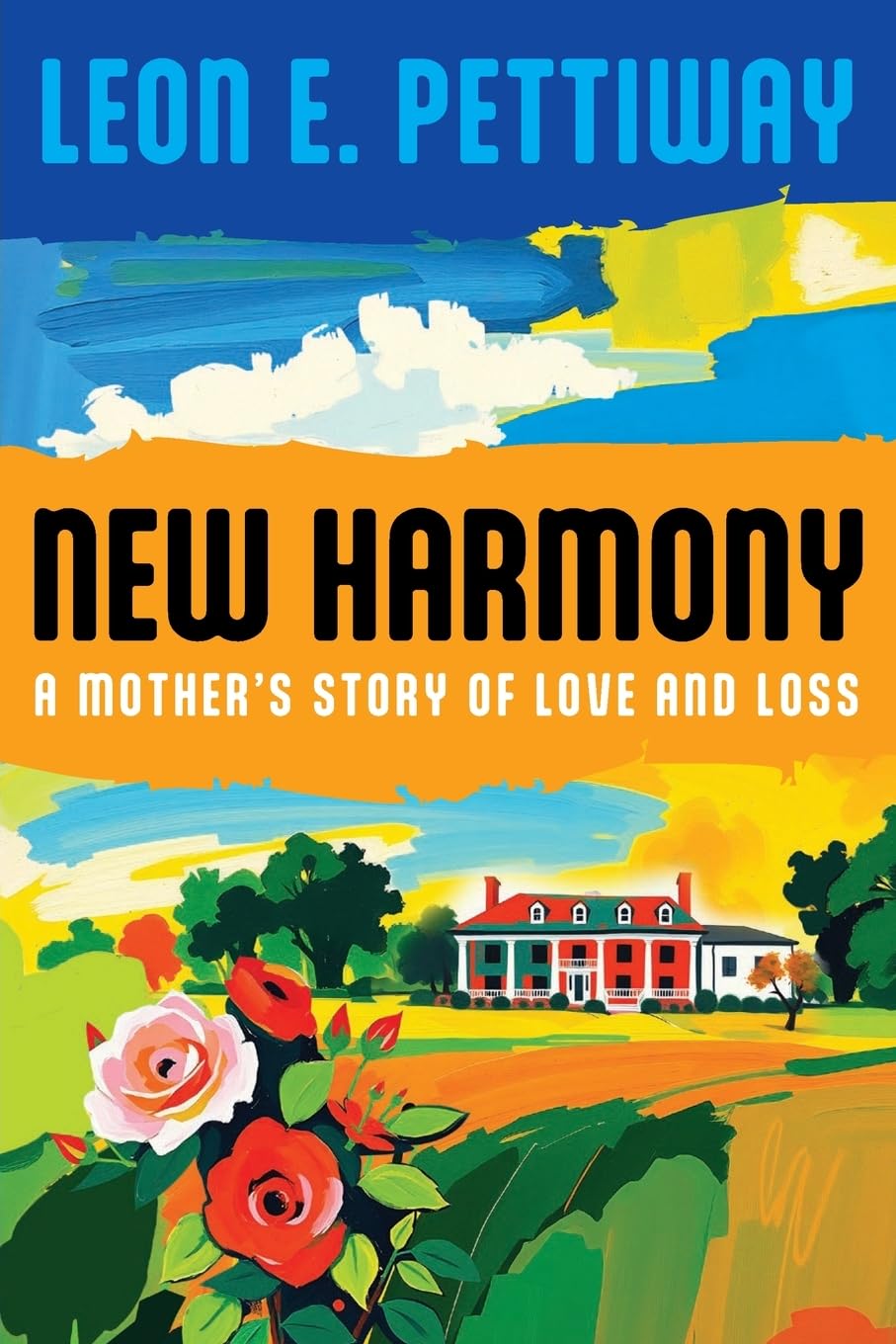
New Harmony opens with a grieving mother, Margaret Butler, recounting the gut punch of losing her teenage son to racist violence in 1949. The story reaches backward through her memories as she traces the long chain of choices, injustices, and quiet heartbreaks that shaped not only her life but the world that destroyed her boy. The novel moves between Margaret’s childhood on a South Carolina plantation, her uneasy ties to the white Demmings family, and the sorrow-filled road toward the truth behind her son’s death. It is a story made of memory, pain, stubborn hope, and the weight of generations.
I was pulled straight in by Margaret’s voice. The writing has this rhythm that feels lived in. Soft at times, sharp at others, always honest. The author doesn’t dress anything up. He lets Margaret speak in her own cadences, and I loved how that drew me closer to her world. I could feel the heat of the fields, the hush of the church during the funeral, the tightness in her chest when the pastor’s words sliced open her grief. The scenes in the Big House hit me hardest. They’re full of beauty on the surface and danger right underneath, and the writing captures that quiet tension so well.
Certain moments were very emotional and thought-provoking. The way Margaret watches the small signs of how power works. The way she tries to shield her children, even though she knows she can’t keep the world off them. The book doesn’t rush. It sits with the hard parts. And the ideas about how small acts, good or bad, weave themselves into a life stayed with me. The whole story feels like someone laying out a quilt square by square. Every piece matters.
By the end, I felt a mix of sadness and admiration. Sadness for everything this family carries and admiration for the strength that keeps rising up through the story. I would recommend this book to readers who want a powerful character voice, who like stories rooted in the South, and who don’t mind being pulled into heavy truths. It’s especially good for anyone who values fiction that feels real enough to leave a mark.
Pages: 374 | ASIN: B0G348J1KP
Sousanna: The Lost Daughter

In the aftermath of World War II, the world was in a state of flux. Countries devastated by the war faced the daunting task of rebuilding while their citizens grappled with profound changes in their lives. Greece, in particular, was further battered by the onslaught of a Civil War, compounding the struggle for survival. Amidst this backdrop of turmoil and rebuilding, America emerged as a symbol of hope and prosperity, an idyllic destination promising a life free from hunger and deprivation.
Sousanna: The Lost Daughter delves into this historical context, narrating the poignant tale of a young girl named Sousanna, caught in the crosscurrents of hope and despair. The memoir unfolds with Sousanna’s father, driven by a blend of hope and desperation, making the heart-wrenching decision to send his youngest daughter to America. This decision, born out of a belief in temporary separation, spirals into years of longing and heartache for Sousanna and her family back in Greece. The narrative poignantly captures the family’s clinging to the hope of Sousanna’s well-being, juxtaposed with her struggle to maintain her identity in a foreign land brimming with abundance.
Set between the 1950s and 1970s, the novel offers a compelling exploration of the complexities surrounding international adoptions, particularly from economically challenged countries. It insightfully presents the perspectives of the biological family, the adoptive family, and most crucially, the child at the heart of these life-altering decisions. The book sheds light on the controversial practices that led to the adoption of thousands of Greek children by American families, often under dubious circumstances.
Sousanna: The Lost Daughter, by Sousanna Stratmann, is a thought-provoking and relevant exploration of themes that resonate as much today as they did in the mid-20th century. The narrative is a testament to the enduring human spirit and the quest for identity in the face of overwhelming odds. This book is highly recommended for its insightful portrayal of a little-known chapter of history and its moving reflection on the human experience.
Pages: 272 | ASIN : B07JKBN66Y



 LITERARY TITAN