Blog Archives
Mary’s Moment


In Mary’s Moment, author Susan G. Mathis delivers a vivid exploration of life in the picturesque Thousand Island Park. Our heroine, 28-year-old Mary Flynn, finds pride and contentment in her existence amidst her aunts whilst operating as the switchboard operator and telegraph interpreter at the Columbine Hotel. However, a sweltering and parched summer incites a series of fires that not only disrupt the tranquil beauty of the islands but also instigate turmoil in Mary’s life. It is within this chaos that she encounters the heroic firefighter, George Flannigan, and the unscrupulous insurance salesman, Archibald Reginald, both contending for her affection. The sudden ignition of the Columbine Hotel sends Mary’s future spiraling into uncertainty in more ways than one.
This captivating installment in Susan G. Mathis’s expansive “Thousand Islands” series deviates slightly from its predecessors, shifting the focus from the scenic depiction of the Lawrence River’s islands to a more intimate examination of character development. Both Mary and George are expertly sculpted characters with rich backstories that edify their present motivations. Archibald Reginald, though an unprincipled antagonist, never descends into caricature, maintaining a delicate balance of loathsome intrigue. In a commendable feat, Mathis extends this depth to minor characters as well, giving them a significance that resonates throughout the narrative.
This narrative is a romance devoid of unnecessary embellishments, instead relying on a gripping sense of anticipation to maintain momentum. The omnipresent danger of fire adds an undercurrent of tension that ensures readers remain hooked, ever aware that an explosive event is imminent.
Mary’s Moment offers a profound exploration of the theme of forgiveness. Mary must learn to forgive others to achieve personal growth and open her heart, while George grapples with self-forgiveness for past mistakes before he can progress in life. Their journey of faith is a testament to the power of forgiveness and the transformative potential it holds.
Having savored the entire “Thousand Islands” series thus far, Mary’s Moment stands out as a personal favorite. The shift in focus towards character development without sacrificing the allure of the Thousand Islands was refreshing. The suspense woven into the narrative elevates the book, approaching a new genre altogether. Each character shines in their respective roles, contributing to a charming and enthralling tale that I would wholeheartedly recommend to avid readers time and again. Susan G. Mathis has created a compelling read in Mary’s Moment.
Pages: 360 | ASIN : B0BWH84X9N

I’ve Always Been Interested in Ancient History

Delicatus follows a young boy from ancient Rome who is enslaved by pirates and becomes a key player in Poppeae’s plot to become the Divine Empress. Where did the idea for this novel come from?
I first encountered Sporus at Eton, studying Alexander Pope with the remarkable teacher Michael Meredith, a guru to generations of literary and stage personalities. Pope’s satire on an 18th century local aristocrat notorious for sexual ambiguity led me to be fascinated by this figure, who was well known enough in 18th century England for a poet to allude to him in a satire, yet mostly just a footnote in history books about ancient Rome today if he appears at all. I would encounter this character from time to time (there’s an illusion, for instance, in the TV series “Succession”) but there are only scraps in the historical record. But what scraps they were! Not just the relatively well-known bit about Sporus getting castrated by the emperor Nero and made his wife … but what happened to Sporus in the year 69 AD when four different emperors held the throne and all had a different relationship with Sporus … from a second wedding to an order to execute him in the arena … and all before Sporus turned twenty. But it took me another fifty years before thinking of it as a novel.
What kind of research did you do for this novel to ensure you captured the essence of the story’s theme?
I’ve always been interested in ancient history and I’ve written both serious and satirical novels in that setting, so I have been doing research for decades. It’s a way of taking revenge on my bullying Latin teacher, as well. I’ve read most of the primary sources (some in the original) but more important, I spent a lot of time daydreaming about what that world, with its radically alien attitudes, was really like … because, despite its weirdness, it is a world populated by real people who speak to us today. One of the things that is hardest to wrap one’s mind around is that absolutely no one that there was anything wrong with slavery, and that because slaves could not be distinguished by race, there was a kind of continuum where you rise to a position of great power and still technically be a slave. Big things like that influence the world-view, but also little things, like human urine being collected to use in laundries. This is a very well studied period so there is a lot of consensus about what this world was like. But there are still gaps in the consensus and this is where imagination comes in.
What is one pivotal moment in the story that you think best defines Sporus?
When Sporus receives his freedom from Petronius, and realizes that in many ways nothing has changed. In a sense this is a central theme of the story. Even the Emperor, we’ll see in the second book, suffers from a kind of enslavement.
To be honest, I didn’t originally conceive of this as a trilogy but as a big fat book. But I’m getting on in years and I want to make sure the whole story comes out. In terms of the trilogy, the real pivotal moment probably happens in the middle of Book Two … I am writing that moment even as we speak.
Can you tell us what the second book will be about and when it will be available for fans to purchase?
The second book will be on sale Dec 1 and is already available for pre-order. The second book deals with Sporus actually becoming Empress and takes us to the humiliating end of his reign … and the third book deals with Sporus’s life in the Year of Four Emperors … perhaps the most eventful time of all.
If readers can’t wait, and have a U.S. Amazon account, they can find the Delicatus series posted in installments on the amazon vella platform, where we are almost half-way through the second book.
Author Links: GoodReads | Twitter | Facbook | Website
World Fantasy Award winner S.P. Somtow weaves a vivid adventure about one of the most colorful personalities in ancient Rome. Delicatus, the first volume in a trilogy, speaks of Sporus, from his enslavement by pirates in a remote corner of the Empire to his meeting with the great satirist Petronius and the woman to whom he bears a striking resemblance, the beautiful Poppaea with her manipulative plans to seduce the Emperor Nero and become Divine Empress.
Gunfighter’s Requiem
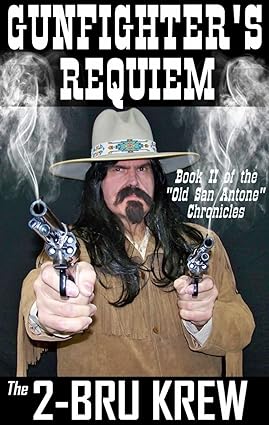

Gunfighter’s Requiem, penned by the formidable duo known as 2-Bru Krew, unveils a chilling narrative set in a land where the line separating law and anarchy is alarmingly blurred. This compelling tale presents an unsettling reality where corruption supplants constitutional norms and wealth triumphs over justice.
Set in the backdrop of Old San Antone, Texas, in 1867, the narrative unfolds in a region crippled by fear, not of the government, but of a power-hungry antagonist named JB Jenkins. Jenkins, through his wealth and manipulation, exercises his dominance in a disturbing fashion – not least of which includes appointing a puppet Sheriff, thereby stripping away the constitutional right of the populace to elect their public servant.
At the center of this gripping tale is an incorruptible law enforcement officer. His noble quest for justice serves as the heartbeat of this narrative, thrusting readers into an exploration of crime fiction that scrutinizes the damaging effects of a malfunctioning justice system. The tale brilliantly captures the dire consequences of corruption, underlining the harsh reality that due process is often bypassed, leading to an environment ripe for vigilantism.
Our protagonist’s mission is undoubtedly virtuous. However, the dysfunction of the justice system forces his hand, prompting him to adopt methods not dissimilar from the villainous Jenkins. This blurring of ethical boundaries further intensifies the plot, questioning the means by which justice can be served when the system itself is inherently flawed.
The 2-Bru Krew expertly leverages the “show, don’t tell” strategy, enriching the narrative with evocative descriptions that draw readers into the heart of the story. This illustrative storytelling effectively engages the readers, facilitating a deep, immersive experience.
The predictability of certain plot points can be seen as a comforting familiarity, providing the reader with a steady, well-trodden path through the storyline. In addition, the protagonist’s journey to restore justice, while developing at a measured pace, emphasizes his endurance and unyielding commitment to his cause, even in the face of a persistent adversary. This slow-burn approach could heighten the anticipation for some readers of the inevitable showdown, creating a unique kind of suspense that grips the reader.
Gunfighter’s Requiem remains a fascinating exploration of justice, power, and corruption. The tale it tells is not just a reflection of its historical setting but a sobering commentary on the timelessness of these issues. Its strengths certainly outweigh its weaknesses, making this book a worthy addition to the library of any discerning reader of crime fiction.
Pages: 1183 | ASIN : B0BRK7MRDW
I Boldly Began To Write My Story

“A Moment of Life” follows a Victorian-era couple who embark on an intimate journey uncovering shared beliefs and lasting intimacy through their profound conversations in the midst of everyday life. What was the inspiration for the setup of your story?
My readers probably already read it in my Author’s review that there was one particular moment in 1989. when I was 24 years old and when the U2 record “The unforgettable fire” got into my hand. First glance at the timeless black and white picture of Moydrum castle (central Ireland) on the record’s cover, instantly overwhelmed me with some intense nostalgic “déjà vu” mood and I felt the need to express that mood in the form of a personal written word. That is when I got the idea for this story because, for a moment, I saw two people sitting on the walls of a castle and enjoying a beautiful day. Well, I boldly began to write my story using pencil and paper (there were no personal computers and Internet in 1989) but I was too young and very inexperienced at that time to write this story properly. Fortunately, the inspiration for this story never left me, so I managed to finally use this inspiration three years ago to finish it.
Why is the main setup “…an unwilling pair is persuaded to see how they were made for each other”? To be honest, I don’t know. It just came to me that way. When I started to write this story, I didn’t have a clue how the story was going to develop and how it was going to end. In the very beginning I had only Albert, Helen and Magie. All the other characters just jumped into the story later and immediately took their role like hockey players during flying substitutes. It was probably a very similar process to art painting. When some painter draws the first lines on canvas, I’m not sure that he knows exactly how his work will really look at the end of painting.
Your characters are compelling and well developed. What were some driving ideals behind your character’s development?
All characters in this story came from my mind and experience, but the two main characters, Albert and Hellen, both come from my heart. There is a lot of myself in Albert’s personality and a lot of “perfect woman” in Helen’s personality. Helen is sensitive, wit, intelligent and most of all brave. Actually, her character is my personal tribute to all women, because I think that women are generally much more interesting as a person then men. Especially when you deal with some intelligent woman, such as Helen e.g. If you compare some intelligent man and intelligent woman, I can bet that the woman would be much more inspiring and amusing then man. Why? Well, that’s just my opinion (experience), but this may be also because women always use their whole brain, simultaneously using left and right hemisphere at same time, while men usually use just half of their brain, in some kind of switch regime, using one hemisphere for serious work and the other one only for fun and pleasure. Finally, women also use their hearts much better than men and also understand and accept their feelings much more properly.
What were some themes that were important for you to explore in this book?
There are seemingly a lot of themes in this short story, such as what is love, what is passion, what are our personal fears and inhibitions, who are deep and who are shallow souls and also a fact that what is good and what is bad is quite relative as well. But the main theme is “A moment of life” itself. Our life is not just circumstances and events that happen to us. Our life is actually the feelings and impressions that we experience inside ourselves when we live through these events and circumstances . One can attend the most interesting events or can enjoy the company of the most interesting people, but if he doesn’t experience those events and people as it should then it’s just a waste of time for him. On the other hand, someone can literally experience a real “Moment of life” while just watching “how grass is growing”. That’s why this story is dedicated to all people that have rich inner life and who can intensely experience inside of themselves even some apparently harmless and banal situations and conversations and turn them into an exciting experience, that is, a moment of life. Watching Helen and Albert from the side, it seems that they are just relaxing on the balcony and chating laisury, but at the same time, they both are experiencing inside themselves the most exciting moments of their lives, the moments that they certainly will never forget. I personally think that these real “Moments of life” are the one of the most accurate measurement units for the richness and poorness of our lives.
What is the next book that you are working on and when will it be available?
In the meantime I’ve already finished another book called “Fox on the run”, but it’s not yet translated to the English language from the Serbian. This is something completely different from “A Moment of Life” and the story is placed in a modern urban Serbian area (Belgrade), but also mixed with some very traditional Serbian mileu. The main character is a TV star guy with the surname “Lisica” which actually means Fox in Serbian. Therefore the title is “Fox on the run”, but it doesn’t have anything with some fox animals. Additionally, for the title for this book I was also inspired by the song with the same title played by UK glam rock band Sweet, which was one of my favorite bands at the beginning of my “Teenage Rampage” (Sweet) age. I should also mention that I take part (with “Fox on the run”) in one competition for unpublished new stories organized by one of the Serbian book publishers. Result of the competition will be in November this year and that is the likely timeline when I’m going to publish this new book on Amazon. Until then, I hope I will find new readers worldwide, especially after the wonderful Literary Titan review of my first book.
Author Links:
Even though it is set in Victorian England, in a time when Britain was becoming great, this story is equally suitable for this day and age because it provides answers to certain questions that are always legitimate, such as – What is love? What is passion? What are our wishes? What are our urges,? What are our fears?
Stone Mother

Stone Mother serves as an elegantly composed narrative surrounding the life of Marie, the youngest of three children in a quintet family. The trajectory of her life, from the crumbling ramparts of a medieval castle to the cramped confines of a single room with her mother and elder sister, and from an austere institution for children of criminal parents to a modest occupation as a waitress in Canada, before eventually returning to Germany, is the crux of the tale. Bereft of the customary affection typically extended to children, Marie forges an extraordinary connection with the castle, her longing to return to what she views as her authentic home becoming a central theme.
Situated in the volatile backdrop of post-World War II Germany, the author weaves a poignant narrative of survival. Reflecting the collective perseverance of a society grappling with the aftermath of the Holocaust, the book encapsulates the life of a splintered family, each member contending with their personal array of trauma, abuse, and sorrow. Marie’s journey through time transports the reader, revealing a community shadowed by the mute, oppressive guilt of historical misdeeds and entrenched in the hushed torment of an inherited eternal mourning.
Despite its modest length, Stone Mother offers a narrative scope akin to that of an epic. The narrative’s simplicity, coupled with exquisitely complex descriptions, imbues the characters with vivid life, eliciting empathy and a sense of connection from the reader. History unfolds organically before our eyes. Burns proves herself to be a talented author, crafting a world within the novel that captivates us even after the last page is turned. This book is recommended for those seeking a temporary respite from everyday reality.
Pages: 282 | ISBN : 1639889248
The Stone Cutter: A novel of Petra In Ancient Arabia
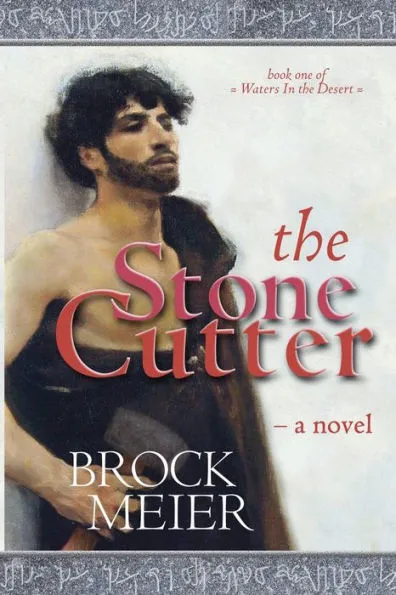
Brock Meier’s The Stone Cutter invites readers to embark on a riveting journey through the intriguing Nabataean Kingdom of ancient Arabia. The narrative orbits around Nahor, a young sculptor grappling with the loss of his sister and mother and the painful void left by his absent father. To mend his broken spirit and find a renewed sense of purpose, Nahor embarks on an expedition that introduces him to a songstress and leads to a debilitating injury, threatening to shatter his aspirations.
The Stone Cutter expertly weaves a tapestry of suspense, adventure, and romance against the lush backdrop of the Nabataean Kingdom and the broader landscape of Arabia. Meier’s tasteful incorporation of magical elements adds a dynamic layer to the narrative, sustaining the readers’ interest up to the last page. Nahor’s odyssey is underscored by themes of loss, resilience, and the pursuit of redemption, crafting a central character that resonates deeply with the audience.
The book shines brightest in its evocative descriptions of the Nabataean Kingdom, effortlessly transporting readers into the awe-inspiring city and its surrounding marvels. The artful blending of love, ambition, and the quest for identity cultivates a rich emotional palette that lingers long after the story ends.
At times, the narrative can feel slightly dense due to its profusion of mythical elements and layered subplots. Readers may need to dedicate additional focus to fully comprehend the intricacies of the story. Nonetheless, the payoff is an elaborate narrative that delves deep into the human experience.
The Stone Cutter offers a tantalizing fusion of suspense, adventure, and romance, granting readers an immersive peek into the bygone Nabataean Kingdom. Meier’s masterful storytelling, coupled with Nahor’s compelling journey, makes this novel an exhilarating and reflective read. For those yearning for a taste of enchanting magic and a narrative that traverses the broad spectrum of human experiences, this book comes highly recommended.
Pages: 444 | ISBN : 9781958902011

Mapping A New World for Women

The Map Colorist follows the life of a talented young woman born into a 17th-century Amsterdam family of mapmakers, as she grapples with deceit and societal norms, seeking to map the unexplored African continent. What was the inspiration for the setup of your story?
Since my first novel was set in the seventeenth century, I wanted to stay in that timeframe. I had decided that I wanted to have my main character do something unusual for a woman, and I hit upon the idea of cartography. My research showed me that Amsterdam was the map-printing capital at that time, and I discovered the work of map colorists who were paid to color maps for collectors. When I found out about four maps of Africa that were unattributed in the Atlas Maior, the largest publication of the century, I knew that I had found the map that my character would create.
How did you research the historical context and mapmaking processes of 17th-century Amsterdam to bring authenticity to your narrative?
I was able to find books about cartography in general, and even a book that talked about women involved in the business in Amsterdam in my century, though none of them were creators. I first learned about colorists in reading the notes to an abridged version of the Atlas Maior. Reading a book about the printer, Joan Blaeu, I discovered that some of the maps were unattributed. I emailed the editor of the Atlas Maior edition to confirm that the map I was considering was still unattributed. He confirmed that it was, and he called my attention to an exploratory trip to Africa, which seems to be reflected in the map I use in the novel.
Scholarly articles on the cartographic publishers of Amsterdam in the seventeenth century informed the picture of how the business was run. I was also able to find books and articles about everyday life at the time. An online museum exhibit by the Rijksmuseum also gave me added information. I located an original online account from a bit later than my period on how to color maps using watercolors. So, as is so often the case with historical fiction authors, my research involved books, online articles, primary sources, museum exhibits, etc.
Your depiction of the characters’ emotions is incredibly profound. How did you manage to evoke such strong emotional connections between the readers and your characters?
It’s difficult to explain how one does this. I suppose that I put myself into the situation of each character, and wondered how I would react. Of course, this falls far from my own personal experience, but some emotions seem to transcend time and place. In addition, I have been reading novels for decades, and analyzing them with my book club. As Neil Gaman has said, “And fiction gives us empathy: it puts us inside the minds of other people, gives us the gift of seeing the world through their eyes. Fiction is a lie that tells us true things, over and over.”
What is the next book that you are working on and when will it be available?
My next book will be a mystery, also set in seventeenth-century Amsterdam, this time in the book-printing world. I am still researching it, so I don’t know when it will come out.
Author Links: GoodReads | Facebook | Website
Anneke hopes to convince the charismatic de Groot to use his influence to persuade Blaeu to include her map in the Atlas Maior, which will be the largest and most expensive publication of the century. But family secrets, infidelity, and murder endanger her dream. Will her map withstand these threats, or will it be forever lost?
The Kiev Confession
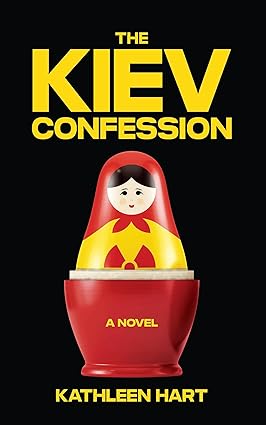
Kathleen Hart’s novel, The Kiev Confession, stands as an unparalleled masterpiece, showcasing a brilliant display of literary prowess. Set against the backdrop of the Soviet Union’s collapse, Hart offers readers an insider’s perspective on the Chernobyl explosion, revealing the secrets, courage, and unbreakable bonds of love entwined within this catastrophic event. The narrative unfolds in Kiev, Ukraine, on the fateful day of the infamous nuclear power plant accident, coinciding with the townspeople’s jubilant celebration of the annual May Day Parade. As a plague of ionizing radiation blankets the continent, the devastating toll of the catastrophe begins to take hold. Fast forward four years and survivor Dmitry Marchenko finds himself thrust into the spotlight as an American journalist embarks on a mission to expose the cover-ups orchestrated by scientists and governments. This unlikely duo joins forces, embarking on a quest that yields more answers than they had ever sought, unraveling the complexities of the Cold War while facing the daunting challenge of delivering justice to those deserving it.
From the very first page, it becomes abundantly clear that Hart’s meticulous research and vivid creativity serve as the driving forces behind this extraordinary book. The story immediately captivated my attention, skillfully blending historical context with personal narratives, igniting my curiosity. Hart’s ability to effortlessly transport readers to the chaos and devastation of the Chernobyl disaster is nothing short of remarkable.
Hart’s masterful character development of Dmitry and Vickie Evans spring to life from the page with an authenticity and depth that fosters an immediate connection. Their anguish, determination, and unwavering quest for truth permeate the very essence of the narrative. Beyond its captivating characters, The Kiev Confession delves into profound themes that will resonate deeply with readers from all walks of life. It skillfully explores the intricate complexities of the Cold War, shedding light on hidden truths and covert operations that shaped an entire era.
The Kiev Confession is an essential read for anyone in search of an unforgettable literary experience that will resonate long after the final page has been turned.
Pages: 322 | ASIN : B0C6V5XSR5



 LITERARY TITAN