Blog Archives
Willful Parties


Willful Parties by Liz Ellyn stands out as a captivating addition to the erotic romance genre, skillfully blending drama, passion, and romance into an engaging narrative. The novel is filled with excitement and tension, as Ellyn weaves a tale of secret love and unconventional relationships. At the heart of the story are Kat, Seth, and Dylan, three recent law school graduates bound together by a shared secret and an intense, unusual love. Dylan is set to pursue a political career under his parents’ guidance, while Kat supports her father in his bar and prepares with Seth for a critical exam that will shape their futures. Yet as their professional lives pull them in different directions, the trio faces growing challenges in maintaining the closeness they once enjoyed. The demands of adulthood leave them searching for fleeting moments to reconnect, both emotionally and physically.
Ellyn’s strength lies in her ability to create charged, intimate scenes that vividly portray the deep desire and emotional connection between the characters. The writing is light and fun, yet it doesn’t shy away from moments of drama and unpredictability, making the story feel dynamic and authentic.
Through her story, the distinct personalities of Kat, Seth, and Dylan emerge clearly. Dylan’s reserved nature contrasts with Seth’s wild, free-spirited attitude, while Kat, seemingly quiet and dutiful on the surface, unveils a passionate side in private. These character nuances, along with the secrecy of their relationship, infuse the story with complexity and intrigue. The chemistry between the trio is palpable, with their encounters radiating heat and tension. Even when life pulls them apart, the intensity of their connection lingers, creating a mounting sense of anticipation. Ellyn’s writing draws readers into this tantalizing web of love, lust, and secrecy, ensuring they remain hooked from start to finish.
In Willful Parties, Liz Ellyn delivers a seductive and tension-filled erotic romance that keeps readers eagerly turning pages to discover how Kat, Seth, and Dylan navigate the delicate balance between their professional lives and their passionate affair. Despite the distance, their bond remains unbreakable, and their journey is one filled with both excitement and emotional depth.
Pages: 364 | ASIN : 1509258507
Worldmaker of Yand-Yildun
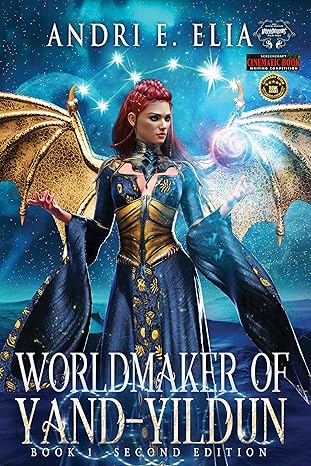
Worldmaker of Yand-Yildun by Andri E. Elia takes us to the planet Yand, orbiting the star Yildun, where Yanara, a powerful spellcaster known as the Worldmaker, must defend her world from the menacing K’tul, an intergalactic invader. The story intricately weaves themes of love, loss, and the responsibilities that come with immense power, all while introducing a rich cast of characters, including Yanara’s daughter, who is just beginning to manifest her own inherited abilities. As threats loom, Yanara is not only challenged by external forces but also by the complexities of her personal life, especially her relationships and her desire to protect her family.
From the start, I was struck by the depth of Yanara’s character and her multifaceted nature. She is powerful, yet vulnerable, particularly when it comes to her family. The narrative begins with a rich backstory, laying a solid foundation for the events that unfold. I found the early exploration of Yanara’s internal struggles compelling, especially her reflections on her marriages and her longing to start a family. These personal conflicts made Yanara relatable despite her extraordinary abilities, and they added a layer of emotional depth to the story. The planet Yand, with its empathic, winged humanoids and their intricate societal norms, is vividly depicted. I particularly enjoyed the scenes that highlighted the contrast between Yanara’s immense power and the everyday struggles of life on Yand. The descriptions of the landscape, the technology, and the unique cultural elements of the Yandar people were immersive, drawing me deeper into this fantastical world. The illustrations, particularly those by Lily Dormishev, beautifully complement the narrative, capturing the essence of Yand’s unique environment and its inhabitants.
Elia’s writing is both evocative and engaging. It has moments of intense action balanced by introspective passages. I appreciated the seamless blend of science fiction and fantasy elements which kept the story unpredictable and fresh. The inclusion of LGBTQIA+ themes, particularly in the depiction of Yanara’s relationships, felt natural and added a contemporary touch to the classic hero’s journey.
Worldmaker of Yand-Yildun is a captivating start to a trilogy that will appeal to fans of both sci-fi and fantasy. It is a book for those who enjoy stories rich in character development, world-building and complex themes. I recommend it to readers who appreciate layered narratives and aren’t afraid to dive into a world as complex as the characters that inhabit it.
Pages: 308 | ASIN : B0BJRMM3T6

Creating a Sense of Normalcy Amid the Chaos

Borealis follows a man with the ability to transport himself through time who discovers secrets about himself and works to save the people of Yand. What was the inspiration for the setup of your story?
Ah, it’s not a man. It’s a young boy. It’s a coming-of-age story of an inadvertent blinker boy who finds himself in the middle of active warfare. It is a story of survival under extreme adversity, of danger, bravery, and resilience, and the ingenuity of creating a sense of normalcy amid the chaos. Many undertones of my childhood, growing up in a war zone. But like always, I infuse a light touch and humor where allowed. Meet and fall in love with Sunny, and see how he saves the world(!). He’s one of my favorite characters, way up there with Wolfpack and Snowfox.
All your characters have unique and original names; how do you come up with character names for your stories?
I draw my characters’ names from their backgrounds, environments, personalities. For example, I began the WorldmakerTM Saga in the star system of Yildun, which is a real star in the Ursa Minor constellation. Yildun means star, and I derived all primary names from it. The planet is Yand. The inhabited moon is Yenda. The worldmakers who manifest their power from this star are Yanara, Yira, Yileen, Yolinda. Yanara’s brother is Yildiz, which also starts with Y and means star.
All the goldenbloods (the bright Yandar race) have names that signify brightness, light, shine, luminance. Hence, Lucent, Flash, Blaze, Stardust.
Yanara’s children have names that reflect their personalities and abilities and also link them to their companions: Dragonlord is a dragoon (strongest mage) and is bonded to a dragon. Wolfpack, who is pathfinder, is like the alpha wolf, the leader. Sunny, well, I don’t want to spill the beans. You’ll see after reading Borealis. If not, please ask me again.
What author in your genre do you most admire, and why?
Tolkien for Fantasy. Do I need to elaborate? He’s the Master.
Anne McCaffrey, also fantasy, for her vivid world-building and characters.
Steven Brust for the first-person narration. Absolutely brilliant.
Can you tell us more about what’s in store for the people of Yand and the direction of the second book?
Ah, Borealis IS the second book in the Chronicles of Phe’lak.
Queen of Highwings is the first book.
The third book will be coming in 2025. It is titled The Beast of Phe’lak. You hear it first right here. I’m very excited about it. It features Dragonlord, whom I have been dying to write about, his dragon, Lavender, and his Yendal partner, Squirrel.
If I may add, in addition to the E-Book on Amazon, the printed book formats offer spectacular 2-page illustrated openings of every chapter, and more full-page illustrations throughout. They can be found here:
Paperback with Standard Paper and Inks: (most economical) https://tinyurl.com/jd363xh4
Paperback with Premium Paper and Inks: (most recommended) https://tinyurl.com/nhc3wm42
Hardbound Premium Edition: (spectacular!) https://tinyurl.com/4s7y6ecm
Author links: GoodReads | Twitter | Facebook | Website
Time Heals All Wounds
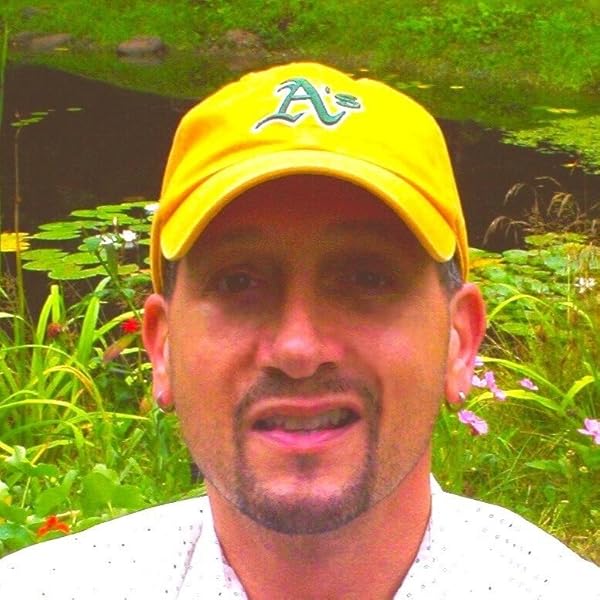
The Last Single Couple in America follows a gay man and his best friend, a straight woman, who both sleep with the same man, unknowingly causing their friendship to take a drastic turn. What was the inspiration for the setup of your story?
I thought it would be an interesting dynamic if two best friends unknowingly slept with the same person, especially if one was gay, and the other being his best straight female friend just added to the dramatic fallout of their friendship. It was tricky how I had to orchestrate them both sleeping with the same guy since they were so close and shared all the intimate details of their love/sex life. Hopefully, I pulled it off without seeming unrealistic. But throughout the novel, I basically let the characters dictate where the story was going, and fortunately, things just fell into place in a logical (hopefully) way.
Because Francine was absent throughout a good chunk of the middle of the novel, I didn’t want the reader to forget about Francine, so I would periodically interject how Jude missed her and wished they were talking so he could tell her about some of the crazy situations he experienced. Of course, I had — at some point — to reunite them and a death was the impetus to do just that because they both came to the conclusion that life is too short to let petty things come between friends.
Jude and Francine are well-crafted characters that readers will be drawn to and can relate to their emotional struggles. Were you able to achieve everything you wanted with the characters in the novel?
I feel that I did. In the beginning, Jude frets about turning 30. By the end of the novel, as he heads into the new year when he will turn 32, he realizes that age is just a number, and he doesn’t feel any different than when he was in his 20s.
As for Francine, she comes to realize it was foolish to let Dakota come between her deep friendship with Jude. She let her anger and emotions override reality. As they are celebrating New Year’s Eve, Jude optimistically moves on from his breakup with Chase, and Francine does the same with Douglas and Jude tells Francine how much he appreciates her and that you can’t rush love; it has to happen naturally. He will find a better version of Chase and Francine will find a better version of Douglas, but patience is needed. Until then, they will have each other and will support each other through the ups and downs of life. Time heals all wounds. I think it is a good lesson to learn for the reader.
What were some themes that were important for you to explore in this book?
Obviously, friendships and relationships were the major themes, but also family. I wanted to portray a positive relationship between a gay man and his family. Although it isn’t until the end of the novel that Jude tells his mother that he is gay, I wanted to present being gay as no different from being straight. When Francine asks Jude why he hasn’t told his parents, he says, “My brother didn’t have to tell them he’s straight. Being gay is who I am.”
Although I think of The Last Single Couple in America as a comic novel, it would be negligent to not include some of the social issues that faced gays in the 90s, so I had to include one character who has an AIDS scare and another character who is HIV positive, but that he was living a normal, happy, and healthy life.
What is the next book that you are working on, and when will it be available?
I’m toying with doing a sequel because I really liked the characters so much. But then I was thinking of doing a novel about a struggling actor and a struggling playwright who are thrown together by economic fates and start out at odds with each other, but an underlying attraction develops between them. We’ll see. I’ve spent a lot of time getting The Last Single Couple in America published and marketing it, but now I can spend more time thinking/writing a new novel.
Author Links: GoodReads | X | Facebook
The Last Single Couple in America

As the years have progressed, the LGBT community has gained greater visibility, and by 2024, the literary landscape is rich with diverse tales in the LGBT genre. Among these is the humorous and engaging novel, The Last Single Couple in America by Martin Sacchetti. The story centers on Jude Giacolone, an openly gay man living in Albany, NY. His best friend, Francine, is a straight woman in her thirties. Their close bond takes a dramatic turn when they both end up sleeping with the same man. Following a heated argument, Jude escapes to San Francisco but is compelled to return to Albany when his father falls gravely ill.
From the very first page, readers are immersed in Jude’s zany and hilarious perspective. Sacchetti effortlessly captures Jude’s captivating and humorous voice, making the character instantly likable and engaging. The book boasts a well-developed cast, with each character being fleshed out and memorable. The friendship between Jude and Francine is particularly well-crafted, making their falling out feel like a gut punch to the reader. The dialogue is the strongest aspect of this story. Sacchetti’s writing is genuine, witty, and often laugh-out-loud funny. Each chapter is peppered with humor that feels natural and unforced, ensuring that readers will find themselves laughing frequently.
The Last Single Couple in America excels at weaving serious moments seamlessly with humorous dialogue, creating a narrative that feels both relatable and real. Martin Sacchetti has crafted a delightful and thought-provoking tale that resonates with authenticity and charm. This book is a must-read for anyone looking for a heartfelt and humorous exploration of friendship, love, and life’s unexpected turns.
Pages: 310 | ASIN : B0CW1KBV7Z
Borealis

Borealis, by Andri E. Elia, is a captivating fantasy novel that delves into the intriguing story of Sunny (Sunstorm) and his unique abilities as a Pathfinder. The narrative masterfully weaves together two timelines—one set in the past and the other in the future—culminating in a resolution that connects these points seamlessly. Continuing from the journey in Book 1, this installment takes readers on a thrilling time jump and space odyssey across the universe.
The tale centers around Asimia, her husbands, Lucent and Snowfox, and their pathfinder, Wolfpack, as they persist in their quest to save the world of Yands from the malevolent K’tuls. Concurrently, Sunstorm transports himself to a future world using his power of ‘blink,’ unraveling secrets about himself with his Da, Dr. Pietro (Pete). The narrative is filled with multiple time jumps and a diverse cast of characters, each playing a crucial role in shaping their future.
Elia’s writing style is fast-paced and exhilarating, with twists and turns that keep readers hooked. The smooth flow of the story during war scenes and action sequences adds to its appeal. These thrilling portions are well-crafted and highly engaging. The diverse character dynamics add complexity to the narrative. Asimia’s affection for Pete and her submission to Snowfox, Sunny’s actions in the first half, Willie’s loyalty to Sunny, Lucent’s evolving role in their marriage, and Asimia’s decision to pass her positions and powers to Snowfox create intriguing and multifaceted relationships. The author’s focus on highlighting specific traits provides depth to the main characters, adding a unique dimension to the story.
Borealis, by Andri E. Elia, is a thrilling and imaginative fantasy novel that takes readers on a fascinating journey through time and space. Fans of fantasy with a penchant for adventure and twists will find much to enjoy in this captivating tale.
Pages: 397 | ASIN : B0CWDGMBS4
God Does Love LGBTQ+ People
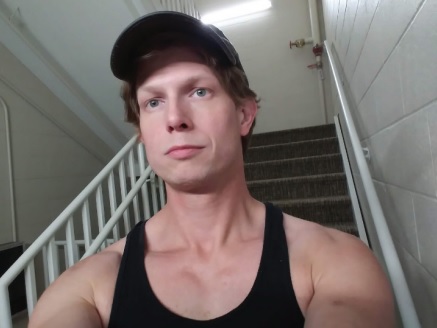
Sin and I is a poetry collection that delves into the themes of identity, faith, and the complexities of the human experience from your perspective as a queer man. Why was this an important book for you to write?
It’s important because people still very often equate homophobia with God, to the point that they feel like you can’t believe in God without believing in homophobia. That pains me to witness people acting as though bigotry is some kind of sacrosanct deity on the same level as God himself. It felt vital to me to draw attention to the fact that homophobia is a part of religion (hopefully a dwindling part) but not a part of God. Religion is a human institution that exists to commune with and worship the divine, but since it’s made up of flawed human beings, it unavoidably encapsulates human failings. But people are led to believe that God shares those failings when they think that God would ostracize them and “other” them because that’s what human beings who have presented themselves as emissaries of God in one way or another are in the habit of doing. I want to make sure, at the same time, that people…LGBTQ+ people in particular…are shown also that religion isn’t JUST it’s failings…that there’s a diversity in Christianity, and that more and more, it’s those forces that have oppressed gay and trans people that are being recognized as truly being something other than God. Time after time, Jesus is proven to stand up for the people in society who are looked down upon and abused when they’re in need of and deserving of being embraced without reservation. Jesus would never stand AGAINST those people. The fact that LGBTQ+ people keep being born the way we are, and that all the various forms of attacks and abuse our community absorbs haven’t been able to “minister gayness out of existing” more or less proves that we’re right with God. It’s God fortifying our resolve to be honest about who we are, and our knowledge that this is just who we innately are no matter how many people try to convince us to lie about it is God given wisdom. Ultimately, “Thou shalt not lie” is one of the 10 commandments, but “thou shalt not be gay” or “though shalt not be non-binary” is not. So Christianity, even with all the faults in how its been lived out, is still on the record as being in favor of gay people being themselves and opposed to the lie that there’s even any other option. We could lie about it, but we don’t want to, and luckily for us, God would never want us to lie about it either. It’s very important not to cede Christianity or religion in general to the voices that use fear-mongering and bullying to argue in favor of dishonesty and oppression. Stuff like that has nothing to do with God and I believe God is hurt by and angry about that sort of thing so often being laid at His doorstep.
I appreciated the candid nature with which you told your story. What was the hardest thing for you to write about?
Some of the more graphic verses, such as in “Hunger Under Cover”, even though they’re necessary to tell the story, are challenging to employ. I want to make sure I’m being clear, for example, when I’m talking about men who are fully grown and can’t rationally admit any gayness in themselves even while they’re acting exactly according to the definition of what the word “gay” means, but I don’t want to descend into “sexing it up” just for shock value. So it’s just a challenge I try to be sure to rise to when it comes to being graphic enough to leave no doubt about the level of denial I’m depicting but not employing blunt descriptions of gay sex beyond whatever levels clarifies the message of the poem instead of distracting from it. However, when something’s been maligned and banned, like any depiction of gay sex has traditionally often been, it’s also important, in some ways, to have it be freely and openly elucidated on to the same extent that straight people’s sex lives always have been, whether the rest of us care to hear about them or not. So there’s also the aspect of not allowing myself to be censored just because certain readers might be squeamish about sexual content, especially if it’s gay. I write for adults, and sex is part of adult life, but it’s not ALL of adult life. Anytime I encounter poetry or song lyrics that either steer completely clear of sex or get hung up on JUST sex, I feel like that’s a very immature form of self expression. Sex should be addressed in love poems and other places when relevant to the themes of the poem. And since LGBTQ+ people keep getting discriminated against for reasons that ultimately are about sex…the kind of sex we’re actually having and the kinds straight people obsessively imagine us having and then look down on us for…it’s challenging in an overly onerous way for gay writers to address sexual themes in organic ways while still being tasteful, mature adults, and also having to face down the possibility that some heterosexuals who feel like their squeamishness should be deferred to will certainly vocally, excessively trash anything that depicts homosexual acts without giving them what they feel is a proper trigger warning somehow. And of course, some people think the only appropriate level to depict gay sex at is none at all. Gay people have been made responsible for straight people’s hang ups about gay sex for so long that it’s hard not to consider hetero sensitivities even when we really shouldn’t have to. So that’s difficult, for sure.
What were some ideas that were important for you to share in this collection?
In the poem “Things You Can’t Have” there’s the line about God’s OCD making everything “tic”. That detail was important to me; the idea that we have so often misappropriated and misread and misjudged God that, at this point, I wouldn’t be surprised if we have given this imperfect, infallible being mental health issues to match our own. The question of whether we can actually do harm to God when we present Him as being eaten up by human bigotries that run contrary to the fact that we’re called upon to love everyone. And then God has to keep going to greater lengths to reach us with that indispensable part of His divine truth. How frustrating that must get even to an infinitely patient being, I imagine. How can God not have some kind of visceral reaction to the petty, bigoted, small ways so many of His own followers insist on seeing Him no matter what He does?
Then in the poem “Always Within Us”, it ends with the line “You know your rights, what’s the law got to do with it?”, and that sentiment is important to get across, too: the fact that even in places where the law hasn’t caught up to the reality of human rights, gay people still absolutely DO have the right to live and love freely and safely, with full equality, even though the law may incorrectly think it has any right to outlaw that. That sort of thing has never actually been something the law has any right to ban. Laws stem from people, so to my mind, on a basic level, laws that steamroll over our fundamental autonomy render themselves null and void. Ultimately, law gets a lot wrong and when laws don’t serve certain essential functions that make things better, we have the right and maybe even the obligation to disobey those laws. Human rights are not something the law ever has the right to take away from anyone even if the law is able to get away with it for a time. It’s important to make the distinction that LGBTQ+ people aren’t just advocating equality, we’re demanding it, because it’s already ours by rights anyway.
What is one thing you hope readers take away from your poetry?
God will not hold it against you if you actually conceptualize and embrace His sweeping, radical, unflagging love for and acceptance of you. God will not create you just the way you are and then expect you to lie about being that creation. What dismays God is when we try to convince ourselves and each other that God’s love and acceptance is difficult to attain and easy to lose. God isn’t shallow and petty, and He actually knows what His purpose is for each of us being who He made it us to be. He knows why LGBTQ+ people are just as important as anyone else. He doesn’t want to be rid of us. If God had a choice between people transgressing against religion or transgressing against love, He would rather us transgress against religion. Because a love that defies human understanding is God’s whole mission statement, and religion has a track record of being so poorly lived out that people can’t even tell it was ever even supposed to be based on love in many cases. And that’s not to minimize the very real fact that a lot of religious people absolutely do live out their faith in the right way, in accordance with God’s vision, to the best of their ability. But religion has also failed God’s children in innumerable ways, and will continue failing them if we can’t acknowledge that. And when religion fails God’s children, it fails God, too. Never conform to religion at the expense of loving each other and yourselves, because that’s the same as failing to love the God who made each of us in His image. No exceptions. There’s no one God is in favor of oppressing. Oppression is hostility towards God.
Author Links: GoodReads | Website
Employing free verse, kwansabas, pantoum, and haiku, Hupp takes us on another journey that encompasses anger and despair over the personal and the political, but ultimately leads to faith, hope, and abiding love.
Experiences of Grief and Loss

The Dreamer and the Dreamed is an evocative collection of poems that delve into themes of queer love, memory, and self-discovery. You share your personal story with readers in this collection; how hard was it to put this out in the world for people to read?
At the end of the collection I include a Postscript with the poem “Juncture.” The final lines of the poem read: “…And all those keepsake odes,/Their golden locks and keys—/Worn smooth as ancient river/Stones: the hard-earned remains/From the art of a nameless dying.” So in answer to your question: Yes, it was both hard, and a hard-earned completion of poems in the making that I’d been living with for decades. In terms of the personal aspect of many of the poems, my hope (as in the words of the psychotherapist and author Carl Rogers: “What is most personal is most universal.”), is that the stories they tell resonate as universal.
What were some ideas that were important for you to share in this collection?
The title of the collection: The Dreamer and the Dreamed, a line taken from the centrepiece poem of the “Young Joseph’s Dream” section of the book, in many ways runs through the entirety of the collection as it explores the interaction between dream consciousness and reality-based time & space consciousness.
Many of the poems concern themselves with experiences of grief and loss. I include a poem titled “In Memoriam” which chronicles a springtime experience of coming to terms with my mother’s death. I summarise this experience with the inclusion of these two lines: “The day you mourned her passing/Is the day the world was reborn.” These lines, and what they suggest in the context of the poem and the universal experience of human suffering, share a kinship with this declaration from Rainer Maria Rilke: “Oh, tell us, poet, what do you do/—I praise./ But those dark, deadly, devastating ways, how do bear them, suffer them?/—I praise…” It is significant that my experiences of grief of loss, having found their way into my poetry making, also bring with them a transformative sense of praise.
What is one thing you hope readers take away from your poetry?
I’m going to again reference R. M. Rilke who says a work of art is the product of having gone to the very end of an experience; that it should spring from necessity and be judged by its origins. Borrowing from this insight, I would hope that whomever finds their way to Young Joseph’s Dream gives their experience of my work a favourable judgement.
Can you tell us about the second volume of poems, and when it will be available for fans to purchase?
Poetry making has its own timetable — at times the ground is fertile, at other times, definitely not. That being said, if you go to www.joeleahey.com and check out some of the material in Joe’s Poems, therein lies clues as to what Vol. 2 of The Dreamer and the Dreamed might eventually look like.
Author Links: GoodReads | Twitter | Facebook | Instagram | Website | Amazon
More than an exploration of the passage of time, these poems inhabit the liminal space between reality and the dream world. They consider the ways altered states of mind and dream consciousness influence life and art. Film, popular music, and literary icons infuse these words with rhythm, style, and musicality. They illustrate the ways different forms of expression and lyricism inspire the poet. Readers will recognize the influences C.P. Cavafy, Edna St. Vincent Millay, and James Baldwin, among others.
Poetry lovers will enjoy the breadth of scope in this collection. From astrological phenomena and spirituality to homoeroticism and death, The Dreamer and the Dreamed reveals the complicated experiences of existence.



 LITERARY TITAN