Blog Archives
Tales From Brook Meadow – The Tale of the Winter Snow
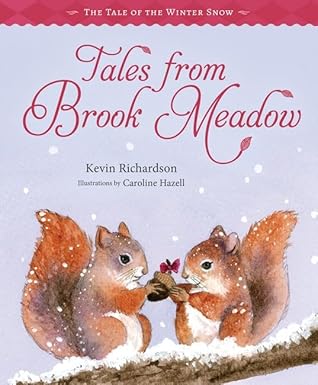

This cozy little children’s book, The Tale of the Winter Snow, is set in the idyllic Brook Meadow and follows Victor the fox and his woodland friends as they experience the first snowfall of winter. What starts as a cheerful morning filled with snowballs and laughter turns into a tender tale of compassion when the animals find a lost and weary fox named Vixen and her two squirrel companions seeking shelter. The story gently weaves themes of friendship, environmental disruption, and the kindness of community, ending with the newcomers being welcomed into the meadow for good.
I really loved how gentle and kind-hearted this kids book was. It’s sincere and warm, like a hand-knit sweater. The writing is straightforward but carries a calm rhythm that suits a bedtime read. The characters are sweet, and Victor, as the steady, big-hearted fox, feels like the kind of friend everyone would want. The illustrations by Caroline Hazell bring a lovely softness to the tale, too, adding just the right touch of charm. I found myself smiling more than once, especially when the two mice popped up from the snow and greeted everyone.
But what hit me was Vixen’s emotional backstory. The quiet, creeping sadness of losing a home to machines and noise felt very real. It didn’t lecture, but it lingered. This isn’t just about cute animals in the snow; it’s also about displacement, loss, and rebuilding trust. I appreciated that the book didn’t shy away from those feelings. It trusted its young audience—and adult readers too—to sit with those emotions for a bit. That trust makes the story stronger. There’s a quiet bravery in how it handles tough topics with such a gentle hand.
Tales from Brook Meadow is the kind of picture book I wish I had on my childhood shelf. It’s ideal for kids who love animal stories, nature lovers who want a heartfelt read, or families looking to share something thoughtful together. Honestly, it’s just a lovely book—simple, kind, and filled with heart. If you want to feel like the world still has safe, magical places where strangers become friends, this little story is your ticket there.
Pages: 35 | ISBN : 1923306073

Feeling of Isolation

Little Bear and the Big Hole follows a young bear struggling with his grief over the loss of his father, who sees his absence as a literal hole—vast, lonely, and invisible to others until a friend shows up and helps him process his pain. Why was this an important book for you to write for children?
I was 35 when my husband died – not a child, but at a time in my life when I knew no one like me. It felt like everyone else my age was in the blossoming of life – new marriages, having children, having fun, etc. and I was at an end of some kind. I didn’t know anyone like me – a widow in her mid-30s – and it felt very isolating. This feeling, that your world has stopped while everyone else’s around you is still joyfully spinning, made me feel so terribly alone on top of all the other heavy feelings of grief. Also, I found that most people (unless very, very close friends or family) tended to avoid talking with me about grief because I think they just didn’t know how to, which made them feel uncomfortable. Children are also at an age/life stage where it is less common to experience a profound loss, so they would very likely encounter this feeling of isolation as well. When I learned that 1 in 12 children will suffer the loss of a parent or sibling by the age of 18 I was astounded, and I wanted to write a book that would help them feel that they are not alone, that their feelings are normal and that grief will eventually transform into healing. I also wanted the book to show others how to be a friend to someone who is grieving.
The artwork in your story brings the concepts to life so that children can visualize Little Bear’s emotions. What was the collaboration process like with Mirjam Siim?
My publisher does not allow direct communication between the writer and the illustrator, but they did allow me to communicate through an art director due to the sensitive nature of this book. One of the main points of discussion was the concept of the hole, as it was very important to me that the hole appear, at least in the beginning, like it was boundless. I knew that if we didn’t get the hole right, the concept would fall flat, and I think Mirjam did a beautiful job depicting the hole and all of the big emotions in the book. Interestingly, I have since commissioned Mirjam to do the artwork for my website (so fantastic!) and a few other projects. She is a joy to work with and so very talented!
What was the most challenging part of writing Little Bear and the Big Hole?
There were so many things I wanted to convey in this book and I think the hardest part was making only the choices necessary for this story. I had to tell myself that there are so many facets of grief, and my one story cannot address them all. Even if it did (this would be a very long book), it would lessen the impact.
What do you hope is one thing readers take away from your story?
You are not alone.
Author Links: GoodReads | Website | Instagram | Amazon
The Power of Stories

Our Song, Our Voice follows a young golden crow as he embarks on a journey to save his grandmother and preserve his flock’s fading traditions, proving that courage, wisdom, and song can bridge generations. What was the inspiration for the setup of your story?
The main inspiration for this Our Song, Our Voice can be found in the UNESCO Indigenous Languages Decade (2022-2032). When I learned more about the topic on their website, the idea of approaching the issue through nature developed in my mind. After all, human cultures are directly connected to nature and the changes that occur within it. Just as indigenous peoples are affected by the changes caused by the modern world, the ecosystem, with its animals and plants, also undergoes a similar experience.
In my story, golden crows that once inhabited vast areas have become increasingly rare as wilderness areas shrink and diminish. Their customs and songs, which correspond to the cultures and languages of smaller groups of people, are also threatened.
I feel great sympathy for the languages of the people. Small language areas, in particular, are in danger when larger languages encroach upon them. The new unilateral development is gaining momentum from global communication, where a few languages dominate. It is inherently good that the people of the world understand each other as widely as possible and without linguistic barriers. Alongside such development, we should also strive to preserve the languages of smaller regions, peoples, and cultures. This is essential for individuals’ identity.
What role do you believe storytelling plays in preserving cultural traditions in the real world?
The power of stories is eternal. It has undoubtedly been utilized for as long as humans have been able to speak. Even in its simplest and most original form, it has been, after primitive basic skills, the most crucial tool for the survival of the human species and the development of culture. In addition to transmitting knowledge and skills, stories have conveyed all the human experiences and emotions that have fueled the progress of the human species, enabling complex forms of cooperation to arise.
The power and need for stories have not diminished as societies have evolved. They are used everywhere: in education, politics, and marketing; the list is endless. The immense power of storytelling can serve both good and bad purposes. At best, it continues to convey valuable information and emotion, forming the basis for human action. At worst, its messages are deliberately distorted, aimed at manipulating people to serve questionable goals and selfish interests.
In my children’s books, I explore and utilize the possibilities of storytelling for various essential purposes. I aim to convey information about today’s world, including history and traditions, to children in an appropriate manner. I believe this approach helps them gain a better understanding of society and function within it.
What were some themes that were important for you to explore in this book?
A central underlying theme in this storybook is the changes occurring in nature. The consequences of drastic economic projects for all living beings are often alarming and, at worst, irreversible. Increasing numbers of animal and plant species, as well as entire ecosystems and life forms, are under threat.
However, I believe that changes in nature should not be presented to children in an overly frightening or threatening way. My goal is to instill in them a respect for nature and a sense of responsibility for preserving it, rather than blaming them or projecting overwhelmingly disturbing images of danger.
I want to highlight the significance of cooperation and care between different generations as a vital foundation of humanity. By being deeply connected with people of various ages, we can pass down traditions and transfer knowledge to future generations as part of human interaction. The experiences of our predecessors pave the way for subsequent travelers on the paths of life.
My little protagonist’s name is “SISU,” a Finnish word that reflects an important theme in the story. It means determination, not giving up, and trying hard despite difficulties. It represents a stubborn strength that doesn’t make a big fuss about itself but acts regardless of obstacles. I thought it was a funny name for a little character, but it holds significant meaning and plays a crucial role in the national identity of people from my home country.
How did you develop the deep, heartfelt bond between Sisu and his grandmother, Una?
Relationships between members of different generations have always been meaningful to me. Important individuals older than me have greatly influenced my life.
To describe the special bond between Sisu and her grandmother in the story, I have drawn from moments and conversations I shared with my grandparents, who were part of my life for the longest time. Now, they are just a dear memory.
My grandfather, who lived in northern Finland, was an honest, old-fashioned man. He was skeptical of reforms that changed his world too much or too quickly. One detail in the story particularly relates to him: using tree resin for healing.
I have heard that my grandfather collected resin while walking in the forest and rolled it into a ball to take home. He would cut off pieces as needed and treat wounds or skin lesions with that gift from nature. Today, the disinfectant properties of resin are also recognized in medicine.
The story also reflects the peaceful togetherness I’ve experienced with my grandparents. They made time for me and shared many lessons that I still carry with me on my life journey.
Author Links: GoodReads | Website | Amazon
Sisu’s grandmother Una wants to teach him important lessons about life, including the crows’ traditional songs and language. The flock is among the last of their species, and Grandma worries their unique songs and customs will disappear forever.
Then little Sisu takes on a big task, a journey that is not only important to his grandmother but also to the future of all golden crows.”
Sisters and Mothers


Angry? That’s Okay! follows a group of seven animal friends on a camping trip who learn some important lessons on coping with the overwhelming feelings that result from frustration and disappointment. Where did the idea for this book come from?
As sisters and mothers with backgrounds in mental health and play-based education, our goal is to not only create space for children to feel their emotions but to give them tools that will help navigate life’s challenges. We wanted to address anger because it is an emotion everyone feels but not very many people understand how to navigate it. Our own children were the inspiration behind our characters, and we wanted this story to feel relatable to kids everywhere.
What is your collaboration process like? Do you have any routines in place for sharing ideas?
Living on separate continents brings a unique and oftentimes a little manic to our collaboration process. But thanks to technology, it is easier for us to keep track of said manic. We do mostly everything on our phones. We have a separate chat group that is just for book talk. And it helps that we are very much embedded in each other’s lives in the sense that we talk almost every day. So you hear of “power naps” but what we do are “power chats” wherein a small amount of time and competing with a 100 “look at this mums,” we share updates, thoughts, and action plans.
What do you hope young readers and their families take away from your story?
Anger often carries a heavy stigma—as if it’s a “bad” emotion. Because of that, many children (and even adults) aren’t equipped with the tools to handle it in a healthy way. We want our readers to understand that anger is a completely natural and normal emotion. The key isn’t to avoid it but to learn how to manage it in ways that are safe and constructive.
What is the next book that you are working on, and when will it be available?
We don’t have a specific title to announce just yet, but we do have a few exciting ideas in the works! Like our previous books, these upcoming stories will continue to focus on social-emotional learning and growth mindset themes. We’ve been releasing a new book each year since we began writing professionally, and as such readers can likely expect our 4th book sometime next year.
Author Links: GoodReads | Facebook | Website | Amazon
Through relatable scenarios, this book explores the different ways anger can look and feel. From clenched fists to racing hearts, young readers will learn to identify the physical signs of anger and discover simple, effective strategies to manage their emotions. Whether it’s deep breathing, body scans, or taking a break, each character in the story finds a method that works for them.
With vibrant illustrations and an encouraging message, Angry? That’s Okay! empowers children to understand that anger is a natural emotion-but learning how to handle it can make all the difference. Perfect for parents, teachers, and caregivers, this book is a valuable tool for fostering emotional awareness and resilience in young readers.
Small Life Lessons

The Curious Quest of Little Luna follows a fox who stumbles upon a mysterious treasure map in the woods, sending her on a whimsical journey filled with excitement, challenges, and meaningful moments. What was the inspiration for your story?
The inspiration for Little Luna came from watching my own children explore with such curiosity and wonder. I wanted to create a story that encouraged that same spirit of adventure—one that blends imagination with small life lessons. Luna’s journey is not just about finding treasure, but about what she learns along the way.
What were some educational aspects that were important for you to include in this children’s book?
One of my goals was to subtly introduce problem-solving, emotional resilience, and the value of curiosity. Luna faces challenges that require her to think, adapt, and sometimes lean on the help of others. These moments offer gentle reminders to young readers that it’s okay to make mistakes, ask questions, or feel uncertain—as long as you keep moving forward.
What scene in the book did you have the most fun writing?
Rather than one specific scene, what I enjoyed most was the process of introducing new characters as the story progressed. Each one added a unique energy and helped shape Luna’s journey in a meaningful way.
Is this the first book in the series? If so, when is the next book coming out, and what can your fans expect in the next story?
The Curious Quest of Little Luna is a standalone story and not part of a planned series. Luna’s journey wraps up in this book.
Author Links: Goodreads | X (Twitter) | Facebook | Website | Amazon
When Luna, a curious young fox, stumbles upon a mysterious treasure map, her quiet forest life transforms into the adventure of a lifetime. With bravery in her heart and a twinkle in her eye, she sets off to uncover the secrets of the map—but she won’t be journeying alone.
Joined by her wise owl friend Benny, the clever turtle Fin, and the fearless rabbit Tilly, Luna ventures through roaring rivers, tangled bramble paths, and the magical Starlight Glade. Together, they face challenges, solve mysteries, and discover that the greatest treasures aren’t glittering gold or sparkling gems—they’re the friendships, courage, and love found along the way.
What’s inside this heartwarming story?
A delightful tale of adventure, friendship, and bravery.
Stunning illustrations on every page that bring the magic of the forest to life.
Memorable characters who teach the power of kindness and teamwork.
Perfect for readers ages 5–10, families to enjoy together, or as a cherished bedtime story.
The Curious Quest of Little Luna is a timeless journey that inspires kids to embrace the magic of adventure and the beauty of connection. Whether read aloud or enjoyed independently, this book is destined to become a family favorite.
Discover the magic, wonder, and lessons that will stay with your little adventurer for a lifetime!
Gratitude, Resilience, and Perseverance

Rooted: A Wildlife Tree’s Journey follows an aging tree who can no longer transport nutrients from his roots due to damage from oak beetles and learns that just because he is growing older, doesn’t mean he has no purpose. What made you write a story about this topic? Anything pulled from your life experiences?
I have great respect for those who have gone before me. As some of my dearest family and friends approached death, they continued to inspire and encourage. I hope to be like them!
What were the driving ideals behind the character’s development throughout the story and the series?
Growth through all stages of life is a commonality throughout the “Rooted” series. By focusing on aspects such as gratitude, resilience, and perseverance, I aimed to encourage readers to reflect on their own life experiences.
What was the most challenging part of writing this part of your Rooted series, and what was the most rewarding?
The most challenging part of Rooted: A Wildlife Tree’s Journey was ending my protagonist’s life, and bringing the series to a conclusion. However, it was rewarding to show how much wildlife (elderly tree) contributes to the lives of others.
What do you hope is one thing readers take away from your story?
I want readers to realize the impact they have on others. I want them to understand that people in all stages of life matter and have much to offer.
Author Links: GoodReads | Facebook | Website | Amazon
Just Be You
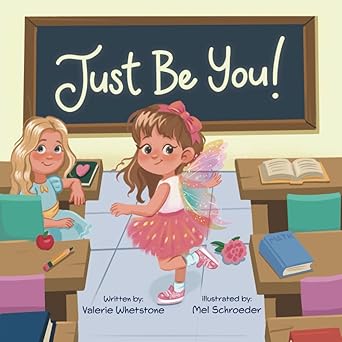

In Just Be You, Valerie Whetstone introduces readers to Pixie, a young fairy whose life is turned upside down when her parents announce they’re leaving the comfort of Fairy Town for the unfamiliar world of Humanville. For Pixie, this news is more than unsettling; it’s earth-shattering. Fairy Town is where she belongs, where she’s free to be herself without fear of judgment. In Humanville, she must conceal her wings and blend in with human children, a task that proves far more complicated than she expects.
Once relocated, Pixie begins attending a new school, and the struggle to hide her true identity intensifies. Every attempt to mask her wings ends in disappointment. Despite her best efforts, nothing seems to work. But Pixie isn’t ready to give up; she tries one final solution. Will it succeed? Readers will find themselves eagerly turning the pages to discover whether Pixie’s bold move brings the acceptance she longs for or something even greater.
This charming tale is not only captivating but also imparts a resonant message. As Pixie wrestles with the pressure to conform, young readers are gently reminded of the power of authenticity. Her journey encourages children to embrace what makes them unique, reinforcing that trying to change who you are for others rarely brings true happiness. Instead, the story champions self-acceptance and honesty as the most empowering path.
The book’s back matter adds depth and interactivity that further enriches the reading experience. Whetstone includes a “Mirror Exercise” that encourages children to speak kind affirmations to themselves, an empowering activity that nurtures self-esteem. A whimsical recipe for Sprinkled Fairy Pancakes, introduced earlier in the story, adds a touch of fun and magic. Additionally, a Journal/Affirmations section invites young readers to reflect, draw, and express gratitude, promoting emotional awareness and self-love. Children can also create lists of “power words” to reinforce their inner strength.
The illustrations by Mel Schroeder are nothing short of enchanting. Every page bursts with warmth and color, pulling readers further into Pixie’s world. Schroeder’s talent shines through in each vibrant, full-page spread, harmonizing beautifully with the narrative.
Just Be You is a heartfelt and empowering picture book that encourages children to stand tall in their individuality. It’s an engaging, thoughtful read with endearing characters and stunning visuals, an excellent resource for parents and educators alike. A truly uplifting story with a timeless message.
Pages: 34 | ASIN : B0DNQHFTTG

The Importance of Family

Muunokhoi’s Awakening follows a marmot who wakes from hibernation early and is unable to return to sleep, finding himself alone and needing to find a way to survive the winter. What was the inspiration for the setup of your story?
I wish I could identify an inspiration for the story, but the truth is I stumbled upon the idea. The initial plot I had in my mind when I began to write the novel, was a children’s story about a marmot who is transported in its dreams to different countries during hibernation. At each place, it gets to experience the people, culture, and an adventure or two. However, I quickly realised when I began writing, that the idea would not be credible. The interactions in various places will have to be with humans in towns or cities to experience the culture, and the idea of this animal living like a human would be a stretch. So, I shelved this idea, but I still wanted to write an anthropomorphic tale. I went back to it after about a week pondering what to do next when the idea popped into my head; what if instead of dreaming, it is the only one awake in the burrow? Several ideas and questions quickly flowed from this which ultimately led to the story. I settled on a Mongolian marmot because this species hibernates for 7-8 months which allowed one sufficient time to develop the story without rushing it; I also found the animals of Mongolia quite fascinating.
What were some ideas that were important for you to personify in your characters?
Muunokhoi’s journey was going to be long enough for him to meet a variety of creatures he did not know. It was important therefore that the creatures he meets should include those with good character traits as well those with bad undesirable character traits to reflect what we as humans see around us. Thus, we meet creatures who are greedy, selfish, arrogant, cunning, and untrustworthy as well as creatures who are courageous, empathetic, goodhearted, caring, selfless, well-meaning, and trustworthy.
What were some themes that were important for you to explore in this book?
Some themes I wanted to explore were the importance of family, loyalty, betrayal, friendship, bravery, perseverance, several aspects of loneliness, and hope.
What is the next book that you are working on, and when can your fans expect it to be out?
The next book I am working on is completely different from this first one. It is primarily about the lives of students, at a university in Ghana (my country of birth) in the early 1970’s, a period of political instability and economic hardship in the country. The idea is to weave in the fiction with political events occurring in the country. My inspiration for this is Paul Scott’s quartet of books The Raj Quartet which I read decades ago. My ambitions are more modest as I plan to write only one book.
With respect to when it will be out, my hope is sometime in 2027. I do not write daily or have a schedule for writing. I also write the initial and second drafts by hand with a pencil, so it takes time, but I am more than halfway through the first draft, so fingers crossed.
Author Links: GoodReads | Website | Amazon
Muunokhoi emerges from his burrow into a hostile winter environment, to explore the availability of food. He first encounters an eagle owl, who advises him that with no food available in the winter months, his only option for survival is to embark on a quest to lower elevations where he can find food to sustain him until the spring.
The journey will be fraught with danger from predators that stalk the mountainous Mongolian terrain, but the marmot will surely starve to death if he stays put. Summoning all his courage, Muunokhoi sets out on an adventure that could ultimately save his life . . . or end it.


