Blog Archives
Divorced at 50 F**K, Now What?


Lara Portelli’s Divorced at 50 is a raw and heartfelt memoir that begins with a stolen childhood, winds through a troubled marriage, and lands in the fragile yet powerful territory of self-discovery after divorce. She writes with candor about cultural expectations, coercive control, and the painful silence of a life lived for others. Yet, woven through the heartbreak is a strong thread of resilience. The book is both a personal story and a guide, filled with reflections, small lessons, and hard-won hope. At its heart, it is about reclaiming one’s voice after decades of suppression.
I found myself pulled into Lara’s honesty. She does not sugarcoat her experiences, and that makes her words feel alive. At times, I felt angry for her younger self, trapped in a world where duty outweighed love. Other times, I found myself smiling when she described small moments of joy, like driving with the window down or noticing a flower left on her desk. The writing is simple and unpretentious, but it carries a deep emotional weight. It often feels like sitting across from a friend who has decided to tell you the truth, even the parts that hurt. That vulnerability is what makes the book so powerful.
I also admired how she framed her journey not just as an escape, but as a rebuilding. She writes about health, self-worth, and the importance of surrounding yourself with the right people. Her focus on words and mindset gave the book an unexpected layer. Some sections lingered on personal analysis, but in a way, that rhythm mirrored her process of working through years of pain. It felt real, not polished for effect.
By the time I finished, I was left with both sadness for what she endured and hope for what she found. Divorced at 50 F**K, Now What? will resonate most with women who feel stuck, whether in a marriage, a job, or even a set of old beliefs. It’s also for anyone standing on the edge of change, afraid of what comes next. Lara shows that the unknown can be terrifying, yes, but it can also be the beginning of everything you’ve been waiting for.
Pages: 76 | ASIN : B0FLPL17MT

The Daily Reality of Marriage

In Unconverted, you share with readers the surprising journey that resulted from your unexpected marriage to an Episcopal priest. Why was this an important book for you to write?
This was an important book for me to write because, beginning around the time I started going to church every Sunday with my children, I was thunderstruck by the feeling that my life had changed enormously, and in a way that I hadn’t fully anticipated before marriage. I realized that falling in love with a particular person, who was on a particular trajectory, set in motion a whole chain of events that brought me into unfamiliar territory: The Church, really, Any Church. I needed to figure out who I really was: how much I could shift around inside myself to accept some degree of religion, even as a bystander; how much my well-being depended upon my staying the secular person I had always been. Sitting in a pew, time after time, watching my husband up front performing his duties, I became fascinated with both the covenant and the daily reality of marriage – what it asks of us, how it enables us to grow and sometimes to merge with another person, how much room it allows for maintaining individuality.
I appreciated the candid nature with which you told your story. What was the hardest thing for you to write about?
Since this is a book about our marriage, I had to be careful throughout with any scenes depicting my husband’s actions or words; I needed his buy-in, his memories of these particular scenes, for accuracy. It was important to me that, overall, he comes across as the very decent and loving person that he is. And I couldn’t make the mistake of assuming I knew what his feelings were in particular moments, either – only what I observed (unless he wanted me to know). Probably the hardest parts of the book to write were the episodes when I stand apart, in some way, from engaging in the full experience of a church service. Specifically, the section when I remain in the pew at communion time, watching my kids go up for the wine and wafer, feeling a kind of necessary isolation; also Chapter 36 — “At the Consecration,” because that event was so celebratory in nature, with many people looking at me, I knew that my internal anxiety pegged me as someone swimming against the tide. And yet, that feeling was precisely what made the scene worth depicting in a book. It was in my Memoir Incubator class at Grub Street that I got the idea to begin this chapter with a childhood memory of lying in a field, seeing the crows circling; I’m proud of the honesty in this writing.
What is one misconception you believe many people have regarding mixed-faith marriages?
Mixed-faith marriages have become increasingly common over the past 50 years or so, part of the cultural landscape that most of us accept as normal. And yet, people continue to gather data on these unions, trying to discern how much impact this particular kind of difference makes over time, in the life of a couple, especially when it comes to divorce rates. From my perspective, a common misperception that is still prevalent is probably that couples spend a whole lot of time wrangling over matters of faith, trying to come to agreement about their individual beliefs. In the case of my marriage, we had probing conversations on the topic through our courtship, owing to the fact that we each knew we were falling in love and so needed to bring it all out into the open: the fact that he was devoting his life to serving the Church, while I wasn’t even sure what I believed! My willingness to have our children be brought up Episcopalian meant that we didn’t need to disagree about a key element in how they were raised, or what holidays we celebrated, etc. Over time, while we continued to explore our diverging beliefs (many being already in synch) we discovered that the key challenges we faced in maintaining daily harmony had more to do with how we were each “built” – his introversion and need for quiet, my extroversion and need for connection – than any specific doctrines we embraced. How well we managed a long drive to Nova Scotia together, for instance, wasn’t determined by anybody’s faith tradition, or lack thereof.
What is one thing you hope readers take away from your experiences?
As they finish Unconverted, I hope readers will take away a sense of tenderness about what’s involved in living out any long-term commitment between two people, especially one in which a fundamental difference is baked right into the relationship. I also hope that they’ll consider how such a difference can actually enrich a union, rather than threaten it, with each person being able to see and respect and learn from “another way” followed by a beloved without fully adopting that other way. Perhaps many readers will have had some kind of a similar experience – when they’ve felt the need to retain their own true nature, stay loyal to their roots, while also making space for someone else’s next to them – and therefore they will take away encouragement that the effort is worth the challenge. In addition, I hope readers might reflect upon how falling for and staying with another person always takes some degree of courage as well as vulnerability; you are taking a risk, putting yourself on the line, opening yourself up to many potential kinds of changes. So long as you don’t give up a sense of your own integrity, your heart can grow in surprising ways.
Author Links: GoodReads | Facebook | Website | Instagram
In lyrical prose that is reflective, candid, and warm, this is the story of how an extroverted agnostic remained true to herself through three decades of marriage, three children, and four relocations. As Polly’s husband rose through the ranks to become an Episcopal bishop, she stayed steadfast in her love of literature, sports, nature, and her family, while deepening her understanding of herself, her husband, and marriage itself.
Changing Eyes
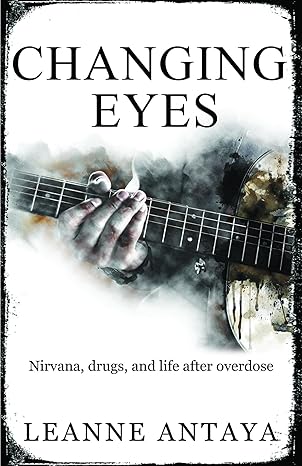

Changing Eyes is a raw and wrenching memoir written by Leanne Antaya about her family’s harrowing battle with addiction, particularly her son Trey’s descent into drug use and the long, painful road to his recovery. Spanning decades, the book moves from Leanne’s early romance and marriage to Marco, through raising four children, to navigating the chaos of addiction, near-death experiences, strained relationships, and personal trauma. Told through Leanne’s eyes as a mother, it’s an honest account of love, loss, resilience, and the aching hope that somehow, amid all the wreckage, healing is possible.
This book tore me up and stitched me back together, sometimes in the same chapter. Antaya’s writing isn’t polished in a literary sense, but that’s what makes it work. It’s messy, emotional, and real. She doesn’t whitewash the shame, the guilt, or the unbearable powerlessness that addiction brings into a family. Her style jumps between memories and moments with a kind of breathless honesty, as if she’s spilling it all out before she loses her nerve. There were parts where I had to pause and sit with it, where her pain leapt off the page and made me feel like I was in that hospital room or standing at that phone, dreading the worst.
The book is more like a collection of moments and memories than a tightly woven narrative. But maybe that’s the point. Addiction isn’t tidy. Grief doesn’t follow a three-act structure. What stands out most to me is Leanne’s sheer determination to hold her family together. Her voice carries this sharp mix of exhaustion and fire that made me root for her, even when things kept falling apart. And Trey’s story is both heartbreaking and infuriating, but Antaya never lets you forget that he’s human, even when he’s at his lowest.
I’d recommend Changing Eyes to anyone who wants to understand what addiction does to families, not in theory, but in the day-to-day heartbreak. This is for the parents who are living in quiet fear, for the friends who don’t know what to say, and for anyone who thinks addiction is just a personal failing. It’s not a light read, and it doesn’t offer easy answers. But it’s full of gut-level truth, and in the end, it clings to hope.
Pages: 356 | ASIN : B0B6QDP6C4
Unconverted: Memoir of a Marriage
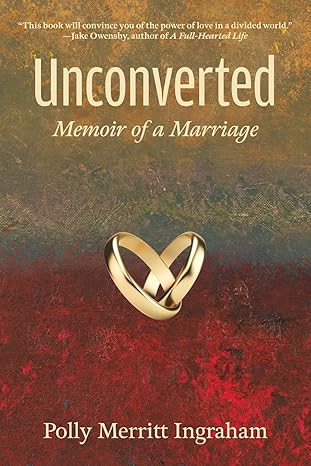
Polly Ingraham’s Unconverted is a moving, often funny, and beautifully written memoir chronicling her unexpected marriage to an Episcopal priest and the even more surprising journey that followed. The book tells the story of a secular woman navigating life, love, and identity inside the deep tradition of the Episcopal Church, not as a convert, but as a skeptic and sometimes reluctant participant. Through candid reflection, Ingraham explores what it means to love someone whose beliefs are fundamentally different from your own and how a marriage can flourish without shared faith, provided there’s shared respect, curiosity, and deep affection.
Ingraham’s writing is sharp and unpretentious, often funny and achingly honest. She manages to be both thoughtful and down-to-earth as she walks us through moments of discomfort, discovery, and the quiet ache of being the odd one out in a world of ritual and belief. Her prose doesn’t waste words. She brings you in close, never asking for sympathy, only understanding. I especially appreciated her refusal to fake devotion just to fit in. That kind of integrity made me root for her all the way through. Her love for Rob is never in doubt, but she doesn’t sugarcoat the strain of being partnered with someone whose life is woven into a faith you don’t share.
There’s also something deeply comforting about her insistence on staying herself, even when the pressure to change would’ve made it easier. I felt her unease during the high church services, her resistance to the wafer and wine, her side-eye at the church politics, and clunky old houses with drafty corners. It felt real. And yet, what held this book together wasn’t doubt or division, it was tenderness. Her marriage, though often challenged by theological distance, is grounded in mutual admiration and a kind of quiet, dogged love that I found deeply moving. There’s no dramatic conversion here, no tidy resolution, but there is growth. And a kind of grace that doesn’t require belief to feel.
I’d recommend Unconverted to anyone who’s ever felt like a bit of an outsider in their own life or who’s struggled to be true to themselves while loving someone very different. It’s especially poignant for secular readers navigating religious families, marriages, or communities. This book doesn’t offer easy answers, but it offers something better: honesty, humor, and hope that two people can build a beautiful life without having to believe all the same things. That feels pretty miraculous to me.
Pages: 284 | ISBN : 978-1578694006
Winning is Not Always Winning

MATE takes a unique look at marriage through the lens of a chess match in which each phase of the relationship is examined with play-by-play commentary. Why was this an important book for you to write?
This was my first and, probably will be, my only, relationship book. The challenges were many. I had to restrain myself from judging the couple’s actions. Since “the game” happens on a subconscious level, I didn’t want their behaviors to be extreme. The book revels in making the everyday, seemingly insignificant things said and done to be monumental and epochal. Only they don’t know it. Hence, the use of the commentator, who may get a tad overwrought in the interpretation and importance of their actions. Also, I had to purge myself of caring who was the winner in “the game”. The commentator addresses this early on. Winning may be not be really winning. Winning a game may actually be detrimental, but the players will never see why.
How did your idea to use the chess metaphor evolve as you planned and wrote this book?
I started with the Chess scheme. It had been on my mind for many years. The chess/marriage idea seemed natural. “War” might be extreme. You could call it battles. The conflict and friction that I dwell on was probably influenced my reading the work of R. D. Laing in the 1970s. His book Sanity, Madness, and The Family had an impact on me.
What do you find is the most difficult aspect of writing about relationships?
The most difficult part was trying not to forget to include the many aspects and perspectives on their relationship. Each other, the kids, the friends, parents, the in-laws, not mention the other innumerable sources of conflict. Ultimately, it took a long time to write the book because of the nature of the narrative. There were few opportunities to elaborate on the details of their conflicts except for the times the commentator rhapsodized about certain episodes and the games that were summarized and did not advance move by move.
What is one thing you hope readers take away from MATE?
Because MATE took a long time to write, causing me to think too much about different ways to engage the reader. Two examples: One, leave some blank pages after a chapter and have the reader rewrite how he or she would have the chapter on the children or the living arrangements would go. Second, at the end of the novel, leave eight to ten pages and have the readers write the “game” of their own marriage – it would be interesting to compare the woman’s to the man’s version.
Author Links: GoodReads | Website | Facebook | Amazon
MATE: a novel in twenty games
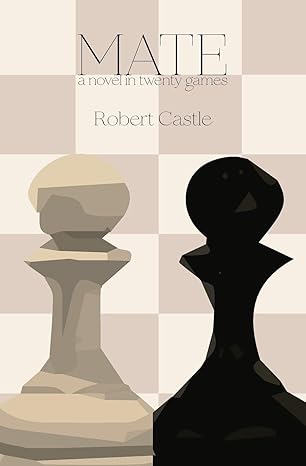
MATE: a novel in twenty games, by Robert Castle, is unlike any book I’ve read. It dissects a marriage by mapping each moment of intimacy, conflict, and compromise onto the framework of a chess match. The story of Pillsbury and Larkin unfolds over twenty “games,” each representing phases of their relationship like courtship, childbirth, relocation, and eventual separation. Every chapter reads like a brutal play-by-play commentary of a high-stakes match where each line of dialogue is a calculated move. The result is raw, honest, and often uncomfortably accurate in its portrayal of the delicate, ongoing war that can exist beneath the surface of domestic life.
Castle’s writing is sharp, biting, and at times hilariously cruel. His chess metaphor isn’t just a clever gimmick; it’s an ingenious device that illuminates the absurdity and tragedy of two people trying (and failing) to love each other properly. The characters aren’t likable in a traditional sense. In fact, they’re often selfish, petty, or clueless. But that’s the point. Marriage, as Castle paints it, is not about romance or even companionship; it’s about control, defense, sacrifice, and sometimes resignation. It was refreshing, even when it hurt to read.
I do feel the relentless move-countermove commentary, while brilliant, could feel overwhelming to some readers. The structure, while unique, can become a bit too clever, making some of the emotional beats feel like intellectual puzzles rather than lived moments. Still, I can’t deny that Castle has created something utterly original. He lets the characters tear each other apart, and we’re left to pick through the wreckage.
MATE is not a book for romantics. But if you’ve ever been in a long relationship, especially one that has frayed over time, Castle’s work will speak to you. It’s for readers who want their fiction uncomfortable, honest, and unflinching. It would resonate with couples therapists, chess fans, failed lovers, and those quietly questioning their own relationships. It’s both cynical and relatable, and it left me thinking about it long after I put it down.
Pages: 176 | ISBN : 978-1963908497
Letting Go of Overthinking and Anxiety in Relationships: 57 Easy Techniques to Stop Overanalyzing, Rewire Your Anxious Thoughts and Build Trust in Your Relationship

Letting Go of Overthinking and Anxiety in Relationships is a compassionate and clear-eyed guide that gently walks readers through the emotional maze of anxiety and overthinking in romantic relationships. With 57 practical techniques, the book aims to unravel the tight knots that overanalysis and insecurity can tie between partners. It balances clinical insight with real-life advice, focusing on emotional awareness, cognitive reframing, and communication strategies that are not only actionable but empathetic.
I found myself moved by how much this book “gets it.” The author speaks to the experience of lying awake at night, spinning in silent spirals of doubt and fear, and validates those feelings without judgment. What struck me most was the simplicity of the tools—many are things you can do right away, without therapy sessions or fancy journals. In Chapter 1, the visualization script of a secure relationship felt like an emotional balm. I paused to do it myself. The imagined warmth, the calm space, the supportive presence of a partner—it was powerful. Later chapters dig even deeper. The section on “Defensive Awareness Check-Ins” offered one of the most refreshingly honest approaches to managing conflict I’ve read. It wasn’t about blame; it was about pausing and choosing empathy over ego.
Chapter 7, Nurturing a Resilient Mindset for Long-Term Relationship Success, is one of the book’s most empowering and quietly motivating chapters. It shifts the focus from fixing anxiety in the moment to building lasting emotional strength that can weather the ups and downs of love. The author emphasizes that resilience in relationships isn’t about being unaffected by conflict—it’s about bouncing back with understanding, empathy, and commitment. What resonated with me most was the idea that resilience is something you build, not something you’re born with. Techniques like setting shared goals, reflecting on past victories as a couple, and practicing emotional regulation in stressful times are all presented as realistic, do-able practices.
I’d absolutely recommend this book to anyone who’s ever felt emotionally hijacked by their own thoughts in a relationship. Whether you’re newly dating or in a long-term partnership, this book has value. It’s especially helpful for folks navigating anxious attachment, or for partners who want to better understand each other’s triggers and emotional patterns. It’s the kind of book you dog-ear, return to, and maybe even read out loud together on a quiet Sunday night.
Pages: 168 | ASIN : B0DTL5VB7Z
Information and Knowledge
Karen R Smith-Racicot, CLC
Rebecca K LaChance, PhD Author Interview
Widows Among Us: Stories and Insights is part memoir and part guide for preparation, support, and community; offering readers invaluable insights into navigating life before and after the loss of a spouse. Why was this an important book for you to write?
Becoming a widow was a very different experience for each of us, and we reacted very differently. However, we realized our experiences also had many similarities. We were surprised by the realization that we actually had not known what to expect. No one ever talked about widowhood, the amount of work to be done by the widow, or how to cope with unexpected situations. We want to make widowhood a topic that is discussed among women and families. We believe that the trauma of becoming widowed can be reduced by information and knowledge.
What were some ideas that were important for you to share in this book?
Everyone grieves differently, and that’s perfectly fine. You don’t need to adhere to what society ‘expects’ of you if it doesn’t resonate with your feelings.
Prepare yourself BEFORE a life event happens.
What is one piece of advice you wish someone had given you when you were younger?
It really is to your benefit to be prepared for life events. You can never know when a life-changing event is going to happen. Your way of managing grief and recovery is entirely your choice. Don’t hesitate to seek help if you feel you want it, but trust your inner voice. You have the ability and power to create your new future.
What do you hope is one thing readers take away from your story?
There is life beyond widowhood, and it can be beautiful.
Author Links: GoodReads | Facebook | Website | Amazon
unsure about how to support widows in their lives. The authors illuminate the realities of
widowhood by exploring its unique and often overlooked aspects. (Search for the Large Print Edition using B0DSG1SJRD in the Amazon search bar.)
Every day, over 2,800 American women become widows. The average age of these widows is
59. You might know one of the eleven million widows in the United States. You may be one
yourself, or you could find yourself in that situation one day.
This inspirational and enlightening book offers valuable insights. The three authors write
candidly and emotionally about their unique experiences as widows and their determination to
create new beginnings after loss. Each author’s voice distinctly reveals different yet similar
aspects of grief and rebuilding a life.
They have collaborated to create a spirit guide and a handbook designed to assist women and
those who wish to support them in navigating the challenges of widowhood. The book offers
explanations that ease the discomfort of preparation and provides practical lists for getting
ready. It reassures widows with logical, comforting, and valuable insights into their experiences
and their tasks. The book concludes with advice and suggestions on how to help and support
the widows in the reader’s life.
A quiet, welcome voice of calm and encouragement emerges from the pages. This book has the
power to comfort many.


