Blog Archives
The Breaking of Time: Chronicles of the Arvynth


The Breaking of Time drops you straight into a life coming apart at the seams. Daniel Ward looks like any middle-aged dad, but he’s actually a centuries-old sorcerer who has been hiding from a ruthless order known as the Arvynth. When he freezes time to save his son from being hit by a truck, he exposes the truth he has buried for twenty years. His wife sees everything. His children sense something they should never sense. The Arvynth find him again. The quiet suburban world he built starts to crack, and those cracks spread fast. The book follows Daniel as he struggles to protect his family while the old world he fled pushes its way back into his life. It blends magic, danger, family drama, and a growing sense that every choice Daniel makes costs him something huge.
I kept rooting for Daniel even when I wanted to shake him. His voice feels worn, tired, and trying so hard to pass for normal that when he breaks, it hurts. I liked how raw the family moments felt. His wife’s shock lands hard. His son’s confusion hits even harder. The scenes where Daniel feels the Arvynth closing in gave me this tight pressure in my chest, like the danger was creeping into the room with me. The writing is clean, quick, and vivid. The magic feels physical. I could almost hear the world stop when he speaks the old words. I found myself flipping pages just to see if he could hold his family together for one more chapter.
Daniel’s past stretches back centuries, and the book keeps teasing details without giving everything away too early. I loved that slow reveal. It made me feel off balance, like the story was letting me overhear secrets not meant for me. And the Arvynth are terrifying in a quiet way, which I really enjoyed. They barely appear at first, yet their presence fills every page. I also liked how the writing shifts between intimate family tension and sweeping magic that feels ancient and dangerous. The mix kept the pace unpredictable in a way that felt alive.
I think this book would land especially well with readers who enjoy fantasy woven into ordinary life, stories about families under impossible pressure, and characters who carry heavy pasts that finally catch up to them. If you like magic that feels tactile and real, or if you enjoy emotional stakes wrapped inside supernatural danger, this book will hit the spot.
Pages: 354 | ASIN : B0G3YH6638

Servant
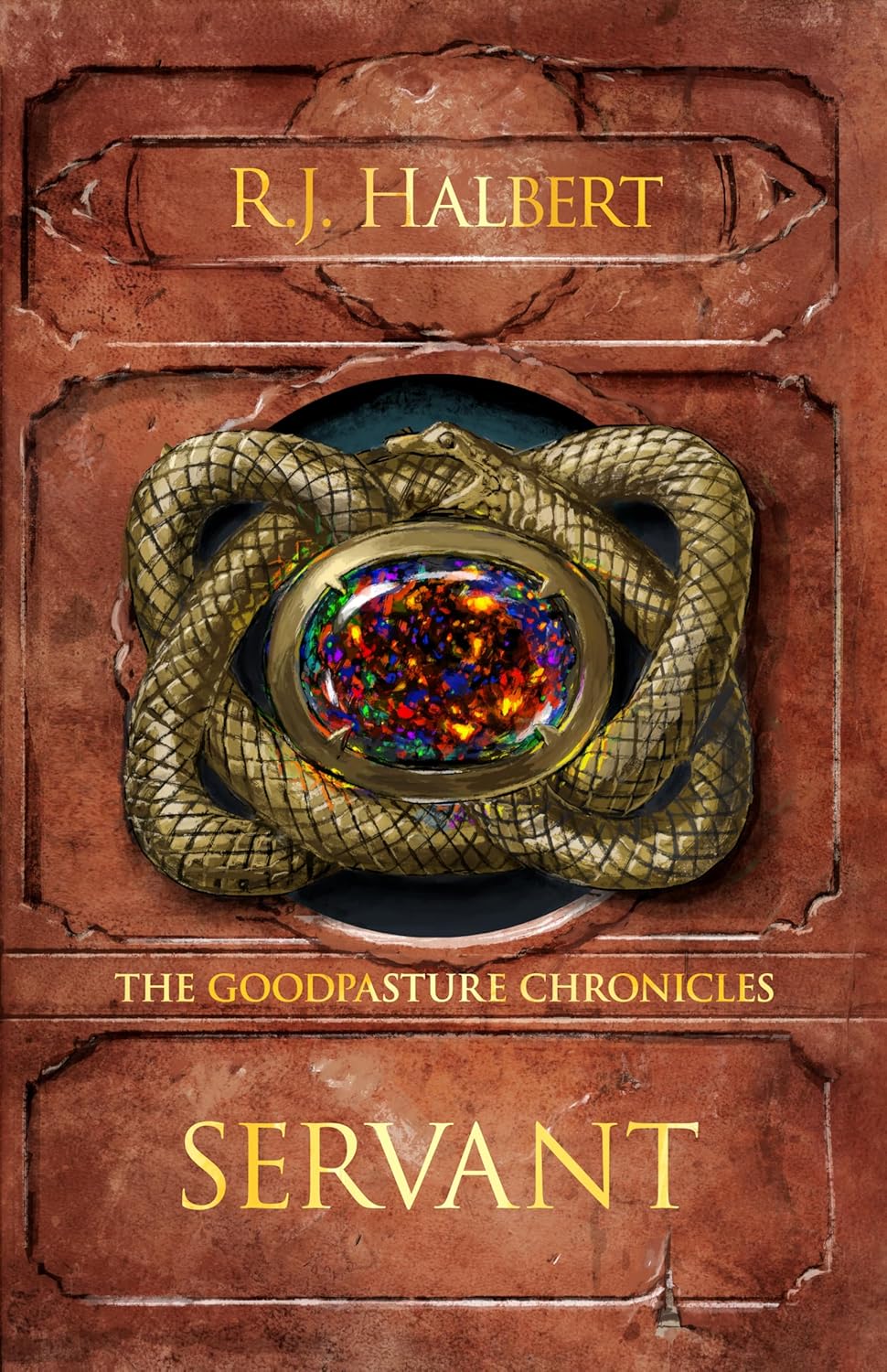
Servant is a supernatural fantasy novel that blends family drama, ancient mystery, and time-crossed storytelling. The book follows two threads that eventually begin to echo one another: Zach, a middle-school kid from the Keane family who vanishes from his house under eerie circumstances, and Akolo, a boy living centuries earlier whose life is marked by war, trauma, and the demands of kings. As Zach’s family searches for him in the present day, he finds himself wandering through stone hallways, oil-lit corridors, and a world that feels pulled straight from his dad’s archaeology stories. Meanwhile, Akolo faces his own captivity in a foreign palace controlled by a ruler who insists he will “need” him. Both boys are caught in places where power, fear, and destiny collide. By the time the book reaches its epilogue, the story has cracked wide open into something larger, hinting at deep magic, interwoven timelines, and a house that is far more alive than anyone wants to admit.
I found myself pulled in by the writing style. It’s simple on the surface but has this steady emotional current running underneath. The authors don’t rush. They let each moment breathe. Even the small scenes, a father making coffee, a daughter complaining about pizza for breakfast, or the house creaking in the early morning, carry a sense of “something is happening here,” even if you can’t name it yet. I liked that. It made me feel like I was sitting inside the Keanes’ home, overhearing bits of life while the bigger mystery brewed just out of sight. And then we cut to Akolo’s story, which feels raw and grounded and ancient. Those chapters landed hardest for me. His fear. His confusion. The way he clutches the jeweled stone in his pocket just to feel connected to something familiar.
I also appreciated the author’s choices around pacing and perspective. Switching between timelines can easily feel gimmicky, but here it feels purposeful. Zach’s modern confusion mirrors Akolo’s ancient disorientation, and that parallel makes the supernatural elements feel earned. I liked how the book doesn’t give its secrets away too quickly. We get hints, symbols carved into doors, fog in places fog shouldn’t be, Marshall knowing more than he says, but the authors trust the reader to sit in the unknown for a while. That kind of patience is rare, and honestly, refreshing. The emotional beats hit hardest because they’re framed by that tension: the Keane parents’ terror when Zach goes missing, Ariel’s mix of resentment and fear, Akolo’s grief for his family, Marshall’s haunted loyalty to forces he doesn’t entirely understand. All of it builds toward that late-book shake of the earth, where the house itself moves as though waking up.
Servant doesn’t wrap everything up, but it feels like a middle chapter that knows exactly what it is. I’d recommend this book to readers who love supernatural fantasy with a human heart, people who enjoy stories about families surviving strange things, or anyone who likes time-slip mysteries tied to ancient cultures. If you want something atmospheric, character-driven, and a little eerie without tipping into horror, this one will hit the spot.
Pages: 262 | ASIN : B0FQ5ZGH1R
A Journey of Discovery

On a Sundown Sea follows a woman with the gifts of being a medium and clairvoyant who meets the leader of the American Theosophical Society, who guides her on a spiritual path that could make her mystical dreams a reality. What was the inspiration for the setup of your story?
I grew up in Point Loma, near Madame Katherine Tingley’s Lomaland. Though she’s been gone nearly a century, stories of her remarkable life—and the extraordinary happenings on that hilltop—still echo throughout the region. I’ve long been fascinated by the mysteries surrounding her. Was she truly a medium and clairvoyant? How did she transform barren land into a flourishing Theosophical community with gardens, a school, and an arts colony? And did she really believe her husband had been reincarnated as a turtle?
Determined to uncover the truth, I spent five years researching and writing this biographical historical novel. While no full biography of Tingley exists, I immersed myself in her speeches, personal writings, and countless archival materials—newspaper articles, letters, photographs, court testimonies, ship logs, and passports. The Theosophists were prolific writers and publishers; Lomaland even had its own press that produced pamphlets and magazines. My greatest challenge was reconciling the many conflicting dates and facts I encountered.
To follow her journey, I traveled to her birthplace in Newburyport, Massachusetts, and to New York City, where her story first unfolds. And to better understand her esoteric world, I attended mediumship readings and worked with a shaman.
What are some things that you find interesting about the human condition that you think make for great fiction?
A novelist’s job is to place obstacles between the protagonist and their deepest desire—and Katherine’s childhood vision of building a white city had no shortage of them. Every compelling story thrives on conflict, and characters become truly memorable when they reveal their touchstones, quirks, humor, and emotions. I also believe love, in one form or another, should always be present—it adds depth, humanity, and hope to even the most challenging journeys.
What experience in your life has had the biggest impact on your writing?
After a twenty-year career as a public-school educator, I found myself drawn to writing. I began attending a weekly drop-in group, where the facilitator gave prompts and set a timer to get us started. Writing in community helped me keep my pen moving, even on days when I wanted to stop. Initially, I thought I’d write children’s books or a memoir about my time in the classroom—but that wasn’t what unfolded at all.
Instead, characters began appearing on the page seemingly out of nowhere, and I just kept following them. I’m an intuitive writer, composing all my first drafts by hand in a journal. When I started, I never imagined I would create the Anne McFarland Series, let alone On a Sundown Sea: A Novel of Madame Tingley and the Origins of Lomaland. It’s been a journey of discovery, both of the stories themselves and of who I am as a writer.
What is the next book that you are working on, and when can your fans expect it to be out?
I’d love to publish a collection of my nature poetry, as well as a personal development book inspired by my philosophy and blog, Crealivity. At the same time, I’m resisting the pull of a first chapter that has jumped onto the page for a fourth novel in the Anne McFarland Series. Over the past ten years, I’ve sent four novels and hundreds of poems out into the world, but right now my focus is on promoting On a Sundown Sea. I’ve many local events planned here in San Diego first, and then I’m taking the book on tour to other parts of the country.
Author Links: GoodReads | Instagram | Facebook | Website
In 1888, Katherine Tingley, a medium and clairvoyant, continues to have a childhood vision of a white city on a sundown sea. While serving the poor at her Do-Good Mission on Manhattan’s East Side, she encounters William Q. Judge, a mesmerist and leader of the American Theosophical Society. He recognizes her potential, convinces her to become his student, and guides her on a spiritual path that could make her mystical dream become a reality.
After Judge’s passing, Katherine assumes leadership of the Society and embarks on a world crusade to spread brotherhood, learn from ancient cultures, and search for a Himalayan Mahatma. In 1900, she moves the Theosophical headquarters to San Diego. Here, she sets out to establish Lomaland—a sacred space of learning, artistry, and divine harmony, built on a barren peninsula yet brimming with hidden potential. As people from around the world converge to share in her vision, they form a community united in purpose to spread enlightenment. However, betrayals, lies, and libels accumulate until a monumental court case ultimately decides her future and the fate of the white city on a sundown sea.
On A Sundown Sea: A Novel of Madame Tingley and the Origins of Lomaland


When I first closed the final page of On a Sundown Sea, I sat with the feeling that I had been walking alongside Katherine Tingley, a woman caught between the raw struggles of the 19th century and her own restless visions of something more. The novel takes us through New York’s crowded tenements, the snowbound Great Blizzard of 1888, and finally into the swirl of spiritualism, social reform, and theosophy that defined her life. It is a story of Katherine’s yearning for justice, for connection, and for the dream of a golden city by the sea where harmony might prevail.
What struck me first about this book was how alive the writing felt. The historical detail pulled me in, yet it never read like a lecture. The voices of the poor at the mission, the creak of an empty bread cart, even the sound of a baby crying outside in the cold stayed with me. I admired the way author Jill G. Hall let Katherine be complicated, fierce and brave, but also vulnerable, flawed, and often unsure. The visions Katherine experiences could have been written as distant or mystical, but instead they felt immediate and human, even tender. I could sense her exhaustion, her longing to believe they meant something.
There were moments when the pacing slowed, especially when the story lingered on Philo’s inventions or the details of household frustrations. I found myself wanting to move back to Katherine’s work at the mission or her encounters with William Q. Judge, which carried a spark. Yet in a strange way, even these slower stretches made me feel more connected to Katherine, because life itself rarely moves in clean arcs of drama. It’s messy, filled with distractions, petty disappointments, and small betrayals, and the novel captured that truth.
I came away deeply moved by Katherine’s journey. Her search for meaning felt familiar to me, and I imagine it will resonate with many others who’ve ever wondered if they were meant for more than the roles life handed them. I would recommend On a Sundown Sea to readers who enjoy historical fiction rooted in real social movements, but also to anyone who loves a story about resilience and the desire to build a better world. It is a thoughtful, heartfelt novel, and though it is set in the past, it left me thinking about the present in fresh ways.
Pages: 384 | ASIN : B0DV6T8P8M

Self-Discovery Path

The 7th Dimension follows a plastic surgeon with mysterious tattoos he believes are connected to larger events unfolding around him, who embarks on a journey that leads him down a path toward the divine. I found Derek Hollinger to be an intriguing and well-developed character. What was your inspiration for this character?
I didn’t realize it until a few years later. Me. I had been diagnosed with stage three breast cancer and didn’t know if I would survive. This pulls the rug out from under your world. How you handle it is with the tools you have in your tool box. Some people don’t even have a tool box. That was Dr. Derek Hollinger.
What themes were particularly important for you to explore in this book?
Self-discovery path. Why we end up where we are and what to do about it.
When will the next book be available? Can you give us an idea of where that book will take readers?
The 6th Heaven September 17th, 2025. The Amazon jungle is captivating. Venturing into its depths is like exploring the hidden corners of the mind. The jungle hosts an array of remarkable creatures, including the mighty jaguar, the massive green anaconda, shocking electric eels, and flesh-eating piranhas. Just as travelers must remain vigilant and highly aware of their surroundings, we ourselves must be alert when exploring the concealed areas of our minds, where our deep personal thoughts and emotions reside. Like the jungle, it will reveal its secrets.
Author Links: GoodReads | X (Twitter) | Facebook | Website | Amazon
Derek Hollinger isn’t sure, but he knows they’re all connected to the mysterious tattoos that suddenly appeared across his body.
Determined to untangle the web spun by the vicious thug known as “Spider,” Derek embarks on a journey of redemption that leads from his lavish Los Angeles penthouse to the seedy world of underground fighting and human trafficking. But as he ventures deeper down the rabbit hole, the self-exiled plastic surgeon realizes that the answer lies within his heart and mind … and soul.
Faith is the key to reclaiming his life, but choosing God may be difficult for Derek, who has spent his entire career valuing material success over spiritual growth.
In this thrilling sequel to 21Tattoos, Derek must face the hard truth about where his tattoos came from and an even harder truth about what it will take to be free of them once and for all.
Final Notes
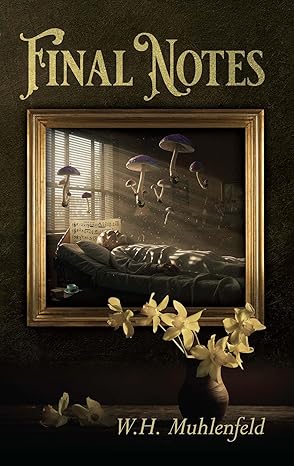
Final Notes is a deeply introspective and brutally honest reflection on dying, memory, and meaning. Written from the imagined deathbed musings of a 107-year-old man, the book unfolds like a last conversation with a thoughtful, witty, occasionally cranky elder who has made peace with his fate. Muhlenfeld blends philosophy, science, personal anecdotes, and black humor to explore what it means to matter, if we matter at all, when we’re all destined for obscurity. It’s a farewell letter to existence, scribbled with elegance, sarcasm, and startling clarity.
Reading this book was a bit like sitting beside someone who’s holding nothing back. I laughed. I got choked up. I put it down more than once to think about my own life. The writing is smooth. It’s raw in the right places, poetic in others. There’s a rhythm to Muhlenfeld’s voice that kept me nodding along, even when I disagreed. The author never pretends to have all the answers, but he asks the right questions. The mix of stoicism and warmth, the gallows humor, the sudden emotional gut punches, they all land. He doesn’t flinch from the messiness of death, and that kind of honesty is rare. Refreshing, even.
At times, it circles back to familiar points, and there’s a stretch where the musings feel slightly indulgent. Still, I didn’t mind much. It felt earned. The digressions on legacy, digital immortality, AI death doulas, and even death row last meals aren’t just filler. They add texture. The real surprise is how comforting it all is. Muhlenfeld seems to have accepted the darkness without bitterness. Somehow, he makes it feel okay to disappear.
Compared to Oliver Sacks and Christopher Hitchens, Final Notes finds a middle ground between gentle reflection and sharp-edged wit. Like Sacks in Gratitude, Muhlenfeld writes with a calm acceptance of death, holding onto wonder even as the light dims. But there’s also a streak of Hitchens’ blunt irreverence. He’s not afraid to mock the euphemisms, the false hope, or even himself. In the end, I think Final Notes isn’t about death. It’s about living with eyes open. I’d recommend it to anyone wrestling with grief, aging, or just the big unspoken question of what any of this means.
Pages: 137 | ASIN : B0FDJDYQKP
The Conscious Virus

The Conscious Virus, by Miki Mitayn, defies easy categorization. Part sci-fi, part medical drama, it blends elements from different genres into a compelling narrative that challenges, yet deeply engages, the reader. At its core lies the unique relationship between Nerida and Mari, two women traveling through the desolate Australian outback, tasked with confronting a conscious virus—a threat unlike anything humanity has ever seen.
Nerida, a doctor and scientist, is driven by her desire to help the scattered communities she encounters. Yet her approach to saving lives is far from conventional. Mari, her partner, claims to communicate with disembodied spirits, something Nerida can’t rationalize but is forced to accept after undeniable proof. Their love is undeniable, yet their dynamic is fraught with tension—Nerida’s logical mind often clashes with Mari’s shamanistic beliefs. Together, they form an uneasy partnership, one that might hold the key to stopping a virus that’s not only intelligent but also seemingly conscious.
Mitayn crafts a narrative that explores not just the physical threat posed by this virus but also deeper, more complex themes—queer relationships, spirituality, and humanity’s capacity for self-destruction. The novel demands focus, especially when it delves into its pseudo-metaphysical moments, but the emotional anchor of Nerida and Mari’s relationship keeps readers grounded. Nerida, who sees herself as a savior of the communities she visits, struggles with Mari’s unconventional methods, yet their bond grows as the reality of their situation becomes undeniable.
The virus they face is terrifying, not just because it threatens humanity, but because it forces the women to confront the deeper question of whether humanity is even worth saving. Mitayn excels at creating a world that feels both familiar and unsettling. The stakes are high—not just for the survival of the human race but for Nerida and Mari’s relationship. The conscious virus looms as an insidious presence, but in many ways, it serves as a metaphor for any existential threat that could tear apart an unconventional love. Amid a hostile world, sometimes the only thing that sustains us is our connection to the people we care about most.
The Conscious Virus is an intricate, thought-provoking read. Its blend of genres creates a tapestry of ideas that can be challenging, but the depth of emotion and humanity at its heart make it an eminently rewarding experience. For readers who enjoy stories that push boundaries while exploring the raw, often painful nature of love and survival, this novel is not to be missed.
Pages: 478 | ASIN : B098X1SXZ4
A Fantasy Memoir
The Dreamtidings of a Disgruntled Starbeing follows a spirited 13-year-old girl who lives with her dysfunctional family: a narcissistic mother, a psychopathic brother, and a distant father, leading her to find solace in her celestial daydreams and embark on a journey of self-discovery. What was the inspiration for the setup of your story?
To be honest, if there was a genre called Fantasy Memoir, I’d say this story would fall into that as, even though the story is fictitious, it holds many truths from my childhood. Growing up, I needed to find my own supportnet and, like Klara, I used my mind and my perspective to change my experience. In fact, it took me close to fifteen years to finish this novel as I was determined not to share it until I had found a way to portray the story with warmth and humor, while also showing a way forward for when we deal with challenging relationships. (Which I suspect most of us seek to do.)
That said, Klara’s story is also different from mine in many ways. Rani, for instance, is someone I wish I had met as a child, as is her uncle. The three belief systems–Quakerism, Hinduism, and Q’ero Shamanism–I came across later in life, however, I decided to include them as they are belief systems that don’t tell us what to believe, but how to find our own inner truth, which appeals to me.
What were some of the emotional and moral guidelines you followed when developing your characters?
That’s an interesting question. I’d say I wanted to portray the characters without judgment, however, as the story needed an antagonist, and as Klara was to have emotional growth, this may not become clear until the very end.
What were some themes that were important for you to explore in this book?
Oneness, that’s the first thing that comes to mind. Oneness, not only in the way we are all connected as people, but the way we are connected to nature and to the Earth and Cosmos as well.
What is the next book that you are working on, and when can your fans expect it to be out?
As much as I’ve enjoyed my connection with all the people who’ve connected with Klara, my present focus is to reach out to children. Besides writing I’ve had extensive experience with art and illustration and a long dream of mine has been to write and illustrate children’s books. Now, retired, I’m grateful to finally have the time and the space to pursue this dream. To follow my progress, please visit my Instagram account.
Author Links: GoodReads | Instagram | Facebook | Website
Precocious 13-year-old Klara Tippins lives in a refurbished convent in upstate New York with her unwholesome family; a narcissistic mother, a psychopathic brother, and a distant father.
It sounds dire, yes, but this is Klara, a starbeing from a distant star, and she has friends in high places; her starfamily none the less, who give her guidance in her dreams. At least that’s what she likes to think, though, if she’s to be honest, she doesn’t remember much when she wakes up.
As the story moves, three belief systems are brought into Klara’s path: Quakerism, which leads to other people, Q’ero Shamanism which connects her with nature, and Hinduism which provides an understanding of the world and her place in it.
A heartfelt novel about the resilience and determination needed to retain a sense of self when it’s being undermined from the very start. For Klara, it was a matter of reaching beyond her circumstances so that, ultimately, she could reach within herself.



 LITERARY TITAN