Blog Archives
Opportunities to Lead

In Scaling Pyramids, you present an in-depth look at the three layers of successful leadership and share with readers your own reflections on what it means to lead with patience. Why was this an important book for you to write?
A lot of the leadership training that focuses on the entry and mid-level is really focused on managing, not leading. A lot of the core leadership literature is focused on the leader at the top. So there is a gap – how to shift from managing to leading, how to lead without authority, how to make meaningful change from the middle.
I had my own struggles with managers who believed they were leaders, but more people fled them than wanted to follow them but I also had some really great role models and influencers, so I wanted to share lessons I learned from both. I also recognized I made (and can continue to make) some mistakes and learned some lessons along my leadership journey. I know I am not the only one, and I know from my leadership journey that more people than just me can learn from those lessons, so I wanted to share them to benefit others. Not Pollyannaish, not “follow these steps and become an instant success,” but real lessons, hard won in the course of a real life.
What is a common misconception you feel people have about becoming a successful leader?
That you have to have a title, rank, or position. The truth is, if you have one follower, you are a leader. The question then becomes, what do you do with that? How can you nurture that flame and grow as a leader? Do you even want to? If the answer is yes, then look for opportunities to lead where you are, regardless of title, rank, or position. I think a second misconception is, “leadership is lonely, I have to do it on my own.” The truth is that to be successful you need to surround yourself with others: role-models, mentors, and coaches that can support you in your leader development and that you in turn can support as you grow.
What is one piece of advice someone gave you that changed your life?
“You know, you seem to carry a lot of anger, and I think you don’t realize how it affects you and those around you.” He actually started the conversation with, “Can I speak into your life?” which was a shocking question for me. And it was a conversation that changed my life because it was a big blind spot that I had, and working with him to recognize it and overcome it changed a lot for me and made me a much better leader. For you, it may not be anger, but recognizing that you have blind spots and finding trusted confidants who will tell you the truth about them and help you work through them is incredibly important.
What is one thing you hope readers take away from your experiences?
For those in the middle, you can lead and make a difference from wherever you are. There is a graphic in the introduction to my book that illustrates my journey through my bureaucratic pyramid. I never made it to the top. I have not been Secretary of State. But I made a difference and an impact on the entire organization, in more ways than I realized. You can, too.
For those at the top, investing in the leadership development of those at the bottom and middle of the organization will make your organization stronger, lead to improved employee retention, and better outcomes. Letting toxic managers flourish will have the opposite effect.
Author Links: GoodReads | Facebook | Crisis Lead | Website | Scaling Pyramids | LinkedIn | Amazon
Scaling Pyramids: Leadership Lessons from a Mid-Level Bureaucrat is an honest, engaging, and research-informed exploration of what it means to lead from the bottom and middle of an organization—especially within complex systems that aren’t always built for innovation, agility, or humanity.
Drawing on more than 25 years of experience as a federal law enforcement officer, diplomat, educator, and public servant, author Christopher Stitt brings a rare combination of street- level credibility and scholarly insight to the leadership conversation. Throughout the book, he weaves together personal stories from his global assignments with contemporary leadership research from behavioral science, organizational psychology, and decision- making theory.
The result is a practical and thought- provoking field guide for those who are tired of waiting for permission to lead—and ready to make a difference right where they are. In these pages, you’ll find lessons on how to influence up, down, and across your organization. You’ll learn how to build trust, coach others, think strategically, and maintain your integrity even when politics or process get in the way. You’ll discover why the middle of the organizational pyramid isnot a waiting room for the next promotion—it’s the center of gravity where culture, performance, and credibility are either built or broken.
Whether you’re managing teams in a government agency, navigating the corporate hierarchy, or trying to make change from within a large institution, Scaling Pyramids offers you a road map grounded in both lived experienc and real evidence. With a voice that is both candid and deeply practical, Stitt reminds us that leadership isn’t about rank—it’s about showing up, stepping up, and speaking up in the moments that matter.
If you’ve ever felt overlooked, underutilized, or underestimated in your role, this book is for you.
It’s time to lead. Not someday—now.
The Power of Digital Identity: Winning Customer Trust and Transforming Experience
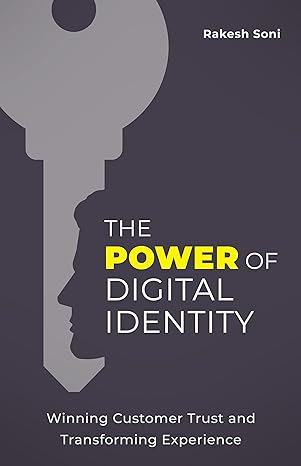

The Power of Digital Identity explores the critical role of digital identity in shaping modern customer experiences, securing personal data, and meeting evolving global privacy regulations. Rakesh Soni, drawing from his experience building CIAM (Customer Identity and Access Management) systems, makes a case for how digital identity is no longer optional, it’s essential. The book starts with the evolution of identity, from tribal names to biometric authentication, and moves into the mechanics of CIAM, contrasting it with traditional IAM (Identity and Access Management). Soni explains how CIAM can unify customer experiences, reduce fraud, streamline compliance, and increase business revenue by building trust. He closes by outlining strategies to design and implement a CIAM system, with an eye on future trends in privacy, personalization, and digital innovation.
I found the book to be clear and convincing. Soni has a knack for making technical concepts feel personal and relevant. His examples, like the frustration of forgetting a password or the clunky experience of interacting with siloed systems, feel familiar. He doesn’t get bogged down in code or vendor specifics; instead, he speaks plainly and focuses on the “why” behind digital identity. I especially appreciated the chapter on consumer behavior. The way he ties trust to revenue, and privacy to user experience, made it click for me in a way other tech books rarely do. There’s a genuine sense of urgency in his writing, but it never feels preachy or abstract.
The book sometimes reiterates points. Some of the trends, like the rise of mobile-first experiences or the impact of regulations like GDPR, are well-known to anyone in tech or marketing. There are references to Fortune 5000 companies using CIAM, but I found myself wishing for a few more real-world success stories.
I’d recommend this book to product managers, tech leaders, and marketers who want to understand how digital identity ties into the bigger picture of customer experience. It’s a strong read for anyone trying to build trust with users online, or who is tired of trying to wrangle legacy systems and clunky login flows. It’s not overly technical, but it’s practical and well-grounded.
Pages: 223 | ASIN : B0FBQ7FT53

I’ve Lived It

Stoic Empathy is a sharp and heartfelt exploration of how two seemingly opposing traits, stoicism and empathy, can be merged into a potent tool for influence, resilience, and personal growth. Why was this an important book for you to write?
Because I’ve lived it. I’ve had to. I grew up in war-torn Tehran, navigating missile strikes and ideological oppression, and then started over as a refugee in Canada. Years later, I was leading high-stakes negotiations in sleek boardrooms as a corporate lawyer in America. Through it all, I found myself constantly reaching for two tools: my ability to stay calm and principled under pressure (stoicism), and my deep desire to understand and connect with others (empathy). People often see these as opposites, but in my life, they were partners—my survival tools, my leadership compass, my parenting strategy. I wrote Stoic Empathy because I wanted to offer a roadmap for others who are trying to live with power and integrity at once, in a world that often tells them they have to choose.
What were some ideas that were important for you to share in this book?
One was that self-control is not about suppression—it’s about clarity.
The other was that empathy doesn’t have to make you soft; it can actually make you sharper.
I wanted to challenge the misconception that empathy is merely emotional absorption. In truth, it can be tactical, discerning, and fierce. I also wanted to speak to people who feel deeply but don’t know what to do with that depth—especially those in leadership positions. And lastly, I needed to share the idea that influence doesn’t require dominance; it requires alignment—between who we are, what we believe, and how we show up.
Did you find anything in your research of this book that surprised you?
Yes—how many ancient philosophers were deeply attuned to what we now call emotional intelligence. I expected to pull heavily from modern psychology and neuroscience, and I did, but what surprised me was how relevant the writings of Epictetus and Marcus Aurelius felt when filtered through the lens of human connection. I also discovered fascinating neurological evidence that validated what I’d experienced instinctively as a survivor of oppression and war, but also as a lawyer and a mother—that our brains are wired to both mirror and regulate emotions, and that mastering that dance is what gives us real power.
What is one thing that you hope readers take away from Stoic Empathy?
That strength and sensitivity are not at odds. In fact, our most effective leaders, partners, and creators are often those who can feel deeply but act with discipline. If there’s one thing I hope readers take away, it’s this: You are allowed to feel everything—but you don’t have to do everything those feelings suggest. Power lies not in shutting down or giving in, but in standing calmly at the center of it all, discerning what matters, and choosing how to move forward with grace.
Author Website
Stoicism combined with empathy may sound like a contradiction in terms. But when these seemingly opposing forces are harnessed together, they have the power to change your life.
From surviving missile attacks and political oppression in Iran to leading high-stakes legal teams and negotiations in corporate America, Shermin Kruse’s journey fuels her mission to merge empathy and stoicism as tools for navigating power, justice, and human connection in every facet of life. In this eye-opening book, she offers you this radical perspective shift—anchored in up-to-the-minute research—to help you navigate life’s challenges with power and principles.
We often think of empathy as an emotional stance: we feel what someone else is feeling. But Kruse outlines a form of empathy that’s based in cognition, not emotion—a way for us to understand what the other person is thinking and feeling while keeping a distance from their feeling state—and shows us how we can strategically maneuver our level of engagement from “emotional empathy” to “cognitive empathy” in different circumstances. Then she utilizes Stoic philosophy and modern science to outline the how of emotional regulation and control. The bridge she builds between Stoicism and empathy gives us the knowledge and discipline we need to:
Calmly assess the power dynamics of any situation
Understand and manage our own emotions as well as the emotions of others
Defuse danger and turn conflict into connection
Skillfully steer a challenging conversation toward the result we want
Whether you’re a leader striving to succeed in your role with integrity, an educator seeking to guide curious minds with compassion, a parent nurturing resilience in your children, or simply facing a personal or professional crossroads, Stoic Empathy is an essential toolkit for negotiating success in every area of your life.
Stoic Empathy: The Road Map to a Life of Influence, Self-Leadership, and Integrity
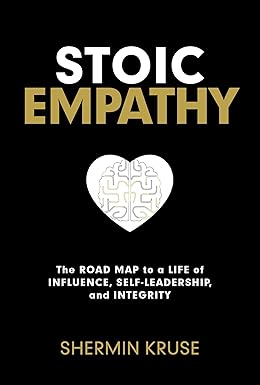

Shermin Kruse’s Stoic Empathy is a sharp and heartfelt exploration of how two seemingly opposing traits, stoicism and empathy, can be merged into a potent tool for influence, resilience, and personal growth. The book mixes personal history, ancient philosophy, neuroscience, and practical advice to introduce the concept of “Stoic Empathy,” the intentional blend of emotional awareness and emotional control. Kruse breaks down cognitive and emotional empathy, offers techniques from both domains, and delivers them through compelling stories, case studies, and reflections from her own turbulent journey from Iran to North America. The message is clear: you can be strong without being cold, and kind without being soft.
What struck me right away was Kruse’s voice. She doesn’t hide behind academic detachment or preach from a mountaintop. Instead, she lays her life bare—stories of war, immigration, trauma, injustice, love, and ambition. And she does it in prose that is raw but composed, often poetic but never indulgent. I felt moved, more than once, not just because of what she lived through, but how she translated those scars into strength. Her writing is both precise and deeply emotional, a difficult balance she pulls off with skill. Kruse somehow made a guidebook feel like a memoir.
Now, in terms of the ideas, some of them hit like a lightning bolt. The way she differentiates cognitive and emotional empathy, then teaches you when to use each, is flat-out brilliant. I’ve read plenty of books on leadership and emotional intelligence, but few are this actionable and easily understood. She doesn’t just give you theory, she shows how it plays out in hard rooms with high stakes. There’s pain in this book. There’s injustice. But Kruse doesn’t wallow. She’s honest about the ugliness in the world, but relentless in her belief that we can navigate it ethically, if we keep both a cool head and a warm heart.
I’d recommend Stoic Empathy to anyone who leads, whether that’s in a boardroom, a classroom, a household, or a movement. It’s especially relevant for folks juggling high-pressure decisions with a desire to stay kind and ethical. But more than that, it’s for anyone who’s ever felt torn between being tough and being tender. Kruse shows you how to be both, and more importantly, how to use that combination to change your world.
Pages: 288 | ASIN : B0D3YVPRX6

A Fresh Lens for Leaders

Certainty: How Great Bosses Can Change Minds and Drive Innovation explores how survival instincts shape workplace behavior and presents readers with practical leadership strategies that will build trust, inspire teams, and drive innovation. Why was this an important book for you to write?
Because I’ve seen firsthand—both at the CIA and in the private sector—how often leaders unintentionally trigger fear, uncertainty, and resistance in their teams. I tossed out everything I learned about leadership and management from West Point and Harvard Business School and started with human nature. I wrote Certainty to give leaders a fresh lens: to understand that the workplace is not just logical, it’s deeply emotional, instinctual, and biological. We’re wired to survive, and that wiring still shapes how we respond to change, authority, and feedback. I wanted to offer practical, brain-based strategies to help leaders build trust, lower fear, and lead in ways that align with human nature—not fight against it.
What were some ideas that were important for you to share in this book?
One key idea is that uncertainty is the enemy of innovation. When people don’t feel psychologically safe—socially, emotionally, or professionally—they shut down, they play it safe by clinging to the status quo, and creativity suffers. Another essential idea is that leadership is less about control and more about creating conditions where people feel seen, heard, and valued. A leader’s job is to unleash the best of human nature. I also wanted to show how simple brain-friendly tools, like open-ended questions, regular check-ins, and praise with purpose, can become part of a leader’s habitual behavior and make a real, lasting difference.
What is a common misconception people have about effective leadership?
That being a great leader means having all the answers or being the smartest person in the room. In reality, effective leadership is about asking better questions, listening deeply, and making people feel safe enough to contribute their best ideas. Too many leaders rely on authority and metrics, when what really drives performance is clarity, belonging, and trust.
What is one thing that you hope readers take away from Certainty?
That you don’t have to be perfect to be a great leader, but you do have to be intentional, and that means setting aside a small amount of time to reflect in order to devise a mental plan for the week. If leaders make small, consistent changes—like replacing feedback with praise and advice or being more transparent in times of uncertainty—they can dramatically increase trust, engagement, and innovation. The book shows that leadership isn’t about charisma—it’s about understanding what makes people tick and creating the conditions for them to thrive.
Author Links: Amazon | Other retailers | Certainty book website | Mike Mears website | LinkedIn | Facebook | Instagram | X | Goodreads | BookBub
The dilemma. Our Stone Age brains are hardwired for survival and programmed to fear the unknown, yet the work world demands constant innovation. The enemy of better leadership is uncertainty deeply buried in the minds of your workforce.
The solution. In Certainty, Mears offers the answer: understand human nature. Work with it rather than pushing against it. Mears draws on neuroscience and psychology-plus compelling stories from his career-to offer practical leadership advice, including:
• Entertaining, science-backed explanations of how our brains think and how our primitive brains are colliding with the demands of the modern workplace
• New feedback, change management, and delegation tools to build an environment of certainty rather than of fear
• Fresh insights to overcome innate change resistance in yourself and others
• Time-saving ideas to empower yourself while empowering your employees
The results. You want loyalty, trust, and great performance from your team. We all do. With Mears’s guidance, you can identify the limitations and strengths of the human mind and create a dynamic and innovative workplace.
CERTAINTY: How Great Bosses Can Change Minds and Drive Innovation
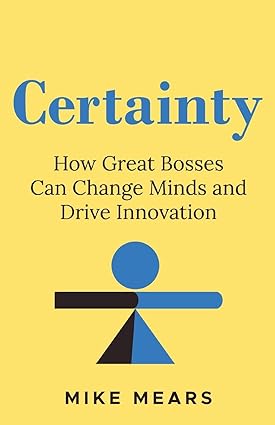
Mike Mears’ Certainty: How Great Bosses Can Change Minds and Drive Innovation takes a deep dive into the human mind and how our survival instincts shape workplace behavior. The book is built around the idea that humans crave certainty, and uncertainty often triggers fear, resistance, and poor decision-making. Mears explores concepts like the “auto-brain,” which governs instincts and emotions, and the “focused-brain,” which helps us control those impulses. Through engaging anecdotes—some from his time in intelligence—he presents practical leadership strategies to build trust, inspire teams, and drive innovation. At its core, the book argues that great leaders don’t just manage—they create a sense of psychological safety that allows people to thrive.
One of the things I really appreciated about Certainty is how it strips leadership down to the basics of human nature. It’s not just about motivational speeches or company mission statements; it’s about how our brains are wired. Mears breaks down how we spend most of our day running on instinct, often without realizing it. His discussion on how humans resist change not out of stubbornness but because our brains are wired to see it as a threat felt like a lightbulb moment. He explains that the key to leading people through change isn’t brute force but creating a sense of security. The simplicity of that insight hit hard.
One of the book’s strengths is its clear and consistent message about how uncertainty triggers fear, reinforcing the importance of creating psychological safety. Mears emphasizes this idea throughout, ensuring it sticks with the reader. His anecdotes from intelligence and corporate leadership are captivating, offering unique insights from high-stakes environments. I appreciated the inclusion of case studies from everyday workplaces to showcase how these concepts apply across a broader range of industries.
One of my favorite sections was the one on “Mental Prompts,” which provides easy, actionable ways to create a culture of certainty. The “Vision Prompts” help clarify expectations, the “Inclusion Prompts” tap into our social bonding instincts, and the “Insight Prompts” encourage creative problem-solving. Mears makes a compelling case that small, consistent behaviors like genuine recognition or making sure everyone feels included can have a massive impact on a team. The example of CIA officer Renee, who created a high-performing unit in a war zone by focusing on trust and inclusion, was powerful.
Certainty: How Great Bosses Can Change Minds and Drive Innovation is an insightful, engaging read that makes leadership feel less like a skill you have to master and more like a mindset you can adopt. If you’re a leader (or aspiring to be one) and want to understand what truly motivates people, this book is worth your time. It’s particularly great for managers in high-pressure environments, but honestly, anyone who works with people will find something useful here. If you’ve ever been frustrated by resistance to change or struggled to inspire a team, this book will give you practical ways to flip that script. Highly recommended.
Pages: 288 | ISBN : 1639081372
You Don’t Know Sh*t About Leadership

Leadership books are everywhere. Most of them repackage the same tired advice, wrapped in a neat list of rules or principles. But G. Damon Wells doesn’t play that game. Instead, he rips apart traditional leadership myths and exposes why so many leaders fail—repeatedly and predictably. You Don’t Know Sh*t About Leadership takes a raw, research-backed look at why leadership is broken and offers a fresh, brutally honest framework for getting it right. Wells blends cognitive science, game theory, and real-world case studies to dissect the psychology behind leadership, ultimately introducing the Ballistic Leadership Framework (BLF), a model designed to work with, rather than against, human nature.
Wells doesn’t sugarcoat things. Right from the start, he hits hard with data: 82% of organizations pick the wrong people for leadership roles, and bad leadership costs the global economy trillions of dollars. He argues that leadership failure isn’t just about poor training or bad hires; it’s about the fundamental ways our brains misunderstand power. One of the most eye-opening sections is his takedown of the so-called “hero leader” myth. We love the idea of the lone visionary saving the day, but in reality, leadership is more about networks, adaptability, and trust than one charismatic figure making all the calls.
One of the strongest parts of the book is its exploration of the biological and psychological reasons behind leadership failures. Wells explains how our primitive neural wiring makes us default to outdated leadership behaviors, fight-or-flight responses, status obsession, and irrational decision-making under pressure. He gives compelling examples, like how Uber’s former CEO Travis Kalanick’s aggressive, winner-take-all mindset worked in Uber’s early days but led to long-term cultural and reputational disaster. Wells is at his best when he’s showing how leaders unknowingly sabotage themselves by following instincts that were useful in small tribal groups but disastrous in modern organizations.
Wells’ writing style is punchy, direct, and sometimes borderline confrontational but that’s part of what makes this book refreshing. He’s not here to stroke egos; he’s here to challenge assumptions. The book isn’t just a rant, though it offers solutions. The Ballistic Leadership Framework is a practical, well-explained system that prioritizes adaptability, psychological safety, and trust. He shows how real organizations can apply these principles through case studies and scenarios, making it clear that leadership isn’t about following rigid models but understanding the science behind human behavior.
If you’re looking for a feel-good, motivational leadership book, this isn’t it. But if you want an unfiltered, science-backed reality check on why most leaders fail and how to do better, this book is a must-read. It’s perfect for mid-career leaders, executives struggling with organizational dysfunction, or anyone frustrated by the endless cycle of bad leadership. Wells challenges everything we think we know about leadership, and in doing so, he provides a path forward for those willing to embrace the complexity of human nature.
Pages: 318 | ASIN : B0DX8C67YR
The Art of Managing Humans
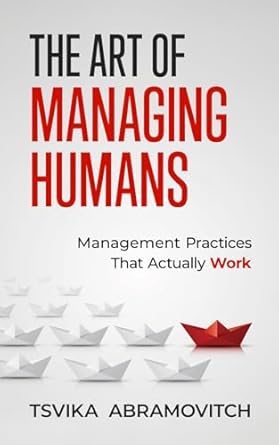
Managing human relationships is an essential skill that permeates daily life, from casual interactions like getting coffee to the complex responsibilities of leadership at work. Tsvika Abramovitch’s book, The Art of Managing Humans, is a comprehensive resource designed to be within arm’s reach, ready to offer practical insights at a moment’s notice. Abramovitch’s central aim is for managers to regularly consult this book and apply its principles in real-world situations. The book’s success lies in its ability to improve a manager’s approach by either clarifying existing knowledge or introducing new, actionable strategies that lead to tangible results. By the end of the book, readers will likely appreciate how seamlessly it achieves this objective.
One of the book’s most compelling elements is its exploration of the evolving workplace landscape, contrasting the rigid, hierarchical norms of the past with today’s dynamic, employee-centric environments. Abramovitch uses vivid examples, such as a scene from Revolutionary Road, to illustrate this shift from monotonous subordination to a work culture where employees seek meaningful engagement, career development, and a sense of purpose.
A particularly noteworthy feature of the book is the introduction of the “Seesaw Model,” which offers a fresh perspective on the shifting balance of power between employers and employees. Abramovitch effectively argues that modern managers must navigate a landscape where authority is no longer absolute, and employee input and satisfaction are critical to organizational success. The value of this book is further underscored by its historical perspective on the evolution of Human Resources (HR). Abramovitch traces HR’s journey from a clerical function to a vital business partner, providing readers with a deeper understanding of the complexities involved in managing human capital today. This historical context highlights the crucial role HR plays in driving organizational success.
Abramovitch’s writing is both insightful and practical, making The Art of Managing Humans an invaluable resource for managers at all levels. His ability to distill complex concepts into actionable advice is one of the book’s key strengths. The text is peppered with quips that not only add depth to the discussion but also engage the reader, prompting them to reflect on the various dimensions of leadership.
The Art of Managing Humans serves as a manual for navigating the challenges of modern management and excelling as a leader in today’s workforce. Abramovitch set out to create a tool that managers can refer to whenever and wherever needed. This book is like a guru imparting wisdom and a wise mentor offering encouragement and knowledge as you step into the world of management.
Pages: 195 | ASIN : B0CPX43KX3



 LITERARY TITAN