Blog Archives
Blurred Lines Between Reality & Nightmare

The Dreaming at the Drowned Town follows a haunted Filipino translator whose nightmare-plagued diary unravels a deadly expedition to a newly risen island where history, paranoia, and ancient horrors collide. What was the inspiration for the setup of your story?
We’ve always been drawn to overlooked corners of Philippine history, especially the transitional period of the 1920s, when cities like Cebu were rapidly modernizing under American rule while remaining at the cultural crossroads that decided the modern Filipino identity–between the legacy of three centuries of Spanish-style hacienda communalism and the enduring influence of the Church, the new American nation envisioned by the suit-wearing, English-nicknamed Sajonistas, and the vision of a country free from both that endured in places like Eastern Visayas. We’ve wanted to write a story in that setting for the longest time, portraying the interaction between people trapped between any of or perhaps none of the paths the Philippines was on the verge of walking, and the conflict that would arise from the clash between their different values and cultural contexts.
The core of the novel, however, came from two major sparks. The first was a love for early 20th-century cosmic horror, particularly the works of H.P. Lovecraft. Kyle has been a devoted fan for years before we ever started writing professionally, and he always wanted to craft a proper homage grounded in our own cultural landscape. The second—and more unexpected—inspiration came from real life. Around the time of the 2024 Manila International Book Fair (MIBF), when we launched our debut novel, Answering the Human Question, Kyle had come up with the concept of a protagonist troubled by vivid and terrible dreams, inspired partly by his own string of nightmares that he had been dealing with at the time through journaling. This entered the story as the main character and narrator of Enrique, who would write about his dreams as Kyle did. It also shaped in some aspects the book’s dream logic–its many false awakenings and the often blurred lines between reality and nightmare.
We also pulled from real historical curiosities like the desolate, sunken town of Pantabangan, the very real Drowned Town that exists here in the Philippines. It’s located in Luzon and in the province of Nueva Ecija, and it resurfaced during the El Niño droughts of both 2020 and 2024. We also combined the aesthetic of that place with Dawahon Islet, which, like the titular Drowned Town, is found near Leyte. Dawahon is a tiny yet densely packed community built on a reef that Kevin often flew over during pilot training. The distant glances and later images of empty, almost liminal spaces in both locations created an uncanny timelessness. It immediately planted in our minds the place where the book’s central mystery would unfold: a drowned town rising again after centuries beneath the sea.
The atmosphere is incredibly vivid. What research or techniques did you use to capture the sensory overload of the island and Enrique’s nightmares?
Much came from layering real-world observation with psychological insight. Research and a little bit of Kevin’s background in biology gave us a foundation for sensory detail—how bodies react to exhaustion, how coastal environments smell, sound, and move. Our travels to parts of the Visayas gave us firsthand experience of environments that feel both crowded and isolated, which helped shape the island’s suffocating atmosphere.
On Kyle’s end, his study of psychology—as well as a few readings of old court decisions for Philippine Law—taught him how perception breaks down under stress. Around the time of MIBF 2024, he was having recurring nightmares, and journaling them became the seed for Enrique’s dream sequences. Those dreams were chaotic, absurd yet vivid, and he translated that rawness into the book’s “dream logic.”
In addition to being partly inspired by Kyle’s own journaling, we employed Enrique’s diary as a framing device. In doing so, we hoped to keep the nightmares disorienting but maintain that they were narratively coherent. The diary form lets us narrow the focus to Enrique’s senses: the heat sticking to his skin, the sulfur that burns the throat, the texture of the drowned town rising from the sea. When those sensory details begin to distort or repeat, the reader feels Enrique’s unraveling in real time.
How did you approach blending real historical tensions of the American-occupied Philippines with cosmic or supernatural horror elements?
We began by grounding the story firmly in Philippine history. The 1920s was a pivotal transitional period in our hometown and province—Cebu was rapidly modernizing under American rule, yet memories of the Philippine-American War and the Revolution before it still lingered. A younger generation of Sajonistas emerged, eager to embrace American culture and modernity, and they often clashed with their elders, who had been shaped by centuries of Spanish influences and even hateful opposition to the betraying, conquering Americans themselves. Naturally, we wanted readers to feel that political and cultural tension in every scene, long before the supernatural appeared.
From there, the horror grew from two sources: Lovecraftian atmosphere and Filipino folklore. Lovecraft shaped the tone and structure—the slow unraveling of sanity, the tension between logic and the unknowable. But we never wanted to imitate Western cosmic horror wholesale. Filipino folklore, possessing tales of otherworldly spirit realms and the phantasms of the restless dead in spades, also played an important role in shaping the story’s identity. In our culture across its history, dreams have often held great power and importance, heralding either auspices of fortune or warnings of a coming malevolence. The sea has long been the place of both the dead as well as the living, and so it seemed natural as well as Filipino for us to portray the water with that same mystic aura.
When these folkloric themes collide with the real political tensions of the American occupation, they amplify each other. The characters themselves reflect this clash–to name a few, the American who believes he brings enlightenment and progress, the Western-educated Filipino guide plagued both by nightmares and generational trauma brought on by war, the old revolutionary who compromises his morals by relying on the wealth of his oppressors, and a corrupt constable armed by the law of a distant empire to fulfill his personal depravities. All of them come together in a chaotic misalliance of pathologies and dysfunctions beneath the cross of a condemned Spanish village, in the caves where the ancestors before told their stories, and above the depths of what came before them all.
Lita’s character goes through some of the most surprising twists. What was your process for constructing her arc?
When we were constructing the original skeleton of the story for Drowned Town, we wanted to explore imperialism—not just as the domination of one country over another, but on a smaller, interpersonal scale through the abuse and conflict that occurs between people. Every character written in this story speaks to or personifies that concept in some way, and Lita began as no different. The age gap between wife and husband, the bursts of passion punctuated by periods of ignorance from one side and betrayal from the other—she represents the country in her own way, a young and beautiful person being taken advantage of by a much older figure. We wanted another victim of imperialism, and in her case, we told the story of a kind of sex tourism and all the sordid perceptions that come with being someone in that world. However, we also wanted her to be aware of that dynamic, so she could play that game and defeat those who would take advantage of her or hold her in low regard. She needed to bear an innate refusal to be victimized, so that by the end she could be the true writer of the story—the architect of her own fate—rather than simply a supporting role in someone else’s narrative. That’s where her most surprising twists come from: the realization that she was never the object of the story, but its author all along.
Author Links: GoodReads | Facebook | Website
When an ancient town mysteriously emerges off the coast of Leyte, Enrique has no choice but to follow his employer to investigate. But as the expedition unravels, so too does the boundary between dreams and reality. With the island’s dark secrets coming to light, Enrique must face the horrors of its past before he too is claimed by the Drowned Town.
Bringing Magical Worlds to Life

Little Creatures follows a science-loving twelve-year-old girl who recently moved from the city to a quiet town and discovers that her backyard and bedroom wall are hiding a magical mystery. What was the inspiration for the setup of your story?
“From an early age, I was captivated by tales of fairies and elves—”Peter Pan” was my favorite. Alongside my love for stories, I had a deep passion for art, often spending hours sketching in my room. Around the age of twelve, I dreamed of writing a story about tiny elves hidden within the walls of a house. Life moved on, and that idea remained just a dream.
Today, as an author of adult fantasy, I decided to challenge myself by creating a children’s book. Instantly, my imagination returned to that twelve-year-old version of me—the one who longed to bring magical worlds to life. Now, I’ve finally fulfilled that dream and proudly checked it off my bucket list.”
In fantasy novels, it’s easy to get carried away with the magical powers characters have. How did you balance the use of supernatural powers?
“Because “Little Creatures” is a children’s story, I aimed to keep the supernatural powers simple and the narrative easy to follow—engaging young readers without overwhelming them with excessive detail.”
What were some themes that were important for you to explore in this book?
“The central theme of “Little Creatures” is that good always triumphs over evil. In a world often filled with chaos and destruction, I believe it’s important for children to experience stories with hopeful, fairytale endings—nurturing their imagination and reinforcing the power of positivity.”
Will this novel be the start of a series or are you working on a different story?
“Absolutely! I’ve already completed the sequel, “Rise of the Thramgrim,” and I’m excited to share that a third installment, “Curse of the Sandman,” is also in the works. This series is just beginning to unfold, and I can’t wait for readers to experience the journey ahead.”
Author Links: GoodReads | X | Facebook | Instagram | Website
Can a science-loving girl save a place where magic rules?
When twelve-year-old Zowie Lillian Saintclair moves from bustling Houston, Texas, to the quiet town of Greenwood, Arkansas, with her family, everything seems normal until she begins to spot little creatures that only she can see hiding in the shadows of her backyard.
And just as she thought things couldn’t get any more bizarre, she discovers something otherworldly living within her bedroom walls. That’s when she realizes her life is about to change in ways she never imagined.
Perfect for readers of all ages who love fantasy, adventure, and a smart heroine who isn’t afraid to explore the unknown.
Little Creatures


Twelve-year-old Zowie Saintclair arrives in Greenwood, Arkansas with deep uncertainty. Houston had shaped her world, and this quiet town shares almost nothing with the life she left behind. Her doubts fade quickly, though, when an unexpected mystery draws her in. Strange, miniature beings begin appearing in her backyard. The sightings unsettle her, and she questions her own reason. The oddities escalate when she realizes her bedroom walls may shelter hidden life, creatures that seem impossibly magical. A science-loving girl suddenly stands before a truth she never imagined: not everything fits inside the boundaries of logic.
Little Creatures, written by Shana Congrove, speaks directly to young adult readers. The story carries more depth and length than very young children might prefer, yet older elementary and middle-grade audiences will likely find themselves engrossed. Its spirit recalls Lynne Reid Banks’s beloved classic The Indian in the Cupboard, with a similar sense of wonder and discovery.
The delicate, fairy-like beings Zowie encounters begin as timid observers. Over time, they recognize something familiar in her and gradually step into the light. Their world comes with a mythology of its own, layered, imaginative, and fully realized, yet never so dense that it burdens younger readers. The history behind these creatures gives them warmth and dimension, making them surprisingly relatable despite their magical nature.
From the opening chapters, fantasy and practicality collide. Zowie’s devotion to science shapes her thinking, yet her youth allows her an openness that adults often lose. Congrove suggests that maturity can narrow the imagination, leaving grown-ups tethered to a rigid sense of reality. Zowie lives outside that constraint, and it’s precisely this flexibility that invites the creatures closer.
Her willingness to accept what she sees makes her an appealing guide through the story. Curious, intelligent, and deeply empathetic, she anchors the novel with a strong emotional center. The magical company she keeps adds charm and excitement, but Zowie herself remains the heart of the narrative. Following her journey turns Little Creatures into a rewarding and memorable read.
Pages: 144 | ASIN : B0FTZ9HLNL

Obesseus The Mighty Muncher
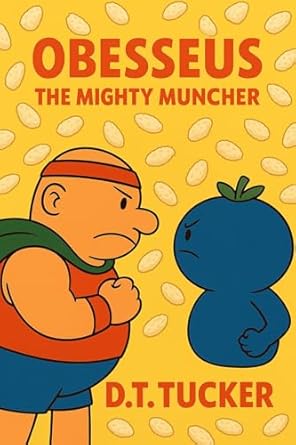
This book is wild. It starts at a dumpling festival where this big-hearted, big-bellied hero named Obesseus is just vibing with his snacks, living his best life, when suddenly, bam! His old friend Monica Mango shows up, leading a “Juice Regime” trying to outlaw solid food. From there, it just explodes into this over-the-top food war, with dumpling battles, fruit villains, and a ton of ridiculous snack puns. Every chapter feels like watching a Saturday morning cartoon. There’s action, betrayal, friendship, and some surprisingly emotional burping.
I didn’t expect to get as invested as I did. At first, I thought it’d just be silly jokes about food fights and belly bumps, but the writing actually sneaks up on you. Obesseus might be goofy, but he’s got heart. He misses his friend, he doubts himself, he tries to do what’s right even when he’s covered in pudding. And Monica? She’s not just a bad guy. She’s complicated, hurt, a little tragic even. The story swings between absurd comedy and weirdly touching moments about loyalty and self-worth. The pacing is quick, and the dialogue has that kind of chaotic rhythm that feels alive. The author clearly had fun writing this, and iyou can feel it.
Sometimes the jokes go on a bit long, and a few parts get overstuffed with food gags. But even then, I was grinning. There’s a sincerity hiding under all the slapstick. The world of Snackland might be ridiculous, but it’s built with love and creativity. You can tell this story believes in joy and in standing up for what you love, no matter how squishy or saucy you are.
Obesseus: The Mighty Muncher made me laugh and even feel a little warm inside. It’s loud, messy, and surprisingly sweet. I’d recommend it for middle-grade readers who like their stories packed with adventure, humor, and heart —or, honestly, for any grown-up who still secretly laughs at food fights. It’s pure, unapologetic fun.
Pages: 98 | ASIN : B0FPMGQGZF

Heir of Flame and Shadow
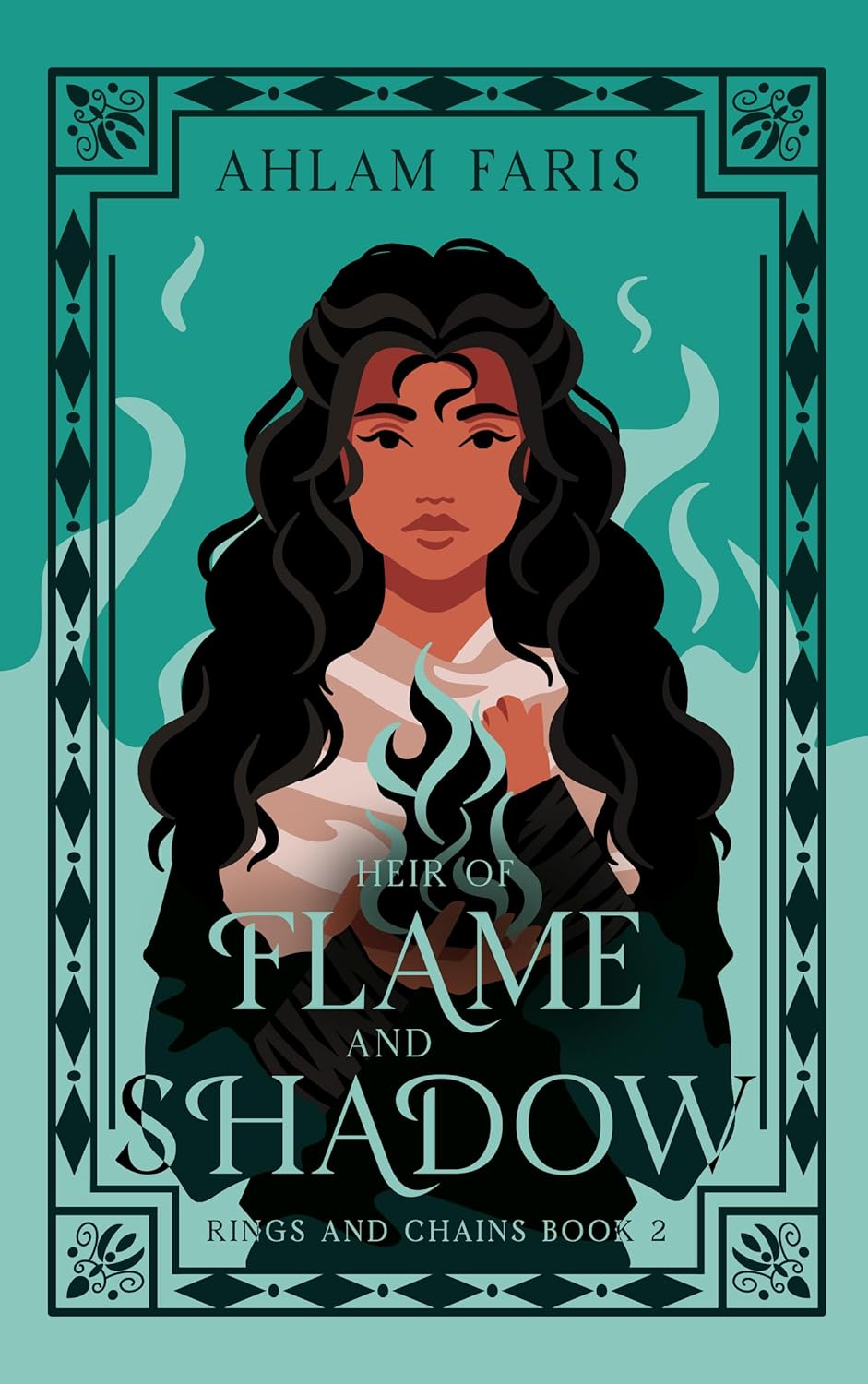

Heir of Flame and Shadow picks up where Daughter of Light and Dark left off, continuing Mina’s journey through a world steeped in shadow, betrayal, and dangerous magic. At its heart, this story is about survival and self-discovery in the face of unbearable odds. Mina struggles with her cursed gift, torn between the burden it places on her and the hope it brings to others. Alongside her, a cast of allies and enemies twist the path forward, pulling her into battles that are both physical and deeply emotional. Themes of identity, family, sacrifice, and the fragile line between love and pain shape the arc of this sequel, while the backdrop of supernatural powers and dark kingdoms raises the stakes to life-or-death levels.
I enjoyed how raw the writing felt. The prose is not polished to perfection, but that roughness gave the book a pulse, like the words were breathing with Mina. The imagery is often harsh, almost jagged, and it fits the tone of the story. I found myself swept along by the energy, even when the pacing slowed. The dialogue carried weight, sometimes heavy with pain, sometimes sharp with betrayal, and occasionally softened by fleeting moments of tenderness. At times, I wanted more quiet space to sink into the characters’ hearts, but the relentless drive of the narrative made sure I was never allowed to get too comfortable. I liked that. It kept me unsettled, the way Mina herself was.
The exploration of trauma and control felt unflinching, and it stirred up emotions that weren’t easy to brush aside. There were moments when I had to pause, not because the writing faltered, but because the weight of what was happening pressed too close. That’s a rare thing for me, to feel almost winded by a book. At the same time, the bond between characters, even when fractured, reminded me of how messy and stubborn love can be. It isn’t always gentle or safe. Sometimes it’s sharp enough to draw blood. And that messy truth gave the fantasy world a raw humanity that made it believable.
I’d recommend Heir of Flame and Shadow to readers who aren’t afraid of dark themes and emotional turbulence. If you like your fantasy with teeth, if you want magic tangled with pain, and if you enjoy characters who are complicated and scarred, this book will speak to you. It’s not for someone looking for a lighthearted escape. It’s for readers who want to be rattled a little, who want to sit with shadows and still see the flicker of flame inside them.
Pages: 262 | ASIN : B0FKZJDW49
THE MYTHOLOGIES OF THE AMERICAS – A BOOK TRILOGY
Roberto S. Jimenez’s The Mythologies of the Americas is a sprawling, imaginative trilogy that reimagines ancient mythologies through a wildly futuristic and metaphysical lens. It blends legends, gods, interdimensional travel, and bedtime story warmth into a series of tales that center around gods like Razielle, the Three Fates, and the goddess Dharma. The stories are presented as part sci-fi odyssey, part mythic folklore, and part bedtime storytelling, complete with gentle closings like “a hug and a kiss, then soft footsteps walking away, then darkness.” It’s a mythological epic wrapped in the language of childhood wonder.
The writing style is surreal, even dreamlike. At times, it felt like I was reading an ancient scroll written by a cosmic bard who had just discovered a spaceship. Take “The Legend of Bi-Frost,” you’ve got a dying warrior being turned into a techno-robot guardian of the Rainbow Bridge by Razielle, the god of the Afterlife. It’s emotional, cinematic, and oddly tender. That moment when Razielle kneels before the fallen Bi-Frost and weeps, causing time itself to come to a halt, struck me deeply. The emotional stakes are often high, even if the delivery is otherworldly.
There’s a lot of repetition phrases like “the god of the Afterlife” and “spirit energy” appear constantly. The prose loves its asterisks, dramatic ellipses, and long, breathless sentences. I honestly had to pause sometimes and just let the phrases wash over me without trying to analyze them. But weirdly enough, that worked. Once I gave up trying to read this like a regular book and let it hit me like a stream of mythic consciousness, it clicked. In “The Heart of Darkness,” the high-concept ideas, like extracting “piezzo-electric data” from obelisks and the philosophical exploration of faster-than-light dimensions—become almost poetic. It’s wild and chaotic but in the best sci-fi-fantasy-pulp kind of way.
What I really loved, though, were the emotional moments and the childlike sincerity that lives under the surface of all the starships and spirit gates. When Dharma, the goddess of Dark Matter, meets her children—the Three Fates—there’s this powerful blend of divine awe and good old-fashioned family reunion. “She looks like any other Dark Phantom to me,” Razielle says at one point, before discovering her hidden potential. And when the Fates grow up, and Razielle tells them they looked cuter as gargoyles? It made me smile. These moments remind you there’s real heart here. It’s a mythology built on love, legacy, and the idea that bedtime stories can still hold cosmic truths.
The Mythologies of the Americas is for readers who are open to something different—something raw, earnest, and unapologetically strange. If you’re into ancient myth reboots, cosmic family sagas, or bedtime stories with gods and robots, you’ll find a lot to love here. It’s messy and heartfelt and absolutely bananas in the best way. Just don’t try to make too much sense of it. Let it wash over you. You’ll dream better that way.
Pages 461
Skull’s Vengeance (Audiobook)

Skull’s Vengeance, the fourth installment in Linnea Tanner’s Curse of Clansmen and Kings series, unfolds against the dramatic backdrop of the Roman Empire. This gripping tale follows Catrin as she embraces her destiny to become the fierce Celtic warrior queen her people desperately need, fulfilling the prophecy her father foresaw. Facing overwhelming grief and betrayal, Catrin must confront her half-brother, King Marrock, in a battle for survival. To prevail, she seeks alliances from unlikely places, including a cunning druidess who once deceived her and her Roman husband, Marcellus. Yet Marcellus is ensnared in a perilous political web, where one wrong move could doom them both. Their love stands on the brink, will they find a way to stand united, or must they part to survive?
The novel’s opening chapters moved slowly for me. While some elements intrigued me, the pace didn’t fully engage until the story hit its stride around chapter six. One contributing factor may have been the male narrator’s delivery, which progressively improved throughout the audiobook. The female narrator’s voice consistently shone.
Despite the gradual start, the plot is masterfully crafted. Action pulses through the narrative, weaving a complex tapestry of events that held my attention. Linnea Tanner skillfully navigates multiple perspectives, all while centering Catrin and Marcellus as the heart of the writing. The balance between their viewpoints enriches the depth of the tale.
Catrin herself is a powerhouse of resilience and determination. Her journey from mourning the loss of her stillborn daughter to leading her people with unwavering resolve was profoundly moving. She stands as a testament to the fact that fictional characters can inspire as deeply as real ones. Marcellus, too, captured my imagination. Trapped in a treacherous political arena, his every action demanded precision and cunning. I found myself holding my breath, fearing for him as much as for Catrin.
In Skull’s Vengeance, Tanner delivers a stirring blend of action, intrigue, and emotion. The characters feel vividly real, their struggles and triumphs resonating long after the final page. The story’s rewards make the audiobook’s journey worthwhile. I recommend this book to fans of historical fantasy who will find much to admire in this immersive and powerful tale.
Pages: 402 | ASIN : B0BC2GCFGG
Psychological Layers

In Delphi, a woman struggling to find balance between the past and present embarks on a journey of self-discovery, seeking the wisdom of an oracle. What was the inspiration for the setup of your story?
The seed was planted in the first novel Dancing the Labyrinth when one of the Minoan characters was bitten by serpents and saw her future as establishing the Oracle for Gaea at Delphi (500 years before Apollo). This is interwoven with a contemporary narrative. I wanted to use the main character Cressida as a sounding board for society’s expectations of women to fit patriarchal culture, especially in the entrenched institutions of marriage and finance. I didn’t anticipate deep diving into Cressida’s backstory and work through generational trauma. That evolved through the writing process. It makes sense though, that in making major decisions, we need to know ourselves – what is right for us. Cressida comes from a dysfunctional family and has no confidence in her choices, so she sets off to Delphi to seek the Oracle’s advice because of what is written on the temple of Apollo ‘Know thyself.’ She is unaware she is an integral part of a major plot being played out within a mythological timeframe. Inspiration for this component came from writing in situ. I have a felt-sense of place and when added to my research, compelling stories find their way to my page.
What is it that draws you to mythology?
When I was young, I was drawn to Greek mythology rather than fairy tales. I once read that there are only seven original stories and in all my creative work I have sought the corresponding Greek myth – whether or not I have incorporated it into the narrative. As an adult, I am interested in the psychological layers they offer, but I am also learning other versions of the same myths from archaeological research that do not necessarily confer with the known version, i.e. the voice of the occupier/conqueror. For example, the story of the Minotaur comes from Minoan history, not Greek/Mycenean. There is a stark difference between their accounts.
What was your writing process to ensure you captured the essence of the characters, specifically Cressida?
Because Delphi is a sequel, and Cressida was already my protagonist, she has a definitive voice. Four years on she is older and more confident with life, but she still responds to triggers – her fight/flight tendencies. She is in a process of healing and so to authenticate her life experiences I researched and read about healing from childhood wounds and trauma. I enjoy writing her and getting caught up with her impatience and frustrations. She is deeply flawed but (I think) likable.
I believe everything we create contains personal elements. My characters have specific attributes I recognise that can be explored in the context of plot to express their own nuances and idiosyncrasies, whether subtly or exaggerated. Many of the places, and some of the experiences mirror my own, but from another perspective that enhance my understanding but also adds an honesty to the work.
What is the next book you are working on, and when will it be available?
I am currently working on a travel memoir of when I lived in Crete for a year and wrote Dancing the Labyrinth. As I’d like to get Delphi translated into Greek and do a book tour through Greece next year, I’m planning for the memoir to be ready for release in 2026.
Recently, I released a quirky humorous nonfiction collation of illustrated memes and quotes called The Little Book of Red Flags. I’m planning to follow this up with The Little Book of Apologies (for those who find it so hard to say sorry).
Author Links: GoodReads | Website | Facebook | X (Twitter) | YouTube | Instagram | Threads | Amazon
With a rich tapestry of snakes and prophetic visions, and a captivating heroine in search of her own truth, Delphi offers a spellbinding exploration of the human spirit. Prepare to be swept away by a story that seamlessly weaves the threads of ancient lore with a young woman’s unyielding quest for understanding.
Delphi straddles history and mythology. Sequel to Dancing the Labyrinth, it can be enjoyed as a stand-alone novel. It is the third book in the thematic series Women Unveiled, which blends myth, history and imagination in the telling of (almost true) stories.



 LITERARY TITAN