Blog Archives
Organized Crime Stories

Lords of Sixty-Third Street follows a Chicago reporter who is investigating his friend’s brutal murder, leading him deep into mob deals, street gangs, and political corruption. What was the inspiration for the setup of your story?
I wanted to write a story that corresponded with all of the gang violence headlines in the Chicagoland area. It seems that every time we watch the news, there is gang-style violence, and innocent people are always getting killed. Also, I liked the ‘Bugsy Siegel’ story and wanted to mix that in with this storyline.
The story jumps between the investigation, mob crews, and gang life without feeling scattered. How did you manage that balance?
I wrote the storyline as though I were watching the movie…different scenes, different characters, different plot structures.
An intriguing aspect of your story is the contrast between the Outfit’s old rules and the chaos of younger street gangs. What interested you about that generational divide?
Like the current organized crime stories, there seems to always be conflict between the ‘old guard wise guys’ and the young, violent gang members who run the Chicago streets without any rules, morality, or scruples.
What is the next book that you are working on, and when can your fans expect it to be out?
Russo’s Revenge, coming out in March, is about a Chicago Cop who is wrongly accused of selling drugs and weapons on the Chicago streets, and looks to pursue redemption and clear his name. The next book, hopefully this summer, is When A Thief Comes To Rome, about a Chicago ex-convict who is hired by the Sicilian Mafia to steal a rare, valuable artifact from a Roman Catholic church in Trastevere, Rome.
Author Links: GoodReads | Facebook | Website | Amazon
McKay becomes entangled with both the Outfit and the street gangs, even taking in a young member of the O-Block gang, DeMarco Stevens. McKay attempts to save this young teenager from the city’s cycle of violence. But there is betrayal and violence at every level. The Sixty-Third Street crew is already skimming cash from its investors before the casino opens its doors.
With mob boss Little Tony DiMatteo’s blessing, everyone is getting a piece of the action, even though some are not willing to pay for it, including Chicago’s corrupt mayor, Bradley Jefferson. Giannini is under pressure to ensure all the investors are playing by the rules while trying to cover up the embezzlement by his Sixty-Third Street crew.
As Giannini’s Windy City Casino is about to have its grand opening, the Outfit’s Bugsy Siegel is going to realize his magnificent dream. But with all of the city’s bloody violence and corruption, is everyone willing to pay the ultimate price?
Lords of Sixty Third Street


Lords of Sixty-Third Street is a gritty crime thriller set on Chicago’s South Side, opening with the shocking murder of Tribune reporter Michael Anderson. From there, the story widens into an underworld web: a mob crew scrambling to protect its interests, a ruthless street gang fighting for power, and a fellow reporter determined to uncover the truth. The book has the bones of a classic crime novel but wraps it in local detail, political corruption, and the messy humanity of people who live and die on those blocks.
I was pulled in right away. The opening chapter is brutal. It sets a tone that never really lets up, and I caught myself tensing as the scene unfolded. Author Edward Izzi writes in a straightforward, almost journalistic style that fits the subject matter, especially when he switches into Larry McKay’s first-person point of view. Larry’s voice feels worn down in the way longtime reporters often are. His sarcasm, his grief, and even his guilt feel believable. And the pacing surprised me. The chapters bounce between the investigation, the mob’s internal politics, and the O-Block gang’s chaos, but it never feels scattered. Instead, it feels like standing in the middle of a neighborhood where everything is happening at once.
What I liked most, though, was how the author handles violence and power. He doesn’t shy away from either. Some scenes made me uncomfortable, not because they were poorly written but because they felt too close to stories that make the news in real life. The book keeps circling back to what desperation and loyalty can make people do. There’s also this tension between the old guard, the Outfit, with its rules and rituals, and the young gang members who don’t care about structure and burn everything they touch.
By the time I reached the end, I felt like I had watched a full neighborhood ecosystem twist around one terrible act of violence. It’s the kind of story where nobody gets out clean, and honestly, that feels right for this genre. If you enjoy crime fiction that leans into atmosphere and moral gray areas, especially stories rooted in Chicago’s history of corruption and street politics, this one will hit the spot. Fans of gritty crime thrillers will appreciate how fully it commits to its world and its characters.
Pages: 378 | ASIN : B0FXVVHLD5

Rose Dhu
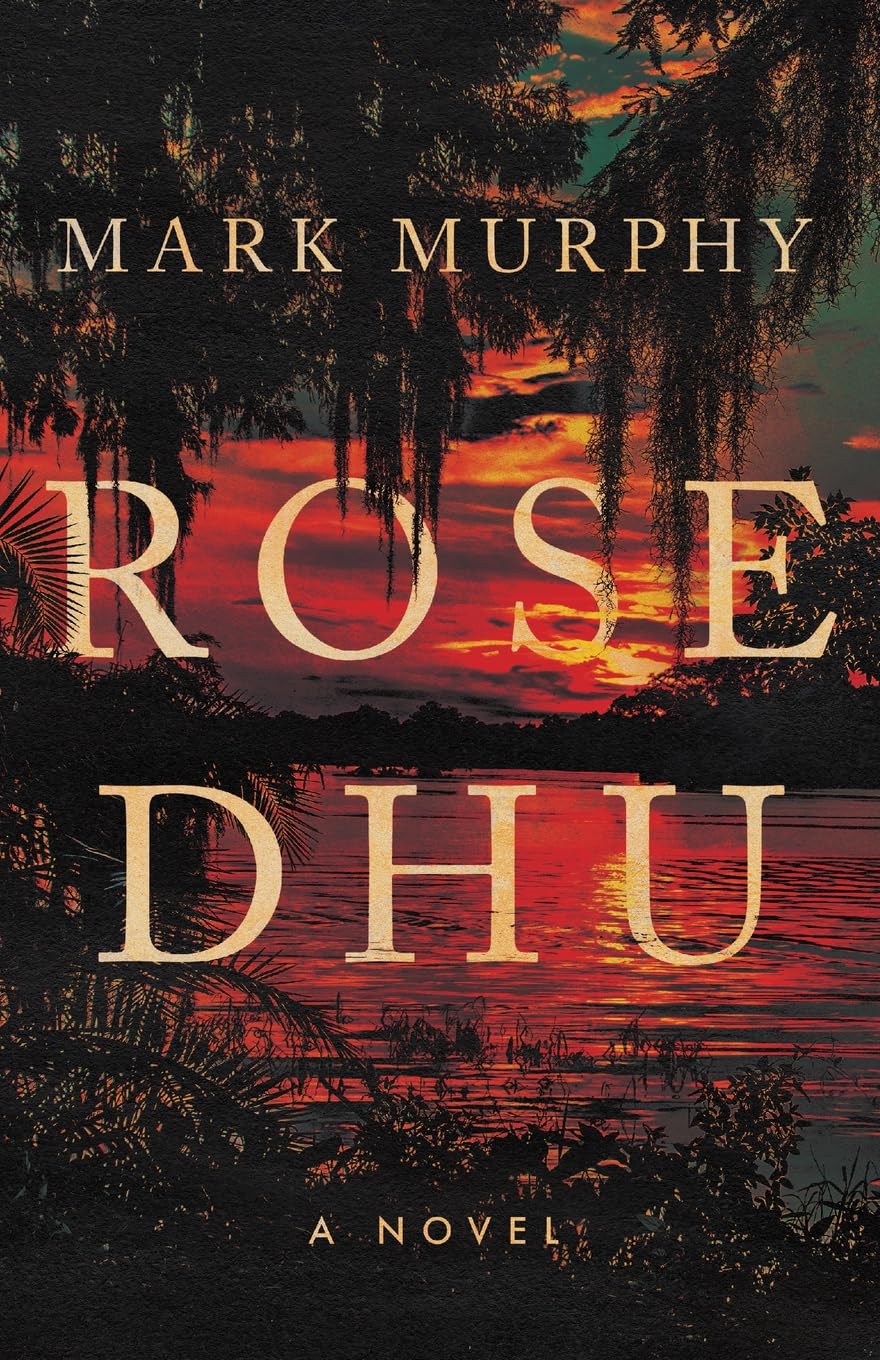

Rose Dhu follows the disappearance of Dr. Janie O’Connor, a brilliant surgeon whose sudden vanishing rattles Savannah. Detective Frank Winger takes the case, and his search uncovers secrets that coil through old money, family loyalty, and violence hidden in plain sight. The story widens from a missing person case into something heavier. It becomes a portrait of power and the people crushed or remade by it. The final revelation, in which Janie reemerges alive under a new identity as Alice Tubman, lands like a quiet shock and changes the emotional color of everything that came before.
Scenes move quickly and often hit with surprising force. I felt pulled in by the atmosphere of Savannah. The place feels damp, shadowed, and tangled with history. Some chapters made me slow down because the emotional weight crept up on me. I found the depictions of trauma raw, but never careless. The book wants you to sit with pain, not look away. That kind of blunt honesty made me connect with Frank more than I expected. His flaws feel lived in. His memories of Afghanistan haunted me in ways I did not anticipate.
There were moments when the story’s intensity nearly overwhelmed its subtler pieces. Still, the ideas underneath the plot stayed with me. What people will sacrifice for those they love. What power looks like when twisted by entitlement. How a life can fracture and rebuild itself into something new. The book is bold about those questions. It pokes at uncomfortable truths, and I appreciate that kind of nerve. By the final pages, I caught myself rooting fiercely for Alice and for Frank.
Rose Dhu reads like a blend of Sharp Objects and Where the Crawdads Sing, only with a darker pulse and a tighter grip on the shadowy power games that shape a Southern town. I would recommend Rose Dhu to readers who enjoy mystery that leans into emotional depth, stories about moral gray zones, or Southern gothic settings with teeth.
Pages: 384 | ISBN : 1967510709

Morally Compromised Characters
Street Brotherhood follows a teenage boy in 1970s New York, as his search for loyalty and belonging pulls him into a dangerous brotherhood where survival blurs the line between family and gang. What was the inspiration for the setup of your story?
The story is about building a family of choice when your family of origin has betrayed you. It’s about brotherhood forged in the face of adversity, boys who are thrust into bleak and dangerous situations due to familial and systemic neglect. But it also shows how these kids don’t just endure and accept their fate. They strive to exploit it. Street Brotherhood is the second book in the Street series, picking up where the first book left off, but each of them works perfectly as a standalone.
What drew you to set Johnny’s story in 1970s New York, and how did that time and place shape the characters’ lives?
The city plays a huge role in this book. New York in the 1970s was on the brink of financial collapse. Municipalities were struggling under massive layoffs, landlords were selling–or torching–buildings to get out from the debt, and crime was skyrocketing. Johnny’s story reflects all of that. He is cunning enough to see the cracks in the system and is able to use them to his advantage. The story could not have been told in any other place or decade without being inauthentic because the conditions changed. Many of the scenarios are tied to my own experiences, since I came of age at the same time, hanging out in those same streets.
Johnny is both sympathetic and frustrating. How did you balance writing him as flawed yet compelling?
From a writing perspective, the flawed and morally compromised characters are the most fun for me. I love pushing those boundaries for the reader: How bad can a character act while still commanding sympathy? Johnny is a street-smart gang leader, with lofty aspirations, living in a very adult world. But he’s still a teenager. Sometimes his youth is an asset, but other times it’s a liability. That becomes apparent in some of the choices he makes. His gang can also be loyal to a fault, by letting his decisions play out. Peppering in the scenes from Johnny’s childhood helped me make him more sympathetic, while also explaining some of his defects.
The violence feels necessary rather than gratuitous. How did you approach writing those scenes to maintain authenticity without sensationalism?
Great Question. Violence in movies and on TV is so pervasive we become numb to it. On the page, however, it translates differently. My early drafts were dripping with brutal details, but thanks to my beta readers, I toned a lot of it down. I learned that what’s not said can be even more ominous. In Street Brotherhood, the violence is necessary in order for the story to be realistic. But violence is also action, and too many details will slow down the pacing, so I tried to maintain a balance.
Author Links: GoodReads | Website | Amazon
Johnny becomes involved with Marco, a tempestuous drug supplier who inspires admiration, but also rueful reminiscence of Johnny’s father. His demands challenge Johnny’s morals, but the payout is hard to ignore. As is Johnny’s aptitude for carrying out his lethal tasks.
Amid his nefarious entanglements, Johnny falls for Jessica. She is witty and self-assured, opening him to normalcy and tenderness for the first time. But as his worlds spin ever closer, will he escape the brutality of his past or be forced to embrace it?
The Scars We Carry
The Sins We Inherit follows a conflicted man trying to be a good father who thought he’d escaped his family’s criminal legacy, only to be pulled back in when his grandfather dies suddenly. What was the inspiration for the setup of your story?
The inspiration began in a very personal place. I started writing during a difficult season of heartbreak and anxiety, and the story grew out of those emotions. What began as journaling slowly evolved into a narrative about identity, family, and the legacies we carry.
The first two chapters — the wake and funeral — are essentially real. They were some of the hardest scenes to write because they came directly from my own experience of losing my grandfather Carlo, who was such an important figure in my life. That rawness gave the story its foundation of authenticity.
Milwaukee became the natural backdrop. I grew up there, and its history and underworld culture gave the story a setting that felt authentic and rarely explored in fiction. From there, the character of Cost took shape as someone wrestling with the same questions I was asking myself: What does it mean to be a man, a father, and a son while carrying the weight of the past? That intimacy, set against the backdrop of crime and family power struggles, gave the book a cinematic quality from the start — I’ve always envisioned it as something that could live not only on the page, but on screen as prestige television or film.
What aspects of the human condition do you find particularly interesting that could make for great fiction?
I’ve always been fascinated by flawed characters who are still trying to do right, even when they fall short. The moments that stay with me — whether in books or film — aren’t usually the loud or violent ones, but the quiet scenes of love, regret, or vulnerability. Those moments reveal our contradictions: strength and fragility, pride and longing, loyalty and betrayal.
That tension is at the heart of The Sins We Inherit. It’s why I believe the story lends itself to screen adaptation — the crime and ambition create stakes, but the real drama comes from the universal struggles of family, identity, and the need to belong. That balance is what defines the best prestige dramas, and it’s what I wanted to capture here.
What themes were particularly important for you to explore in this book?
Redemption was central. The novel asks whether we can rise above the cycles we inherit, or if they define us no matter how far we run. Alongside that, I wanted to explore legacy, manhood, and the bonds of family — especially the father–daughter relationship, which became the emotional core of the story.
Ultimately, the book is about transformation. It’s about shifting the idea of strength from suppressing pain to confronting it, and finding meaning in the scars we carry. That emotional throughline is also why I believe the story is destined to resonate beyond the page — it’s rooted in the same timeless, human themes that make the great crime dramas work on film and television.
When will Book Two be available? Can you give us an idea of where that book will take readers?
Yes — I do see The Sins We Inherit as the beginning of a larger story. From the outset, I had a general arc for a trilogy in mind, and I’ve already outlined both Book 2 and Book 3. Each installment builds on the themes of legacy, family, and redemption, while raising new questions about power, identity, and the price of the choices we inherit.
My ambition is for this saga to stand within the mafia canon, but in a way that feels contemporary and fresh. Milwaukee remains a unique, underexplored setting, and the father–daughter relationship continues to ground the story in something universal. At its heart, the next book will push deeper into what it means to face the past, confront pride, and still fight for transformation. It’s a layered arc that I believe has all the hallmarks of prestige television: intimate, character-driven drama unfolding against a backdrop of power and consequence.
Author Links: GoodReads | X (Twitter) | Facebook | Website | TikTok | Instagram | YouTube | LinkedIn | Amazon
Costantino “Cost” Caduto Jr. thought he’d escaped his family’s criminal legacy. But when his grandfather Tiger, the man who held it all together, suddenly dies, Cost is dragged back into a city simmering with tension, betrayal, and unfinished business.
Now, standing at the crossroads of who he was and who he might become, Cost must confront everything he left behind:
– A family fractured by power, grief, and long-held secrets
– A dangerous power vacuum that threatens to pull everyone under
– The one person he’s always tried to keep safe, his daughter, now watching his every move
Set against the backdrop of Milwaukee’s underworld, The Sins We Inherit is a gripping tale of legacy, loyalty, and the price of silence. As old allegiances unravel and new threats emerge, Cost must decide whether walking away was ever truly an option, or if some bloodlines run too deep to outrun.
Perfect for fans of atmospheric crime fiction, morally complex protagonists, and slow-burning suspense with heart.
Loyalty, Desperation, and Fear

Gangsters and Demons follows a dockworker trying to survive in Chicago during the 1920s who is forced to join an organized crime syndicate to provide for his family and encounters literal demons, both personal and paranormal. What was the inspiration for the setup of your story?
The inspiration for Gangsters and Demons came from a fascination with the gritty, morally complex world of 1920s Chicago, a city pulsing with industrial hardship, organized crime, and social upheaval. I wanted to explore the human cost of survival in such a ruthless environment through the eyes of a working-class figure like Jimmy Maloney, a dockworker who’s not inherently a criminal but is forced into that world to protect his family. The idea of blending a classic noir gangster tale with supernatural horror stemmed from my interest in how external pressures—like poverty and crime—can mirror internal struggles, such as addiction or guilt, which I personified through literal demons. I was also inspired by the era’s cultural undercurrents, like Prohibition and labor struggles, which felt ripe for a story where the line between human corruption and paranormal malevolence could blur. The challenge was to take a familiar historical setting and twist it into something unsettling and unexpected, where the real horror might not just be the demons but the everyday grind that breaks people down.
What is one pivotal moment in the story that you think best defines Jimmy Maloney?
One pivotal moment that defines Jimmy Maloney occurs when he’s forced to make an impossible choice between killing a close friend for the crime syndicate or risking his family’s safety by defying the syndicate’s brutal leader. Without giving too much away, this moment—set against the backdrop of a tense, rain-soaked confrontation at the Chicago docks—strips Jimmy down to his core. He’s not a hero or a villain, just a man caught in a web of loyalty, desperation, and fear. His decision in this scene, driven by his love for his family but haunted by the moral cost, encapsulates his struggle to hold onto his humanity while navigating a world of crime and supernatural terror. It’s a moment where his personal demons and the paranormal ones he faces collide, showing his resilience but also his vulnerability.
What intrigues you about the horror and paranormal genres that led you to write this book?
I’ve always been drawn to the horror and paranormal genres because they allow you to explore the unknown in ways that reveal deeper truths about the human condition. What intrigues me most is how these genres can externalize internal struggles—fear, guilt, addiction, or loss—into tangible, terrifying forms. In Gangsters and Demons, I wanted to use the paranormal to amplify the noir atmosphere of 1920s Chicago, where the line between human evil and supernatural malevolence feels porous. The idea of demons, both literal and metaphorical, gave me a way to dig into themes like exploitation and faith, which are woven into the story’s fabric. Horror also has this raw, visceral power to grip readers, to make them feel the stakes of Jimmy’s world, where every choice could lead to damnation, whether spiritual or societal. Blending that with the historical noir thriller felt like a fresh way to tell a story that’s both pulpy and profound.
What is the next book that you are working on, and when can your fans expect it to be out?
The next book I’m working on is another historical fiction. I won’t reveal too much here because it is still in its early stages. Release date: TBD.
Author Links: GoodReads | X (Twitter) | Facebook | Website | Amazon
Gangsters and Demons is a historical fiction with a dark twist. A noir thriller that blends gangster drama with supernatural horror, exploring how far a good man will go to protect his family, and what prices power truly demands in a city where ancient evil wears modern suits.
Criminal Elements

Secrets of the Shield is a collection of raw, pulse-pounding crime thriller stories rooted deep in real-world law enforcement, and told through the lens of a seasoned cop. Where did the idea for this novel come from and how did it develop over time?
The genesis of Secrets of the Shield stems from my twenty years of frontline experience investigating cases that few civilians ever witness. Throughout my career in specialized investigation units, I documented harrowing encounters with ruthless cartel operations involving human trafficking, drug distribution networks that spanned continents, execution-style homicides, and systematic extortion. My notebooks captured the chaos of the LA riots from inside the police perimeter, the tense negotiations of high-profile kidnappings where lives hung in the balance, and government corruption cases that revealed shocking betrayals of public trust. These weren’t distant news stories—they were realities I lived through daily, meticulously recording details that accumulated in field notebooks over two decades.
Among these cases was a seemingly routine undercover assignment in North Hollywood where I arrested suspects targeting grocery stores throughout LA for high-end merchandise. One of these suspects was Ricardo Ramirez, aka The Night Stalker, 5 years before his murder spree began. I took a Polaroid photo on the date of his arrest that I still have today and included in the book. The fingerprints and booking photo from his arrest at North Hollywood LAPD eventually identified him as Richard Ramirez. I found this photo well after his arrest and decided to tell the untold story that no one had documented in the news media, movies, or docuseries, including the Polaroid that had never been released to the public. This unexpected historical connection became one compelling element in my larger mission to document the hidden criminal landscape I navigated throughout my career.
What brings a smile to my face is that my wife Debbie deserves full credit for inspiring this book. She took one look at my growing collection of storage bins overflowing with case notes and said, “Either those notebooks become a book, or they’re moving into their own house—our garage needs breathing room!” That gentle nudge was all it took to transform decades of field notes into my first published work.
What was the most challenging part of writing Secrets of the Shield, and what was the most rewarding?
The most challenging aspect of compiling this book was exercising extreme caution regarding what information I could disclose. I needed to protect the integrity of the cases while, most importantly, safeguarding the victims and their families who were violently impacted by these predators who forever altered their lives.
The most rewarding outcome has been sharing these stories with readers to reveal the truth about criminal elements lurking in plain sight—predators waiting for their next helpless victims, completely devoid of empathy for the devastation they cause not only to their immediate victims but also to families and associates. These cases exist only in the memories of my fellow investigators and special agents who lived through them, and I felt compelled to help the public understand what transpires around them daily—incidents that often never receive media attention.
How did you decide what to include and leave out in your book?
My decisions about content were primarily guided by the protection of victims and their families, alongside maintaining both the criminal and civil integrity of these cases. Throughout the project, I sought professional legal counsel to ensure these objectives were met.
Will there be a follow-up novel to this story? If so, what aspects of the story will the next book cover?
Yes, I have two sequels launching toward the end of this year: Encrypted Patriot and The Coin Collector. These works elevate Secrets of the Shield into heightened crime thrillers with incredible action and government espionage drama that extends to other parts of the world. Many characters from the first book continue their journeys into covert government agencies, operating at the highest—sometimes officially nonexistent—security levels.
Author Links: GoodReads | X (Twitter) | Facebook | Website | Amazon
The truth has been buried—until now.
Los Angeles County: a sprawling metropolis where power, corruption, and violence collide in the shadows. For decades, the public has only seen the surface. Now, a retired veteran police investigative sergeant rips the veil off the city’s darkest secrets.
From the arrest of Richard Ramirez, the Night Stalker—five years before his reign of terror began—to the chaos of the Los Angeles riots, from covert operations dismantling cartel murder networks to exposing corrupt government officials, these are the cases that were sealed away. Until now.
What you’re about to read has never been disclosed to the public, including a single Polaroid photograph within these pages that tells a story of its own. This book reveals how a routine arrest led to the early identification of one of history’s most infamous serial killers. It uncovers the untold truth of the Los Angeles riots—what really happened in the streets and behind closed doors. It takes you deep inside covert missions that infiltrated the cartels’ blood-soaked empires and into the silent war against public official corruption.
These aren’t just stories. They are confessions from the front lines. Each chapter is a pulse-pounding descent into a world where monsters don’t hide in the shadows—they walk among us. Where justice isn’t always served, and the truth is more terrifying than fiction.
Once you step into this world, you won’t emerge unchanged. Buckle up. You’ve been warned.
Fans of Mindhunter, American Predator, and Don Winslow’s The Cartel will be drawn to this gripping, unfiltered account of crime and corruption. Based on real cases. Written by the man who lived them.
“Get your copy of Secrets of the Shield today and uncover the truth for yourself.”
Secrets of the Shield

Secrets of the Shield by D.M. Currie is a raw, pulse-pounding crime thriller rooted deep in real-world law enforcement. Told through the lens of a seasoned cop, the novel dives into the gritty underbelly of Los Angeles County policing, starting from a traumatizing encounter at a gas station in the protagonist’s youth all the way to tactical operations against cartel assassins. It’s part autobiography, part thriller, and 100% an unflinching look at the sacrifices, darkness, and small victories woven into a life of service.
From the very beginning, Currie’s writing seized my attention with an unrelenting grip. His opening scene, depicting a harrowing struggle in a hospital bed against imagined attackers following spinal surgery, was profoundly affecting. I could feel the panic and brokenness resonate deeply as I read. It is this brutal authenticity that distinguishes Secrets of the Shield. When Currie recounts the grueling demands of academy life, including the torment of abusive instructors, or exposes the vulnerability of rookies navigating the dangers of custody work, it becomes clear that this is no sanitized portrayal of law enforcement. It is raw, it is painful, and it is unflinchingly real. I admired Currie’s refusal to soften these realities for the reader.
Currie’s meticulous attention to detail adds a compelling depth to the narrative, particularly in chapters such as “L.A. Burns” and “And the Riots Roll,” where he vividly captures the intensity of large-scale unrest and tactical operations. His ability to immerse the reader in the operational realities of law enforcement is impressive and lends a striking authenticity to the story. Yet it is when Currie turns his focus to the emotional heart of the narrative, most notably in the heartbreaking account of Catalina Cano’s story in “Peaceful Park Apartments: Explosion of Evil,” that his writing truly shines. The emotional resonance he achieves is powerful and deeply moving, offering moments of unexpected poignancy that elevate the novel beyond traditional crime thrillers.
What hit me hardest, though, was the clear cost of the job. Currie shows better than any fiction I’ve read in a long time that wearing the badge means a slow erosion of yourself. You see it in his recounting of being physically wrecked, emotionally detached, and spiritually exhausted. The title Secrets of the Shield isn’t just clever, it’s painfully accurate. Behind the shield, behind the uniform, there’s a heavy, heavy price. I walked away from this book with more respect for what real cops endure than I ever had before.
Secrets of the Shield isn’t just a crime novel. It’s a bruised, bleeding love letter to the men and women who choose to stand between chaos and order. If you’re a fan of gritty realism, if you liked Joseph Wambaugh’s The New Centurions or Michael Connelly’s Bosch series but want something even more visceral and personal, this book will absolutely blow you away. It’s not for the faint of heart, but for those who can stomach the darkness, it’s a powerful and unforgettable ride.
Pages: 429 | ASIN : B0F2ZGYBLH



 LITERARY TITAN