Blog Archives
Olympus or Oblivion
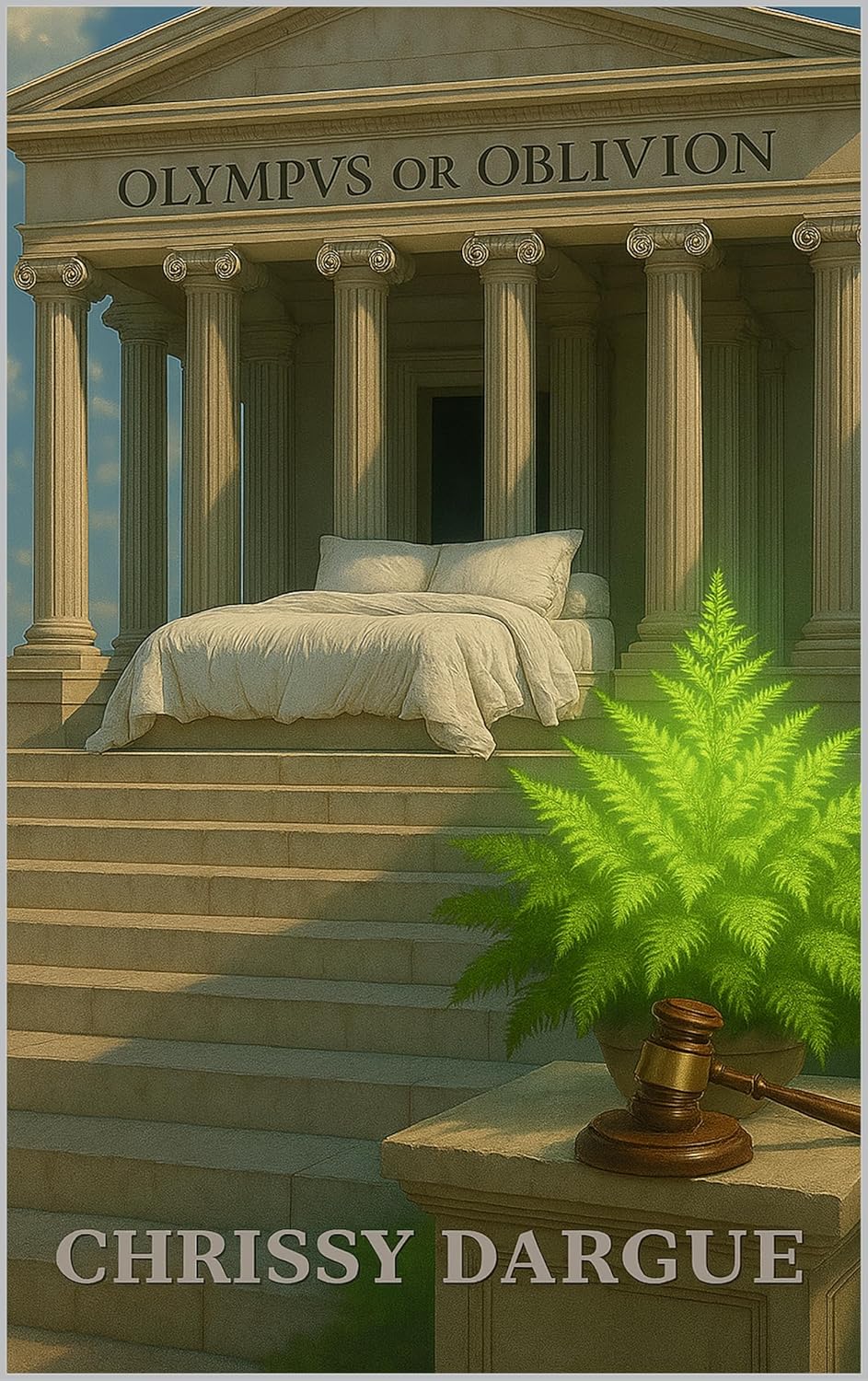

Reading Chrissy Dargue’s Olympus or Oblivion feels like being dropped into a wild, bawdy, self-aware pantheon where celebrity fantasy, personal philosophy, and unapologetic filth collide in the most chaotic way possible. The book introduces itself as an erotic satirical anthology, then immediately proves it can deliver on all three fronts. Each chapter follows a fictional sexual encounter with a different Hollywood icon, framed as both myth and judgment, and the voice that guides it is loud, human, furious, sentimental, and very funny. It moves fast, plays hard, and somehow manages to build a whole moral framework while describing sexually explicit escapades. The tone is intimate and irreverent and completely in control of its own madness.
As I read, I kept feeling a blend of admiration and “what the hell just happened” amazement. The writing is quick, chatty, and sharply observant. It has that feeling of sitting with a friend who tells a story so confidently that you follow, even when it plunges off a cliff into a disaster of sex toys, tree frog cigarettes, emotional vulnerability, or misplaced anatomy lessons. I loved the honesty here. The narrator is flawed and hilarious and often furious at the world, yet there is so much heart behind the jokes. The Henry Cavill chapter swings between worship, frustration, and affection with an almost musical rhythm. Depp’s chapter, on the other hand, crashes into surreal farce, tenderness, and genuine madness, and the contrast really shows off what the author can do. I laughed a lot. I winced a lot. More than once, I was slightly horrified, then impressed by how quickly the story made that horror feel warm. There is something bold about how the book refuses to hide the narrator’s desires or insecurities. It made the comedy sharper and the emotional punches landed harder.
What surprised me most was the philosophical streak running under the chaos. For all the sex and satire, the book is also a meditation on power, desire, loneliness, and the strange ways we try to judge the people we want. The Olympian framing is funny but also revealing. Every encounter becomes a test, not for the celebrity but for the narrator’s own values, boundaries, and hunger for connection. Even the absurd moments, like fainting from frog toxins or sketching a diagram of a vulva to keep a confused man on track, carry a sort of emotional grit. The narrator wants to understand people. She wants to be understood in return. I found myself weirdly moved between the jokes. Sometimes the writing gets messy on purpose. Sometimes it hits a poetic rhythm that blindsided me. The mix works because the voice stays genuine.
I’d recommend Olympus or Oblivion to readers who enjoy sharp humour, chaotic storytelling, sex-positive honesty, and big, unstoppable personality. If you like fearless writing, emotional whiplash, and stories that show both the ridiculous and the tender parts of being human, this book will hit the spot. It’s funny and vivid and unexpectedly sincere, and it left me feeling like I had just witnessed someone telling the truth in the most unhinged and heartfelt way possible.
Pages: 401 | ASIN : B0FLQL7VHN

The Departure Point

Good for the Soul follows a former prime minister forced out of seclusion and back into the spotlight and a troubled priest facing off against a criminal overlord. What was the inspiration for the setup of your story?
My first novel – Paths Not Yet Taken – was written as a standalone story, but the overwhelmingly positive response from my readers invariably included requests (and occasionally demands!) to learn more about the future of the main characters. Having decided to turn one book into a series, it made sense to develop the established plot and themes and to pick up on world events that has occurred in the intervening period.
No matter how much madness dominates our news channels and affects our daily lives, I am always hopeful that humanity’s ability to respond and to overcome trials and tribulations will eventually prevail. Good For The Soul gave me the opportunity to visualise how that might look, whilst having a laugh at the expense of politicians and the oligarchy at the same time.
Did you plan the tone and direction of the novel before writing, or did it come out organically as you were writing?
I had a very good idea of the tone of the novel. Life is a mix of the heart-rending, the heartwarming, tragedy, and humour and I hope I’ve reflected that throughout the book. In terms of direction? Well, I knew the departure point and where I wanted to arrive. Let’s just say the journey was as much an adventure for me as it is for the reader – and I loved every second of it!
What were some of the emotional and moral guidelines you followed when developing your characters?
Community and family are very important to many people. I remember vividly how the townsfolk of Warrington came together after the bombing in March 1993, which killed two young boys and injured 56 others who were just out shopping. People in other parts of the UK and Ireland no doubt had similar experiences and felt the same kind of togetherness in that period of violence. I wanted to show how divisive acts can bring people closer together. I also wanted to explore how far people would go in order to protect those they love; what they would sacrifice and what lines they would cross in order to achieve their goal.
What is the next book that you are working on, and when will it be available?
The next book should be published towards the end of this year. It covers the growth and development of the Path Finder movement, which starts to find its feet in Good For The Soul, and the threat it poses to the current world order. As with the first two books, there will be a significant amount of satirical humour, but this time it will be accompanied by illegal border crossings, half-crazy presidents, and the occasional tornado.
Author Links: GoodReads | Facebook | Website | Threads | Amazon
Six months after assisting the UK’s missing prime minister and avoiding two assassination attempts on the same day, Simon Pope is on holiday with friends, trying to cheer up a man who finds retirement depressing. But Pope also has a secret mission, which requires him to remain unobtrusive. He must assess whether specific individuals in the small Irish town of Clonbrinny are in mortal danger from a criminal overlord.
Failing miserably to maintain the desired low profile, Pope and his group become embroiled in events outside their control and discover all is not as it seems.
Perceptions dissolve, revealing a far more dangerous reality.
Meanwhile, former prime minister Andrew Blackwell’s self-imposed media silence has made him more popular than ever. His Path Finder philosophy generates global intrigue and excitement, despite nobody knowing what it is – including him.
When a secret conference on Ireland’s west coast goes badly wrong, Blackwell must evade a media manhunt and return to London, relying on old friends and new acquaintances for help.
Subsequent events and a meeting of minds raise the tantalising prospect of an unlikely collaboration, creating the foundation of a movement that could transform the world.
Good For The Soul is the second book in the Path Finder series and follows on from the award-winning Paths Not Yet Taken.
Good For The Soul

Philip Rennett’s Good For The Soul is an ambitious, genre-blending novel that tosses political satire, spiritual conflict, and small-town Irish charm into a single, messy but compelling stew. At its core, the book follows Andrew Blackwell, a former UK prime minister, now a reluctant recluse, as he’s dragged back into the world of global influence through a secretive “Global Conclave.” Meanwhile, in the quiet Irish town of Clonbrinny, a troubled priest is caught in the moral chokehold of a criminal syndicate. It’s a story about power, guilt, reinvention, and the weird, awkward humanity that binds it all together.
What grabbed me first was how effortlessly Rennett shifts tone. One moment, you’re in a confessional booth listening to Margaret Doyle deliver an outrageously inappropriate dream confession about cassocks and spanking. Next, you’re in the thick of Blackwell’s emotional unraveling or sitting in a church watching Declan Kelly, a violent gangster, toy with religion like it’s a game of poker. These tonal shifts shouldn’t work. But they do, mainly because Rennett has a wicked sense of humor and a sharp ear for dialogue. Margaret’s appearances, especially in the “Confession” chapter, had me laughing out loud, while Father Aidan’s slow disintegration genuinely broke my heart.
What surprised me most was how Good For The Soul uses the setting almost like a character. Clonbrinny feels lived in, grimy, rain-soaked, and steeped in secrets. Peace Castle, where the elite gather to decide the world’s fate, is jaw-dropping in its opulence, but it feels hollow, too. There’s a beautiful contrast between those two worlds, and Rennett plays them against each other masterfully. When Blackwell stands before the Conclave in “The Opening Statement,” what he says feels honest, even raw, not just because of what he reveals, but because we’ve seen him wrestle with it. I didn’t expect to feel sympathy for a politician on the brink of a second act, but here I am.
The writing itself is tight and conversational, but it’s never dumbed down. I loved how Rennett injects intelligence without arrogance. He keeps the language accessible, even when the stakes are philosophical. There’s also a lot of heart under all the satire. One of my favorite moments was in “Help Me,” when Father Aidan, drunk and broken, finally whispers, “Help me.” That wrecked me.
Good For The Soul feels like a modern-day parable, soaked in Guinness, lit by lightning over crumbling churches, and filtered through the lens of people just trying to figure out what the hell matters anymore. I’d recommend it to anyone who likes their fiction smart, funny, and a little unhinged. Especially if you’re into layered plots, Irish settings, and characters that make you feel something, even when they’re being completely ridiculous.
Pages: 369 | ASIN : B0F44DQKCK
Saint Frank and the Dragon
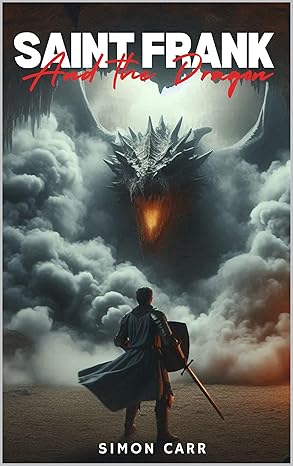
Simon Carr, celebrated for his razor-sharp wit, delivers another masterclass in humor with Saint Frank and the Dragon. This uproarious satire chronicles the chaotic exploits of Sir Frank, an utterly inept knight hailing from the unremarkable kingdom of Little Hampton Upon Sea. Tasked with slaying a fearsome dragon tormenting local villages, Frank’s only allies are his laughably inept “army” — the hapless trio of Russell, Owen, and Tiny. Together, they embark on a quest riddled with absurd perils, peculiar allies, and an abundance of killer potatoes.
Carr leans heavily on irreverent satire, weaving sharp humor into every aspect of the story. His deftly written prose lampoons the brutalities of the medieval era while cleverly skewering the quirks of modern life. The narrative dances between fantasy and farce, with clever wordplay and relentless hilarity keeping the pages turning. Carr’s fourth-wall-breaking asides add an extra layer of comedic brilliance, whether he’s delivering Frank’s musings on the impracticality of metal footwear or indulging in a pseudo-scientific debate about whether dragons blow or breathe fire. In one particularly memorable twist, the author humorously scolds the reader for their perceived lack of attention.
Beneath the humor lies Carr’s biting commentary on societal issues. A cult venerating Eric, the divine rainbow trout, offers a sharp parody of religious fanaticism, highlighting the absurd lengths people go to defend their beliefs. Themes like social inequality and prejudice thread through the tale, with the dragon disproportionately targeting the poor and vulnerable, while the inept King Greek Tony satirizes the failings of contemporary leadership. Sir Frank, an unwilling hero grappling with challenges far beyond his abilities, becomes a relatable symbol of the average person navigating an overwhelming world.
While the book embraces its comedic identity, its characters are more than mere caricatures. Emotional depth may be rare, but the quirky cast radiates charm. Frank’s companions, despite their incompetence, deliver impeccable comedic timing and a surprising dose of heart. Villains, such as a scheming goblin named Rayflex and a giant spider, are more absurdly entertaining than genuinely threatening. The humor is relentless yet remarkably consistent, whether Frank is lamenting that his steed is a cow with delusions of horsehood or undertaking a side quest to retrieve a legendary mace with disappointingly mundane powers.
Saint Frank and the Dragon is a treasure for fans of satirical fantasy. With its witty prose, imaginative world-building, outlandish plot, and incisive critiques of both medieval and modern absurdities, this novel is a laugh-out-loud adventure from start to finish. Carr’s humor shines brilliantly, and one can only hope this is the first of many bizarre escapades featuring Sir Frank.
Pages: 347 | ASIN : B0DQ16ZXPD
Control Spark
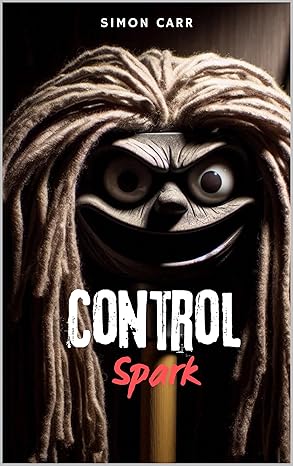

Simon Carr’s Control Spark plunges readers into a whirlwind adventure that begins with heartbreak and ends with an epic battle for Earth’s survival. After being dumped by his girlfriend, Nigel invites his friend Sandra on a preplanned escape to Egypt. What should have been a simple getaway transforms into a pulse-pounding odyssey when Nigel, on a whim, buys a seemingly harmless trinket at the airport. That innocuous purchase draws him and Sandra to the enigmatic Whackowiki pyramids, where a hidden, ancient power known as the ‘Control Spark’ alters the course of their lives forever. Suddenly imbued with the astonishing ability to manipulate matter, Nigel becomes a magnet for forces far beyond his understanding. Alien civilizations, each with their own agendas, soon descend upon Earth, determined to seize the Control Spark. What follows is a frantic struggle as Nigel must defend his friends, navigate the treacherous waters of international diplomacy, and ward off a looming extraterrestrial invasion. Humanity’s fate hangs in the balance, and the stakes couldn’t be higher.
Carr’s ambitious exploration of scientific concepts and alien cultures stands out as a highlight. The narrative boldly tackles complex theories, yet the writing remains accessible and engaging. The scientific elements, which could easily have overwhelmed the story, are deftly handled and surprisingly easy to grasp. Furthermore, the diversity of extraterrestrial civilizations is nothing short of mesmerizing. Each alien race is crafted with remarkable attention to detail, boasting unique physiologies, societal structures, and motivations that bring the intergalactic conflict to vivid life. The novel’s global perspective offers a breath of fresh air. Unlike many science fiction tales that default to a US-centric approach, Control Spark unfolds across international landscapes, with countries from around the world playing pivotal roles. Carr paints a realistic picture of how nations might truly band together in the face of an existential threat, adding a layer of authenticity to the unfolding crisis.
Control Spark still delivers an exhilarating ride packed with action and thought-provoking ideas. Sci-fi enthusiasts who revel in tales of alien intrigue and grand scientific concepts will find much to appreciate. This novel demands the attention of adult readers ready for a story that’s thrilling, ambitious, and unafraid to imagine the unimaginable.
Pages: 396 | ASIN : B0DFDT534V
Humor in a Very Difficult Situation

Laughing in the Face of COVID offers a refreshing and humorous take on the chaos of the 2020 pandemic, turning the bleakness of quarantine into an opportunity for sharp-witted commentary. What inspired the compiling of all these writings into one book?
This entire project started as a way to help maintain my sanity and keep in touch with friends during the time I was diagnosed with COVID and required to isolate myself. If you remember, back in those early days of 2020, COVID was a frightening diagnosis and nobody knew just how dangerous it might be.
So, I began with a single joke entry into an imaginary diary, thinking I might be quarantined for just a few days. It turned out to be SEVEN WEEKS before I was symptom-free, but my FB followers and friends were hooked on the diary idea, so I had to keep going!
It was never my intention to create content for a book; the diary was a one-off idea that had run its course. But I came across some of the entries a few months ago and shared them with friends and family. They all responded positively with memories of reading the entries back in 2020, and several suggested compiling all seven weeks’ worth into a book.
The rest, as they say, is fiction!
What is one thing that people point out after reading your book that surprises you?
My original intention was to find some humor in a very difficult situation, hoping to reassure my friends and family, and to provide myself with a creative outlet to pass the time.
What has surprised me is the number of people who have found the book cathartic. There have been many books about COVID, but they tend to focus on the history, science, and politics of the pandemic, not the individual experiences.
In reliving some of the craziness, and reflecting on just how much we stressed over every nugget of information, people are using the humor/satire of the book to put things in perspective. It seems that, for many people, it’s the first time they have really thought back to those days, and certainly the first time they have been able to laugh about them.
I found this novel to be a cutting piece of satire. What is one thing that you hope readers take away from your collection of writing?
I hope that people will never forget the urgency, fear, and paranoia of those early days, but I hope my book also reminds people how easy it is to panic and buy into rumours or conspiracy theories. Most of us did give in to fear at some level, but I hope we’ve learned to forgive ourselves for being human. Looking back and laughing about those dark days is a way of letting go of the lingering stress.
What is the next book that you are working on and when will it be available?
As a veteran ghostwriter, I’ve had my writing in many books without my name on the cover. This is the first book that I have actually taken credit for, but it won’t be the last!
I’m semi-retired now and have the time to pursue my own writing ideas. I’ve been working for a long time on a Young Adult novel that I hope to publish early in 2025 and have a file folder of ideas for more books, screenplays, short stories, etc.
I’ll be sure to let Literary Titan and its readers know when my next work hits the shelves!
I literally cannot thank the readers and reviewers of my book enough. The positive reception has been everything I hoped it would be. You have all stoked my ego, lol, and given me a strong impetus to get more of my work out there.
Author Links: GoodReads | Amazon
- Shakespeare tributes (“Shall I compare thee to a summer cold?”)
- Song parodies (“Send In The Zombies” “Fridge Full of Bottled Water”)
- Quarantine games for couples (“Hide And Give Up”)
- Haikus, satirical conspiracy theories, a Dr. Seuss (“Donald the Trump”), COVID for children, and more
All from the (literally) fevered imagination of a writer/humorist trapped in a seven-week COVID quarantine during the height of the pandemic.
Glen Stone’s Facebook diary entries, described by readers as “hilarious” and “incredibly imaginative”, are collected in this book of black humour during a terrible time.
From a phone call with a bleach dealer to the secret negotiations between UN reps and the virus itself, Laughing In the Face of COVID will take you back to the madness of 2020 and leave you wondering how any of us stayed sane!
As one fan put it, “Nobody will ever believe that one person wrote all of this!”
WARNING: Contains lots of swears and nasty comments about Trump.
Laughing In the Face of COVID

Laughing in the Face of Covid by Glen Stone offers a refreshing and humorous take on the chaos of the 2020 pandemic, turning the bleakness of quarantine into an opportunity for sharp-witted commentary. While many of us struggled through lockdowns and hospital stays, Stone found a way to lighten the mood by documenting his experiences through a Facebook diary. This collection, born out of those feverish, Covid-induced posts, brings readers a mix of stories, commentary, and humorous observations that are bound to resonate, no matter how varied our pandemic experiences were.
Stone’s whimsical sarcasm leaps off the page, making even the darkest moments of the pandemic feel laughable. His strong opinions and biting humor make the book wildly entertaining, though some readers with differing views might find themselves a little ruffled. But as the saying goes, you can’t make an omelet without breaking a few eggs, and Stone doesn’t shy away from cracking them. The stories span everything from Covid-themed pop-culture references to political jabs, lyrical poems, and even short fiction, ensuring there’s something for everyone to enjoy. What makes Laughing in the Face of Covid stand out is its relatability. Instead of dwelling on the hardships, Stone masterfully flips the narrative, finding humor in the bizarre norms we adopted during the pandemic. His commentary allows readers to laugh at things that, at the time, felt overwhelming. Serious issues are transformed into moments of levity, and it’s all done with a light-hearted touch that makes the collection deeply enjoyable. Most of Stone’s stories are hilarious, with 90% of them delivering laugh-out-loud moments. However, some stories toward the end veer into unexpected territory—such as his Harry Potter Covid fan-fiction. This particular tale is a wild ride, blending disorganized chaos with a quirky “what if” scenario about Harry transferring to Oxford after a brawl. While it might not stay true to the original characters, it’s a curious and humorous alternate take that some readers may find entertaining, even if a bit off-the-rails.
No matter which story strikes your fancy, Stone’s collection has a way of changing your perspective on the pandemic. By focusing on the absurdities, his tales bring out the lighter side of those difficult months, reminding us that even in the darkest times, laughter is essential. Laughing in the Face of Covid is one of the best pandemic-inspired books I’ve come across—equal parts entertaining and cathartic.
Pages: 60 | ASIN : B0DCF3ZHDZ
So You Want To Be An Oligarch: A Go-Getting Guidebook For The Purposeful Plutocrat

In So You Want To Be An Oligarch, author C. T. Jackson offers a simultaneously sarcastic and enlightening perspective on the mechanisms of wealth and power among the world’s elite. The book thoroughly explores oligarchy, tracing its roots from the early principles of capitalism to the exploits of historical figures such as Roman general Marcus Crassus and Chinese Empress Wu Zetian. Jackson adeptly combines historical narrative with modern examples, including insightful case studies of major corporations like Apple and The Shell Corporation.
Jackson’s distinctive voice shines throughout the book, employing a unique approach that blends direct address with a humorous tone. This narrative style effectively conveys a range of thought-provoking truths backed by meticulous research. The book is as much an academic endeavor as it is a creative one, inviting readers to ponder complex economic, philosophical, and political themes. This work delves into various relevant topics, from the ethics of greed and exploitation to practical discussions of lobbying, offshore banking, and tax avoidance. It includes compelling examples of corporate behavior, such as Nestle’s water usage and Shell’s resource exploitation in Nigeria, framing them within a broader critique of materialistic and exploitative ideals.
So You Want To Be An Oligarch is a captivating blend of in-depth essays, evocative language, thoughtfully selected images, sharp wit, and pertinent quotations. Whether the reader’s interest lies in critiquing the realities of oligarchy and capitalism or in understanding the tactics employed by the wealthiest to maintain their status, this book offers a comprehensive and engaging experience. It invites readers to peek behind the curtain of the world’s wealthiest, providing insights into the ever-growing wealth disparity gap. This book promises not only to inform and entertain but also to stimulate thoughtful consideration and discussion.
Pages: 235 | ASIN : B0CPJKR5XN



 LITERARY TITAN