Blog Archives
Great Conversation Starter

The Gnomes of Fibberton follows a group of gnomes who count and collect all the lies and fibs that children tell, and once they reach the secret number they were assigned at birth, they are brought to live in Fibberton. What was the inspiration for your story?
The story came about one Christmas over a decade ago when my niece was telling tall tales. I wanted to share a story with her that would make her think about the consequences of lying in a creative way. So, I came up with a story about little gnomes that count your fibs and take you away to Fibberton. She kept asking how many fibs she could tell before the gnomes would come, and I told her the number was a secret to keep her in suspense! I wanted to give her something to think about each time she considered telling a fib… because you never know which one might be the fib! Over the years, I’ve told that story to other children, and every time, the kids would get really excited, start playing pretend and create games based on the story. It sparked many conversations about what counts as a fib. You could really see the kids’ minds working as they tried to figure out what they could or couldn’t get away with. After seeing so many kids enjoy the story and make games from it, I finally decided to write it down.
The art in this book is fantastic. What was the art collaboration process like with the illustrator Aadil Khan?
Considering that the first two illustrators I hired stopped working about 85% of the way through (and an 85% illustrated book is as unusable as a 1% illustrated book), I feel truly blessed to have found Aadil. His art is fantastic, he’s incredibly patient, and he does a very thorough job. I can’t say I’ve always been the easiest to work with since I’m a bit of a perfectionist when it comes to my books. Yet, Aadil has always been such a positive person! I remember a couple of times having to remind him that these are unhappy, grouchy little creatures, as he often made the Gnomes look a little too happy for their life of drudgery. It felt like a long process to ensure the images conveyed exactly what I wanted, but Aadil did not disappoint. Aadil Khan is an impressive artist and deserves a great deal of praise for his hard work and dedication.
What were some ideas that were important for you to share in this book?
The two main ideas I wanted to drive home were the importance of telling the truth and inspiring integrity. You can’t always see the Gnomes of Fibberton… but they see what you do. I wanted a magical, fairytale-like story that would ignite children’s imaginations—something playful and funny—but I didn’t want to hide the fact that lying has consequences. I also wanted the book to serve as a great conversation starter about a topic that is usually delivered in the form of a parent’s lecture. I’ve seen this approach work in my own home. While my children know the Gnomes of Fibberton aren’t real, they still talk about them and play games as if the gnomes are watching. One day, my son Sampson told his little sister, “If the gnomes are watching… you really are my best friend, Suzy.”
Is this the first book in the series? If so, when is the next book coming out, and what can your fans expect in the next story?
The Gnomes of Fibberton is the first book in the series, focusing on the downside of telling lies. The next book, The Tunnel of Truth, explores the redemption that comes from telling the truth. The Tunnel of Truth resonates with kids who are scared of the consequences of coming clean, even though it’s much more liberating and often easier than they think. I also have three more books in the works: Too Many Tall Tales, The Boy Who Didn’t Do It, and Santa’s Other Helpers.
In Too Many Tall Tales, a little girl loves telling outlandish stories, like lifting cars and flying airplanes. The Boy Who Didn’t Do It centers on a boy who always uses the oldest excuse in the book: “I didn’t do it.” Finally, Santa’s Other Helpers is a playful take on how the Gnomes of Fibberton help Santa with the naughty list by working as special agents for the “FIB”—the Fib Investigation Bureau—under the Department of Naughty. Unlike the happy elves who make toys and wrap gifts, the Gnomes of Fibberton deal exclusively with fibs.
Author Links: GoodReads | X (Twitter) | Facebook | Website | Amazon
The Gnomes of Fibberton helps children learn the importance of being honest with a magical and unique twist. Every child has a secret number of how many fibs they can tell before the Gnomes of Fibberton come to collect!
In the hidden world of Fibberton, a story unfolds about the importance of being honest, much like the lessons in Aesop’s fables. “The Gnomes of Fibberton,” tells a tale where mysterious gnomes keep track of the lies, half-truths, and tall tails of the children throughout the world. This story shows how even a small lie can cause big problems, teaching kids why it’s important to tell the truth. Just like Aesop’s fables taught lessons long ago, this book helps young readers understand why honesty matters in a fun and magical way. Sing along with The Gnomes of Fibberton by scanning the QR code inside the book.
Educating the Whole Family
Nurse Florence, What is Dementia? follows the school nurse as she speaks with a class about Dementia, explaining the symptoms, possible treatments, and preventive measures for this complex illness. Why was this an important book for you to write?
The illustrator of this book chose the topic since her dad had dementia.
What were some ideas that were important for you to share in this book?
I really like sharing ideas on how the family can help a person with this diagnosis.
What is a common misconception you feel people have about Dementia?
It seems that people may be unaware of medication options that can help.
What was the most challenging part of writing the Nurse Florence books, and what was the most rewarding?
The most challenging part to writing the series is ensuring all research on the disease topic is included at a child’s reading level. The most rewarding part is hearing how the books have educated a whole family.
Author Links: GoodReads | Facebook | Website | Book Review
A Global Health Literacy Movement
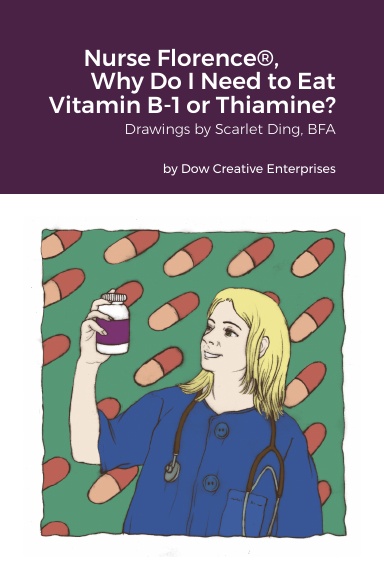
In Nurse Florence: Why do I Need to Eat Vitamin B-1 or Thiamine? three friends learn about the importance of thiamine in converting food into energy through engaging lessons from their mentor, Nurse Florence. How do you approach simplifying complex scientific concepts like thiamine’s role in the body for young readers?
The main technique I use is to imagine talking to my 11 year old child as I write. I try to only include a handful of new words per book so that it is not overly complicated.
How do you ensure that your books appeal to both children and adults, making them valuable educational tools for families and classrooms alike?
It was an accident that the books are just as valuable for adults as they are for children. A government study suggests only 12% of US adults are proficient with health information so we hope the series sparks a global health literacy promotion movement.
What role do the illustrations play in enhancing the learning experience for young readers?
The illustrations help inspire me to write the text. I give my illustrators drawing prompts to guide them which then in turn guides my writing.
Are there any specific future topics you plan to cover in the Nurse Florence series, and how do you choose which health concepts to explore next?
We plan to publish around 500 Nurse Florence books to cover all diseases and general human physiology questions. We publish 4 to 8 new Nurse Florence books a month. Stay tuned for more!
Author Links: GoodReads | Facebook | Website | Book Review
Empowering Families
Nurse Florence, What is Type 2 Diabetes? follows three friends who are curious about the human body and talk to the school nurse to find out whether a disease could affect the human body in the same way climate change impacts the Earth. Why was this an important topic for you to write a children’s book about?
Diabetes is a horrible disease. Many people can develop severe complications after years of living with the disease like going blind or getting a foot amputated. This disease is preventable by maintaining a healthy BMI, regular exercise and eating a well-balanced diet. People need more knowledge to live healthier lives, and I hope the Nurse Florence series empowers a lot of families worldwide.
What were some ideas that were important for you to share in this book?
Ideas for prevention are important for me to include in any Nurse Florence book. I don’t want to scare people about diseases they may get but want to give them actionable info to improve their lives.
What is one thing that people point out after reading your book that surprises you?
That this disease is reversible with lifestyle changes.
Have you ever considered a spin-off series to Nurse Florence to teach kids about the different career options available in the medical field?
No, but Dow Creative Enterprises plans to publish about 30 other book series for kids. The second one has already started and is called Nurse Dorothea. It is about mental health for teenagers and young adults although it could be read by the elderly as well since we should be lifelong learners. Visit www.nursedorothea.com for more info.
Author Links: GoodReads | Facebook | Website | Book Review
The Pysanka Chicken: We Are All Born Different


The Pysanka Chicken: We Are All Born Different, penned by Lesa Melnyczuk, introduces young readers to the important topic of children born with rare conditions or diseases in a thoughtful and engaging way. Set on Easter Sunday in the village of Bukavel, Ukraine, the story begins with Baba Helen, Baba Stefka, and their grandchildren waiting outside the church for the priest to bless their Easter baskets. As they make their way home, a surprising sound of cracking comes from one of the baskets. Curious, the children open it and discover a remarkable egg, painted in gold and blue. From this egg hatches a Pysanka Chicken, a special chick that looks different from the others. The children learn that, just as some chicks are born unique, so too are some babies, leading to a deeper and meaningful conversation about differences.
Lesa Melnyczuk weaves a heartwarming tale that touches on a complex subject with care and compassion. Her storytelling gracefully blends the charm of Ukrainian customs and traditions with the tender message of acceptance. The village setting feels inviting and warm, and Melnyczuk handles the topic of rare conditions with great empathy, making it accessible to young minds. While the story doesn’t point to any specific illness, it skillfully conveys the experience of being different and highlights the love and support needed from family and friends. The narrative also touches on how children born with unique conditions may need extra care, such as doctor visits or medical attention, but ultimately emphasizes unity, respect, and the power of love to overcome challenges. This is an ideal read for introducing young children to the concept of physical diversity and health differences.
The story’s brevity, coupled with its tender tone, makes it both digestible and heartfelt. However, the use of Ukrainian terms might pose a slight challenge for some readers, even though most are explained within the context of the story. I feel that the inclusion of a glossary at the beginning would have been a helpful addition, providing readers with a clearer understanding of these rich traditions upfront. Despite this, the story shines with its lovable characters and its magical touch, which brings the message of acceptance to life in a captivating way.
The Pysanka Chicken: We Are All Born Different, written by Lesa Melnyczuk and illustrated by Veronica Rooke, is a beautifully told story that uses a bit of magic to encourage children to embrace and understand physical and health differences in others. It’s a thoughtful and uplifting tale, perfect for sparking important conversations about diversity and empathy.
Pages: 38 | ISBN : 978-0975658024

Realizing Our Dreams

Sally Mitts and the Land of Imagination follows a curious cat who steps through a magical door into a world where creativity knows no bounds, embarking on an adventurous journey to restore the joy of imagination. What inspired you to create a character like Sally, a curious cat?
Sally’s a real persona to me. She isn’t a superhero, she’s vulnerable but she finds the courage to explore and grow in her stories. In her first book, she faces tough circumstances in a shelter and follows her instincts to choose a kind man for her new family.
In this second book, Sally Mitts And The Land Of Imagination, she discovers how powerful her creativity is when she embraces it and learns to believe in herself. Her potential for real friendships, aspiring, and healing all bloom when she enters the Land Of Imagination, where you can be whatever you imagine. And so can everybody else – sometimes hilariously. But that’s part of the joy of it.
The theme of imagination plays a central role in the story. What message do you hope young readers take away about the power of creativity?
I believe that a healthy imagination is essential to our well-being. It’s the path to realizing our dreams and desires. But this priceless gift is too often repressed as we “grow up.” Something invaluable is lost, without which our capacity for hope and beauty withers. Where there was life and color, there is only sterility and fitting into the status quo.
I hope Sally Mitts And The Land Of Imagination encourages young readers to treasure their unique creativity and facilitates a life-long love affair with their capacity to imagine. Wouldn’t that be wonderful?
Can you share more about the process behind the hand-drawn illustrations and how they complement the narrative?
I draw by hand because it allows me the greatest ability to capture the emotional content of my stories. Although time-consuming, I find this way I can best express the story’s nuances – from my heart to the readers.
When and where will the book be available?
Sally And The Land Of Imagination is available for half-price with pre-order on Amazon. It will be published on October 26th on Amazon and Ingram Spark. Audiobooks will be available on Audible and Find-A-Voice.
Author Links: GoodReads | X (Twitter) | Facebook | Instagram | TikTok | Website | Amazon
It all begins on an ordinary day when Sally spies a pair of shoes walking – without any feet! Curious, she follows them to a mysterious red door with the word Imagination etched above it. Beyond its threshold, Sally discovers a fantastical world of creatures living out their dreams:
A tender-hearted rabbit who loves long blingy gowns and singing opera. A shirty mole who believes he’s too smart to bear other’s company. A snail who floats through the stars and the joyful dancing Gollyphants who make the Rainbow Lake’s waves shake. And threatening them all; the hungry fog monster who steals hopes and dreams.
Full of wonderfully odd characters and unexpected twists and turns, this enchanting tale is a must-have for every child’s library.
Winner of The Golden Wizard Book Prize in Children’s Literature and The Literary Titan Book Award.



 LITERARY TITAN