Blog Archives
Fairy Lights: Bed Time Poems & Gallery of Fairytale Art from Yesteryear


Fairy Lights is a wonderful collection of bedtime poems interwoven with fairy lore, myth, and timeless art. Moving through the seasons of the year, the book gathers stories of spirits, shape-shifters, ocean dwellers, elven royalty, and everyday enchantments. It draws from Irish, Nordic, Greek, and New World traditions, blending them into verses that feel both ancient and freshly spoken. Each section carries its own mood, from the playful revels of spring to the melancholy mysteries of autumn and the haunting stillness of winter. Alongside the words, the author curates a gallery of fairytale art from past centuries, which adds a lovely echo of history to the poetry.
What struck me most was the way the poems refused to be pinned down. They could be lyrical and delicate in one breath, then strange, even eerie, in the next. A piece like A Piece of Amber felt tender and tragic, like a whispered legend by firelight, while something like The Baallad of Blaackie Coal made me grin with its folkloric humor and Scots cadence. I loved how the writing carried me away from reason into a place where fairies still dance, seashells sing, and even the smallest bird is mourned with reverence. The language is musical and sometimes unpredictable. At times, I found myself rereading lines not because I needed to but because I wanted to savor the rhythm.
The author clearly delights in layering metaphor upon metaphor, which creates a rich tapestry. This very quality also gives the book its dreamlike atmosphere. It reminded me of wandering through a forest at dusk, you don’t always know what you’re seeing, but the mystery is the point. I also appreciated how personal some of the poems felt. Knowing that pieces like To Wee Russet Tuft came from real experiences gave the collection an intimacy that balanced out the more mythic material.
Fairy Lights feels like a gift for anyone who still listens for magic in the quiet hours. I would recommend it to readers who love fairytales, folklore, or poetry that doesn’t mind breaking free from neat structure. It’s especially suited for those who want to share stories aloud, whether with children at bedtime or with the inner child who still believes in hidden worlds.
Pages: 181 | ISBN : 0473742454

What We Hold No Longer
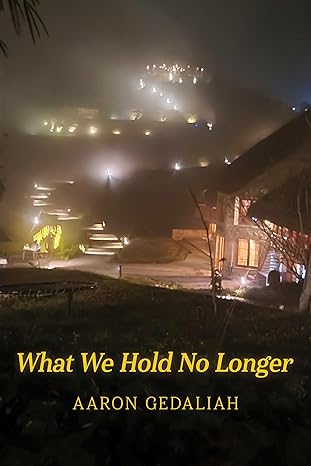
Aaron Gedaliah’s What We Hold No Longer is a collection of poems that circle around memory, aging, identity, and the haunting void that lies beneath it all. The book moves through phases of transformation, wrestles with the Lacanian “Thing,” looks at the unraveling of society, and then slips into reflections on love, loss, desire, and imperfection. It blends the deeply personal with the philosophical, balancing childhood recollections with meditations on mortality, politics, and the quiet strangeness of being human.
Some of the poems struck like sudden jolts. They’re raw, unfiltered emotions that left me uneasy in the best way. Others drifted, slow and lyrical, catching on the edges of memory. Gedaliah doesn’t shy away from pain, whether it’s private grief or public horrors, and I respected that. I thought the psychoanalytic undertones and references added a fascinating depth to the collection. They gave the poems a layered richness that invited me to think as much as feel. What made the book especially strong, though, was the way those ideas blended with moments of plain vulnerability. The balance between theory and raw emotion kept the work dynamic, and the times when the language leaned into honesty and looseness stood out all the more because of that contrast.
The book feels like someone holding a mirror up to both his own past and the chaos of the present world. He talks about adolescence with brutal honesty, aging with rueful wit, and political violence with fury. I connected with the tenderness in “Birds on a String,” the ache in “Paradise Lost,” and the weary warning of “When the Shelves Are Empty.” There’s something relatable in the way he lets contradictions live side by side, rage and love, despair and beauty, the personal and the universal. It made me stop more than once and just sit with my own ghosts.
I’d say What We Hold No Longer is best for readers who like poetry that wrestles hard with ideas yet still finds room for confession and story. It would suit anyone interested in memory, loss, or the philosophical edges of spirituality.
Pages: 85 | ASIN : B0FPG8MLQ9
Toward a Theory of Everything

When I opened this book, I didn’t expect it to be such a sweeping mix of science, spirituality, and poetry, yet that’s exactly what I found. Harper begins with his lifelong quest to make sense of existence. He sketches a vision of two interwoven realms, the physical and the spiritual, and then spends the first part of the book expanding on what that means for everything from the birth of the universe to the mystery of human consciousness. After that, he shifts into poetry, both intimate and universal, before closing with collected quotations that highlight the themes he has lived and breathed. The book is less a tight academic theory and more a tapestry of reflections, stories, and insights born from decades of learning and personal searching.
I found myself caught off guard by the way Harper writes. At times, his prose felt deeply personal, like he was letting me peek into the inner conversations he’s been having his whole life. He weaves science with faith, mixing astrophysics and ancestral spirits in the same breath, and though the connections are unconventional, they carry a kind of honesty that’s hard to dismiss. I didn’t always agree with his conclusions, but I respected the curiosity that drove him there. His ideas about memory, reincarnation, and the merging of science with spirituality made me pause more than once and reread passages.
What struck me most emotionally was the poetry. It wasn’t just filler after the theory section; it was the heart of the book. The poems softened the heaviness of the philosophical ideas and grounded them in human experience, like grief, joy, friendship, faith, and love. Reading them felt like sitting across from Harper and hearing his voice shift from lecture to prayer to conversation. There’s a warmth in his writing, even when the subject matter is heavy. I felt his sincerity and his longing for people to live with more awareness and compassion.
I’d recommend Toward a Theory of Everything to readers who aren’t looking for airtight arguments but who enjoy being nudged into reflection. It’s for people who don’t mind wandering between science and spirituality, who enjoy a mix of heady ideas and heartfelt poetry. If you’re open to curiosity, to a voice that blends scholarship with faith, this book will give you plenty to chew on and maybe even leave you feeling a little more connected to the mysteries of life.
Pages: 264 | ASIN : B07KZPY5YP
The Empathy of Rain

The Empathy of Rain is a lyrical collection of poems that uses rain, in all its moods and forms, as a mirror for human feeling. Each section whether “Morning Dew,” “Virga,” “Scotch Mist,” or “Thunderstorms” offers a shift in tone and imagery. The poems explore longing, memory, love, and loss through recurring symbols of weather and light. The author leans into musical cadence, often weaving music, mythology, and natural imagery into lines that blur the boundary between personal memory and universal meditation. The effect is a tapestry of emotions carried by the rhythm of rainfall.
I often felt swept up in the sheer intensity of the writing. Some poems feel like whispers, others like sudden storms, and that variation kept me hooked. I admired how the poet wasn’t afraid to be vulnerable. The words carry a kind of raw ache, especially when love is spoken of as something both eternal and fleeting. The writing is lush, often overflowing, and that abundance created an atmosphere that felt alive.
The metaphors tumble one after another. That torrent of language mirrors the theme: rain rarely falls gently for long. It arrives in waves, it drenches, and then it vanishes. The book captures that sensation perfectly, even when it risks drowning the reader in its intensity.
I would recommend The Empathy of Rain to readers who love poetry that is unfiltered and emotional. It is best suited for those who don’t mind getting lost in layers of imagery and who want to feel as much as they want to think. If you enjoy writing that leans into passion, music, and the mystical bond between nature and the human heart, this poetry book will give you plenty to return to each time you open it.
Pages: 180 | ASIN : B0FC5M62CN
Reflections: Earth, Heart, Light, Dark
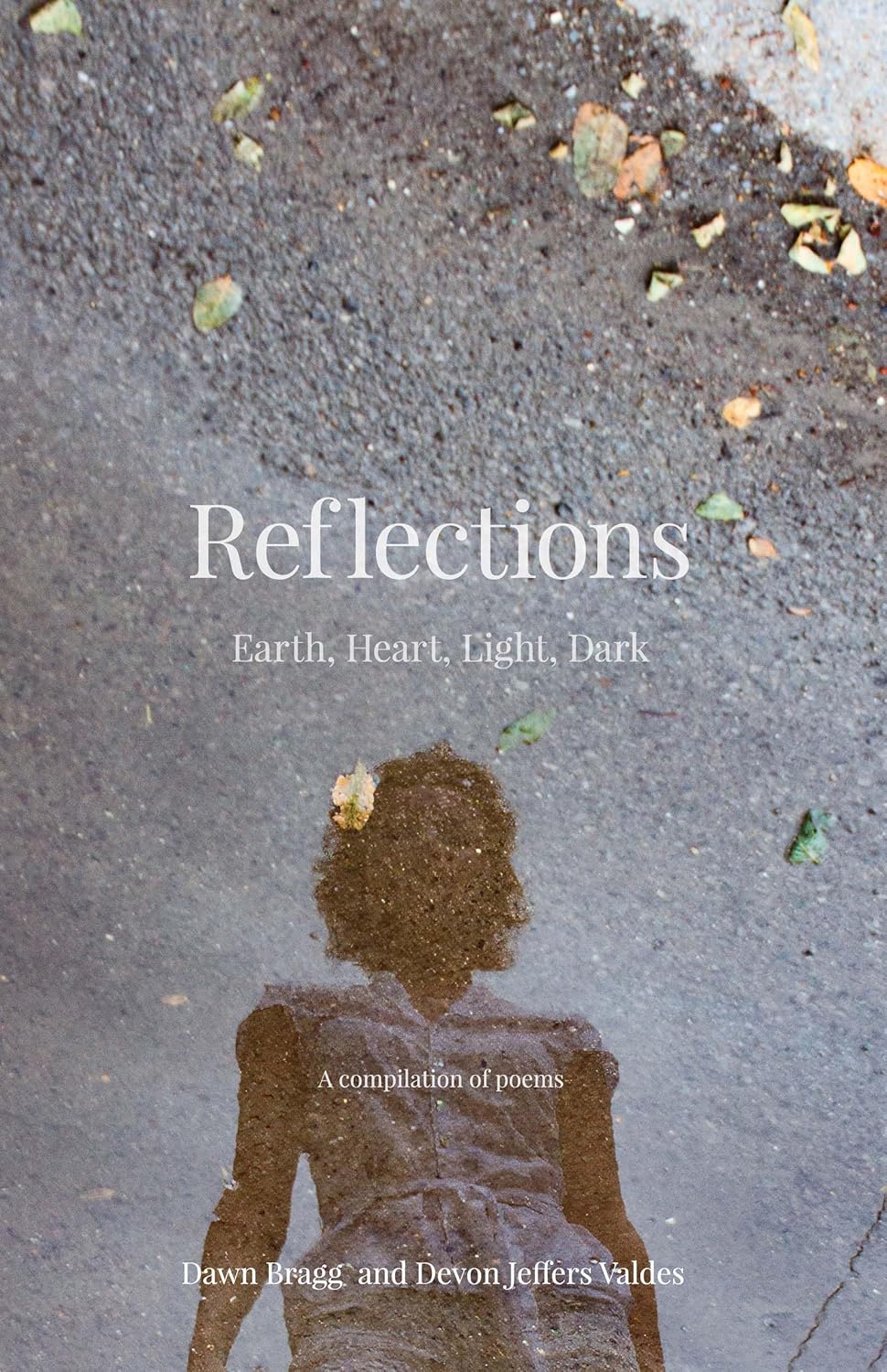
Reflections: Earth, Heart, Light, Dark is a mother-daughter collaboration that explores the intertwined themes of Earth, Heart, Light, and Dark through poetry. The book flows like a seasonal cycle, beginning with poems rooted in nature, moving through love and memory, then toward hope and illumination, and finally into grief, loss, and shadows. Each section feels distinct, yet they all circle back to a shared sense of searching for meaning in both beauty and pain.
Poems like Transition pulled me in with their intimacy, especially the image of a mother’s hands rebuilding a new world after a storm. It felt deeply personal but also universal, the kind of moment that made me stop and think about my own family. I’ll admit, Grandmama caught me off guard with its questions, “What thoughts did you have? Did you think them deserving?” and left me feeling both unsettled and comforted at the same time. That’s what I liked most, the poems didn’t tie everything up neatly. They lingered.
From Ash to Light carried a strong sense of resilience, and I couldn’t help but feel buoyed by its journey from despair to joy. It had this rhythm of stumbling and rising that felt human and raw. On the other hand, Dawn of Forty-Nine leaned more toward classic imagery, almost old-fashioned in its rhymes, which at first jarred me but eventually worked because it added texture to the collection. I found myself rereading those lines about waterfalls and winds, almost like I was letting the words wash over me instead of trying to decode them.
Then there’s the “Dark” section. This is where the book hit hardest for me. You Left Me was plainspoken, almost brutally so, and that stripped-down honesty made it sting. The Waves had this hypnotic pull with its repetition, “Rising above, wave after wave,” that felt like drowning in grief and memory. I could feel the authors letting themselves go to heavier places, and I appreciated that they didn’t shy away. It made the hopeful poems earlier in the book feel more earned, less naïve.
Reflections: Earth, Heart, Light, Dark is for readers who like their poetry to sit somewhere between personal diary and universal myth. It’s not heavy with academic wordplay, but it’s not fluff either. If you enjoy quiet evenings with a book that makes you pause, maybe even tear up, this one is a must-read. Personally, I closed it feeling like I had sat down with two voices who weren’t afraid to be vulnerable, and that’s something I’ll always admire in poetry.
Pages: 38 | ASIN : B0FFNGQ15P
Fists in the Eye that Blinks on a Pin

Dyson Russell’s Fists in the Eye that Blinks on a Pin is a collection of poetry that feels both raw and surreal, like wandering through a dream where images refuse to sit still. The book moves between moments of tenderness and moments of violence, never giving the reader a chance to feel completely safe. Themes of memory, loss, and fractured identity recur throughout, tied together by vivid and sometimes startling metaphors. It’s the kind of collection where one poem can feel like a quiet confession and the next like a scream across a darkened room.
I found myself both unsettled and deeply moved. Russell writes with a kind of reckless honesty that doesn’t apologize for being strange or uncomfortable. Sometimes the words tripped me up, and I had to pause and reread, but I didn’t mind. The language has teeth, and that’s part of its pull. What I admired most was the way the poems manage to be experimental without drifting into nonsense. Even in their most chaotic moments, they circle back to something recognizable and relatable, like grief that feels both personal and universal.
The repetition of despair, loss, and fractured imagery can weigh heavily after a while. Still, I can’t deny that the intensity is part of what makes this book what it is. Russell doesn’t water anything down, and that kind of boldness is rare. It felt like stepping into someone else’s storm and just staying there until the clouds passed.
I would recommend this book to readers who crave poetry that doesn’t play it safe. If you like writing that feels visceral, experimental, and emotionally unfiltered, this collection will stay with you long after you put it down. It’s not for someone looking for light verse or easy comfort, but if you want to wrestle with language and feel something real, Fists in the Eye that Blinks on a Pin is worth your time.
Pages: 110 | ISBN : 1763820602
The Meteor Symphony: Stories and Poems
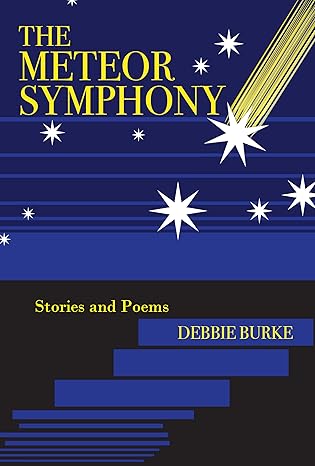
The Meteor Symphony is a colorful mix of short stories, poems, and microfiction, stitched together with music, humor, grief, and hope. It moves from tales of jazz musicians and stolen saxophones to intimate portraits of aging, love, heartbreak, and resilience. Some pieces lean into whimsy, others lean into sorrow, and many hover in the strange, honest space in between. The title story ties it all together with an imaginative search for a lost symphony, but the book itself feels like a symphony of voices, moods, and rhythms.
I enjoyed the range in this book. One page had me laughing at the absurdity of a sax heist, and the next had me sitting with the weight of a widow’s quiet grief. Burke writes with sharp clarity, yet there’s also a looseness in her storytelling that feels natural, like listening to a friend talk late into the night. I loved that she didn’t try to polish away the odd details. People misstep, conversations derail, feelings clash, and it all feels real. At times, the jumps between stories and poems felt a little jarring, but in a way, that’s what made it lively. The collection refuses to settle into one mood.
I also found myself connecting with her fascination with ordinary people. She doesn’t write grand heroes or villains, but flawed, funny, messy people. That resonated with me. Her style is direct but not cold, and she doesn’t shy away from emotions. Some of the poems hit me harder than the stories, brief as they were, because they carried that distilled punch of truth.
I’d say this book is best for readers who like variety, who don’t mind skipping from lighthearted banter to heavier reflections, and who enjoy the intimacy of short-form writing. If you’re open to being surprised, amused, and sometimes gutted all in one sitting, Burke’s collection is worth your time. I’d recommend it to anyone who loves music, who has wrestled with family, or who has ever paused at sunset and felt the ache of beauty and loss in the same breath.
Pages: 114 | ASIN : B0DTJ37FVK
Literary Titan Book Award: Poetry

The Literary Titan Book Award recognizes poets who demonstrate exceptional artistry and proficiency and push the boundaries of language and expression. The recipients are poets who excel in their technical skills and evoke deep emotional responses, challenge thoughts, and illuminate new perspectives through their work. The award honors those who contribute to the literary landscape with their unique voices and powerful words.
Award Recipients


Visit the Literary Titan Book Awards page to see award information.



 LITERARY TITAN