Blog Archives
Where They Came From

Relative Strangers is a moving collection of personal stories exploring how adoption, donor conception, unexpected biological connections, and family secrets shape identity, belonging, and our understanding of kinship. Why was this an important book for you to write?
Adoptees, donor-conceived people, and others who’ve had an NPE (not parent expected) experience are often discouraged from telling their stories, are asked to keep secrets—even to be secrets—and it can be a great burden to shoulder those secrets and not be able to tell one’s truth. That silencing often arises from shame or guilt, and that shame spills over onto people who had no control over the circumstances of their conception and who never agreed to keep secrets or preserve others’ anonymity. This collection was created to give voice to these stories—to express the profound impact of secrecy, family discoveries, DNA surprises, and encounters with previously unknown close family.
Your introduction is deeply personal. How did your own experiences with identity and kinship influence your approach to editing the collection?
My own story is perhaps more complicated than most since it involves both maternal abandonment and an NPE experience, along with the discovery of an unusually large number of siblings. It was also somewhat unusual in that almost all of the relatives I discovered were warm and welcoming, and so it was a story that may have had more joy than many NPE experiences. What I wanted the collection to convey, however, was the broad range of experiences, the different emotional and practical repercussions, the often messy complexities of search and reunion, and the many ways different individuals ultimately define family.
Grief appears in many forms throughout the collection, including mourning relationships that never fully developed. Why was it important to make space for these less recognized forms of loss?
Grief is a thread that runs through each of these stories, and it arose naturally — that is, contributors were not asked to address grief — it emerged as one of the most consistent experiences related to these family discoveries. And that, I believe, is because there are few places where the particular kinds of grief that are so common among people who’ve had these experiences can be shared and understood. Overwhelmingly, the grief expressed is disenfranchised grief and ambiguous loss—that which is not acknowledged by society and for which there’s no source of support. As one contributor said, no one brings a casserole for this kind of loss. This is the pain of discovering a father who’s been dead for 20 years, or learning that the parent you’re seeking died two days before you reached out, or that you have family that would have loved to know you across a lifetime if they’d only known about you. These are losses that individuals typically have to mourn alone, or that are dismissed by others as insignificant. That trivializing of their experiences is a further kind of grief.
After readers finish the anthology, what do you hope they will reconsider about family, inheritance, and the meaning of belonging?
I hope that individuals who’ve never experienced the revelation of a significant family secret or had a DNA surprise will come to understand both how important it is for many if not most individuals who have had these experiences to learn more about where they come from and who their parents were. People who know their parents and have had no such surprises take for granted that privilege and I’d like for these essays to increase their awareness, promote empathy and compassion, and let them realize that all adoptees and NPEs want is to know what everyone else knows about themselves, and when they reach out to biological family, they’re merely looking for acceptance and recognition.
Author Links: GoodReads | X | Facebook | Website
Relative Strangers: Inheritance, Identity, and the Meaning of Kinship


Knowing who your people are can feel as ordinary as recognizing your own face. Relative Strangers: Inheritance, Identity, and the Meaning of Kinship, edited by B.K. Jackson, asks us to consider how much that knowledge means, and what happens when the story we’ve lived with changes. Its 28 contributors write about adoption, donor conception, unexpected biological relationships, and the family secrets that can shape a life long before they’re spoken aloud. With a foreword by Libby Copeland and Jackson’s deeply personal introduction, the collection establishes an intimate, thoughtful space for these accounts. You feel the stakes in the questions people hesitate to ask, the information they cling to, and the effort it takes to approach someone who may be both a stranger and family.
The pleasure of reading this book comes partly from how differently its writers approach their experiences. Laura Jenkins builds an essay around letters of the alphabet, making the struggle to assemble a personal history visible in the structure itself. Brian Gresko uses an open letter to bring childhood vulnerability into conversation with an adult’s growing understanding. Marci Calabretta Cancio-Bello’s lyrical address to her mother moves through Korean language, music, and popular culture, giving longing a rich sensory life. Elsewhere, a beloved stuffed dog, an artichoke, and the movement of water become ways to explore feelings that resist easy explanation. These details give the collection texture and personality. There’s wit here, sometimes wonderfully irreverent, and an eye for the small, awkward moments that make people recognizable.
Across its five thematic sections, the anthology keeps widening the question of inheritance. Resemblance matters, and so do the meals, beliefs, languages, and habits through which people learn to understand themselves. Essays about racial and cultural identity bring particular depth to that inquiry, showing how family knowledge intersects with the way a person is treated in the world. The writing about grief is especially affecting. It gives shape to mourning for people barely known, relationships imagined for years, and time that can’t be recovered. The contributors are candid about wanting recognition and about the vulnerability of asking for it. They’re also attentive to the pressures surrounding their parents’ choices, including stigma, fear, and expectations of silence. That combination of emotional honesty and patient examination gives the book its moral force.
Jackson’s thoughtful arrangement lets the essays speak to one another while preserving each writer’s understanding of kinship. As the collection progresses, belonging takes on many forms: being acknowledged, being listened to, caring for someone, making space for a complicated truth. You may find yourself reconsidering the reassurance you offer a loved one, or noticing how much family knowledge you’ve been able to take for granted. For readers with similar experiences, these pages offer the company of people willing to name difficult feelings precisely. For anyone drawn to personal essays, they offer distinctive voices and close attention to the strange negotiations of love. Relative Strangers makes the ache of missing family palpable and the right to know your own story impossible to dismiss.
Pages: 204 | ASIN : B0H4151W2P

Unnecessary Hurt and Confusion

Faithless Friends and Replacement Lovers is a collection of short stories about the messy, complicated, and sometimes sweet intersections of love, loss, loyalty, and self-discovery. The title is striking. What does “faithless” mean to you in the context of these stories?
To me, being faithful means you’re devoted and true to another person, despite the obstacles that inevitably arise, and you learn how to communicate and work those things out. By contrast, faithless means you give priority to your inner confusion, uncertainty, or misguided desires, which means you stop acting and communicating in honesty and goodness where the other person is concerned.
For example, in the story Faithless Friends and Replacement Lovers, Tracy was faithless in the way she suddenly checked out instead of communicating why she no longer intended to be friends with Connie. A lot of people do that today, never giving a friendship or relationship another chance, but just “ghosting” and moving on. It creates a lot of unnecessary hurt and confusion. How can friendships and relationships continue unless each person is willing to be honest and challenge themselves to grow in love?
Several characters mistake loyalty for obligation or desire for love. Why do you think that confusion is so common?
Broadly speaking, who can truly know the human heart except for its Maker? At the same time, I’ve found that my understanding of my own motives has grown and matured over the years, so I imagine that is true for everyone, whether for good or for bad.
For example, in Sweet Vengeance, the main character thinks she has loved a certain rich fellow since high school, when she actually lusts after his lavish lifestyle and cares nothing for the man himself. Unless she comes to an awakening of what true love is, it’s doubtful that she will ever have his best interests in mind.
The reality is that all of us come to the table with our own experiences and expectations about love and loss, which makes communication often confusing and challenging. The best thing we can do is acknowledge the differences and constantly seek to learn how to be our best selves to the people around us.
Are there particular stories you feel change meaning depending on a reader’s life experience?
Of course, and the stories have even changed for me over the past decade since I wrote them. Since I often write to process my own experiences or what I see in other people’s lives, I look back at the majority of my stories with a better understanding. I expect others to view them differently as well, based on where they are in life. My favorite part is that readers often bring a completely new understanding, teaching me additional things that I never would have recognized without their fresh perspective.
What did writing this collection teach you about relationships?
Writing these stories taught me a lot of things over the years, and still gives me new insight to this day. For example, I have learned a lot about the diversity of human experiences and the necessity to both be more strict in some things (like setting personal boundaries) and also be a lot more relaxed in other areas (like not needing to explain myself or be fully understood by others). Looking back, the biggest lesson I see is how time truly does change perspectives and experiences. I wouldn’t say it heals all things, but it helps us handle the pain of love and loss.
For example, Silvia and Jed no longer come to mind, but losing Tracy occasionally still brings me grief. Meanwhile, Luigi did not turn out to be who I expected, but then again, I am a completely different person today as well. As long as each of us remains humble and teachable, love and loss will only shape us into better people who are more capable of loving others who join us on the journey of life.
Author Links: GoodReads | Facebook | Website | Amazon
From the multi-award-winning fiction author Elizabeth Horst, this collection of short stories is meant to inspire you and provoke you to think about the different kinds of relationships and friendships that we all face.A fanciful knight acts upon his romantic notions when journeying to battle.
A successful career woman fears bumping into her long-lost best friend at their college reunion.
A young man seeks his own way where life, women, and religion intersect.
An Italian maiden considers giving up love forever by devoting herself to the convent.
And more!
Hovering between whimsical and philosophical, these fourteen tales feature realistic characters who face varied challenges with love and relationships while deciding for themselves whether to be fleeting and false or faithful and true. For all of us who wish for our own happily ever after, it’s a wonderful and timeless collection that will touch your heart and soul.
Breaking All the Rules

Bad Americans: Part I is a collection of interconnected short stories that follow 12 strangers who gather in a billionaire’s Hamptons mansion to date, compete, and tell stories during the summer of 2020 and the COVID pandemic. What was the inspiration for this book?
The inspiration actually started almost 25 years ago, in 2001. Right after the 9/11 attacks, I moved from New York City to the UK to study abroad at the University of Oxford. Right across from my College, Wadham, was Blackwell’s Bookshop, and sometimes I would explore books there. I started reading The Decameron, by Giovanni Boccaccio, in depth. I had already read The Canterbury Tales, by Geoffrey Chaucer, in high school, and in general, I really liked the exciting, satirical works of the past. At the time, I was also experimenting with narrative forms and basing them on the ancient and classic works I was reading. For my Fiction Workshop Tutorial, I tried to write a story within a story, but it didn’t go so well. I thought that one day I would have the narrative skill to do this–to one-up Boccaccio and Chaucer and write a frame novel with short stories where each reflected and reinforced the other, and our time.
So fast forward to 2019, I was finishing up the editing of The Dance Towards Death, the third book in The Brotherhood Chronicle, which was coming out in September 2020, and I started thinking about the next book in The Human Tragedy, my panoramic portrait of American society in short stories, the modern version of Balzac’s Human Comedy. The first volume, Good Americans (2013), was a highly provocative and challenging short story collection that definitely did progress its form, but it was also rather conventional in its basic structure. So I thought to myself, how do I one-up that? And that’s when I thought back to my original challenge from 2001. I already had 4 books under my belt, each with a different aesthetic or narrative challenge, so I figured I was up to the great task of writing a novel containing stories that worked both ways: as a novel and a short story collection. I came up with a basic sketch of 10 Americans quarantined in an academic library during a pandemic. Each day they would interact, and each night one would tell a story.
Then the pandemic actually hit us. In late January 2020, I became extremely sick and had to cancel my trip to SE Asia. NYC shut down, my parents got sick, and neighbors died. My mom was on the frontlines. And I followed everything that was happening. I saw the rich were moving to the Hamptons to escape, just like in The Decameron. And there were breadlines on the streets of Queens, riots in Manhattan. Assaults on Asian-Americans, a disproportionate toll on People of Color, especially frontline workers. Rhetoric about immigrants. So I realized, as someone who was dedicated to realism in my works as it was, that I had all the material in front of me for Bad Americans. I just needed to do background research, and eventually, after the first draft, get some opinions on the stories and the characters telling them. The setting moved to The Hamptons, I invented all the characters, and wrote a massive first draft, both frame narrative and individual stories. I got feedback on the individual stories from people I trusted who might have similar backgrounds. Some of the stories, and to a lesser extent, character details, changed a bit, though not dramatically. And the frame narrative just needed to be condensed, which I eventually did after successive drafts.
With twelve major voices, how did you keep each character distinct? Did any character surprise you as you wrote them?
It just happened, I don’t know. I did initially write a bunch of character sketches. There were a lot of details about each character in the first draft that were discarded in future drafts, and there were some concerns by beta readers early on about the characters’ needs and motivation to be in The Getaway. But in general, the characters stayed consistent and dimensional. All my books feature tons of characters, and each is multi-faceted yet vivid, so that wasn’t difficult per se. It’s just the way my imagination works. So I could already picture them all from the beginning.
I’m not sure any of the characters really surprised me. I guess my main dilemma was how to portray the billionaire Olive Mixer. The popular choice would be to make him into some evil rich person, a la Squid Game or something. But I didn’t want to do that. I wanted to make him dimensional and human too. He has his reasons for creating The Getaway, like each guest has for being there. Of course, he is Big Brother here, but nevertheless, he didn’t need to be overly evil or anything. Same thing with Taylor, or Ricard, or even Lisa and Hayley. They all have their good and bad sides. They might annoy you, but that just makes them more human and realistic.
The book doesn’t shy away from political and cultural clashes. What risks did you feel you were taking?
The whole book is a risk, as is all my work. So I figured, as long as we are breaking all the rules, we might as well go all the way. Of course, it’s basically prohibited to have political and, to a lesser extent, cultural clashes in mainstream literary fiction. With the latter, especially when you have someone of a particular cultural background, according to the unwritten rules, you can only write about that group. The truth is, we live in a cross-cultural society, especially in Queens, NY, so that’s absurd, especially if you’re trying to portray reality, and it also highly dilutes the possibilities of narrative content and form.
And really, the extent to which contemporary politics should play a role in the book’s conflicts was a dilemma for me early on. Other than being against the grain, I was also worried that such references would make the book feel dated for someone reading it 20 or 40 years from now. But I decided that if I was really going to make a realistic portrait of the time, there’s no way I could shy away from it. That was one of the major fault lines of the time, as it is today. So I embraced it, at least early in the book.
Each guest’s story changes how the group sees them. What does the book suggest about the power of storytelling itself?
We tell ourselves and each other stories all the time, and this is especially true in trying circumstances, especially when a bunch of people are forced to be together. But the short story collection has become a rather staid form. Everyone knows how a collection of stories is going to be structured at a basic level, even if it’s a novel-in-stories, like Winesburg, Ohio, and many books like it onwards (Olive Kitteridge, for example). And usually, we know that each individual story is going to end with some sense of character revelation. So one strength of having frame characters tell the stories is that it makes them and us see these stories as a dynamic, fluid, and even questionable form. Unless we have an unreliable narrator, to some extent, each story in a traditional collection is given somewhat holy and unimpeachable status. But you wouldn’t give that status to a story your barber or Uber Driver told you. Even while being thoroughly engaged and entertained, you would question its authenticity and its objectivity, wouldn’t you? So, on a basic level, that’s what the book is trying to get at: storytelling at its rawest and most realistic form.
Now, transfer that rawness to the immediacy and tensions of the pandemic, and you see the true power of storytelling emerge, which is the haunting effect of portraying the basic struggles of life: life and death, love and loss, privilege and want. And apply it specifically to characters from different walks of life quarantined in a mansion, and now you have a third dimension, which is context. The characters know each other on a basic level, many of them might even want to date each other, but they don’t necessarily trust each other, or know the context of their lives or positions. Now you are questioning and portraying, but you are also revealing. And you are seeing a picture of the lives of others who are not in the mansion either.
So each character has an objective for each story, each reveals themselves in each story, but not necessarily in the way they want to, and perhaps they have a different goal for each character listening. And the other characters will see them through a mix of their preconceived notions, and how they’ve been convinced or changed by the story in question. It’s an endlessly complex equation you can go over and over. Which is the point of the exercise.
So I think the book demonstrates the immense power of storytelling and also the complexities of the motivations of narratives told.
Author Links: GoodReads | X (Twitter) | Facebook | Bad Americans | Good Americans Collection | Tejas Desai | Website | Amazon
Winner of Bestsellers World Reviewers Choice Award in Short Story/Anthology (1st Place)
Critics and Readers Rave: “A Timeless Masterpiece” “A Landmark Literary Event” “A Genre-Defying Tour De Force” “A Masterpiece of Literary Fiction” “A Moral Reckoning” “A Panoramic Portrait of the American Experience” “A Literary Time Capsule and a Mirror” “Fearless, Thought-Provoking, and Utterly Absorbing” “A Must Read”
Summer 2020: the Covid-19 Pandemic is raging. A reclusive billionaire, Olive Mixer, calls twelve diverse & lonely Americans to his mansion complex in the Hamptons: nurses, lawyers, mechanics, social workers, students, financial analysts, soldiers, Uber drivers, engineers, hair salon operators. During the day, the guests meet, compete, date, dine, flirt and fight. Each night, one must tell the group a story.
Their tales range widely in subject, style, length and decorum. Many stories respond to each other. They trigger passionate debate and fiery resistance. They change how characters perceive each other and affect the trajectory of the frame narrative. They make us ponder the nature of storytelling itself.
Bad Americans is part Boccaccio and part The Bachelor, but it is a creation all its own. Both a novel and short story collection, Bad Americans is at once a powerful portrait of the American pandemic experience and an examination of narrative itself. Bad Americans: Part I includes the frame narrative and the first six stories. Bad Americans: Part II will conclude the frame narrative and include six additional stories.
These two books are the second and third volumes of the profound and daring anthology series The Human Tragedy, following the subversive classic Good Americans.
East Texas Flavor

What Is Unseen is a tender, character-driven story set in East Texas, where three lives intertwined by loss and moral struggle seek redemption and meaning amid faith, pain, and unseen grace. What was the inspiration for the setup of your story?
I live in East Texas. I have seen these stories manifested in the lives of people I know. The culture, in its own unique way, has common threads with other human joys and struggles throughout time. I wanted people to hear these stories in a compelling and literary fashion with a uniquely East Texas flavor. I also want to share these stories with my grandchildren and generations to come.
What were some driving ideals behind your character’s development?
Hope, faith, love, fortitude, courage, justice, and kindness.
What were some themes that were important for you to explore in this book?
I was primarily interested in showing how the East Texas heroes in this story used the driving ideals mentioned above to combat the following evils:
Envy
Greed
Racism
Corruption
Pride
Laziness
What is the next book that you are working on, and when will it be available?
An anthology of short stories, Tales from the Texas Timberlands, Volume 2.
It should be available by May 2026.
Author Links: GoodReads | Facebook | Website | Amazon
Living with his family in Connecticut had been his life. Without her, he has no hope. His mother invites him and the children to live with her in Three Oaks, Texas, his hometown. In Three Oaks, he finds renewed friendships, spiritual awakening and love. But he, his friends and his newfound love are also battered by the unseen evils of self-centeredness, envy, jealousy, greed, racism, power-grabbing and political corruption.
Kyle discovers an unseen hope and with his friends leads the battle to overcome the evil pervading their community.
The Meteor Symphony: Stories and Poems
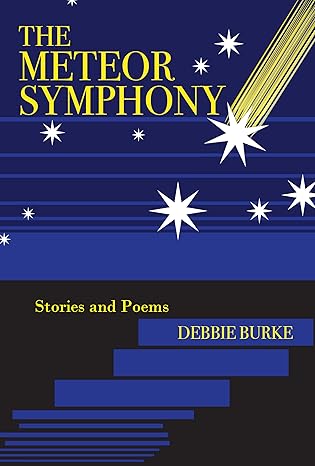
The Meteor Symphony is a colorful mix of short stories, poems, and microfiction, stitched together with music, humor, grief, and hope. It moves from tales of jazz musicians and stolen saxophones to intimate portraits of aging, love, heartbreak, and resilience. Some pieces lean into whimsy, others lean into sorrow, and many hover in the strange, honest space in between. The title story ties it all together with an imaginative search for a lost symphony, but the book itself feels like a symphony of voices, moods, and rhythms.
I enjoyed the range in this book. One page had me laughing at the absurdity of a sax heist, and the next had me sitting with the weight of a widow’s quiet grief. Burke writes with sharp clarity, yet there’s also a looseness in her storytelling that feels natural, like listening to a friend talk late into the night. I loved that she didn’t try to polish away the odd details. People misstep, conversations derail, feelings clash, and it all feels real. At times, the jumps between stories and poems felt a little jarring, but in a way, that’s what made it lively. The collection refuses to settle into one mood.
I also found myself connecting with her fascination with ordinary people. She doesn’t write grand heroes or villains, but flawed, funny, messy people. That resonated with me. Her style is direct but not cold, and she doesn’t shy away from emotions. Some of the poems hit me harder than the stories, brief as they were, because they carried that distilled punch of truth.
I’d say this book is best for readers who like variety, who don’t mind skipping from lighthearted banter to heavier reflections, and who enjoy the intimacy of short-form writing. If you’re open to being surprised, amused, and sometimes gutted all in one sitting, Burke’s collection is worth your time. I’d recommend it to anyone who loves music, who has wrestled with family, or who has ever paused at sunset and felt the ache of beauty and loss in the same breath.
Pages: 114 | ASIN : B0DTJ37FVK

The Shackles of Time
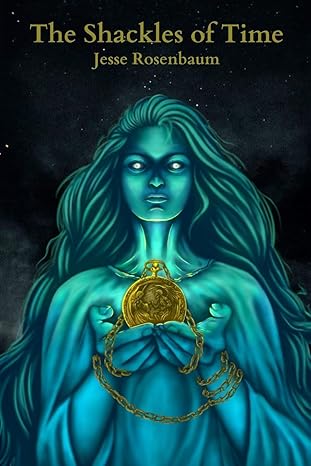
Jesse Rosenbaum has an extraordinary knack for storytelling that feels electric and fresh. The Shackles of Time is a wild ride through a kaleidoscope of twisted realities, blending horror, sci-fi, and suspense. But it’s not just the genres that make this collection shine. It’s the way Rosenbaum pulls you into the scenes. Every moment unfolds vividly, almost like you’re watching a gripping movie play out in your mind.
The stories grip you with their intensity and originality. In “Eighty-Six,” Carmen grapples with her haunting past inside a desolate diner where the relentless rain seems alive with secrets. Then there’s “Downtime,” where time freezes mid-chaos, leaving you questioning what you’d do in such an unthinkable moment.
Rosenbaum doesn’t just tell tales; he throws you curveballs that leave your mind racing and your heart pounding. What truly sets this book apart is the characters. They feel raw and real. Carmen battles guilt and trauma, while Jankowski wrestles with a boss’s arrogance in a haunted theater basement. Their flaws make them human, their fears make them relatable, and their resilience makes them unforgettable. These are people you feel like you know.
The book’s atmosphere is an artful blend of retro and modern. It channels the eerie charm of The Twilight Zone but wraps it in today’s relatable complexities. Rosenbaum’s pacing is also excellent. He builds tension like a DJ holding the beat just before the drop, keeping you hooked until the final, unexpected twist.
If you love stories that challenge your mind and stir your emotions, The Shackles of Time is a must-read. Jesse Rosenbaum creates immersive experiences that linger with you long after the last page.
Pages: 306 | ISBN : 978-1304544285
Twists and Turns
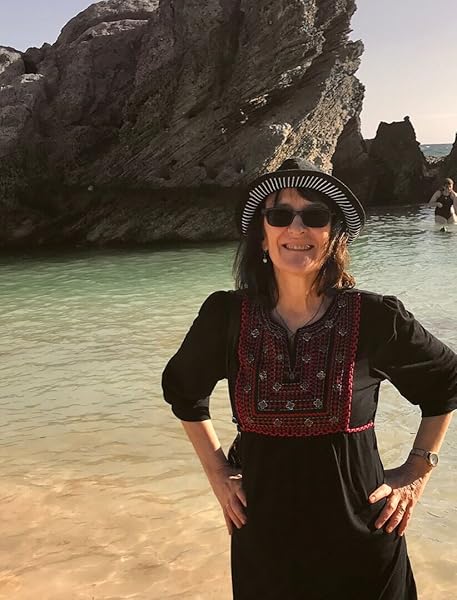
Once Upon a Time Machine is a dazzling anthology of short stories that traverse genres, from time travel to alien encounters, with themes ranging from heartbreak to whimsical absurdity. What was the inspiration for this collection of short stories?
I am inspired by everyday life. Is there anything more absurd than that? Some of my ideas come directly from weird news stories, while others are just continuations of something that happened to me during the day. For example, in the story “The Mystical Rock,” Annie trips on a rock and it changes her luck. That story was hatched the day I tripped on a mangled coat hanger and felt lucky not to be injured.
What draws you to the genre of speculative fiction and makes it ripe for you to write such great short stories in it?
When I was seven years old, I watched my first episode of Star Trek and was immediately hooked on science fiction. I was fascinated by the idea of time travel, aliens, and visiting different worlds. I then began watching The Twilight Zone and was mesmerized by the brilliant stories, and excited by all the twists and turns each episode would take. When I began to write, it felt only natural to write about the things I loved.
What story in the collection did you have the most fun writing?
This is a very hard question. It’s almost like asking which one of my children I have the most fun with. Truthfully, I had fun writing all of the stories, even the serious ones. Two of my quirkier stories, “The Pet from Outer Space” and “Necessary Exclusion” were particularly fun because I actually laughed out loud as I was writing them.
Is this the first book in the series? If so, when is the next book coming out and what can your fans expect in that collection?
Not a series, but there will be a new collection of short stories entitled Twice Upon a Time Machine, which I hope to get started on early in the next year.
Author Links: X (Twitter) | Website | Amazon
Once Upon a Time Machine is a journey through the eerie and enchanting, where ghosts linger, aliens visit, and time itself is a plaything. A collection of speculative fiction shorts from author Peggy Gerber, each page is an invitation to step into a world where the ordinary collides with the extraordinary. Prepare to be enchanted, unsettled, and thoroughly entertained…because we could all use a little magic in our lives.


