Blog Archives
Preparation and Perfectionism

Unstuck digs into the everyday mess of self-sabotage and shows how it hides in fear, doubt, old stories, and protective habits that keep us spinning in place, rather than providing readers with practical tools to build new habits. What inspired you to write Unstuck?
Unstuck was inspired by watching capable, self-aware people repeatedly blame themselves for patterns they didn’t choose. I kept seeing the same frustration show up in different forms, like overthinking, hesitation, perfectionism, and a constant sense of starting over. Most of these people weren’t lacking insight or intelligence. They were responding to fear in ways that once made sense but no longer served them. I wrote Unstuck to explain that experience clearly and to offer practical tools that help people move forward without shame, force, or pressure.
You emphasize that self-sabotage is not a personal flaw. Why is that reframe so important?
Because when people see self-sabotage as a flaw, they respond with self-criticism, and self-criticism almost always strengthens the pattern. The behaviors we call self-sabotage are usually protective responses shaped by fear, conditioning, and past experience. Reframing them this way allows people to work with their nervous system instead of fighting it. Once someone understands that their reactions are learned rather than broken, change becomes something they can practice instead of something they feel judged for.
What patterns do you see most often in people who feel “stuck”?
The most common pattern is overthinking as a form of protection. People delay action while searching for certainty, replay decisions to avoid risk, or use preparation and perfectionism as a way to stay safe. I also see avoidance disguised as productivity and a harsh inner dialogue that erodes self-trust over time. These patterns are subtle, which is why awareness and repetition matter more than dramatic insight.
What does “being unstuck” look like long-term, not just in a breakthrough moment?
Long-term change looks quieter than people expect. Being unstuck means noticing fear without letting it decide, responding instead of reacting, and choosing smaller, steadier actions that build trust over time. That’s also why I created the UNSTUCK Workbook as a companion for readers who want help applying the ideas consistently. The goal isn’t a single breakthrough. It’s learning how to practice awareness, regulation, and follow-through in everyday situations so progress holds.
Author Links: GoodReads | Website | Amazon
You may understand your patterns. You may have read the books, tried the advice, and promised yourself you would “do better next time.” And yet the same cycle keeps repeating. Not because you lack discipline or ambition, but because your mind is defaulting to old protective responses that no longer fit the life you are trying to build.
If you have ever asked yourself why you keep getting in your own way, this book offers a clear, compassionate explanation. You are not broken. Your brain is doing what it learned to do under pressure, fear, and uncertainty.
Built around the A.I.R.™ Method, UNSTUCK helps you recognize self-sabotaging habits as conditioned responses rather than personal failures. Instead of forcing motivation or relying on willpower, the book teaches you how to notice patterns early, interrupt anxiety spirals, and respond with steadier, more intentional action.
Inside, you’ll learn how to:
identify hidden forms of self-sabotage like overthinking, avoidance, perfectionism, and harsh self-talk so you can stop repeating them automatically
calm the inner critic and regulate emotional reactions so fear no longer drives your decisions
rebuild confidence through small, repeatable actions so progress feels sustainable instead of exhausting
create emotional safety around change so growth no longer triggers shutdown or self-doubt
move forward consistently even when motivation fades or pressure increases
Rather than chasing breakthroughs, UNSTUCK focuses on progress that holds. Through practical psychology, real-life examples, and guided reflection, the book shows how to shift from self-protection to self-trust without pretending, performing, or becoming someone else.
Readers and editorial reviewers have noted the book is grounded, emotionally intelligent approach, highlighting its focus on awareness, clarity, and steady change rather than pressure-driven transformation.
UNSTUCK is especially well suited for people who:
feel stuck in cycles of overthinking or fear
know what they want but struggle to follow through
are tired of starting over and blaming themselves
want calm, durable confidence instead of temporary motivation
This is not a book about fixing yourself.
It is about removing the internal resistance that has been blocking who you already are.
If you’re ready to stop restarting and start moving forward with clarity, stability, and self-trust, UNSTUCK offers a grounded path forward.
Read today and begin building progress that lasts.
Unstuck: Break The Cycle of Self-Sabotage and Rewire Your Mind for Lasting Confidence


Unstuck digs into the everyday mess of self-sabotage and shows how it hides in fear, doubt, old stories, and habits that feel protective but really keep us spinning in place. The book moves through patterns like procrastination, perfectionism, avoidance, and negative self-talk, and ties them back to emotional roots that often come from childhood, comparison, or unspoken beliefs about worth. It blends stories of people like Jamal and Elena with practical tools, reflection prompts, and gentle coaching. The focus stays on helping readers slow down, notice their patterns, and use small steps to build new habits that create steady change.
The writing comes across warm and welcoming, almost like a therapist talking to you over coffee. Sometimes the author repeats concepts, yet that repetition slowly sinks in and makes the ideas feel doable. I appreciated the steady reminder that self-sabotage is not a personal flaw. The book explains this in clear language that feels comforting. Some sections linger on similar examples, but the message that change begins with awareness feels powerful. I liked how the author encourages tiny actions rather than dramatic reinventions. It made me relax into the process rather than brace for homework.
What stood out most was the emotional honesty of the stories. Seeing Elena wrestle with success and Jamal doubt his own worth made the ideas feel grounded. It stirred up a mix of hope and discomfort in me. I caught myself thinking about the ways I shrink from opportunities or talk myself out of progress. The book made those habits feel normal, which softened the shame. Then it nudged me to look at them more closely. Some tools felt simple on the surface, but when I tried them, I felt that surprising spark of relief that comes from naming things I usually avoid. I enjoyed that mix of calm guidance and real challenge. It made the reading experience feel personal.
By the end, I felt encouraged rather than overwhelmed. The message lands with clarity. You can grow at your own pace. You can take tiny steps and still move forward. If you tend to hesitate, overthink, or talk yourself down, this book will likely resonate. I would recommend Unstuck to anyone who keeps circling the same goals and wonders why progress feels slippery. It would be especially helpful for young professionals, creatives, and anyone who feels tangled in fear or doubt. The book offers compassion and direction without pretending that change happens overnight.
Pages: 125 | ASIN : B0G3XKYSTH

The Biology of Trauma: How the Body Holds Fear, Pain, and Overwhelm, and How to Heal It

Dr. Aimie Apigian’s The Biology of Trauma is a deep and accessible exploration of how the human body carries and expresses trauma. Drawing from neuroscience, cellular biology, and her personal story, Dr. Apigian maps out how overwhelming experiences don’t just live in memory; they settle into our tissues, our immune system, and even our metabolism. The book blends science with narrative as it explains how trauma develops, how it hides in plain sight, and how we can repair the body’s systems to return to health. Structured around three parts, how the body experiences trauma, how it holds it, and how it heals, it moves from hard science to compassionate, practical guidance.
Reading this book felt like walking with someone who understands both the science and the human cost of trauma. I found Dr. Apigian’s honesty refreshing; she doesn’t write from a place of distance. Her story about parenting her adopted son, Miguel, and discovering her own buried trauma brings warmth and credibility to the science. The writing is clear and often tender. She explains complex topics like the freeze response or mitochondrial dysfunction in a way that feels personal, not clinical. At times, I could feel the ache behind her words, the exhaustion, the compassion, the desire to make sense of why our bodies sometimes betray us. That emotional current kept me turning pages, even when the material was heavy.
The sheer amount of biology might overwhelm readers who expect a lighter self-help tone. Yet I admired how Dr. Apigian stayed grounded. She doesn’t chase quick fixes or spiritual clichés. Her approach to healing, starting with safety, then rebuilding physiological regulation, feels practical and deeply humane. The book made me notice my own reactions, my patterns of shutdown or tension, and see them not as flaws but as biological strategies. That realization was oddly comforting.
I’d recommend The Biology of Trauma to readers who want more than inspiration; they want understanding. It’s perfect for therapists, healthcare workers, and anyone who senses their body has been carrying a story their mind can’t name. It’s not a breezy read, but it’s worth the time. Dr. Apigian gives us science wrapped in empathy and reminds us that healing isn’t just possible, it’s biological.
Pages: 320 | ASIN : B0D1S92WXY
Connecting the Dots

Girl, Groomed is a raw and unflinching memoir that traces your childhood experiences of grooming and abuse at a horse stable, and the long, painful process of understanding how that past shaped your adult life and relationships. Why was this an important book for you to write?
I wanted to offer what I have learned personally and professionally about the importance of lining up with and healing from past trauma. I chose to use my own story to encourage readers that it is only through walking directly into the painful places that we can heal ourselves.
What were some ideas that were important for you to share in this book?
The path towards reclaiming our lives is through an understanding of how trauma continues to impact ourselves and others. This shows up in many forms, but through an awareness of this, we gain the agency to decrease our reactivity and defensiveness that are constricting byproducts. This, in turn, gives us more choice and liberation over our lives going forward.
What was the most challenging part of writing your memoir, and what was the most rewarding?
Writing my memoir required me to delve back into memories that I had disconnected from. The process of re-experiencing what I had fractured off was both painful and healing. After all, we can only heal from what we can accurately name. Connecting the dots of my life helped me integrate and reclaim my story.
What do you hope is one thing readers take away from your story?
One takeaway is that trauma informs our lives, but it doesn’t define who we are or who we are becoming.
Author Links: GoodReads | Website | Instagram | Amazon
Raw and riveting, Girl, Groomed is seasoned psychotherapist Carol Odell’s evolving story of deepening her understanding of how the crisis she blindly imposes on her marriage is rooted in her own history of sexual abuse and violence at the hands of a predatory horse trainer who, for far too much of her young life, held all the reins. Chapters toggle back and forth between scenes of her childhood growing up jumping horses on the show circuit in Virginia and the therapy sessions she later undergoes as an adult sitting in “the other chair.”
Using her own journey, Carol demonstrates in this insightful memoir how unintegrated trauma limits us and our connection with others—and how the work of uncovering and reintegrating “what we do with what happens to us” can become the very source of our liberation.
I Wasn’t Alone
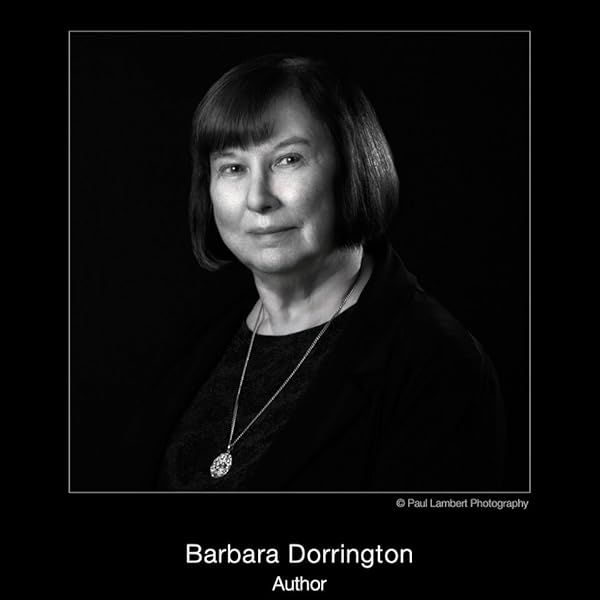
The Trauma Monster shares your story of looking into the unsolved murder of your childhood friend, and through the investigation and with the knowledge you gained as a trauma therapist, helped your community heal. Why was this an important book for you to write?
The Trauma Monster was never just about writing a book. I was not a writer by profession but I decided to learn to write so I could help others deal with longstanding trauma. It was also about breaking a silence that’s hung over my community, and over my own life, for decades. I grew up with unanswered questions, carrying the weight of childhood loss, violence, and unresolved grief. When someone you cared about is murdered, as my first crush, Scott Leishman, was, and the case goes unsolved, the trauma doesn’t end. It lingers, it shapes one, and it shapes the town around each of us that was affected.
This book was my way of finally giving voice to the pain that was hidden for too long. But it’s also a book about hope. It is about how, even after decades, people can come together to seek truth, to heal, and to demand answers. Writing The Trauma Monster allowed me to honour the victims, amplify the voices of those who were silenced, and show others that healing is possible, even when justice feels out of reach.
What were some ideas that were important for you to share in this book?
There are three important ideas that I hoped my book described. First, I wanted people to understand that trauma doesn’t just belong to the families of victims, it eventually ripples through entire communities. When a murder goes unsolved, it leaves behind more than grief. It leaves fear, silence, and shame. I saw that in London, Ontario, and I carried it personally with me for decades.
Sometimes, families didn’t want the investigation stirred up again. They were grieving in their own way, or protecting themselves from more pain, which is their right. But that silence didn’t stop the hurt, it just pushed it underground for everyone else. Friends, classmates, shopkeepers, neighbours and others, we all were left with unanswered questions, and nowhere to put their pain.
Second, I wanted to show that unsolved murders aren’t just cold files, but actual human stories. The victims weren’t statistics; they were kids I went to school with, the boy I once had a crush on. They had dreams, fears, favourite songs. Their stories deserved to be told, and with dignity, with truth.
Third, I wanted people to know that healing is possible, but it starts with facing the past. It starts with stories being told, even the uncomfortable ones. Even when justice feels impossible, we can still reclaim our voices. Silence may have protected some, but it also trapped many others. It’s time for the silence to end.
What was the most challenging part of writing your book, and what was the most rewarding?
The most challenging part of writing The Trauma Monster was carrying other people’s pain, and recognizing my own pain, at the same time. I spent years listening to stories that were buried for decades, including stories of violence, fear, and loss. Some of those were my own stories too. There were moments I’d sit at my writing desk and think, I can’t do this because it’s too heavy, too heartbreaking. But I also knew that staying silent wasn’t an option anymore, not for me, and not for the community.
Another challenge was navigating the delicate reality that not everyone wanted these stories reopened. Some families, understandably, wanted the past to stay buried. I had to find a way to respect that, while still standing up for the friends, classmates, neighbours, meaning the rest of us who’d been living with unanswered questions and hidden trauma all this time.
The most rewarding part, without question, was seeing what happens when people finally feel heard. I’ve had survivors, classmates, even complete strangers tell me that reading The Trauma Monster made them feel less alone. For the first time, their fear, their grief, even their anger, was seen, validated and understood. That’s why I wrote it. Not to stir up pain for the sake of it, but to remind people that silence doesn’t heal, but truth, connection, and shared stories can.
How has writing this book impacted or changed your life?
Writing The Trauma Monster changed my life in ways I didn’t expect. It gave me back my voice and not just as an author. It gave me a way to tell my own story as someone who grew up carrying unanswered questions and unspoken grief. For decades, I thought I had to live with the silence. I thought that’s just how it was because people didn’t talk about these murders, and the pain stayed tucked away in the corners of our lives.
But the more I researched, the more I listened to other people’s stories, the more I realized how many of us had been carrying the same weight. Writing this book showed me that I wasn’t alone. More importantly, I didn’t have to be quiet anymore.
It also connected me with people I never would have met otherwise, including other survivors, families, citizen sleuths, even people from my own past I lost touch with. Some of them shared their memories for the first time in 50 years. That’s powerful.
Most of all, it reminded me that healing doesn’t come from pretending nothing happened. It comes from telling the truth, even when it’s messy, even when it’s hard. Writing this book helped me face my own trauma, honour the people we lost, and finally believe that it’s not too late for change or for answers, or for a community to begin healing together.
Author Links: GoodReads | X | Facebook | Website
The Trauma Monster: A Healing Journey through the Untold Cold Case Stories Of One Ontario Community

The Trauma Monster is a gut-wrenching yet hopeful book that weaves together personal memoir, true crime investigation, and trauma therapy insights. Set in Ontario during the 1960s and ’70s, the book begins with the unsolved murder of the author’s childhood crush, Scott Leishman. That loss becomes the starting point for a wider exploration into a series of cold cases that haunted the community and left lingering emotional scars. Through firsthand accounts, interviews, and years of therapeutic work, Dorrington tells the stories of survivors, people who were children during those years and never had a chance to speak. At its heart, the book is about the long reach of trauma, the silence it breeds, and the healing that comes when people feel safe enough to speak.
There’s a raw honesty to Dorrington’s voice that pulled me right in. She doesn’t write from a distance. She’s not an outsider poking around in someone else’s pain. This was her town. These were her friends. She opens herself up on every page, and that openness gives the book its power. The writing is simple, which works here. No need for flowery prose or academic terms. At times, the book left me breathless. She paints the ’60s in vivid detail. The crime scenes aren’t sensationalized, but they do haunt. I kept thinking about the kids who didn’t come home. The way Dorrington connects personal grief with collective trauma is what makes this more than a true crime book.
What surprised me most was how tender it is. For a book about murder and silence and shame, there’s so much care here. Dorrington is a trained trauma therapist, and it shows, not in technical talk, but in how she handles each story with compassion. She gives voice to people who were never asked to speak. Her inclusion of art, storytelling, and even a workbook makes the book not just a record but a tool for healing. I found myself thinking about my own losses, my own unspoken stories. That’s the kind of impact this book has. And still, she doesn’t tie anything up neatly. She’s not pretending these wounds close easily. The monster, as she calls it, never disappears. But it can shrink. It can be drawn, faced, and named.
This book is not just about old murders or sad memories. It’s about witnessing. About telling stories that were hidden too long. I’d recommend The Trauma Monster to anyone who’s been through something hard and is still trying to name it. It’s not an easy read, but it’s a comforting one. If you like true crime with heart, if you’ve felt unseen or unheard, or if you’re trying to heal, then this book is for you.
Pages: 297 | ASIN : B0F7D6SCL8

Our Deepest Roots: Navigating Past Trauma to Build Healthier Queer Relationships
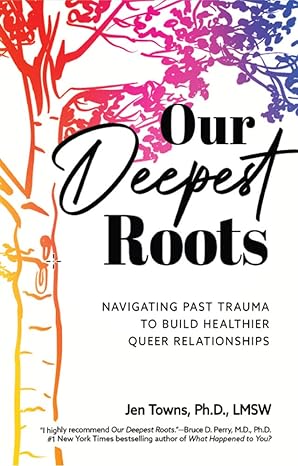
Our Deepest Roots is a brave and illuminating book about how trauma—especially the kind rooted in queerness and relational wounds—intertwines with the mess and beauty of love. Dr. Jen Towns doesn’t just discuss trauma in the abstract. She lays bare her own experiences, not as case studies or distant theory, but as raw, beating-heart truth. Through her lens as a queer trauma therapist and partner, she unpacks how our “parts” (the internal voices, reactions, and protections we develop) shape, distort, and sometimes save our relationships. She explores this through concepts like attachment theory, the Internal Family Systems (IFS) model, and a blend of hard-earned wisdom from both the therapy room and the kitchen table.
Reading this as a gay man who’s wrestled with his own ghosts, I felt seen in a way that knocked the wind out of me. The opening scene where Dr. Town’s wife (also a trauma survivor and therapist) writes about storming out of a fight, numb to her partner’s sobbing felt uncomfortably familiar. That terrifying push-pull of needing space but fearing abandonment? Yep. Lived it. And the self-loathing inner monologue she transcribes after the fallout was brutally spot on. It’s one thing to read about trauma reactions. It’s another thing entirely to read someone gently dissect their own and realize, oh god, that’s me too.
What sets this book apart is the refusal to shy away from the complicated, layered ways trauma shows up in queer love. Towns doesn’t romanticize healing, and she doesn’t offer cheap fixes. Instead, she walks us through her fights, her therapy, her missteps, and the hard-won tools she now teaches. When she talks about “fawning” in queer identity—where we perform caretaking to stay safe—it hit like a freight train. She describes fawning not as a flaw but as a strategy, born of survival.
Towns also brings a refreshingly down-to-earth voice. It’s not clinical or cold. It’s like a trusted friend walking with you, swearing a little, crying with you, laughing with you when you realize, yes, we’re all a little messed up but still deeply worthy of love. And her exercises, like the PEACE TALKS framework and the “Zhuzh” reminders, are actually doable—not just filler. She brings everything back to the body, the relationship, and the now. It’s healing work you can feel.
I recommend Our Deepest Roots wholeheartedly, especially to my fellow queer men who grew up believing we had to shrink to be loved, who still brace for rejection when things get close. This book isn’t just for therapists or couples in crisis—it’s for anyone tired of repeating old patterns and ready to face themselves with honesty and tenderness. It’s raw, smart, sometimes painful, and deeply human. And if you’re anything like me, you’ll find parts of yourself on every page.
Pages: 268 | ASIN : B0C6FRBKN2
Mental Health Crisis
The Stress is Gone Method helps readers navigate stress, anxiety, and trauma via emotional awareness and exercises centered around self-reflection. Why was this an important book for you to write?
I feel this material is so important right now because effective mental health care is so hard to find. The mental health crisis is compounded by stigmas, waiting until the last minute to ask for help, long wait times before appointments are available, etc. Personally, I have seen thousands of clients quickly improve their mental health by learning how to address problems from the inside, as opposed to searching for solutions on the outside.
How much research did you undertake for this book, and how much time did it take to put it all together?
This book is a culmination of the past 25 years of professional experience in the field. The techniques are time tested; first by myself, and second by my clients and students. I now train a broad range of mental health professionals, school guidance counselors, and suicide prevention specialists in my methods. The reach of these techniques continues to grow.
Why was it important for you to include a workbook for your readers?
Often I’m asked, “Why did you write a workbook?” It’s because the human race has a lot of work to do. Another book to read and not interact with, not engage with, that doesn’t help you explore yourself, would be just another book on the shelf. But something that causes a person to look deep inside themselves, and then guides them through practical steps to reduce their stress and anxiety, I felt would be my best service to humanity.
What is one thing you hope readers take away from the advice you offer in The Stress is Gone Method?
I hope readers take away a few things; (1) they can take control back from stress if they focus on what’s happening inside their body, (2) they can release anxiety and emotional pain, and heal traumatic memories, and (3) they can find all the answers they seek inside themselves in deep meditation.
Author Links: GoodReads | Instagram | Facebook | Website | Amazon
• Traumatic Events
• Caring for Elderly Parents
• Work, Finances, or School
• Caring for a Child with Special Needs
• Out-of-Control Family Situations
• Abusive or Narcissistic Relationships
• Personal or Family Health Crises
• Generational or Ancestral Trauma
• Loss of a Loved One
• Legal System or Medical Trauma
• Exhaustion from Placing Everyone Else’s Needs Before Yours
• Being Raised by Abusive, Addicted, or Neglectful Parents
This book allows stress to enlighten us as triggers become teachers and self-love fills the hole that trauma left in our soul.


