Blog Archives
Revived


Barbara Avon’s Revived is a haunting and deeply emotional psychological horror novel that explores love, trauma, and the supernatural through the eyes of a tormented couple, Cassie and Steven. Set initially in a gloomy, century-old house with a chilling past, the story quickly spirals into something far darker when Steven dies in a tragic accident, only to be revived. What follows is a slow, dread-soaked descent into psychological chaos as Steven’s return blurs the lines between life and death, love and obsession, memory and madness. Through atmospheric prose and shifting perspectives, Avon crafts a tale where the scariest monsters might just be the ones we carry inside.
To be honest, this book shook me. The writing is sharp and poetic. Avon doesn’t flinch from digging deep into the murky waters of mental illness, trauma, and grief. Her characters feel painfully real, especially Cassie, who’s written with a rawness that made my chest tighten. At times, the prose borders on lyrical, and that contrast—beauty laid over horror—makes it all the more unsettling. I appreciated that this wasn’t a traditional horror story with jump scares. Instead, it’s a slow burn, a psychological unraveling that lingers in your head long after the last page. Avon’s portrayal of intimacy, both emotional and physical, walks a razor’s edge between sensuality and vulnerability, adding a deeply human layer to the supernatural tension.
But here’s the thing: this book isn’t easy. It’s uncomfortable. Disturbing. It’s full of trauma that’s never neatly resolved. The ambiguity can be frustrating—what’s real, what’s hallucination, what’s supernatural—but I think that’s the point. You’re meant to feel off-balance. Still, I had moments where I felt emotionally wrung out and had to step away. That said, I kept coming back. The pacing could be a little uneven at times, and there’s a surreal quality that might not work for every reader. But if you give it your trust, it pays off with a visceral, deeply affecting experience.
Revived is not for the faint of heart. It’s for readers who want more than a thrill—they want to be unsettled, to feel something. I’d recommend it to fans of psychological horror who aren’t afraid of stories that peel back skin to reveal the mess underneath. If you like Shirley Jackson, early Stephen King, or Gillian Flynn’s darker narratives, this book might just crawl under your skin in the best ways.
Pages: 141 | ASIN : B09WZDDPVM

The Haunting of Wellsley Manor
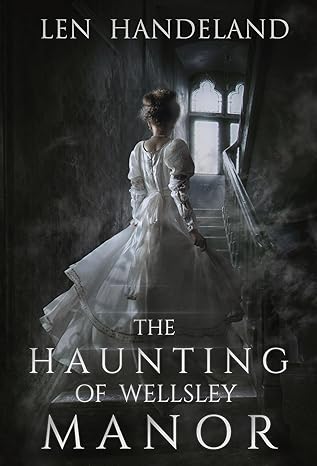

Len Handeland’s The Haunting of Wellsley Manor is a gothic horror novel that follows William Martens, a young man seeking to escape the dead-end monotony of his hometown by attending Cornell University. But his aspirations are soon entangled in a series of ghostly encounters at his grandfather’s decaying estate in Ithaca. As he settles into his new life, William is haunted—literally and emotionally—by family secrets, unresolved trauma, and spectral figures that begin to cross the veil between the living and the dead. The deeper he digs into the house’s eerie history, the more he realizes that some legacies come with strings attached and blood on their hands.
I was drawn in from the very beginning. The dialogue felt natural and raw—sometimes even painfully real, especially during the tense moments between William and his bitter, emotionally distant father. There’s something incredibly satisfying about a story that doesn’t rush. The buildup is slow and deliberate, and that pacing works here. It lets you soak in the atmosphere—the creaking floors, the dusty corridors, the strained silences. The house itself becomes a character, and not just a spooky backdrop. What Handeland nails is the eerie tension between generational pride and inherited guilt. His prose has this honest, almost nostalgic warmth when depicting William’s relationship with his grandfather, Isaiah. Those moments hit me hard.
Sometimes the writing dipped into the overly descriptive, and while the story’s emotional arcs were compelling, the scares occasionally felt more atmospheric than truly chilling. I didn’t mind that too much—this is more The Sixth Sense than The Conjuring—but readers expecting non-stop frights may be left wanting. Still, the dream sequences and ghostly children were deeply unsettling in a quiet and lingering way. The mirror scenes especially gave me the kind of slow-building dread I love in horror fiction.
I’d recommend The Haunting of Wellsley Manor to anyone who enjoys a slower burn and emotionally rich storytelling. It’s a ghost story wrapped in a coming-of-age tale, laced with regret and second chances. If you liked The Others or even older Stephen King novels like Bag of Bones, you’ll probably enjoy this. It’s not just about ghosts. It’s about how the past clings to us, follows us, and sometimes, if we’re not careful, swallows us whole.
Pages: 236 | ASIN : B0DTBZNRV9
A Lack of Closure

Born of Bombs and Bullets follows a prison psychologist who relocates to Belfast following a brutal murder only to find himself deep within unrest tied to the IRA. What was the inspiration for the setup of your story?
While visiting Belfast, Northern Ireland, a few years ago, I took a political history tour to learn about The Troubles. Although that 30-year conflict supposedly ended with the Good Friday peace agreement in 1998, signs of lingering tension between the Catholic and Protestant communities were everywhere, especially in West Belfast.
Massive peace walls separated the two communities. I saw dozens of murals commemorating attacks and the people who died on both sides—ever-present reminders of the horror and grief and trauma that lasted an entire generation. There were even IRA stickers on street signs warning people not to cooperate with the police. I wondered what it’s like to live with that sort of constant strain. Afterward, when I started reading daily news reports from Belfast, I sensed a lack of closure on both sides of the conflict that haunts people today.
Imaginary characters began to form in my mind, and soon I gave them life through words—with a bit of history mixed in for context. To maintain objectivity, though, I decided to write the story through the eyes of an American psychologist. But first I needed to get him to Belfast, so that murder in the first chapter served as a catalyst.
What kind of research went into putting this book together?
A lot! But first, let me say the characters and the story are entirely fictional. Still, I knew from the beginning I wanted readers—especially here in the States, where The Troubles are less understood—to walk away with an accurate understanding of historical events. So I read countless histories and old press accounts, studied period photographs, and watched a lot of documentaries about The Troubles.
They have different car models and candy brands, for example, in the UK, so I had to research those details, too, to make the descriptions as authentic as possible. I also subscribed to Belfast news media and read the current daily headlines for a couple of years—that really helped me grasp the lingering effects of The Troubles.
At the same time, I wanted to acknowledge the psychological impact of such a prolonged and pervasive conflict. So I researched Northern Ireland’s modern behavioral health trends and reflected those themes in the characters. The descriptions of combat equipment and tactics—then and now—are as accurate as I could make them, as well. I really wanted the story to feel genuine, even though it’s entirely made up.
The hardest part, though, as an American, was trying to master the Northern Irish idioms and accents in the dialogue! I watched a lot of Northern Irish movies and television to get a handle on that—and I apologize now for any times I got it wrong! I’m sure a few “Americanisms” slipped past me.
What elements do you feel are essential for creating a successful thriller?
For me, it boils down to tension, plot twists, and pacing. Conflict between the characters—and of course, setbacks—generates the tension. An ever-present sense of danger fuels it, too.
And plot twists keep the reader guessing and therefore engaged. But above all, in my opinion, the pacing has to be right. The action needs to move forward consistently at a good clip to keep the reader’s attention. Personally, I’m a big fan of short chapters with fewer words per page to promote a feeling of urgency.
Can we look forward to seeing a follow-up to Born of Bombs and Bullets soon? Where will it take readers?
Absolutely! There will be several more books in the series, but I don’t anticipate the next one until late 2026. My niche is travel-inspired thrillers, so the setting will be another country with a fascinating history. I’m presently choosing among Spain, Argentina, and Chile. Maybe your readers can help me decide?!
Author Links: GoodReads | Facebook | Website | Amazon
Psychologist Aaron Thornton is riddled with self-doubt after failing to stop a tragic incident at the American prison where he works. So when his wife, Claire, receives a job offer in her native Belfast, Northern Ireland, he sees a chance to start over by treating hardened criminals in Northern Ireland’s judicial system.
But Thornton’s work soon entangles him in the aftermath of ‘The Troubles,’ a brutal conflict that rocked Belfast for over thirty years. Charged with overseeing the release of the Irish Republican Army’s deadliest bomb maker, Thornton reignites smoldering feuds that threaten to consume him and his family in the flames of political violence.
Alongside a broad cast of characters who reflect the many facets and shifting allegiances of The Troubles, Thornton fights to heal long-standing hatred and prevent another tragedy. But can he save himself?
In the spirit of John le Carré and Graham Greene, writer David A. Dummer has created an everyman hero for our time, and with Born of Bombs and Bullets, a political thriller for the ages.
All June Left Behind
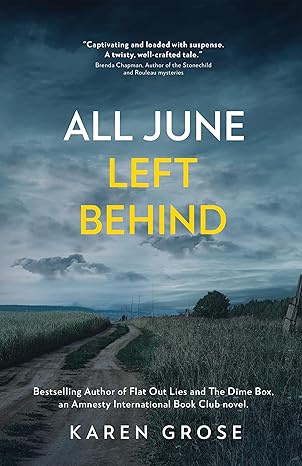
All June Left Behind is a tightly written, emotionally raw story about grief, justice, and secrets that won’t stay buried. It follows Ray Meadows, a weathered farmer trying to keep it together two years after his wife, June, was murdered. The man convicted of the crime is suddenly granted a new trial, cracking open old wounds and unearthing something far more explosive than Ray could’ve imagined, June’s entire past life. What starts as a tale of one man’s pain slowly peels back into a mystery that ties together mob connections, witness protection, and the terrifying thought that maybe, just maybe, everything Ray believed about his wife was a lie.
Ray’s narration is no-nonsense, full of grit, sarcasm, and painful honesty. Right from page one, you feel the weight he carries. That scene where he deletes the detective’s message and talks to his daughter while scrounging for a Pop-Tart is so ordinary, and yet you feel his dread simmering underneath. The writing doesn’t try to be fancy, which I loved. It’s plainspoken, sharp, and emotional when it needs to be. Ray’s grief isn’t pretty or poetic; it’s sweaty, stubborn, and full of denial.
What absolutely floored me, though, was the twist. I had to set the book down and just breathe. The pacing right before and after that moment was pitch-perfect. Karen Grose doesn’t overplay it. She lets Ray react in exactly the way you’d expect, confused, furious, heartbroken. There’s this moment where he’s locked in a cell, soaked in water from a busted faucet, completely unraveling. I could feel the walls closing in. That moment hit hard. And I liked that the book didn’t shy away from showing Ray’s worst sides, his temper, his stubbornness, his pride. It made him believable.
But maybe my favorite part was how Grose writes family. The scenes with Ray and his kids, especially Ryla, are full of tiny emotional jabs. The way they talk around June’s death, the worry in their voices when they think he’s spiraling again is all so layered. The characters felt lived-in, like people you’d meet in a small town diner or at the edge of a cornfield, holding a coffee and a thousand unspoken words.
All June Left Behind is a slow burn with a lot to say about love, anger, and how the past can knock you off your feet when you least expect it. It’s a story about trying to move on when you’re stuck in a loop of what-ifs. If you’re someone who likes character-driven stories with mystery baked in, this one’s for you. It’s got heart, it’s got bite, and it doesn’t let go.
Pages: 324 | ASIN : B0DYL1RYW6
Dream-Logic Terror

The Dream Killer follows a man who is horrified to discover the body of a missing child prodigy in his basement. What was the inspiration for the setup of your story?
The Dream Killer came straight out of a recurring nightmare I’ve had for years—decades, actually. The first time I had it was in the early ‘90s when the JonBenét Ramsey case was all over the news. I was about ten, so I didn’t really understand what had happened, just that a little girl had been found dead in a basement and that nobody knew who did it. I guess my brain took that fragment of information and processed it into a nightmare.
In my dream, I found JonBenét’s body, and somehow, I knew I was the one who killed her… but I had no memory of doing it. My parents knew too, and they helped me cover it up—hiding the body, making sure no one found out. But the police were onto me, questioning me, circling closer. The overwhelming feeling was this deep, gnawing dread. I was free… but not really. It was just a matter of time before the other shoe dropped before I was exposed and my whole life was over.
And this nightmare kept coming back. It wasn’t always JonBenét (I’m not a total psychopath), but the core of it was the same: I’d find a body, I’d know I was responsible, and the dream was all about covering it up, not getting caught, and feeling the crushing guilt of having done something unspeakable. I’d wake up from these dreams still carrying that feeling—sometimes it would take me ten, twenty minutes to shake it off and realize, Oh. Right. I didn’t actually kill anyone.
Then, a couple of years ago, I had the nightmare again… but this time, it didn’t stop. It evolved. It played out past the usual cycle of guilt and cover-up, into an Act 2 and an Act 3. And in this “sequel nightmare,” I finally got answers: Who am I? Who is the girl? Why was she killed? What does it all mean? I woke up from that version of the dream so excited because I love movies and books that feel like nightmares stuff like War of the Worlds (Spielberg’s version), Eraserhead, The Trial, The Metamorphosis. I’d always wanted to write something that captured that kind of dream-logic terror, but whenever I tried to force it, it never entirely worked. It always felt like… trying too hard.
But with The Dream Killer, I didn’t have to force anything. I’d say 80% of it is the nightmare. I just translated it into a novel. It’s pure id, ego, and superego—raw and unfiltered. And I finally managed to create something that feels like nightmare fuel… because it is nightmare fuel. It comes straight from that part of me.
Which of your characters is most similar to you or to people you know?
Ethan is kind of a cipher for the everyman—he’s technically me, in the sense that he’s the dreamer who finds the body. He spends the story constantly bewildered by the shifting, surreal world around him, which is exactly how I felt in those nightmares.
Sophia Labelle, on the other hand, is this rebellious, film-school-dropout-turned-director—a sort of splatterpunk filmmaker. She came from this idea I had back when I was in film school. I used to always say, “Where’s the female Tarantino? I bet if there was one, people would lose their minds over her movies.” And this was before Julia Ducournau and Coralie Fargeat came onto the scene, so Sophia is kind of my imagined version of that—a cocky, fearless filmmaker who makes these ultra-violent, no-holds-barred films. She doesn’t compromise, and she doesn’t care who she offends.
Was there a risk you felt you took in this book? With your characters or with the plot?
The biggest risk I took with this book was trusting that readers would connect with its subconscious, dreamlike logic. It operates on nightmare rules—things don’t always make immediate sense, but instead of holding the reader’s hand, the story asks them to just feel what Ethan is going through.
I really believe that if you go along with that experience, everything clicks into place by the end. There are plenty of clues dropped throughout, and if you’re paying attention, you’ll start to piece together what’s really happening. What I’m most proud of is that early readers have embraced that challenge. Instead of needing everything spelled out, they’ve leaned into the mystery, becoming detectives in their own right. And hopefully, by the time they reach the twist, it feels like this mind-blowing, cathartic moment that makes it all worth it.
Can we look forward to more books from you soon? What do you currently have in the works?
Right now, I’m working on a book called The End, which follows a man trying to make sense of his girlfriend’s suicide. It explores themes of the afterlife, and I’ve got it fully outlined—but there are still some missing pieces that I need to make it as strong as it can be.
Right now, I’m letting the idea marinate. I know it’s close, but I’m waiting for that spark of inspiration to bring everything together—especially in a way that truly cements it as a horror novel. That’s the missing piece. So for now, I’m just living with the idea, letting it evolve in the back of my mind until writing it feels inevitable.
Author Links: GoodReads | Instagram | Facebook | Website | YouTube | Amazon
His quest leads him to James LaRoche, a scientist who believed people could kill within their dreams. As Ethan unravels a global conspiracy, every clue ensnares him deeper, unveiling horrors beyond imagination. Welcome to… The Dream Killer.
The Dream Killer
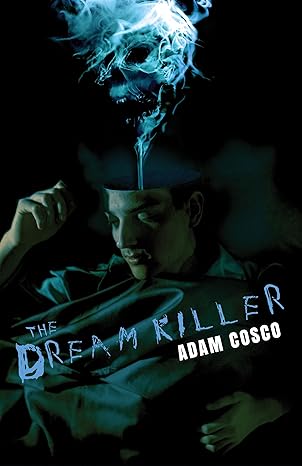
Adam Cosco’s The Dream Killer is a psychological thriller that hooks you from the very first sentence and doesn’t let go. The story follows Ethan Webman, a man whose ordinary life is shattered when he becomes entangled in the mysterious disappearance of a child prodigy, Mary Kay Redding. What begins as an eerie news report soon spirals into a waking nightmare as Ethan discovers her lifeless body hidden inside his own basement carpet. The novel expertly blurs the line between reality and paranoia, leaving the reader questioning what is real and what is part of some greater, sinister design.
Cosco’s writing is vivid and unsettling in the best way. His descriptions plunge you into the thick of Ethan’s growing dread, like the moment he first unrolls the carpet and sees a strand of blonde hair, a slow, horrifying revelation that made my stomach drop. The scene where his mother walks in, unknowingly asking for the same carpet, adds an unbearable tension, forcing Ethan and us to confront the unthinkable. There’s something cinematic about Cosco’s pacing, the way each revelation lands like a gut punch, pulling you deeper into the mystery.
The novel’s greatest strength is its psychological complexity. Ethan is a man drowning in uncertainty, not just about the crime but about himself. The way his past, his father’s illness, and his own isolation intertwine with the investigation creates layers of unease. When Detective Harris enters the picture, the novel takes on a suffocating quality, each interaction a game of cat and mouse where Ethan is the rat trapped in a maze he doesn’t understand. And the symbol, the triangle with three dots lurks at the center of it all, a haunting, ever-present mark of something ancient and unknown.
Cosco’s style leans into slow-burn suspense rather than explosive action, making every discovery feel earned rather than handed to the reader. Some might find the narrative’s dreamlike quality disorienting, especially as Ethan’s grip on reality loosens. But this is what makes The Dream Killer so effective, it lingers, crawls under your skin, and refuses to leave, much like the chilling final scene where Ethan begins to question whether he ever had control over his own actions at all.
The Dream Killer is perfect for fans of dark, cerebral thrillers like Gone Girl or The Girl with the Dragon Tattoo. If you enjoy stories where paranoia, conspiracy, and fractured identities collide, this book will keep you up at night. It’s the kind of thriller that makes you glance over your shoulder long after you’ve turned the last page. Highly recommended.
Pages: 326 | ASIN : B0DTMPDJXR
Twists and Turns

A Change in Destiny: Dark Suspicions follows an FBI investigator who loses his prime suspect and a key witness, causing him to turn his attention to the suspect’s wife, only she has an identical twin sister complicating matters. What was the inspiration for the setup of your story?
The inspiration for this setup on Book II is questions have been left unanswered from Book I.
What character did you enjoy writing for? Was there one that was more challenging to write for?
I loved writing the Boots brother characters. They are complicated as you discover at the end of the book. If any were more difficult it was Brian. His story became more involved as the story progressed.
I felt that there were a lot of great twists and turns throughout the novel. Did you plan this before writing the novel, or did the twists develop organically writing?
The twists and turns…some were planned others developed. As an author, you may be heading down one road with your thoughts and plans, and then a left turn comes up fast and takes you in another direction.
What will the next book in that series be about, and when will it be published?
I do not plan to write another book for this series, however; I did leave it open to a possible one. I will need to sleep on it.
I am working on a book of short stories, and a new paranormal comedy/cozy mystery series, and have plans for a thriller/horror novella.
There will be two audiobooks released sometime this year, Dark Suspicions and my novella It’s for the Best.
Author Links: GoodReads | X (Twitter) | Instagram | Website | Amazon
Charlie is not alone in the spotlight—her mirror-image twin, Dani, adds complexity to the case as a potential accomplice. Brian suspects the twins are concealing crucial evidence. However, their formidable legal defense team hinders any progress. Brian is forced to conceive a risky strategy to uncover a more profound layer of criminal activity. He will deceive those closest to him to discover the truth.
Meanwhile, Charlie and Dani plan to protect their secrets, forging ahead despite Brian’s probing. His relentless pursuit of justice teeters on the brink of an all-consuming obsession. Will his dark suspicions lead to dark consequences?
Stories of Abuse

Hollywood and Velvet is a gripping tale of fame’s seductive and destructive power, following a struggling actor and a faded starlet as they navigate a surreal, volatile bond in the heart of Beverly Hills. What was the inspiration for the setup of your story?
I was living in Cincinnati in 2013 and one of my favorite bands, The National, released an album called Trouble Will Find Me. I listened to that album obsessively and over the course of several months, the vibe of the album inspired a narrative of a young guy from Cincinnati who gets out of the military and takes the risk that I never did. He heads to LA on a whim and has some early success in the film industry but ultimately, gets consumed by it. The story has some psychosexual elements to it, so I put the manuscript on the back burner because I felt society wasn’t ready for it. In 2023, I was already living in Florida, but I had the opportunity to see The National live in Cincinnati and their entire set was the entire Trouble Will Find Me album. That concert was a surreal, creative catalyst for me. I went back to my hotel, opened the manuscript, and put the finishing touches on it through the night. Looking at the recent mainstream successes of psychosexual projects like The Handmaid’s Tale and Babygirl, I felt the time was right to release it.
The book offers sharp commentary on the entertainment industry. Was this drawn from personal experience or research?
I had the opportunity in my youth to participate in some film productions and I fell in love with the process. However, even as a teenager in the 80s, I was already aware that the path to being a professional actor leads to heartache 99% of the time so I ended up enlisting in the military after high school and later, pursuing some business ventures which fortunately, ended up giving me the freedom in my 40s to explore my creative endeavors. The narrative I developed for the story was based on a compilation of publicized stories of abuse as well as many that are still circulating throughout Los Angeles but haven’t been made public yet.
What were some themes that were important for you to explore in this book?
With the exposure of the abuse in Hollywood over the past several years, I have heard a lot of people blame the victims and wonder why they didn’t “just walk away.” That is an oversimplified perspective. When you dedicate your entire life to pursuing a dream, it’s unrealistic to expect someone to walk away from their dreams because of one disgusting person.
I also wanted to explore the complexity of sexual assault and why it is often not reported. It is a trauma that doesn’t come with a natural way to cope. It creates a plethora of emotions and, as we have seen in hundreds of cases, the blame often falls on the victim.
And, of course, I wanted to explore the addictive power of fame. Both of the main characters have had a taste and in their own ways, are seeking to recapture the feeling. Fame can be like a drug. Once you are addicted, you will crave it your entire life.
The dynamic between Velvet and Christian is tense and intimate. How did you approach writing their evolving relationship?
Velvet was the easier character to develop because of the nature of the story. I had some flexibility with her because the reader never really knows the real person. I actually love hearing readers’ retrospective analysis, contemplating which of Velvet’s actions were genuine, which were contrived to manipulate Christian, and which were performance. Christian was a bit more rigid. I had to allow his character to grow and evolve but always maintain his core personality and beliefs. Their relationship was complicated by Velvet’s complexity and constantly changing behavior. I had to carefully consider how Christian would respond to it. It was important to develop him the way I did because a much more assertive or impulsive person would walk away from the situation. Most readers figure out that he was chosen to be in Velvet’s scheme because of his personality.
Author Links: GoodReads | Facebook | Website | Amazon



 LITERARY TITAN