Blog Archives
Residual PTSD

The Meaning of Okay follows a woman healing from a sexual assault who meets a man that she connects with and wonders if she can heal enough to be open to a new relationship. What was the inspiration for the setup of your story?
I read lots of romance novels, and it seemed like a certain situation was underrepresented. I’ve read novels where the focus is the assault, but I haven’t found many where the residual PTSD is the focus. I wanted to show that women still struggling, consciously or subconsciously, can still find their happy ending.
Kennedy and Rhys are both looking to start over and heal from their pasts. Were you able to achieve everything you wanted with the characters in the novel?
I’ve received a lot of positive feedback about Dillon – more than I’ve received about Rhys. Also, Rhys is the only character I’ve received negative feedback about. I thought I achieved everything I wanted with the characters, but apparently Rhys is not as developed as I aimed for.
What were some themes that were important for you to explore in this book?
Sexual assault and PTSD were the main themes, but I also wanted to touch on how people treat others with mental health issues, specifically how it can be hard to recognize and hard to understand if you’re unfamiliar with the signs and symptoms.
What is the next book that you are working on, and when can your fans expect it to be out?
I’m not working on a book-length piece at the moment. I’m finishing up a short story dealing with time and decision-making. I don’t have an anticipated release date yet.
Author Links: GoodReads | Website | Amazon
Rhys Curran moved to Texas to refocus on his career and start a new life not soured by his past. Soon after he meets Kennedy, his open mind and big heart unravel her ability to distance herself. As their friendship evolves, Kennedy’s secrets begin to surface and she’s forced to face each one. Will she ever be able to overcome her past―and will Rhys stick around if he finds out the truth beyond her story?
Deprogramming Victims of Brainwashing and Cult-Like Mind Control
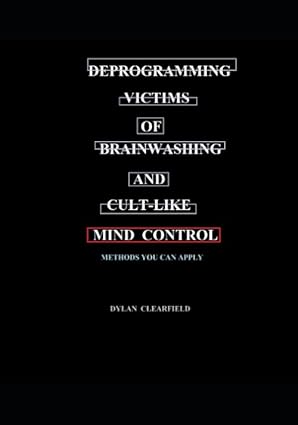

Deprogramming Victims of Brainwashing and Cult-Like Mind Control is an insightful and meticulously detailed exploration of the intricate world of cult dynamics, psychological manipulation, and the challenging journey toward recovery. The author delves into the abyss of mind control with a precision that is as educational as it is captivating.
The book opens a window into the often misunderstood world of cults and their mind-control techniques. It’s structured in a way that systematically uncovers the layers of psychological manipulation employed by cult leaders, referred to as ‘subjugators.’ The meticulous breakdown of these strategies is an eye-opener. From emotional manipulation and isolation to the charismatic allure of the leaders, the book provides a comprehensive guide to understanding how individuals are drawn into and trapped within such environments.
One of the book’s strengths is its deep dive into the psyche of the victims. The exploration of their experiences, the cognitive dissonance they face, and the misplaced loyalty they often feel is handled with a sensitivity and depth that is both informative and empathetic. This section not only educates but also humanizes the victims, distancing the narrative from any simplistic or judgmental views.
A significant portion of the book is dedicated to the deprogramming techniques. This part is particularly intriguing as it shifts from the problem to the solution, offering a ray of hope amidst the dark subject matter. The detailed strategies and psychological counseling methods provided are not only a resource for professionals in the field but also offer valuable insights for anyone seeking to understand the process of recovery.
The book concludes with an insightful discussion of the recovery and aftermath for individuals who have escaped cult influence. This is where the book truly shines, providing not just a theoretical understanding but also practical guidelines for rehabilitation and reintegration into society.
While I think the book is a valuable resource, I think that its intense focus on technicalities and in-depth analysis might be overwhelming for casual readers. It’s a dense read, that I think is more suited for those with a serious interest in psychology, deprogramming, or those directly affected by such experiences.
Deprogramming Victims of Brainwashing and Cult-Like Mind Control provides a deep look into the world of cults and psychological manipulation. Its detailed analysis, combined with a compassionate approach to the victims’ experiences, makes it an invaluable resource. It adeptly accomplishes its goal of shedding light on this dark and complex topic, guiding the reader through the labyrinth of mind control and out into the clarity of understanding and recovery. A must-read for those in the field and a highly recommended piece for anyone intrigued by the subject.
Pages: 144 | ISBN : 0930472470

The Zen of Dancing in the Rain: Becoming one with the storm


The Zen of Dancing in the Rain: Becoming One with the Storm by Aurita Maldonado is an incredibly engaging and inspiring personal life story that weaves together the author’s journey of resilience, self-discovery, and pursuing her dreams. As a U.S. Army veteran and a passionate dancer, Maldonado’s narrative is a testament to her unwavering determination. Maldonado’s life has been marked by numerous challenges and heart-wrenching tragedies, including her time in the army and her courageous decision to relocate to Alaska after retiring. Her remarkable story is a testament to the strength of the human spirit and the power of perseverance, serving as an inspiring example for anyone looking to live life to the fullest.
I found this book to be an absolute gem. Maldonado’s passion and authenticity shine through every page, making it an irresistible read that keeps you glued to its narrative. It’s the kind of book that leaves you feeling elated after each chapter, where you hang onto every word as if it were a cherished melody. The Zen of Dancing in the Rain is undoubtedly a riveting page-turner, a testament to Aurita Maldonado’s compelling storytelling. As you delve into this inspirational memoir, you’ll find yourself reevaluating your own choices and questioning whether settling for the status quo truly serves your deepest desires. Maldonado’s story is a captivating portrait of a Lady Hurricane, both in her literal and metaphorical dance with life’s tempests.
The Zen of Dancing in the Rain is a captivating and inspirational memoir that transcends genres. It’s a must-read for anyone seeking motivation and a glimpse into the transformative power of resilience and determination. Aurita Maldonado’s story is a testament to the human spirit, and I eagerly anticipate more from this talented author.
Pages: 264 | ASIN : B09YM8C4P3
We Are All Worthy Of Love

Redemptive Trauma: Confession of a Defrocked Priest shares your story about living with addiction and mental health issues and how you now advocate for the de-stigmatization of them. Why was this an important book for you to write?
The book is a memoir; a eulogy to both the first half of my life and my life as an ordained Anglican priest. It is a book about male vulnerability and learning the deep value of empathy, while tackling mental health and the associated stigma, which often buries those who suffer. I tell stories about sex, drugs, alcohol and abuse, through the lens of grace, mercy and love. This book is about generational trauma and rediscovering family. Ultimately, Redemptive Trauma is about reconciling hope, and calling home prodigals of all kinds.
I appreciated the candid nature with which you told your story. What was the hardest thing for you to write about?
The hardest thing to write about was my Mum. In many ways, we grew up together. There is no one who sacrificed more so I could tell my story.
What were some ideas that were important for you to share in this book?
Idea 1: Love is the most bullshit word in the English language. Understanding the lack of English vocabulary for love, and discovering new ways to break open the word at its core, provides new lenses to see the heart of one of the most important words across all languages.
Idea 2: We are all worthy of love. No matter what you have done; no matter what you are going to do… you are worthy of some form of love.
Idea 3: Secrets keep people sick. Secrets are what cause families to stay quiet about abuse, and trauma, and neglect. Secrets are how addicts force their loved ones to enable their behaviour. Secrets are how gossip poisons communities and relationships and toxifies the brain with deceit. Failure we all have. Darkness we all face. Brokenness we cannot escape. But secrets, we can defeat.
What is one thing you hope readers take away from your story?
No matter how bad things are: There is hope.
Author Links: GoodReads | Twitter | Facebook | Instagram | Website
Having spent a decade as an Anglican cleric in Southwestern Ontario, David served in leadership in three urban social-justice focused appointments as a priest in the Anglican Church of Canada. David was deprived of ministry and terminated from his appointment as incumbent priest of his parish on December 12th, 2018. He was in his fourth month on medical leave. David was formally accused, investigated and found guilty of sexual misconduct, all while he was drugged out, melting down on social media.
As someone working to heal from traumatic stress injuries from childhood, David’s diagnosis with Complex Post Traumatic Stress Disorder in 2018 led him to become a public advocate for the de-stigmatization of mental health and addiction issues (especially when related to generational trauma). He quickly learned the challenges and opportunities this presents, as he himself is one of the examples. Redemptive Trauma: Confession of a Defrocked Priest is a memoir embracing hard truths of trauma to help others heal their own.
David holds both a Bachelor’s and Master’s degree from Huron University College at the Western University in London, Ontario. For most of his adult life, David served as a street-involved pastor in Toronto and London. His major focuses of ministry were related to social outreach, restorative justice, and learning to wrestle with life and faith in the rapidly evolving social media age.
The author is almost certain that if you don’t like stories about sex, drugs, rock stars, alcohol, and the uneven rise and fall of the guilty and the innocent, you probably won’t like the Bible either. Or this book. Otherwise, go ahead, dig into both.
We Need Change

Brainwashed: A True Story of Psychological Domestic Abuse And The PTSD Aftermath shares your story, scientific evidence on the impact of abuse, and the importance of breaking the cycles. Why was this an important book for you to write?
Issues such as Childhood Psychological Abuse and how that can affect someone’s later life and acceptance of domestic violence, and then PTSD (Post Traumatic Stress Disorder) are all currently such important issues yet so very poorly understood. It’s my hope that Brainwashed will help to change that situation.
I appreciated the candid nature with which you told your story. What was the hardest thing for you to write about?
Initially, I published the book in 2014, but then almost immediately withdrew it from publication because I did not want to be publicly reminded of my early life. But living through the most bizarre string of distressing experiences in 2022, that I talk about in Chapter 27, I knew I had to re-structure and republish the book, which I did in 2023. And so the hardest part was having to re-live all those horrific life experiences once again, that I’d previously written about.
What were some ideas that were important for you to share in this book?
Interestingly, when I first published the book the most important ideas to get out were to do with childhood psychological abuse and psychological domestic violence and the reason why people, especially women, remain in abusive relationships. But after this past horrific year, which is still playing out, suddenly, the most important part was to let the world know MUCH more about PTSD. PTSD, is now one of the leading mental health issues in most countries around the world. BUT very few people realise that it is NOT just a MENTAL health issue, but can also result in physical brain damage, and that a trauma can be locked in your brain for life, waiting to escape at any time, as it did for me in 2022. So now the most important chapters are those on PTSD—Chapters 23 to 27.
What is a common misconception you feel people have about psychological abuse?
Sadly, even today in 2023, those people lucky enough to have avoided a mental health issue, or who don’t have the courage to admit to having a mental health issue, still have a very denigrating attitude to anyone who is a mental health sufferer. You can have a broken leg and everyone will support you and totally accept it as tough luck. But have any sort of “broken” brain and all too often you’ll be treated like a second-class citizen, or worse. This must change.
Author Links: Website
Psychological Domestic Abuse, experienced as a child, a teen, or an adult in an intimate relationship, can have life-long effects, including the making of disastrous decisions, and on to PTSD, unless it’s understood and the victim/survivor is helped to summon the courage to do what it takes to heal.
After thirty odd years of relentless searching, at the age of sixty-three, Kashonia finally discovered that her greatest enemy was her psychologically abusive childhood. Before that, she’d always thought she’d had a relatively good childhood. Why? Because she hadn’t been physically or sexually abused as a child.
But the subtle psychological abuse she received as a child through until she was twenty was what predisposed her to accept, as “normal”, a very psychologically, and sometimes physically, abusive marriage.
Yet, no matter who read about Kashonia’s event-filled life, the only thing they recognized were the handful of physically violent experiences. They completely dismissed the far more insidious on-going psychological abuse.
It was clear that the only way to help people understand society’s monstrous, hidden epidemic of psychological abuse was to overtly explain it as she told her story. And this is what Kashonia has inspirationally done in Brainwashed.
In Brainwashed, Kashonia’s wry sense of humor occasionally appears as she uses forty years of Behavioral Science, Neuroscience, and Neurolinguistics research to overtly explain her extraordinary life of psychological abuse, its devastating PTSD aftermath, and why people stay in abusive relationships.
Courageously, she shares the serendipitous source of her most significant transformation which gave her the strength to escape her abusive marriage. This was also the mostly unlikely source of her spiritual journey, which has kept her going through the really tough times ever since.
Kashonia’s story is true for more people than we realize. Sadly, all too often the victim/survivors of psychological abuse don’t even realize they’ve been abused.
So her story and her greatest enemy could well be your story and your greatest enemy too.
Today, Kashonia is a Moral Philosopher with a PhD in the Ethics of Conscious Change and author of the Multi-Award-Winning Conscious Change Series of books. It was her life, as documented in Brainwashed that led her to research and write the Conscious Change Series.
In 2023, with a growing concern about mental health and PTSD in non-combatants, Brainwashed is extremely timely for a number of reasons.Brainwashed will be of comfort to other victim/survivors of psychological abuse, in helping them understand at a deeper psychological level, why they do/did make the decisions that they did.
It will also give those very lucky people, who’ve not endured what we victim/survivors have experienced, a greater appreciation of the complexities of psychological abuse, where the scars are all on the inside.
Brainwashed also highlights the life-long psychological damage that negative childhood conditioning can have.
It’s a reminder to psychologists, that even if their client insists they’ve had a good childhood, it must still be explored.
And with the growing community concern about mental health and the area of PTSD, Brainwashed will shed a vital light on what that can be like, and how Kashonia was able to heal.
Order your copy of Brainwashed now—available in Kindle/e-book, paperback, and hardback formats and soon as an audiobook.
The Embodied Mind
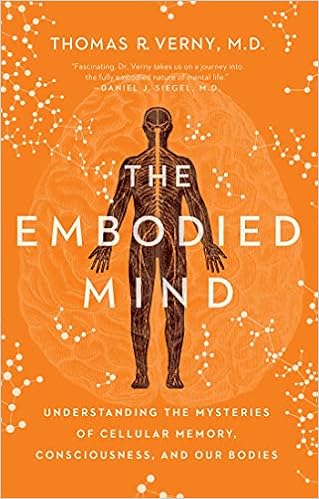
In The Embodied Mind: Understanding the Mysteries of Cellular Memory, Consciousness, and Our Bodies, Dr. Thomas Verny presents a comprehensive exploration of the intricate relationship between the brain, our bodily functions, and the ways our bodies respond to cerebral directives.
Dr. Verny delves into the realms of dreams and consciousness, explaining how our existence is influenced by internal bodily factors and external elements alike. The book is a masterclass in communicating complex ideas, demonstrating how cells utilize consciousness to perform their primary functions.
Aimed not just at medical professionals but at any intellectually curious reader, The Embodied Mind acts as a gateway to understanding the mysteries of the mind, brain, and the human nervous system. The book demystifies how cells maintain behaviors vital to life, leaving the reader with a profound appreciation of the human body’s marvel and the complexities of the brain, often overlooked by the layman.
One of the book’s strengths is its seamless blend of complex discussions and real-life narratives. This is evident from the warm introduction, where Dr. Verny shares his inspiration for writing the book and his fascination with the brain. His account of a young patient highlights individual variations in memory and consciousness and is particularly compelling.
The first chapter— a thought-provoking discussion on the significance of genes and an insightful dive into epigenetics— stands out as a highlight. This informative book covers various complex topics, including the mechanisms behind memory, the workings of the immune system, and the enigmatic nature of human cells.
Dr. Verny’s exploration of how the body retains memory while the brain forgets is a standout section. It resonates due to its relevance to everyday experiences and is presented in a manner accessible to all readers, regardless of their scientific background.
The book is a testament to Dr. Verny’s extensive research, incorporating a wealth of scientific material and revealing fresh insights throughout its ten informative and enlightening chapters. Beyond its educational discussions and engaging narratives, it challenges established scientific concepts and provides clear explanations, making it a valuable resource for anyone seeking comprehensive information on memory, genetics, the human brain, and the body.
Dr. Verny’s insightful understanding of human memory’s nature is impressive, and his ability to explain complex ideas lucidly is commendable. “The Embodied Mind” is a compelling, powerfully engaging read. However, this book isn’t just a testament to Dr. Verny’s expertise—it is a riveting journey into the mysteries of our bodies and minds.
Pages: 238 | ASIN : B08WM42Y2P
Redemptive Trauma

Redemptive Trauma: Confession of a Defrocked Priest is a deeply personal and engaging exploration of the complexities of author David Giffen’s life experiences. Born to immigrant parents and raised in Canada, David’s childhood was marked by instability and a lack of emotional support. His parents’ separation only exacerbated his emotional struggles, leading him to seek solace in a life increasingly detached from reality. As he matured, David became embroiled in the world of sex, violence, alcohol, and drugs, trying to escape his troubled past. Despite his rebelliousness, he longed for stability and normalcy. Ultimately, he turned to spirituality and became a priest, starting a new chapter in his life. However, his past continued to haunt him, and he was eventually stripped of his priesthood due to his vulnerability.
Throughout the book, David’s writing is candid and introspective, inviting readers to explore his struggles and the challenges he faced on his journey. His reflections on spirituality and religion are particularly insightful, offering a nuanced and deeply personal account of the role these forces played in his life. His writing is infused with a sense of hope and resilience, reflecting his unwavering commitment to self-improvement. The book is structured non-chronologically, which may be confusing at times, as it can be easy to mix up the past and the present. Nonetheless, the writing is easy to follow, and David’s unfiltered accounts of his childhood provide a refreshing perspective on the issues of addiction and spirituality.
Redemptive Trauma is a compelling and honest memoir that offers a unique perspective on one man’s journey through life. I highly recommend it to readers seeking an engaging and deeply personal account of the challenges of addiction, spirituality, and self-discovery.
Pages: 138 | ASIN : B08LR15B1V
Brainwashed

Brainwashed: A True Story of Psychological Domestic Abuse And The PTSD Aftermath, authored by Dr. Kashonia Carnegie, is a literary work that seamlessly blends memoir and psychological analysis to provide a comprehensive understanding of the aftermath of psychological abuse. Dr. Carnegie’s personal experience as a survivor of psychological abuse, combined with her extensive research in human behavior and neuroscience spanning over forty years, makes this book a compelling read. Through her personal story, Dr. Carnegie sheds light on the often-neglected aspect of domestic abuse – psychological abuse. In addition, she explains the reasons why victims remain in such relationships and how they can safely seek help and break free from the harmful cycle.
The book is a perfect blend of raw human emotions, insightful storytelling, and scientific explanations, making it a must-read for anyone interested in psychology and mental health. The book also delves into the role of childhood conditioning and attachment in shaping our lives. Dr. Carnegie highlights how early childhood experiences can impact an individual’s entire life and how parents and guardians play a crucial role in creating a secure attachment with their children. The book emphasizes the importance of creating emotionally stable children who grow up to appreciate their self-worth and form healthy relationships, thereby breaking the cycle of abuse. Brainwashed raises pertinent questions about societal issues, emphasizing that psychological abuse is a widespread problem that has been happening for centuries. The book underscores the need for awareness and changes in behavior to tackle the issue effectively. The author’s personal experience and insights make the book relatable and engaging, making it a valuable resource for professionals and students in the field of psychology and mental health.
Brainwashed: A True Story of Psychological Domestic Abuse And The PTSD Aftermath is an eye-opening memoir into the world of psychological abuse. I highly recommend this thought-provoking and impactful read that will inspire readers to take action toward creating a kinder and more empathetic society. Dr. Carnegie’s efforts in sharing her story and contributing to the lives of readers and victims worldwide are commendable.
Pages: 476 | ASIN : B0BRQMX3LT



 LITERARY TITAN