Blog Archives
Love, Forgiveness, and Salvation

St. Paul Goes to Spain follows three men bound by their shared faith and curiosity about the apostle Paul, who, after discovering a letter, they go on a journey to the places they think Paul could have visited in Spain. What inspired the setup of your story?
Well, I wrote it as an historian and a Christian, but I was long interested if Paul actually made a missionary trip to Spain which he mentioned in some other published Scripture, such as the Book of Romans. Plus, I have loved fiction ever since early-life discoveries of Steinbeck, Hemingway, etc. It is a way of reaching people and drawing upon your imagination to tell great stories that, in fact, usually reach a lot more people than histories! I did an earlier novel on early Christianity in the Americas (Columbian discoveries, conquests, and settlements) and how Jesus, or, more exactly, some of his followers and prophets may have reached the New World hundreds of years before 1492, and they left evidence (artifacts in the forms of the Cross), and I was off into the past again, this time inventing and tracing a story which I think could have actually happened. Ok, I’ll stop here. I’ve had a couple cups of coffee and it is Saturday morning and football games don’t begin until this afternoon!
What were some themes that were important for you to explore in this book?
I’ve always enjoyed the trajectory and messages of the Apostle Paul in the New Testament, especially since he produced more than half of the Books of the New Testament. He was, in fact, the writer who did more to write down the teachings of Jesus, or to create the theology of Christianity. So I suppose my principal interest was in exploring, one, the central themes of Christianity that Paul taught (love, forgiveness, salvation, etc.) and, two, how he probably took them to Spain, a country I have long loved and admired given my background and experiences, first visiting as a young Naval officer in the Sixth Fleet in the Mediterranean in the mid-1960s, and then over the years as a historian, where I especially learned about the land and its people while researching for my dissertation in the Archive of the Indies, Seville, 1970-71,.
What experience in your life has had the biggest impact on your writing?
Without a doubt, it has been the growth of my Christian faith, influenced especially by my marriage to my wife Louise more than thirty years ago. Without going into detail, she showed me that true worship in understanding did not come necessarily with reading and doing good works, but through the faith that comes when God in his infinite Grace accepts you into his world. You have but to accept. Secondarily, but no less important (although not as transcending as making the same discovery that Martin Luther made in the early sixteenth century when he discovered for himself, while teaching at Wittenberg on the Book of Galatians, the true power of the grace of God) was my teaching the history of Christianity over the last almost five decades to various forums, from my students at the University of Alabama, to mission trips into places like Honduras and the Dominican Republic, and my all-time favorite students, the prisoners of the Tuscaloosa County Jail where I’ve been ministering on a weekly basis for twenty-five years.
What is one thing that you hope readers take away from St. Paul Goes to Spain?
That the Christian message given to Paul by Jesus (beginning with his Road to Damascus conversion) was indeed aimed to the entire world, albeit a world circumscribed by the knowledge of geography of the world 2000 years ago. Taking it to Spain was just reaching the far Western end of the Mediterranean and I even hint that Paul may have voyaged into the Atlantic with some of the intrepid Phoenician mariners of the times and zipped across the Atlantic, about fifteen hundred years before Columbus!
What if the Apostle Paul, after his release from imprisonment in Rome, embarked on a daring journey to the far reaches of the Roman Empire? “St. Paul Goes to Spain” by Lawrence Clayton is a riveting historical fiction novel that imagines this very scenario, blending meticulous research with engaging storytelling.
Join Matthew Western, an intrepid archaeologist, as he uncovers ancient artifacts in the Sinai desert, sparking a quest to prove that Paul indeed traveled to Spain. His journey intertwines with the lives of several compelling characters:John Baldus, a former Army soldier and current Divinity student, who grapples with faith and doubt while investigating Paul’s journeys.
Domingo, a Dominican priest in modern Spain, facing spiritual challenges and historical mysteries.
Slate Watson, a daring crop-duster pilot with a rich military past, whose adventurous spirit leads him into the heart of biblical archaeology.
Sarah Maxwell, an Englishwoman tracing her ancestors’ historic discoveries, contributing her own expertise to the mission.
Together, they delve into historical sites, uncover ancient manuscripts, and piece together the lost chapters of early Christian history. From the dusty libraries of St. Catherine’s Monastery to the vibrant landscapes of modern Spain, their quest reveals profound insights and unexpected connections.
“St. Paul Goes to Spain” explores the intersection of faith, history, and archaeology, offering readers a captivating journey through time and belief. It’s a story of discovery, adventure, and the enduring impact of one man’s mission to spread the Christian faith.
LAWRENCE A. CLAYTON was born in October 1942, in Summit, New Jersey. He lived in Peru for seven years. He attended Duke University (B.A., 1964), and earned his M.A. (1969) and Ph.D. (1972) at Tulane University in Latin American History. From 1964-1966 he served as an officer in the U.S. Navy on the USS Donner (LSD-20), cruising both in the Caribbean and the Mediterranean with the 6th Fleet. He was on the faculty of the University of Alabama from 1972-2013. He directed the Latin American Studies Program from 1980 to 1992. He was Chair of Department of History 2000-2007 and was Interim Chair, 2009-2010. His specialties focused on Latin American history and the history of the Christian church. He is now Professor Emeritus of History. He retired in 2013. He held two Senior Fulbright Lecturing Awards, one in 1983 to Costa Rica and one in 1988 to Peru. In 1983 he served as President of the South Eastern Council on Latin American Studies. In 1999 he held a year-long Pew Evangelical Scholars Fellowship.
St. Paul Goes to Spain: A Novel


St. Paul Goes to Spain by Lawrence A. Clayton is a captivating work of religious fiction that brings together history, faith, and intrigue. The story introduces us to three main characters—Matthew, John, and Domingo—whose lives, while seemingly different, are bound by their shared faith and curiosity about the apostle Paul. This shared religious fascination drives the plot, with much of the narrative centered on the discovery of a letter believed to be written by Paul to a church in Spain.
The novel’s premise revolves around the authenticity and location of this letter, sparking a journey of discovery for the characters and their companions. This quest takes them to places Paul could have visited if his journey to Spain, hinted at in the New Testament, had indeed taken place. This historical mystery gives the book its compelling edge, encouraging readers to reflect on Christianity’s roots while expanding their understanding of faith. One of the most fascinating aspects of St. Paul Goes to Spain is its grounding in real-world history. Clayton weaves in significant historical events, such as the fall of the Berlin Wall, and touches on modern political issues, including the ongoing turmoil in the Middle East. These references not only add depth to the narrative but also prompt readers to think critically about war, politics, and their impact on religion, both past and present. The question of whether Paul ever reached Spain is a topic of theological debate, and Clayton skillfully uses this ambiguity to drive the story. The characters explore regions Paul might have visited, offering readers a fresh lens through which to consider early Christianity and its spread. By blending history, religion, and politics, the author successfully creates a rich, thought-provoking narrative.
Clayton’s ability to merge these elements makes the book worthwhile for those interested in world events or religious fiction. St. Paul Goes to Spain offers a unique perspective, encouraging readers to contemplate both the historical and spiritual aspects of faith while providing an engaging exploration of Paul’s possible travels. I highly recommend it to anyone drawn to stories that intertwine history, belief, and current affairs.
Pages: 237 | ASIN : B0DC6PPXF8

Politics of Being: Wisdom and Science for a New Development Paradigm

In Politics of Being, Thomas Legrand paints a bold picture of a future where politics moves beyond the usual materialistic and competitive norms. He pushes for a shift toward wisdom, blending spirituality and science to help us navigate the mess we’re in today. Legrand digs deep into how spiritual values can mix with political and social systems, creating a world that’s not only more peaceful and just but also sustainable. With a mix of big ideas and practical tips, he maps out how we might get there.
Legrand’s passion is clear, and his ideas are thought-provoking, though he does pack a lot into this book. He dives into the flaws of our current economic model, really laying out the grim future if we don’t change course. His arguments hit home, but the sheer amount of information can feel like a lot to take in at one time. Still, his enthusiasm is contagious, and you can’t help but get pulled into his vision for a better world.
One of the highlights of the book is how Legrand brings together spirituality and real-world policy ideas. In chapters like “Work and Organization” and “Governance,” he doesn’t just float lofty ideas; he gives practical steps to take. For instance, his push to bring mindfulness into schools and workplaces is both fresh and doable.
What really makes the book stand out is how personal it feels. Legrand shares his own journey, which makes his arguments hit closer to home. His experiences in Mexico, where he connected with nature and indigenous wisdom, give the book a unique and rich flavor. In “My Personal Journey,” he talks about a deep spiritual awakening in the Sierra Madre, where he felt a powerful bond with the earth. This personal touch not only strengthens his arguments but also invites readers to think about their own spiritual paths and how these might shape their views on politics and life.
Politics of Being is an ambitious and thought-provoking book. It’s a great read for anyone looking for a more rounded and meaningful approach to politics and development. It’s especially good for those open to mixing spirituality with science and policy. If you’re up for a book that challenges the usual way of thinking and offers a hopeful view of the future, Legrand’s work is definitely worth a read. Just be ready to dive in deep, because this isn’t light reading, but it’s definitely worth the effort.
Pages: 584 | ASIN : B09N2Q1XS9
I Want People Asking Questions

Legacy: Wisdom of African Traditions and the Bible is an in-depth study of African proverbs and their correlation to Bible verses. Why was this an important book for you to write?
I had been collecting compilations of African proverbs for 30 years. Then, about 6 or 7 years ago, as I mention in the book, I came across a book series that compared teachings on topics such as forgiveness or compassion across the great spiritual traditions. There was no African volume in that series, and I wondered about that.
Have you ever seen the posters that compare the Golden Rule across the great spiritual traditions? Next time you see one, look for one of the African versions of the Golden Rule. Chances are, you won’t see any included.
As far as I could tell, there was nothing quite like this. Almost 30 years ago, Archbishop Desmond Tutu published An African Prayer Book (Walker and Company, 1996), with prayers, poems, stories, and some African proverbs, but not compared to Bible verses. I think seeing the proverbs and verses together offers an opportunity for reflection and insight.
Can you share a little about the research process required to pull together such an informative piece?
I started with the compilations of African proverbs that I had, then expanded to other books and websites (which are all listed in the book). Then, as an extra step, I engaged about 30 African collaborators from multiple countries to corroborate the proverbs, provide additional context, and in some cases, share any meanings that could get lost in translation to English. That became a real collaboration, as they offered more proverbs as well as other Bible verses, shared information about context and meaning, and provided more specific attribution than the sources I had used. There was such a generous and gracious outpouring of support, and they have enriched the book tremendously.
What is one thing you hope readers take away from your book?
As someone who respects asking questions, I hope they come away with more questions! I hope it piques their curiosity to learn more, and I do include some suggestions for additional reading for those with an interest.
Beyond that, I hope they come away with an appreciation for the individual wisdom traditions featured in the book, and the way they are passed down like a legacy. For too long, there has been a pernicious, unchallenged notion that there is nothing to learn from African cultures. Nothing could be further from the truth.
What is the next book you are working on, and when will it be available?
One thing I would love to do is issue translations of this book into French and Portuguese, which, with English, are the principal official European languages of Africa—as well as Spanish, to reach diaspora communities. My collaborators tell me there is nothing like this in their countries.
Author Links: GoodReads | Kirkus | Reader’s Favorite
Chris Morehouse was compelled to write the book after exploring the Parallel Sayings books, which juxtapose insights from the great religious traditions with their counterparts from Jewish and Christian scriptures. These books explore resonances between Christianity and Judaism, Islam, Buddhism, Hinduism, and Taoism.
The author began to wonder why there was not a similar volume exploring corresponding insights from Africa’s traditions. In this book, you’ll discover:
•African expressions of the golden rule;
•versions of loving one’s enemies and welcoming the stranger;
•insights about losing your way to find your way—and much more.
The African idea of sankofa—“go back and get it”—tells us that we can go forward by looking to the past. Find common ground and get tools to face the future with the insights in this book of African and biblical wisdom.
Legacy: Wisdom of African Traditions and the Bible
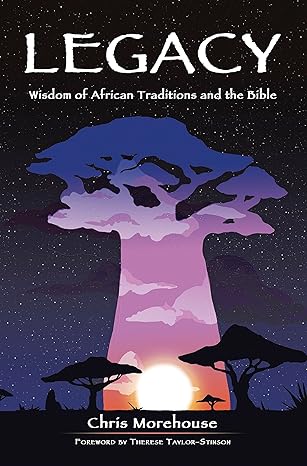

In Legacy: Wisdom of African Traditions and the Bible, by Chris Morehouse, readers delve into the world of African proverbs and their intriguing parallels with Christian Bible verses. This meticulously researched nonfiction piece features sayings from diverse regions of Africa and South America, rooted in traditional African spiritual traditions. The striking resemblance between these proverbs and Christian teachings unveils the rich and layered spiritual heritage Africans held long before European colonization. Central to this discourse is the philosophy of ‘ubuntu’, underscoring our collective interconnectedness. This tenet teaches that causing harm to another invariably harms oneself, and conversely, disseminating love and compassion will be reciprocated.
One of the standout features of Legacy is the set of reflective questions at the end of each chapter which provides thought-provoking discussions suitable for book clubs or Bible study sessions. Each chapter delves into specific spiritual themes, such as pride or anger, prompting readers to assess their actions against these ancient teachings. Engaging with a proverb daily, as the book suggests, could indeed be transformative for those on a spiritual quest. Written in an accessible language, Morehouse ensures a smooth reading experience.
The book also ignites curiosity, leaving one yearning to explore further. How do traditional African religions manifest across different regions? Is there a repository of wisdom from ancient spiritual practices, or have they been predominantly assimilated into religions like Christianity or Islam? While Legacy stands as a commendable work, it also paves the way for a deeper exploration, perhaps in a sequel. I feel that incorporating real-life applications of these proverbs would amplify their relevance. All in all, Legacy: Wisdom of African Traditions and the Bible is a must-read for spiritual enthusiasts across the globe.
Pages: 286 | 
MYSTERIOUS OCEAN WALKERS

In an era where modern science grapples with profound existential questions, Mysterious Ocean Walkers by Pastor Manu Philip steps in to address the tantalizing enigmas of our existence. How did the universe come into being? What, indeed, is the meaning of life?
Philip delves fearlessly into these ‘unresolved’ riddles, highlighting the constraints of scientific theories such as the Big Bang and evolution. He draws our attention to the subtle miracles that weave through our daily lives, often unnoticed. The narrative seamlessly blends biblical tales with contemporary concerns through relatable analogies, offering insights into how to maximize our brief existence.
Pastor Philip paints the biblical narratives with vivid and evocative imagery, transporting the reader right into the heart of the tales. Beyond its spiritual insights, Mysterious Ocean Walkers is an enlightening fusion of religion, geography, and history. It plunges into diverse themes, from the cosmos to natural phenomena, showcasing Philip’s exhaustive research and expertise. Those skeptical of religious narratives might find their perspectives challenged by the compelling evidence presented.
The author’s unique narrative style, characterized by the occasional omission of articles and a poetic departure from conventional syntax, lends the book a distinctive charm. However, this can, at times, demand more attentive reading. Heed Philip’s suggestion: this is not a light read. Approach it in intervals, allowing ample time for introspection and absorbing its profound messages.
As the pages turned, I found myself immersed in Pastor Philip’s spiritually uplifting words, culminating in a rejuvenated reverence for life. By encouraging readers to confront mortality and ponder their place in eternity, Philip instills a sense of urgency to cherish every fleeting moment on this Earth.
Pages: 191 | ASIN : B0C888KTK4
What Is Life All About – Life Is About the Soul
In his thought-provoking book, What Is Life About? – Life Is About the Soul, author Alan Gill guides readers on a journey of self-discovery and purpose through his own experiences, insights, and personal encounters. Gill delves into various aspects of life, including religion, media, marriage, political history, and the nature of God. His straightforward writing style provides clarity and honesty, addressing challenging topics without sugarcoating the issues.
The book is divided into six parts, each focusing on critical aspects of life. Part one starts with discussions on living life differently, offering hope and positivity to readers. Gill’s emphasis on simple living and the importance of family, friends, and community resonates deeply. In addition, the inclusion of biblical verses throughout the text adds depth and context to the discussion.
From the first part to the sixth, Gill’s work is filled with information to inspire readers. One prominent subject in the book is exploring God’s existence, power, and relationship with humanity. Gill’s approach to discussing God is refreshing and accessible, enabling readers to feel a personal connection with the divine.
Gill’s diverse range of topics keeps readers engaged, with chapters that touch on related subjects but delve into a myriad of issues. One such captivating topic is death, which, although chilling, is both intriguing and important to discuss. By addressing both physical and spiritual death, Gill provides a well-rounded perspective on this often-avoided subject.
The simple yet profound text, historical stories, reference materials, and in-depth discussions make this a remarkable book. By engaging with Gill’s work, readers embark on a journey to seek the truth and find themselves. More than just an inspirational book, this transformative work encourages personal growth and improvement in all aspects of life.
Pages: 450 | ASIN : B0BVTBNCW5
Some Mistakes of Darwin and a Programmer’s Theory of Life
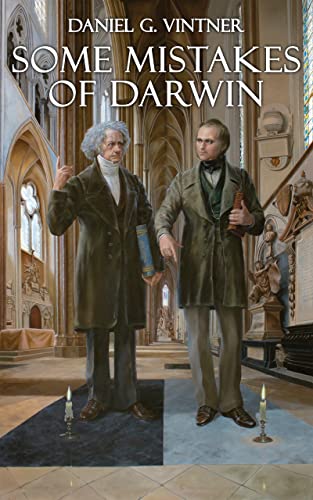
Evolution theories have always sparked unending debates. Human beings have different beliefs about how life was created and how we have developed. In Some Mistakes of Darwin and a Programmer’s Theory of Life, author Daniel G. Vintner compares old and new evolution theories, alternative theories, and everything in between. Daniel G. Vintner starts by discussing Darwin and his original theory of evolution. As you keep reading, the author gets to more complex topics like how accurate the theory is and how Darwin came to his conclusions. The concepts may appear a bit puzzling for starters, but one soon catches up thanks to the author’s brilliant way of breaking down his points.
Following the author as he expounds on the theory of evolution over the centuries, was exciting. I like that Vintner is detailed and diverse in his discussions. The author combs through more than a dozen theories and explains the hard stuff to the reader’s satisfaction. Daniel G. Vintner may be a bit radical, but I like the author’s attitude and firm stand on his philosophies and views.
Some Mistakes of Darwin and a Programmer’s Theory of Life is a great read, not just because of how thorough the author is but also because of how convincing he is. He quotes renowned icons and supports his findings with facts and research. Reading this book made me elated and increased my curiosity about evolution. After reading this book, you will question life and concentrate on the creation story and the origin of species.
This informative book may have been about Darwin and the theory of life, but at no point was it monotonous. Daniel G. Vintner knows how to blend the various sub-topics and how to introduce a new topic even while still discussing the main subject. I enjoyed his personal tales of being a programmer. Learning about the various historical figures and their theories was eye-opening and exciting. I learned more about evolution and got to understand why some problems of evolution not solved by Darwin still have no answers even with the modern advancement.
This book is not for the close-minded; some views by the author may seem extreme, but that only improves the reading experience. The author is an excellent narrator and an even better interpreter. His strength in convincing skeptics to subscribe to specific theories and beliefs is admirable. The technical terminology was easy to understand as the author gives a clear definition and extra description when introducing complex terms. Some topics that were most touched on were Genesis of Genetics, Mutating Randomness, and the Story of Creation. The author leaves readers with an understanding that nature is a bit more complex than we may think and that most things do not happen by chance.
Pages: 276 | ASIN : B0B29G9CY9



 LITERARY TITAN