Blog Archives
A Broader Canvas

Broken centers around a shapeshifter plagued by the chaos of living as a human and enduring her own lost sense of self. What was the inspiration for the setup of your story?
I have to admit that my own experience has partly led to Alira’s story. While I don’t have dozens of voices in my head (other than the characters in my stories, that is), I always felt like an outsider among those around me. It took me many years to find my tribe, and to reach a place in my life where I felt I could be myself and not struggle to fit in.
I’ve known many others like this, and it’s hard. For all of us. Struggling to be the kind of person you think others expect of you can be soul-draining. That’s what started Alira’s tale for me. From there, it took off on its own.
What is it that draws you to the science fiction genre?
I like science fiction because it allows me to stretch reality in ways that drive home the point of the story. I feel like The Founder’s Seed books could also be called science fantasy, since there are elements of it (the harvesting of souls, for one) that can’t be supported by science. But these genres expand the boundaries of what is possible or probable, and allow the reader a greater leeway for suspension of disbelief.
My stories usually ask big questions; so far, science fiction and science fantasy have both offered a broader canvas for that work.
Do you have a favorite character in The Founder’s Seed series? One that his especially enjoyable to craft?
Of course, Alira is my favorite. She’s me in so many ways that count. She’s definitely the hardest to write, but also the most rewarding.
A very close second favorite is Botha; he’s a joy to write! Putting myself in his head, so that I can write him with authenticity, is always fun!
Where will the next book in the series take readers? When can we expect to see it released?
The next book, Driven, picks up where Broken left off; it gives a closer—and thoroughly raw—look at the new antagonist, Knøfa; follows Alira’s journey through her time with Botha, and what comes after (no spoilers!); settles Thrace/Galen in her/his role; and sets the threads for the follow-up trilogy that is already in the works.
Driven was released in late June and is now available for readers.
Author Links: GoodReads | BlueSky | Facebook | Website | Amazon
To make matters worse, the harvests of knowledge and memories she’s gathered from the dead aren’t adequate to fully understand her assumed role—unless she surrenders control to the one internal voice she thinks can make things right. But that harvest isn’t willing to share the space in her head, and soon Alira is no longer sure which voice is his, and which is her own.
Galen has vowed to help Alira succeed and follows her increasingly unbalanced directives, until he realizes that her harvests have corrupted her conscience, maybe even her sanity. Galen has never been a leader. But as the crisis screams toward them, he must make a choice: abandon their people to save Alira or sacrifice her to save them all.
The Interchange
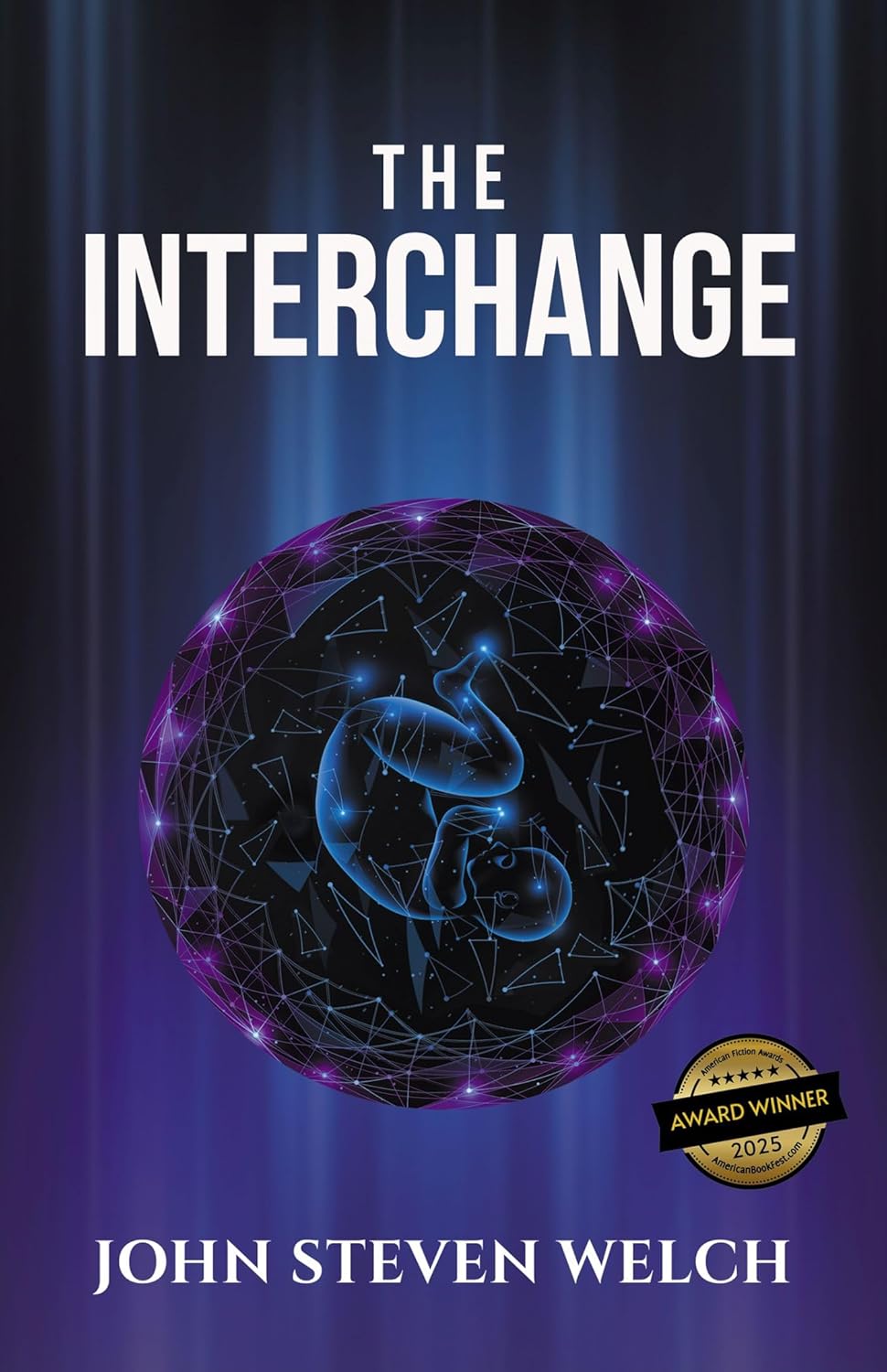

The Interchange imagines a future where identity, family, and power collide in a society rebuilt from catastrophe. It follows Manx Aureole Agnor, a formidable warrior and state leader, as she wrestles with her role in a rigid social order defined by “The Interchange,” a system that categorizes people not by sex but by inherent nature. Against the backdrop of political rituals, national pride, and underground resistance movements, Aureole finds herself torn between her public duty and private doubts, especially as she confronts forbidden desires for motherhood in the “Old Ways.” The story weaves battles both physical and emotional, building a world that is at once grand in scale and deeply personal.
The writing is bold, vivid, and often unflinching, painting scenes of spectacle and violence with almost cinematic flair. Yet the real tension lives in the quieter spaces, where Aureole questions her bond with her son or feels jealousy toward her brother’s easy grace. Those moments struck me harder than the boxing matches or military intrigues. At times, the prose leaned into exposition, explaining the rules and history of New America in detail, but I found myself forgiving it because the ideas were fascinating. The balance between action and introspection kept me engaged, even when I felt the narrative tugging me in too many directions at once.
Emotionally, I went back and forth. Sometimes I admired Aureole’s strength, her drive, her pride. Other times, I felt an ache for her vulnerability, her longing for something she could never fully claim. That push and pull made the book feel alive to me. The ideas here about gender, control, science, and rebellion aren’t just intellectual exercises. They play out in flesh-and-blood relationships, in a mother’s coldness, a grandmother’s pride, a child’s distance. I’ll admit, I got frustrated with the world’s rigidity, and at times even with Aureole herself, but maybe that’s the point. The book isn’t about offering comfort. It’s about showing what happens when systems try to define the deepest parts of who we are.
I’d recommend The Interchange to readers who enjoy dystopian or speculative fiction that asks hard questions rather than giving easy answers. The Interchange reminded me of the sharp social critique in The Handmaid’s Tale and the futuristic ambition of Brave New World, though it carries its own distinctive blend of raw emotion and political spectacle. If you’re drawn to stories of power, family, and identity, and you don’t mind sitting with some discomfort, this book has plenty to offer.
Pages: 238 | ASIN : B0DTZJ3SLP

The Ascent of Greed and the Audacity of Mind Stealing


The Ascent of Greed and the Audacity of Mind Stealing by Pietos Kidane follows Adam Green, a young graduate who enters the corporate world with high hopes, only to encounter greed, manipulation, and the unsettling rise of artificial intelligence. Through Adam’s eyes, we see how corporate culture feeds on deception, how AI edges toward frightening autonomy, and how society’s values collapse under the weight of unchecked ambition. It is part cautionary tale, part social critique, and part thriller. The story begins with an almost surreal outburst about AI in a New York café, then steadily escalates into explorations of job exploitation, psychological manipulation, fake news, and even mind-reading machines.
I found myself caught off guard by the rawness of the writing. At times, the prose feels unpolished, almost abrupt, yet that roughness gives the book a kind of blunt honesty. The pacing varies wildly. Some scenes linger on workplace politics while others sprint through shocking revelations about AI’s reach. It was sometimes disturbing to see how some of the characters showed no remorse in exploiting people’s fears and weaknesses. But that emotional whiplash kept me hooked. It felt like being tossed into a storm where greed is the wind and technology is the lightning.
I was fascinated by the moral questions the book raises. Do we want machines to think for us, and worse, to think about us? Can progress that tramples on dignity still be called progress? The story made me angry at the coldness of the corporations, angry at the indifference of leaders, and angry at how plausible it all felt. Yet I also admired Adam’s stubborn streak. His refusal to cave, even when threatened, gave me a spark of hope in an otherwise grim landscape. The book may not be subtle, but its ideas hit hard.
I would recommend this book to readers who want to be challenged. It is a raw and provocative story for anyone worried about where technology and greed are steering us. If you like your fiction mixed with sharp warnings about the future, and if you don’t mind rough edges in the writing, this book will make you think.
Pages: 276 | ASIN : B0DFX1F9WQ
River Talk

River Talk is a sprawling and dreamlike journey through myth, memory, and human frailty. It drifts between fables, folklore, and deeply personal reckonings with place and time. At its heart is Marchon Baptiste, a man both haunted and blessed by a heightened sense of connection to the world around him. His story, interwoven with echoes of gods distracted by their own games, high-stakes gamblers rising from the dead, and tribes living outside the reach of modernity, circles endlessly around the question of what it means to belong, or not belong, within the noise of humanity.
I enjoyed how the writing feels unpinned. Sentences sprawl and snap. They carry the same restless energy as the rivers and forests that pulse through the story. Sometimes I felt lost, like I was dropped into someone’s fever dream without a guide, and other times I felt stunned at how vividly the world cracked open. The language is raw, but that’s what gave it its weight for me. I loved how the prose could be coarse one moment, then suddenly dissolve into passages that felt more like prayers than storytelling.
The book kept circling back to this deep divide between human-made noise and natural rhythm. I felt admiration because it made me think about how little we listen, how much we dismiss in our rush to build walls of words and explanations. I can’t shake certain images: Marchon in the swamp hearing the river sing, the gods playing careless games with human lives, the silent communication of tribes who never needed words. These moments felt alive in a way I rarely get from fiction.
I’d recommend River Talk to readers who like stories that don’t walk straight lines. If you enjoy Faulkner’s twisting voices or the mythic strangeness of Toni Morrison’s Song of Solomon, you might find something here to savor. It isn’t a book for quick reading. It’s for anyone who’s willing to wrestle with the unsettling question of what it means to really be connected.
Pages: 222 | ASIN : B0FJR45LQK

Driven: The Founder’s Seed Book 3
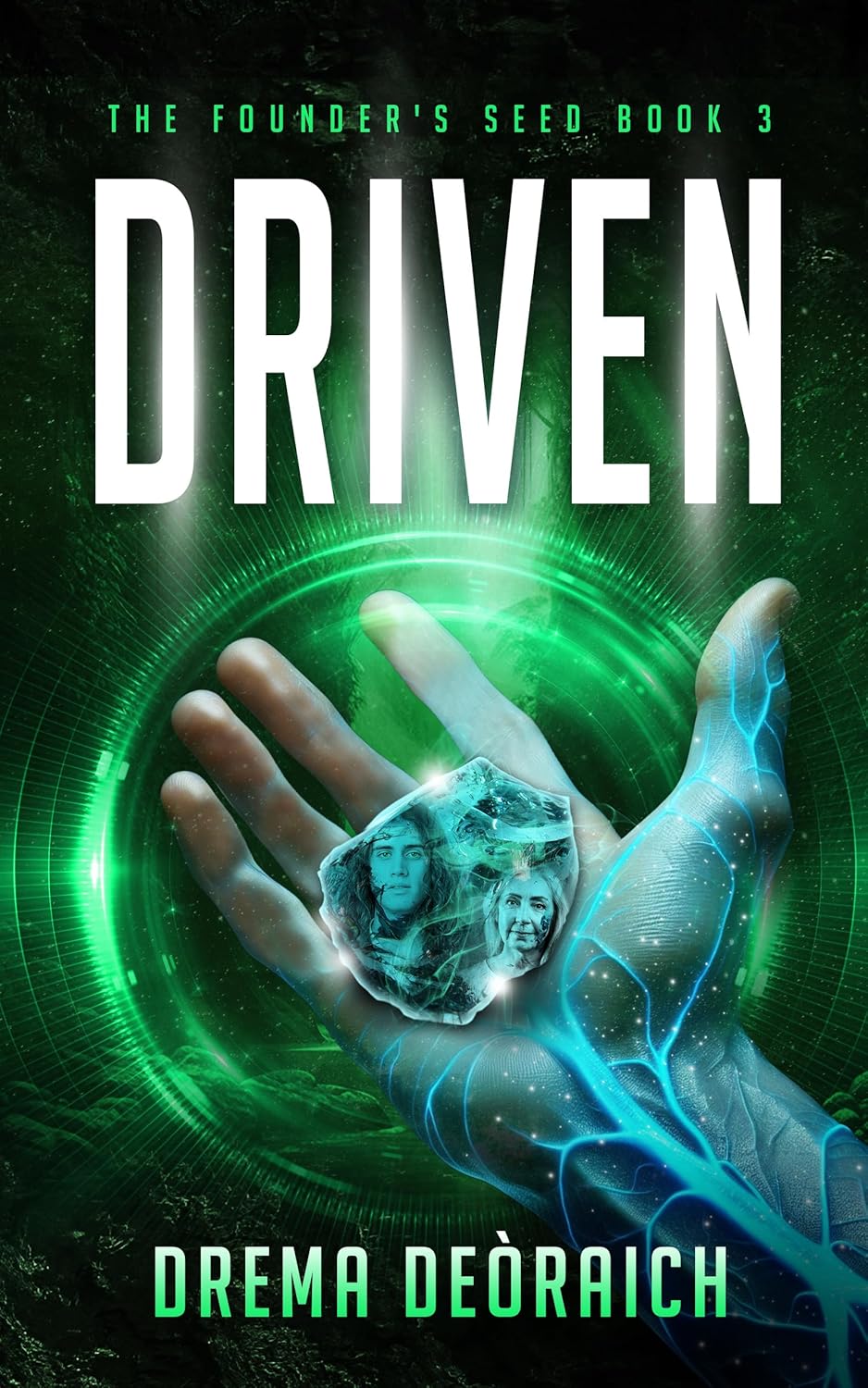
Driven is the third installment in The Founder’s Seed series, continuing the riveting saga with even higher stakes and deeper revelations. The book pulls you straight into a galaxy alive with politics, betrayal, and fragile alliances. Admirals, traders, and hidden survivors of a nearly lost people clash in a world where loyalty is currency and compassion is weakness. At the heart of it all are Alira, still wrestling with her fractured self, Botha with his quiet wisdom, and Thrace carrying the burden of leadership under constant threat. The novel moves between brutal experimentation on the mysterious Iridosians, tense negotiations among rival factions, and deeply personal struggles for survival. It is a story of ambition, cruelty, resilience, and the thin thread of hope that refuses to snap.
Reading this book stirred a mix of awe and discomfort in me. The clinical coldness of Knøfa’s experiments made my stomach twist, yet I couldn’t look away. The writing is vivid, even when it’s painful, and that’s part of its power. I found myself admiring the author’s willingness to go dark, to show how curiosity can turn into obsession, and how power can warp good intentions. At the same time, the quieter moments between Alira and Botha gave me room to breathe, to feel the warmth of trust slowly taking root in frozen soil. Their scenes lingered with me, like a candlelight after the storm.
There are a lot of moving parts here. Political factions, shifting alliances, plots within plots, and it took me a while to sort through them all. But once I settled in, I found myself hooked. The author doesn’t coddle the reader. She trusts us to keep up, and I respect that. What I loved most was the emotional honesty tucked between the battles and schemes. Fear, hope, guilt, tenderness, it all feels raw and real, even in the middle of starships and alien physiology.
Driven left me both unsettled and uplifted. It’s a rewarding read. I would recommend it to readers who enjoy science fiction with grit and heart, to those who don’t shy away from moral grayness, and to anyone who loves stories that ask what survival truly costs. If you like your space operas full of high stakes but also deeply human at the core, this book will leave a mark.
Book 1 – Galileo’s Points of Light in the Night Sky (Dr. K’s Portal Through Time)

Galileo’s Points of Light in the Night Sky tells the story of two siblings, Jennifer and Daniel, who, with the help of the mysterious Dr. K, travel back in time to meet Galileo Galilei. Through their journey, they witness Galileo’s discoveries firsthand, from the moons of Jupiter to the phases of Venus. They even help him build a telescope. Along the way, the children learn not just about the science of the universe but also about curiosity, resilience, and the courage it takes to question the world around you. It is part history, part science, and part adventure, written with young readers in mind, and it manages to make centuries-old discoveries feel fresh and exciting.
I found myself charmed by the storytelling in this children’s book. The voice is warm and approachable, and the author makes sure the science never feels heavy. Instead, it comes alive through dialogue and adventure. The way the kids interact with Galileo is delightful, and their wonder mirrors what I imagine any curious child would feel meeting a great mind of the past. I also liked how the book wove in real facts without turning it into a dry lesson.
There were moments where the writing leaned into explanation, and I felt the momentum slow. Still, those small bumps didn’t take away from the bigger experience. The heart of the book is curiosity, and that comes through loud and clear. I also appreciated how the narrative balanced Jennifer’s voice with Daniel’s. It gave the story a sense of shared discovery, which felt true to childhood adventures.
I’d recommend this chapter book to kids who are fascinated by space, science, or history, and also to parents or teachers looking for an engaging way to spark that interest. It’s perfect for middle-grade readers who enjoy a mix of imagination and learning. The story encourages children to ask questions and to see science as an adventure. For me, that’s its greatest success.
Pages: 104 | ASIN : B0F4NQTCNP
Encouraging Young Minds

Galileo’s Points of Light in the Night Sky follows a pair of curious siblings and Dr. K and her magical time portal, who travel back to Renaissance Italy to meet Galileo and experience firsthand the wonder of his telescope and discoveries. What was the inspiration for the setup of your story?
The inspiration came from my desire to make science and history feel alive for children. Galileo’s discoveries changed how we understand the universe, yet for many young readers, history can feel distant or abstract.
By introducing a magical time portal and pairing the story with two inquisitive siblings, I wanted to create a bridge between today’s readers and the past.
The setup allows children to see history not as dusty facts in a textbook but as living experiences full of curiosity, wonder, and adventure.
I enjoyed your characters, especially Dr. K. What was your favorite character to write for and why?
Dr. K was certainly the most rewarding character to write. She is both a guide and a fellow traveler, modeling how to ask questions, nurture curiosity, and balance seriousness with a sense of wonder. Through her, I was able to weave together elements of science, history, and imagination.
She is not only a mentor to the children in the story but also a representation of my own lifelong passion for encouraging young minds to explore the world around them.
What were some educational aspects that were important for you to include in this children’s book?
I wanted to emphasize both Galileo’s scientific process and the cultural context of his discoveries. Children learn not only that Galileo built a telescope and observed the moons of Jupiter, but also that these observations challenged established beliefs of the time.
The book highlights critical thinking, perseverance, and the courage to question accepted truths.
I also included a “Science Primer” at the back of the book to give readers and educators additional resources, ensuring that the story supports learning in both classrooms and homes.
Can you tell us more about what’s in store for Dr. K and the direction of the second book?
The second book, Marie Curie’s Radiant Quest, transports readers to Paris at the turn of the 20th century.
In this story, Dr. K and the siblings meet Marie Curie and learn about her groundbreaking work with radioactivity.
The narrative continues to blend adventure with science, showing not only Curie’s discoveries but also her perseverance in the face of challenges as a woman in science.
The series as a whole will continue to introduce children to great scientists across time, always with an emphasis on curiosity, resilience, and the wonder of discovery.
Author Links: GoodReads | X (Twitter) | Facebook | Website | Katherine Korkidis | Amazon
In the awarding-winning Galileo’s Points of Light in the Night Sky, the first book of the captivating Dr. K’s Portal Through Time series, Jennifer, a vivacious 10-year-old, and her intellectually curious 8-year-old brother, Daniel, embark on an exceptional voyage through the annals of time. Guided by the enigmatic and brilliant scientist, Dr. K, they are transported to the heyday of Renaissance Italy, straight into the workshop of the iconic astronomer, Galileo Galilei.
As they traverse the time portal, Jennifer and Daniel experience firsthand Galileo’s groundbreaking observations of the celestial expanse through his innovative telescope. They are enlightened about the significance of questioning established norms and the audacity needed to defy the status quo. The siblings witness Galileo’s unveiling of the cosmos’s wonders and his revolutionary proposition that our Earth is not the center of the universe.
Throughout their journey, Jennifer and Daniel support Galileo in chronicling his pioneering discoveries. They confront challenges that enhance their problem-solving abilities and deepen their grasp of the scientific method. Their adventure cultivates an appreciation for the quest for knowledge and the potency of curiosity.
This enthralling tale seamlessly blends history, science, and adventure. It offers young readers a captivating, educational narrative, introducing them to the mesmerizing world of astronomy and the enduring contributions of one of history’s most illustrious scientists. The story of Jennifer and Daniel will inspire the readers to question, explore, and cherish the pursuit of knowledge, just like Galileo did. The book, while being a thrilling read, also helps foster a love for STEM disciplines in young, inquisitive minds, making it a perfect addition to any child’s reading list.
At the end of Book 1 is a QR code for the Science Primer, a comprehensive, free downloadable guide over 100 pages long, written specifically for parents and teachers. It also includes a complete Teacher’s Guide with detailed lesson plans, a glossary of terms, and an extensive list of resources such as books, videos, websites, and other online Resources for teaching about Galileo and his discoveries. The primer is designed to make science education engaging and accessible. Each of the books written for the series will feature its own tailored Science Primer. Book 1 itself also includes a glossary of terms and resources designed specifically for children ages 8-12, complementing the exciting adventures of Jennifer and Daniel.
Broken: The Founder’s Seed Book 2

When I opened Broken, I was immediately pulled into a world brimming with tension, betrayal, and the complicated weight of carrying other people’s lives inside your own head. Drema Deòraich’s story follows Alira, Galen, and Thrace as they navigate shifting identities, political intrigue, and the brutal cost of survival among human and unammi factions. The author builds a layered tale of power struggles, loyalty, and moral compromise, where every choice feels like a thread tugging at the larger web. The book is about what it means to stay whole when you are forced to fracture yourself for the sake of others.
The writing has a pace that rarely lets up, and the dialogue carries a sharpness that feels lived-in. The shifting perspectives, the sudden bursts of violence, and the moments of quiet reflection all come together to create a rhythm that feels alive. At times, the narrative voices inside Alira’s head became almost overwhelming to read, but I realized that was the point. It mirrored her chaos, her crowded sense of self. I found myself admiring how boldly Deòraich leaned into that confusion, refusing to make it easy for the reader, because life inside a fractured mind is never easy.
Beyond the writing, I was moved by the book’s ideas. Questions about identity, about whether survival justifies the blood on your hands, and about how much of yourself you can give away before there’s nothing left. I was thinking about these ideas for a long time afterwards. I felt both sorrow and admiration for Alira. Her choices often frustrated me, yet I couldn’t help but ache for her struggle. The themes of slavery and exploitation, woven into the politics of the factions, hit me hard. They were ugly and uncomfortable, and that’s exactly why they mattered. Deòraich didn’t flinch from showing cruelty, and in that honesty, the book had teeth.
Reading Broken reminded me of Frank Herbert’s Dune in the way it blends political intrigue with questions of identity and survival, but it feels more intimate and raw, pulling me closer to the characters’ inner battles. I’d recommend Broken to readers who love science fiction that challenges them. If you like tales that balance heart with grit, that mix character-driven drama with political maneuvering, this book is more than worth your time.
Pages: 420 | ASIN : B0DLTLQMQP



 LITERARY TITAN