Blog Archives
Depth and Detail

Pandemic Hacker 2 follows a stubborn and resilient woman who transforms her body to be unrecognizable to her enemies; she and her AI partner work to take down an extortion and trafficking group. What was the inspiration for the setup of your story?
The original story idea was to have a hacker who figured out something significant that was part of the plot. It was my first novel, and learning about the process, I changed the plot. The original technical idea is part of the story and subplot, but not the main plot. I also wanted to create a character who wasn’t like the hackers on TV (click, click, click, I’m in.) There is depth and detail to the technology that a group of readers doesn’t get anywhere else. Then, to make it enjoyable, what if she found something, a group that was hidden, that operated outside of the law because they had corrupted the groups that could stop them (FBI). How could she navigate that kind of world? The pandemic setting helps and hurts in different ways, allowing me to present the reader with various viewpoints about our world.
Martha is a woman with strength and determination who refuses to give up. What do you think makes her a valuable and worthy heroine?
She is confident in her ability to do the special operations stuff. She is confident in her hacking, especially with Zoe’s help. She has a compulsion to clean. She grew up poor and won’t spend money on herself, even though she has millions. Partially because of the pandemic, she only has one read friend. She can’t just make friends with new people and expose them to the killer organization. She is learning and growing in Pandemic Hacker 2. By the end of the book, there are several people now part of the group fighting the bad guys. She is looking forward to living again, not just surviving. The ending aims to convey the completion of the journey that began with her asking if all the pain and being alone are worth it.
I find that authors sometimes ask themselves questions and let their characters answer them. Do you think this is true for your characters?
Yes. But my questions are sometimes odd to others. How could someone travel across the country in a few days without being tracked? How would you send a specific, untraceable message to the FBI that you are sure they will see and notice? What evil actions and behaviors would motivate people to help a stranger if they knew helping would be dangerous for themselves?
Where does the next book in the series take the characters?
The first two books dealt with the evil group and revolved around corrupt authorities. The idea for the next book is to explore cleaning up an organization that could be of help. That could start to turn the tide. Who can you trust, who can’t be corrupted? Can you help the good guys so they can help you?
Author Links: GoodReads | Facebook | Website | Amazon
The group leaders operate with impunity. Their security and IT teams are formidable. But Martha is determined to dismantle their empire, stealing their ill-gotten money and learning their secrets. With each strike, the group’s IT experts get closer to knowing her and Zoe’s identities.
The engagements are not just on the internet. Every physical disruption puts everyone in danger. Rejoining with Claire, the chase has become a high-stakes game of cat and mouse. Both sides believe they’re the top predator.
Innocent lives can be destroyed. Is the best option to expose the leaders to the authorities or work to remove the hydra heads of the organization? Martha must navigate the physical world, while Zoe works to dominate the virtual one.
Unintended Consequences

Infernal Wonderland follows an akiko who stumbles into the submerged Amber City, a broken metropolis filled with automations, reptilian gangs, and drugs that push him deeper into madness, violence, and strange alliances. What was the inspiration for the setup of your story?
Games like Bioshock and Dark Souls. I wanted to explore something different from what I had explored in the last book, which also took place on Neldar. I knew what the idea and concept were going to be, but I didn’t know what the city was going to be like. The Ichor was going to be a big driving point since it was one of the mechanics from the previous book I wanted to develop more, and a system like Bioshock spoke to me, so I went with that.
I felt that your story delivers the drama so well that it flirts with the grimdark genre. Was it your intention to give the story a darker tone?
I write dark stories, apparently, and no matter how hard I try, the tales always end up that way. I guess it’s just my style, and honestly, I enjoy those types of stories more, so it’s probably why.
What themes were particularly important for you to explore in this book?
Morality, consciousness, identity, power of corruption, unintended consequences, shadow integration, love and sacrifice, as well as transformation, among others. I believe that in a complex universe, traditional categories of good and evil are insufficient to capture the full truth of existence. I enjoy exploring fundamental questions about morality, consequence, and the price of knowledge and power, for the most part.
I hope the Elder’s Vault series continues in other books. If so, where will the story take readers?
Infernal Wonderland is actually the third novel in the series, and wraps up what the second novel consisted of. I’m currently writing the fourth book. Benign Dystopia is the first novel, and Tellurian Otherworld is the second. The fourth book, currently titled Elysium Nightmare, will take readers on a journey of self-discovery and awakening to one’s true self. It dwells a lot on the nature of consciousness and what it means to be “truly aware.”
Author Links: GoodReads | Website | Amazon

Black Glove
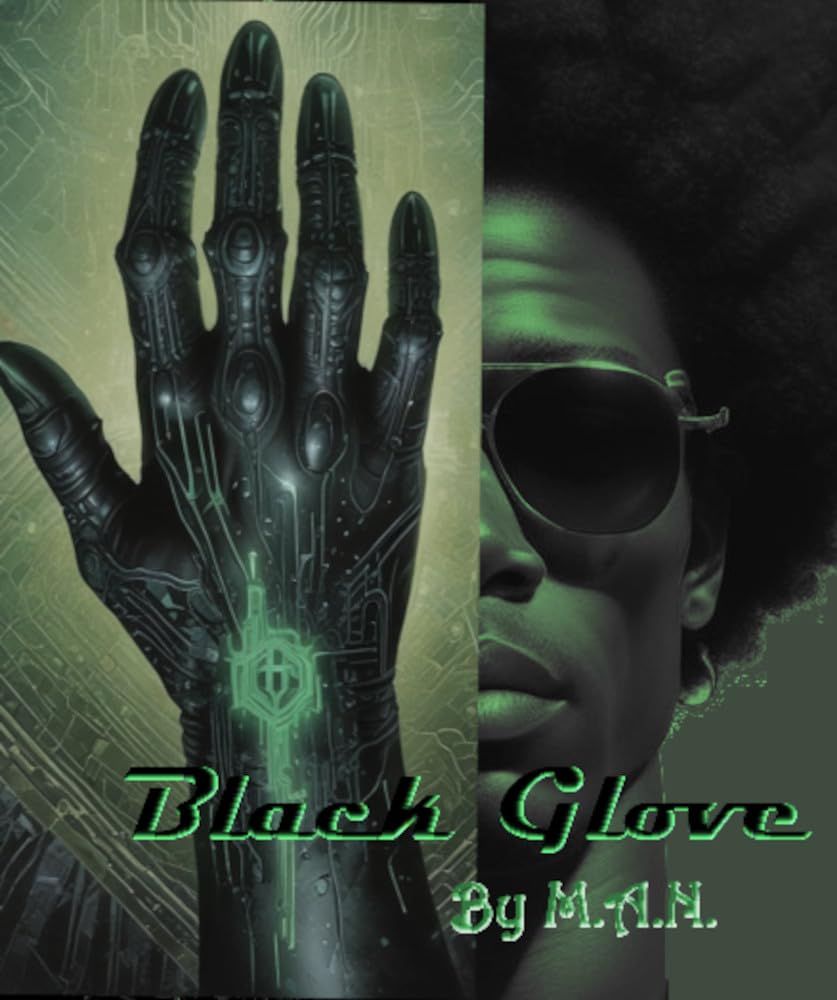

The novel Black Glove by M.A.N. is a sprawling tale of vengeance, power, and the blurry line between justice and corruption. It follows Leroy Black, a young man marked by loss, who grows from grief into a relentless vigilante. His brother is murdered by gang members, his father killed unjustly by police, and these tragedies set him on a lifelong path. Trained in every art of combat, from boxing to martial arts to military precision, Leroy reinvents himself as a force of wrath against gangs and systemic oppression. Parallel to his story is the rise of King Solomon, the leader of the Dynamite Flash, a militant group caught between fighting oppression and becoming what they despise. The two figures move through a world where brutality and ideals clash, raising the question of whether salvation can ever be born from violence.
This story is a whirlwind of action and anger. The fight scenes are long, detailed, and absolutely wild, sometimes almost cinematic in their intensity. At times, I found myself grinning at the sheer audacity of the battles. The writing doesn’t hold back. It’s raw and brutal, sometimes over-the-top, yet I could tell the author poured a lot of heart into balancing the spectacle with deeper themes. I liked the tension between Leroy’s personal mission and the wider chaos around him. He’s both a hero and a man broken by grief, and that contradiction kept me hooked. At the same time, there were stretches where the detail of combat overshadowed the emotional core, and I found myself wishing the quieter, human moments had more room to breathe.
I admired the ambition. The book isn’t afraid to dive into uncomfortable territory. It doesn’t gloss over systemic failures or the ways power corrupts, and it asks hard questions about what happens when resistance begins to mirror oppression. King Solomon, in particular, fascinated me. He’s charismatic and ruthless, convinced that dirt must be fought with dirt. I felt uneasy whenever he spoke, which I think was the point. The moral ambiguity, paired with the relentless energy of the prose, gave the story a jagged edge.
Black Glove is a furious book. It’s for readers who want action mixed with philosophy, who don’t mind a story that gets messy and brutal to make its point. I’d recommend it to people who enjoy gritty superhero stories, vigilante epics, or urban tales that don’t shy away from politics and pain. It’s not a light read, but if you’re ready to ride through chaos, it has a lot to offer.
Pages: 260 | ASIN : B0FDTRSBZH

Book 1 – Galileo’s Points of Light in the Night Sky (Dr. K’s Portal Through Time)
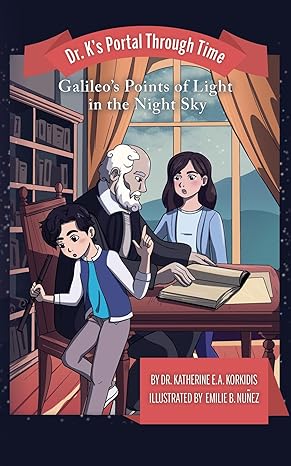

Dr. Katherine E.A. Korkidis’s Galileo’s Points of Light in the Night Sky is the first book in her Dr. K’s Portal Through Time series, and it’s part history lesson, part science primer, and part adventure story. It follows Jennifer and Daniel, a pair of curious siblings, who stumble upon Dr. K and her magical time portal. Together, they travel back to Renaissance Italy, step into Galileo Galilei’s workshop, and experience firsthand the wonder of his telescope and the audacity of his discoveries. Along the way, the kids not only learn about Jupiter’s moons, the phases of Venus, and the birth of modern astronomy, but they also discover the importance of curiosity, observation, and persistence.
The first thing that caught my attention about this book was how effortlessly it weaves fact with fiction. For instance, the scene where Jennifer helps Galileo build his telescope is not just a charming piece of dialogue; it’s a clever way to introduce kids to optics and focal lengths without feeling like a lecture. I found myself smiling at Jennifer’s excitement when the blurry image sharpened into Jupiter and its moons. That moment carried the same sense of awe I remember from my own first look through a telescope. The science was accurate but approachable, and that balance is hard to pull off in a children’s story.
I also appreciated how personal the narrative felt at times. Jennifer’s relationship with her grandfather in the opening chapter set the tone beautifully. Their bond over stargazing gave the adventure real heart. Later, when Jennifer and Daniel stood side by side at the end, promising to always explore the stars together, it felt earned. The book wasn’t just about Galileo’s discoveries; it was about how science can be shared, passed down, and made meaningful within families. That emotional thread made the whole story more engaging.
Another highlight was the way Dr. Korkidis portrayed Galileo himself. She didn’t make him an intimidating genius, but rather a patient teacher who invited the kids into his world. His explanation of the moons of Jupiter and how he realized they orbited the planet was fascinating, and his gentle encouragement to keep asking questions stuck with me. The inclusion of real historical details, like the Medicean stars and Galileo’s struggles with skepticism, grounded the story while still keeping it light enough for younger readers.
This book left me feeling inspired and a little nostalgic. It reminded me of the first time I realized science could be an adventure. I’d recommend Galileo’s Points of Light in the Night Sky to curious kids around 7–12, but also to parents, grandparents, and teachers who want to spark a love of STEM in children. It’s not just a story about Galileo, it’s a story about why wonder matters, why questions matter, and why we should never stop looking up.
Pages: 104 | ASIN : B0F4NQTCNP
A Fresh Start For Humanity

Tim Rees’ Original Earth: Book One follows the last survivors of humanity who have, for generations, drifted through space and now, after their ship is sabotaged, are forced to land on what they now call Earth 2. What was the inspiration for the setup of your story?
What a great question! Thank you for asking it.
I live very near a beach in Wales called Freshwater West. It’s a beautiful beach and I walk on it pretty much every day. Whilst walking on this one beach in Wales, I will see the debris of humankind. Our rubbish. Manmade items that have no place in the natural world. I am constantly being shocked by what I see in this very small corner of the world and this is just one beach. I’m sure you could walk on every beach in the world and experience shock and horror at what we’ve done. And what I see is of little consequence to the bigger picture. What is the rubbish made of and where do we get the materials to make the rubbish in the first place, that’s the bigger picture. And, of course, I’m only scratching the surface here… So, to keep this short, I find myself gasping on the same question every day: imagine how beautiful this planet would be without humans?
I’m a novelist and my tools are words, so the story evolved upon the question: imagine if we were offered a new, uncontaminated planet and a fresh start, how would I, as an author, wish to see humanity move forward…?
And I wanted the main character to be an individual in perfect harmony with the natural world, so through that character I could play with scenarios and ideas about what it must feel like to be truly in harmony with nature and with all my fellow natural beings.
One of the things that stands out in your novel is the complex relationships of the survivors as they try to rebuild a life on this new planet. What aspects of the human condition do you find particularly interesting that could make for great fiction?
I like your use of the term ‘human condition’, because we live in societies where we are conditioned to live in particular patterns and aspire to particular goals. I could go on, but let’s keep this simple. On the spaceship, everyone was forced to live together in a sterile, confined space. They knew no different, so it wasn’t really a problem, that is, until they were exposed to the hope or the opportunity to explore their own dreams and aspirations. They land on a planet without any experience of how to live in the ‘real’ world. They are completely innocent, except for information and data they have with regard Original Earth. So I asked myself the question: where do these people begin to build a community into a free-thinking society? To begin to answer that question, I reflected on a passage in a previous novel I’d written called Delphian. In the novel there is this relevant passage:
For some reason his thoughts always ended up at the same questions: society and establishment; two words describing the maze of structure created to protect and enable the vast variety of people to live in apparent harmony. His mother had put it perfectly when she’d said: ‘People are different shades of colour, darling, and too often the colours clash.’ She was so right. Different shades of colour. Beautiful. Different shades of personality in a rainbow of dreams, aspirations, hopes and desires… It is we, collectively, who accept terms like human resources, for instance. It is we who put up fences labelled ideology and either stand on one side or the other and proclaim this is right and that wrong…
As an author, I’m hugely excited to explore this landscape. No spoilers, but in books two and three you see those colours naturally coming together and blending, whilst other colours clash and pull apart. I leave that very much to the characters to play out. I’m in discussion with a film producer at the moment, not for Original Earth, but another story, but he complimented me on the fact my scenes breathe. I know what he means, but I don’t create that, the characters do.
What themes were particularly important for you to explore in this book?
That’s an easy question. The damage we have done to planet Earth. The damage we have and are continuing to do to ourselves, because, whilst we poison the planet, we also poison ourselves. And the damage we have done and continue to do to the planet and all other life forms with whom we share this space has to stop, because we only have this one planet. I write fiction so can imagine exploring different worlds, but will humanity survive our collective suicide in order to really explore other worlds?
Where does the story go in the next book, and where do you see it going in the future?
Anu grows closer to Sonri and together they will explore the universe. You already see that in books two and three and in all the planets Anu visits you’ll see a reflection of humans on Earth. For instance, in book three Anu visits a planet run by a humanoid species governed by a repressive, authoritarian ideology similar to Afghanistan and the Taliban – Anu, of course, liberates the women in that society. In book four, the novel I’m currently writing, Anu returns to Original Earth about 150 years in our future. Planet Earth is unrecognisable.
I think in the back of my mind, I always had the idea I’d like Original Earth to evolve in a similar way the stories of Star Trek must have for Gene Roddenberry.
Author Links: Facebook | Instagram | Threads | TikTok
Now, armed with some knowledge of the complex relationships that exist between both fauna and flora – all life with whom we share this incredible planet – what lessons have we learned?
This is a story about a new beginning…
Anu has a gift: her personal vibration is in perfect harmony with the natural world.
Infernal Wonderland

When I first cracked open Infernal Wonderland, I wasn’t sure what to expect. What I found was a sprawling, neon-drenched fever dream of a story. It follows Jadecan, an akiko, who stumbles into the submerged Amber City, a broken metropolis that feels alive and dead all at once. From the very first chapter, the world is suffocating, strange, and brimming with danger. Automatons sell people for parts, reptilian gangs lurk in the shadows, and a drug called Ichor twists minds and bodies. The book unfolds in five parts, each one pushing Jadecan deeper into madness, violence, and strange alliances, while the PA system keeps whispering about revolution like a ghost that refuses to die.
This is a unique book. Sometimes thrilling, sometimes disorienting, and often unsettling. Killam has this way of painting a scene that engages your senses. There were moments where I wanted the story to breathe, to let the horror and beauty of Amber City sit with me instead of racing ahead to the next grotesque fight or cryptic exchange. Still, the book’s voice stuck with me. It’s sarcastic, it’s grim, and it doesn’t let you forget that the world is cruel. I found myself both grinning at the dark humor and wincing at the relentless blood and guts.
What really hooked me, though, was the mix of philosophy and pulp. Amidst all the gore and chaos, characters stop to talk about the meaning of life, about want versus need, about existing without actually wanting to exist. Those conversations gave the book an odd tenderness that surprised me. I could feel the author reaching for something bigger.
Infernal Wonderland is haunting and oddly beautiful. It’s not a book for someone looking for a straightforward plot or a clean arc. It’s for readers who want to sink into a unique atmosphere, who don’t mind being jarred, and who can handle equal parts gore and poetry. If you’ve ever loved stories like Bioshock or Blade Runner but wished they were darker and stranger, this book will feel like home.
Pages: 421 | ISBN: 978-1-957195-18-6
Tim Rees’ Original Earth: Book One
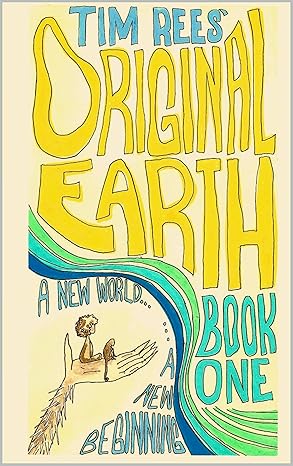
When I opened Tim Rees’ Original Earth: Book One, I expected a familiar survival tale. Instead, I found an emotional journey that runs from the claustrophobic passages of a crippled starship to the harsh beauty of an alien planet. Humanity’s last thousand survivors drift in space for generations before sabotage forces an emergency landing on a world they call Earth 2. Tim Rees explores not just survival, but whether people can truly change when given a second chance. At the heart of it all is Anu, an eight-year-old girl whose honesty and quiet courage cut deeper than the words of most adults.
The opening chapters carried a warmth that drew me in. Anu’s algae-block “strawberry” breakfast was both sweet and heartbreaking, and it showed me how well Rees balances innocence with underlying loss. That sense of comfort didn’t last. The sabotage of the algae vats shattered it in an instant. The frantic scramble to abandon ship, paired with Juno’s ruthless grab for power, made me feel just how fragile their world had always been.
The landing on Earth 2 was one of the most striking sections for me. Rees describes grass beneath bare feet, birds overhead, and the shock of real air with such vividness that I felt the settlers’ exhilaration. Yet he cuts that wonder short with the sudden appearance of a dinosaur-like creature, a jarring reminder that this new world is as dangerous as it is beautiful. Survival becomes grueling, and the endless cycle of hunting, gathering, and securing water presses heavily on every page. Rees captures that grind with a stark honesty that left me uneasy but deeply invested.
For me, Juno’s tightening grip was one of the most unsettling parts of the book. His obsession with water control felt alarmingly real, and it made me think about how fragile any society can be when power rests on basic needs. At the same time, I found myself drawn to Emrys and Onua’s struggle to hold their family together, even as Onua’s injuries dragged them down. What struck me most was Anu’s quiet strength in these chapters. Watching her comfort her brother with a maturity far beyond her years was both moving and painful.
The latter portion of the narrative resonated with me. The pages carried betrayals, losses, and a sliver of hope that felt almost too fragile to hold. Anu’s reflection near the end on what survival truly costs stunned me. It wasn’t neat, and it wasn’t reassuring. Rees doesn’t hand out easy answers. Instead, he leaves us with the harsh truth that humanity has to keep trying, even when the odds feel impossible.
Tender and tense, Tim Rees’ Original Earth: Book One blends discovery, danger, and humanity’s flaws with remarkable honesty. For readers who love survival stories with heart and grit, this book delivers.
Pages: 338 | ASIN : B0DLPGDKQF
The Haunted Purse

Kimberly Baer’s The Haunted Purse tells the story of Libby, a teenage girl who stumbles upon an old denim purse in a thrift store, an object that quickly proves to be anything but ordinary. What begins as a quirky tale about misplaced homework turns into a strange, emotional journey, blending the everyday struggles of adolescence with eerie, supernatural twists. The purse makes things vanish and reappear, leading Libby to uncover pieces of another girl’s life while also grappling with her own fractured family, fragile friendships, and the heavy weight of being far more responsible than a 15-year-old should be.
What I really liked about this book is the way Baer balances the supernatural element with the gritty realism of Libby’s life. Right from the first chapter, when her history report goes missing only to reappear later in the depths of her purse, I was hooked. The purse feels almost like a character itself, playful, mysterious, and sometimes cruel. But what kept me reading wasn’t just the magic. It was Libby herself. She’s sharp, sarcastic, and quietly hurting, and her voice feels completely authentic. When her mom breezes back into her life for a night of fake promises and cigarette smoke, the ache in Libby’s words made me want to both hug her and cheer her resilience.
Another standout for me was the friendship between Libby and Toni. It’s messy and complicated in exactly the way teenage friendships usually are. Toni is bossy, dramatic, and sometimes dismissive, like when Libby finally confides in her about the purse’s supernatural powers and Toni just laughs it off as “woo-woo crap”. Yet, despite all their friction, the bond is real. Their arguments over school dances and borrowed clothes feel so grounded, and it’s through these moments that the story explores deeper themes, loyalty, envy, and the fear of being left behind.
And then there’s the haunting itself. I loved how Baer keeps the paranormal subtle and slippery, never giving us easy answers. Objects vanish, like the bottle of perfume or Toni’s brand-new jeans, and sometimes they reappear, sometimes not. The uncertainty adds tension, but it also works as a metaphor for Libby’s unstable life. She’s constantly holding on to things, friends, family, dreams, that seem to slip through her fingers no matter how tightly she grips them. The purse is magical, yes, but it’s also heartbreakingly symbolic.
By the end, I was both unsettled and moved. The story never veers into outright horror, but it carries a steady undercurrent of dread, softened by the warmth of Libby’s determination to keep pushing forward. Baer’s writing is vivid but unpretentious, full of small, sharp details that make the characters and their world feel lived in.
I’d recommend The Haunted Purse to anyone who likes their coming-of-age stories with a supernatural twist. It’s perfect for readers who appreciate strong, flawed teenage voices, or for anyone who remembers what it felt like to navigate the messy in-between of adolescence, when friendships, family, and self-identity all feel like they could disappear at any second. For me, it was equal parts strange, sad, and hopeful, and that combination made it a book I won’t forget anytime soon.
Pages: 265 | ASIN : B0FLWK2DQM



 LITERARY TITAN