Blog Archives
Adora’s Dance With the Prince


Adora is a bright, imaginative young woman living in a vibrant West African kingdom. Her heart longs for the grand festival newly announced in the capital, yet her days are consumed by the thankless drudgery imposed by a cruel stepmother and selfish stepsisters. Just as hope begins to fade, a shimmering twist of fate arrives, her Spiritual Mother appears, bearing a gown of breathtaking beauty, elegant shoes, and a magical palanquin to carry her to the palace. There, among the lantern light and music, Adora captures the attention of a handsome prince. But magic has limits. When the enchantment dissolves, she flees into the night, leaving behind a single shoe and a prince determined to find her.
Adora’s Dance with the Prince, by Tricia Knights, offers a fresh, culturally rich reimagining of the timeless Cinderella legend. Targeted toward children aged five to nine, the book blends a familiar story arc with vivid West African flair and a generous infusion of magic.
Cinderella’s enduring appeal lies in its universal themes. Children, across cultures and generations, understand the sting of unfairness, being excluded from something wondrous, as Knights so vividly portrays with the festival. At the same time, they embrace magical thinking with ease. The sudden arrival of a benevolent Spiritual Mother at the very moment she is needed feels not just believable, but inevitable in the boundless logic of childhood.
Knights, however, doesn’t simply retell the classic. She bends the arc, subverting expectations in small but satisfying ways, keeping even seasoned readers leaning forward. And while the plot charms, the illustrations astound. Each page bursts with color and life, every detail layered with texture and movement. These are not incidental embellishments; they elevate the narrative, making the book as much a visual feast as a storytelling delight.
The combination of luminous imagery, lively pacing, and a heroine worth cheering for ensures Adora’s Dance with the Prince will resonate with young readers everywhere. It is a story that celebrates courage, beauty, and the belief that magic, whether literal or not, can change everything.
Pages: 32 | ASIN : B0FCD8KGSD

Friendship and Responsibility
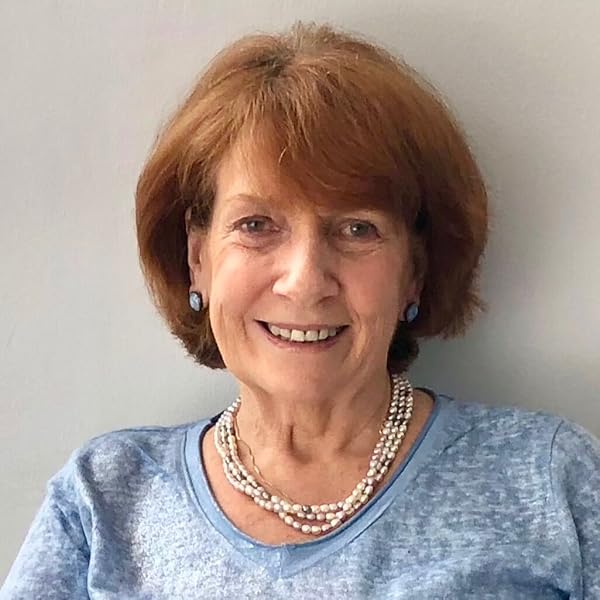
The Tralls of Maruchus follows a spirited young trall who befriends a water sprite and promises not to reveal their existence, yet after a devastating fire, she is forced to break that promise. What was the inspiration for the set up of your story?
There were two important issues I wanted this story to cover.
Firstly, I wanted to show my young readers that even if someone is very different from them, they can become friends. I firmly believe that, as Australia and indeed the whole world become more multicultural, this is an important concept for children to understand.
Secondly, children quickly learn that promises must be kept, and this can sometimes cause them worry and concern, and even lead to dire consequences. I wanted to demonstrate through this story that there are good promises and bad promises. Promises that make you feel happy and excited are good promises and can be kept, but promises that make you feel unhappy, sad, or worried are bad promises and they can be broken, and should be shared with others.
In many contemporary coming-of-age fiction novels, authors often add their own life experiences to the story. Are there any bits of you in this story?
When I was teaching, I would read a chapter of a book to my class each morning, and the stories, although wonderful and exciting, were always about the lifestyle of children living in other countries. By the time I retired, I had three grandchildren, and I wanted to leave them a legacy that would remind them of our family and the close bonds we shared, so I decided to write a portal fantasy, and set it in Queensland so it would showcase an Australian lifestyle.
I included many of the good times we’d shared as a family and the valuable lessons we’d learned along the way. I also included some childhood memories of happy times spent with my own grandparents.
Then, just after the first book was released, my mother and my husband passed away, so I included many of the maxims they loved to pass on. Sadly, a lot of today’s children don’t live near their grandparents, and consequently, they miss out on these nuggets of wisdom.
As more grandchildren arrived, more books were added, and gradually, The Trall Series developed into a stylised biography of our extended family. The tralldoms, for instance, were influenced by the happy carefree existence we had when we lived on Badu Island in the Torres Strait, and the personalities and traits of the various characters are an amalgamation of several family members. There are always a few chuckles when someone is recognized or an event is recalled.
What were some themes that were important for you to explore in this book?
Each book in the series covers issues that I feel strongly about; namely empathy, inclusiveness, fairness, and responsibility.
In The Tralls of Maruchus, I focused on friendship and responsibility. I hope this story encourages young readers to realise that true friendship should be based on shared beliefs, shared interests, a strong commitment to understanding each other, standing by each other in times of need, and embracing differences as well as similarities.
I’m also very committed to preserving the environment and its native flora and fauna. Each book in The Trall Series is based on a different environmental problem that the characters work together to overcome. I truly believe that if we can introduce young people to the beauty of their local environment early enough, they will develop into adults who will take positive steps to care for it.
I hope the series continues in other books. If so, where will the story take the readers?
The series now consists of five books: The Tralls of Nindarry, The Tralls of Mundi, The Tralls of Maruchus, The Tralls of Colum, and The Tralls of Nosa. As previously stated, each story includes an environmental issue (mining, misuse of water, fracking, plastic waste, and local fauna and flora being displaced by introduced species).
They also deal with many of the issues that have an impact on children as they develop their own character and personality.
My hope is that The Trall Series will have a positive effect on young readers and encourage them to make choices that will help them to promote the best facets of themselves. I also hope it will encourage them to become more aware of the environmental problems our world is facing, and that the brave, resourceful young characters that feature throughout the series will motivate them to take an active role in protecting their own environment.
Author Links: GoodReads | Website | Amazon
Eventually, Ellie takes her new friend to her tralldom to meet her kinships and Maya promises the fief that she will never tell anyone about the Tralldom of the Rivers or the water sprites who inhabit it but when their home is destroyed by fire and the lives of the water sprites are put at risk, Maya soon realises that she is unable to help them by herself and that promise becomes a burden too great for her to bear.
Eventually, Maya is forced to break her promise and the story she shares leads to a chain of events that will change the lives of the sprites forever.
Will Ellie, who considers a promise to be a sacred oath be able to forgive Maya or could her betrayal lead to the end of their friendship?
The Tralls of Maruchus is the third book in The Trall Series, a collection of exciting portal fantasies set in Australia. The books may be read as stand-alone books but reading them in sequence opens up the wonderful world of the tralldoms and their inhabitants and uncovers some long-held secrets.
The series has been written for competent readers aged between 9 years and 13 years.
A Pivotal Lens
Trace of Arcane follows a teenage girl navigating life in a fractured society as she struggles to find autonomy while facing the pressure of the coming ceremonial passage. What was the idea, or spark, that first set off the need to write this novel?
What drew me to this story, and to Eden as a protagonist, was the challenge of portraying the neurotype colloquially known as psychopathy with nuance and texture. Over four years, I had extended conversations with individuals living with this form of neurodivergence. I wasn’t interested in the usual caricatures. I wanted to understand them not as villains, but as whole, observant, complex human beings. Eden’s voice emerged from those conversations, and Trace of Arcane became a space to explore deeper questions around conscience, survival, and the systems we live within.
Early on, I noticed that many neurodivergent individuals don’t automatically adopt social structures the way neurotypical people often do. Instead, they examine these systems critically and only mirror them to the extent necessary to avoid social exclusion. This observation made me reflect on the psychological mechanisms embedded in our institutions—religious, political, and cultural. These structures often act as filters, helping people manage the complexity of life. But for those with shallow affect or atypical emotional processing, these filters don’t function the same way. They mimic them, rather than experience them. That dissonance opened up new questions for me: about belonging, about power, and about how easily such systems can be co-opted to marginalize outgroups or consolidate control.
I also did not want the views of the neurodivergent characters to remain unchallenged within the story. Around that time, I came across the work of Dr. Zoran Josipovic, who has studied the brains of meditating monks and found heightened activity in the prefrontal cortex—the part of the brain associated with empathy. By contrast, researchers like Dr. James Fallon have shown that in psychopathy, this same region is often underactive during decision-making. That contrast fascinated me. It felt like the two neurotypes (even though those who have meditated for many years are not a neurotype) were engaging with the world in fundamentally different ways, and I wanted to explore what might happen when they collided.
This led me to dive into monk-centered spiritual teachings, which eventually inspired the creation of other key characters—individuals whose worldviews would directly challenge the neurodivergent characters within the story. Their interplay became a core tension not just in Trace of Arcane: Viridis, but across all three novels in the series.
The science inserted in the fiction, I felt, was well balanced. How did you manage to keep it grounded while still providing the fantastic edge science fiction stories usually provide?
My primary focus wasn’t on science fiction in the traditional sense. My attention was on the social and psychological structures people use to navigate the world—institutions, belief systems, hierarchies—and how those structures shape identity, belonging, and power. The science in Trace of Arcane: Viridis emerged as a secondary layer, more as a tool for exploring those dynamics.
The story follows a neurodivergent girl trying to cope within a fractured, post-apocalyptic world, and I was more interested in her internal logic: how someone with her cognitive wiring might perceive and respond to systems that often demand emotional conformity. That lens helped keep everything grounded. The speculative elements are there, but they’re tethered to real-world dynamics and grounded human experience.
In Book Two, I do lean further into the science behind the fiction—especially in terms of technology, cognitive science, and surveillance systems—but even then, it’s all in service of the characters and the ethical questions they’re grappling with. The “fantastic edge” becomes sharper as the story unfolds, but it’s always rooted in something psychologically or politically real.
What was one scene in the novel that you felt captured the morals and message you were trying to deliver to readers?
There’s a scene early in the novel where Eden recalls using a hidden path to avoid Amaia’s constant lectures on respect. At first glance, Eden comes across as brash and disrespectful, especially in how she speaks to characters like Amaia, and I wanted the reader to sit with that impression. But as the story unfolds, we begin to see Eden’s inner world more clearly. That scene becomes a pivotal lens: Eden isn’t reacting; she is mirroring.
She sees adults demanding respect without offering it, and when she reflects their tone back at them, she’s punished for it. There’s a line where she thinks, “If she hates it so much that I mimic her, then why not change to the behavior she wants reflected?” That moment, to me, captures the core moral tension of the book: Eden is labeled as the outsider, the disrespectful one, but she’s actually holding up a mirror to a society that is itself contradictory and hypocritical.
This becomes a quiet call to the reader: when we encounter something in someone else that unsettles or irritates us, what does that reaction reveal about us? Eden challenges the social norms around her not by preaching or resisting outright, but by reflecting them back. The discomfort that causes isn’t a flaw in her—it’s a diagnostic of the world she lives in.
That’s the heart of Book One: Eden is learning, engaging, adapting—and in doing so, forcing others (and the reader) to confront the assumptions they live by.
What is the next book you are working on, and when will it be available?
Having finished the Trace of Arcane trilogy, the next book I’m working on is called Angel of Death. It follows Azrael, a character introduced in Trail of Arcane: Book Two of the Trace of Arcane series, and dives deeper into his journey: before, during, and beyond his interactions with Eden. While Trace of Arcane was focused more on societal structures and psychological dynamics, Angel of Death leans further into the science of the science fiction. It explores the technologies, surveillance systems, and hidden architectures of power that govern the post-apocalyptic world.
At its core, Angel of Death is a character study about a teenager who begins as an idealist, committed to truth and justice, but slowly transforms into someone willing to break the very rules he once upheld in order to expose systemic injustice. As society fails to respond ethically, and as the costs of truth-telling mount, he becomes increasingly disillusioned. His ideals fracture. Inevitably, he learns about what it means to evolve without losing oneself.
It’s a more expansive story in some ways: technically intricate, politically charged, and emotionally layered. It also offers a more grounded, hard science-fiction tone, exploring how systemic forces can shape a person into exhibiting behaviors we label as psychopathic—while still holding a mirror to the systems that create those very outcomes.
As for the release date, I’m currently deep in the writing process and will announce more details soon. But if Trace of Arcane asked what it means to survive within broken systems, Angel of Death asks what it means to resist them, and what it costs to do so.
Author Links: GoodReads | Amazon
Book One of the Trace of Arcane Series
Trace of Arcane follows Eden, a neurodivergent girl born in Viridis—a remote Fringe society resisting the quiet rule of Lux, an authoritarian power that rose from the ruins of a lost civilization. Lux controls history, suppresses knowledge, and manipulates the Fringe societies through fear, rumor, and erasure.
From a young age, Eden knows she’s different—not in a way that draws admiration, but in a way that draws suspicion. Her mind works differently: precise, emotionally detached, and deeply observant. To survive, she learns to hide it, to mimic what others expect. To pass.
As tensions rise and Lux’s control creeps closer, Eden begins to question the systems around her—who controls truth, who gets to belong, and what is sacrificed to keep the peace. When a forgotten archive is discovered by a society called Arcane, Lux ignites conflict in the Fringe societies before Arcane can share their knowledge with the rest of humanity.
Set in a post-apocalyptic future where memory is controlled and difference is discouraged, Trace of Arcane is the first in a character-driven sci-fi trilogy. More introspective than explosive, it’s a slow-burn story about power, perception, and what it means to live honestly in a world that asks you to disappear.
Labyrinth of Memory

Spear of Lugh follows a powerful and timeless witch reborn across centuries, as she confronts an ancient evil and embraces her destiny as the Keeper of Balance. What were some themes that you felt were important to highlight in this story?
As I delved into the captivating narrative of Spear of Lugh, following Merona, a powerful and timeless witch reborn across centuries, I found myself drawn to several profound themes crucial to her journey. Her epic quest to confront an ancient evil and embrace her destiny as the Keeper of Balance provided a rich foundation, but it was the nuanced exploration of destiny, immense power, and universal equilibrium that truly resonated with me. I aimed to highlight not only her external battles but also her deeply personal struggle through a symbolic labyrinth of memory, ultimately showing that true strength lies in understanding darkness both within oneself and the world.
What was the initial idea behind The Witch’s Rebirth series, and how did that transform as you were writing the series?
Where does the true magic begin? For me, The Witch’s Rebirth series wasn’t with potion-making or incantations, but with the chaotic, exhilarating magic of creation itself. A journey that transformed a simple idea into a thrilling saga far larger and more intricate than my initial scribbled notes ever hinted at. What began as a deceptively straightforward concept, envisioning a witch protagonist facing the harsh trials of historical witch hunts in 1590 Scotland, quickly proved to be just the initial spark for an unpredictable genesis. My restless creative mind, clearly unburdened by sensible notions, soon realized this tale demanded more than mere historical accuracy. It rapidly blossomed into a vibrant blend of fantasy, ancient lore, and profound Celtic mythology. Through numerous revisions, unexpected bursts of inspiration like stumbling upon a real labyrinth, and a deep dive into the very essence of ancient deities, the series evolved. Which gave its primary witch, Merona, a far more ancient lineage, making her a destined embodiment of the land’s primal powers. This enchanting and deeply personal process truly embodies the magic of evolution, a testament to how humble beginnings can lead to an epic, multi-layered narrative that is still unfolding.
Were you able to achieve everything you wanted with the characters in the novel?
Reflecting on my work, the question of whether I fully realized every aspiration for my characters is a nuanced one, landing somewhere between a resounding ‘yes’ and a quiet ‘no’. It’s an immense challenge to condense centuries of intricate past lives and epic battles into a mere three-book series. While I wanted to delve deeper into Murdach’s past conflicts and his individual journey, his narrative threads were so intrinsically woven with Merona’s that extracting them proved incredibly difficult without disrupting the core story. This experience has certainly shaped my approach for the upcoming trilogy, where I aim to not only further develop the main protagonist but also dedicate significant attention to exploring the depths of other key characters.
Now that you have concluded this series, what is the next book that you are working on?
Having just concluded this series, I, too, am wondering: what’s next? Well, the cauldron’s already bubbling again, which probably means more unexpected twists, demanding deities, and quite possibly, a new variety of fictional trouble with my favorite witch. Wish me luck; I’m absolutely going to need it.
Author Links: GoodReads | X (Twitter) | Facebook | Website | Amazon
The final battle for humanity looms. Will Merona rise to meet her destiny, or be consumed by the encroaching darkness?
Return to the shadowed world of 544 AD Septimania, a long-lost town in ancient Gaul, where the echoes of a devastating plague still linger. A fragile hope has bloomed amongst the untamed bonfires and lingering sorrow, but it is about to be extinguished. Samhain approaches, and with it, the veil between worlds thins, allowing an ancient darkness, thought to be defeated, to rise once more.
Destiny calls to Merona, the reborn witch who emerged from the labyrinth’s maw with unwavering resolve. Empowered by the divine strength of the Gods and wielding the legendary Cauldron of Dagda and the Spear of Lugh, she stands as humanity’s last line of defense against the encroaching evil.
But even as she prepares to unleash their power, Merona is burdened by a chilling truth: she is a harbinger, poised to extinguish even her last flicker of hope. The quest to save humanity may demand the ultimate sacrifice, forcing her to choose between her own well-being and the fate of the world.
Prepare to be captivated by a dark fantasy steeped in Celtic mythology, historical grounding, and a high-stakes narrative where magic clashes with ancient evil. Spear of Lugh: The Witch’s Rebirth Part III explores the profound themes of destiny, sacrifice, and the eternal struggle between light and darkness, promising a thrilling and unforgettable conclusion to the Witch’s Rebirth trilogy.
In this final chapter, ask yourself:Can Merona harness the power of the Gods to vanquish the ancient darkness once and for all?
What sacrifices will she have to make to fulfill her destiny?
Will hope prevail, or will the world succumb to the shadows that threaten to engulf it?
Dive into Spear of Lugh: The Witch’s Rebirth Part III and witness the epic climax of Merona’s journey!
A Chance to Make a Difference
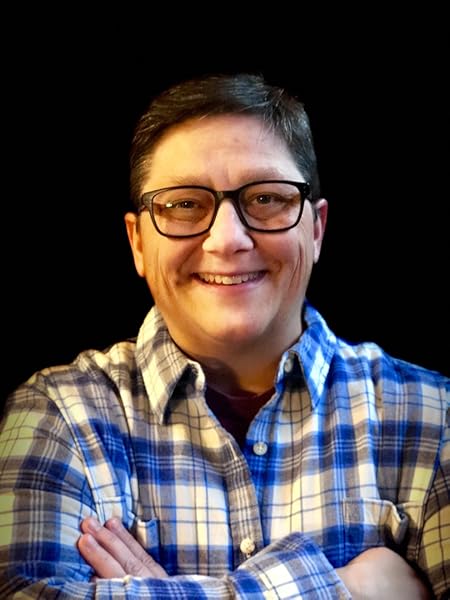
Postmarked Castle Cove follows a US Postal Inspector struggling with sobriety grapples with a small-town mystery involving missing mail and suspicious church leaders. What was the inspiration for the setup of your story?
My intent was to get MC focused on more than just drinking — or not drinking in her case. I wanted a deeper, darker, more gritty investigation that would hit her hard and make her realize she had a bigger purpose in life. Something to really sink her teeth into. A chance to make a difference.
Which character in the novel do you feel you relate to more and why?
I don’t think there’s any one character I relate to more than any other. However, the one I’ve had the most fun with recently is Jim Bob O’Malley, the youngest and newest postal inspector in the same office MC works in. Although, Jim Bob’s role ended up being smaller than originally planned in book three, I can foresee expanding his character in a book four. He’s a bit of a nuisance in MC’s opinion, but his humor breaks through her hard shell at times. And MC grudgingly acknowledges he will be a good inspector—with a bit of stern direction at times from her and other senior inspectors.
What were some themes that were important for you to explore in this book?
The themes I focused on were grief and how MC is handling the overwhelming grief over the murder of her life partner Barb, which happened in the first book in the series. I think up to the point of book three that grief has molded MC into an emotional cripple. Barb had been MC’s world. Along with that grief comes a sense of guilt. Guilt over not being at home that fateful day to save Barb. Guilt over not having the courage to share with Barb while she had the chance, some dark locked-away personal secrets from childhood. And of course, the theme of recovery. An arc that stretches from day-to-day progress; back-sliding; thinking she’s tamed the beast and has no need for any further intervention; to the point where MC realizes that recovery is a life-long journey. And finally justice—MC observes that a number of her cases have involved child victims. Some survivors. Others not. And with that observation comes a sense of a chance at redemption. She hadn’t been able to save her sister Cindy when they were children. And she hadn’t been able to save little Emmy in book two. But MC decides to embark on a crusade to protect child victims. She wants to dig into those dark, disturbing cases and bring light to the voiceless victims and make a difference, no matter how small, in their lives.
Can we look forward to a fourth installment in this series? Where will it take readers?
I’m leaning toward another book for the series. I’ve begun gathering research for the possibility. I think MC will visit a different area of our great state of Minnesota in book four. Maybe somewhere a bit west, the St. Cloud area perhaps. And there might be a cold case revealed to her during an active investigation. The cold case is out of her wheelhouse, but MC can’t help but get sucked in. Thanks for the opportunity to talk about MC and her story!
Author Links: GoodReads | Facebook | Website
A Nod to J.K. Rowling

The Hunt for Alesta follows a reluctant teenage prince who is prophesied to be the chosen one with magical abilities that will save his kingdom from a curse that will destroy it. What was the inspiration for the setup of your story?
Great question. My inspiration came from two authors who truly shaped my writing. J.R.R. Tolkien and David Eddings were my absolute favorites. Their ability to captivate from the very first pages left a lasting impression on me.
I also give a nod to J.K. Rowling, particularly in her magical settings. It sparked my imagination and helped craft my own world—so a blend of all three, really. That is likely why so many reviewers have mentioned my magical doors and described my world as ‘whimsical.’ (But you’ll need to read the books to see what that is all about.)
I find the world you created in this novel brimming with possibilities. Where did the inspiration for the setting come from, and how did it change as you were writing?
Without doubt, my primary influence was, again, J.R.R. Tolkien. He was a true master of worldbuilding and description. From the moment I first read The Hobbit, I was captivated by the richness of the world he created, and it set me on a path to build a world of my own.
As I wrote, the prose seemed to take on a life of its own—fairy lamps, talking doors, and more—everything just fell into place naturally. I try to consider the kind of world I would have loved to immerse myself in as a middle-grade reader, and that vision shaped Westmore and the Western Lands.
What were some themes that were important for you to explore in this book?
Mostly, friendship, coming-of-age, teenage angst, romance, and more. I hoped to capture the essence that not every teen is eager to embrace responsibility right away—even if they are a prince. Often, they just want to enjoy the moment, hang out with friends, and be carefree, brushing aside the harsher realities of life. But despite all the youthful desire for freedom, they still prove themselves to be resilient—formidable even—when the bonds of friendship and mutual respect keep them united, especially through the toughest of times.
Where does the story go in the next book, and where do you see it going in the future?
Without giving too much away, let me just say the prince faces a major twist in Book 2. Being the Chosen One is not as glamorous as it seems, and the harsh truth turns out to be more disappointing than he ever anticipated.
The third and final installment is already available, so I shall hold off on revealing too much. But rest assured, the unexpected twists and turns—things every teenager knows all too well—are a constant thread throughout the series.
Book 2: Apadora Rising dives into the tension that arises when friends no longer see eye to eye. New enemies emerge, and life spirals out of control for the group.
In Book 3: The King’s Ascent, the friends face off against a host of villains in a desperate attempt to save Westmore. (Teaser question: Will Prince Barrett abandon the throne, or will he fight to keep the city his family has ruled for generations?)
Author Links: GoodReads | LinkedIn | Website | Amazon
The ancient sorceress, Alesta, has condemned humanity to an endless cycle of violence. The only hope of breaking her Ruinous Curse comes from the prophesized Helserian. Rumors say Barrett, the prince of Westmore, is the chosen one, but he despises that notion.
Being a normal teenager and spending time with his friends exploring their city—a haven for fairies, cyclops, talking doors, and other magical beings—is his only concern. However, the upcoming war may dash his hopes. Besides, he is a fighter, not a magic user. That is, until the day his power awakens.
Now, aided by his friends, Barrett must face ancient dragons and cave-dwelling Trowkens to acquire the tools to master his magic and confront Alesta. Ultimately, he must force the sorceress to lift the curse or destroy her if she refuses. For if he fails, he will watch helplessly as his world tears itself apart.
Inner Balance

Balance of Light follows a teenager and his companions as they travel through wormholes to the ancient civilization of Atlantis, where they attempt to unlock the secrets of a long-lost civilization and prevent another catastrophic planetary reset. What was the inspiration for the setup of your story?
Ultimately, The Book of Light (Balance of Light being the second part), started life quite simply as a gathering of some of my favourite things: the ocean, surfing, sharks (and anything else in the ocean that can eat you or at the very least ruin your day!), Atlantis, ancient mysteries, and catastrophic planetary events from our past. It was then just a case of taking all of those ingredients and putting them in the story pot! But, as it happens, I found that a lot of these things fitted together quite well. Most of the great cities of the past grew up near water, probably for trade and things like that, and I think that if Atlantis ever did exist, it too would have been near water/the coast. This would certainly explain how so many ancient mythical places have disappeared because of the amount that the sea has risen since the last ice age (at least 400 feet), so any coastal settlements would have long since sunk beneath water, silt, mud, and sand. It also struck me that, because of this, if there were some amazing lost maritime culture, they would have likely had mastery over the sea. And in my mind, unlike our culture today, which has been focused on the evolution of technology over thousands of years, Atlantis was a culture that had put similar time and effort into more of a spiritual evolution. It was then a short leap of imagination to envisage that surfboards that can travel across the ocean through ancient wormholes would be the pinnacle of oceanic travel in a society like this! This was also helped by some of the many flood myths in different cultures around the world that often agree about some huge flood that wiped out much of civilisation, and that afterwards the survivors were visited by an advanced group that re-taught them civilisation and that these people (particularly in South American and Central American myths) often travelled on boats with no sails that seemed to move by themselves – which totally sounds like super-powered surfboards to me! And then of course there are the more spiritual elements of the story, based around having a greater connection to the earth and nature, and anyone who has ever sat on a surfboard on a glassy day will know where this fits in! So, that was how the basic setup came about, I then just needed a couple of protagonists to throw into the action…
What character did you enjoy writing for?
Was there one that was more challenging to write for? My two main protagonists, Zeb and Kaia, are both enjoyable to write for as in many ways they complement each other. Zeb is basically the one who has grown up in the UK surfing mediocre (and cold!) waves and dreaming of more exotic places, and being a bit unsure of himself (slightly autobiographical here!), whereas Kaia grew up in Hawaii, and is a confident and accomplished surfer with a strong connection to the environment. However, while Kaia is more fiery and headstrong, Zeb is more chilled, introspective, and has a greater inner balance. Ironically, it is this inner balance that means he is the one who ends up being able to control the ancient surfboard, despite Kaia seemingly having a more confident exterior and being more of a go-getter, as well as having a greater degree of surfing experience. In many ways, I think this is like life, where there are two ways you can get through it. The strong, powerful way or in a more giving and adaptable way (call it Ying and Yang). I think both ways have strengths and weaknesses, and both represent different energies, and so for Zeb and Kaia, who are not just working together towards a common goal but are also navigating a romantic relationship, this makes for some good tensions within their relationship, but also differences in how they face the many trials and tribulations that they do.
I felt that the action scenes were expertly crafted. I find that this is an area that can be overdone in novels. How did you approach this subject to make sure it flowed evenly?
I think with action scenes, this probably comes from two elements. Firstly, I’ve always enjoyed travel, adventure, and a bit of thrill seeking. Have I swam with sharks? Yes. Have I been attacked/eaten by a shark? Thankfully not yet! But, it means if I’m writing about a scene like that, I have enough first-hand experience to be able to draw on, and this makes it easier to imagine what a character is feeling during a situation like this. I suppose, in acting terms, this would be classed as literary method acting. I heard a story once where a famous actor was immersing himself in a frozen river to help get into character. And one of his co-stars, who was looking on bemused, said, “You should try acting, old boy!” And while I find some actual experience certainly helps, I think the second element that complements the first is then having the imagination to add the extra toppings to a scene that you may not have experienced first-hand. Where does this come from? For me, I get a lot of inspiration from both books and movies. If you asked me to pick one or the other, I (perhaps shockingly!) would be hard pressed to say – I like both mediums in different ways and I think they can complement each other. Ultimately, I just like a good story that grips me, moves me, and makes me think and feel. In my opinion, both of these formats help you see a scene better in your head, which makes action scenes, for example, easier to write. And for me, it is a bit of a test, where you write a scene and then read through it to check that there is enough description and information to make the scene work. This is where you can really dig into how a character is feeling and reacting. Then, in my final read through of a scene, I like to imagine it as a movie scene because this often helps you to see what it looks like and how it flows and generally whether it works or not. With action in particular, if you can’t see the scene clearly playing out like a movie in your head, then (in my humble opinion!) it needs more work.
What will the next book in that series be about, and when will it be published?
The third book in the series is called Storm of Light and should be out by the end of 2025. It follows on from the events of the second book, but ratchets things up a few levels, as is hopefully suggested by the title! I can’t give too many things away at this point, but if you enjoyed the first two books, the third is going even bigger, and I can’t wait to share it with readers!
Author Links: GoodReads | Amazon
Humanities lost senses are awakening
The war is beginning
In this thrilling sequel to Jigsaw of Light, Zeb, Kaia, and Professor Garcia are seeking out the lost human senses and abilities that existed during the Age of Atlantis. But an ancient war is playing out between the remnants of this world. On one side, the Kingdom of Atlantis seeks war and enslavement, and on the other, the Kingdom of Mu seeks harmony and balance with the earth. Powerful forces exist on both sides and Zeb is caught in the middle. And on a mysterious island where unspeakable evil is rising, Zeb’s fate will be decided.
Freedom Highway

Priscilla Speaks follows a young girl living in poverty who is cast out of her home at sixteen, leaving her to set out on the Appalachian Trail, where she meets diverse people who help her learn about life and relationships along the way. What was the inspiration for the setup of your story?
The answer is broader than you might have anticipated. I have thru-hiked the Appalachian Trail four times, and have found each journey to be life-changing or life-affirming. As a consequence, it is an element in much (although not all) of my fiction. I find the trail to be regenerative. Most who successfully thru-hike it or even hike long sections of it feel the same. It is the total immersion that does it, having one’s ego worn down by sweat and hunger and bugs until the real you is exposed. A long weekend on the trail won’t quite get one there.
Relating to the Speaks Saga as a whole, and Priscilla in particular for the moment, during Hike 3 in 2018 I hiked into a town for resupply, a town brought closer by a trail relocation and a town I’d never been to before, in an area where rednecks were known to harass hikers, and where I’ve personally witnessed hillbillies doing some pretty bizarre things. I was struck by the despair of the place before I’d even entered the town, considering the drug paraphernalia I spotted littering the curb. Once in the town, I encountered people almost unintelligible in their speech who volunteered the most offensive racist comments to a total stranger, and many of whom sported the missing teeth and cleft lips of heavy meth addiction. I couldn’t hike out of that town quickly enough.
I pondered as I continued my hike, wondering how one could wrest oneself out of that environment, then realized that the Appalachian Trail, an actual freedom highway, lay right at their doorstep. I conceived the first novel, Timewall Speaks, within the next hundred miles, and have used the Appalachian Trail as a means of escape for every character since.
Priscilla is born into a world of poverty, addiction, and abuse, but refuses to let that define who she is or who she will become. What was your process to bring her character to life?
I knew from the beginning that Priscilla might be the most complicated character in the Saga, and I had to reimagine her a few times before I felt I’d gotten her right. The epiphany came as I was writing Chapter Two, the fight scene, her brother injured, and I knew right then who I wanted Priscilla to be. I raced back, did a lot of re-writing, made Pris autistic and fearless, had her cut off her braid (probably spoilers in this), and evolved her into an outsider in her own family. Unknown to Pris, she is more like her mother at that age than she would ever want to accept, strong, unyielding, fierce, and in her own emotionally-numbed way, proud.
What were some themes that were important for you to explore in this book?
As always, that transformation from dysfunctional to emotional health, and that people are not defined by their circumstances, but defined by themselves. I wanted to demonstrate that it is possible to escape, despite the burdens that Pris carried. I have known people in similar circumstances who have rescued themselves, so Priscilla’s journey is not a stretch.
Will this series continue in another book, or are you working on a different story?
There will be one more novel in the Saga, The Family Speaks, in which a story arc covering fifty years will be brought full circle. I intended to end it there, although I have been encouraged by many to expand the Saga to incorporate some of the secondary characters. That might happen in the future, novels in a Speaks Universe if you will, but immediately after The Family Speaks (and a fifth Appalachian Trail thru-hike), I will begin work on some unrelated novels that have been nagging me for a few years now.
Author Links: Goodreads | Website | Amazon
In Book Four of The Speaks Saga, Blaize’s second daughter, Priscilla, born during the worst of her mother’s addiction, begins at an early age to count the years until she can escape the drudgery and boredom of her dismal, impoverished life, all the while watching as her older siblings leave one by one.
Cast out on her own at the age of sixteen, Priscilla ventures forth in search of an uncertain future while grappling with her sexuality and the phenomenal capacity of her mind. Using the Appalachian Trail as a means of escape, distracted from her obsessive nature by the day-to-day trials of the wilderness, her journey thrusts her into the company of diverse people who steer her toward a fuller understanding of the complexities of life and relationships. Through confounding emotions, heartache, and moments of grace, she is forced to confront mortality, love, and loss, all pointing her toward a staggering awareness of space and time.
With deliberate cunning, Priscilla does battle on her own terms, calling forth the hardened legacy of her family as she fights against the abuses she encounters in society.



 LITERARY TITAN