Blog Archives
Better Choices Are Possible

Against All Odds is a blunt and emotional memoir about growing up in poverty, surviving horrific abuse, entering the foster care system, and clawing a way toward stability, purpose, and adulthood. Why was this an important book for you to write?
I grew up believing that instability was normal—new homes, new schools, new last names on the mailbox. Writing this book was my way of refusing to let chaos be the whole story. I wanted to document what that instability does to a child’s sense of identity and possibility, and to show that survival can become purpose.
It was also a letter to three audiences. To foster youth: you are not what happened to you; you are what you choose next. To caregivers and professionals: stability is not an idea, it is a practice—measured in rides to school, ceremonies you don’t miss, and promises you keep. And to the broader public: systems are made of choices; better choices are possible. The memoir gave me language to transform private pain into public service.
How did you balance honesty and authenticity with protecting privacy—yours and others’?
I followed three rules. First, I wrote from the “I”—what I saw, felt, and believed in the moment—without assigning motives to others. Second, I protected people who were not public figures by changing names, compressing timelines, and removing identifying details, while keeping the emotional truth intact. Third, I applied a dignity test: if a detail sensationalized trauma or exposed someone’s private struggle without advancing understanding, it did not belong in the book.
When possible, I sought consent from supportive adults who appear in the story and shared passages with them. I also set boundaries for myself—there are scenes I chose not to relive on the page because my present and the youth I serve deserve a healthy author. Truth and care can coexist; that tension shaped every edit.
What was the most challenging part of writing—and what was most rewarding?
The hardest part was narrative order. Lived experience is nonlinear; trauma scrambles memory. Turning 25 placements and 13 schools into a coherent arc meant revisiting rooms I’d rather forget and deciding what belonged to the reader and what belonged to healing. Writing about my mother’s death and the first nights in strangers’ homes required frequent stops—walks, prayer, and time.
The reward has been hearing from youth and caregivers who used the book as a bridge—youth who said, “Now I have words for what this feels like,” and caregivers who changed a practice so a child could keep a school, a therapist, or a ritual. Reclaiming my narrative was personal; watching it make someone else feel seen has been the joy.
What is one thing you hope readers take away from your story?
That pain is data, not destiny. For kids in care, the difference between drifting and developing is often a single steady adult plus continuity—of school, relationships, and story. If readers finish the book believing they can be that steadiness—by mentoring, fostering, advocating, or simply showing up reliably—then the pages did their job.
And for those who grew up in instability: you are allowed to build a life that is quiet, rooted, and yours. Resilience is not just surviving the fire; it’s learning to live without smoke.
Author Links: GoodReads | LinkedIn | Amazon
From a young age, Tristian’s life was marked by chaos and uncertainty. Witnessing his mother being taken away on a stretcher was a pivotal moment that thrust him and his younger brother into a turbulent existence within the foster care system. They bounced from one temporary shelter to another, grappling with abuse, neglect, and the haunting specter of trauma. But amidst the darkness, a flame burned brightly within Tristian’s soul. Dreams became his sanctuary, providing solace and fueling his unwavering determination to rise above his circumstances.
Tristian’s memoir is not just a personal narrative-it sheds light on the broader societal issues surrounding foster care. With staggering statistics, he underscores the challenges faced by children in the system and gives a voice to those whose stories often go unheard. Through his writing, Tristian aims to foster empathy and understanding, urging readers to confront the flaws and shortcomings of the foster care system within. His ultimate goal is to inspire positive change and create a more compassionate and supportive system for future generations.
Against All Odds is a powerful and necessary memoir that shines a light on the realities of growing up in foster care. Tristian’s journey serves as a testament to the indomitable human spirit and the transformative power of hope. It is a call to action, urging society to come together, support foster youth, and create a brighter future for all.
Brothers for Life: Hoosiers at the Crossroads


M. Franklin Parrish’s Brothers for Life is a heartfelt family memoir that traces over a century of American history through the eyes and lives of two remarkable brothers, Richard and Myles Parrish. The book weaves together tales of grit, sacrifice, family bonds, and small-town values. Spanning from the Civil War to post-World War II America, it shows the deep imprint that hardship leaves on generations. Rooted in Decatur, Indiana, it chronicles the Parrish family’s journey through war, poverty, loss, and triumph. It also offers a broader commentary on what it means to endure and thrive in the face of both historic and personal adversity.
The storytelling is deeply personal, almost confessional, like sitting across from a wise, soft-spoken elder who is sharing memories. The writing itself isn’t flashy or literary. It’s straight talk, steeped in emotion and thick with detail. That’s part of its charm. It’s not trying to impress; it’s trying to remember, and in doing so, it invites the reader to feel a connection. I teared up more than once, moved by the quiet beauty of brotherhood and unspoken family devotion. When Richard gives his car to Myles for a honeymoon or when young boys lead their blind father door-to-door to sell brooms, it struck an emotional chord I didn’t see coming.
What impressed me most wasn’t the history lessons or the political tidbits, though those were fascinating too, but the way the book unpacks the idea of legacy. These men weren’t just living for themselves. They were laying down stepping stones for others, holding up their whole family like scaffolding. The book doesn’t pretend they were perfect. They were opinionated, scarred, and even eccentric at times. But they were fiercely loyal, and that loyalty shows up again and again in small moments that feel big because they’re real. At times, the book dips into family record-keeping, and some chapters lean into formality, but the heartbeat always comes back strong.
I’d recommend Brothers for Life to anyone who wants a story that feels lived-in. If you’ve ever cared deeply about your family or tried to understand where you came from, this book will speak to you. It’s for history buffs. But more than that, it’s for people who believe character matters and small-town stories can carry the weight of a nation’s soul. It reminded me that our past isn’t just in textbooks, it’s alive in the choices we make, the people we love, and the stories we choose to tell.
Pages: 149 | ASIN : B0F251CZYZ

No Woman Left Behind: A Journey of Hope to Heal Every Woman Injured in Childbirth
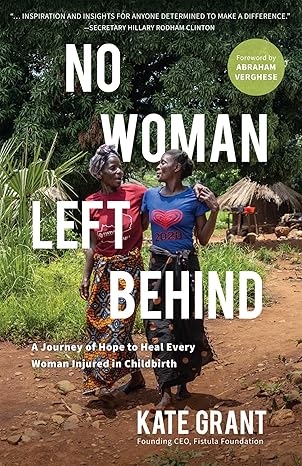

Kate Grant’s No Woman Left Behind is part personal memoir, part global health crusade, and all heart. It follows Grant’s journey from an ad executive climbing the corporate ladder to a relentless advocate for women suffering from obstetric fistula—a devastating childbirth injury that ruins lives and is almost entirely preventable. With striking honesty and compassion, Grant details how she helped transform the Fistula Foundation into a global force, funding over 100,000 surgeries across Africa and Asia. Along the way, we meet the incredible women she fought for, the trailblazing doctors she partnered with, and the deeply human messiness of finding purpose.
What struck me most was how personal this book felt. Grant doesn’t sugarcoat her path. She begins in the glossy world of 1980s advertising, full of cocktail parties and leather tile floors, but inside, she’s unraveling. The chapter “Let’s Go Crazy” hit me especially hard—her life literally cracked open by the 1989 San Francisco earthquake and a crumbling relationship. She’s raw, vulnerable, and funny in that self-aware way that makes you feel like you’re hearing this over coffee, not reading a polished memoir. The moment she walked into the Fistula Hospital in Addis Ababa and met Dr. Catherine Hamlin, my heart broke and healed at the same time. That scene with Hanna, a teenage girl who lost her baby and was abandoned by her husband due to fistula, will never leave me.
I also loved how the book balances tough realities with hope. Grant takes a problem most of us have never heard of—one affecting millions of women—and brings it front and center. But she doesn’t stop there. She shows how change can happen. In “Smile Train of Vaginas,” she cheekily but cleverly compares her mission to the well-known cleft surgery nonprofit, and it works—because it should be that recognizable. Her passion is contagious. At one point, she says, “They will break your heart,” speaking of the women with fistula. And yes, they do. But Kate Grant will also make you want to do something about it.
If you’ve ever wondered whether one person can make a difference, this book answers that with a resounding yes. It’s for anyone who’s ever felt lost and hoped their pain might lead somewhere better. For nonprofit leaders, aspiring change-makers, or people craving more meaning in their work—this is your read.
Pages: 256 | ASIN: B0DK5YPQ69
Lying Down with Dogs
Lying Down with Dogs is a collection of deeply moving and beautifully crafted personal essays that serve as an inspiring beacon for anyone standing at the crossroads of life, hesitant to take the plunge toward an unconventional dream. The author, shaped by a childhood devoid of affection as the daughter of a German war bride in the 1950s, weaves vivid flashbacks of trauma and resilience. Yet, she is quick to clarify: while her life experiences inform the narrative, this is not a memoir in the traditional sense. Instead, it is a heartfelt tribute to the animals that shaped her journey and a testament to their transformative, healing power.
The narrative unfolds as a poignant, non-linear exploration of her adventures. The author recounts rescuing pregnant dogs in desperate need of care, kittens abandoned at construction sites, and even pigs—all while battling her own inner turmoil. She juggled the demands of caring for her aging parents and raising her daughter, all while building her animal rescue organization from the ground up. Through it all, her unwavering determination shines, driven by her love for the creatures she saved. Her stories of “foster failures” brim with warmth and humor. In one particularly memorable account, she likens a paraplegic Chihuahua to Scarlet O’Hara from Gone with the Wind, using the dog’s indomitable spirit as a lens through which to view resilience. These moments are both tender and vivid, drawing the reader into her world with startling intimacy. Grief and loss also permeate the pages. The deaths of three close friends to cancer could have easily overwhelmed her. Instead, she channeled that sorrow into her rescue efforts, finding solace and purpose in her work. The animals, it seems, saved her just as much as she saved them. Despite addressing weighty themes, childhood trauma, grief, and personal struggle the author employs dry humor and a light-hearted tone. Her deliberate avoidance of melodrama keeps the focus on the animals and their stories, making the narrative both accessible and deeply impactful. This restraint lends the book its emotional power, allowing readers to connect with the experiences without feeling overwhelmed.
Lying Down with Dogs contains tales of resilience and hope that inspire readers to see the world through a more compassionate lens, cultivating a deeper appreciation not only for animals but for the richness of life itself. This book is far more than a collection of essays; it is a celebration of the human-animal bond, a testament to perseverance, and an ode to the healing power of love and compassion.
Pages: 163 | ASIN : B0CSKLZ1SX

Ordinary and Unremarkable

I Was a Hero Once offers a deep reflection on a life shaped by extraordinary experiences and the search for meaning after being deployed to Vietnam. Why was this an important book for you to write?
- As I say in the Author’s Note to the book:
I wrote this book for two reasons. First and foremost, I wrote it for my children. Their experience of me is as a slightly boring “soccer dad,” ordinary and unremarkable. I wanted them to know who I was and what I did before I became their Dad. More importantly, I hope the book can be inspiring to the entire younger generation they represent, and which will have to deal with the mess of a world we have left them. The second reason is that when I was young, I had hoped that my actions would “make a difference,” but I’m not so sure if they amounted to “a hill of beans” as Humphry Bogart famously intoned. If my actions did not change the world, then I dream that maybe my stories can.
How did you balance the need to be honest and authentic with the need to protect your privacy and that of others in your memoir?
I found when writing a memoir, there are countless facts and details that are considered and rejected in the writing process. There were a number of highly personal details that were originally in the manuscript that I ultimately cut out with the help and advice of an excellent editor. For many of the individuals in the book, I used only first names as a way to protect their privacy. Finally, there was a passage in the first copies of the book that were printed that my brother found hightly offensive. I was able to get that passage changed in subsequent printings of the book.
What was the most challenging part of writing your memoir, and what was the most rewarding?
I was never able to establish a sustainable focused writing schedule, so I tended to write when the inspiration hit me. The result was that it took me twenty years to finish the book. The most rewarding part has been the warm response from many of the folks who shared these adventures with me.
How has writing your memoir impacted or changed your life?
As I noted previously, I’ve lived with this book in process for twenty years. On the one hand, there is a tremendous amount of satisfaction in seeing what had been something of a dream for so long actually become a reality. On the other hand, there is a certain creative emptiness in my life at the moment, now that the book is completed.
Author Links: GoodReads | Facebook | Website | Amazon
In 1968, Peter P. Mahoney’s world was turned upside down when he joined the Army, became an infantry lieutenant, and was deployed to Vietnam. Upon his return, he found himself embroiled in the Vietnam Veterans Against the War (VVAW) movement and indicted for conspiracy to incite a riot at the 1972 Republican Convention-the so-called Gainesville Eight case-where his friend surfaced as an FBI informer testifying against him.
In the early eighties, Mahoney played a pivotal role in establishing the New York Vietnam Veterans Memorial and later joined a delegation of veterans to meet with Soviet counterparts from their Afghanistan War. He fell in love with a Russian woman, married her, and spent nine years raising a family in a world vastly different from the suburban middle-class life he had left behind.
Now, he shares the extraordinary stories from that finite period that forever changed the trajectory of his ordinary existence.
I Was a Hero Once

Peter Mahoney’s memoir, I Was a Hero Once, offers a deep reflection on a life shaped by extraordinary experiences and the search for meaning. A Vietnam veteran and activist with Vietnam Veterans Against War (VVAW), Mahoney recounts his journey from an 18-year-old college dropout to an infantry lieutenant deployed to Vietnam. His military service was defined by duty and routine, but his return to the U.S. ignited a deeper battle for justice through activism.
The memoir delves into Mahoney’s later years, including his participation in a veterans’ delegation to meet Soviet soldiers, where he fell in love with and married a Russian woman. He spent nearly a decade raising a family in Russia, only to return to the suburban life he had once sought to escape. Mahoney weaves these extraordinary events with the “ordinary” moments that define his humanity, creating a rich narrative that balances adventure with introspection.
Mahoney recounts his adventures while reflecting on the ordinary moments that underpin them. His candid approach underscores a central theme: life is not solely defined by its extraordinary chapters but by the connections between them. While this narrative style enhances the memoir with depth and detail, some sections could benefit from more concise storytelling, as they occasionally lean toward repetition or feel loosely structured. Yet, Mahoney’s compelling voice and ability to ground the extraordinary in relatable human struggles ensure the reader remains engaged. The memoir resonates deeply because it captures the universality of Mahoney’s quest for purpose and morality amidst a life filled with rare experiences. His heartfelt prose offers a vivid window into both the external events and internal conflicts that have shaped him.
I Was a Hero Once is a powerful and introspective memoir that captures the complexity of a life filled with extraordinary moments and grounded in universal struggles. Mahoney’s ability to intertwine his grand adventures with the quiet realities of everyday existence creates a narrative that is both engaging and human. This is a must-read for those interested in personal stories of resilience, transformation, and the quest for meaning.
Pages: 299 | ASIN : B0D9HST1PM
Small Acts of Caring

World Citizen follows a seasoned humanitarian as she navigates war-torn regions, aiming to foster resilience and compassion while grappling with the harsh realities of conflict and displacement. Why was this an important memoir for you to write?
Conflicts continue to erupt in regions where I traveled with international humanitarian and human rights organizations decades ago. The stories in World Citizen provide an historic context and put a face on victims and survivors, invoking compassion and understanding. Small acts of caring can provide hope and healing to those who have lost everything,
Throughout your travels, you’ve encountered diverse cultures and hardships. Which experience had the most profound impact on you personally?
In 1984, I went to Central America during the height of the “Contra Wars” in Nicaragua and El Salvador. I met with Sandinista leaders, with peasant farmers working their fields under gunfire, people sheltering in a church severely damaged by a recent earthquake, and with women who were selling their bodies in order to feed their children. The journey taught me the consequences of war and ignited a lifelong passion to support humanitarian intervention and promote peace and justice around the world.
What were some ideas that were important for you to convey in your book?
We are all World Citizens and should be aware and responsive to the needs of others. At the end of my book, I included the Universal Declaration of Human Rights. After World War II, all United Nations member countries signed the UDHR and agreed to uphold the basic human rights of their people. As World Citizens, we must hold them responsible.
What do you hope readers take away from your book about their role in the global community, and what steps can individuals take to contribute positively to humanitarian issues?
I hope that readers will see themselves in my stories of survival and resilience and will understand that we are connected as a global community, more alike than different. What affects one impacts all. Love and hope can be powerful healing agents.
Author Links: GoodReads | Amazon
Interrupting Violence: One Man’s Journey to Heal the Streets and Redeem Himself

Interrupting Violence: One Man’s Journey to Heal the Streets and Redeem Himself by Cobe Williams and Josh Gryniewicz is both a memoir and a powerful call to action for change across American cities. The book chronicles the life of Cobe Williams, who was born into the gang Black Disciples and faced tremendous adversity from a young age. Despite the odds—losing his father to gang violence at age 10, dealing drugs in high school, and being wrongfully imprisoned for murder—Cobe managed to turn his life around. He became a violence interrupter, dedicating himself to saving the lives of young people on the brink of falling into the same destructive patterns.
This touching memoir is not only about personal growth but also serves as a cautionary tale and a rallying cry for those who believe they can make a difference. As a reader from a different background, I had only encountered gang-related content in movies. It was eye-opening to learn that such gangs exist in reality, with violence as pervasive as portrayed on screen. Coming from a psychology background, I recognize that these issues are deeply rooted in society and manifest globally in similar forms. Addressing violence and problematic behavior requires time and effort, much like the work Cobe and his colleagues are doing, as described in this book. Their stories will undoubtedly reach and inspire many. Reading about real-life events and the life trajectory of someone like Cobe is incredibly impressive. His transformation is a testament to the possibility of change and growth. His story teaches us that better times are always within reach if we remain determined and disciplined in our goals. The book is written in an engaging, conversational style, making readers feel as if they are hearing Cobe’s story firsthand. The authors use slang and informal grammar to reflect authentic spoken language, effectively drawing readers into the narrative.
Interrupting Violence has broadened my perspective, exposing me to realities I might not have otherwise known. I highly recommend this book to anyone looking for a compelling read that transports them into the lives of others around the world. This is a story of resilience, redemption, and the enduring possibility of positive change.
Pages: 328 | ASIN : B0C9W7JJNX



 LITERARY TITAN