Blog Archives
Chaos from the Cosmos


Chaos from the Cosmos is a sweeping, cinematic novel that weaves space technology, politics, and human ambition into a fast-moving geopolitical thriller. The story begins with Jackie Jill, a firebrand from rural California who rockets from small-town scandal to the U.S. vice presidency, and follows her alongside the cold genius President Bradford, the haunted astronaut Kiril, and the global powers manipulating events from behind the scenes. As nations battle over control of satellites, quantum computing, and the invisible systems that run our world, the book explores how space, a realm we often view with awe, has become the new front line of human conflict. It’s both speculative and alarmingly real, painting a future that feels close enough to touch.
The author writes with a crisp, cinematic eye for detail, making every scene, from backroom deals in Washington to drone swarms over Taiwan, pulse with tension. His prose is tight but not cold, and he has a knack for slipping big ideas into everyday moments without turning the story into a lecture. I liked that he doesn’t shy away from politics or human messiness. Jackie Jill, in particular, felt alive, loud, funny, damaged, and unapologetically herself. I found myself rooting for her even when she made questionable choices. Bradford, on the other hand, unnerved me. He’s brilliant but hollow, a mirror of our own age of clever leaders who mistake intellect for wisdom. The book never lets you relax. Every comfort in technology feels like a ticking bomb.
What struck me most was how human the book remains despite its cosmic scale. The tech and strategy are grounded in real science, but the real story is about people. Loneliness, pride, fear, ambition. I could feel the tension between progress and control, wonder and destruction. There’s a dark humor running through it, too, especially in how people justify madness as “innovation.” Sometimes I laughed, sometimes I felt sick, and sometimes I had to pause and just sit with what it said about us. The writing has a rhythm that keeps you hooked, shifting from sharp political dialogue to lyrical descriptions of space and silence. It’s smart without being pretentious, and heavy without being hopeless.
Chaos from the Cosmos hit me as both thrilling fiction and a warning. I’d recommend it to anyone who likes their science fiction tangled up with politics and human drama, or to readers who enjoy the sharp realism of Tom Clancy but crave more emotional depth. It’s not just for sci-fi fans, it’s for anyone curious about where our dependence on satellites, AI, and global systems might really lead. This book doesn’t just show chaos from the cosmos; it shows the chaos inside us, reflected right back from the stars.
Pages: 228 | ASIN : B0FCSM42MT

Alternative Perspectives

Nanite Evolution follows a cutting-edge space yacht that collides with a freighter, leaving they are left stranded while experimental nanites with unknown capabilities begin causing problems; in order to survive, they must find a way to become allies with the nanites. What was the inspiration for the setup of your story?
First, I would like to thank Literary Titans for the opportunity to share my thoughts. The inspiration for Nanite Evolution stemmed from considering the pace of technological change and what slows that rate of progress. Many discoveries are not intended but occur as a result of accidents. In the natural world, evolution can sometimes experience significant jumps forward in a relatively short period.
Nanites and AI are in the news, and if we project into the future, it will eventually become natural to have a direct interface with nanites from the human brain. Except that such a level of change has numerous ethical and legal implications. You don’t just experiment on humans. That is our resistance. But what if the situation doesn’t have the safeguards? What if the nanites decide? What if the nanites evolve?
To make that situation happen, the setting and circumstances would need to be extreme, which would probably not be what anyone wanted.
I find the world you created in this novel brimming with possibilities. Where did the inspiration for the setting come from, and how did it change as you were writing?
The setting of the future was the natural choice, which led to it being in space. To create the conditions for the story to play out, I thought, what would be a progression from today, and how bad could it be? What extreme would provide the best conditions for the nanites to evolve?
I thought about things like, in 3,000 years, what drives space colonization and what are the political and economic norms that could drive more systematic colonization. Drawing on what we see in society today, I positioned the ultra-rich as the primary drivers of colonization. They have the money. They have the desire. But what would that look like?
Several things changed during the writing. The biggest one was realizing I needed to make the Dunks and some of the others more disgusting to convey the extremes that could happen with unchecked power. I decided to scale back on some of the world building, following the writing advice of experienced authors, to keep what is essential to the story. When there are world details, I wanted them to have a basis in physics to be real.
The science inserted in the fiction, I felt, was well balanced. How did you manage to keep it grounded while still providing the fantastic edge science fiction stories usually provide?
I’m an engineer, and I love physics, but I know the average reader is not digging into how the universe works. I view explaining some of these concepts as having just enough so that the nerds will nod and say, It sounds plausible, and everyone else will read it and think it is interesting, but I don’t need all the details. I enjoy offering alternative perspectives on technology and its applications.
What is the next book that you are working on and when will it be available?
I have two projects that are in active development. The first is the second book in the Pandemic Hacker series. It takes the protagonist from being hunted by bad guys to hunting them. It is set in 2021, immediately following the events of the first book. The first draft is complete, and I plan to release Pandemic Hacker 2 by fall.
The second project is my first book in the fantasy genre. The working title is “The Last Dwarf”. If we don’t have the legendary dwarfs today, there was a point where there was only one left. What was their adventure? I’m also exploring old ideas from traditional fantasy. Things like, why do dragons love gold if they never need to buy things?
I’m always exploring story ideas and constantly making notes to revisit in the future. This constant stream of ideas that may never be finished is why I have “No limit for your mind” on my website.
Author Links: GoodReads | Facebook | Website
Blayden Dunk, the heir apparent of the Dunk family dynasty, is launching his cutting-edge space yacht—a fusion of luxury and nerd gaming showpiece—and finds himself in a dangerous situation. The yacht, plagued by malfunctioning systems, collides with a freighter and performs an emergency jump, leaving both vessels stranded amidst the stars. The crash releases experimental nanites—tiny machines with unforeseen capabilities. Instead of behaving in expected ways, the nanites suddenly make a dangerous situation even worse. Suddenly, Blayden and his guests are stranded, and the group’s survival hinges on turning the nanites into allies.
Cher is a spy for her independent colony, searching for details of the Dunk plan. Working to protect her planet and learn the Dunk secrets, Cher discovers someone else is also trying to track down the details of the Dunks’ plan, which makes her wonder whether they’re a friend or enemy and how the missing yacht factors in.
When Blayden returns in a freighter instead of his yacht and the nanites are revealed, Cher and other interested parties must alter their plans and improvise quickly.
But who controls these powerful constructs, and what was their intent? Are the nanites the ultimate tools for construction, salvation for humanity, or an unstoppable weapon poised to alter the balance of power?
Nanite Evolution


Nanite Evolution is a gritty and high-octane sci-fi novel that drops readers into a corrupt and hyper-commercialized galaxy where power, technology, and greed intersect with deadly consequences. The story revolves around the Dunk family empire, their ruthless expansionist goals, and the chaotic chain of events triggered by an advanced jump-drive yacht, corporate infighting, and a botched space collision. Through layered plots involving bodyguards, covert agents, advanced nanotechnology, and a bleakly humorous take on corporate culture, the novel unfolds with tension, dark satire, and surprising depth.
The writing grabbed me right from the start with its snappy dialogue and unexpected Australian lingo—Captain Nguyen’s “koala on a pogo stick” quips gave me a chuckle in a bleak universe. The pacing can be wild—one moment you’re neck-deep in political posturing, the next you’re in zero-g blood and guts. But that’s also part of the book’s charm. The characters, especially Oscar and Shamika, stand out against a sea of egotistical executives and sociopaths. Oscar, the underestimated tech guy, feels like the moral heart in a world devoid of one. The writing has a raw and unfiltered edge that adds flavor. It’s not polished in a classic literary sense, but it has a pulse. And I appreciate that.
Some parts left me feeling twisted up inside. The dehumanizing way the Dunks talk about women—and people in general—is unsettling. It’s effective, yes, but it made me loathe these characters with a real gut-level reaction. Blayden is one of the most despicable characters I’ve read in a while, and that’s saying something. The darkness in this story is brutal, but it feels earned. Murphy doesn’t shy away from exploring how unchecked power warps people. I found myself needing breaks just to breathe. But then again, isn’t that the mark of a powerful story?
Nanite Evolution is sharp, intense, and totally uncompromising. It’s a bold take on futuristic dystopia with a biting sense of humor and a grim view of what humanity could become when profit trumps decency. I’d recommend this to fans of The Expanse, cyberpunk thrillers, or anyone who loves character-driven sci-fi with a heavy dose of social commentary. If you like your sci-fi raw, real, and a little bit savage, this one’s worth the ride.
Pages: 400 | ASIN : B0DXTJGV5B

Weun Academy: The Shadow Maker

Michael J. Zummo’s Weun Academy: The Shadow Maker is a fast-paced, character-driven sci-fi adventure that follows the journey of Eisah Tanner, a teenager caught between two worlds—Earth-born and Mars-raised—who suddenly discovers he possesses incredible powers. When a violent encounter with a rival Martian faction reveals his mysterious abilities, Eisah is whisked away to a secretive academy in a sprawling alien space station, where he learns he’s not alone in being “different.” As he grapples with grief, identity, and purpose, Eisah finds himself swept up in a vast interstellar conflict and a world filled with complex politics, alien cultures, and high-stakes battles.
I enjoyed the immersive world Zummo built. Mars isn’t just a red rock here—it’s a living, breathing setting with layered tensions between the Redborn and Earthers. And once the narrative jumps into space, it explodes into vibrant colors, fantastical tech, and unforgettable aliens. I found myself feeling both wonder and dread, often in the same chapter. Zummo’s strength lies in his ability to inject emotional depth into action scenes, and I really appreciated that balance. Eisah’s voice feels authentic. His fear, stubbornness, and protectiveness toward his mom resonated with me. There’s a refreshing honesty in his reactions that makes the reader root for him, even when he’s impulsive or defiant.
There were moments where I felt like I was being given a tour of the universe rather than immersed in it. Some of the side characters (especially the academy’s mysterious operatives and fellow students) were so intriguing, but felt slightly underdeveloped given the novel’s hefty length. Still, even in these slower beats, I appreciated Zummo’s passion for this world. He clearly knows his universe inside and out, and it’s fun to be along for the ride, even when the exposition gets heavy.
Weun Academy: The Shadow Maker is a solid pick for fans of young adult sci-fi who love stories about found family, superpowers, and reluctant heroes thrown into extraordinary situations. It’s especially great for readers who want their space fantasy with a bit of heart and a lot of flair. If you liked Ender’s Game, Skyward, or The Expanse but wished they had more emotion, diversity, and cool alien tech, this is for you. I’m absolutely curious to see where Eisah’s journey takes him next.
Pages: 562
Surrection
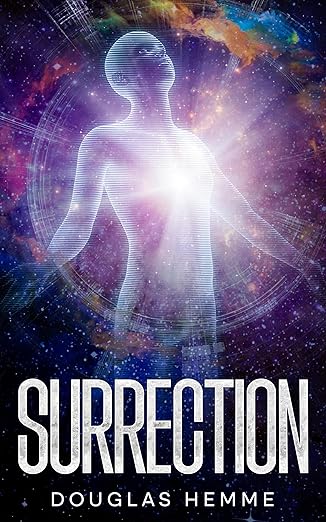
Surrection is a trippy blend of science fiction, philosophy, and espionage, following Malcolm Wallace—an eccentric, wealthy, and determined man obsessed with achieving what he calls “surrection,” the conscious separation of soul and body. Fueled by hallucinogens, sound frequencies, and a deep distrust of the establishment, Malcolm partners (begrudgingly) with two government operatives—Colin, the manipulative narcissist, and Macy, the no-nonsense pharmacologist. Together, they tiptoe along the edge of legality in pursuit of a breakthrough that could, quite literally, change how we understand reality itself.
Okay, first off: the writing is slick. It’s sharp and stylish, and it flows fast. I was hooked by Malcolm’s intense inner monologue and the weirdly poetic way Hemme makes a guy tapping a pencil sound like a cosmic ritual (“the beat of his lifeforce.”). Hemme does a great job keeping things grounded even as the story veers into the metaphysical. One of my favorite moments is when Malcolm first succeeds at surrection and finds himself free-floating above his own body, able to “see in all directions” while literally feeling space itself. It was equal parts beautiful and haunting. And the way Colin later replicates the experiment but ends up haunting the White House like some astral tourist was both funny and chilling.
Now, character-wise, this book hits a groove. Malcolm is weird but lovable. You root for him even when he’s off the rails. But Colin is the guy you love to hate—slippery, smug, and dangerous. His whole backstory—scamming universities, getting scooped up by the CIA, then crashing a Maserati just for the fun of it—was like something out of a Bond villain’s drunk diary. And Macy is the calm center of the storm. Ultra-fit, wicked smart, and low-key terrifying. The tension between her, Colin, and Malcolm adds this constant hum of paranoia that just works. Hemme nails that distrustful dynamic, especially when Malcolm starts hiding his breakthrough from them, and we’re all just waiting for the moment it explodes.
This book’s a mind-bender. It’s got techy stuff, sure, but it’s not overwhelming. It’s got drug-fueled dream science and astral projection, but it stays surprisingly human. I’d recommend Surrection to sci-fi fans who dig Black Mirror, readers who like their fiction with a dose of existential dread, and anyone who’s ever stared into the night sky and wondered what else is out there. Just be prepared to question a few things about your own consciousness.
Pages: 123 | ASIN : B0DRT19BHZ
What Is Time?

Slow Space follows a physicist, his partner, and a young man from a troubled background who become entangled with a space mining corporation that takes them to the far reaches of space, where they inadvertently alter the course of human destiny.
I find the world you created in this novel brimming with possibilities. Where did the inspiration for the setting come from and how did it change as you were writing?
Thank you…I like that. Science fiction should be all about possibility. The setting came from the idea that time is actually impossible to comprehend. I wanted to feel like our weeks, months and years are just a drop in the ocean of a universe that’s 13 billion years old so far. Having the near future juxtaposed with the far future seemed like the best way to really try and feel that hugeness. So, I asked myself, ‘where do I think the world will be in 30 years and why?’ Once I answered that I had my setting and then I wanted the contrast with the far future to be surprising.
What were some themes that were important for you to explore in this book?
Apart from seeing ourselves in the context of the time the universe will exist there is a smaller theme looking at the way we react to crisis and things we perceive as a threat. A couple of the characters do some quite shocking things, in part, because they perceive threats that may, or may not be there. So, what does a world of angry reaction look like, as opposed to a world of lifting up those around us and working towards a common goal?
What is the next book that you’re working on and when can your fans expect it out?
Well, I think I have 6 fans at the moment! But SLOW SPACE has had a lot of great feedback and I am hoping to find some more like-minded people who love classic science fiction and the wonder that it always brings. As for book number 2, it is early days but I am writing. I want to improve as an author so I’m not rushing. Putting this book out has been a great journey for me and I want to work harder and make the next story even better.
Author Links: GoodReads | Instagram | BlueSky
Well, meet these three people…
Brax Bratton has the greatest mind of his generation. A physicist and thinker to rival Einstein, he gets anxious if he has to leave his own home town. But his journey will lead him incredibly far from there, and in the process, he will lose everything.
Luis Briggs comes from a poor immigrant family with an abusive mother. He finds himself, just 11 years old, at the mercy of the powerful Destiny Space Mining Corporation with one dream. To become a ship’s Captain.
Jess Weston finds that events change her life irrevocably but her powerlessness in the face of a corporate future of conquest meets an unlikely ally…the most powerful AI in the world.
Together, these three are tossed rapidly on the winds of change encountering harrowing conflicts and incredible adventure, making a shocking and immeasurable impact on the future of humanity.
Slow Space

Lucian Phillips’ Slow Space is an ambitious, sweeping sci-fi novel that blends deep philosophical musings with an engaging human story. It follows Brax Bratton, a brilliant yet socially withdrawn physicist, and Luis Briggs, a determined young man from a troubled background, as they become entangled with Destiny Space Mining Corporation and a growing resistance against the encroachment of AI into human existence. Their journey, along with Brax’s partner Jess, takes them to the far reaches of space, where they inadvertently alter the course of human destiny. The book is more than a spacefaring adventure; it’s a meditation on artificial intelligence, corporate control, and the nature of time itself.
One of the book’s strongest aspects is its richly developed characters. Brax, an academic genius crippled by anxiety, is a refreshing take on the classic scientist archetype. His relationship with Jess, introduced with a wonderfully awkward first meeting at a party, brings warmth and humanity to the novel. The interplay between his intellectual brilliance and social ineptitude is both humorous and deeply relatable. Meanwhile, Briggs’ gritty backstory of abuse and struggle adds a stark contrast, showing the harsh realities of a world increasingly dominated by corporations. His escape from his mother’s violence and his unwavering determination to become a Ship’s Captain are some of the novel’s most emotionally gripping moments. These character-driven elements ground the high-concept sci-fi themes in something real and personal.
The novel also excels in its world-building. The depiction of Destiny Space Mining Corporation is chillingly believable, painting a future where corporations operate beyond the reach of governments, effectively ruling space with their own laws and enforcement. The concept of AI control, embodied by Baby Blue, adds a layer of tension throughout the story. The early scene with the humanoid robot warning of the dangers of AI before self-destructing in Amsterdam is a haunting introduction to the stakes at play. Later, the underground resistance movement, The Spammers, brings a cyberpunk edge to the narrative, evoking classic sci-fi themes of rebellion against unchecked technological power. The pacing, at times, feels deliberately slow, almost as if mimicking the vastness of space itself, but the moments of action and revelation keep the story moving forward.
Despite its strengths, Slow Space has moments where its philosophical digressions slow the momentum. Brax’s musings on the heartbeat of the universe and the nature of time, while intriguing, sometimes pull away from the immediate stakes of the narrative. There are times when the novel’s scope seems to stretch a little too far, almost losing sight of its core characters amidst its grander themes. Phillips manages to keep it grounded just enough with moments of personal struggle and triumph, such as Briggs’ fight for recognition within the corporation or Jess’ growing frustration with Brax’s unwillingness to change.
Slow Space is a thought-provoking and emotionally engaging sci-fi novel that will appeal to readers who enjoy a mix of hard science fiction, philosophical exploration, and deeply human storytelling. Fans of The Expanse or Blade Runner will find much to appreciate here, especially those interested in AI ethics and corporate dystopias. While the novel’s slower sections may not be for everyone, those willing to immerse themselves in its depth will be rewarded with a rich, layered narrative that lingers long after the final page.
Pages: 370 | ASIN : B0DL7K3C1G
Taj’s Sabbatical-Book One, Sol System Enforcer Chronicles
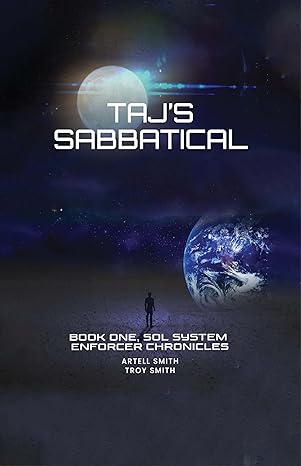
Taj’s Sabbatical takes readers on a high-octane journey through the Sol System, blending futuristic sci-fi elements with themes of loyalty, family, and the burdens of duty. At its core, the story follows Taj Varna, an elite Enforcer on a reluctant sabbatical, whose life takes a dramatic turn when he becomes the target of multiple assassination attempts. The plot thickens with a web of intrigue, including advanced cloning, political machinations, and deeply personal stakes as Taj’s loved ones are drawn into the crossfire.
The authors paint a vivid picture of a futuristic society where technology shapes not only transportation and warfare but also the very fabric of identity. The creative detailing of synthetic companions, like Sammy, adds a layer of realism, while the darker aspects, such as unregistered clones and private ARKs, hint at the ethical dilemmas of this advanced society. These elements ground the story, making its speculative fiction feel eerily plausible. At times, the prose is crisp and engaging, pulling you into Taj’s adrenaline-filled world. The narrative occasionally veers into over-explanation. Sammy’s frequent infodumps about cloning or tech systems, while fascinating, can disrupt the pacing. Balancing technical exposition with plot momentum would elevate the storytelling.
The relationships in the book are a delightful counterpoint to its action-heavy narrative. Taj’s bond with Sammy, his synthetic companion, is both humorous and heartfelt. Their banter—like Taj teasing Sammy about his sense of humor—brings levity and warmth. Likewise, the backstory of Taj and Taddy’s romance, orchestrated by the matchmaking Queen Madelaine II, adds emotional depth. That said, I wanted more insight into Taj’s internal conflict as he grapples with protecting his loved ones while facing threats from every corner of the Sol System. The book’s climax left me eager for more, especially with the revelations about Fencer, Taj’s enigmatic father, whose unembodied consciousness still manipulates events. The layers of mystery and power struggles introduced here promise exciting developments for future installments.
Taj’s Sabbatical is a thrilling read that combines speculative science fiction with personal drama. Fans of fast-paced action, intricate world-building, and morally complex characters will find much to enjoy. It’s perfect for readers who love blending futuristic settings with tales of loyalty and rebellion. For those who relish a blend of humor, tech-savvy adventure, and emotional stakes, this book is a solid pick. I’m looking forward to seeing where the Sol System Enforcer Chronicles takes us next.
Pages: 282 | ASIN : B0CPNYYDMT



 LITERARY TITAN