Blog Archives
Centered On The Dream World

The Dreamer follows a teenager traveling through space with her parents, who experiences terrifying visions and must cope with the aftermath of a vicious attack that forces her to make important life decisions. What was the inspiration for the setup of your story?
I’ve always been highly interested in dreams, past lives, and parallel universes. I like to believe it’s all connected. Dreams play a big part in most of my stories. I’m currently working on a new series that is centered on the dream world. When I was little, I had a very lucid dream where I was an older woman who was running through a battlefield and got shot in the leg. I told my father (who is also a historian) about my dream the next morning, and after hearing all the details, he was convinced I had been dreaming of the Revolutionary War. I was too young to know about it! I wanted to write a series with a vast, complex timeline, exploring how one person and their choices could impact an entire reality, because we actually do that every day. I have been working on this series for 17 years, so it’s pretty planned out!
What was your approach to writing the interactions between characters?
I wanted my teen and young adult characters to feel real, with their emotions and dialogue feeling natural. I spent a very long time crafting each character’s background so that I could drop them into any situation and have their interactions flow without me having to think too hard. Sometimes they would say or do things, and I would be surprised as I was writing it! I love that feeling when your book starts writing itself! There are characters in the second book that popped up as I wrote, and I would think, “Who’s this guy?”
The science inserted in the fiction, I felt, was well balanced. How did you manage to keep it grounded while still providing the fantastic edge science fiction stories usually provide?
Honestly, I tried my hardest not to turn this into a super “sciencey” book. I wanted to write a sci-fi saga that was easy to read and accessible to a broad audience. It makes me sad that so many people are intimidated by science fiction. It can get too heady or science-based, taking away from the emotional journeys. I wanted to write about teens who happened to be in space. I wanted to be inclusive and normalize the marginalized. I wanted the fate of the galaxy to fall on a group of misfits who end up saving it, but I also wanted them to be stressed out about their first kiss, engulfed by jealousy, and annoyed with each other. I was a teenager who grew up overseas, performed in theater, and was also trying to learn Klingon… if that tells you anything!
Can you give us a glimpse inside Book 2 of the The Black Stone Cycle series? Where will it take readers?
We open with two brand-new characters, one of whom is the one I mentioned above, who appeared without me planning him at all. He turned out to be one of my favorites! It will explore the galaxy and society further. It’s already written, and I’m always interested in ARC readers, so please contact me if you’re seriously interested!
Author Links: GoodReads | Facebook | Website
But when a quick stop on Phobos goes from routine to disaster, Ash’s fragile world implodes. Stranded and hunted by enemies she doesn’t understand, she’s thrown together with a ragtag crew of teens just as lost as she is.
There’s Isaac and Isabel, telepathic twins caught between uncovering the truth about their missing parents and outrunning the Mind Squad agents they once thought were a myth; Edan, a street-smart survivor who just happens to be the prince of the space pirates; Moon, a savant who speaks code more fluently than feelings; and Xai, a mysterious blue alien boy who lingers in Ash’s dreams―and who might be far more real than she wants to believe.
As Ash wrestles with grief, trust, and the colossal power flickering to life inside her, she stumbles into a prophecy that feels way too personal. Being the “chosen one” isn’t what Ash signed up for. All she’s ever wanted was a chance to stop running and just be a regular teenager on some boring moon colony.
With telepathic super soldiers closing in, betrayals around every corner, and a galaxy-shaking secret in her hands. Ash must decide whether to keep running―or finally stand and fight. Because some destinies can’t be outrun.
The Dreamer is the first book in The Black Stone Cycle, a thrilling YA sci-fi saga about found family, hidden legacies, and the messy, exhilarating journey of discovering who you really are. Fans of Firefly, Skyward, and The Expanse will feel right at home among the stars.
The Dreamer (The Black Stone Cycle Book 1)


The Dreamer follows Ash Bennett, a teenager drifting through space with her parents until her life is split open by terrifying visions, mysterious strangers, and an attack that shatters everything she knows. The story blends sci-fi adventure with a deep emotional undercurrent as Ash realizes she may be connected to powers and histories she never understood. The tension builds fast. The quiet opening on the family ship gives way to vivid danger on Phobos, then to loss, rescue, and a strange new path that forces her to decide who she is meant to be. It feels like the start of a much bigger saga.
When I first settled into the book, I expected a familiar space-opera vibe, but the writing surprised me. Scenes snap together in quick bursts. The images are sharp and sometimes dreamy, and they made me feel like I was walking through Ash’s memories and fears rather than just reading about them. I liked that the story never waited around. It pushed forward with a kind of breathless energy, and even the quieter moments carried this low buzz of anxiety that kept me hooked. I found myself caring about Ash morwe quickly than I expected. Her mix of sarcasm, loneliness, and curiosity felt honest. I appreciated that her voice didn’t get swallowed by the big world around her.
As the story unfolded, I felt a tug in two directions. On one hand, I loved the ideas: the fractured past between humans and other species, the mystery around her abilities, and the sense that Ash is tied to something ancient and powerful. On the other hand, the worldbuilding sometimes hit me like a sudden gust. New terms and cultures arrived fast, and I occasionally had to pause to catch up. Still, I liked the rawness of it. The author took risks with emotion, especially when Ash witnesses what happens to her parents. That whole sequence hit harder than I expected. It left me feeling unsettled in a good way. I could feel the shock in my chest as she tried to understand what she’d seen.
By the time I reached the later chapters, I realized I was rooting not just for Ash but for the strange little group forming around her. The mix of loss, found family, and growing danger pulled me in. I liked that the book didn’t wrap things up neatly. It left questions hanging in the air, teasing a bigger truth waiting on the other side. I enjoy stories that don’t talk down to me, and this one trusted me to sit with the unknown.
I walked away feeling both satisfied and eager for the next piece of the story. I’d recommend The Dreamer to readers who enjoy character-driven sci-fi, especially those who love fast pacing and emotional stakes. It’s a good fit for teens and adults who want a world that feels lived-in and messy, with a heroine who is still figuring herself out. If you like stories that blend danger, heartache, and a spark of wonder, this one is worth your time.
Pages: 328 | ASIN : B0G32FG96C

Guiding Principles

Aries I – The King of Mars follows a 13-year-old boy who, after his mother’s death, ends up part of the Mars colony, leading him on a journey of self-discovery and understanding of what survival really means. What were some of the emotional and moral guidelines you followed when developing your characters?
When developing my characters, I followed emotional and moral guidelines rooted in loss, survival, and empathy. The death of my son last year fundamentally changed how I understand pain, resilience, and what it truly means to endure. Grief stripped away any interest I had in shallow motivations or easy answers. From that point on, I felt a responsibility to write characters who carry weight, who hurt, adapt, and keep moving forward, not because they are fearless, but because stopping isn’t an option.
One of the strongest guiding principles was an understanding that all life is engaged in a constant struggle to survive. Whether human, animal, or even systems we build to sustain ourselves, survival is never abstract; it is physical, emotional, and moral all at once. I wanted my characters to reflect that truth. Their choices are often imperfect, driven by fear, love, guilt, or hope, but always grounded in the instinct to protect what remains and to find meaning in continuing on.
Emotionally, I allowed characters to be shaped by loss rather than defined by it. Grief does not disappear; it changes form. I tried to honor that reality by letting characters carry their wounds quietly, sometimes awkwardly, and sometimes in ways that create conflict. Morally, I avoided clear heroes and villains in favor of people making the best decisions they can with the tools they have at that moment. Survival, after all, rarely allows for clean moral lines.
Ultimately, these characters exist because I believe survival itself is an act of courage. Every living thing fights to breathe, to belong, to matter—even in hostile environments. Writing from that place, shaped by personal loss, became a way to acknowledge pain without surrendering to it, and to recognize that continuing forward, however imperfectly, is one of the most human acts there is.
What were some themes that were important for you to explore in this book?
At its core, this book is centered on a single idea: life fights to survive. Everything else grows out of that truth. My experience with loss helped me to see survival, not as something dramatic or heroic, but as something constant and relentless. Life persists even when it is broken, even when it is exhausted, even when it has been reshaped by loss. That realization became the emotional foundation of the story.
I wanted to explore survival in all its forms, not only the physical struggle to stay alive, but the quieter, harder fight to keep going emotionally and morally. Every living thing is engaged in that struggle, adapting to hostile conditions, scarcity, fear, and uncertainty. In the book, survival demands resilience, cooperation, and sacrifice, whether the challenge comes from an unforgiving environment or from the weight carried inside a person’s heart.
The idea that life continues forward also shaped how I approached legacy and responsibility. Survival isn’t only about the present moment; it’s about protecting what remains and making space for what comes next. Even after loss, life pushes forward through memory, through purpose, and through the act of building something that can endure.
Ultimately, this story is about the stubborn persistence of life. It doesn’t deny pain or minimize grief, but it recognizes that choosing to continue—to breathe, to build, to hope—is itself an act of survival. Life may be fragile, but it is also determined, and that determination is what drives the heart of this book.
Where do you see your characters after the book ends?
When Aries I: The King of Mars ends, the story is really just beginning. The characters may have survived the first and most dangerous step, arriving and establishing themselves, but survival is only the opening chapter of a much larger journey. Mars is not a destination that stays still; it pushes back, changes the people who live on it, and forces them to evolve.
Aries, in particular, is only at the beginning of becoming who he will be. By the end of the book, he has proven he can survive, adapt, and contribute, but leadership, identity, and consequence are still ahead of him. Mars will demand more than intelligence and resilience; it will test his values, his relationships, and the kind of future he believes is worth fighting for.
The other characters follow similar arcs. What starts as cooperation for survival will grow into conflicts over control, legacy, and what it truly means to claim a new world. Some characters will rise in unexpected ways, others will fracture under pressure, and alliances that seem solid at the end of this book won’t remain untouched by time or hardship.
In many ways, Aries I is the foundation stone. The next chapters explore what happens after survival, when building, ruling, and protecting a world brings new dangers that are no longer purely environmental. This story was always envisioned as a trilogy, and the later books dig deeper into the cost of leadership, the weight of inheritance, and how far people will go when Mars is no longer just a place to live, but something worth fighting over.
Author Links: GoodReads | X (Twitter) | Facebook | Website | Amazon
At first, Mars is just another hostile frontier, a place for scientists, soldiers, and survivors. But when disaster strikes and no one listens to the boy who knows the colony best, Aries must choose: follow orders or forge his own path.
What begins as rebellion becomes legend. Alone among the wreckage, Aries discovers that survival means more than oxygen and water, it means leadership, courage, and the will to challenge Earth itself.
In a world where every breath is borrowed, one boy dares to claim a planet.
Aries I – The King of Mars


Aries I – The King of Mars tells the story of a father and son who leave behind a life marked by loss to help build humanity’s first permanent colony on Mars. The book follows young Aries Karalis from the trauma of his mother’s death through his relentless training, his complicated bond with his father, and the discovery of his own purpose as the colony faces danger and, ultimately, its fight for independence. The novel grows from a quiet, personal beginning into a full epic about identity, loyalty, survival, and the creation of a new world.
I felt pulled in by the emotional weight of the story more than the science itself. The writing is straightforward and clear, and it avoids getting bogged down in technical talk. Scenes that deal with loss felt raw. The father–son conflict felt honest in a way that caught me off guard. Even when the plot moved into bigger action, the heart of the book stayed centered on relationships and the messy way people try to do the right thing while carrying their grief. I liked that the story never pretended that bravery comes clean or easy. Instead, it showed how fear and love can sit side by side and still push someone forward.
I also enjoyed how the book handled Mars as a place. It didn’t feel cold or distant for long. As the colony grew, the planet became something alive, something worth fighting for, and I found myself rooting for these characters as if I knew them. Some moments felt almost cinematic, like the chants echoing through the colony halls or the quiet scenes of Aries watching the Martian sunset with Skye and their newborn son. Those were the chapters that I really enjoyed. They were simple scenes but full of meaning. If anything, I sometimes wished the prose loosened up a bit more because the emotional parts were strongest then.
The story ties together themes of family, leadership, sacrifice, and the strange hope that comes from starting over. I’d recommend this book to readers who enjoy character-driven sci-fi, especially anyone who likes stories about growth and resilience more than hard mechanics. It’s a great pick for teens, educators, or adults who want a hopeful and heartfelt look at what it might take to build a new world.
Pages: 224 | ASIN : B0FVHQYS3R

Daughters of the Empire
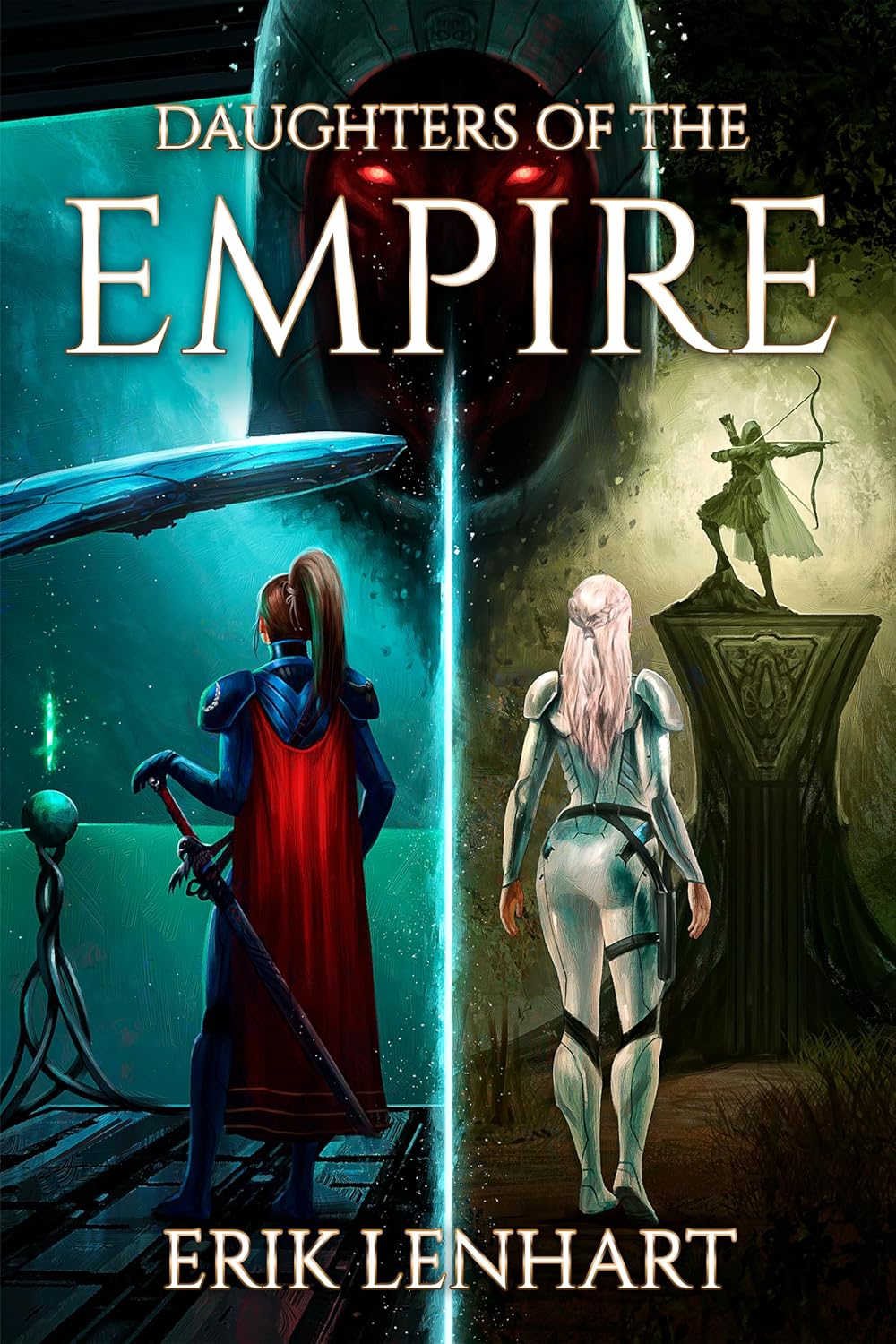
The story kicks off with a punch. It drops you straight into a massive space battle where Valerica Crassus commands a fleet with sharp precision and a colder kind of confidence. Then the book switches gears and gives a warm, grounded look at Deanna and her cousin Miyu living a quiet merchant life on Dorset II. Their world feels ordinary until it suddenly breaks apart as raiders strike the annual Vintage Festival. From that moment on, the story pulls together politics, ancient prophecies, power struggles, and a galaxy that feels both huge and fragile. The contrast between star-spanning warfare and small human hopes gives the novel a strong emotional core.
I enjoyed how bold the writing can be, and I felt pulled into the action when Valerica faced Drakos. The pacing had real energy. I liked how the author shifts from sweeping military strategy to quiet domestic scenes. The jump between those worlds kept me on my toes. I did find myself craving more breathing room during some of the denser political explanations, since the universe is packed with factions and titles. Still, I appreciated that the author refuses to treat worldbuilding like filler. It carries weight. It feels like people actually live in this place instead of moving through a backdrop.
I also got attached to Miyu more quickly than I expected. His stubborn bravery and his rough humor made the raid hit hard. Watching Deanna run into the forest felt tense in a very personal way. The book knows how to mix danger with heart, and that mix worked for me. On the other hand, Valerica’s storyline sometimes felt so large that it overshadowed Deanna’s. Even so, the emotional sparks between Valerica and Lana were vivid, and their relationship added warmth to a story that could have been too cold without it.
I would recommend Daughters of the Empire to readers who enjoy big galaxy-shaking plots but also want characters who feel alive and flawed. It’s a good pick for fans of military sci-fi who like mythology, political tension, and a bit of romance. If you want a space opera that moves fast, has heart, and isn’t afraid to swing between quiet moments and high stakes, this one should be on your list.
Pages: 525 | ASIN : B0FVXWR1NZ
Heirs of Empire

S A Melia’s Heirs to Empire is a sprawling space opera of loyalty, survival, and rebirth. The story sweeps through twelve human worlds known as the Dodecahedral Empire, where young King Teodor, once presumed dead, claws his way from slavery on a plague-ridden world to reclaim his crown. Alongside him are soldiers, nomads, and lovers bound by webs of duty and betrayal. Melia threads political intrigue, biological warfare, and deep personal transformation into a story that feels both intimate and epic. It’s part military science fiction, part mythic hero’s journey, and part meditation on power and belonging.
Reading this book, I felt pulled between admiration and awe. Melia’s world-building is stunning, dense, and alive with detail. Her writing has a cinematic rhythm, with scenes that pulse between horror and beauty. There’s a strange poetry in how she describes destruction, especially the plague-ravaged London and the living forests of Sas Darona. The characters feel raw and human, even when they’re riding giant spiders or waging interplanetary wars. I loved the contrast between Teodor’s noble stoicism and Guy Erma’s rough-edged loyalty.
What struck me most was how personal the story feels beneath all the spectacle. This isn’t just about empires rising and falling, it’s about what happens to people when the idea of “home” burns down. Melia writes grief and hope side by side. Her characters are always torn, always trying to choose between love, survival, and duty. I found myself angry with them one moment and rooting for them the next. That unpredictability kept me turning pages, even when the politics grew thick. There’s a pulse of emotion here that feels tender, painful, and real.
Heirs to Empire is a bold, emotional ride. It’s perfect for readers who love the grand scope of Dune but crave the grit and heart of Battlestar Galactica. If you enjoy stories that blend science fiction with myth, politics with passion, and chaos with redemption, this book will grab you and not let go. It’s ambitious, heartfelt, and riveting.
Pages: 466 | ASIN : B0FCCX2672
Blade Rider
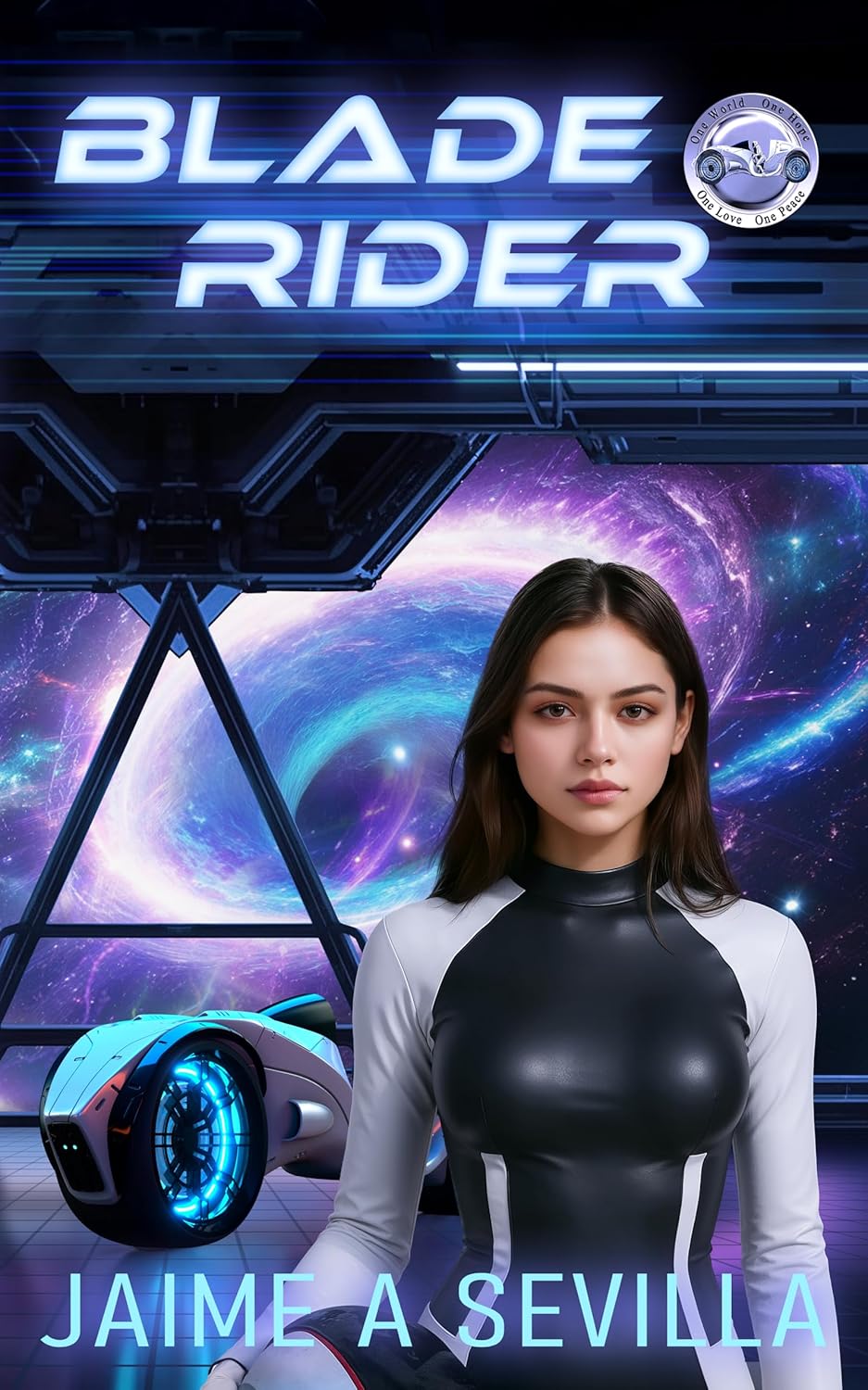
Blade Rider is a wild ride through stars, steel, and heart. The story follows Raven Pierce, a young woman chasing her dream of becoming an Air Ranger in a universe where courage is as rare as the gemstones mined from distant planets. The book blends sci-fi adventure with coming-of-age grit. It starts on the luminous planet of Aurora and soars through trials, rivalries, and the fire of ambition. There’s high-speed action, moments of calm beauty, and a deep pulse of hope that runs through every page. What makes it shine is not only the futuristic flight scenes but the emotional gravity that keeps Raven’s journey grounded.
The writing moves like music, lyrical and cinematic, yet simple enough to feel real. Sevilla doesn’t just describe light or sound, he paints them, fills the air with them, makes you feel the hum of engines beneath your skin. The pacing is deliberate, but I didn’t mind. Those quiet chapters gave the story its soul. There’s a rhythm between tension and tenderness that feels intentional. I could sense the author’s musical roots in every scene. The prose often felt like verses from a song, full of rhythm, breath, and longing. I caught myself smiling, even tearing up, when Raven faced her doubts or looked up at the stars she was born to chase.
The ideas in this book resonated with me. It’s about finding purpose when the world tells you you can’t. It’s about identity, resilience, and the fire that keeps dreamers alive. The world-building is big but personal, the characters flawed yet fiercely human. I loved that it wasn’t just lasers and engines, it was belief and persistence. There’s something deeply nostalgic in its optimism, almost old-fashioned in the best way. It reminded me why stories about flying still make our hearts race.
I’d recommend Blade Rider to anyone who ever wanted more than what they were handed. If you like sci-fi that carries heart, or if you’ve ever stared at the night sky and wondered what’s out there, this book is for you. It’s for dreamers, for the stubborn ones who don’t give up, for those who still believe in the power of hope.
Pages: 344 | ASIN : B0FX8QJYYJ



 LITERARY TITAN