Blog Archives
The Comet Line

The Belgian Girls follows two young women resisting German occupation in Belgium, one during World War I as an intelligence agent, and the other during World War II involved in resistance efforts. What interested you about portraying courage as something that can look different from one person to another?
My first book, Women Heroes of World War II, includes the most heroic stories of Second World War resistance that I could find at the time, including the one that inspired me as a young adult: Corrie ten Boom, the devout Dutch resister who was sent to the Ravensbrück concentration camp for hiding Jewish people from the Nazis. I always wondered if I would have the guts to do what she did, to put my own life on the line for the sake of conviction. And as I saw Women Heroes of WWII gain a fairly large audience, I thought that perhaps some young readers, when encountering the book’s stories of remarkable courage, might entertain the same self-doubt I had. That’s why, while writing The Belgian Girls, I deliberately gave the fictional Julienne a quiet, reserved disposition, to illustrate that courage is a choice, not a personality type.
Gabrielle Petit’s personality was basically how she is portrayed in the novel!
Family history becomes an important bridge between the two timelines. What interested you about exploring the ways one generation’s experiences can shape another?
When one of my sons dressed up as WWI American hero, Sergeant Alvin York, I asked my WWII vet father to identify which historical character he was trying to portray. He guessed immediately. That was the first time I realized part of the Greatest Generation’s alacrity in signing up for the military after Pearl Harbor was that they had been raised on stories of the previous war’s heroes. Then, while writing my books on the two world wars, I discovered a generational inspiration factor among Europeans. For instance, WWII special agent Pearl Witherington, who led an enormous team of French fighters against the Nazis, was inspired by Louise de Bettignies, the French First World War spy Kate Quinn wrote about in The Alice Network. And as I point out in The Belgian Girls, Andree de Jongh, founder of the Comet Line, was inspired by Gabrielle Petit and Edith Cavell, both of whom worked against the German occupation of Belgium during World War I.
What challenges come with placing fictional characters alongside people who actually lived through these events?
Actually, it was great fun. An author of nonfiction has to make certain that every sentence is absolutely factual. For once, I was free to make things up, to fill in the blanks of what I already knew about Gabrielle’s life and work and everything I already knew about the young women who worked on the Comet Line.
Why do you think stories about women’s roles in wartime resistance continue to resonate so strongly with readers?
Everyone loves a good underdog story, and it can be stated that women in the first half of the 20th century were underdogs, often considered less valuable, less qualified, and less capable than men. But because of the strange reality created by war, women rose to challenges not normally afforded to them. And those who prospered in those unusual circumstances continue to inspire us today.
Author Links: GoodReads | X (Twitter) | Website | Amazon
When the Germans overrun Brussels during the First World War, Gabrielle is infuriated to see her newfound happiness shattered. It isn’t long before she is faced with an impossible choice. Three decades later, shy and bookish Julienne moves to Brussels with her widowed father at the height of the Nazi occupation and is horrified to witness the city’s callous treatment of Jews.
In this dual timeline novel inspired by the life of Belgian spy Gabrielle Petit, two very different young women must discover their inner strength to become the heroes their city needs. And when loyalties are tested and decades-old secrets are revealed, their legacies will become entwined forever.
Written by historian and storyteller Kathryn J. Atwood, The Belgian Girls is a tale of hope, forgiveness, and the healing power of friendship.
Life’s Like A Book…


Life’s Like A Book…, by Christina M. McKenzie, is a contemporary women’s fiction novel that blends romance, grief, friendship, family, and personal reinvention into the story of Kloey, a young woman whose carefully planned life has stopped feeling like her own. At the beginning, she’s ending a five-year relationship, finishing law school, dealing with the lingering effects of a serious medical condition, and questioning what she actually wants from adulthood. Then the sudden death of her best friend, Brandi, changes the direction of everything. What follows is less about finding one simple answer and more about Kloey learning how to participate in her own life again.
One of the strongest parts of this contemporary romance and women’s fiction story is the way grief remains present even when Kloey is doing ordinary, funny, messy, or impulsive things. Brandi’s death doesn’t disappear whenever romance enters the picture. Instead, Kloey carries her friend with her, quite literally for much of the novel, scattering Brandi’s ashes in meaningful places and eventually incorporating some into a memorial tattoo. That gives the book an unusual mixture of sadness, humor, sensuality, and everyday life. Kloey can be mourning one moment, flirting with Henry the next, worrying about work after that, and then thinking about food, her dog, or something completely mundane. It makes her feel like a person whose life keeps happening even when she isn’t emotionally prepared for it.
The romantic storyline with Henry fits naturally into Kloey’s larger journey because attraction forces her to confront insecurities that existed long before she met him. Her illness has changed her body, her former relationship damaged her confidence, and dating exposes both wounds pretty quickly. Henry’s response to her scars becomes an important early moment because he treats them as evidence of a life lived. Their connection develops alongside separations, career decisions, long-distance conversations, and Kloey’s fear of allowing another major change into her life. That makes the romance feel connected to the book’s broader questions about confidence, intimacy, independence, and whether feeling safe is always the same thing as feeling fulfilled.
By the end, Life’s Like A Book… has grown into a story about accepting that a life can contain several different versions of the same person. Kloey has lost Brandi and her grandmother, begun establishing herself as an attorney, reopened herself to Henry, and reached a point where career, home, and love may all require another leap. The final pages deliberately leave her at that crossroads, considering a different firm, the possibility of taking over her family’s Florida farm, and a future with Henry before finally deciding to listen to what she wants and beginning to type. For readers who enjoy contemporary women’s fiction, romantic fiction, stories about grief and healing, and character-driven novels about starting over, this is an intimate look at how one chapter of a life can close while the next one is still being written.
Pages: 150 | ASIN : B0DH7T452J

The Best of Both Worlds

Disheartened follows a woman living a separate life in 1860 and 2020, remembering everything as she drifts between the two, struggling to protect the people she loves in two different centuries. How did the concept of E.V.E. first develop?
The concept of E.V.E. (Essence Voyager Era ― the inherited gift of having the ability to live two parallel lives on two separate planes of existence as the soul travels nightly – essentially falling asleep on one plane and awakening to a new day on a new plane) came about due to a strange dream I had in the summer of 2009. I immediately started writing the first book in the E.V.E. series, Essence. After it was published in 2011, it grew into a series of four books that centered on Jocelyn (Sidney’s younger sister) and Jackson’s relationship. The Spirit Quest series is a spinoff of the original series, except this series focuses on Sidney’s experience with E.V.E.
Sidney carries the memories of two different lives. What was the greatest challenge in writing her perspective?
The greatest challenge with this particular character and period was researching from both perspectives (North and South) for the 1860 era and trying to offer a varying perspective of the 2020/Covid era experience, which we all lived through.
Foreknowledge plays a central role in the novel. How would you respond to the question of whether knowing the future is a gift or a burden?
Different members of different families who have inherited the gift (or curse) of E.V.E. have expressed their opinions of it. Some believe it to be a gift that allows them to experience the best of both worlds. Others feel it is a curse because despite knowing what the future holds, they are almost helpless to stop it in any meaningful way.
What lies ahead for the Spirit Quest series?
The third installment in the series, Foreshadowed, is due to be released later this year. The span of the novel covers the day after the 1860/2020 presidential elections through the first shots fired at Fort Sumter. It focuses on the personal challenges Sidney faces with the global pandemic, extended family pressure, and navigating increasing political division that is tearing apart the country in both of her lives.
Author Links: GoodReads | X (Twitter) | Facbook | Website | Scarlett Ink Publishing | Amazon
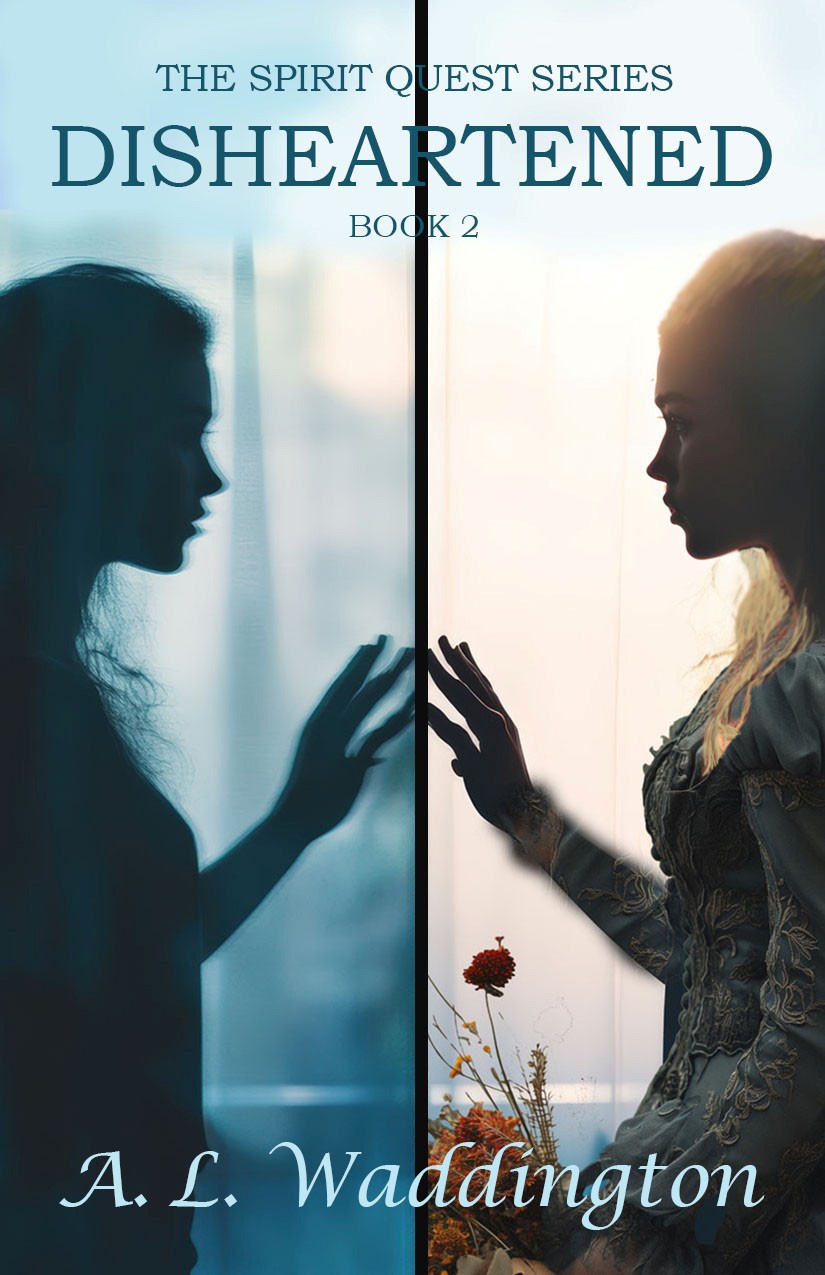
Gifted or cursed with the inherited ability of E.V.E., Sidney is forced into the inconceivable ― her 1860 self-watches on the eve of the American Civil War as the Northerners and Southerners dismantle the fabric of the nation. Whereas her 2020 self-witnesses the extreme Progressives and Liberals under the guise of the Democrat umbrella shred away the decency of the American Culture on a world-wide stage and making the USA the laughingstock of the globe.
Sidney is heartbroken watching everything her loved ones and countrymen from her other life fought to preserve be undone by a minute mindless minority of entitled fanatics and a political party so hell-bent on spreading violence and hate, they would rather burn the nation to the ground than relinquish power.
But what can she do? Can one small voice change the mind of millions with hate in their heart? Can she find her way back to the solace she once treasured in both her lives?
Outbreak (The Dark Days Series Book 1)


Outbreak: The Dark Days Book One follows Sonny, a young boy whose ordinary summer collapses into terror when a mysterious infection spreads across the world. What begins with family breakfasts, mall trips, and nervous rumors soon becomes a brutal fight for survival through quarantine zones, military violence, zombies, refugee camps, and fractured communities. The story is less about the outbreak itself than about what it steals: childhood, certainty, safety, and the simple belief that adults know how to fix things.
I was most affected by the novel’s insistence on filtering catastrophe through Sonny’s young perspective. His voice gives the horror a raw immediacy; he notices the strange details children notice, from favorite cartoons to birthday memories, even as the world around him is turning feral. That contrast gives the book its sting. The violence is often harsh, but the emotional damage lingers longer than the bloodshed. Sonny’s grief, fear, guilt, and stubborn loyalty become the real pulse of the story.
What really affected me, though, was the book’s bleak but persistent attention to human connection. Families are broken apart, friends are lost, and safe places keep proving temporary, yet the characters keep reaching for one another. The novel is at its strongest when it pauses amid chaos to let people comfort, argue, protect, or mourn. Some scenes are rough-edged and direct, but that bluntness suits the world author Christopher Cole is building: a place where tenderness has to fight for oxygen.
I think this book is best suited for readers who enjoy young adult dystopian fiction, zombie apocalypse horror, survival thriller, post-apocalyptic adventure, pandemic fiction, and coming-of-age horror. Fans of The Walking Dead will recognize the same grim question underneath the carnage: when civilization dies, what kind of person survives in its place? Outbreak is a fierce and grief-marked survival story about a boy forced to grow up while the world burns around him.
Pages: 245 | ASIN : B0G4GQ9J5N
The Jingu Magical Garden

In The Jingu Magical Garden, Lillian Jingu, the youngest daughter in a big Japanese American family living inside the Japanese Tea Garden in San Antonio in the late 1930s discovers a strange egg by the koi pond, hatches a tiny blue dragon she names Kokoro, and hides him with the help of her brother Kimi, a very dignified turtle, and a tough gray cat. At first, it feels like pure magic and mischief in a hidden garden. Then a crack in time opens, and Lillian and Kokoro are pulled into moments that show how war, rumor, and racism creep into their world and shake the life they love in the tea garden. The story braids fantasy with the real history of the Jingu family and the garden, all the way through World War II and beyond.
I had a soft spot for Lillian right away. She just wants to grow her hair long, wear a white Stetson, blend in at school, and also secretly raise a baby dragon who drinks Coca-Cola and eats sardines out of a tin. That mix of ordinary kid worries and wild magical stuff really worked for me. The family scenes in the Bamboo Room kitchen made me feel like I was sitting at the table, listening to sisters tease each other while their parents try to keep everyone fed and in line. Kokoro is goofy and sweet and a bit chaotic, so every time he bursts out of hiding I could feel my shoulders tense and my brain go “oh no, not now,” in the best way. Some chapters feel cozy and funny, and then the tone shifts, and I felt my stomach drop when hints of war and suspicion started creeping into their everyday life.
The book talks about anti Asian prejudice without turning into a lecture, and that made it more powerful to me. You see how quickly neighbors and officials can turn on a family that has done nothing wrong, and it hurt to watch, because we know this stuff did happen in real life and still echoes today. At the same time, the dragon and the time travel bits keep the story from feeling hopeless, almost like the past itself is reaching out to protect this family and their garden. I liked that the author doesn’t pretend everything gets neatly fixed, but she still gives the Jingus courage, humor, and dignity, and that mix left me sad and hopeful at the same time.
As for the writing, it has a very old radio show vibe in spots, with Buck Rogers and songs on the wireless and little period details tucked everywhere, and I thought that was charming. The garden descriptions are lush and detailed, so I could picture the waterfall, the stone paths, and the hidden corners where a dragon might hide, and those scenes slowed my breathing in a good way. The dialogue can be a bit old-fashioned in places, which fits the time period. Still, the emotional beats land. When the family faces public shaming, name changes, and the loss of their place, the simple language hits like a punch because you already care about these people and this garden so much.
I really enjoyed this children’s book. I would hand it to middle-grade readers who like dragons but can handle some heavier real-world stuff, kids around nine to thirteen who are curious about World War II on the home front, and any young reader who has ever felt caught between cultures or out of place. It would also be great for teachers or parents who want to talk about racism, resilience, and community in a way that feels authentic. If you want a story with cozy family meals, secret magical pets, and real history woven together, this one is a good pick.
Pages: 282 | ASIN : B0GCQV9TB9
Curiosity Matters

A New Way to Know follows Francis Bacon from a questioning boy to a power-brokering statesman, only to learn how costly truth can be when evidence collides with loyalty and politics. What drew you to Francis Bacon as a middle-grade protagonist?
What drew me to Francis Bacon as a middle-grade protagonist is that, before he was famous, he was simply a curious kid. Long before he became a powerful statesman or philosopher, he was a boy who asked a lot of questions, sometimes too many for the adults around him.
Middle school students understand that feeling. They live in a world where adults often say, “Because that’s just how it is.” Bacon was the kind of kid who answered, “But why?” That curiosity made him stand out. It also sometimes got him into trouble. I think many young readers can relate to that.
I was also drawn to the tension in his life between truth and loyalty. Growing up around the court of Elizabeth I, he saw how politics and power often mattered more than facts. Later, his friendship with Robert Devereux, 2nd Earl of Essex, forced him to face a very hard choice: What do you do when someone you care about is wrong? Do you protect your friend, or do you stand by the truth? That is a question young people understand, because friendships and loyalty are a big part of their lives.
Another reason I chose Bacon is that his greatest contribution wasn’t just one big discovery. It was a new way of thinking. He believed people should observe the world, test ideas, and look for evidence instead of just repeating what older books said. That message is powerful for young readers. It tells them that their curiosity matters. It tells them they don’t have to accept something just because it’s old or because someone important said it.
As a classroom teacher, I’ve seen how exciting it is when a student realizes, “I can think for myself.” Bacon’s story shows that even someone who helped shape modern science started out as a kid sitting in a classroom, feeling frustrated when his questions weren’t answered.
In the end, I was drawn to Francis Bacon because he wasn’t perfect. He was smart and ambitious, but he also made mistakes. He struggled with big choices. That makes him real. His story shows that searching for truth isn’t always easy, and doing the right thing can be painful. But it also shows that one curious kid with a notebook can change the way the world thinks.
What did you most want kids to feel about Francis Bacon beyond “famous thinker”?
More than anything, I wanted kids to see Francis Bacon as a person, not just a “famous thinker” whose name appears in a textbook.
Today, many of us benefit from ideas like the scientific method without ever thinking about the struggle it took to bring those ideas into the world. We enjoy the results. We quote the principles. But we don’t always see the cost. I wanted young readers to feel the weight of that cost.
Bacon didn’t just wake up one day and become important. He questioned teachers who didn’t like being questioned. He challenged traditions that had stood for centuries. He lived in a world where loyalty to powerful people, including figures like Elizabeth I, could matter more than evidence. He had to balance ambition, truth, friendship, and survival. Those pressures weren’t abstract; they were personal and painful.
So, beyond “famous thinker,” I wanted kids to feel his courage. Not loud, dramatic courage — but the quieter kind. The kind that keeps asking questions even when adults sigh. The kind that stands by truth even when it costs you friendships. The kind that keeps working on an idea when no one else fully understands it yet.
I also wanted them to feel empathy. Big ideas don’t float into the world on their own. They are carried by real people who doubt, struggle, fail, and try again. When kids understand that, they begin to see that greatness isn’t magic. It’s built — often slowly, often painfully.
If young readers finish the book thinking, “He was brave,” or “He paid a price,” or even, “That must have been hard,” then they’re seeing him clearly.
The modern classroom experiment frames Bacon’s legacy without hero-worship. What made you choose that structure, and what do you hope teachers or students do with it after finishing the book?
I chose the modern classroom experiment because I didn’t want Francis Bacon to feel distant or untouchable.
It’s easy to turn historical figures into marble statues that are impressive, but cold. I didn’t want hero-worship. I wanted my readers to have a connection. By framing his legacy through a modern classroom experiment, students can see that Bacon’s ideas aren’t trapped in the 1600s. They’re alive. They’re practical. They’re something a twelve-year-old can try tomorrow.
The classroom structure also does something important: it shifts the spotlight. Instead of saying, “Look how great Bacon was,” it quietly asks, “What happens when you try this way of thinking yourself?” The focus moves from admiration to participation.
As a longtime teacher, I’ve seen that students understand concepts best when they experience them. Reading about observation and evidence is one thing. Testing a question, collecting data, and discovering that your prediction was wrong, or right, that’s powerful. It creates ownership. And ownership matters more than memorization.
I also hope teachers use that structure as permission. Permission to slow down. Permission to let students ask messy questions. Permission to let them be wrong and then figure out why. Bacon’s method wasn’t about having the right answer immediately. It was about building a careful path toward truth.
What is the next book that you are working on, and when will it be available?
My next historical fiction project brings René Descartes to life for young readers.
If A New Way to Know explores how Francis Bacon helped shape a new method for discovering truth through observation and evidence, this next book shifts the focus to a different but equally powerful question: What can we know for certain? Descartes wrestled with doubt, reason, and the foundations of knowledge in a way that still influences how we think today.
As with Bacon, I’m not interested in presenting Descartes as a statue in a textbook. I want readers to see the human being — the young man who questioned everything, who struggled with uncertainty, and who tried to build a framework for truth from the ground up.
The book will be available this fall. I’m excited to continue the journey of introducing students to the thinkers behind the ideas they often take for granted — showing not just what they concluded, but what it cost them to get there.
Author Links: GoodReads | X (Twitter) | Facebook | Website | Amazon
From the bustling halls of Queen Elizabeth’s court to the risky friendships with ambitious nobles, Francis must navigate loss, loyalty, and the temptations of power. Along the way, he discovers that curiosity can be both dangerous and brilliant—and that true understanding comes from observing, experimenting, and thinking for yourself.
Part historical adventure, part scientific discovery, part coming-of-age story, A New Way to Know is the story of a boy who would grow up to change how the world learns forever.
The Dreamer (The Black Stone Cycle Book 1)

The Dreamer follows Ash Bennett, a teenager drifting through space with her parents until her life is split open by terrifying visions, mysterious strangers, and an attack that shatters everything she knows. The story blends sci-fi adventure with a deep emotional undercurrent as Ash realizes she may be connected to powers and histories she never understood. The tension builds fast. The quiet opening on the family ship gives way to vivid danger on Phobos, then to loss, rescue, and a strange new path that forces her to decide who she is meant to be. It feels like the start of a much bigger saga.
When I first settled into the book, I expected a familiar space-opera vibe, but the writing surprised me. Scenes snap together in quick bursts. The images are sharp and sometimes dreamy, and they made me feel like I was walking through Ash’s memories and fears rather than just reading about them. I liked that the story never waited around. It pushed forward with a kind of breathless energy, and even the quieter moments carried this low buzz of anxiety that kept me hooked. I found myself caring about Ash morwe quickly than I expected. Her mix of sarcasm, loneliness, and curiosity felt honest. I appreciated that her voice didn’t get swallowed by the big world around her.
As the story unfolded, I felt a tug in two directions. On one hand, I loved the ideas: the fractured past between humans and other species, the mystery around her abilities, and the sense that Ash is tied to something ancient and powerful. On the other hand, the worldbuilding sometimes hit me like a sudden gust. New terms and cultures arrived fast, and I occasionally had to pause to catch up. Still, I liked the rawness of it. The author took risks with emotion, especially when Ash witnesses what happens to her parents. That whole sequence hit harder than I expected. It left me feeling unsettled in a good way. I could feel the shock in my chest as she tried to understand what she’d seen.
By the time I reached the later chapters, I realized I was rooting not just for Ash but for the strange little group forming around her. The mix of loss, found family, and growing danger pulled me in. I liked that the book didn’t wrap things up neatly. It left questions hanging in the air, teasing a bigger truth waiting on the other side. I enjoy stories that don’t talk down to me, and this one trusted me to sit with the unknown.
I walked away feeling both satisfied and eager for the next piece of the story. I’d recommend The Dreamer to readers who enjoy character-driven sci-fi, especially those who love fast pacing and emotional stakes. It’s a good fit for teens and adults who want a world that feels lived-in and messy, with a heroine who is still figuring herself out. If you like stories that blend danger, heartache, and a spark of wonder, this one is worth your time.
Pages: 328 | ASIN : B0G32FG96C
Guiding Principles

Aries I – The King of Mars follows a 13-year-old boy who, after his mother’s death, ends up part of the Mars colony, leading him on a journey of self-discovery and understanding of what survival really means. What were some of the emotional and moral guidelines you followed when developing your characters?
When developing my characters, I followed emotional and moral guidelines rooted in loss, survival, and empathy. The death of my son last year fundamentally changed how I understand pain, resilience, and what it truly means to endure. Grief stripped away any interest I had in shallow motivations or easy answers. From that point on, I felt a responsibility to write characters who carry weight, who hurt, adapt, and keep moving forward, not because they are fearless, but because stopping isn’t an option.
One of the strongest guiding principles was an understanding that all life is engaged in a constant struggle to survive. Whether human, animal, or even systems we build to sustain ourselves, survival is never abstract; it is physical, emotional, and moral all at once. I wanted my characters to reflect that truth. Their choices are often imperfect, driven by fear, love, guilt, or hope, but always grounded in the instinct to protect what remains and to find meaning in continuing on.
Emotionally, I allowed characters to be shaped by loss rather than defined by it. Grief does not disappear; it changes form. I tried to honor that reality by letting characters carry their wounds quietly, sometimes awkwardly, and sometimes in ways that create conflict. Morally, I avoided clear heroes and villains in favor of people making the best decisions they can with the tools they have at that moment. Survival, after all, rarely allows for clean moral lines.
Ultimately, these characters exist because I believe survival itself is an act of courage. Every living thing fights to breathe, to belong, to matter—even in hostile environments. Writing from that place, shaped by personal loss, became a way to acknowledge pain without surrendering to it, and to recognize that continuing forward, however imperfectly, is one of the most human acts there is.
What were some themes that were important for you to explore in this book?
At its core, this book is centered on a single idea: life fights to survive. Everything else grows out of that truth. My experience with loss helped me to see survival, not as something dramatic or heroic, but as something constant and relentless. Life persists even when it is broken, even when it is exhausted, even when it has been reshaped by loss. That realization became the emotional foundation of the story.
I wanted to explore survival in all its forms, not only the physical struggle to stay alive, but the quieter, harder fight to keep going emotionally and morally. Every living thing is engaged in that struggle, adapting to hostile conditions, scarcity, fear, and uncertainty. In the book, survival demands resilience, cooperation, and sacrifice, whether the challenge comes from an unforgiving environment or from the weight carried inside a person’s heart.
The idea that life continues forward also shaped how I approached legacy and responsibility. Survival isn’t only about the present moment; it’s about protecting what remains and making space for what comes next. Even after loss, life pushes forward through memory, through purpose, and through the act of building something that can endure.
Ultimately, this story is about the stubborn persistence of life. It doesn’t deny pain or minimize grief, but it recognizes that choosing to continue—to breathe, to build, to hope—is itself an act of survival. Life may be fragile, but it is also determined, and that determination is what drives the heart of this book.
Where do you see your characters after the book ends?
When Aries I: The King of Mars ends, the story is really just beginning. The characters may have survived the first and most dangerous step, arriving and establishing themselves, but survival is only the opening chapter of a much larger journey. Mars is not a destination that stays still; it pushes back, changes the people who live on it, and forces them to evolve.
Aries, in particular, is only at the beginning of becoming who he will be. By the end of the book, he has proven he can survive, adapt, and contribute, but leadership, identity, and consequence are still ahead of him. Mars will demand more than intelligence and resilience; it will test his values, his relationships, and the kind of future he believes is worth fighting for.
The other characters follow similar arcs. What starts as cooperation for survival will grow into conflicts over control, legacy, and what it truly means to claim a new world. Some characters will rise in unexpected ways, others will fracture under pressure, and alliances that seem solid at the end of this book won’t remain untouched by time or hardship.
In many ways, Aries I is the foundation stone. The next chapters explore what happens after survival, when building, ruling, and protecting a world brings new dangers that are no longer purely environmental. This story was always envisioned as a trilogy, and the later books dig deeper into the cost of leadership, the weight of inheritance, and how far people will go when Mars is no longer just a place to live, but something worth fighting over.
Author Links: GoodReads | X (Twitter) | Facebook | Website | Amazon
At first, Mars is just another hostile frontier, a place for scientists, soldiers, and survivors. But when disaster strikes and no one listens to the boy who knows the colony best, Aries must choose: follow orders or forge his own path.
What begins as rebellion becomes legend. Alone among the wreckage, Aries discovers that survival means more than oxygen and water, it means leadership, courage, and the will to challenge Earth itself.
In a world where every breath is borrowed, one boy dares to claim a planet.


