Blog Archives
Ya Gotta Eat!


Ya Gotta Eat! is a cozy hybrid of family memoir and community cookbook, where Catherine Ring Saliba braids together Italian, Syrian, and old-school New England dishes with stories about the people who cooked them and the kids who grew up eating them. Recipes for things like lamb-bone spaghetti sauce, Christmas lasagna, kibbeh, koosa, bacon rolls, and corned beef and cabbage sit alongside memories of her scientist father whose mantra gives the book its title, long-ago tablecloths, nursing-school nights in snowy Vermont, and grandchildren circling the kitchen. It feels less like a polished “chef” book and more like being handed the family recipe box and a stack of photo albums at the same time.
I really fell for Saliba’s voice. She talks the way a good home cook talks in the kitchen, with side comments and little detours and a lot of humor. She admits when something is fussy, when she cheats, when she never mastered mashed potatoes. I liked how often she lets herself wander for a page before getting to the “official” recipe, like the story about her father’s grapes before stuffed grape leaves, or the rant about the IRS and that catastrophic turkey wing before the lemony wing recipe. Those bits made me feel oddly cared for. I could hear the clatter of pans, the low family chatter in the background, the sense that food is what you reach for when you do not quite know how else to love people. The writing is simple, sometimes rambly, but it has a warm pulse.
I also felt a lot of affection for the way she treats the recipes themselves. They are specific enough to cook from, yet they keep a loose, older style that trusts the reader. There is plenty of “a dab of butter,” “a big scoop,” “as much as you like,” and jokes about not remembering why the wooden spoon matters, only that it does. The dishes can be rich and old-fashioned, full of bacon, lamb bones, George Washington seasoning, and long-simmering pots. For me, that gave the book real character and a strong sense of era and place. I sometimes wished for clearer cues on yield, timing, or substitutions, especially when she leans on products that are not as common now or skips steps a beginner might need spelled out. The balance tilts more toward “let me tell you how we do it in this family” than toward test-kitchen precision.
I would recommend Ya Gotta Eat! to readers who like cookbooks with a personal, lived-in feel and to home cooks who already know their way around a stove and want to add some deeply nostalgic Italian and Syrian American dishes to their rotation. It is a great fit for people who cook to remember their own families. If you are happy to read family stories, dog-ear pages, and let the house smell like sauce for hours, this book feels like good company.
Pages: 268 | ASIN : B0GDZB8RGG

The Ripple Effect


The Ripple Effect is a memoir that follows Teresa Baglietto from a golden childhood in Aspen through the shattering loss of her father, a steep financial fall, sexual assault, three marriages, motherhood, multiple cancers, aneurysms, strokes, and a brutal round of money crises. It is structured as a series of storms and partial calms, each chapter moving from vivid scenes to “Core Lessons” and reflective “Breakout Questions” that spell out what she took from each season of her life. The through line is her belief that we can meet even the worst moments with a mix of radical honesty, small practical steps, and a stubborn inner voice that says, “Not today, life.”
This is an emotionally stirring book, in a good way. Baglietto writes in plain, straight-talking language, and she leans on concrete details, like the feel of the swimming pool at the country club, the smell of the barn blankets, and the exact sound of the walker with tennis balls scraping along the hospital floor. Those moments pulled me in and made the medical scenes, in particular, feel painfully real. The structure of the story, followed by “Core Lessons” and “Breakout Questions,” gives the book a coaching flavor, which I mostly liked because it kept nudging me to think about my own life instead of just watching hers. The lessons felt like a keynote talk captured on the page, but the scenes before them are so specific and emotionally charged that the summaries usually landed as earned rather than preachy.
Emotionally, the book hit me hardest when it dealt with compounded trauma and how it lands on family. The way she describes rape, then silence, then the armor she builds over years, is blunt and unvarnished, and I felt my stomach drop reading it. Later, when she writes about her sons watching her cycle through diagnoses, treatments, relapses, and new crises, I could feel how much she carries in her body and in her mind at the same time. Her central idea is that resilience is not magic, it’s a series of small, strategic choices: pushing for a mammogram when the system drags its feet, speaking up when something feels wrong in the hospital, sitting down with the numbers when the money is gone, letting people bring food when pride wants to say no. I appreciated that mix of emotion and practicality. The constant framing around strength and comeback felt relentless, leaving little room for simply being wrecked, but she does show those cracked, exhausted moments, and that kept the message from sliding into toxic positivity for me.
I would recommend The Ripple Effect to readers who are living through serious illness, caregiving, grief, divorce, or financial upheaval, and to people who walk alongside them, including clinicians who want a grounded sense of what this kind of life actually feels like from the inside. It’s not a light read, and there are passages that may be triggering for survivors of assault or those in the middle of cancer treatment. For readers who are ready to sit with hard stories and still look for something sturdy to hold onto, this book offers both a personal testimony and a set of simple, workable anchors for getting through the next wave.
Pages: 159 | ASIN : B0G2Q4WCVB
Inside the Walls
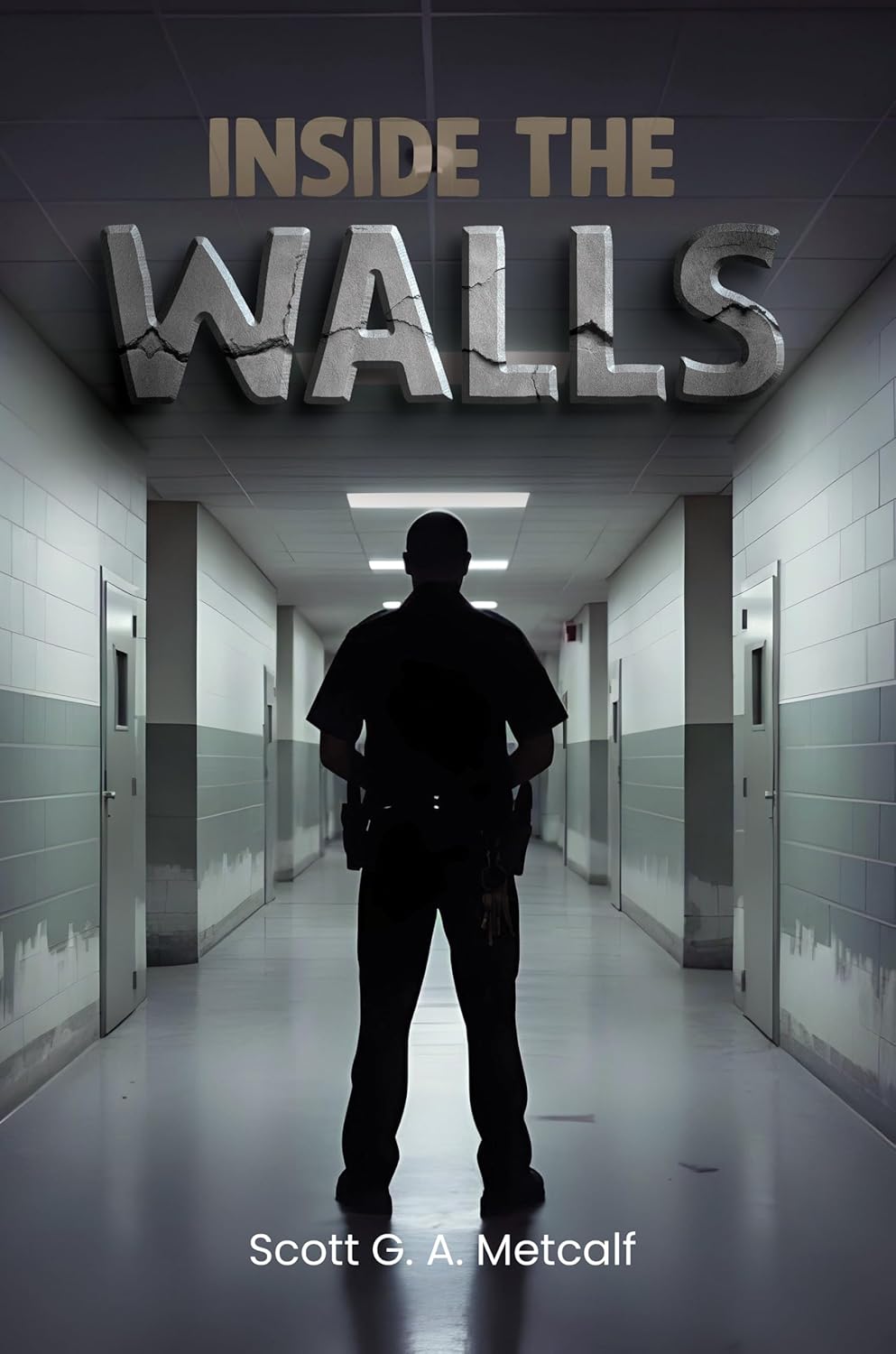
Inside The Walls by Scott G. A. Metcalf is a first-person memoir of life as a correctional officer, from a wide-eyed rookie walking into “The Steel Welcome” in 1991 to a worn but reflective veteran finally stepping back through the gate for good. Scott G. A. Metcalf walks through the full arc of that career. He takes the reader from the sensory shock of the first day, through the slow building of trust between officers, the games and dangers in the inmate population, the quiet wars with management, the absurdities of policy, the dark humor that keeps people sane, and the lasting psychological scars that follow him out to civilian life. The later chapters and back matter broaden the story with timelines, definitions, and statistics that frame his memories inside the bigger picture of modern corrections.
The book really grabbed me. The prose is vivid and rich with sensory detail. I could almost smell the disinfectant, the sweat, the tobacco, the institutional food, all layered together until the place felt alive in a sick way. The opening chapter in particular is emotionally stirring. The air, the clang of steel, the first encounter with Miller and his three rules. I felt my shoulders tense as I read. Metcalf leans into metaphor and repetition. That excess matches the environment he’s describing. Prison is not subtle. The pacing feels deliberate. Long, dense passages where he unpacks a corridor or a shift in painful detail, then quick scenes that come and go before you can breathe.
I liked how the book keeps circling back to trust, fear, and humanity, both for staff and inmates. The hierarchy among officers, the way reputations are built one small action at a time, the unspoken pact to back each other up, all felt painfully real. I also appreciated that he does not turn the inmates into monsters or saints. He shows lifers folding blankets, young guys fronting with tattoos, manipulators working angles, and he keeps saying, in his own way, that they are still people. His reflections on the prison as a micro-version of society hit hard. The book is angry at the system but not cheap or preachy. I did feel that his outlook is pretty bleak in places, and I wanted to see programs that worked, or see examples of change beyond the individual level. Still, that frustration is part of the honesty here. It felt like listening to someone who has seen too much, trying to make sense of it without lying to himself.
By the time I reached the final walk toward the gate and the appendix of terms and stats, I was moved and a little haunted. This isn’t a light read, but I think it’s an important one. I would recommend Inside The Walls to anyone who works in corrections or law enforcement, to students in criminal justice, to policymakers who talk about prison from a distance, and to general readers who want a ground-level view of what “doing time” looks like for the people in uniform. It will probably be tough for readers with their own trauma around violence, confinement, or institutional work so be warned. For everyone else, if you are willing to hear a raw, thoughtful voice, then I think this book has a lot to offer.
Pages: 306 | ASIN : B0GM2SBHDH

West Point to Wall Street: My Journey to Mental Wellness

West Point to Wall Street: My Journey to Mental Wellness is a straight-up life story of motion and impact. Author Omar Ritter starts as a kid in a fractured family, bouncing between Germany and South Carolina, raised on grit, faith, and the hard lessons of money and race. He moves through high school, struggles to get into West Point, then to peacekeeping in Kosovo and combat in Iraq. The book follows him home to brain surgery, an elite MBA, and the brutal hours of investment banking, all while untreated PTSD rides in the background. The later chapters track his slide toward burnout, his lowest point after a friend’s murder–suicide, and his decision to finally seek real help and turn himself into an advocate for mental wellness. The story closes with practical reflections on work, leadership, and stigma, along with resources for readers who may be fighting similar battles.
The book is direct and intimate. Ritter keeps the prose simple and focused, and that fits his story. The chapter structure with “Triggers” sections at the end gives the memoir a reflective rhythm. You get the scene, then you get the emotional fallout in plain language. Those bullet lists feel almost clinical, but I ended up appreciating how they map the buildup of trauma over the years. The childhood and West Point sections are vivid. Small details stick with me, like him selling newspapers outside the mess hall or sleeping on a sagging couch in a run-down trailer. The voice feels honest, not polished for image, which made me trust him even when he talks about his own success and credentials.
Emotionally, the book hit me hardest in the sections on Kosovo, Iraq, and the Wall Street grind. The combat pieces never drift into action-movie drama, and that restraint makes them heavier. You feel the weight through the aftermath, not the explosions. Then he walks into investment banking, and you realize he has just traded one high-alert environment for another. The ninety-hour weeks, the perfectionism, the lack of sleep, the quiet panic at night, all of that felt painfully believable. I also liked how he keeps circling back to relationships, mentors, and family, especially his grandfather. The idea that money skills, community responsibility, and mental health are linked comes through without him having to say it outright. I did wish for a bit more depth on his therapy journey itself, what specific tools and moments helped him change, but the emotional honesty around hitting rock bottom and accepting medication really resonated with me.
I think the book is really about permission. Permission for soldiers to hurt. Permission for Black men to say “I need help.” Permission for high achievers to admit that the grind is breaking them. Ritter points out how the cultures he lived in, from the military to Wall Street, rewarded toughness and silence, and how that almost killed him. I appreciated that he does not glamorize resilience as “just push through.” He frames resilience as getting support, setting boundaries, and learning to talk about pain before it explodes. The sections on workplace culture and mental health are straightforward and practical, and I could see managers or HR leaders underlining key points from those chapters.
I would recommend West Point to Wall Street to a few specific groups. Veterans and military families will see a lot of familiar patterns here, both good and bad. Anyone in a high-pressure career, especially finance or consulting, will recognize the slow creep of burnout. Men of color who feel boxed in by expectations of strength may find this voice especially validating. And readers who just enjoy memoirs about persistence, mobility, and second chances will get a lot from it too. It’s a clear, heartfelt account from someone who has been to some very dark places and is willing to pull the curtain back so the rest of us feel a little less alone.
Pages: 248 | ASIN :B0FLN6VW1T
The World’s Scariest Haunted Lighthouses, Vanishings, and Murders

The book delivers a sweeping tour through some of the world’s eeriest lighthouses, pulling together ghost stories, tragic histories, strange vanishings, and unsettling folklore into one long chain of atmospheric tales. Each chapter focuses on a different lighthouse and mixes documented events, local legends, and paranormal claims. From the child spirits said to roam the St. Augustine Lighthouse to the grim disappearance of the Flannan Isles keepers to the piano-driven madness on Seguin Island, the book moves quickly from story to story, tying them all together with a clear fascination for the lonely, haunted nature of lighthouse life.
I was pulled in by the sheer variety of stories. Some chapters felt almost tender in their sadness, especially the tales involving children and grieving families. Others hit me harder, with their accounts of shipwrecks, murders, and unexplained deaths. The author uses simple, steady language to walk through each event, and I appreciated how easy it was to sink into the scenes. I actually enjoyed how the stories flowed one after another. The steady pace kept me immersed, almost like sitting by a campfire and hearing ghost stories, which gave the book an exciting, continuous energy.
I also liked how the book has a sense of empathy. The author never treats the tragedies lightly. Even in the more sensational chapters, there’s a clear respect for the people who lived and died in these remote places. It gave weight to the paranormal claims, even when the supernatural elements may have felt a bit embellished. Some moments had me smiling because the stories leaned into classic ghost-story theatrics. Other moments actually gave me a chill. The mix worked for me. The book doesn’t try to convince the reader of the paranormal. It simply invites you to experience the atmosphere, and that made the whole thing feel warmer, more human, and honestly more fun.
I’d recommend this book to readers who enjoy ghost lore, maritime history, or just a good eerie tale told with heart. It’s a storyteller’s collection, and it works best when read that way. Anyone who loves abandoned places, lonely coastlines, and mysteries that refuse to be solved will find something here to enjoy.
Pages: 94 | ASIN : B0GCTPPW1G
The Quiet After
The Quiet After is a collection of linked creative nonfiction stories that trace an Iraqi man’s journey from Baghdad through war, displacement, and finally to a fragile, hard-won peace in the American Northwest. The pieces move between barbershops, markets, kitchens, churches, border crossings, and battlefields, and they circle the same core questions again and again. What does it mean to belong. How do you father a child while carrying a history full of ghosts. Where does faith sit after the bombs stop falling and the paperwork starts. The book calls itself creative nonfiction, and it reads that way. Memory on the page. Crafted scenes and dialogue. A steady thread of reflection on war, migration, and the slow, quiet work of rebuilding a life.
This is an emotionally stirring book. The prose feels careful and musical without drifting into showoff territory. I kept noticing how concrete the images are. Hair falling like snow in a barbershop. A kitchen so overdesigned it has everything but a knife. A boy’s name bumping against a school hallway that does not yet know how to pronounce it. The sentences lean on repetition, rhythm, and simple words, and that choice makes the hard moments land even harder. A few passages stack metaphor on metaphor, and I would have liked one plain line, just for contrast. But then a scene like “Loofah” or “The Intruder” arrives and the language feels exactly right for the horror and tenderness it carries, so I forgave the occasional excess without much struggle.
I laughed in some of the lighter pieces, like the confusion over “showers” in a church or the culture shock around silent car horns in Idaho. Those stories have a dry, self-aware humor that kept me from drowning in grief. Then I would turn a page and land in something brutal. The assault and killing in “Loofah” is one of those scenes that I almost wanted to look away from, yet the author refuses to sensationalize it. He stands close, he names the harm, he lets the consequences sit. Later stories that move toward adoption, fatherhood, and small gestures of kindness in American kitchens and barbershops softened me in a very different way.
The book keeps circling the tension between being Arab and being American, between being seen as a threat and trying to live a quiet, decent life. It speaks to the aftershocks of war more than the explosions themselves. Identity, exile, and belonging sit at the center, but they are grounded in very ordinary moments, not speeches. A kid asks his father if they are terrorists. A grieving widower snaps at a barber, then cracks open in the chair. A man misreads the word “hard” on a bottle of lemonade and stumbles into a lesson about grace and fine print. The faith in these pages feels earned and complicated, not neat. God appears in silence, in survival, in paperwork, in the choice to adopt instead of hate. The author is clear about political violence and betrayal, yet he refuses to flatten Americans into villains or Iraqis into saints. That nuance felt honest and rare.
The Quiet After is a deeply humane and powerful book. I would recommend it to readers who like literary memoir, creative nonfiction, or short story collections that sit close to real life. It will speak strongly to people from immigrant or refugee backgrounds, to veterans and aid workers, to anyone who has tried to build a new life in a place that once met them with fear. It would also be a rich read for book clubs, faith communities, and therapists who want to understand the lived texture of war’s aftermath. The stories are short enough for a busy schedule, but the echoes stay.
Pages: 204 | ASIN : B0G4KY1ZDL
Hostage: A Memoir of Terrorism, Trauma, and Resilience

Hostage tells the true story of a young American woman who survives the 1970 Dawson’s Field hijackings and the brutal weeks that follow. The book moves through the terror inside the plane, the suffocating days in the desert, the chaos of the civil war around Amman, and the long stretch of waiting that wears people down. Nichter looks back on the ordeal with the sharper eyes of the person she became later. She uses her journals and memories to pull the reader into each moment of fear, confusion, and small hope that kept her going. The narrative follows her from boarding the plane in Tel Aviv to her release many days later, and the story feels both intimate and historical at the same time. I felt the heat inside the grounded plane, the sting of sand in the air, and the strange mix of stillness and danger that marked every hour.
This was a very emotional book for me. I found myself leaning in, almost holding my breath, because the writing feels so honest. The way she describes the hijackers pacing the aisles or the passengers tearing up passports hit me hard. Her voice is calm at times, almost steady, and then it wobbles in a way that made me feel the shock and disbelief with her. I could sense how young she was, how much she wanted to keep a grip on normal life, and how that life slipped further away each day. The details she notices, like the smell of sweat in the cabin or the way a baby’s crying cut through everything, felt strangely tender to me. The story is frightening, yes, but I also felt a deep sadness that sits underneath her words. She had to grow up fast. The world forced it on her.
What I found most interesting was how she carries her identity through the ordeal. She writes about being one of the Jewish passengers who were kept behind while others were freed, and I felt the weight of that moment. Her fear rises and falls in waves, but she never stops thinking, never stops trying to understand the people holding her. She lets us see her anger, her doubts, her guilt, and even her dark humor. That honesty shaped my reaction more than any single event. The writing feels grounded and human. There were moments when I wanted to reach into the book and tell her she wasn’t alone.
By the end, I felt tired in the best way, like I had walked alongside her. The story is gripping and painful and strangely hopeful. I would strongly recommend this book to anyone who wants a survivor’s view of political violence and its emotional aftershocks. It is not a dry historical account. It is a personal journey written with clarity and courage. Readers who like memoirs that face trauma directly will find a lot here. Students of history, psychology, or Middle Eastern politics will gain insight, too. And anyone who wants to understand what it means to hold on to yourself when the world becomes unpredictable will find something worth remembering.
Pages: 232 | ASIN : B0FWPGVP4M
A Promise of Rest: Stories from the Commonplace

A Promise of Rest is a collection of linked vignettes in which hematologist–oncologist Ron Lands looks back over a life spent around illness, death, and ordinary grace. Moving between childhood memories in small-town Tennessee, early training in rough-edged public hospitals, years of oncology practice, and later work in palliative care, he tells brief, concentrated stories about patients, family, colleagues, and his own younger selves. Together they form a kind of quiet spiritual autobiography of a doctor learning how to see the “poetry of the commonplace” in exam rooms, farmhouses, ICUs, and front porches.
As a reader, I was struck first by the texture of his attention. Lands notices smells, gestures, the way a nurse’s stockings crease or how a boy pinches the bridge of his nose to keep from crying. The chapters are small, but they feel dense with lived time; you can sense the decades of work behind a single sentence about an IV line or a CT image. I appreciated how unsentimental he stays while clearly caring deeply, he lets scenes sit, without forcing me to feel a particular way, which weirdly made the emotion land harder.
What resonated with me most, though, were his admissions of uncertainty and regret. The story of treating his uncle’s cancer, for instance, is not framed as a triumph but as a painful lesson in what happens when love and professional judgment tangle. His early awe of hospitals, the later grind of oncology, and his eventual move toward palliative care all fit together into a portrait of someone continually revising what “helping” means. The book suggests that medicine at its best is less about heroics and more about staying in the room, bearing witness, telling the truth without cruelty, and honoring the small, stubborn will to live that shows up in very different forms.
I’d hand this to readers who gravitate toward medical memoir, narrative nonfiction, physician essays, end-of-life care, palliative care stories, anyone curious about what cancer medicine actually feels like from the inside, but also anyone who thinks about vocation, aging, and how to be present for other people’s suffering. If you appreciated Atul Gawande’s Being Mortal, you’ll recognize a similar moral clarity here, filtered through a more intimate, Southern, small-town lens. A Promise of Rest is a quiet but potent book that teaches you how much can change when one person truly sees another.
Pages: 150 | ASIN : B0G6JPRKV1


