Blog Archives
Meaningful Work Is Messy Work

Serving the Leftovers shares with readers your journey from a fractured marriage and unfulfilling jobs into a life defined by compassion, chaos, and canine companionship. Why was this an important book for you to write?
I thought I was simply documenting the brutal mathematics of animal rescue—the endless cycle of intake and loss that defines the South’s overpopulation crisis. But somewhere between chronicling emergency calls and heartbreak, I realized I was excavating something deeper: the emotional archaeology of a life rebuilt from scratch. People think we just “like” dogs, but I was drowning in stories I couldn’t tell at dinner parties—stories that revealed I’d been rebuilding myself one rescue at a time, transforming from someone just existing through disappointment into someone living with purpose. The book became my way of honoring both the dogs we’ve saved and the ones we couldn’t, while showing readers that animal rescue isn’t charity work—it’s emergency medicine for a crisis most people never see. It is also proof that transformation can happen to anyone brave enough to follow what calls to them, no matter how impossible it seems.
What were some ideas that were important for you to share in this book?
I realized I’d documented a blueprint for quiet revolution—completely reimagining your life when everything feels impossible. The core message: the life you’re meant to live is already speaking to you. For me, it was that first dog I couldn’t turn away from. Each rescue was the universe saying, “This is your work.” Transformation doesn’t require permission or perfect timing. I started with a fractured marriage—hardly ideal conditions for a life-changing mission. Stop waiting for readiness that never comes. That thing pulling at your heart isn’t a hobby—it’s your next chapter trying to get your attention. Sometimes you have to trust the pull toward something that makes no logical sense.
Ultimately, our vision isn’t too big. Our current life is too small.
What was the most challenging part of writing your memoir, and what was the most rewarding?
Untangling the Beautiful Mess
The biggest challenge was trying to impose narrative order on what felt like controlled chaos—how do you create a coherent storyline when one day you’re fielding divorce calls while having an epiphany about purpose? Writing forced me to connect dots I’d been too busy living to notice—that every dog that changed my life had arrived exactly when I needed the lesson they carried, and that I hadn’t just been saving dogs, I’d been saving myself, one rescue at a time, building the person I needed to become to handle the life I was meant to live.
What do you hope is one thing readers take away from your story?
I hope readers walk away understanding that meaningful work is messy work—and that’s not a bug, it’s a feature. I want readers to stop waiting for a calling that comes without complications. The work that will transform your life isn’t the work that fits neatly into your existing schedule or makes sense to everyone around you. It’s the work that demands you become someone bigger than who you were yesterday—and becoming bigger always involves growing pains. The unglamorous parts aren’t obstacles to your dream—they ARE the dream. The sleepless nights, the impossible decisions, the moments when you’re too emotionally spent to remember why you started—that’s not evidence you’ve chosen wrong. That’s proof you’ve chosen something worth the fight.
Author Links: GoodReads | Facebook | Website
James Dean: An American Icon


When I picked up James Dean: An American Icon, I expected another glossy tribute to the Hollywood rebel who burned bright and left too soon. What I got was a detailed and surprisingly intimate look at Dean’s rise, struggles, and enduring legacy. The book walks through his early years in Indiana, his faltering start in California, his transformative move to New York, and, of course, his brief but legendary Hollywood career with East of Eden, Rebel Without a Cause, and Giant. Brennan doesn’t shy away from Dean’s flaws, his mood swings, his stubbornness, his combative nature, but he also makes clear why Dean’s presence electrified audiences in a way that hasn’t quite been matched since.
Reading about James Dean’s close relationship with his mother, followed by the devastating impact of her death from cancer when he was only nine years old, carried a profound emotional weight. Brennan convincingly links this formative loss to Dean’s later restlessness and at times reckless ambition, and that connection resonated with me strongly. The scene in which Dean reads the 23rd Psalm to his dying mother was particularly affecting, leaving me in thoughtful silence. It served as a poignant reminder that behind the iconic figure of Hollywood’s brooding rebel was a young man who continued to long for stability throughout his life.
I also loved the sections about Dean’s relentless push to carve out an acting career in New York. Brennan captures his raw hunger in those years, washing dishes, living at the YMCA, and taking tiny roles just to keep himself afloat. The anecdote about Dean working as a stunt tester on Beat the Clock, practicing silly tasks until he mastered them, made me smile. It showed his obsessive streak but also his refusal to quit. And when Brennan describes Dean writing to his young cousin Marcus Jr., warning him not to draw prisons and weapons but to draw trees and animals instead, I saw a softer, gentler James that doesn’t usually make it into the legend.
Of course, the Hollywood chapters are the most exciting, and Brennan delivers them with energy. I especially enjoyed the behind-the-scenes glimpses of Rebel Without a Cause. The way Dean pushed against Nicholas Ray’s direction, the way he made a scene electric even when he ignored the script, it made me feel like I was there on set, watching history being made. Brennan also notes how critics dismissed him at first as a Marlon Brando knockoff, only to eat their words after Rebel and Giant. I found myself almost cheering for Dean while reading these pages. It’s hard not to admire someone who stayed true to his craft, even if it made him “difficult.”
By the end, I felt both inspired and a little hollow. Inspired because Dean really did change cinema, Brennan shows how he gave voice to young people’s discontent long before it was fashionable. Hollow because I couldn’t shake the thought of what roles he might have taken on had he lived past twenty-four. The chapter on his death is sobering, but the final chapter on his lasting impact balances it with hope, showing how his spirit still touches new generations.
I’d recommend James Dean: An American Icon to anyone who loves film history, but also to anyone curious about the messy, human side of stardom. It’s not just about the myth of James Dean, it’s about the boy, the actor, the rebel, and the artist. For me, it was both a celebration and a reminder that brilliance often comes with shadows.
Pages: 318 | ISBN : 1587906880


Singing Through Fire

Singing Through Fire follows Lara, a brilliant young lawyer whose life takes an unexpected turn when chronic illness derails her dream career. Told in four acts, the memoir reads like a stage play filled with drama, sarcasm, faith, and raw honesty. It begins with her legal triumphs, then moves into the heartbreak of physical collapse, spiritual wrestling, and an ongoing struggle to reconcile suffering with belief in a loving God. Alongside this journey of pain, there’s also humor, romance, family loyalty, and moments of surprising joy. The book is not just about illness. It’s about the human fight to make sense of loss and to keep faith alive when everything feels upside down.
What I enjoyed most was the voice. Lara writes with sharp wit, biting humor, and a willingness to laugh at herself even in the darkest places. One moment I was laughing at her courtroom jokes, the next I was gutted by her descriptions of vertigo so severe the world spun out of control. The style isn’t polished in the way some memoirs try to be. It’s messy, emotional, and jagged, which makes it all the more real. I found myself pulled into her contradictions: one page proclaiming trust in God, the next shaking her fist at Him. That tension felt authentic, and it gave me permission to admit my own doubts instead of pretending to have tidy answers.
Sometimes the sarcasm felt like a shield. I admired her honesty but also felt exhausted by the relentlessness of the struggle. She doesn’t shy away from bitterness or raw complaint, which made the book heavy in stretches. Yet, that same rawness is what gave the story its power. In those rare moments of light, when hope cracked through, it felt earned.
This isn’t a book for someone looking for neat answers or a “how-to” on suffering. It’s for anyone who’s been angry at God, who’s wrestled with pain that makes no sense, who’s felt cheated by life and still dared to hope. Singing Through Fire is a raw, funny, and heartbreaking read that stays with you. I’d recommend it to anyone who values honesty over polish and wants to see what it looks like to keep stumbling forward in the dark with faith still flickering.
Pages: 512 | ASIN : B0FN3PVZZV
On the Edge
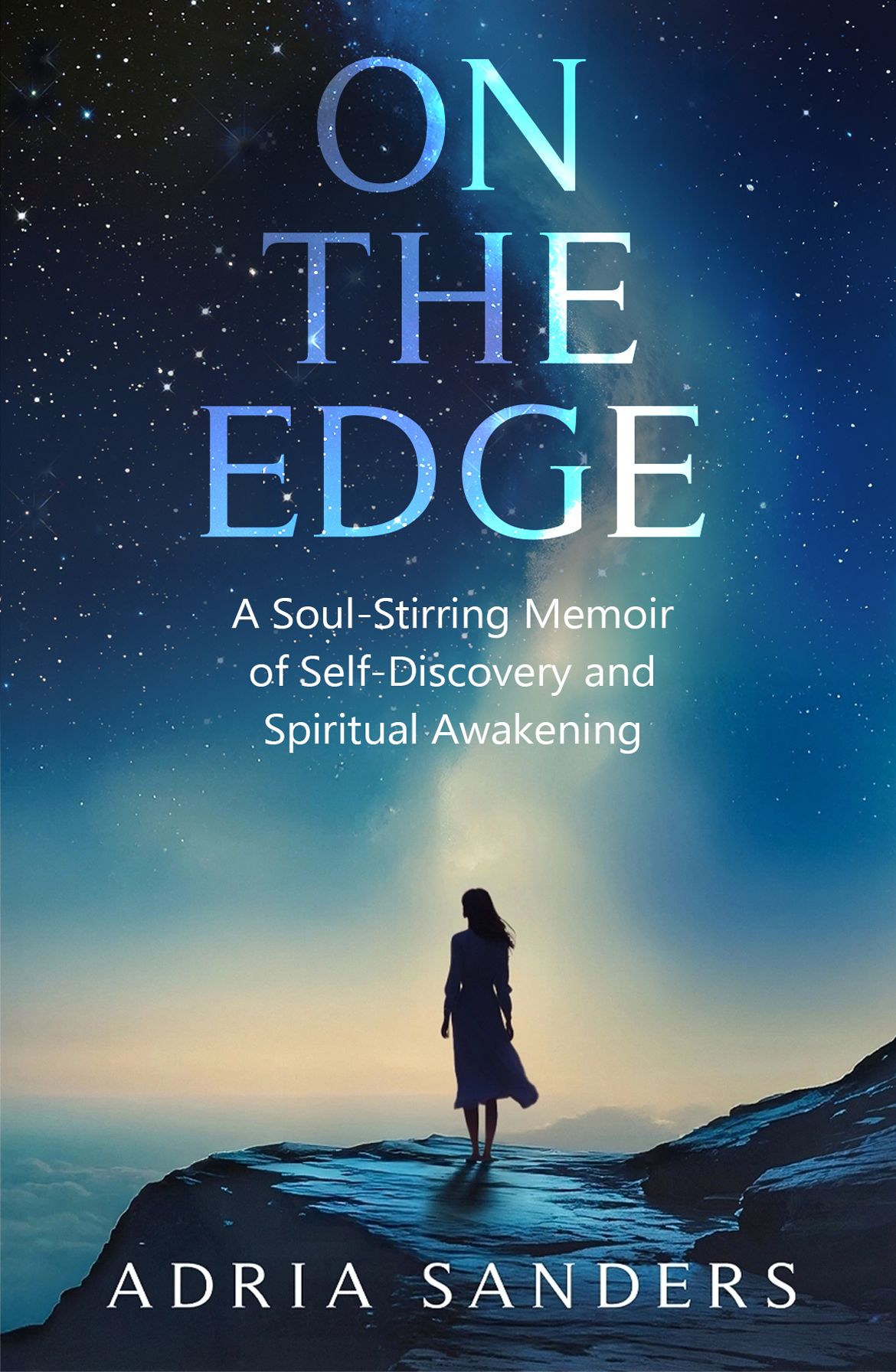

When I picked up On the Edge, I expected a quiet memoir, but what I found was something more like a raw confession and an unfolding diary of spiritual transformation. Adria Sanders takes the reader through her past lives, telepathic experiences, encounters with entities, and moments of stark human vulnerability. She moves from memories of childhood déjà vu to complex visions of portals, parallel universes, and whispers from the Akashic realm. The book reads as both a personal story and a larger meditation on what it means to live as a soul searching for purpose in an unpredictable world.
I found myself pulled into her honesty. At times, the writing feels like a friend sitting across from me, sharing secrets. There’s no glossing over the strangeness of what she describes. She talks about past life memories, premonitions, and the deep ache of longing for a love she feels spanned centuries. That kind of openness takes courage, and I believe the emotions she puts on the page. Her vulnerability is the kind that makes me pause and think about the invisible threads in my own life. Some passages are heavy and hard to process, and yet they carry a warmth that kept me reading.
The stories flow quickly from one to the next, and at times I found myself wishing she had lingered a little longer on certain ideas to let them sink in. The blend of paranormal experiences and deeply personal struggles creates an intensity that can feel a bit overwhelming, yet it also reflects the richness of her journey. In a way, it adds to the authenticity. It’s not a polished guide; it’s full of questions she doesn’t always answer, and that’s what makes it feel alive. I appreciated the mix of skepticism and surrender in her voice. She doesn’t preach. She just tells it as it came to her, and I respect that.
I’d say On the Edge is a book for the curious. It’s for readers who enjoy stories about spiritual awakening, past lives, and the mysterious side of existence, but also for those who simply want to sit with someone else’s raw experience of searching for meaning. If you want a memoir that feels like sitting in the middle of someone’s storm, seeing both the fear and the wonder, then this book is worth your time.
Pages: 261
Just Play Like You Do in the Basement: Coming of Age as The Drummer for The Greatest Entertainer in the World

This memoir tells the story of Rick Porrello’s journey from a basement in Cleveland Heights to the bright lights of stages around the world. He begins as a boy with sticks in his hands, pushed forward by the weight of family expectation, the shadow of his brother’s rising star, and the complicated legacy of both music and crime. His story weaves through smoky clubs, shimmering showrooms, and a world tour alongside Sammy Davis, Jr., the greatest entertainer of his time. Beneath the sparkle is a quieter story: a young man trying to find his place, pulled between loyalty to family and a growing pull toward another life, one rooted in service and self-discovery.
Reading this memoir stirred something deep in me. The writing has an unpolished honesty that made me feel like I was sitting across from Porrello while he told his story. Sometimes the sentences clipped along fast, like drumbeats rattling off the snare. Other times, they slowed, stretching out like a cymbal crash that hangs in the air. What hit me hardest was how vulnerable he was about his family, especially his father’s expectations and his brother’s spotlight. That tension made the glamorous parts shine brighter because you could feel the cost of them. I caught myself grinning during his first rehearsal jitters, then sinking back when the family’s past with organized crime crept in. It’s raw and messy in places, but that mess feels authentic.
What I liked most was how he balanced the glitter of the stage with the grit of ordinary life. He doesn’t hide the chaos. The burn scars, mob ties, and bad choices. That makes the triumphs hit harder. His memories of Sammy Davis, Jr. felt electric, full of awe but never blind hero worship. The writing has its loose, wandering moments, like a story shared late at night, but I found it charming. I was moved by how much of it is about family love and the ache of carving your own identity.
I’d recommend this memoir to anyone who loves music, but also to people who enjoy personal stories of struggle, ambition, and growth. You don’t have to be a drummer to feel the pulse of this memoir. It’s for readers who like to be pulled behind the curtain, to see the sweat along with the spotlight. If you’ve ever felt torn between who your family wanted you to be and who you felt you were meant to become, you’ll find yourself nodding along with Porrello’s journey.
ISBN : 9798987831243
An Inconvenient Witness: The Weight of Ordinary Things
An Inconvenient Witness is a winding journey through memory, trauma, and survival. Casebier recounts his life with vivid detail, moving between childhood scenes, brushes with death, family dysfunction, and encounters with cultural and historical moments. It reads less like a straight memoir and more like a series of lived fragments stitched together by reflection. The wrecks, the violence at home, the near misses with fate, all collide with observations about memory, history, and the strange ways the past and future leak into the present. At its core, the book wrestles with what it means to endure, to notice, and to carry stories that don’t always fit neatly inside the lines of ordinary living.
I found the writing raw and gripping, sometimes messy in the best way. It doesn’t settle into a safe rhythm but instead jolts you awake, like being pulled into someone else’s storm. Casebier’s voice feels unfiltered and honest, even when the truth is hard to look at. I liked how he tied his personal history to larger events, how a boy’s pain could echo against civil rights marches or global revolutions. That could feel scattered in another book, but here it felt appropriate, because memory is scattered too. The style is not polished smooth; it’s jagged, urgent, alive. That’s what pulled me in.
Some passages dig deep into scenes I wanted to linger on, but then they veer into cosmic speculation or philosophical tangents. It can feel like listening to someone tell you about their life at a bar at midnight, where the stories blur with dream logic. It’s unpredictable. You don’t always know where he’s going. It felt like a conversation more than a lecture, a voice remembering in real time rather than serving you something carefully rehearsed.
By the end, I came away with a sense of the weight of what it costs to carry the ordinary things that don’t seem extraordinary until you look back at them. I’d recommend this book to readers who like memoirs that don’t whitewash, who can handle detours, and want to sit inside someone else’s head for a while without demanding order. If you want to feel memory in its messy, beautiful, inconvenient fullness, then this book is worth your time.
Seven Blank Pages

Seven Blank Pages is a memoir that moves like a journey across continents, emotions, and inner landscapes. Whitney Joy begins with moments of adventure, like skydiving, climbing mountains, traveling across oceans, and layers them with the heartbreak of divorce, the weight of grief, and the stubborn hope of starting over. It is not just a travel story. It’s a meditation on risk, resilience, and the search for meaning. Alongside stories of luxury events in glittering cities and treks up rocky summits, there’s a raw exploration of loss, intuition, and self-discovery. Each chapter feels like both a leap into the unknown and a homecoming to the self.
Reading this book felt like sitting across from a friend who isn’t afraid to tell you the truth, even when it stings. The writing is vivid and alive, with scenes that pull you into the cold air of the mountains, the glitter of jewels, or the ache of an unraveling marriage. I admired how Joy didn’t polish her story into a neat, triumphant arc. Instead, she showed the messy middle. The contradictions. The laughter that comes right after tears. That made it feel honest, even when her choices or perspectives made me pause. At times, the spiritual themes like manifestation, energy work, and intuition felt a little far out for me, but they were written with such sincerity that I couldn’t dismiss them.
I also found myself swept up by the sheer energy of her life. The speed of her career, the intensity of her relationships, the extremes of both risk and beauty. It made me reflect on how often I play it safe. Her story cracked open that little voice in me that asks, “What would happen if I leapt?”
I closed the book feeling both stirred and unsettled, in the best way. Seven Blank Pages is for people standing at the edge of something new, whether that’s an ending, a beginning, or the wild in-between. It’s for readers who crave adventure and honesty more than tidy answers. And it’s for anyone willing to believe, even just a little, that magic might still be possible.
Pages: 297



 LITERARY TITAN