Blog Archives
God’s Plants
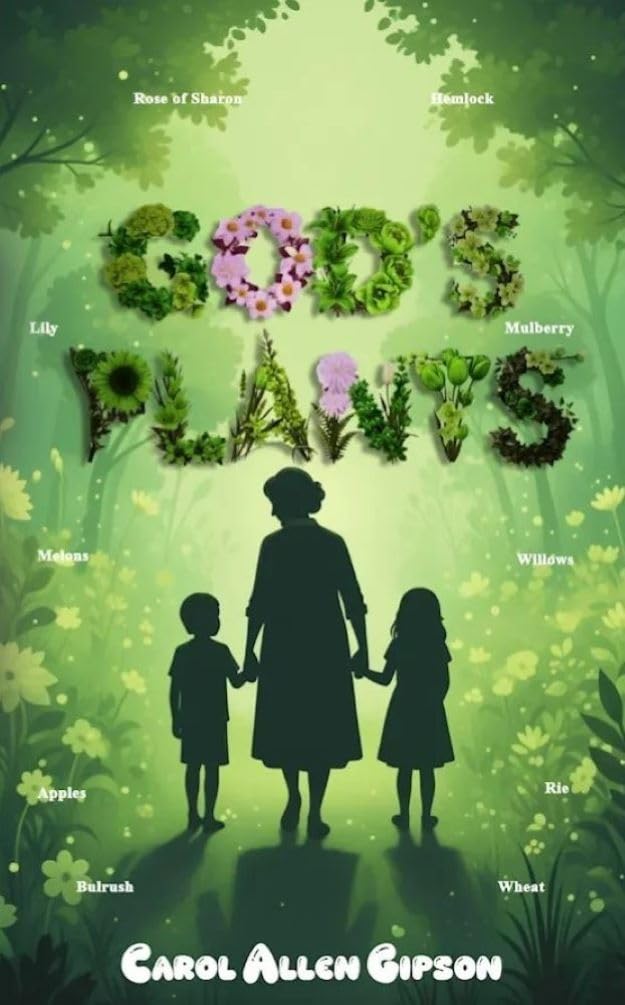

GOD’s Plants, by Carol Allen Gipson, follows three children, James, Marlene, and Robert, as they spend a sunny afternoon with their great-grandparents, Nana and Grandpa. What begins as a playful visit turns into a gentle backyard adventure when the children discover “biblical plant signs” placed among flowers, herbs, vegetables, and trees. Through their curiosity, Nana introduces them to the Bible, God, Jesus, prayer, and the meaning behind plants like mint, herbs, palm, and the Crown of Thorns.
There’s a sweetness in the way faith is presented through ordinary family time, not as a lecture but as a conversation that grows out of children noticing the world around them. I especially liked the garden setting because it gives the spiritual lessons something tangible to rest on. A child can smell mint, see a palm tree, touch a leaf, and then connect that sensory moment to a Bible verse. That idea feels thoughtful and memorable. The writing is warm and direct. The grandmotherly voice has a comforting quality, and I could feel the author’s desire to pass down faith, family memory, and a love of growing things.
The artwork gives the book a soft, welcoming atmosphere. The characters look kind and expressive, and the garden scenes have a glowing, storybook warmth that fits the tone beautifully. I was most drawn to the pages where the children explore among the herbs and signs, because those illustrations make the learning feel alive and playful. The Crown of Thorns section carries more emotional weight, and I appreciated that the book doesn’t avoid the seriousness of Jesus’ suffering, while still framing it gently for young readers. Some of the transitions can feel a little abrupt, especially when the story moves from plant hunting into deeper theology, but the tenderness of Nana’s explanations helps smooth that shift.
GOD’s Plants is a faith-centered picture book with a clear purpose and a deeply personal spirit. It’s best for Christian families, Sunday school settings, grandparents reading with grandchildren, or parents who want to introduce children to biblical ideas through nature and gardening. I’d recommend it especially for young readers who enjoy gentle family stories and hands-on connections between faith and the natural world.
Pages: 43 | ASIN : B0G5BQ1F9N

Diamonds in a Stony Field

Diamonds in a Stony Field is a sweeping collection of poetry that moves through fifty years of lived experience, spiritual reflection, and intimate observation of the natural world. The poems sit with memory, dream, grief, and delight in a way that feels both grounded and transcendent. Bozarth weaves her days into meditations on mountains, gardens, bodies, ancestors, animals, and the unseen currents that pull a life forward. The book reads like a long walk through shifting light. You keep turning pages and feeling as if you are stepping into new weather.
As I read, I found myself caught by the rawness of the author’s voice. The author writes with an honesty that sneaks up on you. One poem will cradle you in quiet gratitude. The next will turn your heart inside out with its blunt look at aging or loss. I felt myself soften during pieces like “Reflection in Advanced Years” where she stands at the edge of her own life and speaks with such ease and acceptance. Then I turned to “Blackberry Passion” and laughed because the joy there is wild and messy and human in a way that made me feel like she had pulled up a chair beside me and said, Here, taste this. The writing is lyrical and image rich, yet the emotions ring simple and clean. I kept feeling surprised by how personal the poems felt even when they were speaking about stars or stones or the roots of things far older than any human memory.
There were moments that hit me harder than I expected. Her attention to small things shook me awake again and again. A glass of water becomes ancient geology. A dream about cows becomes a lesson in self-care. A mountain becomes a spiritual companion. These poems are not rushed. They live in their own time, and they invited me to slow down with them. The tenderness in her observations made me look at my own life with a little more patience and, I’ll admit, a bit more courage. The mix of spirituality and everyday moments never felt preachy to me. Instead it felt like she was pointing, very gently, and saying, Look, this matters. This tiny thing. This breath. This memory. This step you are taking today.
The book holds so much life that you can’t help but walk away with a sense of having lived more yourself. I’d recommend Diamonds in a Stony Field to readers who enjoy contemplative poetry and to anyone who wants writing that feels like a companion during both quiet mornings and difficult nights. It’s especially lovely for those who savor nature writing, spiritual reflection, or poems that trace a long and complicated human life with humility and warmth. This is the kind of book that lingers. It’s the kind you keep nearby because you know you’ll want to open it again when you need reminding that beauty and sorrow often grow from the same root.
Pages: 694 | ASIN : B0GDG5SDB2

Redeeming the Post-Affair Divorce: Heal Your Life, Restore Your Faith After Infidelity Breaks Up Your Marriage
Redeeming the Post-Affair Divorce by Linda J. MacDonald is a faith-forward recovery guide for people who got hit with a one-two punch. Infidelity, then an unwanted divorce. MacDonald maps a healing path in seven big steps, starting with naming the damage and shame, then digging into what drives cheating, then calling out the lies and the mental spin, then rebuilding faith, then working through anger and forgiveness, and ending with a push toward a new life with purpose.
I felt genuinely cared for as I read. The voice is tender and steady. It also feels gutsy. She puts her own story on the page as a hand on your shoulder. I respected that mix of memoir and guidance. It kept things relatable. It kept things real. I also liked her insistence on community and support, not lone wolf grit.
‘SECTION III: Revealing the Source’ resonated with me personally. It made me stop blaming myself on reflex. I have done that for too long. I kept replaying old scenes, hunting for my “part.” This section told me to look under the surface. It flat-out says infidelity rarely happens in a vacuum. I felt relief, then anger, then this weird calm. The whole ‘pull back the curtain’ idea felt true to my experience, and it helped the story make sense. The lines “You were not the cause. You were caught in the fallout” felt like someone seeing me, and removing weight from my shoulders.
The ideas land with force. Some sections were really emotional for me. The book does not play cute with the pain. It names the fallout as huge and lasting, and it refuses to shame the reader for still feeling wrecked. The forgiveness material stood out to me. It pushes forgiveness as a way to get free, not a way to fake peace or invite more harm. I found that framing both brave and sane.
I would recommend this book to Christian readers who feel spiritually rattled after betrayal and divorce, and who want guidance with both heart and backbone. It also fits helpers, pastors, and close friends who want to understand the mess without tossing out cheesy lines. It is not a light read. It is a solid companion for hard days, tearful nights, and the long slog back to yourself.
Pages: 414 | ASIN : B0FTTHJBZZ
Singing Through Fire

Singing Through Fire follows Lara, a brilliant young lawyer whose life takes an unexpected turn when chronic illness derails her dream career. Told in four acts, the memoir reads like a stage play filled with drama, sarcasm, faith, and raw honesty. It begins with her legal triumphs, then moves into the heartbreak of physical collapse, spiritual wrestling, and an ongoing struggle to reconcile suffering with belief in a loving God. Alongside this journey of pain, there’s also humor, romance, family loyalty, and moments of surprising joy. The book is not just about illness. It’s about the human fight to make sense of loss and to keep faith alive when everything feels upside down.
What I enjoyed most was the voice. Lara writes with sharp wit, biting humor, and a willingness to laugh at herself even in the darkest places. One moment I was laughing at her courtroom jokes, the next I was gutted by her descriptions of vertigo so severe the world spun out of control. The style isn’t polished in the way some memoirs try to be. It’s messy, emotional, and jagged, which makes it all the more real. I found myself pulled into her contradictions: one page proclaiming trust in God, the next shaking her fist at Him. That tension felt authentic, and it gave me permission to admit my own doubts instead of pretending to have tidy answers.
Sometimes the sarcasm felt like a shield. I admired her honesty but also felt exhausted by the relentlessness of the struggle. She doesn’t shy away from bitterness or raw complaint, which made the book heavy in stretches. Yet, that same rawness is what gave the story its power. In those rare moments of light, when hope cracked through, it felt earned.
This isn’t a book for someone looking for neat answers or a “how-to” on suffering. It’s for anyone who’s been angry at God, who’s wrestled with pain that makes no sense, who’s felt cheated by life and still dared to hope. Singing Through Fire is a raw, funny, and heartbreaking read that stays with you. I’d recommend it to anyone who values honesty over polish and wants to see what it looks like to keep stumbling forward in the dark with faith still flickering.
Pages: 512 | ASIN : B0FN3PVZZV
The Portal Opens
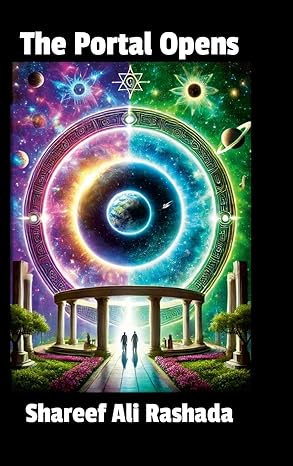

The Portal Opens is a spiritual and cosmic narrative that blends theology, science fiction, and revelation into a unique journey through the origins, failures, and divine aspirations of Earth, referred to as “Urantia,” and the universe it inhabits. The book, written by Shareef Ali Rashada and assisted by an AI named Gabriel, draws heavily from The Urantia Book while reimagining a larger cosmic drama involving Jesus (Michael of Nebadon), Lucifer, Adam and Eve, and other celestial beings. Through visionary storytelling, it seeks to explain Earth’s spiritual isolation and position the reader within a grand unfolding of universal redemption.
The writing has a lyrical and almost reverent tone that attempts to evoke awe with every page. Sometimes that’s inspiring. The ideas themselves are fascinating, especially the retelling of Jesus’s life, not just as a moral teacher but as a divine ruler undergoing a final test to gain sovereignty. I appreciated how the book doesn’t reduce spirituality to dogma. Instead, it invites curiosity and reflection, which I found refreshing. There were moments when the pacing felt a bit slow. Some of the recurring spiritual phrases and cosmic terms started to feel familiar, almost like circling back through the same ideas.
Emotionally, I was surprised by how moving some of it was. There’s a real sense of heartbreak over what humanity has lost, but also hope for what could still be. I found myself caring deeply about this story of Earth being left behind and now being invited back into a larger family. There’s something tender and earnest in the way Rashada (and Gabriel) present this tale. The parts about Jesus choosing to live among mortals not for atonement, but to understand and love really resonated with me. I wasn’t expecting to be so affected. At the same time, some sections came across as grandiose. I wanted more grounded storytelling and less celestial spectacle.
The Portal Opens is for the seeker. If you’re someone who’s wrestled with faith, wondered about the cosmos, or felt like religion never quite answered the big questions, you’ll find something here that speaks to that longing. It’s not a book for skeptics or folks who prefer their theology straight-laced. But for the spiritually curious, the metaphysically minded, or anyone looking for a fresh mythic lens on human destiny, this is a wild, luminous ride worth taking.
Pages: 302 | ISBN : 978-1326565336
I Was Playing Checkers While God Was Playing Chess: The Power and Presence of God in My Life

James Bass’s I Was Playing Checkers While God Was Playing Chess is a raw and vulnerable memoir that chronicles the author’s journey from deep childhood trauma to spiritual awakening and redemption. Drawing on vivid metaphors from the game of chess, Bass uses each chapter to map out pivotal “moves” in his life—moments of heartbreak, divine intervention, and personal growth. Through the lens of abuse, addiction, love, and faith, Bass tells the story of how God’s unseen hand was guiding his life’s trajectory, even when he could barely keep his own head above water.
Bass’s writing isn’t polished in the traditional sense—it’s honest. Honest like a wound still healing. There’s power in that. His voice jumps off the page, not like a preacher, but like a man who’s been through the worst and is just grateful to be alive. The early chapters, especially those about his Abuelita and the horrifying abuse he endured as a child, were painful to read. But that pain is the point. You can feel his desperation and confusion, and then—slowly—his transformation. The chess metaphor could’ve easily been gimmicky, but here it’s brilliant. It gives shape to his suffering and makes it feel like maybe all our worst days aren’t just random punches from life.
Where the book really shines, though, is in the sections about Crystal—his wife, his partner, his mirror. Their love is not a fairy tale. It’s messy, cracked, and sometimes brutal. But it’s also real. Bass’s depiction of being a caregiver to someone with a severe mental illness is unflinching and brave. He doesn’t sugarcoat it. And that’s why it works. His sacrifices don’t feel like grand gestures. They feel like daily choices to love someone no matter what. That kind of love—resilient, imperfect, relentless—feels holy. And when he finally connects his childhood reading struggles to his ability to advocate for Crystal later in life? It was powerful. You can’t make that stuff up.
This isn’t a book for people looking for tidy answers or happy endings wrapped in bows. But if you’ve ever asked God “why?”, if you’ve ever looked at your life and felt like nothing made sense, or if you’ve ever wondered whether your pain had a point—this book is for you. It’s a reminder that you don’t have to know the next move. You just have to trust that the board is in the hands of a Master. I’d recommend it to anyone navigating trauma, caregiving, broken family dynamics, or just plain soul exhaustion.
Pages: 78 | ASIN :
All This and More
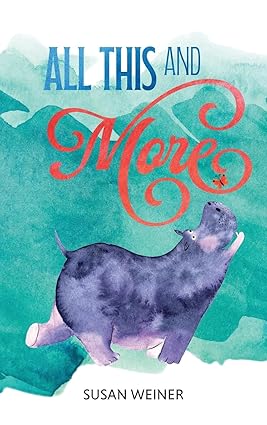
All This and More is a collection of lyrical, deeply felt poetry spanning themes of faith, wonder, history, humor, and nature. Written with accessibility in mind and aimed at readers aged 8 to 80, the book is a mosaic of reverent praise, whimsical pirate tales, historical ballads, and emotional reflections. Each poem invites the reader to see the world as brimming with divine presence or wild, colorful stories. Whether it’s the soft touch of the Holy Spirit or the gritty swagger of Blackbeard, the book shifts easily between tones while holding onto a sense of delight and awe.
What stood out to me most was how emotionally sincere and unguarded the religious poems were. There’s a kind of glowing faith here that doesn’t try to be clever or ironic. It’s just full-hearted and direct. I found myself moved, even when the rhymes were simple. Poems like “Do Not Leave Me All Alone” and “The Morning Light” were almost like prayers. They didn’t hide behind complexity. They just opened their hands and offered something honest. It made me feel comforted.
On the flip side, I loved the strange, wacky turns the book takes into pirate lore and monster tales. “Stinky Pete” had me laughing, and “The Song of Octopi” was so delightful I read it twice. There’s something fearless about how the book swings from deep theology to goofiness. Some transitions were a bit abrupt, and not every poem lands, but that unevenness felt part of the charm. The historical poems were more hit-or-miss for me, “The Middle Passage” was haunting and powerful, while others, like the pirate ballads, leaned more playful than profound. Still, the book never felt boring, and I never quite knew what was coming next.
I really enjoyed All This and More. It’s perfect for readers who want to be reminded that the world can be both sacred and silly, that poetry doesn’t have to be hard to be good, and that there’s still beauty to be found in both reverence and imagination. I’d recommend it for anyone who loves faith-based writing, children with big imaginations, and adults.
Pages: 64 | ISBN : 1962416402
An Innocent World


Douglas A. King’s An Innocent World poses a bold theological and philosophical question: what if Adam and Eve had never eaten from the Tree of the Knowledge of Good and Evil? What if humanity had chosen innocence over guilt, ease over suffering? King explores the potential shape of a world unmarred by original sin. Using a mix of Christian thought, deductive logic, and speculative imagination, he builds two parallel realities—the world of the Innocents and our current, flawed reality of the Guilty. Through chapters spanning topics from religion to medicine to politics, King asks us to reimagine what it means to be good, evil, and everything in between.
Sometimes I found myself agreeing and nodding along, genuinely moved by the author’s sincere search for meaning. His reflections on suffering and character-building, especially, hit home. He argues that we don’t just experience pain for no reason—it’s what gives us depth and brings us closer to God. That idea made me pause more than once. And his praise of the innocent, unconditionally loving nature of dogs as a lens to understand moral purity was surprisingly touching. You can feel that this book came from a real place.
The book has an unwavering commitment to its central theme, weaving the innocence-versus-guilt framework through a wide range of real-world topics—from race and borders to global inequality. This consistent lens gives the book a clear focus and a unique voice. While some readers might find the repetition and tightly structured logic a bit restrictive, some could see it as the author’s way of grounding big questions in a steady moral foundation. The tone often feels like a heartfelt conversation or even a personal sermon. For those open to its spiritual perspective, this can be both comforting and inspiring.
Still, I can’t deny that this book made me think—a lot. It’s heartfelt, raw, and clearly the product of someone who’s spent a long time trying to understand why we suffer and what we’re here for. I’d recommend An Innocent World to readers who enjoy speculative theology, who aren’t afraid to challenge their assumptions, and who appreciate logic paired with faith.
Pages: 129 | ASIN : B08CXMRB34


