Blog Archives
Greed and Treachery
The Image Maker follows three men chasing opportunity, legacy, and identity in the Pennsylvania oil fields during the Civil War era, whose lives intersect during this pivotal time in history. What was the inspiration for the setup of your story?
The inspiration for the setup for the story told in The Image Maker was a conversation with a friend a couple of summers ago. Her family has a rich archive of information about their great-grandfather, who was an integral part of the processing of crude oil shortly after it was first pumped from the ground by Drake in 1859. Before this, oil was a commodity that the Indians used for salves, war paint, and to caulk their canoes. The early settlers found it a nuisance, contaminating their well water and always floating on the shallow oil creek waters.
I met, through the first family, another whose great-grandfather was a roustabout, doing all jobs required to get oil out of the ground. He became an oil scout, a spy for an oil company who hid behind bushes to find out whether the competitor’s well was a gusher or if it was a bust, often in peril of his life. He became the editor of the international oil newspaper, the Oil City Derrick, a resource for all oil people on current production, a breakdown of what was happening and where, and new tools invented on the spot to make oil production easier. Papers, photographs, and family tales from these two sources gave me the impetus to tell their stories. I added a photographer who became as famous, and Brady, who photographed the Civil War atrocities at about this same period. John Mather, glass negative by glass negative, taken in the fields, and often in danger from the gushing oil, documented the complete history of the infancy of the petroleum industry.
What intrigues you about this time period enough to write such an interesting and engaging period piece?
This time is within that of my grandparents and great grandparents, who were all alive when I was growing up, across the PA border from where this happened. Around 1880, oil was being found in the southern half of our county. So much of the background information needed to write about another period didn’t come from books or the internet, but from my 101-year-old father, a historian, who read the chapters, one by one, and helped my accuracy and added the smells and tastes of that time. His sharp mind and his love for history molded my writing career. My other books include the Book of Fretz, a 1750 historical novel on Kindle about one of my relatives coming at great risk to his life to America. I’ve also written a history book called The Bemus Point-Stow Ferry: A History about the early history of the Chautauqua Lake region. This Ferry started as a raft in 1811, crossing the narrows of the lake, and over the years became a barge carrying cars and people across the lake. It was fun showing how the whole history of our region was centered by this small ferry, now in her 114th year of continuous service. I gave the proceeds of the book to the Ferry to help with the maintenance of this aging piece of history.
What were some themes that were important for you to explore in this book?
The themes of this book included the prevailing greed and treachery of the early days of oil coming out of the ground in a very rural farming area, an area where the only export was wood from their hilly farms. The sudden wealth was mind-altering, making some folks very rich while others lost everything. The towns of only several hundred people were suddenly cities full of hotels, barrooms, brothels, and churches. Factories for processing the oil were along the shallow oil creek, while the barrels of oil, carried on barges, could only get to the deep flowing Allegany River by flooding the creek from the oil logging ponds along the way. Railroads were built, and when the independent drillers were at their best, along came Standard Oil and the underhanded buying up of all transportation, processing, and drilling businesses. You joined them, or you were doomed. The story is told from the three main characters and their families and friends. It gives the story an ability to relate to their feelings of hope, of despair, and of the importance of family. All three characters have flaws, but don’t we all?
What is the next book that you’re working on, and when can your fans expect it out?
I am currently writing a story, quite unlike The Image Maker. A friend read it and came to me saying her Great Grandmother was “something else, quite a character.” I was intrigued right away. She provided hours of family stories that I recorded, papers, short pieces written by Lila, and thousands of slides to plow through. Lila was born in 1906 in North Dakota. She got off the farm to live with her older sister in Chicago in 1930, working at Cook County Hospital in the typing pool. She was assistant to the CEO within 2 years. From there, after being jilted by her pilot boyfriend as WWII started, she joined the WACS. She went directly to Italy, where she was an administrative assistant to Patton as he took Italy and marched on to Germany. After the war, she took a job as an administrative assistant to the Army Corps of Engineers in Alaska, where she worked summers, spending her winters in San Diego. There she started going on trips, wherever the vessel went, on trawlers and freighter ships. She eventually circumnavigated the globe several times in her lifetime. She was never married but was seldom alone. What a setup! This should be out late 2027.
Author Links: GoodReads | Facebook | LinkedIn | Amazon
Ten Years of Research

Tesla’s Cottage is a beautifully woven mix of memoir, historical detective story, and tribute to Nikola Tesla’s human spirit, exploring his lesser-known years in Shoreham, Long Island, where he sought refuge and inspiration during the critical period of the Wardenclyffe project. What inspired you to share his story and its connection to you?
Too often, Nikola Tesla is seen as a strange individual who lacked human emotions. He is regarded to be a kook or even seen as an alien by some. My book focuses on Nikola Tesla as a human being: the motivations behind his work, his struggles, his warmth, his joys and happiness. It speaks to his daily life at Wardenclyffe the village where he had a lab and built his tower. Since I live in his former home there, I have a specific insight into what his life was like. I breathe the same air, see the same horizon, swim in the same water; I literally walk in his footsteps. I also have access to village lore as well as unpublished accounts written by residents who knew Tesla while he was here.
What were some ideas that were important for you to share in this book?
Tesla’s primary goal was the advancement of the human race. To this end, he invented the polyphase AC motor, wireless technology, remote control, electrotherapy applications and so, so much more. The purpose of his inventions was to achieve world peace, universal education, increased productivity, environmental sustainability, and provide abundant food to the world. Because he believed he could improve the human race in this way, he gave up everything that might be a distraction: a wife, a family, a home of his own, and personal profit.
What was the most challenging part of telling this story, and what was the most rewarding?
The most challenging aspect was probably the ten years of research that went into proving that Tesla did live in my house, discovering what his life was like, and discovering who his local friends (and enemies) were, etc. The most rewarding was coming face to face with the man, the human being behind the meme.
What is one thing that you hope readers take away from Tesla’s Cottage?
I hope that people come away with an accurate portrait of a very human person who dedicated his life for humanity. I also hope they come away with an idea that I believe Tesla would want to convey: technology is neutral. It can be used either for good or evil. Tesla believed that the only purpose of technology was to improve the human race. In today’s world, it is critical to ask if our vast technology is making us more intelligent, more compassionate, more open-minded, and safer; or, on the other hand, are we becoming intellectually lazy, more isolated, less tolerant, and more imperiled?
Author Links: GoodReads | YouTube | Website | X (Twitter) | Facebook | Amazon
Daddino set on a on a ten-year long search for answers. Was the cottage really his home? How long did he live there? What was his life like? Who were his friends, his enemies?
Daddino scours historical records and newspapers and reads Tesla’s own letters and those of his friends. Bit by bit, she pieces together the inside story of Tesla and his wonderful tower.
Alternating between past and present, the narrative wends its way through New York City during the Gilded Age, the humble beginnings of Wardenclyffe-on-Sound and the Shoreham of today to discover the man behind his inventions – his perseverance and heartbreaks, triumphs and regrets, and the quarrels and friendships history has long forgotten.
Part biography, part memoir, part detective story, Tesla’s Cottage: The Lost story of Wardenclyffe (and how it was recovered) brings Tesla to life and reveals the legacy he leaves for those of us living today.
Tesla’s Cottage: The Lost History of Nikola Tesla at Wardenclyffe
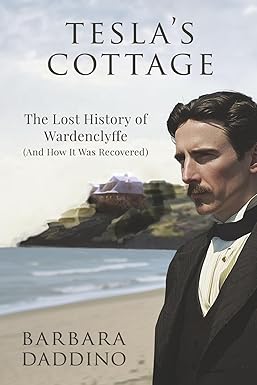

Barbara Daddino’s Tesla’s Cottage is a beautifully woven mix of memoir, historical detective story, and tribute to the human spirit of Nikola Tesla. The book explores Tesla’s lesser-known years in Shoreham, Long Island, where he sought refuge and inspiration during the critical period of the Wardenclyffe project. With deep reverence and personal insight, Daddino chronicles her own journey, uncovering the truth behind the house she now calls home, once inhabited by the brilliant yet often misunderstood inventor. Alongside her investigation, she paints a vivid portrait of the town, its evolution, and the passionate efforts to preserve Tesla’s legacy.
What struck me most was the author’s voice—tender, curious, and occasionally heartbroken. She doesn’t just relay facts; she invites you to feel them. Her writing is intimate and grounded, skipping pretension in favor of honesty. The structure itself mirrors the meandering nature of memory and discovery, which made it feel like I was walking through the dusty corners of history with her. Daddino isn’t afraid to admit when the trail goes cold, and that authenticity—those pauses and uncertainties—lend the book its charm. It’s not just about Tesla; it’s about devotion, place, and how the past lives on in small, stubborn ways.
There are moments when the timeline blurs, or the line between myth and fact wavers without resolution. But that may be the point. Daddino doesn’t try to trap Tesla in a neat narrative. She embraces the mystery. At times, I felt frustrated, like wanting to grab history by the collar and demand answers, but I always felt something. And that, to me, is the mark of a book worth reading. It moved me, even when it didn’t quite satisfy me.
Tesla’s Cottage is not for those seeking a scientific breakdown of Tesla’s inventions or a rigorous biography. It’s for the dreamers, the romantics, and the seekers—those who believe that stories matter as much as facts, and that a man like Tesla can still haunt a place, not as a ghost, but as a presence. I’d recommend it to anyone with a fascination for Tesla, an appreciation for place-based storytelling, or simply loves a good book.
Pages: 332 | ASIN : B0DYCSGFZP

Starry Starry Noir Rebels and Censors
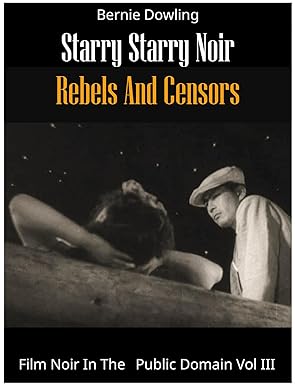

Bernie Dowling’s Starry Starry Noir Rebels and Censors is a bold and biting dive into the shadowy corners of public domain film noir. It’s part history, part commentary, and part elegy for an era where rebellion simmered under celluloid. Dowling uncovers the lives behind the films, actors, directors, censors, and outcasts, and weaves a human tale out of forgotten reels. He doesn’t just retell film plots; he places them in a tug-of-war between art and morality, freedom and control. Censorship, both comedic and catastrophic, looms large as he dissects works like Dishonored Lady, Stray Dog, and The Hitch-Hiker.
I was immediately struck by how personal the writing feels. This isn’t some dry academic tour through noir tropes, it’s alive, angry, funny, and sad all at once. Take the story of Hedy Lamarr, co-producer and star of Dishonored Lady (1947), where Dowling explores how censors gutted what could’ve been a hard-edged noir into a limp melodrama. He doesn’t hold back, calling out how Lamarr—“dubbed Headache” by the Hollywood boys’ club, was judged more for her beauty than her brains, despite co-inventing frequency-hopping tech that would lead to Wi-Fi. And when Dowling digs into Ida Lupino’s gutsy leap from actress to noir director, you can feel his respect bleeding through the page. Lupino didn’t just break barriers, she shattered them, directing The Hitch-Hiker in 1953, a brutal, tension-drenched film that punched above its budget and bent censorship rules without flinching.
But my favorite parts are when Dowling tangles with the censors. He doesn’t just document their decisions he ridicules them, laughs at them, and sometimes mourns the films they destroyed. These are the book’s best beats: where Dowling paints censorship as absurd and tragic in equal measure. His love for these lost and maimed films is tangible, but he’s no rose-colored romantic. When a film doesn’t work, like Strange Illusion, he says so, calling it “all over the shop,” a mash of Freud, Hamlet, and shadows that just doesn’t gel.
This book made me feel things like irritation, admiration, nostalgia, and more than a few laughs. Dowling’s voice is sharp and full of heart, and he’s clearly done his homework. I’d recommend Starry Starry Noir Rebels and Censors to anyone who loves old films, stories of underdogs, or just really good writing. Film students, noir buffs, and history nerds will find gold here. But even if you’re none of those, you’ll come away with a deeper appreciation for the people behind the flickering black-and-white frames—and the battles they fought to get them made.
Pages: 295 | ASIN : B0DWXYVN7C

Hurricane Audrey: The Deadly Storm of 1957

Hurricane Audrey captures the raw human experience of one of the deadliest natural disasters in Louisiana’s history. The book weaves the stories of six families who lived through the catastrophic 1957 storm, providing a vivid account of their fight for survival and the emotional aftermath. Cathy C. Post’s narrative unfolds like a thriller, grounding the suspense in historical facts and personal anecdotes. This mix of history and drama makes the book both enlightening and moving.
The writing is what stood out to me the most. It’s clear and gripping, yet heartfelt. One moment, Post is diving into technical details about the Weather Bureau’s first radar-tracked hurricane. The next, she’s painting scenes so vivid that I could almost hear the crackling of the storm and feel the rising panic. The heart of this book is its people. Post doesn’t just tell you what happened, she introduces you to the families of Cameron Parish. Post’s knack for blending facts with personal stories, like those of the Broussard family or the determined sheriff O.B. Carter, adds depth and keeps the reader invested. The chapter describing the tidal wave’s arrival was devastating yet mesmerizing. Survivors like Elaine Broussard reflect on their miraculous survival and the loss of neighbors and loved ones. These stories reminded me how fragile life can be. The heartbreaking accounts of the children lost or separated during the storm stayed with me long after I closed the book. The sheer suddenness of Hurricane Audrey’s landfall, 12 hours ahead of predictions, is described in harrowing detail, leaving the reader as unprepared as the residents themselves.
I’d recommend Hurricane Audrey to history enthusiasts, fans of survival stories, and anyone curious about Louisiana’s culture. It’s a testament to human resilience and a haunting reminder of nature’s power. The book brought me to tears more than once and left me in awe of the people who endured this catastrophe. Don’t miss it; this story deserves to be remembered.
Pages: 320 | ISBN : 1685932126
Clear Narratives

In Death to Justice, you provide readers with an in-depth look at the evidence, investigations, and implications surrounding the murder of Lee Harvey Oswald. What first drew you to write a book centered on this case?
It was when I was working on another project that I saw a lot of gaping inconsistencies and irregularities among the statements of witnesses to Lee Harvey Oswald’s shooting.
From there, very clear narratives that have largely been overlooked emerged, compelling me to write this book.
How much research did you undertake for this book, and how much time did it take to put it all together?
It took me 18 months – to compile all witness statements and evidence & write the book.
Did you find anything in your research that surprised you?
Yes, the media personnel that were present to witness the shooting had been completely overlooked – the 50/50 ratio of media personnel to police at the scene is startling.
What do you hope readers take away from Death to Justice?
To provide new insight into an aspect of the subject of President Kennedy’s assassination and make Oswald’s shooting a topic worthy of its own productive research.
Author Links: GoodReads | Website | Amazon
And despite the many works on that historic weekend ever since, very little research has been dedicated to the shocking murder of Lee Oswald. Instead, it has stood presumed as one of the more open-and-shut aspects of the horror of that weekend in 1963.
But as this book will prove – it is anything but.
DEATH TO JUSTICE is the first book to focus entirely on the shooting of Lee Harvey Oswald. In doing so, it provides a never-before-seen deep dive into all aspects of the crime that includes:
Exposing the lengths of incompetence and culpability of the Dallas Police Department for Oswald’s slaying, providing the most definitive record of witnesses at the scene, highlighting a list of suspects, alongside Jack Ruby, that were involved in the shooting and its cover-up, and consolidating the evidence to establish a clear and complete scenario of how Oswald’s shooting most likely took place.
Through reasoned and critical analysis of all facets of the event, DEATH TO JUSTICE corrects the narrative and solidifies the case that Lee Harvey Oswald’s murder is worthy of its own field of research. From this point, what more can still be uncovered about the weekend that changed the course of the world?
Death to Justice: The Shooting of Lee Harvey Oswald
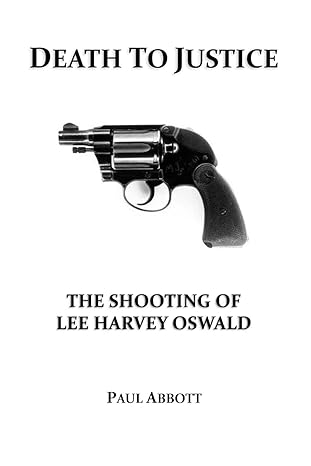
Paul Abbott’s Death to Justice dives deep into one of history’s most curious and often overlooked crimes: the murder of Lee Harvey Oswald, the man accused of assassinating President John F. Kennedy. Abbott doesn’t merely recount events; he methodically examines the evidence, investigations, and implications of Oswald’s shooting, exposing cracks in the official narrative and shedding light on the wider web of conspiracies surrounding that fateful weekend in November 1963. The book oscillates between being a historical account and a sharp critique of the system that hastily closed the book on Oswald’s death without satisfying scrutiny.
Abbott’s attention to detail is astounding, especially when unpacking inconsistencies in witness testimonies and discrepancies in photographic evidence. The book delves into the peculiarities of Oswald’s movements, suggesting gaps in the official timeline that make it almost impossible for him to have acted alone or at all in the Kennedy assassination. This isn’t a book that just scratches the surface; it digs deep into police reports, forensic details, and the behavior of key players. The vivid descriptions and well-documented accounts create a scene that feels immediate and unnervingly real.
What I found most compelling were Abbott’s reflections on justice and accountability. He argues persuasively that Oswald’s murder, while captured live on television, was treated more like an inconvenient afterthought than a crime worthy of serious inquiry. The parallels he draws between public outrage over contemporary events like George Floyd’s death and the apathy following Oswald’s assassination are striking. These comparisons make the book feel not just relevant but urgent, pressing the reader to consider how historical blind spots shape public consciousness.
Death to Justice is a thought-provoking and painstakingly researched exploration of a case that has long lingered in the shadow of a greater tragedy. Abbott’s writing is clear, engaging, and at times outright damning. This book is perfect for history buffs, conspiracy theory enthusiasts, and anyone who enjoys digging into unsolved mysteries. While it can feel dense, the payoff is undeniable for those willing to dive in. I would recommend it to anyone curious about the untold stories that history tends to bury.
Pages: 426 | ISBN : 978-1763725805
All the Presidents’ Money: How the Men Who Governed America Governed Their Money

Megan Gorman’s All the Presidents’ Money: How the Men Who Governed America Governed Their Money is an engaging dive into the personal financial lives of America’s most powerful figures, its presidents. The book explores how these leaders managed their finances, often paralleling their successes and struggles with the economic realities faced by everyday Americans. Gorman brings us stories of debt, thrift, and lavish spending, creating a narrative that humanizes the men who governed the nation. Through these financial lenses, she provides an intimate look at their decision-making and personalities, showing how their financial behaviors mirrored their governance styles.
Gorman makes history relatable. For example, FDR’s ill-fated investment in a lobster business gives him a surprisingly human, almost vulnerable, quality. This mix of personal and fiscal details, like Lincoln scrimping to save for a larger home or JFK sipping beer to avoid New York’s pricy Stork Club, makes the presidents feel less like historical statues and more like everyday people with real financial anxieties. One of the most surprising sections was the focus on Warren Harding. Harding is often maligned for his political scandals, but Gorman does a fantastic job of reframing him as a savvy businessman. He managed to turn a $300 investment in a small-town newspaper into a multimillion-dollar empire. This balance of storytelling combines political and personal, adding layers to the presidents that we don’t often see. It was fascinating to read how Harding, despite being one of the lowest-ranked presidents historically, had financial foresight that rivals the best. Thomas Jefferson’s financial downfall paints a picture of a man whose love for wine and extravagant dinners outpaced his ability to save. His eventual financial ruin feels oddly relatable in today’s world of consumer debt. The recurring theme that struck me was how similar their financial problems were to ours. The pressures, bad investments, and outright mismanagement were not unique to their times, and Gorman’s exploration of these mishaps felt refreshing, almost comforting in a strange way.
All the Presidents’ Money: How the Men Who Governed America Governed Their Money is a must-read for anyone interested in the intersection of money, power, and history. It’s not just for history buffs; it’s for anyone who’s ever wondered if leaders have the same struggles as the rest of us. If you’re a fan of presidential history or financial stories, you’ll enjoy this book’s unique angle. It reminds us that even those at the top are only human, after all.
Pages: 372 | ASIN : B0D3T7TGMZ


