Blog Archives
Nurse Dorothea® presents Mindfulness Based Stress Reduction and Why Mindfulness is a Key Coping Skill
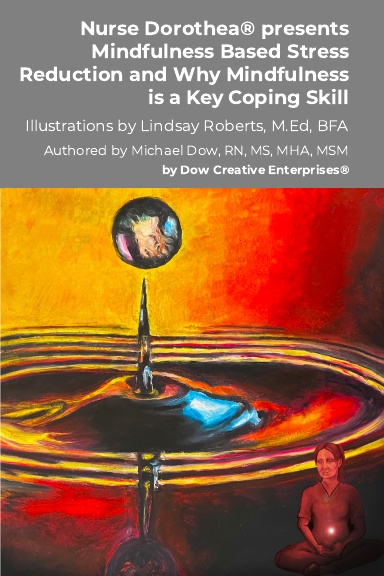

Nurse Dorothea Presents Mindfulness-Based Stress Reduction and Why Mindfulness Is a Key Coping Skill by Michael Dow is a warm, inviting introduction to mindfulness presented through a fictional after-school class. Nurse Dorothea guides readers through the basics of mental health, the meaning of mindfulness, and the many ways it can improve daily life. The book mixes friendly explanations, real research, and simple activities while also covering Jon Kabat-Zinn’s nine pillars of mindfulness and the three main practices: meditation, body scanning, and mindful yoga. It’s an easygoing, approachable read meant for people of all ages.
The book opens with Dorothea reminding the class that every person is one life event away from facing a mental health challenge, which felt honest and grounding. Throughout the early chapters, she repeats gentle reminders to be patient and nonjudgmental with yourself, and I found those small, warm nudges surprisingly comforting. The writing avoids heavy language and instead feels like someone sitting beside you, calmly talking you through your own thoughts.
I also really enjoyed the student comments woven throughout the book. They make the lessons feel alive and relatable. One student mentions that mindfulness while driving helps keep you safe, and another talks about how multitasking can pull you away from the moment. These small interactions add humor and humanity to the material. They break up the teaching in a way that makes the book feel more like a real class than a traditional self-help guide.
The seated meditation instructions are clear and easy to follow, and the emphasis on letting your mind wander without judgment made me feel oddly relieved. The body scan exercise is explained in a simple, calm voice that made me want to try it right away. Even the yoga section feels approachable, especially when the author reassures readers not to judge themselves if they wobble or fall. That moment actually made me smile because it felt so human.
The book is gentle, sincere, and wonderfully beginner-friendly. I’d recommend it to teens, parents, teachers, or anyone who wants a simple and encouraging introduction to mindfulness. If you’re looking for a book that feels like a calm, supportive voice guiding you through stress and distraction, this one fits the bill perfectly.
Pages: 179 | ISBN : 978-1-968690-01-4

Nurse Dorothea® presents Healthy Relationships
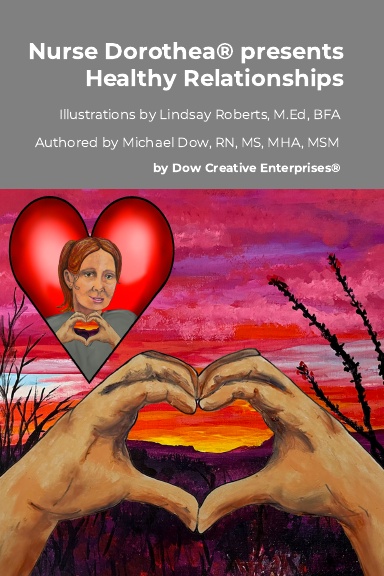
Healthy Relationships presents a thoughtful and approachable exploration of what helps relationships thrive. The book is framed as a guided workshop led by Nurse Dorothea, who walks readers through the core ingredients of healthy connection, communication, boundaries, empathy, responsibility, and self-awareness. Although the tone is gentle and accessible, the book is wide in scope, touching on friendships, family ties, romantic partnerships, and online relationships. Its structure blends direct instruction, reflective prompts, and short personal stories in a way that encourages readers to slow down and consider how they relate to others.
The classroom-style format works particularly well. Early in the book, readers are invited to pause, write, and reflect, which creates a sense of active participation. Simple metaphors, like caring for relationships as one would tend a garden, and the recurring reminders that everyone faces challenges, offer a steady, grounding presence throughout the text. At times, the tone can feel overly earnest, but that sincerity reinforces the author’s intention: to encourage readers to approach their relationships with clarity and kindness.
The many student stories woven into the book add depth and texture. Accounts from individuals describing supportive parents, patient partners, meaningful friendships, or online connections create an authentic emotional thread. These examples are used to highlight specific principles such as trust, cooperation, and mutual respect, and they break up the instructional sections in a way that feels natural. The book does not shy away from discussing difficult dynamics either. Its explanations of imbalance, dishonesty, control, and disrespect are concise and direct, making the warnings easy to understand without sensationalism.
The section on meaningful apologies stands out for its emphasis on responsibility and repair rather than defensiveness. Later discussions on reconnecting with others and choosing high-quality relationships are practical and encouraging. The message is consistent and clear: healthy relationships are intentional, vulnerable, and sustained through ongoing care.
Nurse Dorothea® presents Healthy Relationships offers a steady, compassionate guide for readers of all ages. It would be especially valuable for educators, counselors, families, and anyone seeking a straightforward framework for understanding relational well-being. Its warmth, clarity, and practicality make it a supportive companion for those hoping to build stronger and more thoughtful connections.
Pages: 239 | ISBN : 978-1-968690-00-7
Lifelong Learner

Nurse Florence®, What is a Mast Cell? follows three curious schoolgirls and their approachable school nurse, who discuss mast cells and their role in the immune system. What inspired you to write about this topic?
Nurse Florence® seeks to spark a global movement of health promotion and literacy. We explore how the human body works in each book, as well as discuss disease topics with our numerous disease-related books. We will be publishing around 700 books in the series, and this topic finally came up to the top of the list of books needing to be written.
How did you decide what to include and leave out in your Nurse Florence books?
Writing the Nurse Florence® books is an art since we don’t want to overload kids with too much science information, but we need to bring college-level information down to a fifth grader’s level. Every book is a little complicated to write, and I decide what to include out of inspiration from my illustrator’s drawings. Disney might say they have Disney magic to help produce their movies, while we have DCE magic to produce Nurse Florence® books to help even adults stay engaged with each page of the books.
What was the most challenging part of writing these books, and what was the most rewarding?
The most challenging is to decide what info to include, and the most rewarding is getting feedback that whole families are learning from each book.
What is one thing that people point out after reading your book that surprises you?
Grandparents have even said on GoodReads that they are learning. I was surprised at first since I thought I was writing just for kids. I’m happy to hear that everyone is learning. Being a lifelong learner is so important in the world that we live in.
Author Links: GoodReads | Website | LinkedIn | YouTube | Nurse Florence Project | Amazon
Why Are You Sick? (Audiobook)
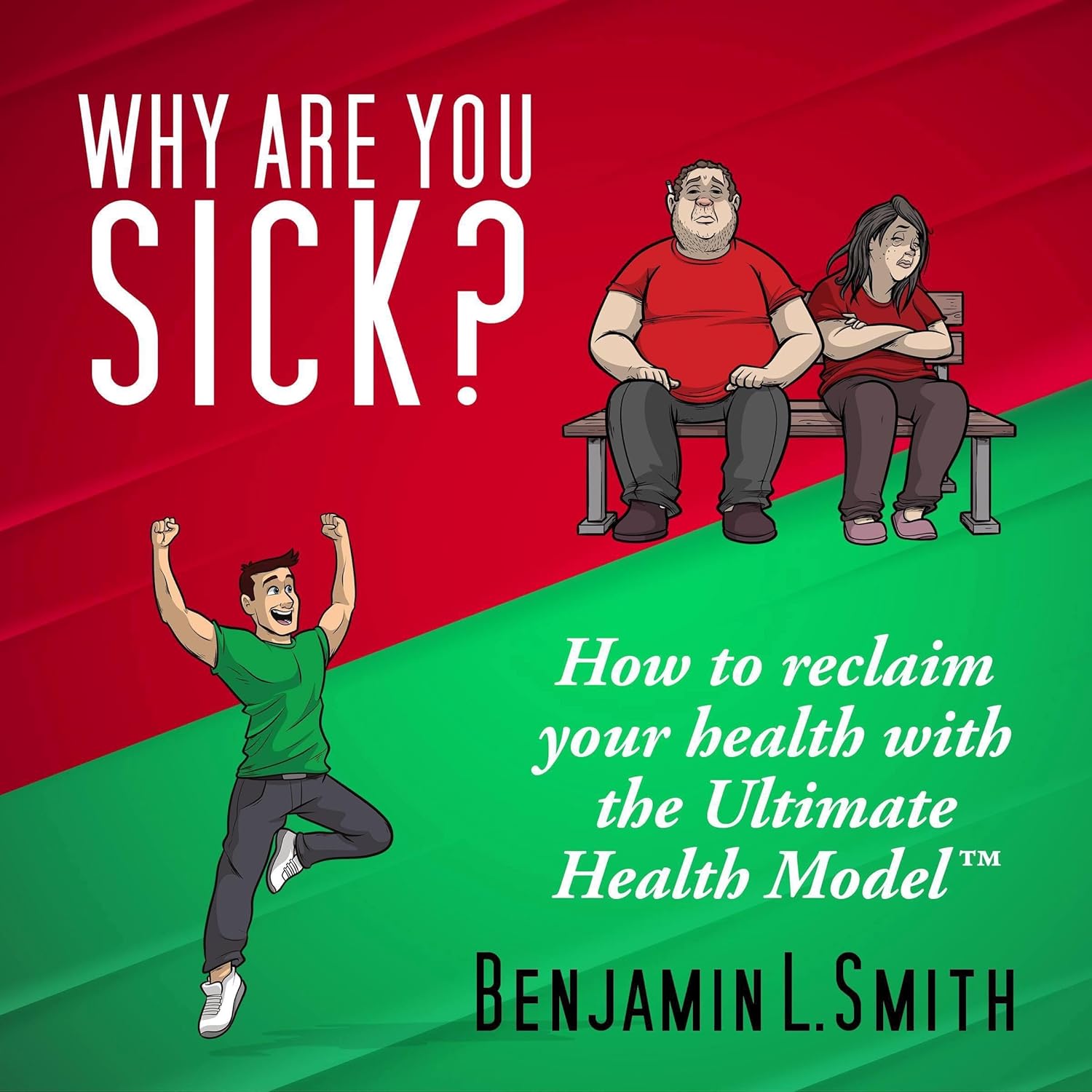
The audiobook starts by pulling back the curtain on the lies and myths we’ve all been fed about health. From the first chapter, the narrator makes it clear that this is not another fad diet manual or a magic-pill promise. Instead, he introduces what the author calls the Ultimate Health Model™, a framework that connects cellular health with lifestyle factors like breathing, sleep, water, food, movement, environment, and even thoughts and feelings. He threads personal stories of loss, his own health struggles, and years of research into a narrative that pushes the reader to think differently about sickness. By the end, it feels less like a lecture and more like a wake-up call to reclaim agency over our bodies.
Listening to the audiobook, I found myself reacting in waves. At times, I was nodding along with genuine excitement, especially when Smith explained concepts like structured water or the overlooked role of chronic dehydration. The narrator’s voice is soothing but carries conviction, which makes the listening experience feel calming and informative. The narrator’s passion kept me engaged, and I couldn’t help but admire the author’s dedication to challenging the status quo.
The mix of narrators, Gillian Williams, GM Hakim, Tom Wayland, and Rachel Sloane, keeps the audiobook lively and dynamic, each voice adding its own energy and tone, and hearing directly from the author himself makes the experience feel even more personal and authentic.
The book feels personal. Author Benjamin Smith shares stories of losing loved ones to cancer, his own battles with asthma and fatigue, and the frustration of watching mainstream medicine ignore what he sees as obvious connections. That vulnerability gave weight to his arguments. I also liked how he broke up serious topics with humor, casual asides, and even a few sharp words. It made the audiobook feel conversational. It was heartfelt and, at times, surprisingly inspiring.
I’d recommend Why Are You Sick? to anyone who feels stuck in their health journey and wants a fresh perspective. It’s not an audiobook for someone looking for a rigid plan or a neat list of do’s and don’ts. It’s more for the curious, the frustrated, and the open-minded listener who’s willing to sift through bold ideas, personal stories, and unconventional advice to find what resonates. If you like your audiobooks passionate and provocative, this one might be exactly what you need.
6 Hours and 22 Minutes | ASIN : B0FN4S3DMB

Nurse Dorothea® presents Managing Anger Instead of Letting Anger Manage You


Michael Dow’s Managing Anger Instead of Letting Anger Manage You is a conversational, interactive guide on understanding and handling anger in everyday life. Framed through the warm and encouraging voice of a fictional nurse named Dorothea, the book reads like a group therapy session, complete with peer discussions, personal reflections, and science-backed insights. It blends storytelling, practical advice, and educational content with a focus on building emotional intelligence and community support. Across three parts, Dow takes readers on a journey through the biology of anger, its triggers, consequences, and most importantly, dozens of actionable ways to respond to it in healthier ways.
I found the book to be surprisingly heartfelt and easy to connect with. The writing is simple, perfect for children, and it also makes it feel accessible. It doesn’t get bogged down in academic jargon or heavy theory, which makes it approachable for people of all ages, especially teens or those who feel overwhelmed by dense self-help literature. The use of a classroom-style narrative, with Nurse Dorothea guiding a group of diverse students, makes the lessons stick. Their stories felt real. The emotional resonance is where the book shines most. It invites you to not just read, but to pause and reflect.
The book sometimes revisits the same ideas, especially when emphasizing similar coping strategies or restating the importance of managing anger. But maybe that’s the point. Anger doesn’t go away with one good insight, it takes practice, and a lot of the same reminders, over and over. What I appreciated most was the variety of techniques offered, from journaling and exercise to breathing, forgiveness, and goal-setting. It’s a toolbox, not a rulebook. The encouragement to try what works for you felt empowering rather than prescriptive.
This children’s book is a warm and practical guide for anyone who struggles with anger, whether that means explosive rage or the quiet, festering kind. It’s especially helpful for young adults, teachers, counselors, or parents trying to model emotional regulation. If you want something that feels like a caring voice walking beside you, offering kind, practical nudges in the right direction, this picture book fits the bill.
Pages: 281 | ASIN : B0FB1X2H7N

A Tricky Topic

The Doctor’s Perspective unpacks the science of testosterone, performance-enhancing drugs, and men’s health, separating fact from fiction while offering practical, evidence-based insights into optimizing wellness. Why was this an important book for you to write?
I think writing this book gave me an opportunity to provide a physician’s viewpoint on these topics that combines real-world clinical experience with evidence-based reviews. Many times, interpreting the literature helps us provide guidance on what to do next. But often times the real-world clinical experience is what really can help someone make decisions, especially when there is a lot of subjectivity involved.
Another important point is that anabolic steroids and performance-enhancing drugs are truly a topic of their own and are essentially not really covered in medical textbooks or online medical platforms. There is simply a complete lack of familiarity with these topics in the medical world. My book helped bridge that gap and provides a useful reference to other physicians.
I provide expert guidance to other physicians on a daily basis on the eConsult platform in Ontario and this really helps build on that.
What was the biggest misconception about testosterone that you wanted to clear up in this book?
I would say that knowing it’s a tricky topic without black-and-white answers. Every person is different and we should really personalize the approach on when or when not to use it.
In your research, what was the most surprising fact you discovered about TRT or PEDs?
Over the years I’ve discovered two very interesting facts.
One is that I’m surprised by the level of side effects some patients see even at low doses whereas others use incredibly high doses yet never experience any side effects and maintain fully normal blood work. The variability is very interesting.
Second, many PEDs have such novel and unique side effects that need to be picked up on early to prevent long-term harm.
How do you think social media and fitness influencers have shaped public perception of testosterone and supplements?
By far the biggest perception is that the term “TRT” has become simply another term for low-dose testosterone use. I think it’s important to distinguish these two topics. TRT is by definition the replacement of low testosterone. That is completely different than supplementation of low-dose testosterone for someone who has normal levels. Social media has definitely been the driving factor in this.
Author Links: GoodReads | Website | Instagram | Amazon
Nurse Dorothea Presents Bipolar Disorder and Guidance on How to Live Well with the Mental Illness

Michael Dow’s Nurse Dorothea Presents Bipolar Disorder and Guidance on How to Live Well with the Mental Illness, illustrated by Lindsay Roberts, is an insightful and accessible guide to understanding Bipolar Disorder. What makes this book stand out is its inventive approach: it is framed as if Nurse Dorothea is teaching a classroom lesson on Bipolar Disorder. Inspired by the compassionate 19th-century nurse Dorothea Dix, who championed mental health treatment with dignity and care, the character of Nurse Dorothea embodies warmth and wisdom. Roberts’ illustrations enhance the experience, depicting the nurse in action while visually representing symptoms and concepts. These visuals make the book approachable, especially for readers less familiar with the disorder.
Dow’s writing feels like a casual chat with a friend—clear, direct, and empathetic. The tone is conversational yet informative, breaking down the complexities of Bipolar Disorder in a way that feels welcoming rather than clinical. As symptoms are explained, Dow makes a compelling effort to humanize the experiences of those living with Bipolar Disorder, helping to dispel stigma and promote understanding. Readers are guided through both manic and depressive states with simplicity and insight, creating a resource that’s both educational and deeply compassionate.
The collaboration between Dow’s words and Roberts’ illustrations is particularly effective. Each symptom is paired with visual cues that bring the discussion to life, offering clarity and relatability. From manic highs to depressive lows, the book illustrates the disorder’s dual nature while also providing thoughtful strategies for coping. As a psychology student preparing for a psychopathology exam, I found this book far more engaging and practical than traditional academic texts. It explains complex symptoms with a level of simplicity and understanding that is hard to find elsewhere.
Nurse Dorothea Presents Bipolar Disorder and Guidance on How to Live Well with the Mental Illness is a must-read for anyone affected by Bipolar Disorder, whether directly or through a loved one. It’s also an excellent resource for mental health professionals or anyone curious about the human mind. Dow and Roberts have created a guide that is as informative as it is heartfelt, and I hope this is just the beginning of a series that explores mental health with the same care and creativity. This book is a triumph in making mental health education accessible and meaningful.
Pages: 222 | ASIN : B0DNTL2MX5
The Complete Mindbody Dictionary: For Practitioners, Professionals, Coaches, the Mindful and Wellness Minded

The Complete Mindbody Dictionary, by Ronald B. Wayman and Denise Wayman Scholes, is a hefty guide that dives deep into the connections between our minds, emotions, and physical health. It’s part dictionary, part wellness handbook, offering entries for 240 conditions ranging from common ailments like migraines and back pain to more complex issues like chronic disease. Each entry details the troubled mindset associated with the condition, a healing mindset, affirmations to shift thought patterns, and even foods to support recovery. It’s a comprehensive resource designed to help readers align their mental, emotional, and physical well-being, whether they’re practitioners or everyday individuals seeking balance and insight.
What struck me first was how beautifully the book ties emotional states to physical ailments. Reading through, I noticed how often I’d pause to reflect on my own patterns. The book invites introspection and action. I also loved how the affirmations are simple but impactful. They are easy to integrate into meditation or daily life.
The section on phobias deeply resonated with me on a personal level. I’ve struggled with a persistent fear that has felt insurmountable at times, and the insights in this book gave me both understanding and hope. The line, “Bridging this gap is learning to integrate the many parts of your mind, heart, and body,” struck me like a revelation. It framed my fear not as a weakness but as something rooted in primal survival instincts. The section encouraged me to approach my phobia with self-compassion, using practical techniques like breathing exercises and pacing myself through moments of fear. It helped me see my fear as something I could work with rather than just endure, and that shift has been incredibly empowering.
The writing in the healing mindset sections stood out to me. It makes complex emotional concepts feel digestible. The language is soothing, like having a supportive coach guiding you through. I also appreciated how food suggestions weren’t overly prescriptive but still felt intentional, like recommending “a well-balanced diet including…” along with a list of foods to include. It’s a small detail, but it made the advice feel doable.
I did find the dictionary-style format a little daunting at first. It’s dense, and flipping through can feel overwhelming. However, the guide at the front helped simplify things, and the book is in alphabetical order. Once I got the hang of it, I found myself repeatedly reaching for the book, whether for a headache or just out of curiosity. It feels less like a reference manual and more like a companion in your wellness journey.
The Complete Mindbody Dictionary would be a fantastic fit for anyone curious about the mind-body connection. It’s ideal for holistic practitioners, wellness coaches, or even families looking for a shared resource. If you’re into self-discovery or enjoy tools that blend science and soul, this is your book.
Pages: 750 | ISBN : 978-1947176027



 LITERARY TITAN