Blog Archives
Payback


Payback by Molly D. Shepard and Peter J. Dean is a workplace thriller that follows Samantha, a high-performing banker who spends years navigating a toxic, sexist culture and the predatory attention of an executive named Archer Dunne. The story moves between Samantha’s point of view, Archer’s warped inner monologue, and the perspectives of allies and bystanders as the bank’s abuses pile up, push her out, and eventually circle back when Archer, now ill and diabetic, is admitted to the upscale nursing home Samantha runs. There, she seriously considers killing him by quietly increasing his insulin, only for fate to intervene when he dies after a fall, leaving her to grapple with what justice really looks like and how to live with a rage that never fully disappears.
The opening prologue drops you right into Samantha’s mind as she calmly admits she is planning “the perfect murder,” and it is both chilling and deeply believable once you see what she has survived. The early scenes at the bank feel painfully real: the drunken company party, the alleyway assault where she escapes only to realize the attacker is her own Executive Vice President, Archer. The authors lean into clarity more than subtlety, and sometimes the villains are almost grotesquely obvious, but in a workplace thriller like this, that bluntness works. It feels less like a puzzle and more like a long, angry debrief of “this is exactly how they get away with it,” which I found strangely cathartic.
What stayed with me most was how much of the book is about the slow grind rather than just the headline traumas. Samantha’s first boss Margie, who bullies her daily for minor mistakes until she quits, the constant body shaming from her parents, the impostor syndrome that keeps replaying in her head even as she racks up wins at the bank. Her friendships with Inga and Josephine become the emotional center of the story. Inga is a top pharma rep whose numbers are excellent but who keeps getting passed over because she is out of sight, out of mind in the Midwest, and Josephine is a Black consultant who writes speeches for her CEO yet cannot break past a certain rank because of bias in her firm. Their late night strategy sessions at the Barrister Bar feel like war councils and group therapy at the same time, and the book keeps circling back to how women have to quietly train each other to survive systems that were not built for them. That coaching tone does poke through sometimes, and a few passages read like a leadership manual folded into a novel, but I did not mind it. It gave the story a grounded, “here is what actually happens in these rooms” quality.
I also appreciated the choices the authors made around Archer and the men who are not monsters. Seeing scenes from his perspective is uncomfortable in the best way. You watch him stalk Samantha in that alley, brag to his young male “minions” about using women for sex while blocking their promotions, and later seek out the nursing home she runs because he wants one last chance to torment her and even ogle her teenage daughter. When he exposes himself to a vulnerable resident at The Fairfield and Samantha finally has the power to kick him out, her fury practically hums off the page. At the same time, the book gives us Lance, the new CEO who discovers Samantha’s detailed notes about the bank’s abuses and decides to tear out the culture by the roots, and Todd, the thoughtful carpenter who becomes her husband and steady base. That balance keeps the story from sliding into pure despair.
I see Payback as a feminist workplace thriller that also works as social commentary about harassment, bullying, and the cost of keeping quiet. It is not subtle, and it does not try to be. The language is clear, the emotions are right on the surface, and the plot keeps you turning pages to see whether Samantha will cross that final line. If you have lived through a toxic office, care about gender equity at work, or just want a tense, emotionally honest story about a woman who refuses to stay a victim, I think this novel will hit hard in a good way.
Pages: 240 | ASIN : B0FX3FV52H

Is the Grass Greener?

Having It All follows a devoted mother and Wall Street trader, who tries to hold together a demanding career and a family when one disaster after another hits, leaving her to make a desperate decision. What was the inspiration for the setup of your story?
I started out with the idea to show three women with very different lifestyles, a single woman, a stay-at-home mom and a working mother, and show that each was a viable option. And you see these three characters in the book. But the working mother ended up being the focus. Perhaps because that was what I was most familiar with myself.
Dalia is a relatable character that many modern women will see parts of themselves in. Was there anything from your own life that you put into the characters in your novel?
There was plenty! This was originally my first attempt at writing a novel. I gave Dalia a security trader position because that was my job and I figured it would save on the research involved with using an alternative. So, I had the long commute, the stressful day and the child and husband to juggle.
I put the manuscript away for years because I couldn’t resolve some issues with the plot, but five published books later, I knew how to fix the problem. I kept the book set in 1997 because that’s when I started writing it, and if the characters had modern technology, the story wouldn’t work, and the trading details wouldn’t be accurate anymore.
What were some themes that were important for you to explore in this book?
Back in the day, they led women to believe they could have a perfect life as a working wife and mother with nothing having to suffer. That it should all be a simple snap of the fingers. But everything in life has its ups and downs. Also, the grass isn’t always greener on the other side, so be sure to take time to be grateful for what you have.
What is the next book that you are working on, and when will it be available?
I’m working on the second book in my Findale Fae Mystery series with hopes to have it available by the end of 2026.
Author Links: GoodReads | Facebook | Website | Instagram
1997––Dalia Roberts had it all––a successful career on Wall Street, a big beautiful house, a loving marriage, and two fantastic kids. But along with those blessings came the work-related stress, the harried days and sleepless nights, the long commutes, and the constant, never-ending juggle of marriage, children, and finances.
Despite being a two-paycheck family, Dalia and Joel Roberts must juggle to make ends meet. Then disaster after disaster hits, leaving their once-perfect home life, along with the professional persona Dalia had worked so hard to perfect, in shambles. Burnt out and unable to think clearly, Dalia makes a desperate decision. Will this ill-thought-out move be the answer or only cause further heartbreak?
Belinda Gordon’s poignant new contemporary fiction unpacks the complex struggles and financial challenges working women with families face when trying to have it all.
When Dreams Float


When Dreams Float is a sensuous African American romance set against the lush backdrop of Tahiti and nearby islands. The story follows Melanie, a travel writer recovering from a painful divorce, and Winston, a charming and confident doctor she meets by chance at an airport jewelry counter. Their connection ignites quickly, deepening through a charged plane ride and growing even more complicated when they unexpectedly end up on the same cruise. The plot blends travel, emotional healing, flirtation, and slow-building intimacy, all framed within the warmth and escapism of the romance genre.
I found myself reacting to the writing the same way Melanie reacts to Winston’s presence. One moment I was caught up in the playfulness of their banter, and the next I was watching her pull back, unsure whether to trust what she felt. The author writes attraction through small gestures, glances, and touches that land with real weight. The scene on the plane where turbulence throws Melanie into Winston’s arms stands out. It isn’t just physical; it reveals her reluctance, her longing, and her fear all in one breath. The story knows how to stretch those moments without overdoing them, letting the tension rise naturally.
I also appreciated the author’s choices around character grounding. Melanie isn’t just a romantic lead; she’s a woman with a past, a career, and quiet internal battles she doesn’t always name out loud. Winston, for all his confidence, shows flashes of vulnerability that make him more interesting than the typical smooth-talking hero. Their dynamic feels honest. Sometimes messy. Sometimes sweet. There’s a little humor, a lot of heat, and just enough emotional complexity to make the story feel fuller than a simple getaway romance. And the travel writing details add texture. The descriptions of the islands, the cruise ship, and the small cultural observations make the setting feel like more than a backdrop.
This book would hit the spot for readers who love romance that’s sensual but also rooted in character healing and emotional discovery. If you enjoy stories where two people meet at the wrong time but can’t quite step away, you’ll connect with this one. And if you’re drawn to travel-inspired romance, tropical settings, or slow-burn chemistry that simmers before it boils over, When Dreams Float delivers exactly that.
Pages: 185 | ISBN : 1585711047

Having It All
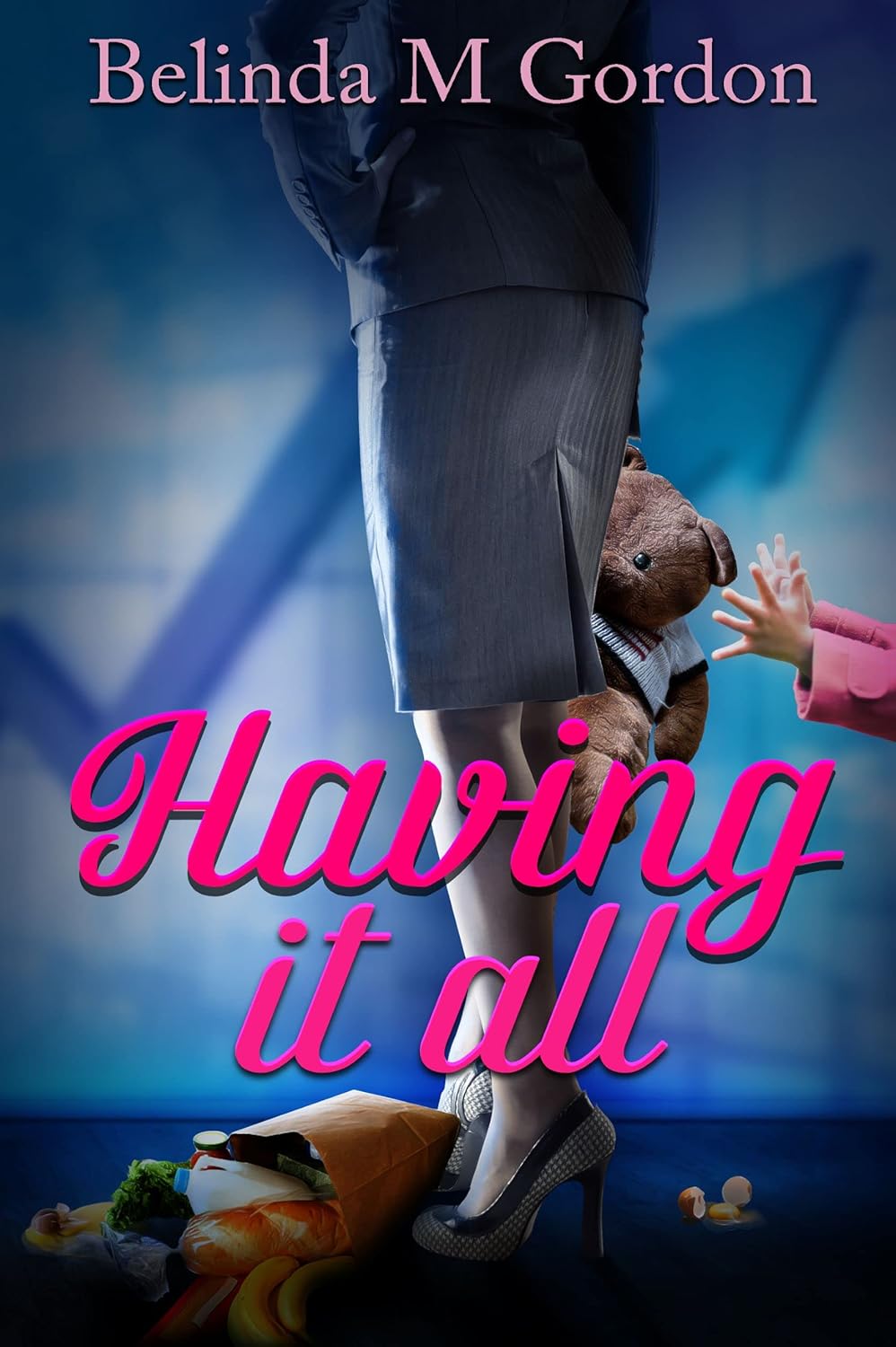
Having It All follows Dalia Roberts, a devoted mother and sharp Wall Street trader, as she tries to hold together a demanding career, a young family, and the emotional weight of a past that shaped her more than she cares to admit. The book opens with a gripping evacuation during a high-rise fire that sets the tone for the chaos woven through her days. From there, the story settles into the everyday struggle of keeping her daughters healthy, her marriage steady, and her job secure. Along the way, she leans on her sister, her mother, and her own stubborn strength as she learns what having it all really means in a life that is far from picture-perfect.
I felt pulled right into Dalia’s world. The writing has a warm and steady rhythm that fits her character so well, and I liked how the author keeps the stakes grounded in real life instead of forcing big melodramatic twists. The scene where Dalia rushes to help the daycare babies during the fire hit me hard. It showed her instincts, her fear, and her heart all at once, and I found myself rooting for her immediately. I also enjoyed the family scenes, especially the ones with her sister, Melanie. Their kitchen conversations feel lived-in, messy, and familiar, which gave the story a sense of comfort even when the stresses around them grew heavy.
At times, though, I felt frustrated with Dalia in a way that made her feel even more real. She holds herself to impossible standards, and the book doesn’t hide how that pressure wears her down. Watching her panic over Kelly’s sniffles or stress over bills from years past made me ache for her. I appreciated that the author never mocks these moments. Instead, she treats them as honest pieces of a woman trying her hardest. I also liked how the story quietly challenges the shiny magazine version of the “perfect working mom,” and I caught myself laughing when Dalia scoffed at an article claiming women can effortlessly manage it all. Her reaction felt like a wink to every woman who has ever tried to juggle too much at once.
The story’s message is gentle but firm. You don’t “have it all” by matching someone else’s idea of perfection. You have it when you learn to value what’s already in your hands. That conclusion landed beautifully for me, simple and true in a way that lingers after the last page. I’d recommend Having It All to readers who enjoy heartfelt domestic fiction, stories about motherhood, or character-driven novels that explore work, family, and identity in a relatable way. If you like books that sit somewhere between comfort reading and emotional honesty, this one fits right in.
Pages: 216 | ASIN : B09JN2Y6DY
Polar Deception
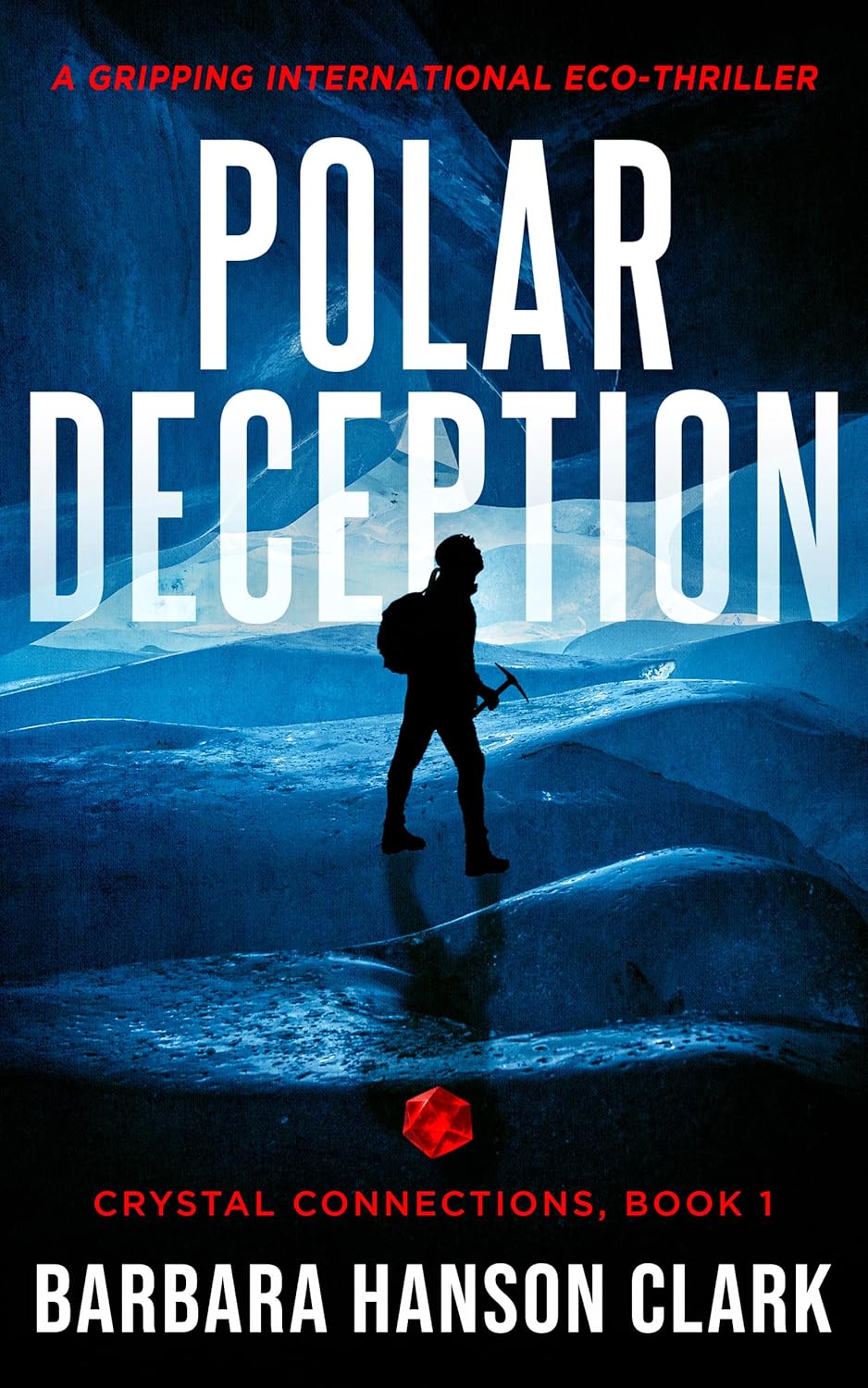
Polar Deception is a tense eco-thriller set in a future shaped by environmental collapse, geopolitical fractures, and the discovery of powerful red crystals hidden beneath the Antarctic ice. The story weaves together the ruthless ambitions of Dr. Carlos Perez, the quiet moral struggle of Dr. Omar Hasson, the grief-stricken journey of Diana Harris, and the covert operations of CIA agents racing to keep the crystals from falling into the wrong hands. What begins as a scientific mystery quickly turns into a globe-spanning battle over technology, survival, and the fragile state of a warming world.
This book never quite let me catch my breath. The writing hit me with sharp images and simple but striking language, and I found myself leaning in, eager for the next twist. I liked how the tension inside the Antarctic station simmered from the first pages. Perez’s obsession unsettled me, and the cold brutality of his choices made my stomach tighten. Then the narrative shifted to Diana, and the tone softened. Her grief carried real weight. I felt that heaviness in her cramped apartment, in the unopened boxes, in the way she talked to her dog like he was holding her together. That contrast between danger and vulnerability gave the whole story a pulse that grabbed me.
There were moments when the ideas themselves hit harder than the plot. The book dives into rare earth scarcity, global power struggles, broken technology, and the desperation that follows. I found myself thinking about how easily science can become a bargaining chip when the world gets shaky. Some scenes made me angry as characters manipulated research for profit or control. Other scenes made me hopeful when people showed loyalty and courage despite everything falling apart around them. I liked how the author slipped in social commentary without making it feel preachy. It felt real. Messy. Relatable.
The story delivered high stakes, a fast pace, and characters who stayed in my head. I’d recommend Polar Deception to readers who enjoy eco-thrillers, survival stories, and science-driven mysteries. It felt like a blend of the high-stakes environmental urgency of The Day After Tomorrow and the globe-spanning intrigue of The Da Vinci Code while carrying the character-driven emotional weight you’d find in The Martian.
Pages: 506 | ASIN : B0FRB6XPYV
Lunch Tales: Teagan

From the very first page of Lunch Tales: Teagan, I was pulled straight into Teagan Quinn’s world. The book begins with warmth, ease, and a glimpse into a contented life, marriage, motherhood, and family. Then suddenly, that life is shattered. Her husband dies in a freak accident, and we follow her through the crushing grief that follows. We see her try to put one foot in front of the other. There’s love, loss, friendship, heartbreak, and a tentative hope that life can still hold beauty, even when it feels like the world has gone cold. The story unfolds through Teagan’s eyes as she faces widowhood, single motherhood, and the slow, painful path toward healing.
Reading this felt like listening to a friend spill her heart. Teagan’s voice is honest. Author Lucille Guarino doesn’t palliate grief. It’s raw, messy, and stretches out longer than you’d think. What I loved most is that she doesn’t turn Teagan into a saint. She’s angry. She’s tired. She lashes out. She feels selfish. She feels broken. But she keeps trying, and that’s what makes her feel real. The writing is clean, almost conversational. At times it’s quietly poetic, but mostly it’s grounded, warm, and intimate. And while the story could easily slip into melodrama, it doesn’t. The emotions feel earned. I laughed. I cried. I caught my breath in parts. There were scenes I had to reread just to sit with the weight of them.
What surprised me was how much I came to love the side characters. Suellen, Bridget, even Luke. Everyone felt like someone I’d met in real life. The friendships, especially among the lunch moms, were such a balm. They held her up when she couldn’t stand. And while there’s a flicker of new romance by the end, it’s not rushed or forced. It’s more like a door left slightly open. The book isn’t about moving on. It’s about moving forward. There’s a big difference. And Guarino nails that. She doesn’t give us a fairytale. She gives us the slow, stumbling rhythm of real healing.
I’d recommend Lunch Tales: Teagan to anyone who’s ever had to start over when they didn’t want to. It’s a gentle, moving story for readers who crave depth and feeling over plot twists and speed. I found that the book reminded me somewhat of The Light We Lost in its raw emotional core, and it had echoes of Still Me with its theme of rebuilding life, though it carries a gentler, more hopeful tone overall. I think this book is for women who understand how complicated love is. And how precious.
Pages: 288 | ASIN : B0FR582BPJ
When Dreams Float
This book sweeps readers straight into the shimmering warmth of Tahiti, where love, lust, and self-discovery intertwine beneath the tropical sun. When Dreams Float tells the story of Winston Knight, a confident and rational doctor, and Melanie, a thoughtful, recently divorced woman searching for peace and renewal. What begins as a fleeting encounter in a jewelry store turns into a passionate and unexpected connection that follows them from the skies to the sea. Their chemistry ignites instantly, and the story sails between emotional tenderness and sensual intensity as both characters learn to navigate vulnerability, trust, and desire amid a stunning island backdrop.
The writing is lush and sensual, yet it carries an emotional honesty that surprised me. Author Dorothy Elizabeth Love has a way of describing intimacy that feels both raw and poetic, balancing physical heat with emotional truth. Sometimes the dialogue leaned toward melodrama, but I found myself forgiving it because it matched the heightened emotions of two people trying to mend their hearts. The pacing was unhurried, letting the tension simmer until every glance and touch felt earned. What struck me most was how real the characters’ hesitations felt. Winston’s logical mind warring with desire, and Melanie’s fear of being hurt again, those moments felt relatable, and I caught myself rooting for them to let go and just love.
There were moments when the steamy scenes took up so much space that I wanted more time to breathe with the characters outside of their passion. Still, the story had a rhythm to it that kept me turning pages. Love’s writing feels cinematic, with descriptions that glow; silk against skin, ocean breezes, and all the sensory details that make a setting come alive. It’s a romance that doesn’t shy away from fantasy or physicality, yet it carries a beating heart of forgiveness and self-rediscovery. I felt a genuine warmth at the idea that broken people can still float toward something beautiful.
I’d recommend When Dreams Float to readers who love sensual stories that mix emotional healing with tropical escapism. It’s for those who believe that second chances aren’t just possible, they’re necessary. If you like your romance lush, dramatic, and unapologetically passionate, this one will leave you smiling long after you finish the book.
Pages: 227| ASIN : B0FQJPKNX1
Kissed the Girls

Anthony Silman’s Kissed the Girls dives deep into the sleek, poisonous world of power, privilege, and corruption. The novel weaves several storylines together, a pair of ruthless lawyers, a naïve designer lured into a predator’s den, a celebrity couple undone by scandal, and a grifter who thrives in the cracks of bureaucracy. The book opens with a cry of outrage from the press against a man “beyond the law,” setting the tone for what follows: a series of interconnected tales where greed, lust, and moral rot fester beneath elegant façades. It’s satire, thriller, and social commentary rolled into one.
Reading it, I found myself both fascinated and uneasy. Silman’s writing is crisp and confident, filled with sharp dialogue that makes his characters sound alive, even when you wish they weren’t. Inigo and Archie, the slick lawyers who bend law and ethics like soft metal, are drawn with wit and venom. Suzanne Pickwick’s story hit harder for me. Her innocence, her polite compliance, the quiet horror of what she endures, it all builds slowly until you’re holding your breath. I could almost feel the weight of the room she’s in, the polished menace of the people around her. There’s anger beneath the words too, a fury aimed at the smug invulnerability of men like Omar, and it bleeds through in the best way.
At times, the story feels like a moral fable hiding behind a crime drama. Silman’s world is full of people who think they can buy decency, and for a while, they almost do. But there’s a pulse of resistance running through the book. Suzanne’s defiance, the small flickers of conscience from unexpected places, they make the darkness sharper. The style isn’t smooth or sterile. It stings, it laughs at itself, it jumps from the wickedly funny to the deeply grim. That volatility made me enjoy it more. I felt irritated, amused, disgusted, and even oddly hopeful, often within a few pages.
In the end, Kissed the Girls left me rattled but satisfied. It’s not a pretty story, and it doesn’t try to be. It’s clever and brutal, and it doesn’t let you stand comfortably on the sidelines. I’d recommend it to readers who like their fiction bold, cynical, and grounded in the uncomfortable truths of modern power. If you enjoy stories that peel back the glossy surface of success to show the greed and cruelty underneath, this one’s for you.
Pages: 408 | ASIN : B0FHQFRBGN


