Blog Archives
Forgotten History

On the Wings of Flying Tigers follows a Florida farm boy turned pilot who goes from rural poverty into the morally uncertain skies of prewar China, where choosing to act may matter more than choosing sides. What was the inspiration for the setup of your story?
The almost forgotten history of the Flying Tigers, how they began our unofficial entry into the Second World War.
I used my recollections of a place where I had lived for several years, Palatka, Florida, to make the story more lifelike. As writing instructors say, “Write about what you know.” This farm town launched my story.
What boy doesn’t marvel at his first sighting of a prop plane sputtering overhead? I, too, held that fascination, but unlike my main character, I did not pursue that curiosity into a lifetime career. I chose instead the study of microbes that led to my becoming a pathologist. It’s a story about early impressions and where they might lead us.
One of the book’s strongest tensions is moral rather than military. Why did you want to focus on prewar ambiguity instead of clear-cut conflict?
Life is a constant struggle between what is right and what is easy. People are constantly torn between which fork in the road to take. Often lost in the noise of battle is the tenderheartedness of those in the trenches. I chose to focus on this aspect and not create just another story filled with bombs dropping and active trench warfare.
The book lingers on mechanical, physical details—oil-stained hands, training rituals, engineering problem-solving. Why were those moments important to you?
I felt it was important to transmit the experience of working on these machines, the training involved in getting the skills to put together these marvelous machines, and the constant technical attention to maintaining them to be airborne ready quickly to save lives. The mechanics who work on these fighter planes are unsung heroes.
What do you hope readers take away about conviction, courage, and responsibility?
I hope my readers take away the understanding that courage and conviction in doing what’s morally right isn’t always easy. One must live with the consequences of one’s choices, which may not be those that were truly right for us at the time.
Author Links: GoodReads | Amazon
But dreams come at a cost. Determined to serve and soar, Albert joins the military, enduring grueling hardship and sacrifice as he rises through the ranks. His journey eventually takes him halfway around the world, where he becomes part of the legendary Flying Tigers—an American volunteer group fighting under the Chinese Army’s banner during World War II.
In the cockpit, Albert finds the freedom he’s always sought. Yet every mission tests not only his courage but his very sense of self, reminding him that true freedom often demands the highest price.
Everyone Deserves a Home


Baer Charlton’s historical fiction novel, Everyone Deserves a Home, traces the intertwined lives of Walter Humphrey, Leatha, Betsy Turner, and eventually Hannah Mariah Rose Humphrey. It begins in the American South of the mid-1800s, moves through New Orleans, crosses the ocean to England, and follows a family shaped by secrets of race, identity, and survival. From the first chapters, the story lays out a complicated inheritance: hidden parentage, passing as white, the legacy of enslavement, and the formation of a chosen family built not by blood but by loyalty. Even early on, you see how Hannah’s future as a surgeon grows out of this unconventional household where medicine, language, theater, and resilience are all part of daily life.
The writing moves with an intimate, memoir-like rhythm, especially in the prologue, where adult children recount their mother’s hidden Black heritage and how she “became white” at five years old. That moment alone sets the tone. It’s direct, a little painful, and strangely gentle. Scenes stretch out with detail you can almost smell or touch. Then, suddenly, a sentence snaps short and lands like a stone in the gut. I liked that mix. It mirrors the characters themselves. Walter’s voice, in particular, blends clinical precision with emotional restraint. Meanwhile, Leatha’s chapters feel grounded and visceral, as if she’s speaking while chopping vegetables or tying on an apron. And Betsy’s early chapters shimmer with that mix of bravado and fragility found in a teenager who has survived too much too young.
What surprised me most was how the novel lets relationships carry the ideas. Topics like passing, racial identity, gender, sexuality, and bodily autonomy are present, but they arrive wrapped inside the everyday details of meals, births, surgeries, and whispered conversations over kitchen tables. The story never lectures. It just unfolds. Sometimes I found myself pausing, not because something dramatic had happened, but because a small detail shifted my understanding of a character. A hand on a shoulder. A joke in sign language. A quiet refusal to leave someone behind. These moments gave the book a warm undercurrent even when the history it leans on is harsh. And although the novel spans continents and decades, its emotional center always comes back to the home this unconventional family creates together.
By the end, I felt like the title wasn’t just a claim but a philosophy that the book keeps proving. The story champions people who carve out belonging in a world determined to deny it to them. It’s historical fiction, yes, but it reads with the intimacy of family lore and the clarity of someone finally ready to tell the whole truth. I would recommend Everyone Deserves a Home to readers who enjoy character-driven historical fiction, stories about identity and chosen family, and novels that blend emotional honesty with rich, lived-in detail.
Pages: 263 | ASIN : B0FL13PG6X

In the Face of the Foe

In the Face of the Foe brings together three wartime tales that follow British prisoners of war and the strange mix of fear, grit, and shaky hope that shapes their survival. The story opens inside Stalag XXA, where boredom and danger sit side by side. Men spar, argue, dream, and stumble into choices that could kill them or free them, sometimes on the same night. The early chapters move from camp politics to tense missions beyond the wire, and the book keeps piling on moral knots that force each character to decide what they are willing to risk and who they want to be.
As I moved through the book, I felt myself leaning in, drawn by the rough humor and the raw strain between the men. The writing feels direct and sharp. It never hides the ugliness of fear. It also never forgets that soldiers can be petty and foolish and brave all at once. I liked how the author gives room for small moments that say more than the big ones. A quiet exchange over stolen cherries, the sting of a bad joke, the uneasy pause when a guard appears in the dark. These details felt honest, and they gave me a sense of standing right there in the mud with them. The dialogue sometimes slips into playful banter, and I found that mix of light and dark strangely comforting. It felt real in a way that polished war stories often miss.
The book kept raising questions without preaching. What does loyalty look like when every man is starving? What does courage mean when the cost falls on someone else? Some choices hit hard. One scene with a child had me holding my breath because the moment felt too close to the edge. The tension built slowly, then snapped tight. The writing does not tidy up the mess afterward, and I appreciated that honesty.
It is a story for readers who enjoy wartime fiction that focuses more on people than battlefields. Anyone who likes character-driven plots, moral puzzles, and a close look at the fragile ties that hold people together will find a lot here. I would recommend it to readers who want grit without glamor and heart without sentiment.
Pages: 508 | ASIN : B0G1K6GG7F
Love, Hate, and Ego
The Long Farewell follows a young man with an Oedipus complex living in the rise of Nazi Germany who, after a series of tragic events, seeks to get revenge on his father. What was the inspiration for the setup of your story?
When I was in college, I was fascinated by Jorgen, a fellow student whom others in our student house labeled as a weirdo. He exhibited abrupt mood swings and had an aggressive aura, although he was skinny and short. When something irked Jorgen – and many things did – he stood trembling, his fists clenched, his eyes wide-open, in front of you and then burst into tears. After such an emotional eruption, he was withdrawn and silent. In our student house, we placed bets on how long he would last at university. I had been so stupid to tell the others I wanted to become a writer and that Jorgen could become a fascinating character in the novel I wanted to write. The rumor had apparently reached Jorgen: during an evening out at the well-known student pub The Red Scaffold, he confronted me about my statement. It turned out that, for once, he wasn’t aggressive. On the contrary, he seemed flattered. We found a quiet place on the terrace. Jorgen told me he wanted to become a poet and asked a string of questions. We drank a few beers, and he became nostalgic and tearful. He boasted he was diagnosed as borderline schizophrenic. He really seemed proud about it and became strangely souped-up and said with trembling lips and flared nostrils: “My mother turned me into a creep. I was only thirteen when she confessed that she wanted me to make love to her. I remember that a fiery arrow went along my spine, making me shudder.” He peered closely at my shocked face and almost whispered:” Nobody knows if we did it or not.”
What could I say? I was quiet.
Jorgen looked me straight in the eyes. I saw he was fighting back tears. “I hate my father,” he whined softly, exhaling with quivering lips. “It’s all his fault.”
That evening, in my bed, I vowed to write a book one day, circling a character with an Oedipus complex.
And to dodge Jorgen.
I didn’t have to do that long. Two weeks later, Jorgen didn’t check in on Monday at our student house.
And never came back.
The memory of this troubled young man stayed with me for several years.
And popped up stronger than ever when I began writing “The Long Farewell.”
The tragic boy Hermann was born.
What are some things that you find interesting about the human condition that you think make for great fiction?
The contradiction between our ‘good’ and ‘bad’ urges is breathtaking. The building of our personalities after birth is chaotic. Our instincts are relentlessly brutal. If babies had the strength to wield weapons, I believe that most of them would be murderers before their third year. We speak with disdain –and fear- about narcissists and don’t want to face up to the fact that our own ego is narcissistic on different levels. In “The Long Farewell,” we see Hermann’s mental suffering, fueled by his hate for his SS father, getting worse and culminating in a dangerous schizophrenia, leading to a truly apocalyptic ending in the German city of Dresden. Schizophrenia is a fascinating and eerie mental disease. When a baby grows up in a family where its mother and father imprint it with radically opposed worldviews, research has detected that the tension thus generated later on in life is the ideal breeding ground for mental anomalies. In past times, these anomalies were called demons. You may smile, but I assure you that we have to take them seriously.
What were some themes that were important for you to explore in this book?
You know, I often think that everything on this Earth eventually comes down to the endless configurations that love, hate, and ego can produce. Love and ego can join forces to form powerful hate and cruelty. I know that we want to see love as something pristine and holy, but reality shows us otherwise.
Of course, I propose my statement here, pure and well-defined. In everyday life, the borders between love and hate –and ego! – are fuzzy. In my oeuvre, I try to follow the intricate signs in our mind that forecast violent drama. Not an easy task, I can assure you. You may wonder why I am so frantically searching for the roots of our violence. I wonder about that too, because after 39 years of being a full-time author, I’m still searching. I’ve been a travel writer in conflict zones between 1990 and 2003, visiting Somalia, Liberia, Sudan, Lebanon, Burundi, Bosnia, Gaza, Iran, Iraq, Kosovo, Myanmar… to name but a few. Those travels have surely influenced my outlook on the world. In Belgium and the Netherlands, my Flemish/Dutch publisher published 45 books. Although set on several continents, they all focus on the mystery of our aggression, on the executioners and the executed.
What is the next book that you are working on, and when will it be available?
I suspect that I’m writing my last novel: I am seventy-two, and I feel my energy waning. Three years ago, I fell victim to a sepsis infection that nearly killed me. I still struggle with the damage the sepsis has wrecked. Moreover, I am afraid to lose my mental powers and glide into Alzheimer’s maw. The terrible disease destroyed my mother’s brain. I know that Alzheimer’s is hereditary, therefore I spy on myself as if my life depends on it. Which it does, of course.
But enough whining, my manuscript-in-progress carries the ominous working title “Black Water,” but I keep searching for a better one. Over here, in Belgium, readers know me as an author who writes crossovers between suspense and literary, but “Black Water” is more magical realism, with a story taking place on different continents, with a central character, a writer/father hiding many secrets from his teenage daughter until a car accident results in a deep coma. Moran, the daughter, tries to wake him up by reading excerpts of his diary. I could explain more, but an author must be cautious and not divulge too much about a work in progress—the novel centers on love, sorrow, and guilt.
And magical mystery?
Maybe.
When out?
I hope next year.
Author Links: Website | Email | Facebook | X | Instagram | LinkedIn | YouTube | BookBub | Amazon | GoodReads | TikTok | Substack
His father is in the SS, his mother is Belarusian, and his girlfriend is Jewish. After a brutal clash with his father, Hermann and his mother flee to Paris. Swept along by a maelstrom of events, Hermann ends up as a spy for the British in the Polish extermination camp Treblinka.
The trauma of what he sees in this realm of death intensifies his pessimistic outlook on humanity. In Switzerland, the famous psychiatrist Carl Gustav Jung tries to free Hermann of his frightening schizophrenia, but fails to unravel the power of the young man’s emotions, especially his intense hate for his father.
What follows is a tragic chain of events, leading to Hermann’s ultimate revenge on his father: the apocalyptic bombing of Dresden.
THE LONG FAREWELL is an unforgettable exploration of fascism’s lure and the roots of the Holocaust. More than ever, the novel is a mirror for our modern times.
The Long Farewell
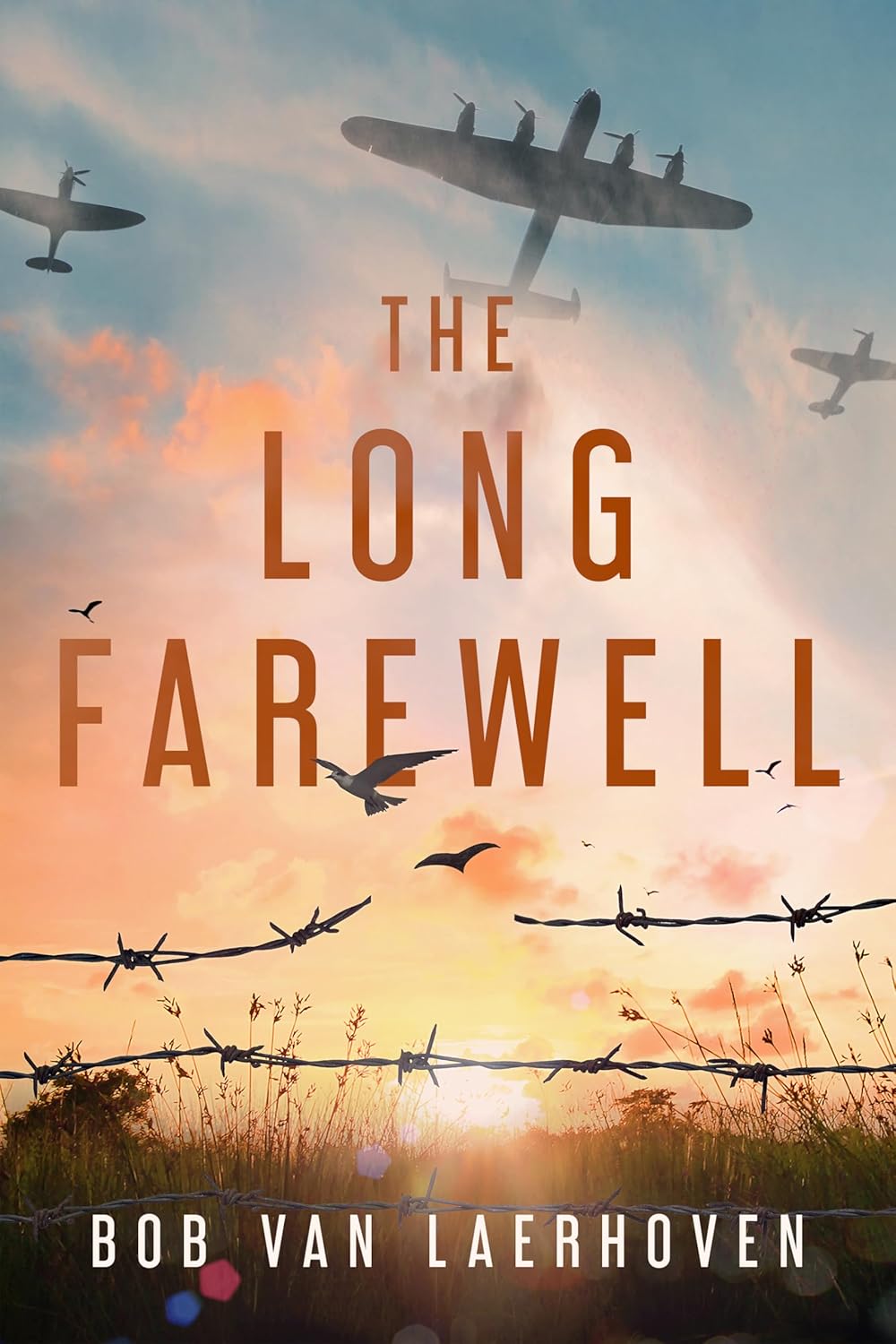
The Long Farewell is a haunting and relatable story set in the grim rise of Nazi Germany. It follows Marina Nesdrova, a Belarusian refugee trapped in a loveless marriage to an ambitious German officer, and her son Hermann, a boy torn between the warmth of his mother and the cold ideology consuming his father. Through their eyes, the book reveals the slow poisoning of ordinary lives by fanaticism. Love, guilt, betrayal, and fear mix with the heavy shadow of history, turning the personal into something almost mythic. Author Bob Van Laerhoven writes with the precision of a historian and the soul of a poet, weaving the domestic and the political into a tapestry that feels both intimate and terrifying.
What I liked most was the raw, unfiltered emotion beneath the words. Every page hums with quiet menace. The author doesn’t let us look away, and I found myself torn between admiration and discomfort. Marina’s despair feels like a slow drowning. Hermann’s innocence is eaten away scene by scene until you realize there’s no escape for him. Laerhoven’s prose is elegant but never showy. He keeps the sentences sharp and grounded, and the translation by Vernon Pearce carries a dark rhythm that lingers. It’s not just a story about Nazis and victims, it’s about what happens when love rots in the shadow of power.
I won’t lie, reading it was emotionally difficult. I felt angry, then sad, then strangely numb. The violence is understated yet suffocating. It creeps in like a chill. I found myself wanting to shake the characters, to warn them, but they kept walking toward their fate, blind and hopeful in equal measure. What I loved most, though, was how the book refuses to moralize. It just presents life as it was, messy, cruel, and tragically beautiful. It’s that honesty that makes it unforgettable.
The Long Farewell is not a book you finish and set aside. It’s a book that keeps you thinking well after it’s ended. I’d recommend it to anyone who loves historical fiction that bites deep, who doesn’t mind feeling a little broken when they turn the last page. If you want to look straight into the heart of human weakness and still find traces of grace there, this book will stay with you for a long time.
Pages: 365 | ASIN : B0FPK7P459

Timeless
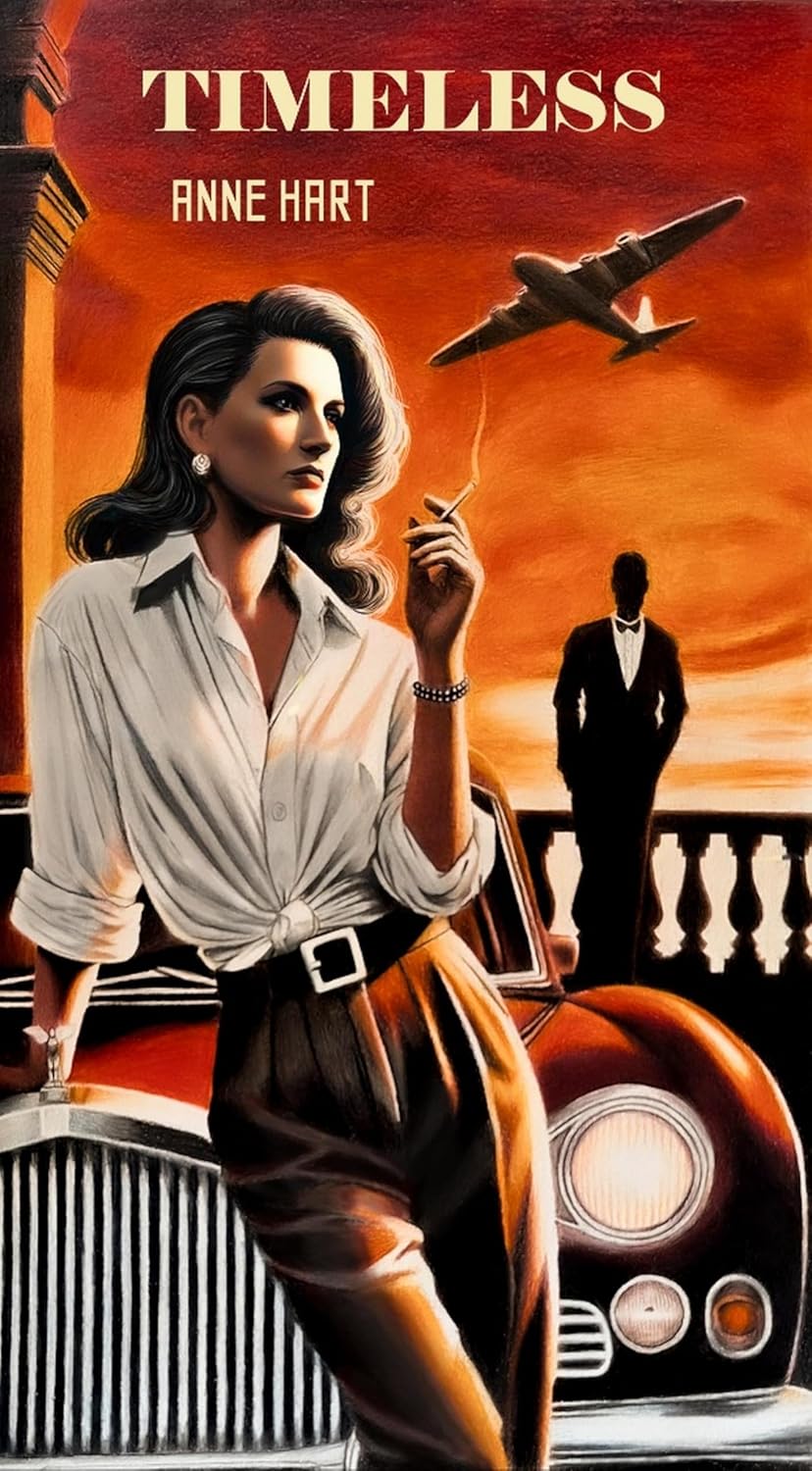

Anne Hart’s Timeless is a sweeping time-travel spy novel that blends espionage, politics, and personal struggle with a sharp eye for historical detail. At its heart is Anne, a seasoned field agent who slips between eras to manipulate history in ways that serve shadowy powers. The story unfolds across Geneva, Eastern Europe, and shifting political landscapes on the brink of war. Hart threads in rich settings, complex moral dilemmas, and characters caught between loyalty, survival, and personal desire. It is both a taut spy thriller and a meditation on the costs of living outside the normal flow of time.
Hart’s prose is crisp, direct, and atmospheric. I admired the way she captures small gestures and passing moments, the flick of a lighter, the hush of a closing vault door, a careless smile at the wrong time. These details made the story vivid. At times, the dialogue felt a little formal, as if it was doing double duty to explain the world as well as move the story forward. Still, the pacing carried me along. I wanted to know not just what would happen to Anne and Markus, but how Hart would weave together the politics of nations with the intimacy of two people’s lives.
What struck me most was the emotional undercurrent. Anne is a fascinating lead: hard-edged, sharp-tongued, cynical, yet deeply human in her weariness and longing for peace. Her smoking habit, her resistance to being told what to do, her flashes of humor, all of it made her feel alive. There were moments when I felt a kind of ache for her, as if she carried the weight of too many lives, too many timelines, too many compromises. The novel’s treatment of history, like how fragile and malleable it can be, left me unsettled, in the best way. It made me think about power, morality, and the human cost of decisions made in shadows.
Timeless is a book I would recommend to readers who enjoy spy fiction, political thrillers, or alternate history with a touch of melancholy. It will speak most to those who like their stories gritty yet reflective, where action and atmosphere go hand in hand.
Pages: 257 | ASIN : B0FQ1KJB66
A Promise I Made

Avoiding Muddy Foxholes: A Story of an American Bombardier recounts the life and military service of your father, Richard “Dick” Loveless, a young man from Washington, D.C., who joins the Army Air Corps during World War II to avoid the muddy foxholes of infantry life. Why was this an important book for you to write?
Like many boys growing up in the 1950s and ’60s, we were completely captivated by our fathers’ involvement in World War II. They were our heroes, and playing army was how we tried to be like them. As we got older, we began to understand that war wasn’t a game. Fighting and dying for your country was serious business. Like many veterans of that war, it was something they wanted to forget, but as kids who didn’t know any better, we pressed them for their stories.
My father didn’t talk much about the war, not because of any psychological issues. He just believed back then that he was doing his job, and that wasn’t something anyone would find interesting. Little did he know that, over time, I would come to see that this man, who was my father, was a true hero, and his story needed to be told. It became a promise I made to him on Father’s Day in 1972, and I vowed that his story would always be remembered.
What were some ideas that were important for you to share in this book?
One main idea I wanted readers to understand was how my father overcame the many fears he had to face during his experiences in the war. He relied on his strong faith to get through everything and believed that if he could handle the things he knew he could control, God would take care of the things he couldn’t.
Also, it is important to know that the people of the town in France, Champigny, honor the five crew members who died on each anniversary of the day their plane was shot down over their town.
What was the most challenging part of writing your father’s story, and what was the most rewarding?
The most challenging part of writing my father’s story was that by the time I was able to write it, everyone who was a part of it had passed away. In many cases, I had to rely on my familiarity with those I knew to create the dialogue. Also, my knowledge of history and the many events that made up the story helped me with trying to piece everything together. What was most rewarding was that almost every incident I had to speculate on, hoping it was correct, turned out to be spot on. It was particularly rewarding that I was able to convey a nearly one-hundred-percent accurate account of his story.
What do you hope is one thing readers take away from your dad’s story?
My hope is that readers will gain an understanding through the story of one man what those of the Greatest Generation did to help preserve the freedoms we take for granted today.
Author Links: GoodReads | Facebook | Website | Amazon
Though neither really discussed it, marriage was undoubtedly on the horizon. Unfortunately, a war got in the way. He was forced to decide between being drafted into the Army or enlisting so he could choose what branch of the service he would serve. Dick enlisted. Regrettably, enlisting didn’t matter; he wound up in the coastal artillery. As luck would have it, an opportunity to join the Air Corps presented itself, and Dick took it.
Thus, the adventure began for Dick. From boot camp and flight school to flying bombing missions over Germany for the 388th Bombardment Group, things never got easier. But it was only in his sixth mission over Stuttgart, Germany, that his strength, courage, and faith were put to the ultimate test. No training could prepare him for what lay ahead.
Eighty years later, Dicks oldest son finally made good on a promise he made him. He vowed never to let his father’s remarkable story go untold, so “Avoiding Muddy Foxholes” is his story.
Surviving

Kitty Schmidt: My Life As A Prostitute follows a young woman whose only option to pay for her grandfather’s burial is with sex, sending her on a path to becoming the madam of a high-class brothel for the Nazi in WWII. What was the inspiration for the setup of your story?
I had read a magazine account of Kitty’s life and how the SS refused to let her leave Germany, instead ordering her to work for them. I wanted to know more about her impoverished background that, unbeknownst to her at the time, served to help her manage a brothel for the inner circle of the Third Reich.
In addition, I thought it was important to draw attention to the exploitation of women before and World War II. Kitty Schmidt is a fascinating character who does what she must do to survive during a time when women were not valued as highly as men. She used her position to get information to expand her mind and her portfolio to improve her life and the lives of those around her.
What scene was the most interesting to write for that character?
Two scenes stand out. First, we see how a young child witnesses her mother’s murder at the hands of her alcoholic father. How does a young child process such a situation ? Does it scar her for life? She goes to live with her elderly grandparents who are in their last day, but she won’t have it. She finds paint and brushes and begins to work on fixing their house which has fallen into disrepair. In the second scene, in order for Kitty to pay for her grandfather’s funeral, she must sell herself to a pathetic undertaker. That is when she realizes she has power over men. This power helps her pay for her groceries, her clothes, and household repairs. It opens up a world that she had not known existed.
What draws you to the period of WWII and makes it ripe for you to write such a great historical fiction novel in it?
The WWII generation witnessed many heroes and heroines who in some cases made the ultimate sacrifice. I have written several novels centered on that generation: Brazzaville, The Reluctant Nazi, and Sunrise Over Casablanca. They all embrace a theme of personal growth and self-awareness and sacrifice in the midst of external struggles as well as in their own personal conflicts.
What is the next book that you are working on, and when will it be available?
On the Wings of Flying Tigers tells the story of a young man named Albert who always wanted to fly to feel free. That love grows when he watches flying circus performers in the 1930s. Then his uncle gives him a one-man plane to build.
Through hardship and self-sacrifice, Albert joins the military and moves up the ranks to become a member of the Flying Tigers, a volunteer Air Force branch of the Chinese Army. His time in the air indeed makes him feel free, but that freedom comes at a price. We expect to enter the publishing stage of this book in the coming weeks.
Author Links: GoodReads | Website
When Kitty attempted to leave Nazi Germany, the Gestapo made a deal with her. Manage a bordello for their hierarchy or go to a concentration camp. They wired her bordello so they could eavesdrop on every officer, diplomat, and foreign dignitary that passed through her door. Every word was recorded and passed to the authorities.
A modern-day Berliner stumbles upon her story, and he reads it during breaks from remodeling the building that housed her bordello. In doing so, he contrasts his life with hers


