Blog Archives
O’SHAUGHNESSY INVESTIGATIONS, INC. Leave Murder to the Professionals


A.G. Russo’s O’Shaughnessy Investigations, Inc. swept me into wartime Brooklyn in 1944, where the O’Shaughnessy Detective Agency tries to stay afloat as war, love, and corruption tighten their grip. The story follows Maeve O’Shaughnessy, a resilient woman running her family’s detective agency while her brothers fight overseas. She juggles heartbreak, danger, and loyalty as she faces mobsters, federal agents, and the heavy shadow of the Second World War. The book blends mystery, romance, and historical detail with an intimate look at ordinary people caught in extraordinary times. Author A.G. Russo paints the era vividly. The rationing, the fear, the faith that life might one day feel normal again.
Reading it felt like slipping into another time. Russo writes with a steady hand and a clear affection for her characters. Maeve is strong without being hardened, and I admired how she never loses her compassion even when the world around her turns brutal. The dialogue feels sharp and real; it’s the kind of talk you’d hear in a smoky Brooklyn diner. Some scenes hit hard, especially when Maeve faces choices that test her morals. The emotional weight sneaks up on you. One moment you’re caught in a clever bit of detective work, and the next you’re hit with the loneliness of a woman holding everything together while the world falls apart.
The number of side plots, mobsters, federal intrigue, family drama, sometimes pulls focus from Maeve’s heart, which is the story’s strongest pulse. Yet even when the plot meanders, the writing carries it. Russo’s world feels lived-in, and her affection for her cast gives the novel warmth that lingers. The prose isn’t flashy, and that’s part of its charm. It feels honest, unpretentious, like it’s being told over a cup of coffee on a gray Brooklyn morning.
When I finished, I sat for a while thinking about courage. The quiet kind that never makes headlines. Russo’s story isn’t just about solving crimes; it’s about surviving them, about staying decent when decency feels naïve. I’d recommend O’Shaughnessy Investigations, Inc. to readers who love classic mysteries, strong-willed heroines, and wartime stories grounded in everyday heroism. It’s a slow burn, but by the last page, it left me both moved and grateful for Maeve’s grit.
Pages: 342 | ASIN : B0FRHCZRG9

The Mystery from Way Back When

In The Mystery from Way Back When, Carolyn Summer Quinn weaves a compelling narrative that bridges the present and the past with elegance and emotional depth. Benny Finnegan, accompanied by his wife Imogene and daughter Tara, returns to his childhood church in New Jersey for its final Mass. This seemingly routine visit transforms into a poignant journey through time when Benny reunites with Antonia “Baby Face,” a woman he once found as a baby on the church steps alongside his brother. Now a mother herself, Antonia urgently seeks Benny’s help to uncover the identity of her biological mother—a quest made critical by a medical crisis. As Benny reflects on his wartime childhood and the earlier, fruitless search for Antonia’s family, the narrative delicately unfolds layers of memory, revealing how the passage of time brings clarity and resolution to the long-unsolved mystery of her origins.
Quinn balances suspense with warmth, crafting a story that is as engaging as it is uplifting. The intrigue surrounding Antonia’s past, paired with her urgent search for answers, offers just enough suspense to keep readers hooked without veering into melodrama. Simultaneously, the wholesome tone of the book lends a comforting, heartfelt quality that makes the story both accessible and deeply satisfying.
The author’s writing style and pacing are fantastic. The narrative moves seamlessly, blending mild suspense with moments of reflection and revelation. Quinn’s ability to evoke both emotional resonance and curiosity ensures that readers remain fully invested in the characters’ intertwined journeys.
At its heart, this novel is a touching exploration of belonging and identity. Quinn beautifully captures the significance of family bonds and the profound sense of rootedness that comes with understanding one’s history. Through Benny’s and Antonia’s interconnected stories, the book offers a poignant reminder of the enduring importance of connection, whether by blood or choice.
The Mystery from Way Back When is a wholesome, engaging, and thought-provoking read. With its blend of mild suspense and heartfelt moments, it holds universal appeal and is highly recommended for readers of all ages seeking a story that will both captivate and uplift.
Pages: 166 | ASIN : B0DQP1RJ4P
Montjoy
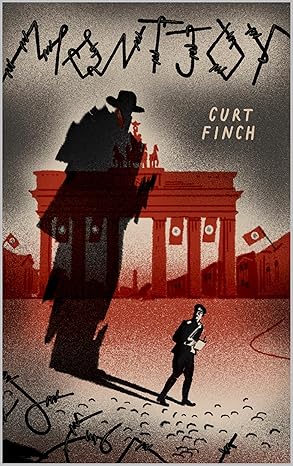

Curt Finch’s Montjoy is a narrative shaped by loss, memory, and the weight of history. Told through the reflective lens of its protagonist, Owen Schoenberg, a historian grappling with personal and professional crises, the novel traverses Europe, exploring Manchester, Vienna, Berlin, Linz, and finally a return home. Finch weaves together themes of grief, identity, and the search for meaning against the backdrop of Holocaust history and contemporary existential malaise.
One of the most striking aspects of the book is Finch’s writing style. It’s intricate, even meandering at times, with sentences that seem to mirror the protagonist’s restless and pensive state of mind. There’s an early scene in Manchester where Owen receives a phone call from Ella Grunebaum that sets the story in motion. Finch writes with a blend of dry humor and melancholy that hooked me immediately. Owen’s ruminations—on the collapse of his marriage, the death of his son, and his Baillie Gifford Prize for a book that feels hollow in hindsight—strike a deeply human chord. Finch captures the emotional weight of these experiences without tipping into melodrama. The balance between Owen’s sharp wit and his palpable sorrow made him a compelling, if occasionally infuriating, narrator.
Vienna—the second “verge”—is where the novel truly shines. Here, Owen immerses himself in the archives of the Mauthausen Memorial, unearthing both historical and personal truths. The city becomes a character in itself, with its wintry streets and grand cafés reflecting Owen’s internal isolation. Finch excels in painting Vienna as a place of contradictions: cultured yet haunted, vibrant yet subdued. A particularly vivid moment is a dinner with Ella and her husband Noah, where the conversation spirals into philosophical debates about memory, history, and the ethics of storytelling. This scene epitomizes the book’s intellectual richness, though at times, the dialogue can feel academic. Still, it’s these dense exchanges that give the narrative its weight and texture.
One aspect I found challenging was the novel’s pacing, especially in Berlin and Linz. While Finch’s prose remains evocative, the plot occasionally feels bogged down by Owen’s introspection and the historical detail. For instance, Owen’s discovery of the mysterious “merkbuch” in Linz—a journal buried at the Mauthausen site—is a fascinating thread, yet its unraveling is slow and laden with tangents. That said, the merkbuch’s contents—recounting acts of defiance and despair during the Nazi era—are haunting and memorable, raising questions about the interplay of fact and fiction, morality and survival.
By the time Owen returns “home” in the final verge, the novel feels like it’s circling back on itself, much like its protagonist. The ending is understated yet poignant, leaving more questions than answers. I found it fitting for a story so concerned with the elusive nature of truth and reconciliation. Finch doesn’t offer easy resolutions, and that’s precisely what makes the book linger in your mind.
Montjoy is a novel for readers who enjoy thought-provoking literature steeped in history and philosophy. Fans of W.G. Sebald or John Banville will likely find much to admire here. For me, it was a moving and intellectually rewarding read, though one that demanded patience and reflection. Finch has crafted a novel that’s as much about the stories we tell ourselves as it is about the ones we uncover in the world around us.
Pages: 147 | ASIN : B0DLLHSTY7
The Little Dutch Girls
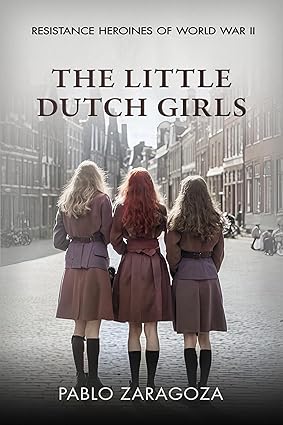
The Little Dutch Girls by Pablo Zaragoza offers a poignant and immersive exploration of the Dutch resistance during World War II, centering on the life of Freddie Oversteegen. Now 82 years old, Freddie, along with her sister Truus and their friend Hannie, has become a symbol of heroism for their courageous actions as teenagers during the war. Yet, despite the admiration that surrounds her, Freddie carries the weight of her past, often haunted by the memories of what she endured and the choices she made.
This historical fiction novel presents Freddie as a central figure, who is interviewed for a documentary about her wartime experiences. Through these interviews, readers are drawn into Freddie’s reflections, her encounters with the film crew, and her emotional journey as she revisits the traumas and triumphs of her youth. Zaragoza skillfully brings Freddie to life as a deeply human character—strong yet vulnerable, willing to share her feelings and inner struggles. This openness provides readers with a nuanced understanding of her emotional state, both during the war and in the present day. Freddie’s honesty about her wartime experiences, her lingering guilt, and the toll it has taken on her life makes her a relatable and compelling character. I found this vulnerability to be one of the most engaging aspects of her portrayal. It’s refreshing to see such raw honesty in a character, especially when discussing the personal impact of historical events. The novel also delves into her personal life, offering glimpses of her relationship with her late husband Jan and their shared journey of raising three children, which adds further depth to her character. Zaragoza’s attention to detail in depicting historical events makes this novel a standout for fans of historical fiction. Freddie’s story, while at the heart of the narrative, is enriched by the backstories of other key characters, even the minor ones, adding layers of realism and complexity to the overall plot. The blend of personal history with broader wartime events creates a well-rounded and vivid portrayal of life during the Dutch resistance.
For readers who enjoy richly detailed historical fiction, The Little Dutch Girls offers a moving, authentic portrayal of war, survival, and the long-lasting effects on those who lived through it. Freddie Oversteegen’s story is a testament to both the strength and fragility of the human spirit, making this novel a compelling and thought-provoking read.
Pages: 220 | ASIN : B0DDTS1SZF

The Last U-Boat

Jack O’Brien’s The Last U-Boat is a gripping dive into the depths of history, seamlessly blending the past with the present. This novel invites readers on a thrilling journey, starting from the tumultuous times of World War II to the explorative curiosity of the modern day. Centered around the discovery of a long-lost Nazi U-boat by a group of adventurous teenagers, O’Brien crafts a narrative that switches between the lives of Gunther Kraus in 1943 and the LeClair family in 2023, unveiling a mystery buried for decades under their home.
O’Brien’s writing is smooth and engaging, making The Last U-Boat a page-turner. His ability to weave two distinct timelines into a cohesive story is one thing I really enjoyed about this story. The juxtaposition of the past and the present is handled with finesse, allowing readers to draw parallels and contrasts between the eras. While I enjoyed the story, I felt that the novel’s pacing can feel uneven at times, particularly in the transition from the high-stakes espionage of the 1940s to the more explorative, yet less urgent, modern-day treasure hunt.
I enjoyed the character development in this story, particularly the portrayal of the Kraus family. Their internal conflicts and loyalties, depicted through Gunther’s perspective, add depth to the narrative. The novel’s most compelling aspect is the thematic exploration of history’s impact on the present. O’Brien skillfully raises questions about legacy, the moral ambiguities of war, and the lasting impact of decisions made by previous generations. These themes resonate well with the dual narrative structure and are thought-provoking.
The Last U-Boat is a fascinating read, particularly suited for those who enjoy historical fiction blended with modern-day adventure. It’s an excellent choice for readers who appreciate a mix of history, mystery, and a touch of youthful adventure and those intrigued by the lasting echoes of the past in the present.
Pages: 295 | ASIN: B0D2M73TRN
The Thread Of Life

White Cat unveils the intricate life of a centenarian through letters and artifacts, weaving a tapestry of history, emotion, and mystery across eras like World War 2 and the approach of apartheid-era South Africa. Why was this an important book for you to write?
Initially, a family connection made it important: Barbara was my aunt and the last of her generation, and, during her last years, shared with me a lot of family history and anecdotal material which, I suspected, no other family member had been aware of. The instigation for the actual writing was her disclosure of her extra-marital relations with the army spy whom I have called Hugh in the book. In fact, she refused to tell me his real name, which I put down to the unwavering wartime sense of duty of her generation. She suffered for this relationship and it became important to me to witness to the resilience and courage – evidenced also by her own wartime actions – of the person she was. Then my therapist persona jumped in and I realised that I had the material for a favourite theme of mine, namely, the passage of our lives through our heredity mixed with our contacts with others, the strands from which the thread of life is spun.
Can you elaborate on the real events that inspired “White Cat” and how you balanced historical accuracy with creative storytelling?
Wars, in this case, the Boer War in South Africa and World War 2, provide grand tableaux which, if we are not careful, distract us from the reality that it is the lives of the people which make up the picture. I knew that my grandfather lost a leg in an engagement in the Boer War, that a granduncle drowned in South Africa in undocumented circumstances and was ‘disappeared’ by his family, and that Barbara’s paramour, the military spy, vanished in Vienna. The great events provided a stage on which to play this out, but the real drama was about the lives of individuals. I had considerable material from my firsthand acquaintance with many of the individuals. I also had family anecdotal evidence of the personalities of the generation before, enough to be able to ‘write back’ some family traits which I knew of from my own day. So the narrative of the story grew also from what I could believe or impute for the characters concerned. This formula, such as it was, gave me enough scope for creativity in storytelling. The one enigma was Harry, my granduncle, and, whilst I offer a therapist perspective on his death, I leave it for the reader to decide.
The book’s narrative structure, weaving together elements of historical fiction, memoir, and mystery, is unique. What challenges did you face in crafting this multi-layered story, and how did you overcome them?
This was a challenge. I knew how I was going to start and I knew where the book was going to end. In fact, I wrote the final chapter not long after the first and I changed it very little. I knew I had two main storylines, the love story of Barbara and Hugh, and the tragedies of the family in South Africa: they were roughly 50 years and 10,000 miles apart. That in itself intrigued me. It was the letters that gave me the answer. Within my cast of characters over four generations, there were enough people who either did, because I had some letters, or plausibly could have, written to each other across the generations, for this to provide the continuity and create for Barbara the pivotal role in the overall drama.
What is the next book you are working on, and when will it be available?
The first sequel to White Cat is already out. It is called And Then There Are The Stories. It follows the fortunes of Hugh and Nobomi, starting in Vienna and then moving back to South Africa, ending in the Drakensberg mountains on the border between Eastern Cape and Lesotho. It is largely fictional – I was unable to find any trace of a likely Hugh in the National Archives once he moved from his military unit to the FSS. But there is one scene in Vienna for which I found sufficient family material to make possible a reconstruction. I have adopted a different format in this sequel, the main storyline being carried by the accounts given by a series of ‘outside’ characters, whose lives become involved in different ways.
I am now working on the third and final sequel, which is more or less present-day, though with allusions to some material in White Cat, as well as to the two main characters of the first sequel. The two figurehead names of White Cat reappear, though they might not be related to their namesakes there, but they continue my theme of the thread of life. This final sequel is called River.
Author Links: Goodreads | Facebook | Website | www.life-counselling.co.uk
This family saga begins at an end, with the death of Barbara at 104, the last of her generation, and the end of an era. She was the custodian of memories and memorabilia from four generations – her larger-than-life grandfather converted by a Quaker nurse, a father in the Boer War in South Africa, an uncle who mysteriously drowned in the Indian Ocean, his African girl-friend and the child he never saw, Barbara’s own paramour a spy in post-war occupied Vienna…and her own heroism in that war.
The reader passes through the abandoned rooms of her house, as the story unfolds by way of narrative and letters which create an immediacy, even intimacy, with the various players in the drama.
“… a confusion of sets and settings when the action moved, sometimes you could see it but sometimes it was offstage and reported, and then you have to trust the word passed down across the terraces of history, the hardships, the joys, the resentments, the hopes, the terror, the humanity, the resilience… and somewhere back along the way, still tolling, the bourdon bell which marked the tide of war.”
The White Cat? – no, six in all, and a question left unanswered.
Babylon Laid Waste-A Journey in the Twilight of the Idols
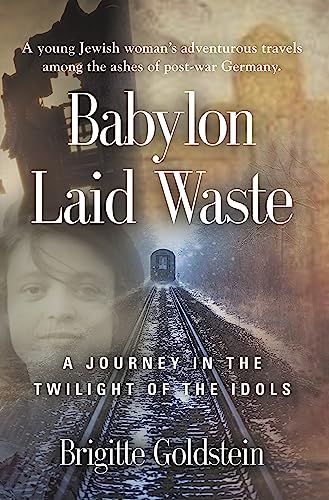
Babylon Laid Waste: A Journey in the Twilight of the Idols, authored by Brigitte Goldstein, masterfully delves into the harrowing saga of a young Jewish woman’s audacious endeavor to locate her long-lost grandmother in the ruins of post-war Berlin.
Set against the backdrop of a world in the throes of convalescence following the devastation of World War II, the narrative unravels in the year 1946. Our protagonist, Artemisia Safran, hailing from New York, receives an unexpected missive hinting at the possible survival of her grandmother, previously assumed deceased. This news prompts Artemisia to defy familial objections and embark on a perilous journey through the scarred streets of Germany. The desperate urgency of her mission forces her to weave a web of deceptions, but her inexperience may inadvertently obscure the real perils lurking along her path. A quagmire of danger engulfs her, and she’s falsely branded as a Nazi, cornered with seemingly no escape. However, salvation emerges in the enigmatic form of Franz Kafka from Prague, who, acknowledging her undeserved plight, meticulously crafts an escape strategy. This unlikely alliance ignites sparks of romance, complicating Artemisia’s original mission, weaving a tangled tapestry of politics, survival, and blossoming love.
Goldstein’s narration is fantastic. She meticulously structures each chapter and segment of the novel to effectively guide the reader through the labyrinth of poignant events that marked the War. The authenticity and precision of the recounted horror scenes invite readers on a journey of recovery and reconciliation, fostering connections and facilitating healing.
The novel’s intricate structure, engrossing plot, and enlightening insights encapsulate the harrowing uncertainties and fears of the era. The diverse perspectives offered through an array of well-developed characters craft a provocative milieu, compelling readers to reflect on historical events and vicariously experience the trials of those who bore witness to some of mankind’s darkest hours.
Babylon Laid Waste: A Journey in the Twilight of the Idols stands as a riveting historical novel imbued with unexpected plot twists and resolute characters that enrich the reader’s engagement. This highly recommended literary piece succinctly encapsulates significant moments of Jewish history with a deep reverence for past events and a tribute to the countless lives tragically extinguished during this catastrophic epoch.
Pages: 368 | ASIN : B07VV6F4KW



 LITERARY TITAN