Blog Archives
Victim and Villain
Raven follows a deeply flawed woman whose love affair leads her down a road of dangerous secrets, obsession, and self-destruction. Where did the idea for this novella come from?
Raven is one of, if not the most, intense books I’ve ever written. Delilah was first introduced in EverGreen, the first book in the EverGreen Trilogy, years ago. At that point, she was kind of a classic mean girl character. But even then, I knew that she had a troubled background. Raven is a companion novella that gives the reader some insight as to what was happening to Delilah before the events of Fallen Snow, the last book in the trilogy. It sounds a bit cliché, but sometimes my characters play a part in writing their own stories. Delilah knew what her backstory was, and she led me down the path of writing Raven.
I always take a lot of inspiration from my personal life. Raven is no exception. Abuse and sexual violence are topics that are very close to my heart. Unlike in Fallen Snow, I wanted Raven to feature an imperfect victim that was also a villain. However, I wanted to make it clear to the reader that Delilah’s actions and the way she treated others do not justify or excuse what happened to her. As the saying goes, hurt people hurt people. Like I said, I’m not necessarily trying to make the reader feel sympathy for Delilah or make them view her as less evil. At the same time, I do want to reflect that victims of abuse and sexual violence aren’t always (or even usually) perfect, and that’s completely normal. We can acknowledge that what happens to Delilah in Raven is a tragedy without revoking her status as an antagonist in the EverGreen Trilogy.
Delilah is an incredibly well-crafted character. What was your inspiration for her traits and dialogue?
I am extremely proud of being able to create a character that is as complex as Delilah. The more I wrote and planned the storyline, the more fleshed out and fascinating her character became. As I said before, she started out as your typical high school bully that took things way too far. But as I kept writing, I continued to follow her journey and realized where that ultimately led her. In Raven, we see Delilah at the lowest points in her life. Throughout the story, she thinks that her choices are acts of self-preservation, but they’re actually the opposite. She’s typically a very calculated individual, but her obsession with Silas (which I will make clear is an obsession, not real love) completely throws her off. In Silas, she’s met her match in terms of ability to manipulate. The two of them being in a relationship was never going to work, no matter how hard they tried. In a relationship, there has to be concern and respect for the other person. Neither of them had that. Her traits are those I imagine a person diagnosed with an extreme case of psychopathy, or antisocial personality disorder, would exhibit. All of her dialogue stems from that. Similarly, Silas is a malignant narcissist. Neither of them should be in a relationship, and certainly not with each other.
What do you find to be the most challenging aspect of writing a trilogy? What is the most rewarding?
The most challenging part of writing a trilogy is remembering little details. This can be something as simple as a character’s eye color, etc. The most rewarding is being able to watch them grow. I love seeing my characters transform into what is typically a better version of themselves. Obviously, that wasn’t the case for Silas or Delilah.
Can we look forward to more work from you soon? What are you currently working on?
I recently completed my first adult romance, titled Crazy For You. It’s a clean billionaire romance with an antihero MMC (main male character) and a sweet female protagonist with a heart of gold. They are actually one of my favorite couples I’ve ever written. I’ve never encountered a clean billionaire romance before, so when the story came to me, I decided it was definitely worth writing. I’m currently contemplating a sequel focusing on some of the side characters from Crazy For You and getting an idea of what that might look like. It’s definitely something I see myself writing in the future, but no promises.
Author Links: GoodReads | Facebook | Website
Delilah Banks was never the type of girl to let herself be manipulated by a man. But when she becomes involved with a tempting stranger, Silas, everything changes. Between the events of Moonlit Skies and Fallen Snow, Delilah discovers that no one is above having their heart broken. After all, we are each the hero in our own story.
The Call of Thunder


The Call of Thunder, by Sarah Blynne, follows Havanna, a young woman marked by loss and destiny. Torn from her parents during a violent raid as a child, she grows up in hiding within the mountain village of Ketra. Her life balances between ordinary tasks like running the eatery and extraordinary challenges such as resisting the urge to reveal her lightning-born powers. Legends of Descendants, monstrous Dormants, and the looming shadow of the Dormant King shape her world. Alongside friends, rivals, and potential love interests, Havanna struggles with identity, duty, and the yearning to break free of secrecy while danger lurks just beyond the village gates.
Reading this book felt like being carried along by a current that shifts from gentle to wild. The writing is vivid and often cinematic. The opening scene of Havanna’s escape filled me with both panic and heartbreak, and that urgency never really let go throughout the novel. The world-building is strong, layered with history and myth that feel alive rather than forced. At the same time, the dialogue sometimes struck me as a bit too modern for the medieval-like setting. Still, I admired how the author balanced action with quieter, emotional moments.
Havanna’s character truly makes this book unique. She’s stubborn, flawed, fiery, and vulnerable all at once. Her grief over her parents, her frustration at hiding, her clashes with Darius, her tender bond with Aria–all of it felt raw and real. I found myself frustrated with her when she lashed out, yet cheering for her every time she picked herself back up. The undertones of a love triangle with Victor and Claeron added charm to the storyline. What I enjoyed most were the training scenes and moments where Havanna questioned her place in a world that expects her to be both hidden and heroic.
I would recommend The Call of Thunder to readers who love fast-paced fantasy adventures with a strong female lead, plenty of tension, and emotional depth. It’s ideal for those who enjoy stories about chosen ones grappling with responsibility and identity. If you appreciate a mix of sword fights, mystical powers, heartfelt friendships, and a dash of romance, this book will keep you hooked until the last page.
Pages: 267 | ASIN : B0DHNLHF59

Raven

The book follows Delilah, a striking and deeply flawed woman whose tangled love affair with Silas drags her into a spiral of obsession, violence, and dangerous secrets. Set between Moonlit Skies and Fallen Snow from the EverGreen Trilogy, the novella shows events through the eyes of a character who is more often the villain than the victim. What makes the story gripping is the way it refuses to soften Delilah. She is not portrayed as misunderstood or redeemed but as fully aware of her own dark choices. Through pregnancy, manipulation, and power games, we see her fight to hold on to Silas while also grappling with her own sense of control, vulnerability, and twisted love.
Reading this book felt unsettling and fascinating at the same time. I found myself both repelled by Delilah and unable to look away from her story. The writing style is sharp and vivid. I could practically hear the click of her stilettos on the floor or feel the electric crackle of her faerie power humming under her skin. The tension in her relationship with Silas is raw, messy, and at times horrifying. I appreciated how the author leaned into that darkness rather than pulling back. It made the whole experience feel more honest, even when it was uncomfortable. At times, I caught myself feeling sympathy for Delilah, only to be reminded moments later of just how ruthless she could be. That push and pull kept me hooked.
What struck me most was how much the book made me reflect on the nature of love, control, and power. There were moments where the drama felt almost theatrical, yet the emotions behind it rang true. The writing doesn’t dress up Delilah’s cruelty with excuses, and that made her inner conflicts more powerful to watch. The pacing leaned on confrontation and spectacle, which left me craving a deeper look at the cracks in Delilah’s armor. But maybe that was the point. She doesn’t allow herself to be fully exposed, even to the reader.
Raven is an intense and dramatic read that doesn’t shy away from the darker corners of human desire and obsession. It’s not a comfortable book, and I don’t think it’s meant to be. I would recommend it to readers who enjoy morally complex characters, stories that blur the line between villain and protagonist, and tales that pulse with danger and passion.
Pages: 158 | ASIN : B0F4RR5L5M
Beyond Superhero School: Let The Games Begin!
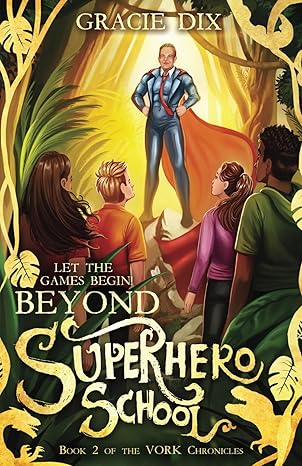
Let The Games Begin! picks up right after Gracie Dix’s Welcome to Superhero School and throws us straight into the lives of a group of teens who are trying to navigate the awkward balance of being both teenagers and superheroes. Their old school is gone, and now they are forced to attend a “normal” high school, hiding their powers while still facing dangers, bullies, and the ever-present shadow of VORK. It’s a story about friendship, secrets, and resilience, wrapped in a mix of action, humor, and heartfelt moments.
I loved how much energy pulses through the writing. The dialogue feels natural, and the banter between characters often made me smile. Some scenes, like Nick’s struggles with PTSD triggered by a history class video, hit harder than I expected. Those moments reminded me that beneath the flashy powers, these kids carry real pain and complicated histories. The story rushed from fight to fight. The momentum kept me turning pages, eager to see what the group would stumble into next.
I also loved how the friendships felt genuine. The teasing, the loyalty, and the occasional tension reminded me of my own messy and chaotic friendships when I was younger. A few lines of dialogue leaned cheesy, but honestly, that gave the book its charm. The heart of the story, the kids sticking together, was a wonderful heartbeat that consistently beat throughout the novel. Dix crafts the kind of book that makes you remember how important it felt to belong to a group, especially when the world seemed confusing or hostile.
Let the Games Begin! is perfect for readers who love fast-paced adventure, quirky humor, and found-family dynamics. It’s a book I’d hand to middle schoolers who want something fun but also real enough to stir up emotions. And for anyone who ever felt like an outsider trying to hide a part of themselves, this story hits home in a surprisingly tender way.
Pages: 508 | ASIN : B0F4Y6ZCBY
Split
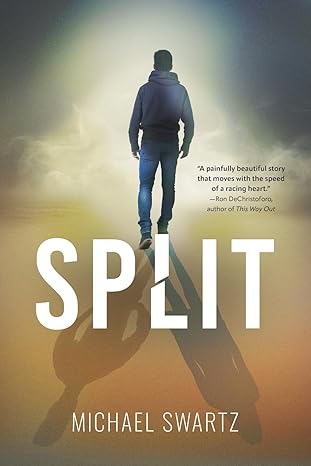

Split, by Michael Swartz, is a haunting story about Ethan, a boy born with genetic chimerism, carrying two sets of DNA and the confusion, pain, and strength that come with it. The novel follows him through a gauntlet of bullying, identity crises, and family wounds, all while his body betrays him with asthma, and his mind struggles with the fear of becoming like his violent father. Along the way, friendships bloom, love steadies him, and the truth of his condition forces him to question who he really is and who he wants to become. It is both a coming-of-age tale and a raw look at survival when the world tells you that you are broken.
The writing is sharp and urgent, with scenes that left me squirming in discomfort, not because they were bad, but because they were so brutally real. The cafeteria humiliations, the suffocating asthma attacks, the relentless bullying, all of it dropped me straight back into the shaky insecurity of youth. Swartz doesn’t soften the edges. He makes you sit with the pain, and in that pain, I found a strange kind of beauty.
At the same time, there’s a tenderness here that surprised me. Moments with Mo and Aia glowed like little lanterns in the dark, and those relationships kept the story from sinking into despair. I loved how the book didn’t give easy answers about identity or fate. Ethan’s split nature felt like a metaphor for all of us who feel divided between who we are and who we’re supposed to be. I kept thinking about genetics versus choice, destiny versus defiance, and it made me restless in the best way. I didn’t agree with every decision Ethan made, but I understood them, and that made the story hit harder.
I would recommend Split to readers who want more than just a story, to anyone who likes books that dig under your skin and refuse to let go. Teenagers who feel out of place, adults still wrestling with family scars, and anyone who has ever carried the weight of being different will find something of themselves in these pages.
Pages: 264 | ASIN : B0F9MWLMNY
A Heavy Theme

Weun Academy: The Shadow Maker follows a teenager caught between two worlds—Earth-born and Mars-raised—who suddenly discovers he possesses incredible powers and is whisked away to a secretive academy in a sprawling alien space station. I find the world you created in this novel brimming with possibilities. Where did the inspiration for the setting come from, and how did it change as you were writing?
The original locations of New Eden space station, Rinow City, and Weun Academy first appeared in my D’mok Revival series, but Weun Academy is the first book (and now side-series) to focus on the students and faculty at the academy. While a few existing characters made appearances—or even became permanent faculty—the majority were brand new. To bring these places and people to life, I dove deep into research: conducting “interviews” with each character (my journalism background helped here) and writing numerous backstories about life on the station, Rinow City’s districts, and every building and feature of the school.
The core inspiration came from my son’s experiences in school, my parents’ backgrounds as educators, and my own views on effective teaching strategies. Those influences shaped how the academy operates, the dynamics between faculty and students, and even how superhuman aliens approach learning.
As a “pantser,” I let the world grow through the characters’ actions. Sometimes they wandered into places I hadn’t planned, or a moment in the story demanded more history for a location or alien race. When that happened, I’d pause to explore—often by writing a new short story—so that by the time readers visit these settings, they feel authentic, layered, and full of possibilities.
What were some themes that were important for you to explore in this book?
The core theme of the book is gun violence, inspired by real incidents in U.S. schools. My own son experienced three lockdowns during his school years, the most recent just this past year. I saw firsthand how parents, kids, and educators felt—scared, powerless, and unprepared.
I wanted to make that reality tangible for adult readers, while also giving young readers something they could relate to—validating their feelings and showing them they’re not alone. Most of all, I wanted to offer hope: to show how we can support one another, and how fear, depression, and even trauma can be channeled into something that helps us move forward. It’s a heavy theme, but one I believe is deeply important.
Where does the story go in the next book, and where do you see it going in the future?
Weun Academy will absolutely continue, with Eisah and his crew remaining at the heart of the story. Future books will explore the lasting impact of the first book’s events—on the school, its staff, the students, and their families.
I’m already halfway through writing a novella that bridges the first and second books. A full trilogy is planned, along with a prequel that reveals how the academy was founded. And there’s room for even more.
Each book connects to the greater D’mok Revival literary universe—deepening readers’ understanding of events that shape a much larger storyline, while giving the academy its own unique and memorable place within that world.
Author Links: GoodReads | X (Twitter) | Facebook | Website | Dmok Revival | Amazon
As an Earther on the fringes of a Martian colony, he keeps to the shadows, evading bullies who stalk his kind for sport. But when their cruelty explodes into violence, a dangerous power ignites within him—one that can’t be hidden—drawing unwanted, extra-terrestrial attention.
Torn from Mars, Eisah is conscripted into Weun Academy, an alien school for gifted outcasts. With an uneasy start, he struggles to master his superhuman powers—and finally belong. This alien realm proves just as treacherous.
When a brutal strike shatters the academy, shifting loyalties and hidden agendas drive Eisah and his friends into a fight for answers. Learning who to trust is the deadliest lesson.
As enemies close in, they must untangle a web of lies, betrayal, and something far darker—before shadow consumes them all.
Step into Weun Academy—where mettle is tested, chosen family secures, and the fight to step into your power begins.
Elements of Life

Dominion follows a leader of the Dragon Guild, who discovers her brother is a primary target, putting him and his dragon in grave danger, and tries to protect him while preparing for battle. What was the inspiration for the setup of your story?
The character, Gabri, inspired the adventures of her little brother, Alex. As a baby in an earlier series, Gabri had used one of her powers to save Terra from destruction. It made sense to me that her baby brother would be born with the same gifts. Alex’s intellect is far advanced for his age. Like a child, he’s headstrong and emotional. Because of his powers, he feels invincible and doesn’t believe he’s in any danger. He knows he can defeat the evil entity that is capturing and hurting dragons.
Much wiser and having learned to live without her powers, Gabri rightly fears what the Shadow will do to Alex when he discovers the boy and his abilities. She’s torn between protecting him and fighting the enemy.
Their conflict developed organically. I had no idea the story would end the way it did until I got there.
The writing in your story is very artful and creative. Was it a conscious effort to create a story in this fashion, or is this style of writing reflective of your writing style in general?
That’s a tough question. I would say it’s a combination of the two. The words flowed as the story unfolded in my mind. I became immersed in the scenes, invested in the characters, and intrigued by the emerging story.
My writing style may have developed because of the many books I’ve read and enjoyed in this genre. In short, I wrote a book I would like to read.
Friendship, love, sacrifice, and finding one’s place are virtues that are highlighted throughout the story. Why are these important to telling the story?
They’re elements of life. Both friendship and love involve some sacrifice. There is no love or friendship that doesn’t require giving up a bit of oneself. The journey is different for everyone, but it makes for some great stories.
Finding one’s place, one’s anchor, one’s tribe, has immeasurable rewards, but the process of getting there can be daunting and can make interesting reading. As an Army Brat, it took me years to realize my place, my home, was with my core family, no matter where we lived. The pain of saying goodbye to my friends as they left, or as I left them behind, was a sacrifice born of my love for them. As a parent, loving our children requires giving them up to live their own lives. No character-driven story would be complete without some such life elements.
After surviving so much, where do you see your characters after the book ends?
I don’t want to give away the ending! I will say that some of the characters might show up in other stories. They can become quite insistent, and I feel a plot or two percolating.
Author Links: GoodReads | X (Twitter) | Facebook | Website | Amazon
As tensions rise, and Gabri, Elio, and their dragons prepare for battle, Alex and Tito embark on a daring mission to rescue Phoenix, a dragon caught in the crossfire of a sinister plot.
Treacherous challenges await the Dragon Guild as they harness their unique abilities and forge alliances to secure the safety of their loved ones and the future of their planet. Will courage and determination be enough to overcome the darkness threatening to engulf them? Will Gabri lose her little brother in their fight to regain dominion over their world?
Inner Balance

Balance of Light follows a teenager and his companions as they travel through wormholes to the ancient civilization of Atlantis, where they attempt to unlock the secrets of a long-lost civilization and prevent another catastrophic planetary reset. What was the inspiration for the setup of your story?
Ultimately, The Book of Light (Balance of Light being the second part), started life quite simply as a gathering of some of my favourite things: the ocean, surfing, sharks (and anything else in the ocean that can eat you or at the very least ruin your day!), Atlantis, ancient mysteries, and catastrophic planetary events from our past. It was then just a case of taking all of those ingredients and putting them in the story pot! But, as it happens, I found that a lot of these things fitted together quite well. Most of the great cities of the past grew up near water, probably for trade and things like that, and I think that if Atlantis ever did exist, it too would have been near water/the coast. This would certainly explain how so many ancient mythical places have disappeared because of the amount that the sea has risen since the last ice age (at least 400 feet), so any coastal settlements would have long since sunk beneath water, silt, mud, and sand. It also struck me that, because of this, if there were some amazing lost maritime culture, they would have likely had mastery over the sea. And in my mind, unlike our culture today, which has been focused on the evolution of technology over thousands of years, Atlantis was a culture that had put similar time and effort into more of a spiritual evolution. It was then a short leap of imagination to envisage that surfboards that can travel across the ocean through ancient wormholes would be the pinnacle of oceanic travel in a society like this! This was also helped by some of the many flood myths in different cultures around the world that often agree about some huge flood that wiped out much of civilisation, and that afterwards the survivors were visited by an advanced group that re-taught them civilisation and that these people (particularly in South American and Central American myths) often travelled on boats with no sails that seemed to move by themselves – which totally sounds like super-powered surfboards to me! And then of course there are the more spiritual elements of the story, based around having a greater connection to the earth and nature, and anyone who has ever sat on a surfboard on a glassy day will know where this fits in! So, that was how the basic setup came about, I then just needed a couple of protagonists to throw into the action…
What character did you enjoy writing for?
Was there one that was more challenging to write for? My two main protagonists, Zeb and Kaia, are both enjoyable to write for as in many ways they complement each other. Zeb is basically the one who has grown up in the UK surfing mediocre (and cold!) waves and dreaming of more exotic places, and being a bit unsure of himself (slightly autobiographical here!), whereas Kaia grew up in Hawaii, and is a confident and accomplished surfer with a strong connection to the environment. However, while Kaia is more fiery and headstrong, Zeb is more chilled, introspective, and has a greater inner balance. Ironically, it is this inner balance that means he is the one who ends up being able to control the ancient surfboard, despite Kaia seemingly having a more confident exterior and being more of a go-getter, as well as having a greater degree of surfing experience. In many ways, I think this is like life, where there are two ways you can get through it. The strong, powerful way or in a more giving and adaptable way (call it Ying and Yang). I think both ways have strengths and weaknesses, and both represent different energies, and so for Zeb and Kaia, who are not just working together towards a common goal but are also navigating a romantic relationship, this makes for some good tensions within their relationship, but also differences in how they face the many trials and tribulations that they do.
I felt that the action scenes were expertly crafted. I find that this is an area that can be overdone in novels. How did you approach this subject to make sure it flowed evenly?
I think with action scenes, this probably comes from two elements. Firstly, I’ve always enjoyed travel, adventure, and a bit of thrill seeking. Have I swam with sharks? Yes. Have I been attacked/eaten by a shark? Thankfully not yet! But, it means if I’m writing about a scene like that, I have enough first-hand experience to be able to draw on, and this makes it easier to imagine what a character is feeling during a situation like this. I suppose, in acting terms, this would be classed as literary method acting. I heard a story once where a famous actor was immersing himself in a frozen river to help get into character. And one of his co-stars, who was looking on bemused, said, “You should try acting, old boy!” And while I find some actual experience certainly helps, I think the second element that complements the first is then having the imagination to add the extra toppings to a scene that you may not have experienced first-hand. Where does this come from? For me, I get a lot of inspiration from both books and movies. If you asked me to pick one or the other, I (perhaps shockingly!) would be hard pressed to say – I like both mediums in different ways and I think they can complement each other. Ultimately, I just like a good story that grips me, moves me, and makes me think and feel. In my opinion, both of these formats help you see a scene better in your head, which makes action scenes, for example, easier to write. And for me, it is a bit of a test, where you write a scene and then read through it to check that there is enough description and information to make the scene work. This is where you can really dig into how a character is feeling and reacting. Then, in my final read through of a scene, I like to imagine it as a movie scene because this often helps you to see what it looks like and how it flows and generally whether it works or not. With action in particular, if you can’t see the scene clearly playing out like a movie in your head, then (in my humble opinion!) it needs more work.
What will the next book in that series be about, and when will it be published?
The third book in the series is called Storm of Light and should be out by the end of 2025. It follows on from the events of the second book, but ratchets things up a few levels, as is hopefully suggested by the title! I can’t give too many things away at this point, but if you enjoyed the first two books, the third is going even bigger, and I can’t wait to share it with readers!
Author Links: GoodReads | Amazon
Humanities lost senses are awakening
The war is beginning
In this thrilling sequel to Jigsaw of Light, Zeb, Kaia, and Professor Garcia are seeking out the lost human senses and abilities that existed during the Age of Atlantis. But an ancient war is playing out between the remnants of this world. On one side, the Kingdom of Atlantis seeks war and enslavement, and on the other, the Kingdom of Mu seeks harmony and balance with the earth. Powerful forces exist on both sides and Zeb is caught in the middle. And on a mysterious island where unspeakable evil is rising, Zeb’s fate will be decided.



 LITERARY TITAN