Blog Archives
The Best of Both Worlds

Disheartened follows a woman living a separate life in 1860 and 2020, remembering everything as she drifts between the two, struggling to protect the people she loves in two different centuries. How did the concept of E.V.E. first develop?
The concept of E.V.E. (Essence Voyager Era ― the inherited gift of having the ability to live two parallel lives on two separate planes of existence as the soul travels nightly – essentially falling asleep on one plane and awakening to a new day on a new plane) came about due to a strange dream I had in the summer of 2009. I immediately started writing the first book in the E.V.E. series, Essence. After it was published in 2011, it grew into a series of four books that centered on Jocelyn (Sidney’s younger sister) and Jackson’s relationship. The Spirit Quest series is a spinoff of the original series, except this series focuses on Sidney’s experience with E.V.E.
Sidney carries the memories of two different lives. What was the greatest challenge in writing her perspective?
The greatest challenge with this particular character and period was researching from both perspectives (North and South) for the 1860 era and trying to offer a varying perspective of the 2020/Covid era experience, which we all lived through.
Foreknowledge plays a central role in the novel. How would you respond to the question of whether knowing the future is a gift or a burden?
Different members of different families who have inherited the gift (or curse) of E.V.E. have expressed their opinions of it. Some believe it to be a gift that allows them to experience the best of both worlds. Others feel it is a curse because despite knowing what the future holds, they are almost helpless to stop it in any meaningful way.
What lies ahead for the Spirit Quest series?
The third installment in the series, Foreshadowed, is due to be released later this year. The span of the novel covers the day after the 1860/2020 presidential elections through the first shots fired at Fort Sumter. It focuses on the personal challenges Sidney faces with the global pandemic, extended family pressure, and navigating increasing political division that is tearing apart the country in both of her lives.
Author Links: GoodReads | X (Twitter) | Facbook | Website | Scarlett Ink Publishing | Amazon
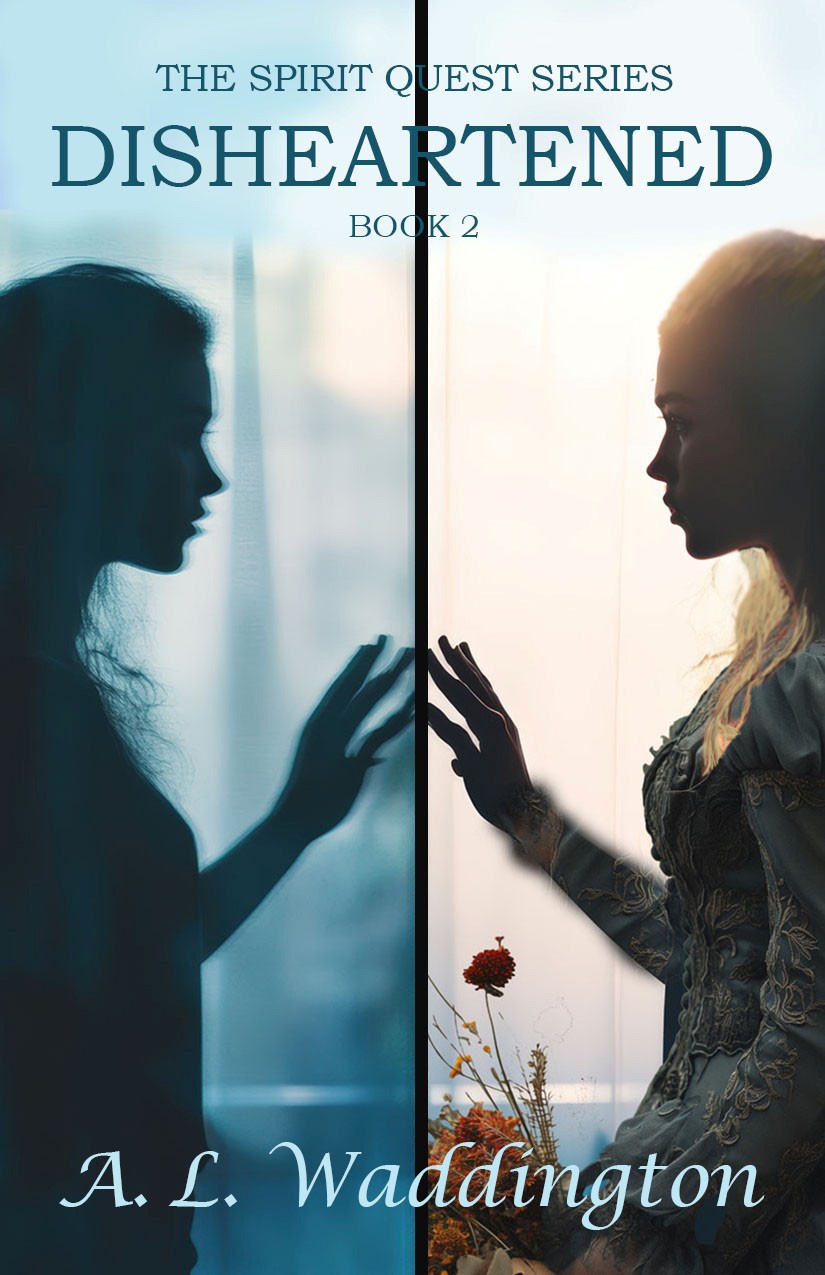
Gifted or cursed with the inherited ability of E.V.E., Sidney is forced into the inconceivable ― her 1860 self-watches on the eve of the American Civil War as the Northerners and Southerners dismantle the fabric of the nation. Whereas her 2020 self-witnesses the extreme Progressives and Liberals under the guise of the Democrat umbrella shred away the decency of the American Culture on a world-wide stage and making the USA the laughingstock of the globe.
Sidney is heartbroken watching everything her loved ones and countrymen from her other life fought to preserve be undone by a minute mindless minority of entitled fanatics and a political party so hell-bent on spreading violence and hate, they would rather burn the nation to the ground than relinquish power.
But what can she do? Can one small voice change the mind of millions with hate in their heart? Can she find her way back to the solace she once treasured in both her lives?
A Gray Cat Showed Up One Saturday

The Great Contagion follows an ancient, sharp-witted cat with a human soul who helps a man confront a deadly sickness sweeping the land. What was the inspiration for the setup of your story?
The idea for The Great Contagion came to me when I was working on Cat Sidhe, another novel in The Merliss Tales series. Cat Sidhe takes place about fifty years after the events in The Great Contagion. I mentioned that the results of a great plague were still visible at the time of Cat Sidhe. After calling attention to this plague numerous times, I decided that I needed to find out what had happened. The result of that exploration was The Great Contagion.
More interesting is the idea for Merliss herself who is based on a real feline. A very thin, sickly, gray cat showed up on our driveway one Saturday and tried to get into our breezeway. We gave it some food and then took it to an emergency vet. The cat had no microchip and was not terminally ill. She was suffering from a respiratory infection, an eye infection, malnutrition, and thousands of fleas. In other words, she needed antibiotics and TLC. A few hundred dollars later, we left the vet with a new cat named Smokey, who was the sweetest lap kitty you can imagine. We never knew how old Smokey was, possibly pushing twenty. She spent her last two and a half years being spoiled by us. Thanks to Smokey, I felt inspired with the idea for an ancient gray cat in a fantasy setting.
What drew you to writing a fantasy centered on healing rather than conquest or warfare?
Many fantasy stories centered on conquest and warfare focus on protagonists occupying the upper strata of society. If you want your characters to directly influence events and you’re dealing with politics and warfare, the characters will need to be in positions of power. I wanted to write stories about characters outside the circles of political and military power and show them dealing with events outside their control, struggling to have an impact on their environment. The healing arts are one area in which a relatively low-status character can impact many others, including high-status characters. Healers also travel through villages and the countryside as part of their work.
How do you build tension in a story that unfolds at a measured pace?
The Great Contagion is composed of numerous subplots that interact and conflict. Some of the subplots center on conflicts and problems related to the people. Others revolve around Merliss, the old gods, and other magical creatures. There is also a subplot involving Merliss and the local cat population. All the subplots are tied together by the contagion, and Merliss is a witness to all the events described. I build tension by staggering high points from the various subplots and planting seeds to set the stage for later scenes of intense action. The level of action increases throughout the book.
What is the next book you are working on, and when will it be available?
The next book in The Merliss Tales series is The Forging of Merliss. The origin tale, this novel is set thousands of years in the past and will tell how Merliss’s spirit came to occupy the body of a cat. I hope to release this book by spring 2027.
Author Links: GoodReads | BlueSky | Website
Merliss is no ordinary cat. She’s a young girl’s spirit trapped in a cat’s body. While the magic that banished her has snatched away her ability to speak to humans, it has given her a life spanning millennia. For centuries she has lived with the cunning folk, assisting their efforts to heal the sick and ward off malevolent creatures. Now a bleeding sickness has thrown the medieval community into chaos.
The cunning man Hailaird and his apprentice Fendrel are in danger from the disease. The life Merliss has worked so long to build is in jeopardy. Before she entered the cat, she had trained to be a shaman. Do her centuries of experience hold a secret to a cure? But disease isn’t her only nemesis.
A pair of malevolent creatures have crossed the moor into the forest, threatening more havoc. With disease and monsters ravaging the land, Merliss is hard-pressed to survive. It couldn’t be worse, until a mob looking for a scapegoat turns its wrath on Merliss. Tooth and claw and magic may not be enough.
God Gave Us the Gift of Imagination

How the Winterlilies Grow follows a young woman desperate to save her mother, who sets out on a journey for a healing flower, meeting with tests of courage and spiritual challenges along the way. What was the inspiration for the setup of your story?
My desire is to return morality and Truth back into storytelling. I love fantastical media and learning more about theology. Specifically, I am obsessed with the movie about Rapunzel. Adventure, comedic quips, warmth, seeking belonging alongside beauty, the imagery of a magical healing flower. In this world, the flower isn’t magical, but rather a representation of elemental things created by God like medicine. God heals and doesn’t heal for reasons unknown, but they are reasons that are just. In this book, I wanted to showcase healing with medicine, healing by the creator, a time that the creator doesn’t heal, and how we can strive in the waiting. I wrote this book during a time of my own sickness, and I didn’t know if God would heal me. It was a time when I clung to my faith as my body whittled away, and I could no longer eat food. I wanted to write a story where the reader can find value in most lines whether they relate to Aradella’s pain or Lykke’s clumsy joy or Giselle’s sickness, daydream about visiting Thiddlestacks and Frosty Halo, find resilience like the Hunyljavekians, enjoy the many creatures, and learn about a creator who some claim to be absent, but is actively providing. I wrote this book for fantasy lovers, those grieving or dealing with church hurt, for those questioning God. Ultimately, this story was written intentionally with an engaging storyline and I am eager for people to read it.
The novel features dwarves, goblins, sirens, enchanted weapons, and hidden gardens alongside spiritual lessons. How did you balance classic fantasy elements with the book’s faith-centered message?
This is a fantastic question and one that I thought a lot about. God has given us the gift of imagination because he is an imaginative God, so both imagination and creation are a reflection of Him. These are fun elements to use, and we forget a fruit of the spirit is joy, so it is alright to bring joy to others and play and entertain. That being said, In literature, I am wary of the normalization that magic is a good tool and a way to solve problems. I tried to be intentional that magic and enchantment was used by those who do not know the creator while those who are followers of the creator relied on gifts of the creator like imagination, engineering, peace, prayer, teamwork, and intelligence. Fantasy is the vehicle to spread the gospel and talk about God. How the Winterlilies Grow is the perfect book for Christian parents to use as a tool to have faith-filled discussions with their kids who are in 8th grade and up.
Available on Amazon, Barnes & Noble, and IngramSpark in print and e-book formats starting Oct 6, 2026.
The story visits a wide variety of places and introduces many different creatures and cultures. Which part of the world was your favorite to create, and why?
My favorite town is Hunyljavek – home of the dwarves. It is a place that once was riddled with hardship and pain, but instead of staying in their suffering, they turned their eyes and hearts towards “the creator” and made new traditions that were joyful. When you go there, you can see hints of the brokenness (not many women or children), but it has been redeemed. On a more stylistic note, I appreciate viking culture and I tried to incorporate small elements from them into Hunyljavekian society from their grooming to their armor. The aesthetic of the town and the food they eat is partly inspired by Icelandic culture which is a beautiful culture. From an aesthetic standpoint, I would live in Frosty Halo ~ the sledding, bakeries, angels, choir concerts, lights, community ~ it is a porcelain Christmas village come to life.
Without revealing spoilers, was there a character who surprised you during the writing process by taking the story in an unexpected direction?
There is a character in the book who I wrote to be the comedic relief or at times the moral guide. In a way, this character reminds me a bit of my father- the way he is able to bring joy into hard situations, yet in this book, an event occurs where he faces loss after having already gone through loss. I think his identity shift is a powerful one because as followers, sometimes we believe we have to force ourselves to be happy through pain because the Bible tells us to have a joy beyond circumstances. In fact, in a separate book I am writing, this character holds joy through trauma for the sake of others. His shift shows that it is alright to mourn, grieve, cry, and to be completely shaken by events that take place. It reminded me of Noami in the book of Ruth where her name meant pleasant and the grief made her “bitter” aka Mara. Jesus wept and grieved Lazarus even though He knew he would be resurrected. This character has been holding on to this grief for so long that this shift was inevitable. It is alright to experience it. Just remember that no one can take away Jesus’ sacrifice on the cross from you as you go through those highs and lows.
Author Links: GoodReads | Instagram | Facebook | Website | Amazon | Barnes and Noble
HOW THE WINTERLILIES GROW is an award-winning tale of adventure and rekindled faith. Aradella will encounter pirates, dwarves, goblins, elves, reindeer, wyverns, a kitten, and dragons who will either help her or stand in her way. A Love Knudsen wrote this book as a balance between faith and fantasy with the hope to give glory to God.
Life-Changing Revelation

The Exiled Kin follows a sixteen-year-old Puerto Rican teenager with autism whose world is changed by bullying, betrayal, loss, and the shocking discovery of a truth about the father he thought was gone. What inspired you to create this foundation for the story?
As an autistic author who is also of Puerto Rican descent, I felt it was important to represent my community in my stories. Growing up, I didn’t always see that on paper or on screen, so when I had an opportunity to showcase a character that looked like me, I took advantage of it. Basing my main protagonist, Luke, off my own personal history was easy since I live those experiences in my daily life. An important aspect of autistic individuals is routine, and when that gets broken, disrupted, or upended, it can be difficult to adapt. Luke’s discovery of his father’s whereabouts is a life-changing revelation that would shake anyone’s world. For a teenager with a strong sense of justice and a deep reliance on structure, the impact is even more profound.
How did you approach writing a character whose differences are an important part of him while also showing his humor, strengths, fears, and ambitions?
Authors usually write what they know, and it’s vital to be self-aware of one’s own strengths and weaknesses, and how to apply them so you’re not in a tough situation. An important realization as I got older is that having a disability makes one different, not less. People get so focused on what makes individuals on the spectrum different that they fail to see our similarities. So, fleshing out Luke to showcase his humor, fears, strengths, flaws, and ambitions humanizes him to the reader and thus humanizes people on the spectrum.
The story explores Puerto Rican identity within a late-1990s Tennessee setting. How important was it for you to include cultural experiences, family traditions, and questions of identity in Luke’s story?
I was raised in New England, so I knew and met many people of different backgrounds throughout my young adult life. A highlight of my books that readers have mentioned is that the characters are so diverse that there’s someone relatable for everyone. When it comes to Luke, I felt it was important for the audience to understand his experience as a young Puerto Rican male on the autism spectrum. The best way to do that was to emphasize his family, his culture, and his struggles. Additionally, I grew up in the 2000s when there wasn’t a lot of representation for certain cultures or groups, so making identity a prominent focus in my stories wasn’t mere creative choice; it’s something deeply personal to me.
Can you give us a peek inside the next book in the Looked Down Upon series? Where will it take readers?
So far, I have written and published two books in the Looked Down Upon series, and as I grew as a writer and a person, Luke grew alongside me. I wrote The Exiled Kin right after high school and A Masked Wickedness while in college. Now that I am an adult, we’ll get an idea of what Luke is like as a full-fledged adult in the workforce and what challenges he has to go through in the final book of the trilogy series. Without giving too much away, one of those challenges will involve the Outcasts, a group I introduced in book two. Their return will play an important role in Luke’s journey and the conclusion of the series.
Author Links: GoodReads | X (Twitter) | Facebook | Website | Amazon
But everything changes when Lucas discovers the truth about his father’s supposed death. Furious and determined to bring his deadbeat father to justice, Lucas embarks on a dangerous mission that takes him on a journey of self-discovery and redemption. Along the way, he grapples with issues of faith, love, and the complexities of family dynamics.
Medieval Space Setting

The Dangerous Shipment follows a seventeen-year-old Assistant Gearsman aboard the fastest ship in the Nebula on a mission to deliver medicine to New Diamond before Blue Death spreads too far. Where did the idea behind this novel come from?
The idea for writing this novella came, in part, from watching Star Trek for years, especially the Next Generation. I always liked the fact that the episodes of that series tended to go beyond a simple space adventure and went into deeper themes of characters, morals, and what it means to be human in space. I used those themes in creating the characters and the plot of The Dangerous Shipment. Also, I heard about Steampunk and fell in love with the idea of it, so that served as the inspiration for the style and technology behind the story.
What part of the world was the most enjoyable to create?
Creating the medieval space setting was one of the most enjoyable aspects of creating this world. Explaining how medieval people got to the Nebula in the first place and creating a timeline parallel to ours was exciting to me. Also, creating new ethnicities of people and their characteristics was also very enjoyable.
Godwin begins as someone who prefers not to be noticed. What interested you about telling the story through such a quiet protagonist?
For a while, I thought about a deaf protagonist in a space opera setting. When I finally began writing the cogs and gears of the cosmos, I wanted to make a deaf protagonist who was both as accurate as possible and respectful to the deaf community. Admittedly, this took research and effort. It was an interesting experience writing from a deaf protagonist’s point of view and not making it obvious until the second half of the book. He started out as a low-ranking crew member who hid his deafness because of prejudice from his homeworld and ended up as a senior officer who now refuses to hide it. My hope is that both the hearing and the deaf will view this story as respectful and unique.
Can you give us a glimpse inside the next book in The Cogs and Gears of the Cosmos series?
This series is currently four novellas. The next story is titled: The Secret Saboteur. The novella surrounds Godwin trying to identify an undercover saboteur intent on stealing confidential information from the Game Changer and selling it on the black market. At the same time, he struggles with being respected by the other senior officers. This is a cozy space mystery with high stakes and heart.
Author Links: GoodReads | Website | Amazon
In the vast reaches of the Nebula, the 21st century looks nothing like Earth.
There are no computers, no digital screens, and no artificial intelligence. Instead, humanity has conquered the stars with the hiss of steam, the roar of magma boilers, and the intricate perfection of clockwork gears. It is a universe where elememts of the ancient past and the far future collide—where starships run on clockwork and medieval societies navigate the deep space.
The Mission of a Lifetime
The Game Changer is a marvel of engineering—the first ship capable of crossing the cosmos at speeds that defy history. Its maiden voyage is a heart-stopping race against time: a devastating plague is devouring the population of New Diamond, and the life-saving medicine will spoil unless the Game Changer can prove its legendary speed.
A Prodigy with a Secret
Seventeen-year-old Godwin Dirteon is a brilliant new recruit among the ship’s Gearsmen. His mechanical knowledge is unparalleled, driven by a unique ability to “feel” the ship’s engines through vibrations. But his gift comes with a devastating cost.As the ship plunges into volatile nebula storms and the pressure of the mission mounts, Godwin carries a burden heavier than the ship’s massive engines. He is hiding a personal secret—a profound sensory impediment—that he believes would get him instantly exiled by the crew.To save ten million lives, Godwin must navigate a high-stakes deep-space service, survive a treacherous voyage, and keep his secret hidden from the most powerful Captain in the Nebula.Step onto the deck of the Game Changer for a spectacular display of grit, gears, and galactic wonder.
Perfect for fans of Jules Verne, classic space opera, and coming-of-age steampunk adventures.
The Dangerous Shipment


The Dangerous Shipment, by Simon Drayton, is a sci-fi adventure with a very specific flavor: medieval-descended space societies, gear-powered ships, analog technology, and a rescue mission that keeps the story moving. The book follows Godwin Dirteon, a seventeen-year-old aboard the Game Changer, the fastest ship in the Nebula. Its first mission sounds simple enough: deliver medicine to New Diamond before Blue Death spreads too far. But the trip quickly turns into a test of the ship, the crew, and Godwin himself.
A lot of the fun comes from the worldbuilding. This universe has its own measurements, histories, cultures, ship systems, and social customs, and the book spends real time making those details part of the story. The Game Changer feels less like a backdrop and more like a living machine, full of cogs, boilers, magnetic shields, bush rooms, sails, and crew members who all have a part to play. The story has a steady sense of curiosity, and it’s easy to see the author’s interest in classic adventure fiction coming through in the way space travel feels physical, risky, and hands-on.
Godwin is the heart of the book. At first, he’s cautious, anxious, and determined to stay unnoticed, but his talent with machines keeps putting him in situations where he can’t hide. His deafness and the way he’s been treated because of it give the story its emotional center. One of the most memorable lines comes from the poem he keeps close: “The cogs will turn in my favor one day.” That line captures Godwin’s quiet hope, and it pays off as the story shows him moving from fear and secrecy toward confidence and purpose.
The supporting cast gives the book warmth. Edmond brings humor, loyalty, and directness, while Citlali offers kindness without pushing too hard. Captain Joanne is controlled and practical, but she also grows in how she sees Godwin and his place on the ship. The action scenes build well, especially when the Game Changer faces storms, damaged systems, marauders, and impossible navigation problems. Godwin’s big moment works because the book has already shown how closely he understands the ship. When he finally tells the First Mate, “Don’t judge me by your limitations,” it feels earned.
The Dangerous Shipment is an imaginative, earnest space adventure about ability, prejudice, courage, and finding the place where you’re meant to serve. It’s very much a first book in a series, with a world that feels built for more voyages, more planets, and more danger. Readers who enjoy detailed fictional settings, unusual technology, and underdog heroes will find a lot to enjoy here. The book’s strongest quality is that it treats Godwin’s journey as both an adventure in space and a personal fight to be seen clearly.
Pages: 190 | ASIN : B0GZPBCZHT

Wishes and Choices: MorKano’s Wish


Wishes and Choices: MorKano’s Wish, by D.B. Thomas, is a young adult fantasy novel about Kit, Mythral, Cat, and their allies trying to protect the Realms after MorKano’s defeat proves less final than everyone hoped. The story blends magic, time inversion, dark wizards, dragons, gryphons, and a layered three-realm world, but its real focus is on the weight of choices. Kit has wished for adventure and romance, and now she has both, along with danger, responsibility, and the awful knowledge that saving others can demand more than courage.
What I liked most is that the book does not treat fantasy as only a spectacle. There are spells, magical duels, and cosmic stakes, but the heart of the novel is much more grounded than that. Kit is powerful, but she is still young, still learning, still wondering if she is making the right call. Mythral, meanwhile, carries regret like a stone in his pocket. I found that reflective thread compelling. The author keeps returning to the idea that mistakes are not always cleanly separated from victories, which gives the story more emotional texture than a simple good-versus-evil adventure.
The writing has a lively, direct style, and Cat’s interruptions give the book a playful classroom-story feel. Sometimes those asides are funny; sometimes they slow the momentum, but they also make the novel feel distinct. The author seems interested in teaching as much as entertaining, especially when the story moves into ideas about power, self-control, mentorship, prejudice, and protecting those who are vulnerable. The book can be heavy on explanation, but there is sincerity here, and you can really feel that throughout the story. The book wears its moral questions openly, without pretending not to care.
I would recommend Wishes and Choices: MorKano’s Wish to readers who enjoy young adult fantasy with strong magical systems, chosen-family bonds, time-travel complications, and a clear moral center. It will especially appeal to fans who like their fantasy adventurous but thoughtful, with characters who pause between battles to ask what their choices have cost and what kind of people they want to become.
Pages: 224
The Marigold Bridge

The Marigold Bridge, by Arien Skye, is a young adult paranormal fantasy with mystery, romance, and thriller elements woven through it. The story follows Araceli, a wealthy young woman in San Miguel de Allende, whose life collapses after her father is presumed dead and a dangerous family takes control of her home. As El Día de los Muertos opens the veil between the living and the dead, Araceli must use the spiritual gifts she has resisted to uncover the truth, protect her family, and decide what kind of person she wants to become.
What I appreciated most was how the book lets Araceli begin in a place that is not especially noble. She is spoiled, image-conscious, and used to comfort, but Skye does not flatten her into a cliché. Her fall from privilege is sharp and sometimes messy, but that mess is what makes her interesting. I liked watching her grief change her. Not magically. Not cleanly. It comes through anger, fear, pride, stubborn hope, and the slow realization that power is not the same thing as status.
The story really works when it leans into atmosphere and family. The marigolds, candles, food, perfume oils, ancestral voices, and festival scenes give the book a vivid texture without pulling it away from the plot. I also liked the author’s choice to make Araceli’s gift feel both sacred and inconvenient. The story is big and dramatic with villains who can feel almost operatic and plot turns that move fast. But for this genre, that heightened energy mostly works. It gives the book the feel of a supernatural telenovela mixed with a coming-of-age mystery, and I mean that as a compliment.
I would recommend The Marigold Bridge to readers who enjoy YA paranormal fantasy with strong family stakes, a touch of romance, and a heroine who has to be humbled before she can become brave. It will especially appeal to readers who like stories about ancestral magic, hidden corruption, revenge, and healing after loss. The book is emotional, stylish, and sincere, with enough suspense to keep the pages turning and enough heart to make Araceli’s journey matter.
Pages: 322 | ASIN : B0GX2XVJZQ


