Blog Archives
Influence, Governance, and Accountability

Our Next 250 Years is a wide-ranging civic examination of American democracy, framed by the notion that democracy isn’t sustained by sentiment alone. Why was this an important book for you to write?
Democracy is one of the most successful forms of government ever created, but success in the past does not guarantee success in the future. America today faces challenges that the Founders could not have anticipated, including a population more than one hundred times larger, a vastly more complex economy, rapid technological change, and institutions operating at a scale never before imagined.
I wrote this book because I believe citizens should periodically step back and ask whether the systems that served previous generations are still serving us as effectively as possible. Too much public discussion focuses on personalities, parties, and daily controversies. I wanted to focus on the underlying structures of representation, influence, governance, and accountability that shape outcomes regardless of who holds office.
The goal is not to criticize democracy, but to strengthen it by encouraging thoughtful examination of how it can continue to serve citizens over the next 250 years.
How do you define meaningful political influence for ordinary citizens in a modern democracy?
Meaningful political influence exists when citizens have a realistic ability to affect public policy and government decisions through lawful democratic processes. Voting is an important part of that influence, but it is not the only part.
Citizens should be able to communicate their concerns, organize around shared interests, participate in public debate, and reasonably expect that elected representatives remain responsive to the people they serve. Influence does not mean always getting one’s preferred outcome. In a democracy, disagreement is inevitable. It means having a voice that can be heard and a system that remains accountable to the public.
As societies grow larger and more complex, preserving that connection between citizens and decision-makers becomes increasingly challenging. One of the central questions explored in the book is whether existing institutions continue to provide that connection as effectively as they once did.
Why do you think many citizens feel politically powerless even while living in a democracy?
Many citizens feel politically powerless because modern government operates on a scale that is difficult for individuals to comprehend, let alone influence. Decisions affecting millions of people are often made within large institutions, bureaucracies, regulatory agencies, courts, and legislative bodies that can seem distant from everyday life.
At the same time, citizens are exposed to a constant stream of political information, much of it focused on conflict, controversy, and problems that appear beyond individual control. This can create the impression that participation has little effect.
Whether that perception is entirely accurate is less important than the fact that it exists. A democracy depends on citizens believing their participation matters. If large numbers of people conclude that their voices no longer make a difference, civic engagement declines and trust in institutions weakens.
One purpose of this book is to examine why that perception has developed and to explore ways democratic systems might be strengthened so citizens can maintain confidence that their participation still matters.
What is one thing you hope readers take away from Our Next 250 Years?
More than anything, I hope readers come away with a renewed appreciation for the importance of thoughtful citizenship. Democracies do not sustain themselves. They depend on informed, engaged citizens who are willing to think critically about the challenges facing their nation and the institutions that govern it.
The book does not attempt to tell readers what to think or which political positions to adopt. Instead, it encourages them to examine important questions about representation, influence, accountability, governance, and the long-term future of American democracy.
I also hope every reader makes a commitment to vote in every election. Voting remains one of the most important responsibilities of citizenship, and every election helps shape the future direction of our communities, states, and nation. Beyond voting, I hope readers discuss these issues with family, friends, neighbors, and colleagues. A healthy democracy depends on citizens who are willing to exchange ideas, learn from one another, and help build a more informed electorate.
If the book encourages readers to become more knowledgeable voters, more active participants in civic life, and more thoughtful stewards of America’s future, then it will have achieved its purpose. The next 250 years of American democracy will be shaped not only by elected leaders, but by millions of citizens who choose to stay informed, stay engaged, and take seriously their role in self-government.
Author Links: GoodReads | Website | Amazon
In Our Next 250 Years: Representation and Influence, Charles Patton examines how America’s system of representation has drifted from its original purpose. As the population grew and institutions evolved, the connection between citizens and their elected officials weakened. At the same time, organized influence—through money, lobbying, and privileged access—expanded its role inside government.
The result is a system in which influence often outweighs representation.
Drawing on history, constitutional design, and modern political realities, this book explores how that shift occurred and why restoring meaningful representation is essential to the future of American democracy.
Representation and Influence is the first volume in the Our Next 250 Years series.
Theater of Lies – Misinformation divides us – with purpose
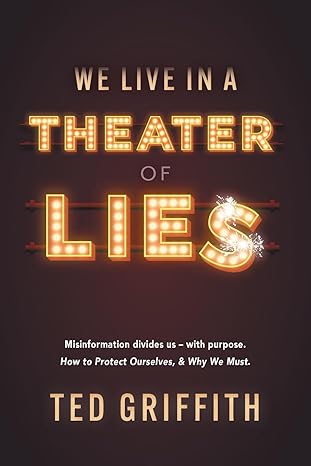

Theater of Lies by Ted Griffith presents a compelling exploration of deception throughout history and its implications for modern society. Griffith skillfully delves into the art and science of persuasion, highlighting the potent weapon of manipulation and how leaders have skillfully camouflaged and employed it throughout history. The book traverses historical episodes, from Napoleon’s media restrictions to Trump’s utilization of social media in his presidential campaign, offering an in-depth look at the strategies used by figures in power.
Griffith’s knack for drawing parallels between historical and contemporary events is evident as he examines topics like monarchy in ancient Egypt and the British royal family. His comparisons seamlessly blend insights from different eras with eloquence and thought-provoking commentary. This stylistic approach engages the reader deeply, encouraging close attention to the narrative’s nuances. The book is more than just an educational read; it’s a pleasure to journey through. Griffith enriches his narrative with a diverse range of quotes from figures like French writer Édouard Louis and Canadian journalist Malcolm Gladwell. He also incorporates research studies and additional references, offering a treasure trove for readers keen on further exploration. The author’s reflective perspectives and well-structured introductions to various sections enhance the reading experience, guiding readers smoothly through the narrative. This book will resonate with readers drawn to thought-provoking literature and those who appreciate a blend of historical, philosophical, psychological, and theatrical discussions. It challenges conventional thinking and offers a perspective that could significantly alter one’s view of the world.
Particularly recommended for individuals passionate about freedom, human rights, and independent thought, Theater of Lies emerges as a crucial read in an era dominated by brief attention spans, overwhelming social media influence, and pervasive propaganda. Ted Griffith has crafted a work that not only informs but also enriches the reader’s understanding of the world.
Pages: 480 | ISBN : 1039192084

Shadows Of The Acropolis
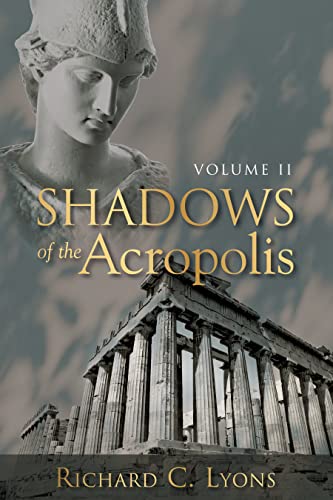

Shadow of the Acropolis, by Richard Lyons, is the second volume of the series “DNA of democracy” and focuses on subjects such as equality, independence, and American history. He focuses on the most important political figures and acts, going from the acropolis to the evolution of society and how our government has failed to sustain liberty ideals. The difference between what should be and what happens in society is quite unsettling, and the aim of the book is to reflect on how things went and how they are going, thinking about what will happen in the future.
Lyons writes in a straightforward way, starting from Greek society and slowly getting to today’s situation. He analyses each society’s characteristics in a trip through the world and through different eras.
As a reader keen on details, I appreciated the presence of the illustrations, which might look funny or cute at first but gain importance as one reads the book. They are all satirical images, and their symbolism grows as the chapters continue. For example, in the author’s opinion, the octopus representing the administrative state might look cute at first but then seems increasingly corrupted and wicked, just like society’s evolution.
Furthermore, the author addresses the reader directly, asking questions and trying to get the latter to stay active while reading. Finally, the use of illustrations helps readers grasp the concepts and splits the book into three parts, focusing on three different aspects.
Shadow of the Acropolis, by Richard Lyons is an eye-opening look at the historical background of what Lyons calls a “hybrid nation,” which will catch most readers’ attention. This book is insightful for those who are keen on history and politics. I would like to end this review with a quote from the author: “- The State seeks to amputate the DNA contained in our history, in our founding ethos and separate us from the heroes who made America a free and independent democracy devoted to the rights of humanity.”
Pages: 441 | ASIN : B0B9V86BHJ

The Forgotten


The Forgotten by Barbara Dorger is a deep dive into one of the most tragic events of modern American History- 9/11. Countless volumes have been written about this awful day, but Dorger has taken a different approach than any other book.
Dorger approaches 9/11 with an often overlooked perspective, that of the aircrews who were serving that fateful day. Dorger was a flight attendant on the day of the attack, and in her book, she gives us a fascinating insight into how it would have been for the crews of the planes that went down that day.
For most of the book, Dorger focuses on the perspective of flight crews and other aviation workers before, during, and after 9/11. However, Dorger isn’t just focused on the attack itself but on the failures within her industry that let it happen. She then highlights the plight of the aviation workers who, through layoffs and downsizing post-9/11, were left out in the cold as their industry struggled to recover.
Later on, in the book Dorger widens her scope. She gives brief but detailed histories of the major intelligence agencies involved in investigating 9/11 and airline security procedures and regulation/ deregulation. In addition, she interviews flight attendants who had served on the flights leading up to 9/11 that had had the future bombers onboard. In these chapters, Dorger paints a troubling picture where their airlines and government counterintelligence ignored front-line flight workers’ concerns.
This is not to say that Dorger’s work is all finger-pointing. She also highlights the heroism and good that came from the day. In addition, she spends time praising other countries’ responses to the tragedy, and the solidarity America received from its allies.
But at its heart, this book is a tribute to the flight crews who lost their lives that day. She highlights how her colleagues, even when they knew they were going to die, kept their cool and stayed professional. Their cool heads helped prevent other hijackings that day. The Forgotten isn’t for everyone. But for anyone wanting to learn more about what happened during 9/11, The Forgotten is worth a read. Dorger’s years of experience in the industry and thorough research shine through.
Pages: 228 | ISBN : 1664183329

Shame Is The Word!

Gorilla In The Closet shares your experiences working in EPA and how the agency has gotten to the point they are at, and what needs to be done to correct the path and restore public confidence in the agency. What was the hardest thing for you to write about?
Reconciling my service as a naval officer and Vietnam Combat Veteran and the rejection I faced by my own generation upon my return to San Francisco Bay in 1969; and, fast forward, reconciling my service as a Presidential Appointee in EPA doing groundbreaking work and being again attacked by my own generation and those in congress who didn’t agree with me resulting in being marginalized. Also, even in 1981-83 my Vietnam Service meant nothing to them. After my forced resignation from EPA, I was completely marginalized by society. I couldn’t get a job. Shame is the word! I had to write this book to put both of these experiences in perspective, knowing in my heart, I had served honorably. I no longer feel shame but on a very personal level, heroic.
What is a common misconception you feel people have about the purpose of the EPA?
People don’t think about EPA at all. It is never discussed at the kitchen table. It is just another bloated federal bureaucracy and EPA has earned this non-reputation owing to its political nature, the structure and revolving door of leadership where there is no continuity or strategic thinking and attitudes of many in federal service. Congress was initially responsible for this state of affairs followed by EPA employees in their hierarchical attitude towards governance. Ergo, top down with limited real forward progress on environmental protection; in having all the answers but not knowing what the question is. In the past 52 years, EPA has retreated from a hopeful perch in our society, a social experiment if you will, to a mundane agency whose reach and effectiveness is limited. It is grossly mismanaged. All this can change and the book does more than leave bread crumbs to follow in how to do this! I offer legislation that is comprehensible.
What do you hope is one thing readers take away from your story?
WE LOSE OUR DEMOCRACY IF WE DON’T HOLD OUR GOVERNMENT INSTITUTIONS AND THEIR LEADERS (LIKE ME AT EPA) ACCOUNTABLE. My profile of EPA, it’s anatomy and detached behavior, is a metaphor for almost all federal governmental agencies. Our future as a society in the face of Climate Change, rests with all of us. EPA plays a vital but limited role; but, less so than your city and county governments where there is real accountability and where they annually balance their budgets. Local politicians know the value of a dollar and they feel strictly accountable to their constituents. I hope my book sparks a focused bottom-up attack on climate change by asking the Environmental Elite to set aside their personal ambitions in the Beltway, and turn inward to their members and mobilize them to implement nationally funded local programs that reduce carbon emissions and better prepare for and manage the worst climatological effects using land use and police powers. Ironically, Reagan was on to something when he said, “Government (meaning the federal government) is the problem”. We can do better and by rebooting of EPA as an independent commission driven by engineering, technological and scientific values and goals, it can become the new NASA on which humankind that inhabits planet earth may depend for its very existence.
Author Website: gorillainthecloset.com

GORILLA IN THE CLOSET
An eye-opening memoir for those interested in government service, politics, academia, environmental history, and environmental engineering.
Eric Eidsness, an environmental engineer and former EPA Assistant Administrator for Water appointed by President Ronald Reagan, diagnoses the EPA’s missteps over the decades leading up to today’s crisis of confidence. He proposes a solution that will reconfigure the EPA into the agency it was meant to be.
America: Standing Strong

Robert J. Emery’s America Standing Strong is a detailed analysis of the latest catastrophes in American politics. Backed up by a plethora of quotes from historical- and present- day visionaries, scholars, and politicians, Emery reviews the political and legal pratfalls of the previous administration while offering brief lessons on America’s accomplishments and shortcomings.
Emery covers such topics as tribalism, conspiracy theories, the environment, gun violence, BLM, the Covid-19 pandemic, and the Russian invasion of Ukraine. He relates many current events back to historical parallels, but the common theme seems to be that the American people have never been on such a precarious precipice of losing their democracy.
America Standing Strong is not a light read, but it is a useful and necessary lesson and provides readers with a worthy and informed reflection on how and why we, the American people, got here. Emery does a great job of laying down a baseline of American history, including failures and accomplishments. The main focus of the book is on how to recover from the damage done by the Trump administration. To his credit, Emery uses polite language, and the message to the American people throughout the book is a plea for togetherness, forgiveness, and reconciliation. This is a worthy undertaking, as the author presents problems with solutions, that will appeal to anyone that is willing to listen without bias.
America Standing Strong is an enlightening and impactful read and presents compelling evidence that has the potential to change political discourse in the U.S. Whether you pick up this book up to get a better understanding of the contemporary issues America faces or because you want to find new solutions to those problems, this is a book that will surely get people talking.
Pages: 228 | ASIN: B0B2KSLN5D
Eternal Vigilance
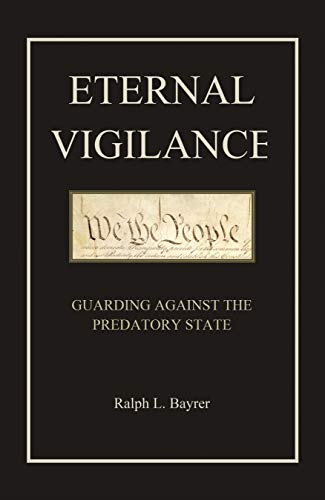
Ralpjh L. Bayrer, in his book Eternal Vigilance: Guarding Against the Predatory State, writes about the status quo, government functions, the economic state of things, and the world as a global village. The reader is taken through various concepts and enlightened on how economics works. The author’s objective is to break down his topics so that the reader will fully understand. Every topic covered in the book is given an overview and then followed by an in-depth discussion.
Ralph L. Bayrer’s encyclopedic writing style is appealing and encourages the reader to dig deeper. For instance, on Cautionary examples of Representative Government, the author uses practical examples to discuss how our actions as humans have led to a financial mess. This chapter will help you as a reader compare the economic policies in your country versus other countries and learn how governments manage their finances. The mention of countries in the Global North versus others in South America and other developing nations gives one an idea of how finances affect every aspect of human life.
The economy is among the top topics vastly covered in the book. Ralph L. Bayrer extensively writes about the generation of economic advancements and how government policies impact the growth of wealth in societies. Reading about economic freedom was enlightening as the reader gets exposed to economies that often lead to healthy debates.
Ralph L. Bayrer writes in a convincing tone, encouraging the reader to see past flaws and dents and getting them to think more seriously about the government’s financial systems, the economy, and the significance of free markets. History lessons are part of this in-depth book. The author has mastered using historical references to make his point while comparing and contrasting various situations and drawing examples before writing the conclusion of a particular topic.
Eternal Vigilance: Guarding Against the Predatory State is an excellent reference book if you want to learn about economic freedom, the role of government, and human cooperation.
Pages: 344 | ASIN : B087TQGG22
Spies of the Deep
![Spies of the Deep: The Untold Truth About the Most Terrifying Incident in Submarine Naval History and How Putin Used The Tragedy To Ignite a New Cold War by [W. Craig Reed]](https://m.media-amazon.com/images/I/51DWcS2dgmL.jpg)
Spies of the Deep is riveting and timely because it has so much to do with today’s political climate and current tensions with Russia. When Valdimir Putin came to power a torpedo sends a Russian submarine to the bottom of the Barents sea. All of this occurs a decade after the cold war. Twenty three people survived but were not rescued and ended up dying after the incident. The Russians refused to get aid from the west. Evidence of collusion with a spy submarine from the United States revealed by Russian naval officers eventually lead to them being fired. This all leads to rising tensions between adversarial governments.
W. Craig Reed reveals a little known naval incident and unveils it with an impressive understanding of the events. There are different facts and opinions that the author bring into light, but the manner with which the information unfolds made me feel like I was listening to a true crime story podcast. The story is told with a sense of intrigue that permeates the entire book. I had to double check to ensure this was indeed a nonfiction book. The story itself is absolutely captivating, but the way in which author W. Craig Reed presents the information makes it feel like we are reading an international espionage novel by Tom Clancy. While international relations between superpowers that don’t trust each other can be complicated, W. Craig Reed ensures that everything is easy to understand and fairly straight forward.
I found the Russians deeply interesting in this book and I appreciated the depth of the authors knowledge on the subject and found myself feeling better educated, not only on this subject, but about Russian and international politics as well. I also found myself terrified by the superiority of Russian and Chinese torpedo technology. While I heartily enjoyed reading this book, and felt that it was well researched overall, I felt that sometimes the book dipped into conspiracy theory territory that, while fascinating, pulled me out of the deep trench of reality the author places readers in.
Spies of the Deep is an enthralling military history book detailing a grim event in naval military history that changed the world. The skill with which the story is told will appeal to any fan of political thrillers or anyone seeking to expand their knowledge on history and politics.
Pages: 273 | ASIN: B088VQJ9DP



