Blog Archives
Agent Bigglesby: Not Dead Yet


Agent Bigglesby: Not Dead Yet, by James P. Rochester Jr. III, is a satirical spy comedy about Herbert Bigglesby, an 84-year-old former superspy who has been officially declared dead, tucked away in a senior living facility, and expected to fade quietly into the background. Herbert, naturally, has other plans. What begins as a comic portrait of a retired agent refusing to accept retirement turns into a wild genre-bending romp involving old enemies, senior scams, family complications, cruise-ship chaos, and one last chance for Herbert to prove he is still useful, even if his body, his colleagues, and common sense keep suggesting otherwise.
What struck me first was how committed the book is to its own absurdity. Rochester writes with a restless comic energy, piling jokes on top of references, misunderstandings, wordplay, and physical mishaps until the story feels almost like a spy movie being performed in a nursing home after someone misplaced the script. Sometimes that works beautifully. The opening scenes at Sunset View are sharp, funny, and oddly vivid, with all the fluorescent lighting, bad smells, institutional blandness, and bruised pride of old age turned into the setting for espionage. I liked that the humor is not gentle. It pokes. It elbows. It’s often ridiculous, but it also has a clear target: the way society files people away once they are no longer convenient.
The author’s biggest choice is also the book’s biggest risk. Herbert is not always easy to like. He’s vain, inappropriate, stubborn, and trapped in an old version of himself that the world has mostly outgrown. Still, I found myself curious about him because the book does not treat aging as a soft-focus lesson in wisdom. It treats it as a collision. Herbert’s mind is full of old missions, old habits, old desires, and old wounds, while the present keeps interrupting him with pills, liability forms, family demands, and people who do not remember why he mattered. That tension gives the comedy more weight than I expected. Beneath the jokes about spycraft and senior living, there is a real question here: what happens to a person when the role that gave them meaning is taken away?
As a work of comic spy satire, Agent Bigglesby: Not Dead Yet will appeal most to readers who enjoy humor, parody, and stories that move fast even when their hero doesn’t. Readers who enjoy messy, loud, self-aware comedy with a surprising amount of heart should have a good time. I would recommend it to fans of spy spoofs, aging antiheroes, and books that are willing to be silly while still asking what dignity, purpose, and usefulness look like near the end of life.
Pages: 310 | ASIN : B0GSPKG78M

Disgruntled Entitlement

Debt centers around two lawyers whose lives are becoming defined by the debt they bear as they face the aftermath and lessons learned following a colleague’s tragic suicide. What was the inspiration for the setup of your story?
The novel is a retelling of Crime and Punishment in the same way The Stranger probably was. The contention being that the moral architecture of the age has started dictating different moral conclusions. The book uses the arcs of murder and prostitution almost allegorically, and I think it was this general theme that drove the plot more than anything else. I saw Park Chan-wook’s No Other Choice a couple months after finishing Debt, and that film sort of corroborated the emergence of this new archetype for me. Someone who transgresses a moral boundary and not only feels no direct remorse but whose life gets immeasurably better as a result, and who suffers no consequences. That’s sort of the meditation here. I’m also a corporate attorney.
The voice is frantic, funny, disgusted, and intensely precise. How did you develop that tone?
I wrote another novel, – -, where the narrator of Debt is the main character. The world of that novel is more straightforwardly absurd, so when Wade is situated in a world that’s ostensibly “normal,” it’s like he’s still suspended in that absurdity. He approaches the world of Debt as if it were its own Invisible City, and I think that’s where the tone comes from. This place is pretty absurd if you think you’re only visiting.
How did you balance empathy for Bill and K with the satire directed at their choices and ambitions?
That’s a good question. It’s very true that Bill and K are representatives of one of the least sympathetic classes in our society, the HENRYs. It’s also true that their situation is almost entirely self-inflicted. What do they have to complain about, really? The book leans into this some. On another level, their problems and their misery are kind of a way of saying that it doesn’t get better for anybody. Like that Malvina Reynolds song, “and there’s doctors, and there’s lawyers and business executives,” but even they can’t get a little box anymore. There’s a disgruntled entitlement and a pessimism that make the book possible. We forget to pray for the HENRYs, and so the HENRYs forget to pray for us.
If readers finish the novel haunted by one thing beyond the satire — the romance, the exhaustion, the fear, or the compromises — what do you hope lingers most?
Debt is a tax imposed by the capital class on the cost of social mobility. If you feel like you’ve been disappointed for so long that you’ve forgotten an alternative, at least you’re not alone. It’s not a hallucination. Things have gotten worse. They are getting worse. There are intractable logics at the core of our systems that we both suffer and enforce. And if you can find a way to fall in love and get married, then you should.
Author Links: GoodReads | X (Twitter) | Website | Barnes & Noble | Amazon

Debt

Wade Parrish’s Debt is a bleak and funny literary novel about Bill and Kaelyn, two overworked New York lawyers whose love is being slowly crushed by student loans, corporate law, family damage, class panic, and the constant arithmetic of survival. The story begins after one of Bill’s colleagues dies by suicide, a death that becomes less an isolated tragedy than a warning flare from the life Bill and K are already living. From there, the novel follows their engagement, their work in the machinery of private equity, their fraying tenderness, and the increasingly grotesque bargains they make to escape the Debt that has come to define them.
I really enjoyed the voice. It’s frantic, hilarious, disgusted, and weirdly exact. Parrish writes corporate language as if it were a parasitic fungus growing over the soul, turning ordinary grief into defined terms and moral collapse into cleanly formatted clauses. I found the book exhausting in all the right ways. It does not merely describe burnout; it reproduces the claustrophobia of it, the way every email, subway platform, family call, and wedding expense becomes another small creditor tapping on the glass.
I also admired how the novel refuses to let Bill and K become simple victims. They are trapped, but they are also vain, cruel, evasive, funny, loving, cowardly, and sometimes monstrous. That complexity gives the book its serrated power. The satire is brutal, but the romance underneath it is not fake. Their love feels like two people clinging to each other in a flooding basement, aware that they may be holding one another under as much as keeping one another alive.
I recommend Debt to readers of dark comedy, corporate and class satire, legal fiction, and psychological drama, especially those drawn to books about ambition, money, burnout, and moral compromise. Readers who enjoy the corrosive social intelligence of Bret Easton Ellis or the workplace despair of Joshua Ferris may find a harsher, more legally intoxicated cousin here. Debt is a love story written in red ink, and every page knows exactly what survival costs.
Pages: 166
Deadly Serious

Deadly Serious by A. J. Thibault is a darkly comic spy thriller about Dan Goodis, an anxious would-be stand-up comic whose ordinary life gets pulled into a dangerous web of Cold War secrets, murder, romance, family history, and strange science. The book moves between 1980s Los Angeles and later consequences, mixing comedy clubs, intelligence operations, anti-gravity intrigue, and personal unraveling into a genre-bending thriller that is part espionage novel, part mystery, and part dark comedy.
This book feels restless in a good way. One minute, I was in a violent, snowy opening that feels almost cinematic, and the next, I was with Dan and his sheepdog in Los Angeles, watching his life veer between awkward humor and real danger. Thibault makes a bold choice by letting comedy and brutality stand close together. Sometimes that contrast is sharp enough to make you wince. Sometimes it works like a pressure valve. The jokes are not just decoration. They are part of how Dan survives, or tries to.
I also found myself thinking about how much of the book is really about fear beneath performance. Dan wants to be funny, but he is also exposed, insecure, and often overwhelmed by forces he barely understands. That gives the spy-thriller machinery a more personal edge. The author’s choices can feel big, strange, and occasionally messy, but the ambition is clear. This isn’t a neat little thriller that follows one clean track. It swerves. It piles on conspiracies, odd characters, romance, violence, and satire until the whole thing starts to feel like a feverish backstage tour of power and paranoia.
I would recommend Deadly Serious most to readers who like thrillers with personality, especially people who enjoy espionage stories that are willing to get weird, funny, and emotionally jagged. Readers who appreciate dark comedy inside a mystery-thriller will likely enjoy its nerve and unpredictability. It’s a book for someone who wants a plot with bite, a little chaos, and a main character who keeps trying to laugh while the world keeps raising the stakes.
Pages: 342 | ASIN : B01I92QGRQ
The Bath Salts Journals, Volume One
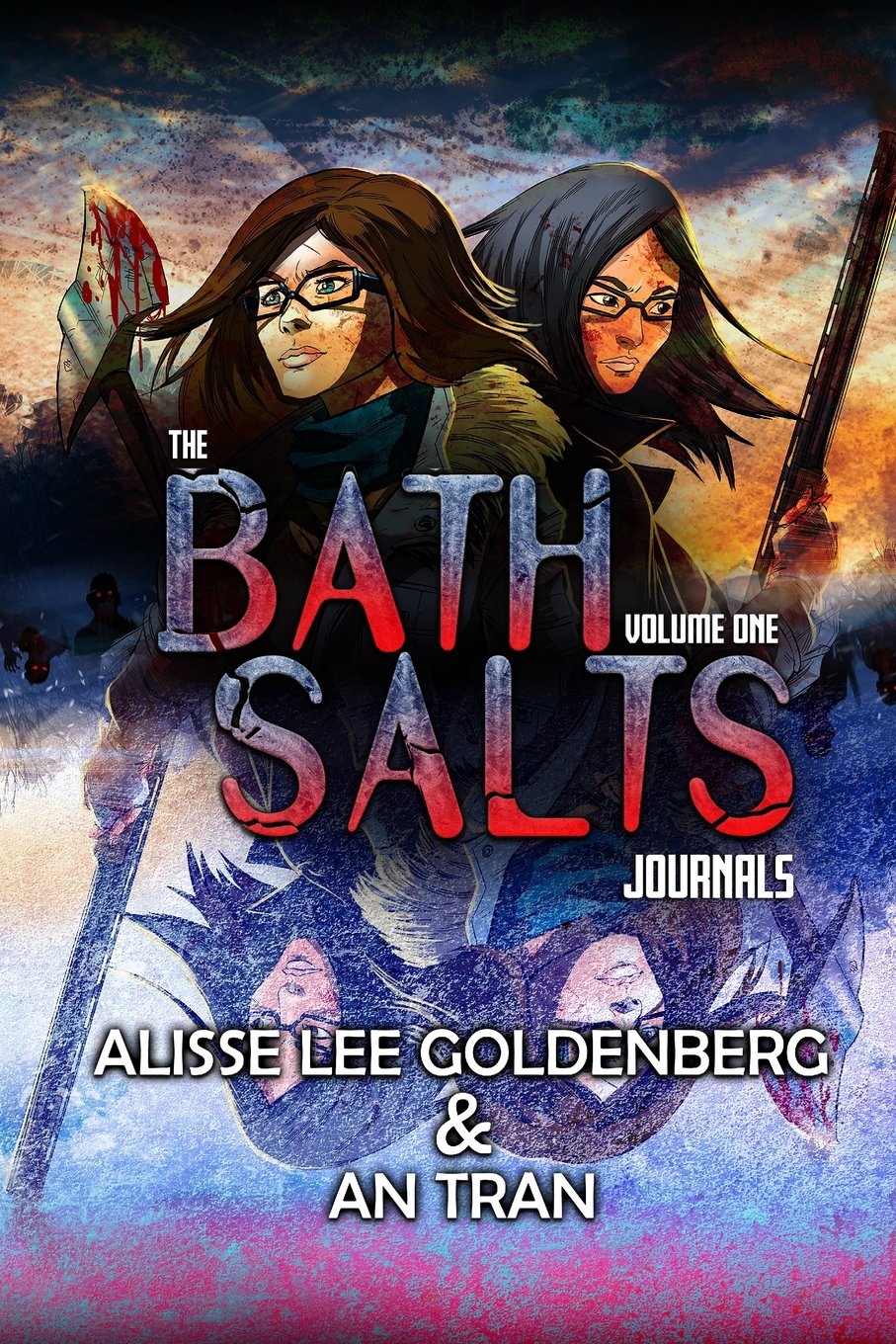
The Bath Salts Journals, Volume One drops readers into a zombie apocalypse through dated entries rather than panoramic spectacle, and that choice gives the book its pulse. Alexis, a Toronto mother of triplets, notices early signs that the so-called “bath salts” attacks are really the beginning of the undead, then drags her skeptical family and a fiercely funny friend, Xuân, into a survival plan that leads north to a fenced compound in Nunavut. What begins as domestic paranoia hardens into a trek through wreckage, then into a rough new life built from hydroponics, fishing, grief, and vigilance. The book’s premise is familiar; its texture is not. It keeps returning the apocalypse to the scale of diapers, canned food, improvised childcare, and whether there will be enough light, warmth, and patience to get through one more day.
What I enjoyed most was the doubleness of the narration. Alexis writes with earnest resolve and maternal terror, while Xuân’s entries slash across the page with profanity, gallows humor, and a kind of anti-sentimental clarity. That contrast keeps the novel from going slack. Alexis can verge on idealized competence, but the book is sharper when it lets exhaustion, pettiness, boredom, and small comforts sit beside the horror. I believed this world most when the characters were arguing over what to pack, improvising meals, hauling children through danger, or trying to preserve scraps of normal life with movies, karaoke, and make-do celebrations. The apocalypse here is not sleek; it’s cramped, messy, and often absurd, which makes it feel oddly convincing.
I also appreciated that the novel is less interested in zombie mythology than in endurance and social reassembly. Even after the gore and flight, the story keeps asking what survival is for. The answer is not heroics alone, but routine, community, and the stubborn decision to remain human. The prose is sometimes blunt, and the emotional beats land a little squarely, yet the journal format forgives some of that by making immediacy more important than polish. I came away feeling that the book’s real engine is not fear but tenacity. It has an unvarnished, handmade quality that suits the material: less a polished studio production than a barricade built overnight that somehow holds.
I’d hand The Bath Salts Journals to readers who enjoy zombie horror, survival fiction, post-apocalyptic fiction, diary novels, and character-driven speculative fiction, especially those who want domestic detail and dark comedy mixed into the bloodshed. It reminded me less of World War Z’s global architecture than of The Walking Dead filtered through a colder, more intimate, more homespun lens, with a streak of irreverence that feels closer to Mira Grant at her loosest. This is a good fit for readers who like their end-of-the-world stories scrappy, human, and a little feral. The end of the world is still, maddeningly, a matter of keeping the house together.
Pages: 216 | ISBN : 978-1945502521
Where The Winds Blow

Where The Winds Blow blends political satire, global intrigue, and adrenaline-soaked storm chasing into a single, fast-moving narrative. The book follows the rise of Path Finder, a grassroots movement born from grief and idealism, while powerful governments, criminal networks, and ordinary people collide around it. At the same time, the story weaves in a parallel thread of storm chasers barreling across Texas, where tempests both real and emotional hit with little warning. The plot swings from Irish funerals to boathouse diplomacy to desert border tensions, always nudged forward by colorful characters who often stumble into history by accident.
Reading it, I found myself laughing at moments I didn’t expect to laugh at and bracing during scenes that came out of nowhere, like the chaotic barbecue rescue early on or the tense debates inside the gilded halls of Peace Castle. The writing has a kind of cheeky confidence. The author slips from humor to sincerity in seconds, and somehow it works. I liked how the “science guides” at the castle go from bickering like rivals to forming a unified plan after being nudged by drinks, blunt truth, and a locked door. Those small human quirks make the big themes feel grounded. And the storm chasing chapters surprised me. The imagery of dirt clouds swallowing the vans and lightning cracking overhead felt alive. Moments like Simon dragging a stubborn tourist away from his dramatic self-sacrifice scene stuck with me because they were messy and relatable and oddly sweet.
The book plays with many threads. I enjoyed each storyline on its own, but sometimes the pace jumped so fast that I had to remind myself where we were and who was scheming or storm chasing or hiding from cartel lookouts. The Path Finder political satire is sharp and funny, especially scenes in Washington where we watch powerful people try to bend the movement to their will. The storm chasing plot, though, has this raw emotional pulse that could carry a book by itself. When the two worlds finally echo each other thematically, it lands.
I closed the book feeling satisfied. Where The Winds Blow is a good pick for readers who like stories with heart and humor mixed into real-world chaos, who enjoy political send-ups, or who don’t mind a chase through a thunderstorm or a bureaucratic maze. It’s lively. It’s warm. It’s playful. And it’s perfect for anyone who wants a story that reminds them that even the biggest changes in the world often start with a handful of imperfect people trying to do the right thing.
Pages: 313 | ASIN : B0G1KKJLYR

Potential to Grow and Change

Afterward follows a woman who finds her boyfriend unconscious in their apartment and is thrust into an emotional maze, forcing her to question love, responsibility, and belonging. What was the inspiration for the setup of your story?
Unfortunately, the story, or something like it, is something you hear more often than one would hope. I heard a version of it had happened to an acquaintance of mine in school (many years ago, and it had happened years before I met her), and it was just something I couldn’t get out of my head. I thought the normal things, such as how bad I felt for what she and the rest of the people affected must have gone through. But then my mind kind of wandered with new questions–about how one becomes equipped to deal with things like that, and what if you weren’t? How would that go? It was really in the course of thinking about those tangential questions that I came up with the story.
Are there any emotions or memories from your own life that you put into your character’s life?
Lauren as a character really didn’t inherit anything from me, but in the course of writing this, I did break my leg and end up in the hospital. I remember being tired and hurt in the ER, and hearing the staff talk about a bad date one of them had had. I remember thinking it was such an odd thing to overhear such an everyday conversation during a day that was so unusual for me. But of course, this was their every day, it wasn’t odd for them, and they should be able to talk with coworkers like anyone else. It just stood out to me in that experience, so I included that moment in the book.
What themes were important for you to explore in this book?
Understanding was a big one. I really don’t even like Lauren in the beginning, but it’s easy to be critical, right? My hope was that by the end, the reader would find a little empathy for a flawed person in a truly horrible situation that wasn’t doing a great job with it. And, I guess, hope for the potential to grow and change. But there are other issues in there that different readers have picked up on as being big to them–friendship/bullying, race, alcohol, insecurity, mental health–and I’m glad different people are finding issues that mean a lot to them, and I hope I handled them okay.
What next book are you working on, and when will it be available?
Actually, I’m very excited to say I am sending my newest book to my publisher tomorrow. It is about a young man whose life events put him in the position to pursue his dream of living in a cabin in Alaska, and what that reality looks like. And I know what that reality is because I spent a lot of time growing up at my family’s homestead, which was not only “off the grid,” but also off the road system. It’s a love letter to, and a cautionary tale about, Alaska.
Author Links: GoodReads | BlueSky | Website | Amazon
Torn from her normal routines—coffee, sex, barhopping, and disc golf—she finds herself in an unfamiliar world of hospital visits and doctor’s appointments, all while navigating an unexpected move to a new apartment and enduring the disapproval of her boyfriend’s mother, as well as the gossip of her friends and coworkers. (Plus the suspicious looks of strangers, and the unbearable strain on her credit card…and did we mention the gossip of her friends and coworkers?) Along the way, she meets every obstacle with…well, not grace, exactly. In fact, pretty much the opposite of grace. Maybe more like bitchiness, truth be told. And all the while, the aftereffects of the tragedy cast a pall over everything she does—and threaten to destroy everything she has.
Bristol Vaudrin’s fascinating debut novel is an engrossing and darkly comedic read with an unforgettable narrator/protagonist. Watching her struggles—real, imagined, and in-between—we too must choose between kindness and judgment, between condescension towards someone who simply doesn’t have a clue, and empathy with a person struggling to deal with something we all must face: the desire to hold on to the things we enjoy when the world around us changes in ways we didn’t expect.
There’s Humor Within the Pain

Buffer Zone follows a hapless food service worker enduring the daily grind in a demeaming position. Where did the idea for this book come from?
This book is largely autobiographical. I’ve spent 20 years working in the food service industry, mostly as a waiter. I wanted to incorporate those experiences into this book because as difficult as customer service can be, there’s humor within the pain. In many ways humor is the way I process pain. I believe humor helps us cope with the hardships of life.
Are there any emotions or memories from your own life that you put into your main character’s life?
The concept for this book really started in 2008 when I had an experience in a cafe that I describe in chapter 1. A woman was sitting next to me and getting a little too invasive of my personal space. I had a flashback memory of when I was a kid and I used to build a wall of cereal boxes around me when I ate breakfast. This prompted the first 12 page black & white comic, which later became chapter 1. A couple of years later I created issue 2 about people on the bus, which became chapter 2. A year or so later I released issue 3 about how I wanted to be a ninja as a kid, which became chapter 3. The original title for this comic series was, “White Male Neurosis”, poking fun at the stereotype of the neurotic white guy. Around 2015 I had the idea to combine the stories into a larger book and transform the issues into chapters. I changed the title to “Buffer Zone” because I feel it represents more of the overall theme and tone of the book.
What draws you to the graphic novel genre and makes it ripe for you to write such a great dark comedy in it?
I’ve always enjoyed comic books and graphic novels. I was drawn to the idea that I could tell a story visually any way I choose. There are standards and norms, but really you can frame, compose and pace a story any way you want. The first version of “Buffer Zone” was more like a picture book, but I wanted it to have more movement and action, so I kept revising. I also do stand up comedy occasionally and I used this book as a vehicle for illustrating my stand up material instead of performing it.
Can we look forward to more work from you soon? What are you currently working on?
I’ve been creating a series of surreal digital paintings for an art exhibition, and I’m currently working on a prequel story to “A Nightmare On Elm St” which I’ve titled “Springwood 1972” about Freddy Krueger living a double life as a serial killer and mild mannered member of the community. This story is a thriller about a town in disarray, a cop in pursuit, and a killer with an insatiable lust. You can view the cover and pages 1-6 on my patreon. This is fan fiction. I have not been commissioned and I don’t have any legal permission to use the characters from these movies, so I’m not sure if I’ll be able to publish it. However, I’d love to. I’ve always been a horror fan, and after spending so much time on a project so personal it is refreshing to create something totally fictional and separate from my life story.
Author Links: Goodreads | Instagram | Facebaook | Patreon | Website
Told through colorful pen & ink illustrations and narrated through the protagonist’s thoughts and memories, “Buffer Zone” is a hilarious journey inside the mind of a waiter on the verge of a breakthrough or a breakdown. This 130 page graphic memoir is a character study of social anxiety, a darkly comical look at food service and an examination of growing up in Midwest America in the 80’s and 90’s.


