Blog Archives
Confessions of a Female Dominant


Confessions of a Female Dominant follows Anastasia, Mistress Ana, a Soviet-born single mother in Sweden whose life is split between corporate polish, meticulous parenting, and the uncompromising world of BDSM. The novel traces her independence from childhood, her migration to Sweden, her life as a mother, and her intense entanglements with men such as Gabriel and Sven, turning what might have been a straightforward erotic confession into a story about control, loneliness, grief, class, desire, and the ache of being truly seen.
I found the book most compelling when it refused to flatter its narrator. Ana is funny, exacting, ruthless, tender, vain, exhausted, and sometimes startlingly self-aware. She can discuss laundry rooms, Swedish parental leave, kink etiquette, and heartbreak with the same unsentimental precision. That tonal collision gives the book its charge: domestic realism keeps walking into erotic extremity, and neither side is treated as a costume. The title promises provocation, but the deeper drama is not shock; it’s the narrator’s hunger for recognition beneath all her competence.
Ana may be a dominant, but the emotional weather often belongs to the people who withhold, disappear, need, or fail to understand her. The prose is sometimes blunt, but that roughness suits a narrator who thinks in schedules, appetites, wounds, and verdicts. I admired the moments when the book lets grief and absurdity sit side by side: a kink bag beside school routines, erotic command beside bodily fatigue, a woman performing strength while quietly begging not to vanish inside her own usefulness.
The target audience is mature readers drawn to erotic fiction, BDSM fiction, psychological fiction, women’s fiction, and unconventional romance. Readers of Fifty Shades of Grey may recognize the BDSM framework, but this book feels closer in spirit to the emotional candor of Melissa Broder or the severe self-examination of Catherine Millet than to glossy fantasy. Confessions of a Female Dominant is raw, idiosyncratic, and unexpectedly domestic. A book about a mistress who discovers that control is easier to command than tenderness. It’s not a story about domination so much as a story about the terror of being known.
Pages: 276 | ASIN : B0GS96HLFD

He will never know who I am.

Olympus or Oblivion tells the story of fictional sexual encounters with fifteen different Hollywood icons. What was the inspiration for the setup of your story?
Like most people, I have favourite movie stars. One actor in particular, Clancy Brown, has lived rent-free in my head for forty years. I realised one day that my limerence for him (although compelling and chemically indistinguishable from love) was essentially the adoration of a stranger. He will never know who I am.
That led me to think more deeply about the one-sided relationships we build with these people. Why do we place them on pedestals? Do they really deserve a status approaching demigods?
I wanted to place them into ridiculously implausible but very human situations – not to expose them, but to expose us. And, if I’m honest, writing about me getting jiggy with a selection of A-list movie stars was also a gloriously stupid comedic premise and an escape from the mundane.
I wanted readers to laugh, wince, and occasionally stop and think. It would be disingenuous to ignore that there’s erotica in there as well, which may… entertain. Ultimately, it had to feel like the inside of my own head splattered onto the keyboard. The icons get an affectionate roasting by me and my judgmental, sentient house fern, Della. I take their godhood, and their clothes, stripping them down to what matters – their character.
Get your minds out of the gutter. That’s my territory.
We live in a world that moves quickly and often skims the surface of what’s real and meaningful underneath. We celebrate fame as though it were the highest achievement, while quietly overlooking those who make a tangible difference – surgeons, scientists, people who change lives in ways that don’t trend on social media.
What do you find to be the most challenging aspect of writing satire? The most rewarding?
To have a broad appeal yet remain 100% true to myself. That’s it. I’ve no intellectual answer to that. I am largely unfiltered, so my challenges are few.
But that’s also the reward. The inside of my head is a delicious, chaotic, entertaining mess. Readers should relax and enjoy the ride. Lean into the cringe and try not to snigger on the train.
The power of my comedy lies in discomfort; the horror of the cringe, sharp snarking, and weaponised sarcasm. I don’t have much interest in formula or convention. Creative writing, to me, should actually feel creative. Writing courses, degrees, process…nah. Not for me. Watch as I open my flip-top head and let the crazy out for a walk.
If it ever ends up in a library, I quite like the idea of someone having a mild crisis about which shelf it belongs on.
What were some themes that were important for you to explore in this book?
That fame does not equal legacy.
Striving to be known is deeply human – we all like to think we’ll be remembered. But fame without substance collapses under its own weight. Legacy, on the other hand, is built quietly, through actions and impact, whether people are watching or not.
The people who leave the deepest mark are often not the ones chasing recognition, but the ones who earn it without asking.
Can we look forward to seeing more work from you soon? What are you currently working on?
You surely will.
I’m currently working on another comedy – Olympus or Urbana. It’s a sequel, of sorts. Kind of. It’s a mythological whodunnit with romantic elements, swearing, and multiple story arcs, set across Olympus and its surrounding realms.
There are two co-protagonists, Vox and Hera Minor, both mortals, tasked by Zeus with solving a mystery – helped and hindered in equal measure by a cast of interfering gods. It features riddles, Latin dialogue (with translation), exotic creatures, strange places, and more than a few familiar faces in unexpected roles.
There’s a realm built entirely for hedonism, a god desperate for more adoration than he currently receives, arguments about shades of green, endless feasting, lizard-wrestling, swearing lessons, and Henry Cavill boring everyone to death as Olympus shakes to the collective roar of, “Shut up, Cavill!”
Now, if you don’t mind, I’m off to take my imagination for a long walk along the banks of the Acheron.
Author Links: GoodReads | Facebook
Part satirical memoir, part erotic odyssey, part divine smackdown—it asks one burning question: If you could sleep with fifteen of the world’s most iconic men, would you risk it all to see who truly deserves godhood?
From Henry Cavill’s heroic inability to navigate basic female anatomy, to Josh Holloway’s hypnotic Route to Ruin; from Chris Pine’s tragic squeaking to Clancy Brown’s gaze hot enough to fuse steel; from Hugh Jackman’s oceanic allure and suspicious interest in tropical fish, to Tom Cruise’s relentless habit of stealing everything that isn’t nailed down—each trial is a riot of emotional chaos, sexual physics, and the occasional pigeon.
Some men rise to Olympus.
Some fall into Oblivion.
All are judged.
Set in the Scottish Central Belt and narrated by a mortal woman with a snark cannon and zero tolerance for mediocrity, this is a filthy, funny, and fiercely honest celebration of desire. Forget perfect abs—these are complex, broken, brilliant men facing one final test. And they’d better pass.
Yes, there’s sex—scorching, poetic, absurd, occasionally athletic enough to dislocate something—but beneath the thrusting runs a deep vein of honesty. It’s about longing, disappointment, body image, female desire, and being seen after a lifetime of invisibility.
Featuring:
15 celebrity “gods” in entirely fictionalised encounters
A judgmental houseplant named Asphodela
Hysterical Latin names for every trialist
Obscene metaphors unfit for church
No male gaze—just squinting female scrutiny
Full-frontal mythology with a chance of redemption
This is not fanfiction.
This is not romance.
This is Olympus or Oblivion.
And the gods are on trial.
Ever After: Book One


Ever After: Book One by Jonathan J. Howard is an erotic romantic drama and the first book in the “Veils and Vices” saga. The novel follows Amanda Reese, a therapist and bride-to-be, as she moves toward her wedding while still emotionally tangled with Evander, the man from her past who never fully left her system. Her fiancé Derrick represents stability and the future she says she wants, but the book keeps pulling her back into old desire, unfinished hurt, family pressure, faith, temptation, and the messy question of whether marriage can save someone from parts of themselves they have not faced yet.
What stood out to me first was how intense and direct the writing is. Howard doesn’t tiptoe around Amanda’s wants, memories, or contradictions. This is a sensual book, and it knows that. The erotic scenes are not just decoration, though some are very explicit and may be too much for readers who prefer romance with a lighter touch. They are tied to Amanda’s emotional life, especially her need to be chosen, desired, and reassured. I appreciated that the book lets her be complicated without asking me to fully approve of her. She is smart, successful, spiritual, messy, selfish, wounded, and sometimes shockingly reckless. That mix made her feel frustrating in a relatable way.
Church counseling sits beside sexual temptation. Professional therapy sits beside Amanda’s own lack of self-control. A wedding, which should feel like a clean beginning, becomes almost like a pressure cooker. That worked for me because the book’s genre thrives on heat, secrets, and emotional risk, but it also made me wish some moments had a little more quiet space to breathe. The drama stacks up fast, but there’s something honest in the chaos. The book seems curious about how people can know the right language for healing and still choose the thing that hurts them.
I would recommend Ever After: Book One to readers who enjoy adult romantic drama with erotic content, messy relationship dynamics, faith-adjacent tension, and characters who make questionable choices for very understandable reasons. Readers who like emotionally charged, sensual fiction about desire, commitment, and unfinished pasts will probably find a lot to sink into here.
Pages: 243 | ASIN: B0FD8J5CPL

A Love Letter

Ancilla centers around a bisexual woman in the 80s and 90s in Ohio as she finds herself unraveling her own Catholic upbringing when she enters into a relationship with a magus who becomes her mentor, dom, and soulmate. What was the inspiration for the setup of your story?
I took my inspiration from a number of different sources.
Some of it came from my own memories of growing up. I, too, was raised in Ohio, at roughly the same time my protagonist grew up. People have asked me just how autobiographical the book is, to which I would have to say, not much, except for the protagonist’s sexual orientation (I, too, am bi/pan and kinked – more on this later) and the book’s setting.
Putting the story in the time I remembered, in places where I had lived, allowed me to do my background descriptions more or less on autopilot so that I could focus on other things. I didn’t want to think too hard about whether or not I was describing a college campus, or downtown library, or city park accurately. It felt like a distraction. I wanted to use familiar material when writing. I prefer to pour my energy into other things: word choice, sentence structure, philosophy, foreshadowing, character development, and style.
Some of it came from a desire to fill a void – to fill multiple voids, actually. Bisexual people, for instance, are rare in literature. They’re rare in general. When we are portrayed, it’s usually in a villainous context (we’re depraved! Remember Basic Instinct?) or a pitiable one (just Google “hot mess bisexual” and “disaster bisexual” and see what you get – it’s an unfortunate trope). When we manage to be the main characters rather than just side characters, we’re still usually villains or “messy.” Or we’re hypersexualized! The bisexual literature category, commercially, is well-stocked with smut. This is not necessarily a bad thing if you are looking for validation or for one-handed reading material, but I think we deserve something serious, as well.
So I wrote something that was sort of like The Bell Jar, only its protagonist is a young bisexual woman. (Also, it takes the historical figures of Heloise and Abelard as its inspiration, and the main characters are vampires who can bend elements when adequately fed or otherwise sufficiently powered, because magical realism. I assume my readers are bright enough to figure that one out for themselves).
I worked in depictions of BDSM that centered informed, enthusiastic consent, because there’s a lot of material out there that romanticizes captivity, “dubious consent” with or without “betraying body syndrome” (news flash: “blurred lines” are just rape), and other abusive dynamics, and that’s not what BDSM is all about. Let’s have some good representation.
And I created characters who were different from what might be otherwise expected in more mainstream love stories. How often have you encountered a story about a couple of academic nerd types falling head over heels in love with each other, despite what was originally meant to be a purely tutorial relationship? And how often have those nerds been obviously neurodivergent? Although I don’t say so explicitly (there’s not a lot I say explicitly in Ancilla, ironically enough for a novel that is explicit enough when it comes to matters of sexuality) I coded “ancilla” and “Magister” as autistic. I am on the spectrum, so this is another way in which Ancilla is own-voice literature written for a demographic that, at least from what I have seen, seldom gets good representation. The autistic characters I’ve seen in books are often caricatures, or at least, our autism is treated as our entire personality, rather than as just part of what makes us who we are and ought to be taken for granted as such. Normalized.
I especially thought about breaking convention when crafting “Magister,” because I wanted to create a male character who didn’t fit at all into the “man box,” but who was nevertheless unquestionably masculine. Whereas most men in romance novels are alphas, even when they aren’t alphaholes, “Magister” is shy and reserved, and he is more than content to let other people take the lead when BDSM is not involved. He’s not a billionaire CEO or sports figure or firefighter or cowboy or spy or in some other hyper-masculinized, unrealistically romanticized line of work – he’s a librarian. He’s middle class, and that only barely. Hobbies? He cooks and bakes, listens to opera, reads, and plays tabletop role-playing games. Is he “ripped?” No, he’s actually rather slender, and his muscles are not prominent (although he is strong enough to carry “ancilla” in his arms without struggling – let the readers assume what they like about whether or not vampiric power factored into that one). He’s comfortable with showing his feelings and being vulnerable, too, although introvert that he is, he’s usually rather subtle about it… He is masculine, though. Very obviously. You wouldn’t have accused people like Bob Ross and Fred Rogers of not being men just because they didn’t fit into the prescribed masculine mold when they were alive, and I don’t think anybody could accuse “Magister” of not being a man, either. He is a wrecking ball to toxic masculinity.
I put these people into a setting I knew, and knew intimately, so that I could focus on them rather than on the setting. I wanted them to shine.
On another level, Ancilla is a love letter. The people I wrote it for know who they are. They might not see themselves in the characters – in fact, I sincerely hope they don’t, because my characters are distinct people in their own right, and were never meant to be based closely on anybody in particular, even in instances where I ransacked my memories, took things out of context that I thought would read well if fictionalized, and embroidered like mad – but they know who they are.
One of them was my first beta reader. She lost internet access soon after I completed the rough draft and sent her the final chapter in its raw form, and I hope she finds the final product on Amazon or in a library somewhere, reads it, and approves of it. And if she ever sees this interview, I hope she reads far enough to see that I say I miss her.
What drew you to frame your narrative in this particular setting?
Why northeast Ohio in the early 1990s, of all times?
Partly because, again, I wanted to rely on memory for descriptions of the setting. Nearly all the places described in the book are real, whether I’m describing a mansion in Cincinnati within walking distance of a posh private school, a small college on the edge of northeast Ohio’s Amish country, Severance Hall, or the neighborhoods and metroparks of Akron and Cleveland. The only made-up place in the entire book is “Magister’s” apartment, which I nevertheless set at the end of a real street. I didn’t want to interrupt my creative processes by researching locales. I just wanted to write my story and let the setting more or less take care of itself. I trusted my memory when thinking about how to describe places.
I also decided on northeast Ohio because it was generic. A colourful setting – say, Manhattan – would have become almost a character in itself. I wanted a setting that felt real, but not one that would steal the focus from my characters and from the book’s esoteric themes.
If I’d set the story too early, it would have been historical fiction, which would have required extra research. If I’d set it later, it would eventually become science fiction, because this is going to be part of a trilogy, and the third book covers “ancilla’s” later years. She’s writing her memoirs, and at the time of her writing, she’s either a centenarian or a late nonagenarian. That’s still going to put the final chapters of the last book in the future, but not very far. I don’t want the focus to pivot to science fiction scenarios… So the time is set where it is.
The eighties and nineties were not a good time to be queer in any way, unless you were maybe living in a haven like San Francisco. While I didn’t want to make that hostility to sexual divergence the most central part of the plot, it is nevertheless part of the background. It was all too common for kids to get disowned by their parents after coming out, or to be packed off to “deprogramming.” Coming out was terrifying if you lived in a conservative part of the country, which was most of the country at the time.
It was also difficult to be kinked back then. There wasn’t much support for it unless, again, you had the good fortune to live in a large city where there was an active subculture. Today, “ancilla” and “Magister” could have booked sessions with a kink-friendly, polyamory-friendly couples counselor to work on the challenges they faced (okay, that I set up for them). That option did not exist for them in their time and place.
The chapters are structured around the Tree of Life and its sephiroth, turning the novel into a kind of spiritual ladder. Why did you decide to organize the book this way?
It came to me.
It demanded to be written that way.
I still don’t know if I was up to the task that seemed to have been set before me. Only time will tell.
What do you hope readers ultimately take away from your protagonist’s journey through belief, identity, and desire?
Enlightenment.
Failing that, I hope I created something so beautiful that it felt like a dream, and so immersive that it felt like a pleasant form of drowning.
And for the readers on the margins of our heteronormative, neurotypical society, I hope they see themselves represented and know that they are not alone, and that they are valid.
We exist. We have a right to exist. We have a right to be visible.
Author Links: Reedsy Discovery | BookBub | GoodReads | Bluesky | Facebook | Instagram | Pinterest | YouTube | Website | Amazon
Things Are Going to Happen

Husband Wants Hotwife follows a happily married woman who tests the strength of her marriage when she explores the eroticism of the “hotwife” world. Where did the idea for this book come from?
The idea came from the first paragraphs. As soon as those words “I told him I couldn’t do it” stuck in my head, the remainder of the book fell into place.
Emma’s voice is very conversational, and the pacing moves quickly from one major scene to the next. How did you shape her narrative voice and rhythm to keep readers engaged?
How to explain this? When I’m writing, it’s as though the characters have taken over and I’m merely recording their stories. In Emma’s case, it’s clear from the first page that her hormones have taken over. She’s eager and open to sex, and as a good-looking woman with a kinky husband, things are going to happen.
Consent and communication are central to the story, especially in high-intensity situations — what real-world influences shaped how you portrayed the dynamics in Chris and Emma’s relationship?
Communication is key to any successful marriage, but it’s absolutely essential in a hotwife union where the possibilities of jealousy and misunderstandings are so close to the surface.
Can we look forward to more books from you soon? What are you currently working on?
I just released Creating a Cuckold, and I’m working on a new novella that will take a unique track. Below is the blurb for Creating a Cuckold: Even though it scared him, Brad wanted his beautiful wife, Isabella, to cheat on him. He planned always to leave her unfulfilled, then to introduce her to his friend Mike as a test. He knew Mike had a way with women, but Brad wasn’t ready for the hold Mike soon had on Isabella. It wasn’t long before he discovered that his wife was being shared at work, and that she was a size queen.
Author Links: GoodReads | Amazon
~~~~~ PG Excerpt ~~~~~
We could hear them going at it upstairs as I made fresh coffee for us in the kitchen. My body was humming like a cord stretched tight for too long. I’d put on a long housedress, but my husband Chris was sitting naked at the table.
“We need to talk,” he said.
I turned to look at him, thinking, “Oh, no.”
“How do you feel about all the things we’ve done today?” He started.
My thoughts went from “Oh, no” to “No way!” I saw nothing good coming from this conversation.
“I don’t know,” I said while attempting to look busy. “How do you feel about it?”
What a chickenshit I was. I was happy to be wearing the old housedress, which covered everything but my head, feet, and hands. It felt like a layer of flimsy armour.
“Did it turn you on?” Chris asked.
What a stupid question! I was still wet down there, and I could feel my lady parts vibrating. So, what did I say?
“Yeah, kinda. What about you?” I needn’t have asked. Chris was sporting a magnificent boner.
“I got excited watching you with her, and now I’m wondering if the same thing would happen if I watched you with another guy.” Chris was so upfront about it that he just blew me away with his honesty.
“How would you feel about watching me with another woman?” There it was, Chris had asked the magic question, the question I suspected was the real reason for his eagerness to share me. He wanted to get himself some strange.
“Nope,” I said. “That’s not happening. You’re mine, exclusively.”
I was happy to see Chris smiling. Happy, but confused. “Why are you smiling?” I asked.
“It’s what I hoped you would say. I don’t want another woman. I just want to share you and enjoy the pleasure it gives me.”
The next day, Chris asked a question that surprised me, and that’s not easy for him to do. I pride myself on being able to anticipate him. I believe all wives in successful marriages possess this skill or something similar. After a while together, you can anticipate where your significant other is usually going. But not this time.
“What would you think of us joining a sex club?”
Ancilla: Master, Teach Me
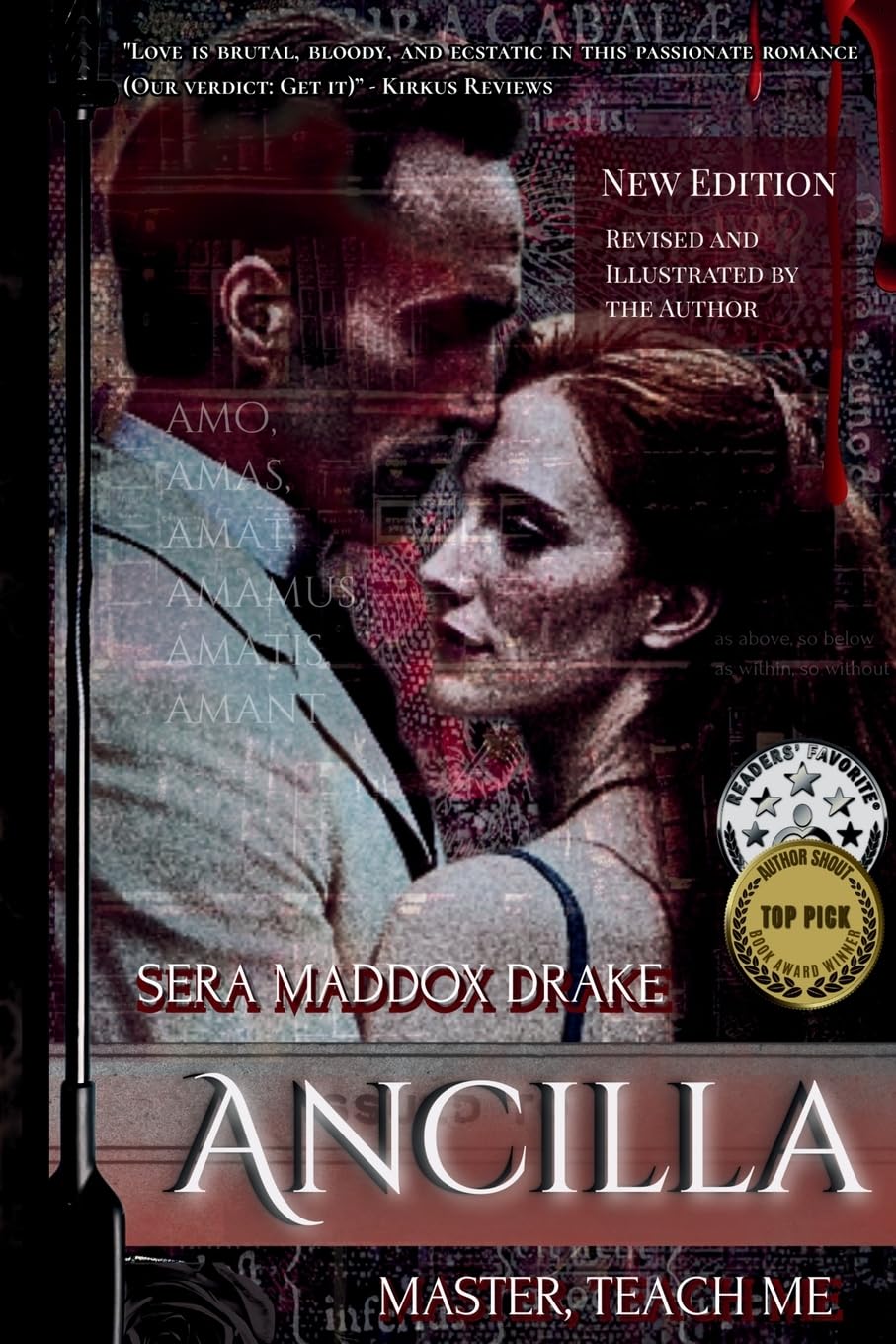
Sera Maddox Drake’s Ancilla: Master, Teach Me is an occult, sexually explicit BDSM romance that tracks a bisexual woman in late-80s to mid-90s Rust Belt Ohio as she unravels a strict sedevacantist Catholic upbringing and stumbles into a relationship with a charismatic magus who becomes her mentor, dom, and soulmate. The story is built around Western esotericism (Thelema and Golden Dawn style Kabbalah), and the chapters are explicitly organized around the Tree of Life sephiroth, with each section acting like a rung on a ladder of transformation rather than “just” a new plot beat. Along the way, the book leans into edge play and on-page sex, plus harder emotional material like food insecurity, chronic pain, vampiric starvation that mirrors depression, and moments where the protagonist gets close to the cliff of suicidal thinking.
What landed for me first was the author’s directness about what the book is and what it is not. The content warnings are frank in a way that feels almost like Drake is taking you aside before you enter the room, making eye contact, and saying, “This gets intense.” That honesty gave me trust, especially because the erotic material isn’t treated as a naughty bonus but as part of the protagonist’s learning curve. Sex here is not a fade-to-black reward. It’s language. It’s ritual. It’s also messy, risky, and sometimes emotionally heavy, which fits the “mentor/dom/soulmate” setup the author spells out early in the narrative.
I also kept thinking about the author’s choice to foreground the moral complications of the spiritual framework itself. Drake doesn’t pretend Western esotericism is clean or culturally neutral, and she names the colonial “cafeteria” dynamic head-on, including the way the characters “loot and pillage” ideas from oppressed cultures. That doesn’t magically resolve the tension, but it does change the feel. Instead of the book asking me to admire the system, it asks me to watch people reach for meaning through a flawed system, sometimes sincerely, sometimes blindly. The Tree-of-Life chapter structure reinforces that. It’s as if the author is saying: growth can be real even when the tools are imperfect.
By the end, I felt like Ancilla is best approached as dark, reflective erotic romance with occult and paranormal undertones, not as a tidy love story or a neutral “intro to magic.” If you like intimacy that’s explicit and psychologically charged, and you’re also curious about spirituality, power exchange, and the way belief can reshape a person for better and worse, you’ll more than appreciate this story.
Pages: 440 | ASIN : B0GLLRBK55
Communication is Key

Husband Wants Hotwife follows a happily married woman who tests the strength of her marriage when she explores the eroticism of the “hotwife” world. Where did the idea for this book come from?
The idea came from the first paragraphs. As soon as those words “I told him I couldn’t do it” stuck in my head, the remainder of the book fell into place.
Emma’s voice is very conversational, and the pacing moves quickly from one major scene to the next. How did you shape her narrative voice and rhythm to keep readers engaged?
How to explain this? When I’m writing, it’s as though the characters have taken over and I’m merely recording their stories. In Emma’s case, it’s clear from the first page that her hormones have taken over. She’s eager and open to sex, and as a good-looking woman with a kinky husband, things are going to happen.
Consent and communication are central to the story, especially in high-intensity situations — what real-world influences shaped how you portrayed the dynamics in Chris and Emma’s relationship?
Communication is key to any successful marriage, but it’s absolutely essential in a hotwife union where the possibilities of jealousy and misunderstandings are so close to the surface.
Can we look forward to more books from you soon? What are you currently working on?
I just released Creating a Cuckold, and I’m working on a new novella that will take a unique track. Below is the blurb for Creating a Cuckold:
Even though it scared him, Brad wanted his beautiful wife, Isabella, to cheat on him. He planned always to leave her unfulfilled, then to introduce her to his friend Mike as a test. He knew Mike had a way with women, but Brad wasn’t ready for the hold Mike soon had on Isabella. It wasn’t long before he discovered that his wife was being shared at work, and that she was a size queen.
Author Links: GoodReads | Amazon

~~~~~ PG Excerpt ~~~~~
We could hear them going at it upstairs as I made fresh coffee for us in the kitchen. My body was humming like a cord stretched tight for too long. I’d put on a long housedress, but my husband Chris was sitting naked at the table.
“We need to talk,” he said.
I turned to look at him, thinking, “Oh, no.”
“How do you feel about all the things we’ve done today?” He started.
My thoughts went from “Oh, no” to “No way!” I saw nothing good coming from this conversation.
“I don’t know,” I said while attempting to look busy. “How do you feel about it?”
What a chickenshit I was. I was happy to be wearing the old housedress, which covered everything but my head, feet, and hands. It felt like a layer of flimsy armour.
“Did it turn you on?” Chris asked.
What a stupid question! I was still wet down there, and I could feel my lady parts vibrating. So, what did I say?
“Yeah, kinda. What about you?” I needn’t have asked. Chris was sporting a magnificent boner.
“I got excited watching you with her, and now I’m wondering if the same thing would happen if I watched you with another guy.” Chris was so upfront about it that he just blew me away with his honesty.
“How would you feel about watching me with another woman?” There it was, Chris had asked the magic question, the question I suspected was the real reason for his eagerness to share me. He wanted to get himself some strange.
“Nope,” I said. “That’s not happening. You’re mine, exclusively.”
I was happy to see Chris smiling. Happy, but confused. “Why are you smiling?” I asked.
“It’s what I hoped you would say. I don’t want another woman. I just want to share you and enjoy the pleasure it gives me.”
The next day, Chris asked a question that surprised me, and that’s not easy for him to do. I pride myself on being able to anticipate him. I believe all wives in successful marriages possess this skill or something similar. After a while together, you can anticipate where your significant other is usually going. But not this time.
“What would you think of us joining a sex club?”
Loss Fuels a Life

Loss Fuels a Life is a queer erotic crime novel that follows Ivan Dorn, a globe-trotting classical music critic, whose life is ripped apart when his best friend Rye, a Toronto tech whiz and sex worker, is found dead in what looks like a kinky suicide gone wrong. As Ivan digs into Rye’s emails, videos, and clients, he discovers footage that points to murder and to “Upstairs Daddy,” a wealthy older benefactor named Harold, whose world stretches from a Palm Springs gay resort to a sleazy film set in Los Angeles. Around them orbit hustler turned actor Andreas, Harry’s bitter daughter Melissa, and a whole ecosystem of critics, festival insiders, and sex partners, all tangled up in money, desire, and lies. The book moves between Toronto apartments, desert pools, and casting couches, and builds toward a bloody, messy finale where attempts at revenge leave more than one body on the floor and no one walks away clean.
I was pulled along by the sheer energy of the writing. The style is lurid, breathless, and very visual. Scenes of sex, murder, and concert halls all get the same close-up treatment, and that gives the book a strange, nervy power. I liked how S. James Wegg uses the structure of emails, reviews, and camera footage to shift point of view and to keep dropping new information. The explicit scenes come early and often, and a few times I caught myself wanting more space to sit with what the characters are feeling in the aftermath. When the book slows down and lets Ivan grieve or scheme instead of just react, it really lands for me. Those quieter stretches in Toronto or in an empty hotel room hit harder than yet another trip to the lube drawer.
What I liked most were the ideas behind all the sweat and violence. The novel digs into power and dependency in queer relationships in a way that feels blunt and uncomfortable. Rye trades submission for rent and a sense of safety, Harry trades money for youth and denial, Andreas trades his body for access and leverage, and Melissa treats everyone around her as a threat to her inheritance. Loss sits in the middle of all that, not just Rye’s death but also Melissa’s dead mother, Harry’s health, Ivan’s illusions about his own sexuality and about his best friend. The title feels dead on. Grief becomes fuel for art, and also for obsession, bad choices, and finally murder. I liked that the book refuses to give me a neat moral. Ivan’s revenge is clumsy and cruel, and the story does not pretend that righteous anger automatically leads to justice.
I see Loss Fuels a Life as a bold, messy, very specific ride. The pages are full of graphic sex, BDSM, sexual violence, homophobia, substance abuse, and a detailed suffocation scene, so readers who are sensitive to those topics will want to steer clear. If you enjoy dark, character-driven stories about queer lives that sit at the crossroads of art, money, and desire, and you are comfortable with explicit content that never really lets up, this novel will probably get its hooks into you.
Pages: 248 | ASIN : B0G341Y3PX


