Blog Archives
The Face of Expression 3: Fall of A King
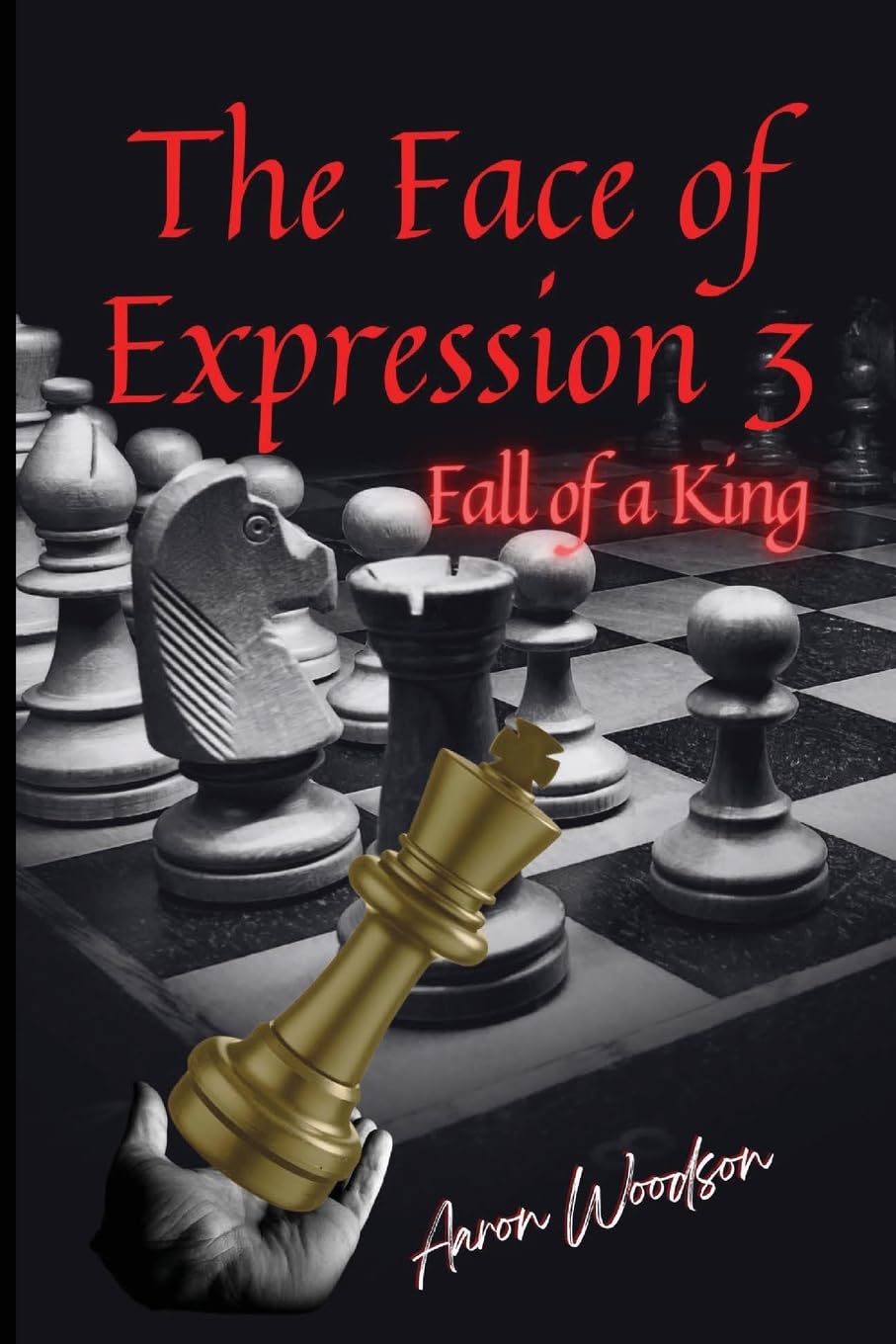

The Face of Expression 3: Fall of a King by Aaron Woodson is a sprawling, deeply personal poetry collection about faith, masculinity, love, Black identity, heartbreak, endurance, and spiritual repair. It moves like a long testimony, beginning with surrender in “Chess With God,” swelling into declarations like “Leading With Love,” “Black By Popular Demand,” and “Heart of A Lion,” then circling through romance, loneliness, self-worth, social pain, fatherhood, exhaustion, and legacy before arriving at the title poem, “Fallen Kings,” and the quieter ache of “Swan Song.” The book feels less like a neat, curated volume and more like a life poured straight onto the page, sometimes polished, sometimes raw, but almost always emotionally direct.
I felt the force of that in poems like “Still on My Feet,” where the speaker is bruised but refuses to retreat, and in “Quitting,” where the honesty turns darker, wearier, and more vulnerable. Woodson writes often from the posture of a king, a soldier, a lover, a believer, but the most moving moments come when the crown slips a little and I can see the tired man underneath it. In “Anchor,” the prayer isn’t ornamental. It sounds like someone genuinely close to breaking, asking God to hold him in place before the storm takes him. That kind of naked need gives the collection its heartbeat.
Woodson’s style is conversational, repetitive, sometimes sermon-like, and he often leans into big declarations rather than subtle turns. I admired the sheer openness of the voice. Poems like “Waves” and “Pilot” stretch an idea almost playfully until it becomes metaphor, memory, flirtation, joke, and testimony all at once. “Black By Popular Demand” has a proud, pulsing confidence that feels communal rather than merely personal, while “Hello Handsome” turns self-affirmation into something funny, sensual, and strangely tender. The ideas in the book are not shy ones. Love heals. God rescues. Blackness is beautiful. Men hurt. People fail each other. Grace remains.
By the end, I felt like I’d spent time with someone determined to bless the wounds that shaped him, not deny them. The Face of Expression 3 isn’t a delicate book, and it isn’t trying to be. It’s loud, searching, romantic, wounded, faithful, proud, and full of hard-earned hope. This collection works best when read as a testimony in motion, not as a pristine literary object. I’d recommend it to readers who enjoy confessional, faith-centered poetry with a strong spoken-word current, especially those drawn to reflections on Black manhood, resilience, love, and spiritual recovery.
Pages: 414 | ISBN : 1953526322

All Told

All Told is a big, loose, lived-in gathering of poems that tracks a whole life, not in a straight line, but in loops of memory, travel, politics, love, and aging. Kenne starts by greeting the reader in a plain kitchen where “the beans are simmering in the pot” and cornbread is in the pan, then moves through childhood on the Gulf Coast, work on farms and in gins, long nights in bars, years in Mexico and Turkey, and into late-life classrooms and quiet rooms where the poet waits for the phone to ring. Sections like “South,” “The Scene Today,” “In a Country of Cars,” “The Art of Facing Oneself as a Ghost,” “The Way of the Fool,” “All Told,” and “I’m in Your Hands” give the book a loose arc from place and family toward wider public life and finally back to intimate friendships and love. The whole thing feels like a story told over many long evenings.
I enjoyed how sturdy and grounded the writing feels. Kenne likes real rooms, real weather, real work. In “This House” he watches the “gray ghost” of his father ride a lawnmower past mesquite and blue norther wind, then lets time jump so the same house lifts and settles in summer heat. The language stays simple. The images do the heavy lifting. A poem about a timing chain in a car, a night shift, or a mechanic’s bad news turns into a little parable about fear and delay without any fuss. His long piece “Smitty, Wallace and Me” circles around a neighbor rewiring his stereo and Wallace Stevens on the bookshelf, and somehow it becomes a quiet essay on communication, performance, and the way our “systems” of living barely touch each other. I liked the relaxed, talky tone. It never felt like the poems were trying to impress me. They just kept showing me things until I started to care.
I also liked how wide the book opens out into the world. Kenne writes beautifully about Istanbul, standing at his window over the Bosporus while birds spin like white confetti and traffic roars across the bridge, and he slides from that scene into music, Turkish poets, and the weird parade of late-century life. The poems in “The Scene Today” and “In a Country of Cars” keep running this line between wonder and annoyance, affection and disgust, as he watches consumer culture, car culture, war memorials, and election years roll past. There is real bite in titles like “America, You Son-of-a-Bitch,” “Election Year,” and “Against Monotheism,” yet the poems almost always come back to one human voice, tired and worried, trying to stay honest inside all that noise. The long sequence about “The Fool” lets him poke fun at himself and at power in mythic language, but underneath the jokes I heard real loneliness, a man who says his main power now is to sit, wait, and be “an empty room / waiting for you to walk in,” and I felt that in my gut.
Under the craft and the travel and the politics, the book feels tender. The early section “South” holds family ghosts, drought, letters from his mother, and awkward boyhood memories. Later on, in “I’m in Your Hands,” he turns toward teaching, old students, old friends, love poems, and a cat named Kestane who becomes a way to think about God. The tone softens without losing edge. I felt a steady ache running through these later poems, but also a kind of rough gratitude. The book accepts confusion and keeps talking anyway. I found that comforting.
All Told is better taken in sections, like a long road trip with stops in little towns, diners, and old neighborhoods. I would recommend it to readers who like narrative, place-rich poetry, to people who grew up in or around the American South, to anyone who has lived abroad and still feels torn between worlds, and to teachers and writers thinking about their own long haul. If you want clear, humane, often funny, often bruised poems that let you sit in the room with a working poet and see what a whole life looks like from the inside, this book is worth your time.
Pages: 193 | ASIN : B0FRB1W1WD

The Fraud of Eternity
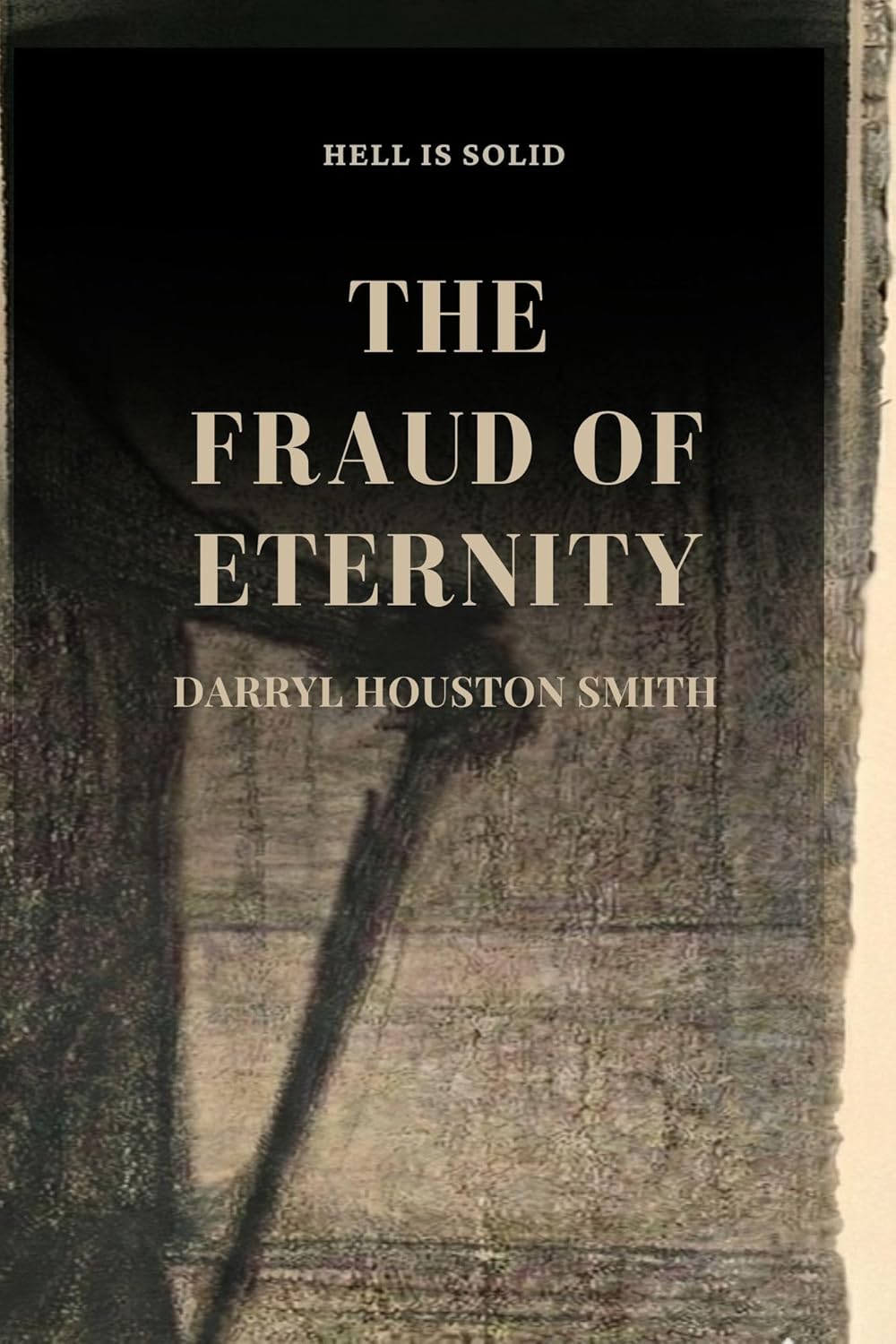
The Fraud of Eternity is a compact, bleakly beautiful collection of poems that circles around death, suffering, and spiritual exhaustion in the industrial landscape of Lowell, Massachusetts. The book moves through four sections, from the cosmic brutality of “The Slaughterhouse” to the brick mills by the Merrimack, then into personal hauntings and finally toward a kind of hard, earthbound acceptance. The voice keeps reaching for images of slaughter, mud, ice, and machinery, and it does that through very strict rhyme and meter, what the author calls “The Dyad,” mostly ABAB patterns that hold the emotion inside tight little cages. References to Baudelaire, Rimbaud, and the French Symbolists appear both directly and through the tone, and the notes at the end make that lineage explicit.
As a reader, I was first grabbed by the sheer force of the language. The images have teeth. “The Monolith,” “The Wheel And The Knife,” and “The Venom Of Thought” all hit with a kind of controlled violence. The clock shaving off skin, the river turned into steel, the falls chewing the water like granite jaws, scenes like that stay with me. The strict rhyme and meter work well here. They act like restraints, and the emotion pushes against them until it starts to vibrate. I appreciate that discipline. In a time when so much poetry goes loose and drifty, the choice to stay formal feels bold and very deliberate. At times, I caught myself reading lines aloud just to feel the rhythm click into place, and that is usually a sign that the craft is doing its job.
The book insists again and again that heaven is empty and that the real, honest place is the “slaughterhouse” of the earth, the warm mud, the mills, the graveyard on a cold Sunday. Poems like “The Morning Star Rejected” and “The Warmth Of Hell” lean hard into that stance, and I felt both fascinated and unsettled. It is a defiantly anti-transcendent vision. No soft afterlife, no comforting light, only heat, soil, and repetition. For me, the most moving pieces are where that philosophy meets human tenderness. “Edson Cemetery (Sunday)” has a quiet envy of the dead that cut deeper than the louder cosmic lines. “The Dyad” turns a metaphysical idea into an intimate portrait of love as two pillars holding up one roof, never merging, still sharing the strain. The pairing of “Fear Not Death (Original)” and “Fear No Death (Eulogy)” adds another twist, one dark and nihilistic, the other gentler and consoling. That contrast made me feel like I was watching the poet argue with himself, and I liked that tension.
I would recommend The Fraud of Eternity to readers who enjoy dark, formally structured poetry, and to people who already feel at home with Baudelaire, Poe, or Jim Morrison’s more apocalyptic writing. It suits anyone who wants a serious, unflinching look at despair, religion, industry, and the body, and who does not mind walking through a very shadowy landscape to get there. If you want poems that stare straight into the night and refuse to look away, this collection will feel like exactly the right kind of trouble.
Pages: 38 | ASIN : B0GF9T4RCZ
Cardinal or Crow

Cardinal or Crow by Molly Myriah is a short, intimate collection of prose poems and lyric fragments that circle around grief, faith, motherhood, trauma, and everyday wonder. The book moves through hospital rooms, kitchen floors, beaches, churches, and garden paths, and keeps returning to weather, trees, birds, tides, and small animals as anchors. It tracks a speaker who has lost her mother, survived betrayal and poverty, raised children, wrestled with God, and still finds reasons to laugh, plant flowers, and notice butterflies and hydrangeas. The pieces are brief, often only a page or two, and they gather into a loose story about being broken open and then learning to live with a tender, alert heart.
As a reader, I felt close to the voice on the page right away. The writing is simple on the surface, and that choice works. Short lines, plain words, small scenes. It feels like someone who has lived a lot is just talking to me across a table. I liked the steady mix of sharp one-liners and soft images. A poem will crack a joke about “be cool” and then turn and punch straight into the cost of pretending to be fine. The free verse feels loose, but the book has clear patterns. Nature shows up again and again. Trees that feed the weakest roots, yellow butterflies, hydrangeas that change color, the shore as medicine, the tide that covers and then pulls back. That repetition gives the book a spine. I also enjoyed the small structural tricks. Titles like “Maslow,” “Goliath,” or “Road to Emmaus” drop in big ideas, then the poem itself stays grounded in very human scenes. The tone stays conversational, but the images are often bright and odd in a good way, like a pink canoe across a golden grid or a leaf caught in a window screen.
Emotionally, the ideas in this collection really resonated with me. The book sits with grief without rushing to fix it. Death of a mother, the long ache after a breakup, the strange life of being a single parent, the weight of childhood trauma. All of that shows up, and it feels honest. I appreciated the way the speaker talked about faith, too. God is here, but not as a neat answer. The poems question, argue, and still lean toward hope. There is a lot of talk about free will, courage, and choosing to keep going when the tide of pain pulls you under. The collection also takes care with attention. It keeps saying, in different ways, that small acts matter. Picking up an earthworm, asking how someone really is, planting loud flowers for angels, noticing rain or a dog’s steady presence. I found that idea comforting and also a little challenging, since it asks me to wake up more in my own life. The mix of tenderness and hard truth felt believable. I never felt preached at. I felt invited.
Overall, I would recommend this book to readers who enjoy reflective, accessible poetry and who are open to spiritual language that lives beside real hurt. It will likely speak to people who have lost a parent, left a painful relationship, or carried old family wounds. It will also suit readers who love nature writing and small, daily moments more than big plot twists. If you want clean, spare lines that feel like a friend talking, and you do not mind sitting with heavy feelings along with little flashes of joy, this collection is a good fit.
Pages: 150 | ASIN : B0FJPPHMNN
A Revolution of One

A Revolution of One gathers the poems, prose, fragments, and messages of James Munro Leaf into a raw and startling portrait of a mind fighting to stay open to beauty while battling its own darkness. The book moves through friendships, love affairs, political fire, theatre, travel, and long stays in psychiatric institutions. It circles again and again around one central idea. That art and courage might hold back despair for a moment, even if they cannot defeat it for good. The pieces feel found rather than polished, scattered like notes left on a desk after a long night. They come together into a kind of memoir told sideways. A life seen in shards.
The writing has this mix of clarity and frenzy that left me wide awake. Some lines felt soft and tender. I kept feeling pulled between admiration and sadness, almost like watching someone run full speed into a storm because they refuse to bow their head. Leaf’s honesty is so bare that I sometimes had to pause just to take a breath. He writes about love like it is a lighthouse. He writes about mental illness like it is a hunt he must survive. And he writes about ordinary people with such respect that even a stranger on the subway feels illuminated. His voice has a kind of youthful fire that doesn’t feel young at all. It feels ancient and worn at the edges.
I also found myself moved by his beliefs about art. He refuses to treat it as decoration. He wants it to matter. He wants it to change something inside a person. And I felt a kind of ache too. His desire for meaning often bumps up against a world that shrugs back. His political anger hits the page with a force that made me nod one moment and wince the next. His love poems feel fragile and wild at the same time. His pieces from psychiatric wards hit with an honesty that left me quiet for a while. Nothing here feels moderated or smoothed. It is all edge and pulse and longing.
A Revolution of One is messy in the way real lives are messy. It left me grateful. I think this collection will speak to readers who have struggled with mental illness, to artists who feel trapped between idealism and daily life, to anyone who has ever tried to hold onto hope while the world shakes under their feet. If you want something that feels alive, frightened, brave, and stubbornly human, then this book will be perfect for you.
Pages: 167 | ASIN : B0G8KJ7Q9F
From the Shallow End to the Deep End
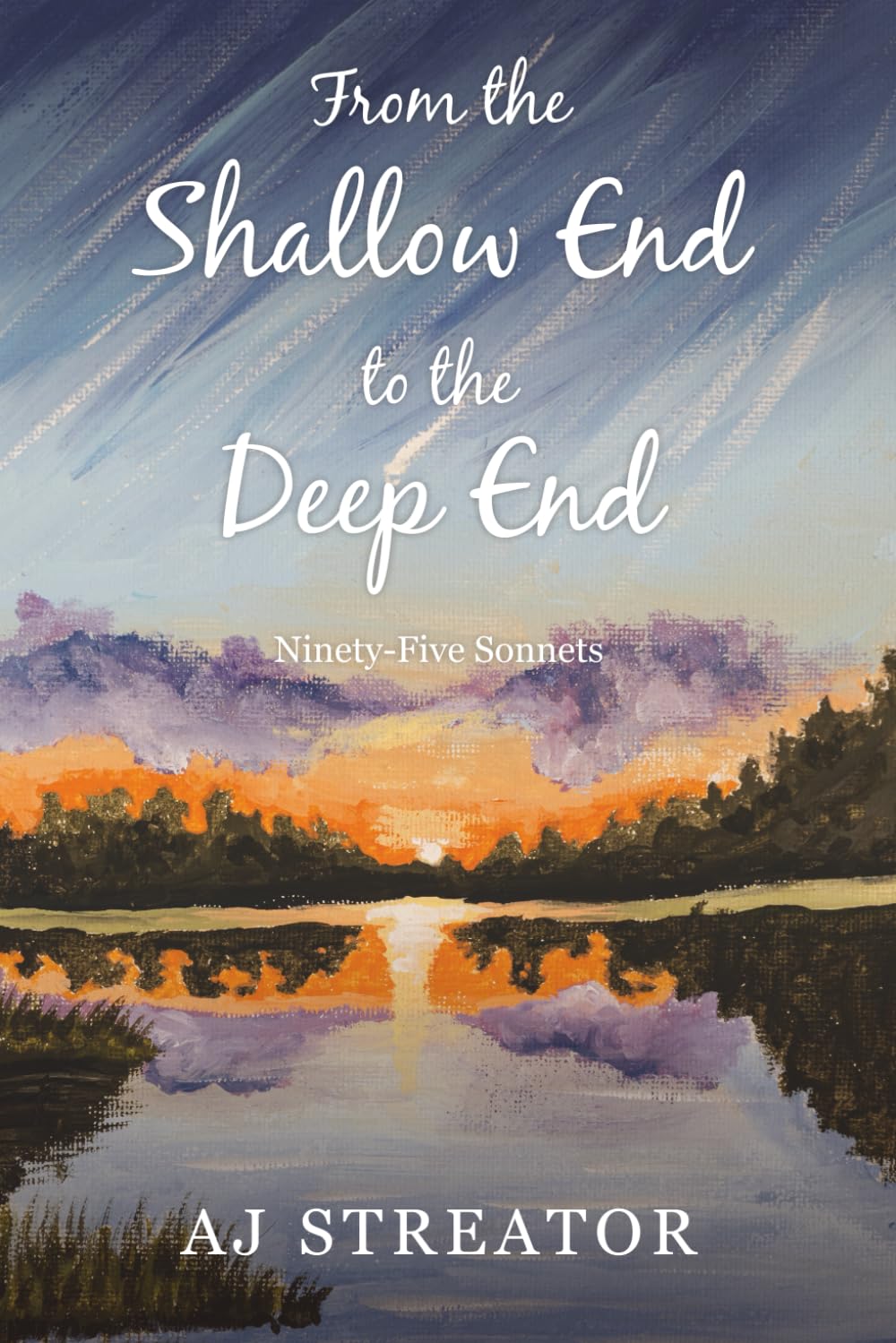
From the Shallow End to the Deep End is a rich and deeply personal collection of ninety-five Shakespearean sonnets that moves through childhood memories, family histories, heartbreaks, faith, despair, and redemption. The book travels in a steady descent from innocence to complexity and then rises again toward clarity and grace. Its structure mirrors the stages of a life that has been lived with open eyes and a bruised but persistent heart, and each section lays bare a different layer of the poet’s world. Streator uses the traditional sonnet form to anchor experiences that feel modern, messy, and often raw, and the tension between old structure and new emotion is one of the book’s strongest features.
I was surprised by how quickly the writing pulled me in. The language is formal on the surface, but beneath it flows a current of sincerity that feels warm and human. I kept pausing at lines that carried a punch not because they were fancy but because they were honest. The poems about childhood felt especially sharp. Scenes of brothers growing apart, parents missing from the stands, and friendships fading hit harder than I expected. They had this way of stirring old memories in me, making me nod along and think, yes, I’ve been there, too. The sonnets in the middle section became heavier and darker, and I admit they made my chest tighten. When the poet spoke about loss, depression, and the desperate quiet of survival, the writing felt intimate. I appreciated that. It made the collection feel alive.
Sometimes the rhyme scheme amplified the weight of the words and made the pain or the joy ring louder. I caught myself smiling at the poems about his children because they warmed the whole book. They softened the darker stories without pretending everything is fixed or simple. That mix of light and shadow felt real to me, and I found myself admiring how Streator holds both without flinching. The shift toward faith in the later sonnets felt authentic, not preachy, more like a man trying to keep his footing after being tossed by life one too many times. It gave the final stretch of the book a quiet sense of hope.
I walked away from this collection feeling both moved and grateful. I’d recommend From the Shallow End to the Deep End to anyone who loves poetry that speaks plainly about life’s messiness while still finding beauty in it. I think it’s well-suited for readers who appreciate traditional forms but want the content to feel fresh, personal, and unguarded. It’s also a meaningful pick for anyone who has lived through family storms, heartbreak, or the slow rebuilding of a life. The book isn’t afraid to wade into deep water, and it invites you to step in with it, one sonnet at a time.
Pages: 109 | ASIN : B0GCPRF4RD
SACRED SEXUALITY: Grace and Truth Revealed in a Culture of Confusion


Sacred Sexuality is a straightforward and deeply personal exploration of biblical sexuality told through the lens of Mark Richard’s own journey out of what he describes as deception, confusion, and sexual brokenness. The book blends teaching and testimony, moving from his years in a same sex relationship to his eventual break with that life as he embraced what he believes is God’s design for sexuality. Throughout the chapters, he lays out a consistent argument: Scripture is the unchanging authority on sexuality, culture has drifted far from it, and believers must return to a life shaped by holiness, repentance, and obedience. The book weaves his story with biblical passages, devotional sections, and practical steps meant to guide readers toward what he calls sacred sexuality.
The sincerity of the author is undeniable. His emotional honesty, especially in the preface and his retelling of leaving behind a relationship of many years, comes through with force. There were certain moments that were thoughtful and moving, like when he described falling to his knees with Scripture open, wondering what it must have felt like to have your whole sense of self cracked open by a single passage. The writing carries an intensity that sometimes made me feel like I was sitting across from someone who desperately wants you to grasp what he grasped. That passion can be stirring. His voice is pastoral, urgent, and deeply convicted. Whether one agrees with every interpretation or not, it is clear he has lived every word he wrote, and that kind of vulnerability will resonate with readers.
The book leans on long blocks of Scripture and strong declarations about sin, judgment, and identity. There were moments when I wanted more nuance, especially when he addressed topics like same sex relationships, temptation, or modern cultural norms. His certainty is absolute, which can feel steadying for some. I would have liked more stories from people he has ministered to. The book’s frame of reference is clear, sharp, and unwavering, which offers readers clarity.
The book has a solid sense of purpose, and it delivers exactly what it promises. Readers who long for strong biblical arguments about sexuality, or who want a testimony of radical life change, will likely find this both challenging and encouraging. Pastors, parents, and believers who feel lost in cultural debates might also appreciate the book’s firm convictions and practical steps. If someone is already inclined toward a traditional Christian sexual ethic, this book will feel like a roadmap and maybe even a lifeline. If someone is questioning, searching, or carrying pain around sexuality, they may find honest reflection and heartfelt hope.
I would recommend Sacred Sexuality to readers who want a bold, earnest, Scripture-centered approach to sexuality and identity. It is best suited for those who appreciate direct teaching and personal testimony woven together. The emotion in these pages is raw, and the message is clear, and for the right audience, it could be deeply impactful.
Pages: 120 | ISBN 13: 979-8-89804-030-7
ENTWINE

ENTWINE sweeps through forests, brooks, moonlit branches, and wingbeats, all woven with a steady pulse of wonder. The book moves through poems and meditations that circle hummingbirds, birches, hawks, seeds, storms, memory, and grief, and it builds a picture of the Hudson Highlands as a living, breathing companion. It feels like a record of attention, a long look at the more-than-human world, and a quiet insistence that our lives thread through soil and water, whether we notice or not. The poems shift between close observation and big feeling, and the book holds everything from scientific detail to spiritual yearning in one continuous braid.
Author Mary Newell writes with this mix of tenderness and excitement that made me lean in and then lean back as if I needed more room to breathe. Some poems rush with energy like the hummingbirds she studies, while others settle into slow, grounded rhythms. I loved that variation. It kept me off balance in a good way. I was wrapped up in her affection for trees and birds and rocks, and then suddenly swept into her grief for lost species or her worry that the land is shifting faster than we can keep up. That emotional jumpiness felt real to me. Life is like that. Beauty and ache and humor all at once. The writing invites that kind of response.
I also found myself reacting strongly to the way she folds her own life into the landscape. Her stories of drought, gardening, watching hawks, losing her mother, or waiting for a familiar hummingbird all cracked open something soft in me. None of it felt forced. I could sense how hard she listens to the world around her and how much she wants to meet it with honesty. Sometimes the imagery felt wild and tangled. Sometimes it hit with a clarity that made me stop reading for a moment so I could feel the point land. I appreciated the intimacy of that.
ENTWINE is perfect for readers who love nature writing that feels alive, for people who enjoy poetry that is tender. If you like work that blends science with feeling or work that welcomes you into the woods and asks you to stay awhile, ENTWINE will be a good companion.
Pages: 94 | ISBN : 1609644921


