Blog Archives
Lovestruck Maggot
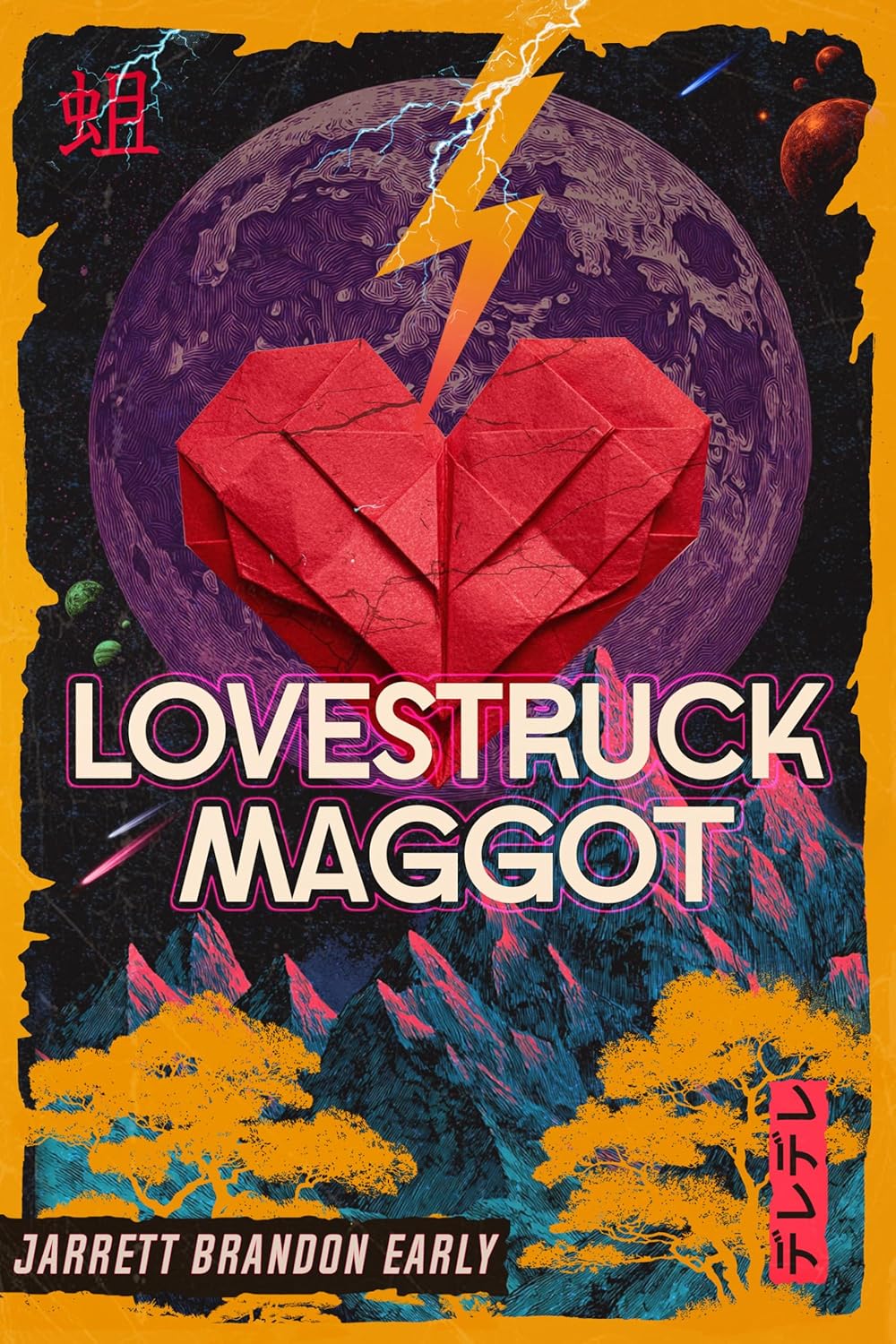

In Lovestruck Maggot, we follow Mona Ripple, scarred, middle-aged, fiercely competent, and disastrously in love—as she tries to claw a future out of the brutal colony world of Kalderra, where “Maggots” harvest volatile alien carcasses under the shadow of corporate greed, native mystery, and lethal beauty. What begins as a break-for-freedom story, with Mona dreaming of buying out her and Darien’s contracts, quickly widens into something stranger and more dangerous: a planet-scale power struggle wrapped around devotion, exploitation, and the mad hope that love might still mean escape.
What I liked most is that the novel never treats love as a softening agent. It treats it as an accelerant. Mona’s voice has grit under the fingernails: funny, vulgar, wounded, possessive, tender, and a little frightening all at once. I didn’t read her as a neat heroine; I read her as a person whose longing has warped around survival until the two are nearly indistinguishable. That gives the book a welcome asymmetry. The romance is not dainty or idealized. It’s hungry, bruised, delusional in places, and therefore weirdly moving. The author understands that desire can make people luminous and ridiculous in the same breath, and he gets a lot of charge out of that contradiction.
I was also taken by the texture of the worldbuilding. Kalderra doesn’t feel like wallpaper pasted behind the plot; it feels mined, lit from below, and faintly toxic. The opening planetary report gives the book a sly, cold-blooded frame, and then the novel drops into a much hotter register: banter, violence, class resentment, strange ecologies, and the eerie glamour of the subarashi forests. I especially admired the tonal audacity here: the book can pivot from gallows humor to menace to aching sincerity without losing its footing.
I’d hand this to readers who like space opera, science fiction, romance, survival adventure, body horror, dystopian fiction, and weird western-inflected SF with a sharp voice and a taste for the baroque. It should land especially well for people who want character heat inside a dangerous speculative setting rather than clean hard-scfi sterility. It feels closer to Kameron Hurley than to sleek blockbuster space adventure; there’s also a bit of Gideon the Ninth’s irreverent bite in the way it lets sentiment and savagery share the same room. Lovestruck Maggot is proof that even in the harshest world, love can still be the most explosive substance on the page.
Pages: 365 | ASIN : B0GPRPR53S

Talisman: Halcyon
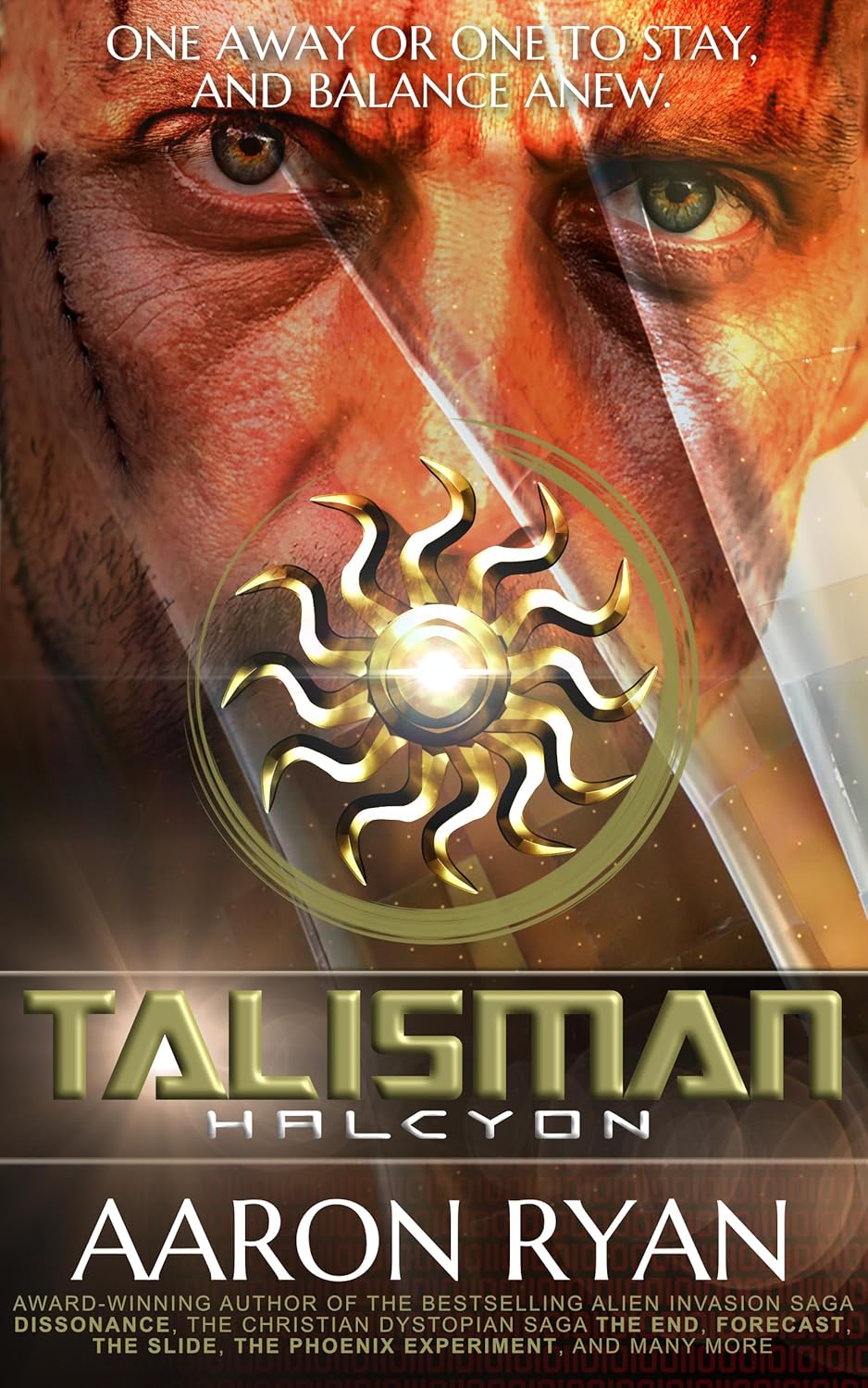

Talisman: Halcyon is a science fiction adventure novel with strong superhero and space opera DNA, but I think it’s really a story about grief getting dragged across the stars. Author Aaron Ryan picks up Liam Mayfield’s story after betrayal, loss, and revelation have already cracked his world open, then sends him into a larger conflict involving Onyx, Arion, the Aeterium Axis, the multiverse, and a search for truth that keeps changing shape as the book goes on. The scale is huge, with cosmic alliances, alternate selves, and a widening war for liberation, but the emotional center stays tied to Liam’s pain, his family, and the question of what remains when the promise you built your life around turns out to be false.
I really enjoyed Ryan’s willingness to go big. This book is packed with lore, declarations, training, revelations, and confrontation, and at times it has the full-throttle energy of a graphic novel stretched into prose. But I think that’s part of the book’s identity. It is earnest in a way that many contemporary sci-fi books try to dodge. It wants the emotions to be felt clearly. It wants the stakes to sound like stakes. And when that works, it really works. The shifting viewpoints from Arion, Onyx, and Liam give the novel a layered feel, especially because each of them carries a different mix of loyalty, longing, and suspicion. I found myself especially interested in how Onyx grows into Soteria and how the book lets attraction, jealousy, and memory complicate what could have been a more straightforward good-versus-evil story.
I also appreciated that Halcyon is not content to stay a revenge story. It starts to feel like one kind of sci-fi saga, then opens into something stranger and more reflective, especially once the multiverse material and the doubled identities come into view. There is a scene where Liam and Onyx confront alternate versions and people they thought were gone, and it gives the book a haunted quality that I genuinely liked. It makes the story feel less like a straight corridor and more like a hall of mirrors, where every choice throws back another version of regret or hope. The dialogue can lean theatrical, and the mythology is occasionally dense. But even when I felt that, I never felt indifference. The book has conviction. It believes in its world, its pain, and its big moral struggle, and that kind of commitment carries real weight.
Having read other books in the series, along with Dissonance, The Phoenix Experiment, The Slide, Forecast, and The End, one of the real pleasures of Halcyon was catching the tie-ins and seeing how the author keeps pulling threads from those earlier stories into something larger and more connected. That gave this novel an added charge for me. It felt less like an isolated sequel and more like another major piece locking into place. What’s emerging now feels like an “Aaronverse,” a shared story world where apocalyptic stakes, sci-fi mythology, and spiritual questions keep folding back into each other in ways that reward longtime readers.
I would recommend Talisman: Halcyon most to readers who enjoy ambitious indie science fiction, superhero-inflected cosmic fiction, and long-form saga storytelling that leads with heart rather than restraint. This book is emotional, mythic, and fully invested in redemption, loss, power, and destiny. Readers who want passion, scale, and a story that wears its soul on its sleeve will probably find a lot to admire here.
Pages: 385 | ASIN : B0GQXHM7NN

Richard: Distant Son

Michael W. Hickman’s Richard: Distant Son opens with a wonderfully outsized premise: an ordinary fifteen-year-old from Ohio discovers that he is the lost heir to a galactic throne and is swept from suburban life into a sprawling interstellar kingdom of court ritual, prophecy, old betrayals, and species drawn from both science fiction and myth. What follows is a chosen-one story with a deliberately maximal appetite, part space opera, part royal fantasy, part coming-of-age tale, as Richard is tutored by the enigmatic AAL and forced to grow into a destiny much larger than his own imagination ever allowed.
What I liked most was the book’s refusal to behave modestly. Hickman doesn’t nibble at worldbuilding; he heaps it on. The novel moves from cosmic prologue to Ohio basement to a kingdom populated by aliens, winged horses, political operators, and ceremonial grandeur, and I found that sheer amplitude genuinely fun. Richard himself is appealing because he does not arrive pre-polished. He’s gawky, impulsive, occasionally funny without trying to be, and still recognizably adolescent even when everyone around him wants to turn him into a symbol. That contrast of teenage bewilderment set against imperial expectation gives the novel much of its momentum and charm.
I also found the book interesting in the ways it exceeds the boundaries some readers might expect from its premise. Beneath the wish-fulfillment engine, there’s a streak of earnest strangeness here: sexuality is more explicit than a typical younger-YA adventure, the mythology of Richard’s bloodline is treated with near-feudal seriousness, and AAL’s guidance carries a persistent undertow of secrecy and control. The novel can feel overfull, even unruly, but for me that unruliness is part of its character. It reads like a story written by someone who genuinely loves the idea of throwing star empires, prophecy, palace intrigue, romance, and adolescent dislocation into the same crucible and seeing what burns hottest. The result is not sleek; it’s exuberant.
I’d recommend Richard: Distant Son to readers who enjoy science fantasy, space opera, royal-intrigue fiction, chosen-one narratives, and coming-of-age adventure with a romantic thread. Readers who like the dynastic scale of Dune but want something more accessible and emotionally direct, or fans of Christopher Paolini-style earnest mythmaking pushed into a galactic register, will probably find a lot to savor here. This is a book for people who don’t mind a little grandeur in their storytelling and maybe prefer it a touch unbuttoned.
Pages: 493 | ASIN : B0B627767G
The Five Rings of Peril


Jeri Massi’s The Five Rings of Peril opens by yanking Penny Derwood out of safety and into the wake of Doc Thorson’s old enemy, Theskulis, then widens into a scrappy cosmic pursuit involving kidnappings, casino worlds, alien criminal networks, and the gloriously improbable Mags Hardbottle, a self-styled “Detective to the Stars.” What I found most engaging is the book’s ability to juggle two energies at once: earnest high-stakes adventure and a pulpy, almost serial-style exuberance. The story moves from the familiar orbit of Peabody’s young heroes into a harsher interstellar landscape, where loyalty, courage, and quick thinking matter more than polish.
The book’s voice sounds idiosyncratic in a way I increasingly value. Massi writes with a lively, unabashed fondness for melodrama, old-school daring, and oddball invention. Mags Hardbottle in particular gives the novel a delightful voltage: she is funny, game, strange, and unexpectedly touching, a character who could have remained a gimmick but instead becomes a live wire in the narrative. I liked, too, the way the book treats danger seriously without surrendering its sense of play. Beneath the flamboyant surface, there is a sturdy moral architecture, friendship, duty, and endurance that keep the story from drifting into mere caper.
I also admired the novel’s refusal to flatten its world into generic science fiction. The cosmos here feels peopled rather than decorated: Tarks, Gronnox, body pirates, casino districts, crude transport systems, and improvised forms of cosmic travel all give the setting a rough, inhabited grain. The book feels like it is cheerfully raiding several cupboards at once; space opera, detective spoof, juvenile adventure, rescue thriller, and I mean that as praise. Its pacing can be quick, and its tonal swings are abrupt, but I found that part of its peculiar charm. It reads less like a machine-tooled franchise novel than like a story told by somebody with real affection for her characters and enough nerve to let the tale be eccentric.
I’d hand The Five Rings of Peril to readers who enjoy science fiction, space opera, YA adventure, portal fantasy, and pulpy interplanetary mystery, especially those who like ensemble casts, clean moral stakes, and a touch of retro bravado. It may appeal to readers who enjoy Madeleine L’Engle’s cosmic earnestness or the adventurous spirit of classic juvenile sci-fi more than to readers looking for sleek contemporary dystopia. This is a quirky, high-spirited, wholeheartedly uncynical adventure that wins me over by being exactly and exuberantly itself. Odd, earnest, and fun, it has more pluck than polish, and that is precisely why I recommend it.
Pages: 215 | ASIN : B0GHPMJSX3
Burgeoning Romance

Terra Lux centers around a family swept up in the evacuation of their planet, forced into servitude, and struggling to find solace in a brutal existence. What was the inspiration for the setup of your story?
I really wanted to explore what was next for our trio, and I wanted to reunite them with a character from an earlier book, Soren. Soren is a potential future love interest for Sev, and we see their relationship develop over the course of this book and the next. I was really interested in exploring how this family would stay together if they lost their home…how they would struggle and triumph in an alien environment.
What is the most rewarding aspect of writing a trilogy for young adult readers?
Meeting and connecting with readers, whether in person or on social media. The best thing about a YA audience is the scope of it. You really do connect with a wide variety of people and age groups, and it’s very rewarding.
What were some themes that were important for you to explore in this book?
Loss, resilience, and triumph over tragedy. I wanted to explore a slow-burning, burgeoning romance, too, and I got to tease that a little with Sev and Soren.
Are you currently working on a new series? What can we look forward to seeing from you next?
I’m actually working on a continuation of this universe, with books four and five coming at a later date. It’s more of an intimate, character-driven exploration of the world I’ve created for them.
Author Links: GoodReads | X (Twitter) | Facebook | Linktree | Website | Amazon
Sev has lost her home before. She’s learned how to survive,how to fight, how to run. But when war sweeps across Dobani, there’s nowhere left to go—only forward.As the world crumbles, Sev clings to the people she loves most.
Through storm and silence, danger and displacement, she must forge a new path in a galaxy that keeps trying to break her. But Sev is done running. This time, she’s ready to decide who she wants to become.
The final book in the Terra trilogy is a story of survival, resilience, and found family—where even in the darkest times, a light remains.
Price of Vengeance

Price of Vengeance is a military science fiction novel with a strong young adult feel, laced with paranormal dreamwalking, telepathic creatures, and a slow-burning romance. On the besieged planet Etrusci, Liam grows up as the adopted son of a city leader after chitin insectoids slaughter his farmstead family. As an adult soldier, he is still haunted by that night, volunteering for lonely border outposts and hiding from festivals and crowds. A massive, engineered attack, political betrayal from Councilor Licinious, and the ruthless alien mastermind Azurius rip the last safety nets out from under him. Liam is blown clear of a doomed outpost, teams up with a telepathic “bear lizard” named Swift Hunter, uncovers sabotage and assassination plots, and fights his way back toward his brother Randolf, the empathic high priestess Celinia, and a city under siege. The book builds toward a brutal final confrontation with Azurius and a hard-earned, quietly hopeful ending where family, faith, and love survive the wreckage.
What I enjoyed most was Liam himself and how author Kurt Springs lets his trauma bleed into everything he does. Liam is never just a badass sniper. Even when he is holding the line at Taho and choosing to destroy the portal rather than let the enemy into New Olympia, you can feel how much the little boy who survived the farm massacre is still inside the lieutenant. His guilt over Jorge’s death, his parents’ murder back in the city, and the way he replayed choices in his head felt painfully human. I liked that the military science-fiction side isn’t all shiny tactics and tech. The battles are loud and messy and sometimes unfair, and people die because of sabotage or politics, not just because the chitin are scary. The book’s title pays off: every step toward vengeance costs someone something, and Springs does not let Liam or Randolf look away from that.
The author’s choices around the “dreamscape” and spiritual elements surprised me in a good way. Celinia helping Liam reshape his nightmares instead of just banishing them was one of my favorite sequences, because it made healing feel active rather than magical. Their relationship grows out of that inner work, plus shared danger, instead of insta-love. The telepathic bond with Swift Hunter adds another emotional layer. Those campfire conversations about family, hatchlings, and the “Maker” gave the story a warm, almost mythic texture in the middle of all the plasma fire. I also appreciated that Azurius is not just a cackling villain. He quotes Shakespeare, respects skill, and genuinely tempts Liam with a chance to save lives if he will just compromise himself. When he dies, quoting Romeo and Juliet back and forth with Randolf, it comes across as sad and eerie rather than just “finally, the monster is dead.”
The writing itself is straightforward and clean, which fits the tone. Action scenes are easy to follow, with clear stakes and geography. The big set pieces – the fall of the Taho outposts, Liam stumbling injured across abandoned sectors, the sewer interception of Licinious’s assassins, the last stand around the Temple – all have that tense, cinematic feel. At the same time, there are quiet moments the book lets breathe: Randolf comforting a terrified toddler in a crib, Liam becoming “Uncle Liam” to Jorge’s twins, the wedding scene where the dead briefly appear at the altar. A few conversations explain ideas a bit more directly than they need to, but I’d rather have a science fiction novel wear its heart on its sleeve than try to be cool and detached when it is clearly about grief, faith, and choosing who you become after loss.
Price of Vengeance feels like a solid fit for readers who enjoy character-driven military science fiction that leans into emotion and spiritual questions as much as tactics. If you like the idea of a YA-flavored story where a small, scarred sniper wrestles with survivor’s guilt, bonds with a telepathic predator, falls in love with a dreamwalking priestess, and has to decide what kind of warrior he wants to be, this is worth your time. If you want an action-heavy, hopeful story about family, faith, and the real cost of revenge, Price of Vengeance delivers.
Pages: 309 | ASIN : B0CQ5QH3D6
Centered On The Dream World

The Dreamer follows a teenager traveling through space with her parents, who experiences terrifying visions and must cope with the aftermath of a vicious attack that forces her to make important life decisions. What was the inspiration for the setup of your story?
I’ve always been highly interested in dreams, past lives, and parallel universes. I like to believe it’s all connected. Dreams play a big part in most of my stories. I’m currently working on a new series that is centered on the dream world. When I was little, I had a very lucid dream where I was an older woman who was running through a battlefield and got shot in the leg. I told my father (who is also a historian) about my dream the next morning, and after hearing all the details, he was convinced I had been dreaming of the Revolutionary War. I was too young to know about it! I wanted to write a series with a vast, complex timeline, exploring how one person and their choices could impact an entire reality, because we actually do that every day. I have been working on this series for 17 years, so it’s pretty planned out!
What was your approach to writing the interactions between characters?
I wanted my teen and young adult characters to feel real, with their emotions and dialogue feeling natural. I spent a very long time crafting each character’s background so that I could drop them into any situation and have their interactions flow without me having to think too hard. Sometimes they would say or do things, and I would be surprised as I was writing it! I love that feeling when your book starts writing itself! There are characters in the second book that popped up as I wrote, and I would think, “Who’s this guy?”
The science inserted in the fiction, I felt, was well balanced. How did you manage to keep it grounded while still providing the fantastic edge science fiction stories usually provide?
Honestly, I tried my hardest not to turn this into a super “sciencey” book. I wanted to write a sci-fi saga that was easy to read and accessible to a broad audience. It makes me sad that so many people are intimidated by science fiction. It can get too heady or science-based, taking away from the emotional journeys. I wanted to write about teens who happened to be in space. I wanted to be inclusive and normalize the marginalized. I wanted the fate of the galaxy to fall on a group of misfits who end up saving it, but I also wanted them to be stressed out about their first kiss, engulfed by jealousy, and annoyed with each other. I was a teenager who grew up overseas, performed in theater, and was also trying to learn Klingon… if that tells you anything!
Can you give us a glimpse inside Book 2 of the The Black Stone Cycle series? Where will it take readers?
We open with two brand-new characters, one of whom is the one I mentioned above, who appeared without me planning him at all. He turned out to be one of my favorites! It will explore the galaxy and society further. It’s already written, and I’m always interested in ARC readers, so please contact me if you’re seriously interested!
Author Links: GoodReads | Facebook | Website
But when a quick stop on Phobos goes from routine to disaster, Ash’s fragile world implodes. Stranded and hunted by enemies she doesn’t understand, she’s thrown together with a ragtag crew of teens just as lost as she is.
There’s Isaac and Isabel, telepathic twins caught between uncovering the truth about their missing parents and outrunning the Mind Squad agents they once thought were a myth; Edan, a street-smart survivor who just happens to be the prince of the space pirates; Moon, a savant who speaks code more fluently than feelings; and Xai, a mysterious blue alien boy who lingers in Ash’s dreams―and who might be far more real than she wants to believe.
As Ash wrestles with grief, trust, and the colossal power flickering to life inside her, she stumbles into a prophecy that feels way too personal. Being the “chosen one” isn’t what Ash signed up for. All she’s ever wanted was a chance to stop running and just be a regular teenager on some boring moon colony.
With telepathic super soldiers closing in, betrayals around every corner, and a galaxy-shaking secret in her hands. Ash must decide whether to keep running―or finally stand and fight. Because some destinies can’t be outrun.
The Dreamer is the first book in The Black Stone Cycle, a thrilling YA sci-fi saga about found family, hidden legacies, and the messy, exhilarating journey of discovering who you really are. Fans of Firefly, Skyward, and The Expanse will feel right at home among the stars.
The Dreamer (The Black Stone Cycle Book 1)

The Dreamer follows Ash Bennett, a teenager drifting through space with her parents until her life is split open by terrifying visions, mysterious strangers, and an attack that shatters everything she knows. The story blends sci-fi adventure with a deep emotional undercurrent as Ash realizes she may be connected to powers and histories she never understood. The tension builds fast. The quiet opening on the family ship gives way to vivid danger on Phobos, then to loss, rescue, and a strange new path that forces her to decide who she is meant to be. It feels like the start of a much bigger saga.
When I first settled into the book, I expected a familiar space-opera vibe, but the writing surprised me. Scenes snap together in quick bursts. The images are sharp and sometimes dreamy, and they made me feel like I was walking through Ash’s memories and fears rather than just reading about them. I liked that the story never waited around. It pushed forward with a kind of breathless energy, and even the quieter moments carried this low buzz of anxiety that kept me hooked. I found myself caring about Ash morwe quickly than I expected. Her mix of sarcasm, loneliness, and curiosity felt honest. I appreciated that her voice didn’t get swallowed by the big world around her.
As the story unfolded, I felt a tug in two directions. On one hand, I loved the ideas: the fractured past between humans and other species, the mystery around her abilities, and the sense that Ash is tied to something ancient and powerful. On the other hand, the worldbuilding sometimes hit me like a sudden gust. New terms and cultures arrived fast, and I occasionally had to pause to catch up. Still, I liked the rawness of it. The author took risks with emotion, especially when Ash witnesses what happens to her parents. That whole sequence hit harder than I expected. It left me feeling unsettled in a good way. I could feel the shock in my chest as she tried to understand what she’d seen.
By the time I reached the later chapters, I realized I was rooting not just for Ash but for the strange little group forming around her. The mix of loss, found family, and growing danger pulled me in. I liked that the book didn’t wrap things up neatly. It left questions hanging in the air, teasing a bigger truth waiting on the other side. I enjoy stories that don’t talk down to me, and this one trusted me to sit with the unknown.
I walked away feeling both satisfied and eager for the next piece of the story. I’d recommend The Dreamer to readers who enjoy character-driven sci-fi, especially those who love fast pacing and emotional stakes. It’s a good fit for teens and adults who want a world that feels lived-in and messy, with a heroine who is still figuring herself out. If you like stories that blend danger, heartache, and a spark of wonder, this one is worth your time.
Pages: 328 | ASIN : B0G32FG96C


