Blog Archives
Eden, Divided


Steven Marks’s Eden, Divided is a thoughtful reimagining of Adam and Eve’s fall that treats temptation as a slow fracture rather than a single reckless choice. The novel begins with Eden in radiant harmony, where Adam and Eve live without shame, suspicion, or any sense that love might require protection. When the serpent first approaches Eve, she recognizes the deception and refuses it. That refusal becomes the book’s most intriguing decision, since the serpent must find subtler ways to unsettle the couple. Instead of relying on obvious hunger for the forbidden fruit, he introduces comparison, possessiveness, private thoughts, and the idea that a person might keep part of themselves separate from those who love them.
Marks spends much of the novel exploring how these small inward changes reshape Adam and Eve’s relationship. A touch becomes a claim. A private thought becomes something deliberately withheld. Admiration begins to mingle with jealousy, while individuality starts to feel like isolation. Adam and Eve remain loving and deeply devoted, which makes their growing distance more affecting. Their conversations give the story its emotional center, especially when they sense that something has changed but lack the experience to understand it. The book’s version of sin is closely tied to division, not only division from God, but division within the self and between two people who were created to live openly with one another.
The novel recalls C. S. Lewis’s Perelandra, another story that expands the biblical temptation into a sustained psychological and spiritual struggle. Lewis presents temptation as an intellectual siege, while Marks brings it closer to the emotional patterns of a marriage. His serpent succeeds by teaching Adam and Eve to reinterpret love as ownership and vulnerability as danger. The lush, reverent descriptions of Eden also carry something of Lewis’s sense of creation as spiritually alive, though Marks’s style is more intimate and meditative. Readers who enjoy biblical fiction, theological speculation, or character-driven stories about trust will find plenty to discuss here.
At times, the deliberately elevated prose and repeated attention to subtle emotional shifts slow the pace, but that patience is central to the book’s purpose. Marks wants the reader to feel every degree of separation before the fruit is finally taken, so the familiar ending arrives with renewed weight. By the time Adam and Eve hide, blame one another, and leave the garden, their exile feels like the physical completion of a division that has been growing for many chapters. Eden, Divided is ultimately a sorrowful story about how love can remain real after innocence is gone, and how truth, trust, and mercy become choices once they’re no longer effortless.
Pages: 412 | ASIN : B0D6W6LXHK

Historical Imagination

Survival Secrets is the second book in The Magi’s Encounters series and follows Akilah and the Wise Men on a layered journey through Egypt, politics, threats, family wounds, and spiritual uncertainty. How did the idea for Survival Secrets first take shape?
Survival Secrets is rooted in the final verse the Bible records about the Wise Men. Matthew 2:12 says, “And having been warned in a dream to not return to Herod, they returned to their country by another route.” What seems like a footnote to their story is really a beginning. They couldn’t return home on the Roman roads because Herod would have alerted those guards to watch for the Wise Men and drag them back to Jerusalem in chains. Roman roads were peppered with watchtowers every 10 miles, and their guards’ main job was to snag runaway slaves and other “illegals.” The Wise Men were added to that list as soon as Herod realized they wouldn’t return to him as he’d commanded. So where did they go? Without access to Roman roads, their choices were limited. Judea’s geography further narrowed their choices. By process of elimination, I mapped the most plausible route they might have taken. It was circuitous and dangerous. They had to hide their identity to protect themselves from Herod and other enemies. I believe their returning home “by another route” was also the first acid test of their newfound faith–and each Wise Man responded to that challenge differently.
How did you balance biblical tradition with historical imagination?
The Bible is my north star for writing the series. It’s infallible in recording what happened, but it doesn’t always say why things happened. For that, I dig into world history, using accounts by 1st-century historians and other reliable resources to understand how world politics, religions, and culture influenced people’s thoughts, motivations, and actions. The Wise Men were priest-scholars in Magi society, a powerful, influential entity in the Parthian Empire. They were duty-bound to uphold the empire’s official religion, plus officiate for other religions. What if they suddenly believed in something other than what their empire’s official religion espoused? That’s exactly what happened with the Wise Men when they found Yeshua/Jesus. Think of what conflict and danger that caused for them. History records a lot about Herod as well as how the Roman and Parthian empires treated Jews long before Jesus’ ministry started. That tension is the backdrop behind Matthew 2:12. That tension is where I judiciously exercise my historical imagination.
One of the book’s strengths is its patience with faith as a process rather than an instant transformation. Why was that important to you?
A common misconception is that a person can “grow” their own faith–but the Bible doesn’t say that. The apostles could have asked Jesus for many things, but they said, “Increase our faith!” (Luke 17:5), They inherently knew that faith didn’t come from them, but from God. In that verse, the Greek word “increase” is the root of our English word “prosthesis.” It literally means “to add or increase.” Its connotation is to make something stronger and more functional–which is exactly what a prosthetic (and faith) does. Put another way, when we let God work in our lives, He lays down more train tracks to guide our lives, which increases our faith and strengthens our resolve to trust Him more.
Can you give us a glimpse inside Book 3 of The Magi’s Encounters series? Where will it take readers?
Geographically, Book 3 will take readers to the northern fringes of the Parthian Empire, where small, semi-autonomous vassal states form a buffer zone that controls the tensions between the mighty Roman and Parthian Empires. Emotionally, Book 3 shows each Wise Man’s faith on trial. It differs for each of them, but taking center stage is our main character, Akilah, whose pursuit of the prophesied child-king (Yeshua/Jesus) lands him in prison. Now he must answer to allegations of civil and religious crimes against the Parthian Empire that could cost him his life.
Author Links: GoodReads | Facebook | X (Twitter) | Website | Amazon
Hunted by Herod’s forces and others who fear what the Magi know about Yeshua, Akilah and his companions flee into the Wilderness of Paran—a land as merciless as the enemies pursuing them. To reach Egypt’s safety, his caravan must survive the elements and the strain of maintaining their anonymity while protecting the many secrets that jeopardize their lives.
But the greatest danger isn’t the wilderness.
Bound by their shared knowledge of Yeshua, the group carries a truth powerful enough to upend empires yet tenuous enough to fracture their resolve. When calamity tears one Wise Man away from the others, the group’s newfound faith start to crumble. Faith once sparked by wonder is now tested by hardship and the silence of unanswered prayers.
Farther from their goal of returning to Persia than ever before, Akilah encounters Yeshua’s family again. Its ramifications raise the stakes for the Magi’s cost of belief in the Hebrew God.
Meanwhile, two thousand miles away, Akilah’s estranged cousin Farzaneh begins her own dangerous search for truth, uncovering secrets her husband carried to the grave after embracing the Hebrew faith.
Survival Secrets is a gripping continuation of the Magi’s journey. As they struggle to return home while facing an uncertain future, costly obedience replaces the early awe of their belief—underscoring that faith doesn’t travel in a straight line, endurance is often learned in the wilderness, and trust rests with an unfathomable, sovereign God.
Perfect for fans of biblical fiction rich in tension, clean adventure, and faith journeys shaped by doubt, hardship, and quiet courage.
Follow belief into dangerous territory.
Knowledge is Power

Sisters of Twelve follows a woman known as the final Custodian who must determine if the world is prepared for what the Voynich Manuscript contains. What was the inspiration for the setup of your story?
The story really began with the Voynich Manuscript itself. Like many people, I became fascinated by the fact that it has resisted explanation for centuries. But instead of focusing only on how to decode it, I found myself asking different questions: Who could have created something like this, and more importantly, what was it actually for?
I wanted to approach the manuscript not simply as a puzzle, but as part of a larger system. From there, I became interested in the kinds of people history tends to overlook, especially those who preserve knowledge quietly in the background while others receive recognition for it. I began imagining a lineage of women whose role was not just to protect information, but to determine when humanity was ready to receive it.
In many ways, the novel also became an homage to the strong women in my own life and to the countless individuals throughout history whose contributions were never fully acknowledged. Many of them were not seeking recognition at all, yet their work became part of the invisible foundation upon which later discoveries and institutions were built. That idea stayed with me throughout the writing of the book.
The novel treats knowledge as a burden as much as power. Was that one of the central ideas you wanted to explore?
Yes, absolutely. Knowledge is power, but power without wisdom or timing can become dangerous very quickly. One of the central ideas I wanted to explore in Sisters of Twelve is that possessing knowledge is only part of the burden. The greater burden is deciding when, how, and even if it should be shared.
For generations, the Custodians of the Sisterhood preserved accumulated discoveries and systems of knowledge, but Gia is the first to fully realize that time itself is running out. Previous Custodians had the luxury of patience. Gia does not. She understands that revealing certain discoveries too early could destabilize civilizations in ways history has repeatedly shown us, while withholding them for too long could deny humanity gifts that might alleviate suffering or fundamentally improve the world.
That tension becomes deeply personal for her. At times, the responsibility of deciding what humanity is ready to receive becomes almost suffocating.
The novel argues that women have often preserved culture, memory, and knowledge without recognition. What historical examples most influenced that idea?
As a college student, I remember first hearing the idea that much of history is really “His Story,” not “Her Story.” That concept stayed with me. History is often written by the winners, and historically, those winners were usually men whose names filled textbooks, monuments, and institutions.
But the survival of knowledge has rarely depended only on the visible people history remembers.
Across centuries, there were always others working quietly in the background. Archivists preserving fragile documents, translators carrying ideas across languages, assistants organizing the work of scholars, daughters inheriting memory when no formal record remained. Many of these people, especially women, lived and died without recognition, even though the ideas they protected survived because of them.
That became one of the emotional foundations of Sisters of Twelve. The book is fiction, but the spirit behind it comes from a very real truth: if knowledge from the past has reached us at all, it is because someone chose to carry it forward, often quietly, often without credit, and sometimes without anyone ever knowing they had done so.
In many ways, the novel is dedicated to those unseen custodians of knowledge.
Did you want readers to leave the novel feeling hopeful, unsettled, or intellectually uncertain?
At times, it feels like we are constantly being conditioned to believe the world is always on the verge of collapse. Maybe it is, or maybe it only feels that way because uncertainty has become such a constant part of modern life. I didn’t want Sisters of Twelve to reinforce the idea that humanity is doomed or incapable of growth.
I wanted to tell a story that acknowledges the world will probably never be perfect, but that does not mean it cannot become better. The ending is meant to leave readers with a sense of cautious hope. Not the kind that arrives overnight or solves everything at once, but the belief that people are still capable of learning, adapting, and choosing something better for the future.
If readers walk away from the novel feeling that maybe, just maybe, humanity still has the capacity to get things right, then I think the story succeeded.
Author Links: GoodReads | Amazon
A hidden sisterhood that has safeguarded its meaning for two thousand years.
And a world rapidly approaching the moment it was never meant to reach.
Sisters of Twelve
For centuries, the Voynich Manuscript has defied every attempt at translation. Historians, cryptographers, scientists, and codebreakers have all failed to explain its meaning.
Because the manuscript was never meant to be read in the conventional sense.
In Sisters of Twelve, the Voynich Manuscript is revealed as the current vessel of a system preserved across generations by a hidden lineage of women known as the Sisterhood. Their purpose has never been to conceal knowledge forever, but to control its release, ensuring that discoveries capable of reshaping civilization enter the world only when humanity is ready to survive them.
Now that responsibility belongs to Dr. Gia Braccia, the Sisterhood’s newest Custodian.
As technological advances begin to erode centuries of secrecy, Gia realizes the system can no longer remain hidden indefinitely. The manuscript and its ancient counterpart, the Roman dodecahedron, exist in a world of artificial intelligence, distributed data, 3D imaging, and limitless replication. Time, once the Sisterhood’s greatest advantage, is running out.
What the manuscript contains could transform medicine, science, language, agriculture, and human longevity.
Or it could destabilize governments, deepen inequality, weaponize scarcity, and fracture a civilization already struggling to hold itself together.
As pressure mounts from institutions, private actors, and factions within the Sisterhood itself, Gia must confront the question her predecessors spent centuries avoiding.
Not whether the world deserves the truth.
But whether it can survive it.
Blending historical intrigue with speculative science and philosophical suspense, Sisters of Twelve explores the hidden systems that preserve knowledge across generations and the unseen people history rarely remembers.
From the author of Time Lines comes a story about memory, stewardship, and the dangerous moment when the future arrives before humanity is prepared for it.
Sisters of Twelve
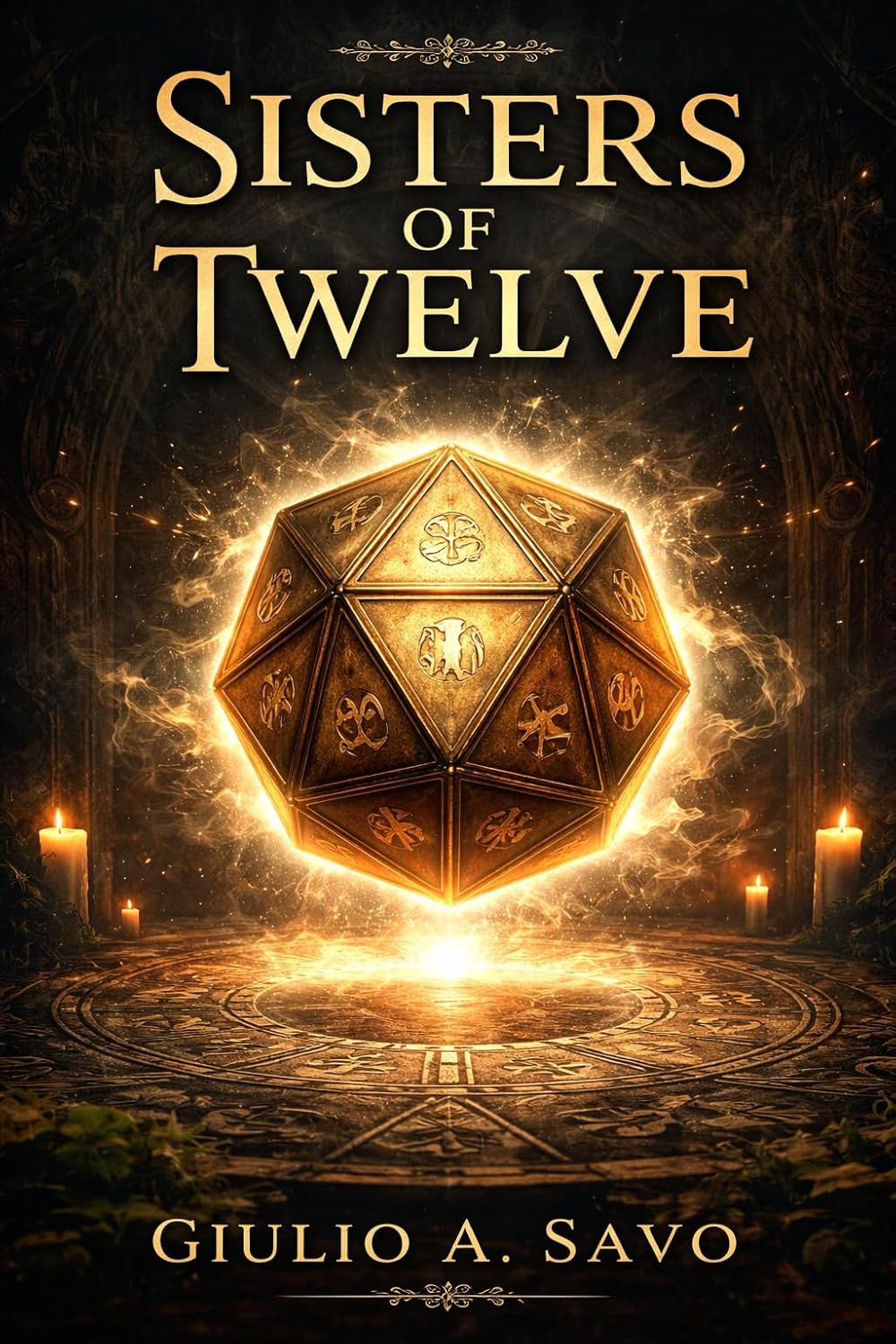

Sisters of Twelve is a historical mystery thriller built around the Voynich Manuscript, imagining that its unreadable pages are not a failed puzzle but a deliberately protected vault of knowledge, carried across centuries by a hidden lineage of women called the Custodians. At the center is Gia Braccia, the final Custodian, who must decide whether the world is finally ready for what the manuscript contains—and whether preservation has become its own kind of captivity. The novel braids real historical figures, archival intrigue, secret societies, scholarly obsession, and speculative systems into a story about women who kept knowledge alive when history preferred them nameless.
The book doesn’t rush toward revelation; it understands that secrecy has texture, procedure, dust, paperwork, and dread. The scenes inside libraries and archives have an almost mineral stillness, and I liked how the novel makes bureaucracy feel thrilling, not through car chases or melodrama, but through delayed emails, loan agreements, box numbers, and the soft violence of institutional language. Its best passages treat knowledge not as treasure, but as burden: something that must be timed, guarded, doubted, and eventually released.
I also found the book most compelling when it resisted the easy glamour of conspiracy. The Sisterhood is not simply a clever hidden order; it is an argument about history’s missing hands. The novel’s emotional current comes from its insistence that preservation is work, and that women have often done that work without signatures, monuments, or applause. The scale of the mythology can feel heavy, but that weight is also part of the book’s design. It wants to feel like a codex being opened slowly, page by page, with each layer asking whether understanding is always a gift.
This book is for readers who enjoy mysteries, thrillers, historical fiction, and the intrigue of the Voynich Manuscript. Fans of The Da Vinci Code may recognize the pleasure of symbols, suppressed histories, and dangerous knowledge, but Giulio A. Savo’s approach is quieter and more contemplative, closer in spirit to Umberto Eco’s fascination with texts, interpretation, and the peril of certainty. Sisters of Twelve is a novel about the moment a secret stops being protected and starts becoming responsible to the world.
Pages: 509 | ASIN : B0GTW2FJ1P
Awakening – There is Only One Truth

Awakening is a spiritual historical-fantasy novel that follows Dr. Stefano Mondi, a modern clinical researcher from Basel who is unexpectedly pulled into a vivid, fully embodied journey to first-century Jerusalem. The book begins with Stefano’s very ordinary, structured life, then drops him into an ancient world that feels startlingly real. What starts as a strange dream becomes a full immersion: the heat of the streets, the chaos of the marketplace, the brutality of Roman soldiers, and eventually the quiet mystery surrounding the Teacher of Righteousness. Through Stefano’s eyes, we watch historical, religious, and mystical elements intertwine as he tries to understand why he has been transported across time and what role he is meant to play. The story blends elements of spiritual fiction, adventure, and historical drama.
The writing is straightforward and clear, and it leans heavily into sensory detail. I liked how quickly I felt the weight of the sun on him, the claustrophobia of crowds, the tension of being an outsider. The author doesn’t rush the plot. Instead, the early chapters dwell on Stefano’s confusion and slow adaptation, which helped me feel grounded in the strangeness of his situation. Some passages move with a measured, almost reflective rhythm, letting the atmosphere build, while others jump into sharp, breathless moments of danger. That mix kept pulling me forward.
I also liked how the author handles the historical and spiritual material. The book is bold in how it reimagines familiar figures. Seeing Yeshua, Miriam of Magdala, Nicodemus, and even Saul through Stefano’s skeptical, modern eyes gave their scenes a refreshing angle. The Essenes, the politics of the Temple, and the tensions of Roman-ruled Judea are woven into the narrative in a way that feels accessible even if you don’t have a background in theology. Sometimes the novel leans close to spiritual allegory, then it swings back toward intimate character moments that feel almost like a conversation between past and present. It’s a curious balance, and while not every leap completely landed for me, I admired the ambition behind it.
I think Awakening is a story for readers who enjoy spiritual fiction with a historical edge. Its heart lies in personal transformation: one man waking up to a world far larger and more mysterious than the life he knew. If you like novels that explore faith, identity, and destiny through an accessible, story-driven lens, this one will speak to you. It’s a reflective, imaginative journey, and I think readers who appreciate thoughtful historical spiritual drama will connect with it most.
Pages: 193 | ASIN : B0F4M4PMLJ
Human Nature
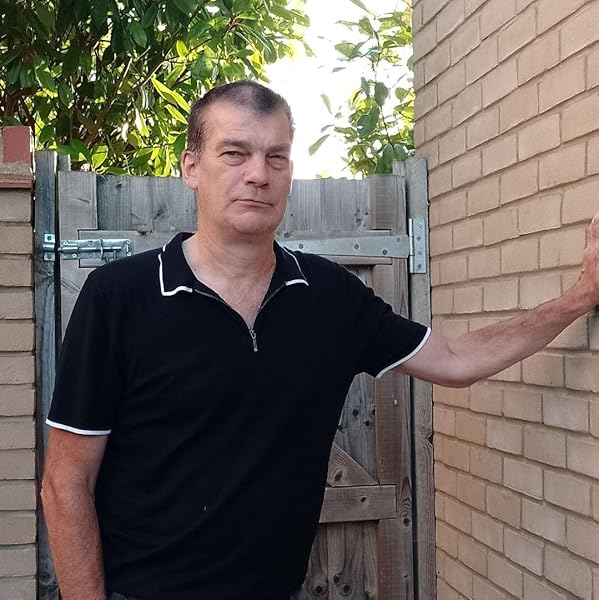
The Great Hunter follows a young hunter living in Mesolithic Britain about 10,000 years ago who is determined to wed the woman he loves, but to earn her hand, he must kill a rare and dangerous giant stag. What was the inspiration for the setup of your story?
I’ve always been a big fan of ancient myths and legends. The GREAT HUNTER is written in that style. It is a classic tale, a quest in which the hero must kill a dangerous beast in order to marry the woman he loves. A re-awakened family feud, subsequent betrayal, and long-awaited revenge are essential parts too.
What were some themes that were important for you to explore in this book?
I know a lot of authors would probably say this, but it’s the age-old theme of human nature. I don’t think it has changed very much since humans first appeared on this planet.
What intrigues you about this time period enough to write such a thrilling period piece?
I have always been into history – and prehistoric times in particular. I like the mystery of it.
But there was another reason too. Many years ago I started to experience these images – recurring images in my head. They were of ancient people who wore clothes made from animal-skins, lived in what looked like wig-wams, travelled on foot or by canoe and used tools of stone, wood, bone and antler. These images kept coming to me over several years. They really were vivid and after a while I could tell certain individuals apart. Many of the places I saw, too, looked somehow familiar.
Research led me to believe these people were part of a hunter-gatherer tribe who lived in what is now England about 10,000 years ago. I knew I had to give them a voice.
What is the next book that you are working on, and when can your fans expect it to be out?
If The Great Hunter does well, there will be a sequel: THIRTEEN MOONS – which follows on from where the first book ends.
If that does OK too there could be a series: TALES FROM THE DREAMTIME. Another two or three books about Garetto and the Nahan tribe. But also other people, other hunters and gatherers in different times and places.
I have a long-term medical condition which, though not deadly, does slow me down a bit. I have to work at my day job too. So it would probably take me about 2 1/2 years or so to write another book.
Author Links: Facebook | Website
Powerful spirits and other supernatural beings influence everything in the minds of these people, from the weather to illness, to childbirth and success in hunting or courtship.
Life is not without its challenges, but the real hardships of the Ice Age that ended over sixty generations before are becoming a distant memory. There is an abundance of game animals, fish and plant foods too, in season. Rich pickings for the numerous bands of hunter-gatherers. Yet the country is as hazardous as it is bountiful. Bears, wolves, aurochs and other wild animals that could kill a man roam the landscape. Floods, blizzards, wildfires and tree-felling storms may strike with little or no warning. Still more danger comes from the tribal wars that might suddenly flare up, with their brutal raids and counter-raids. Destruction may also come from enemies within.
A young hunter, Garetto, is determined to wed Harenshi – a woman of another camp, who he loves. True, there was trouble between their families many winters before, but all they want is to stay together, and stay with their own people.
Challenged to go away from the gathering to kill a very rare – and very dangerous – giant stag, Garetto travels far from the camps, with only his dog for company. It is the middle of a freezing, snowy winter, and the hunting-ground is a hostile one.
It seems an impossible quest, but only when Garetto returns with the sacred antlers will the ox-chief Haranga – Harenshi’s father – allow him to wed his daughter.
But the past is far from forgotten, or forgiven. Haranga breaks his promise, resolved Garetto must never return to his people. This act of betrayal – and the sudden appearance of a mysterious and powerful shaman – will have fateful consequences for the whole tribe…
The Great Hunter

Kel Paisley’s The Great Hunter follows the life of Garetto, a young man living in Mesolithic Britain about 10,000 years ago, when hunter-gatherer tribes struggled to survive in harsh landscapes shaped by ice, wind, and rising seas. At its heart, the story is about love and loyalty. Garetto longs to wed Harenshi, a woman whose father not only disapproves of him but actively threatens their bond. What unfolds is a tapestry of tribal politics, sacred rituals, dangerous hunts, and the daily fight for food and honor. The novel blends historical imagination with intimate storytelling, letting the reader step into a time when survival and tradition dictated nearly everything.
The writing is vivid, almost cinematic, and the world feels tactile. But at times, the descriptions ran long. The dialogue, though, had a sharp edge. It carried both warmth and menace, and I often felt the tension of being in a camp where every look and every word could spell danger. I liked that it didn’t sugarcoat the violence of the time or the rawness of relationships. It made the book feel honest, though also heavy.
What struck me most was how much of the book pulsed with longing. Garetto’s love for Harenshi is desperate, almost reckless, and it pulled me in. I felt for him, even when he acted out of pride or anger, because his emotions rang true. The book made me think about how love, fear, and family ties have always shaped human lives, no matter the era. Still, I’ll admit there were moments when I wanted less ritual detail and more forward momentum, but the ideas always kept me hooked. The mix of survival and spirit, blood and devotion, felt raw and human.
This is not a light read. It’s immersive, dense, and full of grit. I would recommend The Great Hunter to readers who enjoy historical fiction that leans into the primal side of human nature. If you want an adventure that is full of danger and love, and you’re seeking a story showing a clash between tradition and desire, this book is for you.
Pages: 453 | ASIN : B0FM58B2TW

Ramparts of Winter Iron: When Frost Hammers the Gate
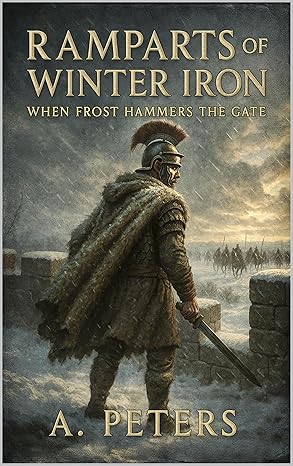
Ramparts of Winter Iron is a gritty and tightly woven historical fantasy set on the snowy fringes of a fading Roman frontier. The story follows Flavius Marcellinus, a seasoned Roman officer tasked with holding the fortress city of Caesarea against a rising tide of nomadic Alan invaders. With only raw recruits, improvised weapons, and the bitter cold at his back, Marcellinus must forge discipline out of desperation. The novel tracks his struggle through military drills, political tension, and a climactic night raid meant to cripple the enemy’s supply line. It’s both a tale of war and a meditation on duty, leadership, and the endurance of civilization under siege.
What I loved most was the sheer sense of place. The cold felt like a character all on its own. It was biting, unforgiving, and always present. Peters’ writing style is direct and powerful. There’s no fluff here, no purple prose. Every sentence pulls its weight. I appreciated how the author balanced action with introspection. Marcellinus isn’t a superhero. He’s tired. He doubts himself. But he pushes on. That kind of worn determination struck a chord with me. The battles are gripping, the tactics believable, and the stakes always feel real.
The book asks a lot from the reader. You’re dropped right into a cold and crumbling world with little time to catch your breath. At times, I found the sheer amount of logistical detail overwhelming, especially regarding the tactics. It’s clear the author did his homework, and I admire that. This book is a great pick for readers who love diving into the gritty, boots-on-the-ground details of Roman combat, from shield formations to siege engines and everything in between. But the details slow the story in moments when I wanted the story to move. Still, those slow patches are outweighed by the raw emotional honesty of the characters. Antonus, the reluctant farmer-turned-soldier, especially stood out. He gave the story a human core beyond all the spears and orders.
Ramparts of Winter Iron surprised me with its depth. It’s about building something worth protecting when the world seems bent on tearing it down. I’d recommend it to readers who enjoy Roman-era fiction, military history buffs, and anyone who’s drawn to stories of quiet bravery and stubborn hope.
Pages: 259 | ASIN : B0F71QK934


