Author Archives: Literary-Titan
Powerful Tools for Storytelling

Wing Haven follows a fairy who finds herself queen after being betrayed by her sister, and along with some unlikely allies, enters into a dangerous adventure. Where did the idea for this novel come from?
I looked on Submittable for short story and flash fiction writing contests because I think it’s a good way to flex your writing muscles, and saw one which must have had a fairy or forest theme. I hit the word count limit and had so much more to say about Almond’s journey that I just kept going.
There was a lot of time spent crafting the character traits in this novel. What was the most important factor for you to get right in your characters?
I think archetypes are powerful tools for storytelling, and each character has a role: the hero, the sidekick, the love interest, the comic relief, the villain, the muscle, etc. In Wing Haven, the hero is a fairy, the sidekick is a chipmunk, the comic relief is insects—and they have motivations and quirks corresponding with their roles in the story that I hope draw the reader into a suspension of disbelief that allows them to go along for the ride.
What were some themes that were important for you to explore in this book?
Some of Wing Haven’s most important themes are self-reliance, chosen family, and acceptance. Almond must learn to live outside of the regimented Fairy Nook, where there are no rules or safety nets, but also learns to trust the creatures she befriends. They’re a ragtag group of very different creatures who accept each other as they are and appreciate each other’s strengths.
Can fans of Wing Haven look forward to more work from you soon? What are you currently working on?
I am excited to share that I’m working on my first closed circle murder mystery, but I also have ideas for more adventures for the Wing Haven crew, so sign up on my website for updates.
Author Links: GoodReads | Facebook | Website | Amazon
Layer of Tension

Born on Monday tells the story of two people with a shared history and whose lives are both scarred by heartbreak, who reunite under less than ideal circumstances. Where did the idea for this novel come from?
Born on Monday began as a short story called “Time Capsule,” which was published in my debut collection, 50 States. The original story was very much about how those who leave a place after high school are changed, whereas those who stay behind remain the same. Billy Stevens stays in Augusta, whereas the love of his life escapes to New York City. When I started exploring this aspect of the story —wondering whether they would ever reconcile their differences —it became increasingly clear that they would have to overcome a past mired in tragedy. More than that, they would have to face several present-day threats, including someone sinister who follows Jessica Michaud home. It was in discussing the progression of this story with a close friend that her real-life experiences and my own research into stalkers would inform much of the novel’s direction.
What do you find to be the most challenging aspect of writing a thriller?
For this thriller, it was very much a matter of who knew what and when they knew it. All the characters have different perspectives on their shared past, which not only dramatically shapes how they interact with each other but also how they perceive themselves. The same can be said for the reader, too. They inevitably know more than any one character, creating an additional layer of tension, but never know enough to predict the end. Born on Monday is very much a story with secrets within secrets, and the consequences of keeping them.
Do you have a favorite scene in this book? One that was especially satisfying to craft?
There were several, and the two that stand out for me may be among the most overlooked by readers. I very much enjoyed crafting the chapter where Billy and his current girlfriend, Autumn, reconcile their differences. It’s a tender, heartfelt moment amid the chaos surrounding them. The immediacy and intimacy of their reunion run deep. The second is Andrea’s visit to the Kennebec Journal. She meets with her boss and mentor to discuss the story she is working on, which also touches on what journalism means in a small town like Augusta. Having worked as a journalist, this chapter allowed me to rehash some old conversations with colleagues in a contemporary setting. More than that, it underscores why I was so thrilled that Andrea, who was initially meant to be a supporting character, grew to become such a strong protagonist.
What is the next book you are working on, and when will it be available?
My next work in progress (WIP) can best be described as a speculative thriller, blending and bending science, metaphysics, and something akin to the supernatural. It’s a continuation of the short story “Dead Ends” from 50 States. “Dead Ends” was one of the most called-out stories from the anthology and involves a young couple who take a reckless turn off a state highway in Utah and find themselves in a nightmarish government biohazard area. I’ve been relatively consistent in releasing a new book every other year, but I’m hoping to accelerate my pace so this novel is something readers can look forward to toward the end of 2026!
Author Links: GoodReads | X (Twitter) | Facebook | Website | Amazon
In Augusta, Maine, a historic nor’easter unearths sins and secrets buried deep in the town’s past. Billy Stevens, a quarry worker haunted by loss, is drawn into a web of betrayal when a brutal crime pins him as a suspect. Jessica Michaud returns to care for her ailing mother, only to find herself hunted by a vengeful ex whose chilling threats awaken old wounds. And journalist Andrea Kearney digs into a local dynasty’s corruption as the storm’s fury mirrors the rising tide of violence.
With time running out, three lives collide in a desperate fight for survival, where truth becomes a casualty and redemption comes at a cost. Eleven-time award-winning author Richard R. Becker delivers a gritty literary thriller that digs into identity, perception, and the human condition.
Processing My Trauma

Tremor in the Hills follows a teenage girl struggling with trauma after surviving a devastating quake, whose best friend is accused of murder, and she has to help discover the truth. What was the inspiration for the setup of your story?
The inspiration: In 2007, I was with my husband and 2 young children visiting his family in Ica, Peru, when an 8.1 magnitude earthquake struck. 90% of the town we were in was destroyed, and we had a difficult time getting home, although we were VERY lucky and grateful that we survived, and everyone in his family did also. 500 people died in the same town we were in. When I got home, everyone wanted to hear my story, but I did not want to talk about it, so I wrote it down and sent it to everyone I knew. The writing got a very good reception, and I have always loved mysteries, so I decided to continue processing my trauma through writing a story based loosely on my experience.
It seemed like you took your time in building the characters and the story to great emotional effect. How did you manage the pacing of the story while keeping readers engaged?
Tremor in the Hills has been through countless edits and 3 different editors, so I think it was mainly practice, editing, and just getting to be a better writer over the years.
How do you balance story development with shocking plot twists? Or can they be the same thing?
I hate to say it, but I think it’s a mixture of real-life experience and twisted imagination… I do believe that story development and shocking plot twists are melded together.
When will Book Two be available? Can you give us an idea of where that book will take readers?
Book two, with any luck, will be out in late 2026. It will feature many of the same characters. The setting is Caral, an archaeological site in the north of Peru, and answers part of the question of where K’antu went at the end of Tremor in the Hills. There will be 3 books total in the trilogy.
Author Links: GoodReads | X (Twitter) | Facebook | Website | Amazon
Writing Organically
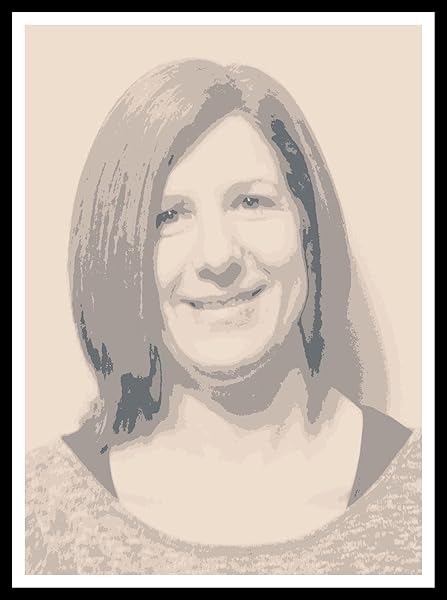
The Guardian’s Legacy centers around a history teacher whose strange inheritance reveals a long-buried family secret and leads him on a journey through time. Where did the idea for this novel come from?
The spark came from a facsimile of a Greek coin—sent to me as a prompt for a short story that eventually found its way into a published collection. It took a few months for the idea to take root, but inspiration struck, fuelled by my love of ancient history, mythology, and the gripping twists of The Da Vinci Code, Steve Berry, and James Rollins. That tiny coin became the key to a much larger mystery, its origins entwined with lost languages and forgotten legends. From that seed, Nik and Iasos emerged—though if you ask them, they’ll insist they were the ones who found me first.
When you first sat down to write this story, did you know where you were going, or did the twists come as you were writing?
Great question! I originally outlined the story as a five-book series—though whether it reaches five depends on how book four unfolds. Did I know where it was going? Not entirely. I had a plan, but the characters had other ideas, steering the plot in unexpected directions and demanding more involvement. I do outline scenes, but they’re more guideposts than strict rules. Writing organically allows the story to stay fluid and responsive, which I love. Of course, that means keeping close track of details and plot threads to maintain continuity. It’s a dynamic process—part structure, part surprise—and that’s where the magic happens.
Were you able to relate to your characters while writing them?
The bond between Nik and his grandfather, Iasos, is deeply rooted—something I relate to through my own family. No matter the distance or age gap, that connection endures. For both Nik and Iasos, family heritage and tradition are central, and that thread runs through me as well. Nik’s role as a high school teacher draws from my own teaching experience, grounding his character in something personal. While Nik’s heritage is Greek and mine is Italian, our roots intertwine. My family hails from southern Italy, where Greek ancestry isn’t uncommon. I only recently learned from my mother that my grandmother called her grandfather “Papou”—the Greek word for grandfather. That small detail felt like a beautiful echo across generations.
Can you give us a glimpse inside book 2 of the Coin of Time series? Where will it take readers?
In Book 2: The Race for the Lost Coin, Nik is pushed to take matters into his own hands—stepping beyond the law to protect what matters most. Though he offers an olive branch to Detective Sauveterre, she remains a steadfast officer, bound by duty. As the stakes rise, Nik evolves into an unlikely hero, drawing on his skills as a guardian to safeguard the coin and rescue his grandfather. Along the way, he’s joined by a hacker, a librarian, and a taxi driver—each adding heart and grit to the journey. It’s fast-paced, full of twists, and packed with myth-infused suspense.
Coming 29 November 2025—get ready to dive into the adventure.
Author Links: GoodReads | X (Twitter) | Facebook | Website | Amazon
A three-thousand-year old magical coin, the disappearance of an old man, fanatical neo-Nazis, and the hunt by Interpol, merge in this gripping story of an ancient cover up, and the transition of an ordinary man into the guardian of the most powerful coin on earth.
High school teacher Nik Zosimos, leads an uncomplicated life until he receives a cryptic phone message from his grandfather, Iasos. He hurries to his grandfather’s finding him relaxed and pleased to see him. A few beers later, Nik leaves his grandfather’s place, stupefied and astounded. Iasos has a secret, one that dates back to the time of Herakles.
But that was just a myth, wasn’t it?
If you like Dan Brown and Wilbur Smith books or enjoys action, fast-paced dramatic shows similar to National Treasure and The Librarians, then you’ll love The Guardian’s Legacy. Award-winning author of Historical Fantasy/Adventure, Luciana Cavallaro, pens a thrilling mystery. Click the BUY NOW button at the top and find out how Nik’s life changes.
The Human Psyche

The Woman in the Ship follows the captain of a starship and the ship’s sentient AI, as they drift through the black silence of space after the destruction of Earth. What was the inspiration for the setup of your story?
It was a wonderful and fascinating topic to write about, but the inspiration itself would involve a major spoiler for a twist in the novel, so I will have to tell you later off mic! But I have always been interested in space flight since teenage years and have had an interest in artificial intelligence since writing my previous novel Android Author. I am primarily interested in human emotions and interactions though, and putting the crew of the Ascension into such an extreme situation is a perfect way for me to delve into the human psyche and the AI element was an interesting jump point to explore what it means to be a conscious, intelligent life form.
The writing in your story is very artful and creative. Was it a conscious effort to create a story in this fashion, or is this style of writing reflective of your writing style in general?
It is my natural style, although it has developed over the years. When I first started writing, I was always lyrical in my style, and actually, I have reigned it in over the years and learned that just because I know how to write beautiful twiddly prose doesn’t mean you always have to – a bit like not showing off all the time on the guitar in a band – not that I am in a band, well not yet anyway!
What were some themes that were important for you to explore in this book?
Yes, I wanted to explore childhood memories, how we remember our parents and how we can relive similar stories through different lifetimes. Mostly though, getting sidetracked from your question a bit, I just wanted to be in space! And until they decide to appoint a poet laureate in the international space station, this is the closest I can get. I woke up one morning at about 2AM and had the whole book plotted out in two hours, including names and everything. Sitting down and writing it was the equivalent of getting my space boots on and venturing out myself into, as you say, the black silence of space.
What is the next book that you are working on, and when can your fans expect it to be out?
I have just finished this and another project, a comic called The Gloriously Untrue Adventures Of Sapphira which I wrote and illustrated – also set partly in space – and will be working on my new projects in January. Issue 2 of my comic and a new novel, as yet untitled, about a future society where unborn children are vetted by AI systems before they are deemed suitable for birth and inclusion in society.
Author Links: GoodReads | Facebook | Website | Amazon
Captain Sally Arden finds herself at the heart of this drifting elegy, caught between duty and despair. Her closest companion is Nova, the ship’s sentient AI, who defied orders to self-destruct and now manifests with the personality and memories of a long-dead woman named Nova Starlight. As the remaining crew wrestles with loss, love, and fractured identities, Sally’s bond with Nova deepens into something intimate, uncanny—and possibly redemptive.
With luminous prose and a dreamlike voice, The Woman in the Ship drifts between science fiction and philosophical fable.
Never Too Late to Live

My Sexual Awakening at 70 is a raw and daring memoir that traces the path from your childhood steeped in repression and control to a late-in-life explosion of freedom, sensuality, and truth. Why was it important for you to share your story with the world?
It was important to me for a few reasons. One, I wanted to be able to tell the truth about all I went through in my growing-up years, and two, I wanted to share the joy I felt at experiencing sexual freedom for the first time in hopes that other women might be inspired and able to do the same.
What were some ideas that were important for you to share in this book?
That it is possible to live, really live, free from nightmares from the past and experience the joy of sexual freedom.
What was the most challenging part of writing your memoir, and what was the most rewarding?
It was challenging to open up about all of it, my past with my parents, and my sexual explorations, but all of it was rewarding because in the end, I was able to feel free for the first time in my life.
What do you hope is one thing readers take away from your story?
That it’s never too late to live, truly live, your own life, no matter what torment you have gone through.
Author Links: GoodReads | X (Twitter) | Facebook | Website | Amazon
Interweaving a repressed and intimidating upbringing with her lively and uncensored search for sexual liberation (complete with writing erotic stories), Rosenberg discovers it’s never too late to find freedom and begin life anew.
Compelling Mystery

The Magician’s Wife follows a small-town journalist who gets pulled into the mysterious disappearance of a magician’s glamorous assistant who vanishes during a live TV performance, only to reappear a week later, dead. What was the inspiration for the setup of your story?
First and foremost, I wanted to write a novel with a compelling ‘impossible’ mystery at its heart, and give the book the kind of hook that would instantly make a reader want to know exactly how such an impossible event could have occurred. My starting point for this particular mystery was the teleportation illusion, a classic of stage magic. A magician’s assistant gets into Box A on a live TV talent show and is supposed to reappear in Box B, but vanishes for an entire week. She then does reappear in Box B on the show’s next round… but she’s dead. My journalist, Clare, is as shocked by this as everyone else. As the books are told from her perspective, she is echoing what a reader is perhaps thinking as the narrative unfolds. It also appealed to me to have a character drawing the reader in who cared deeply about a missing person case, which is the reason Clare became a journalist in the first place, something we learn more about as the story progresses. A broader inspiration for this book (and the upcoming books in the series!) has been my husband, who is a professional stage and TV magician and with whom I worked backstage for a time. It’s been very useful having a magic advisor on hand while writing this book, especially when devising some of the methods and effects!
When creating Clare, did you have a plan for her development and character traits, or did they grow organically as you were writing the story?
I think it was a bit of both! The two main characters in this story are Clare Deyes and Mara Knight. They’re unlikely allies as they’re such different people from different backgrounds. Originally, I conceived The Magician’s Wife in third-person, to centre more around Mara. But compared to Clare, Mara can be cynical and brittle, a little dismissive and subversive. Certainly in commercial fiction, I find that a character with these traits usually has to be offset by a foil, more of an ‘everyman’ that a greater percentage of readers are able to identify with straightaway. It was true of the Sherlock Holmes stories (a big inspiration for me), and I think it still holds today. In contrast to Mara, Clare sees the good in everyone, is optimistic, and friendly. So Clare and Mara have a real Watson/Holmes dynamic. Clare’s the heart and Mara the brain; you can’t have one without the other. And it’s the contrast between these characters’ personalities that drives much of the novel’s pathos and tension. Saying that, some of Clare’s background and core motivations did grow organically as I was writing the book. As much planning as you might do, as a writer you always tend to make some discoveries about your characters as you go along – and these can often be the most exciting parts of the story!
What was the most challenging part about writing a mystery story, where you constantly have to give just enough to keep the mystery alive until the big reveal?
The Magician’s Wife is my first novel in the crime/mystery genre, and I’ve often heard other writers say that it’s possibly the most difficult genre to write in. Not only do you have to create a compelling mystery in the first instance, but you must ensure that you’re feeding clues to your reader in an ‘honest’ way, so that none of the ultimate reveals come out of nowhere. However, one of the most challenging things I found when writing this book – particularly as the story is told from the first-person perspective of Clare – was keeping in my head what a reader/Clare was thinking about the mystery at any given time (the story’s ‘logical progression’), versus what I knew was actually happening. It certainly kept me on my toes throughout the various drafts! I found having a detailed chapter-by-chapter breakdown written out before I started work on the book was invaluable, and I’ll definitely tackle future novels in the series in the same way.
When will Book Two be available? Can you give us an idea of where that book will take readers?
I’m currently working on the next book in The Magician’s Wife series, and it should be widely available to readers in early 2026! It’s called Second Sight and tells the story of a young boy who claims to be having unsettling visions of the future, visions that appear to be coming true. Even stranger, these visions only started happening after a cornea transplant the boy had to save his sight. When the child makes his most disturbing prediction – that his own life is in danger – it’s up to Clare and Mara to get to the bottom of what lies behind it all in order to save the boy’s life. The setting is a bit of a contrast to the world of TV studios and stage magic in the first book, as Second Sight is largely set in an inner-city London housing estate. I’m hugely enjoying writing this series so far and have lots more impossible mysteries up my sleeve for future books. My biggest hope is that readers will enjoy them as much as I do, as entertaining someone who has parted with their money to read my work is – and has always been – extremely important to me.
Author Links: GoodReads | Instagram | Facebook | Website | Amazon
When Angel, the wife of magician Dex Devereaux, mysteriously vanishes on a live TV talent show, journalist and wannabe investigator Clare Deyes cannot resist trying to work out what happened. But a week later, when Angel reappears dead during the show’s next round, Clare is certain she is out of her depth.
Clare soon realises only one person can help: the brilliant, brittle Mara Knight – magic consultant, psychologist and wife of the world famous illusionist Travers – whose husband’s disappearance is still unexplained.
Can Clare and Mara together solve the puzzle of Angel’s death before the talent show’s live final, when they are sure someone close to Angel has something even more extreme planned?
—
The Sherlock Holmes stories meet Jonathan Creek in this fast-paced, twisty mystery with a generous peppering of pathos and humour. Perfect for fans of Richard Osman and Elly Griffiths, The Magician’s Wife is the first in a brand new series from internationally published author (and real-life magician’s wife) Lora Jones.
Insane Extremes
Uncommon Sense is a raw, unfiltered, and unapologetic deep dive into the heart of American dysfunction, exploring the problems with both parties, and helping Americans understand how we got to this point and what we can do to correct the course. Why was this an important book for you to write?
We all know the country is more divided than it has ever been, and we all know that it has become the norm to hate those with whom we disagree…simply because we disagree. I just had enough of the shouting and the hate and the noise; I had enough of the lies that are never questioned and the misinformation that is readily accepted as fact. So, I set out to offer context and a tough reality check. Writing this book was the only way I could think of that I could contribute to the solution, to help the country get back to what we were intended to be. My biggest hope is that enough people will read it and be moved by it to wrest the control of society away from the insane extremes on both sides and restore it to the vast majority of voters closer to the middle- where governing and growth can happen.
What is a common misconception you feel people have about how America has drifted so far from its founding principles?
I am not sure I understand what you mean by misconception. America has objectively drifted from its founding principles. I believe mass media and social media are to blame. Too many people accept memes as news and headlines as information. Too many people don’t understand enough about history and the foundation of this country to see that most of what they see is just wrong. If the people shouting the loudest understood the Constitution, for example, they would see there is no reason to shout.
What were some ideas that were important for you to share in this book that can help voters start to heal the division that is dividing the country?
The most significant idea to be found on the pages of this book is that we can disagree and still be friends; that disagreeing doesn’t make us enemies; that supporting conservative ideas does not make one a nazi and supporting liberal ideas does not make one a communist; that the answer to everything that ails us can be found in the middle.
What is one thing that you hope readers take away from Uncommon Sense: For the Voters Who Can Save America From Itself?
Beyond what I have already said, I hope readers take from this book the courage and tenacity to always ask the follow-up questions until they get real answers; to never accept talking points as answers; to hold their elected officials accountable for doing what is right for their constituents, or to vote them out regardless of party affiliation. Mostly, I hope they take away the ability to agree to disagree.
Author Links: GoodReads | Instagram | Facebook | Website | Amazon
The immeasurable abundance of misinformation and outright lies, combined with the unfettered vitriol cloaked in the anonymity of the internet, are feeding the beast of hate faster than anything ever has in our history. If the misinformation and hatred don’t end, America will.
Drawing from American history, the Constitution, and the voices of past leaders, Uncommon Sense makes the case that it’s not politicians who will save America, but informed, engaged, and principled voters who dare to think critically, ask questions, and speak civilly.
This is not a book for the far left or the far right—the extremes on both sides may hate its message. Uncommon Sense is for every American who’s tired of the shouting and the noise and the hate; for every American who is willing to have a real conversation.
Getting there is going to require that we put away our biases and party allegiances; that we take a deep breath and open our minds; that we flush away everything we have been told about governing and politics by network media corporations, social media content creators, and clickbait talking point headlines. We must adopt a position of simple pragmatism and logic—we must all think it through to find the simplest solutions for voters and politicians alike to pursue and tap into the true greatness America has to offer in the twenty-first century and beyond. Getting there is going to require that we ask more questions and listen to more answers . . . and that we normalize talking about it civically.


 LITERARY TITAN